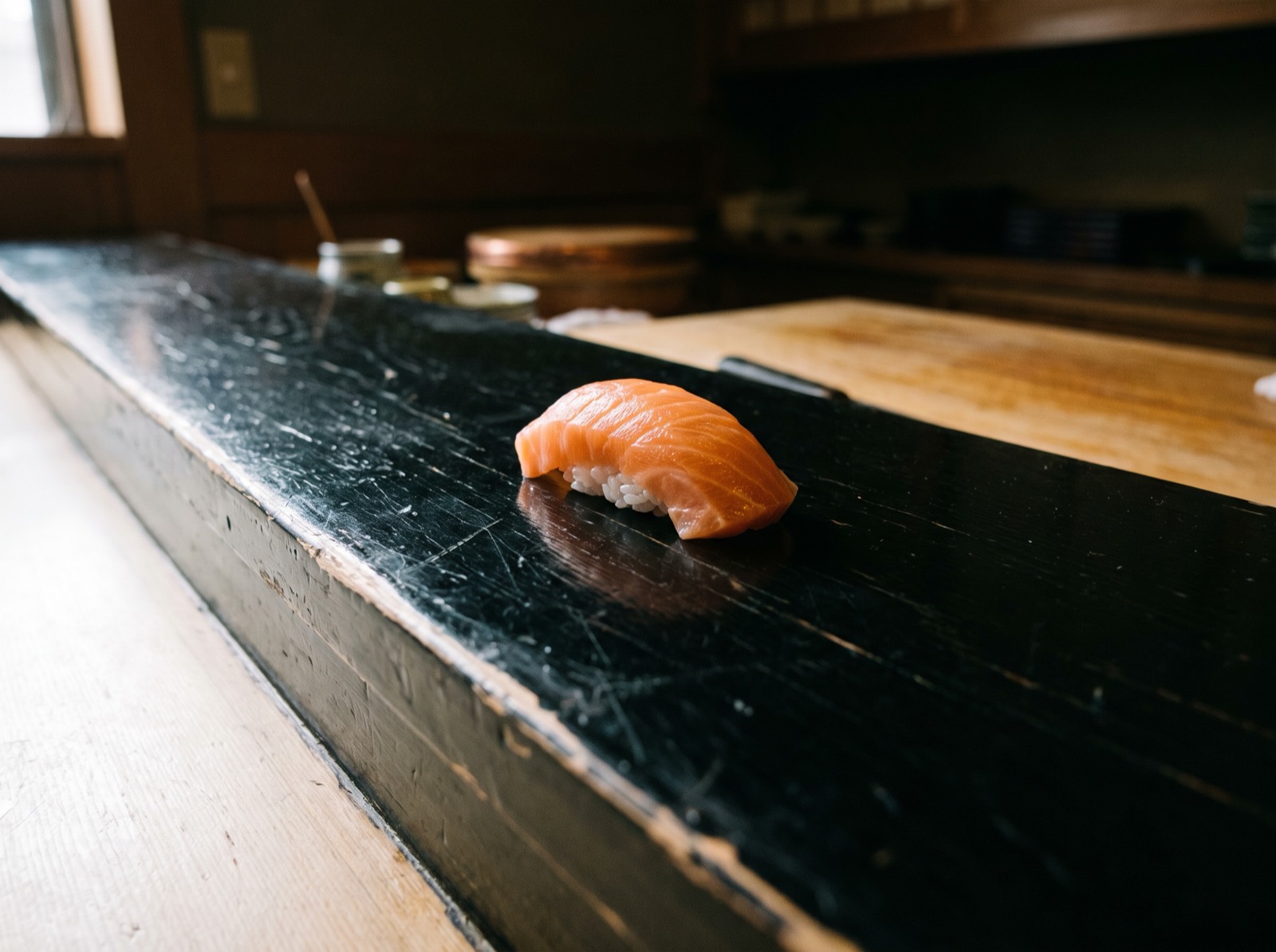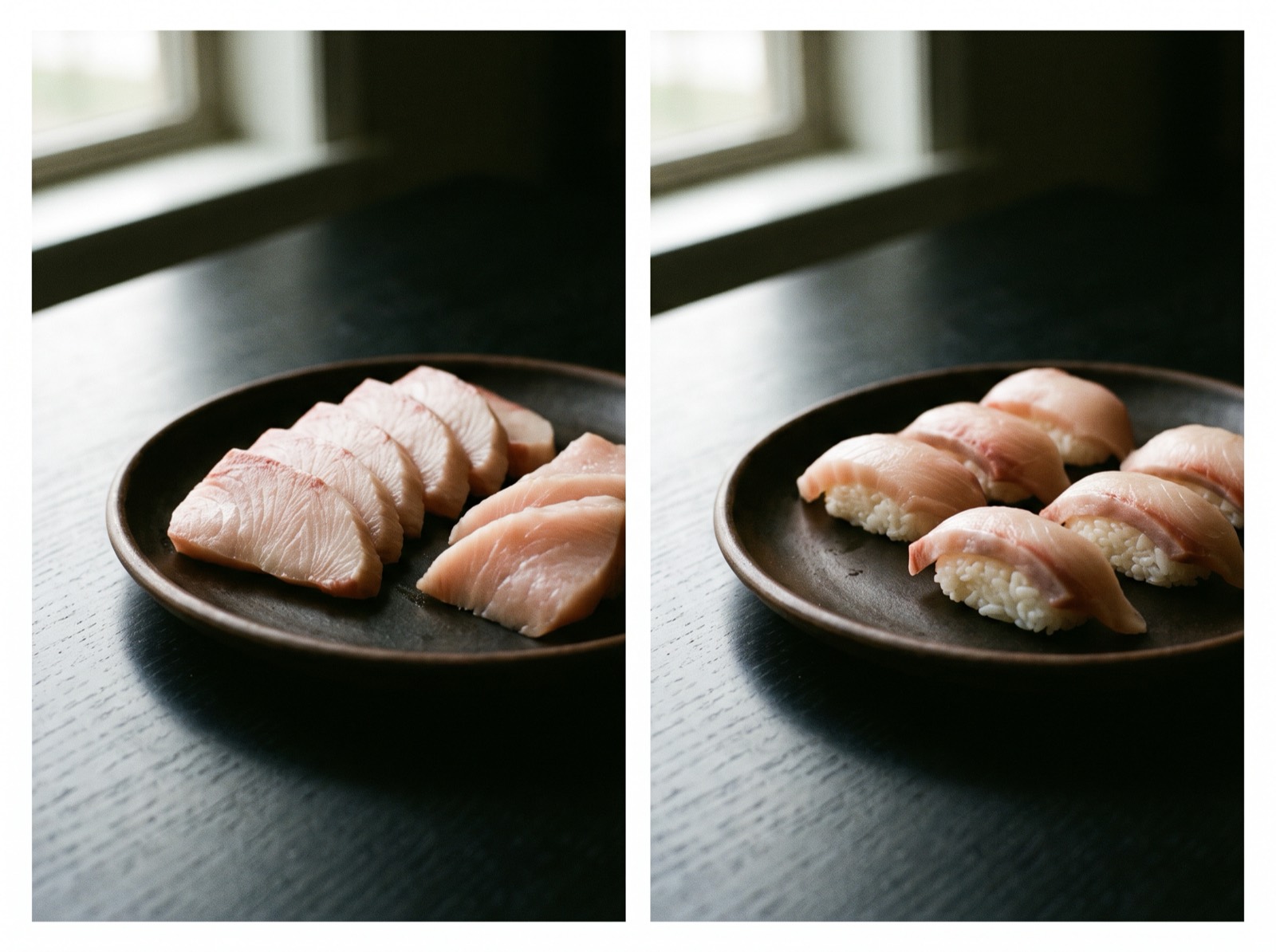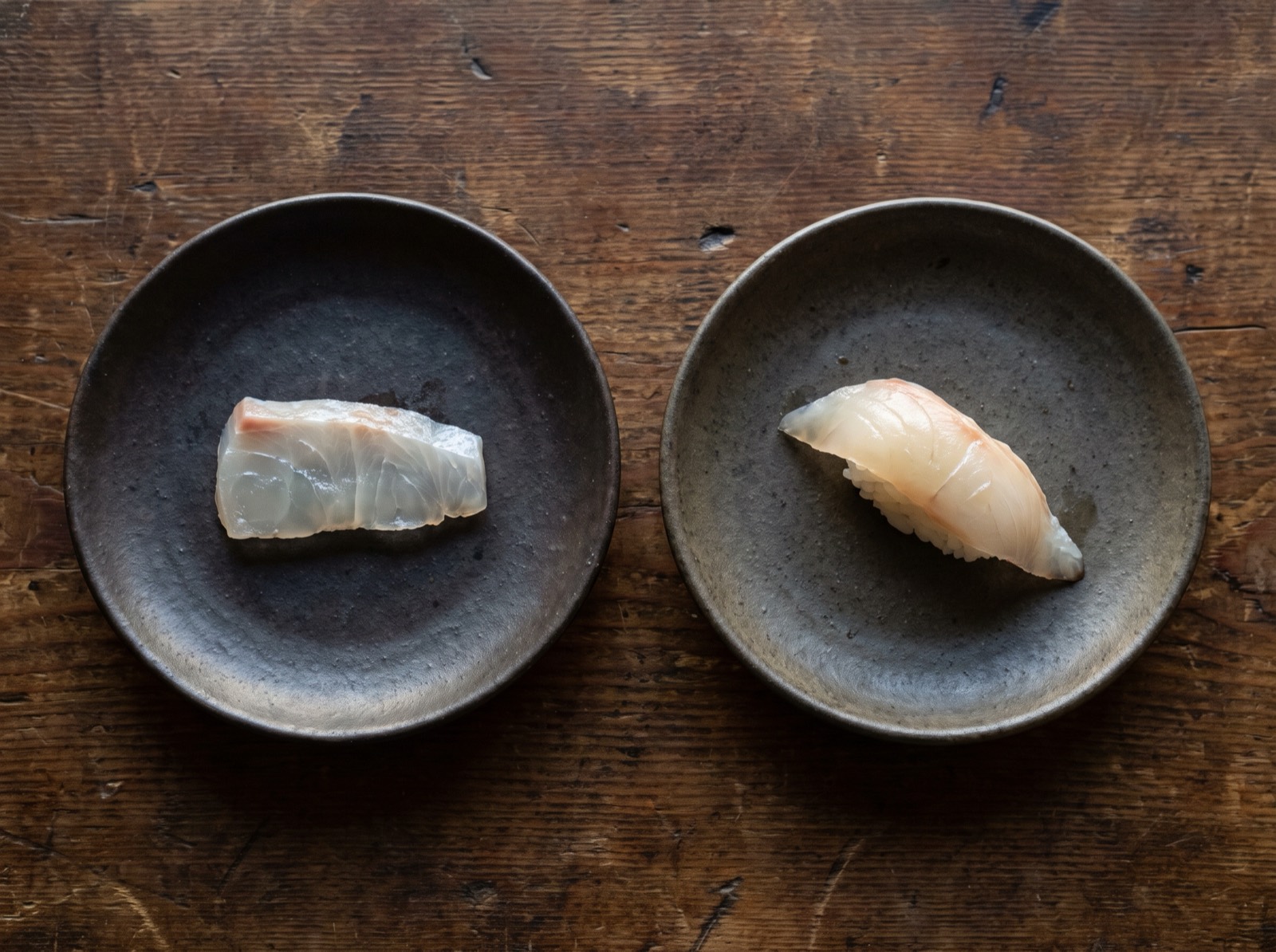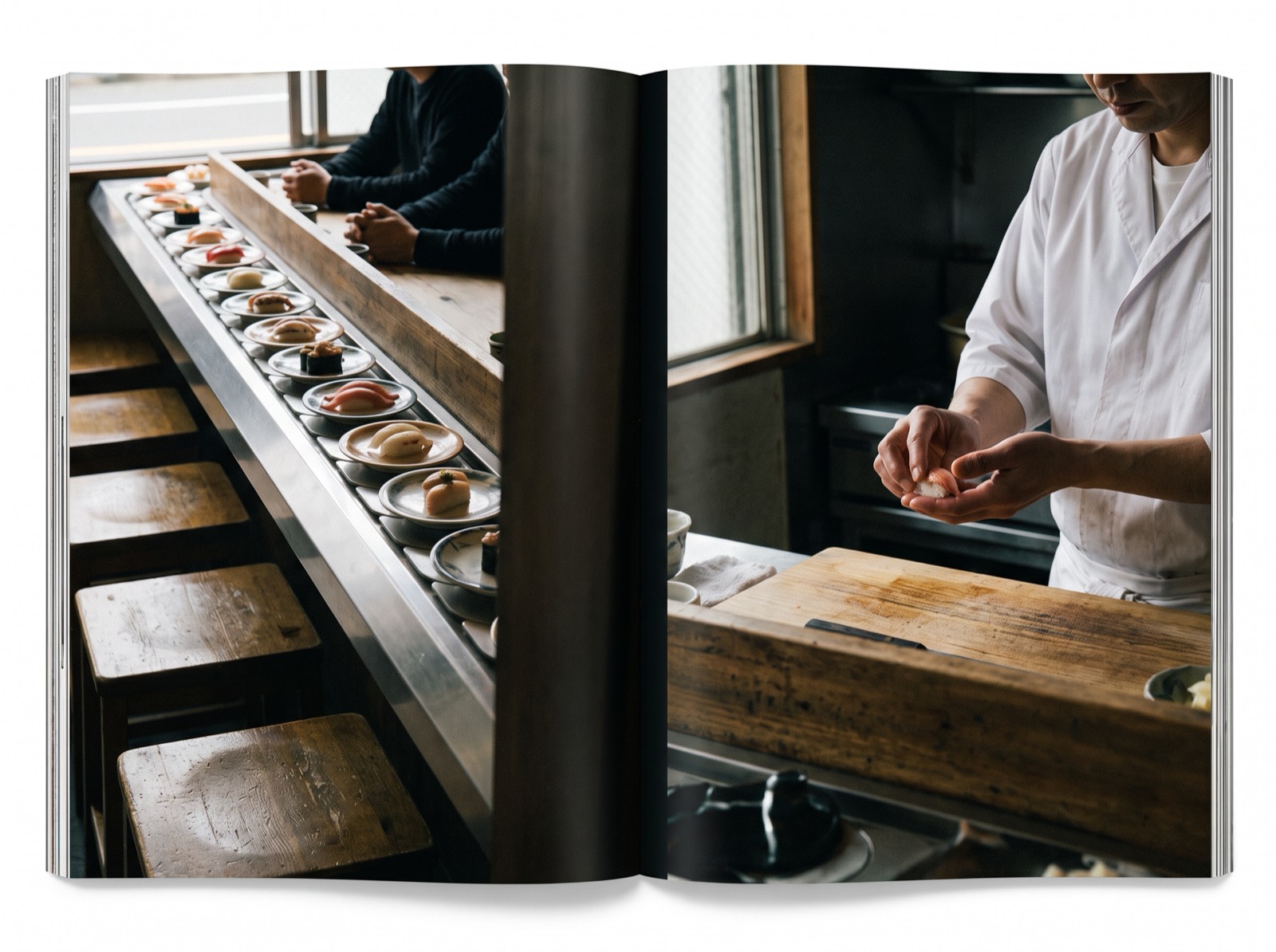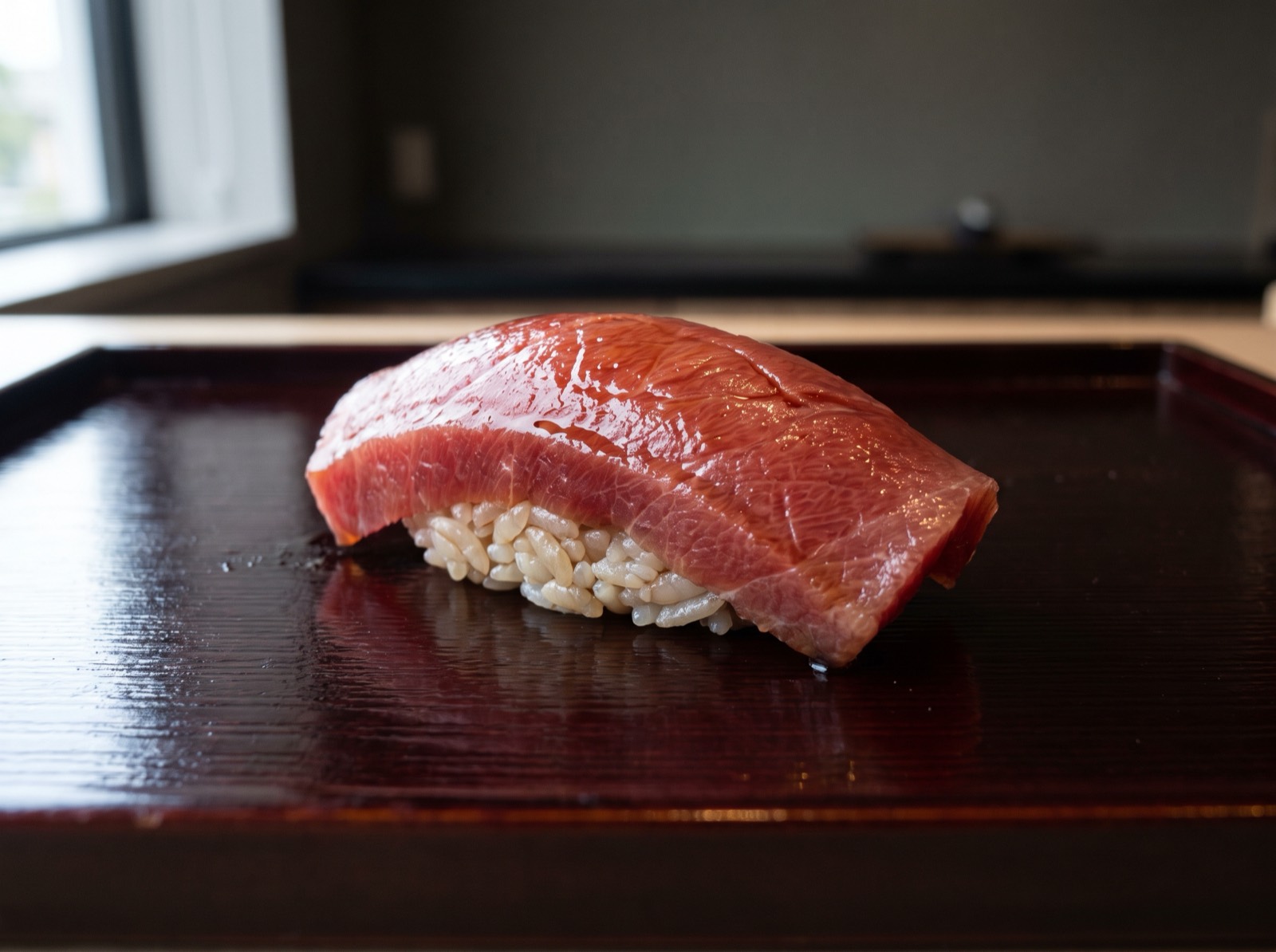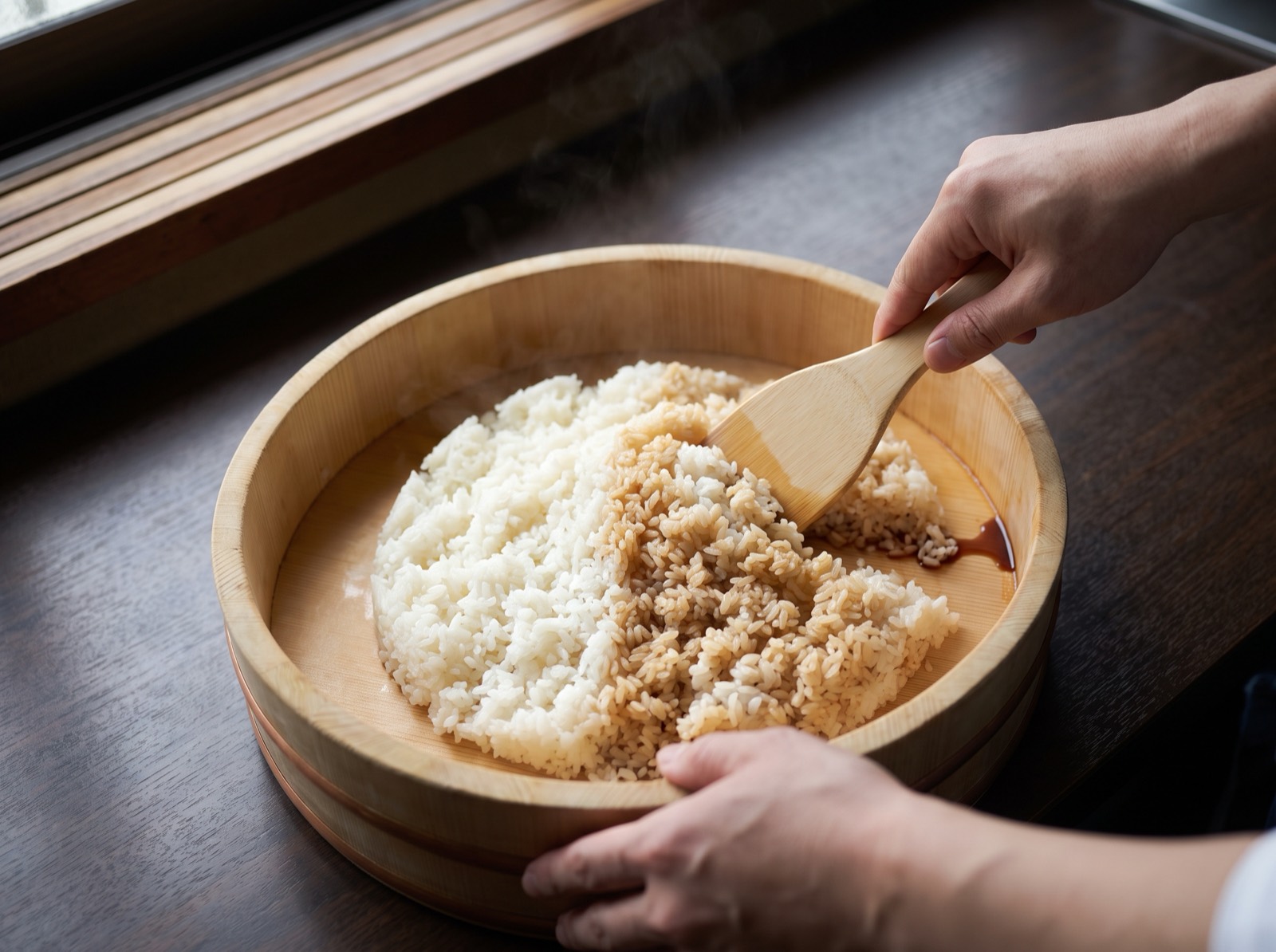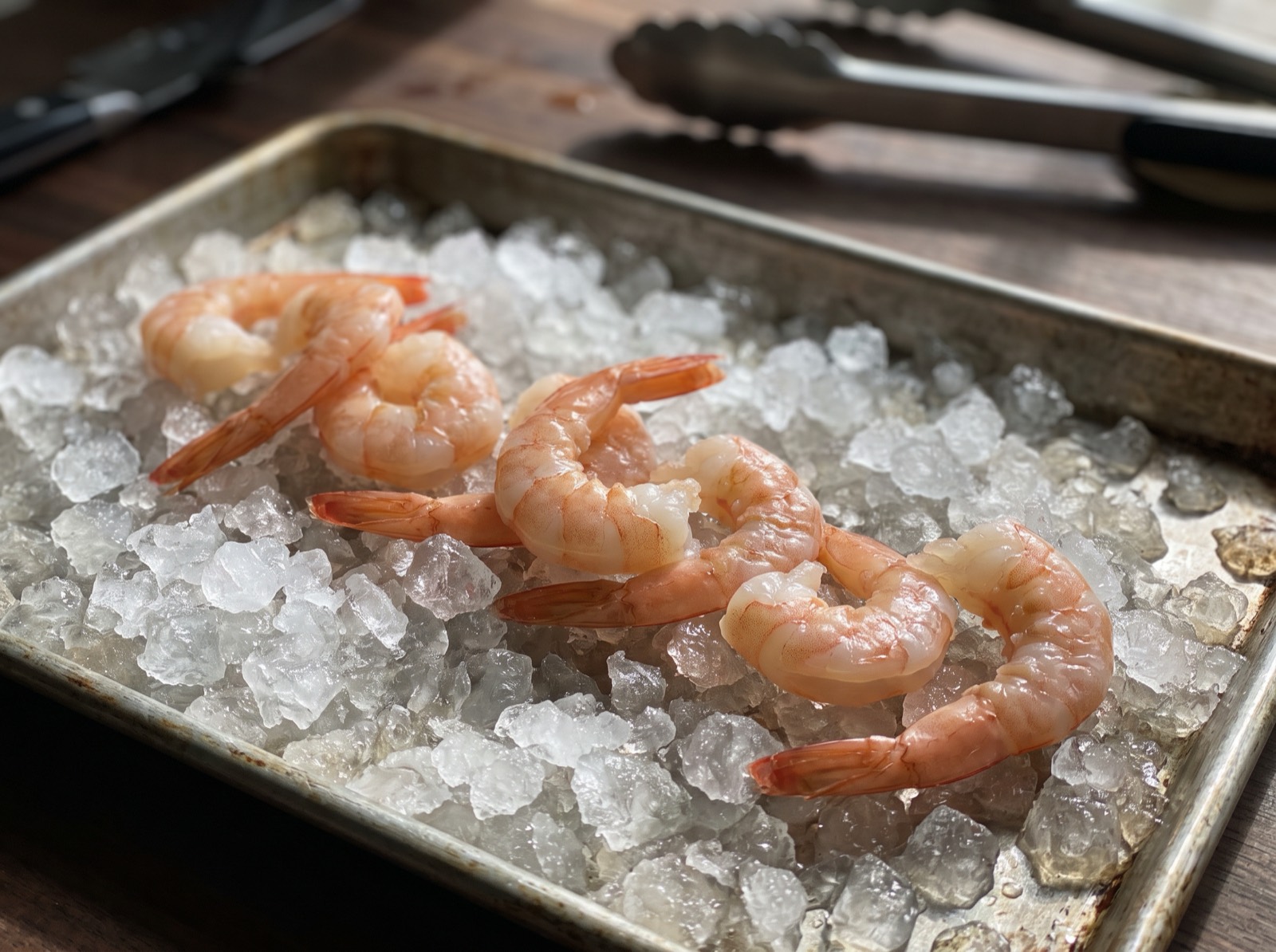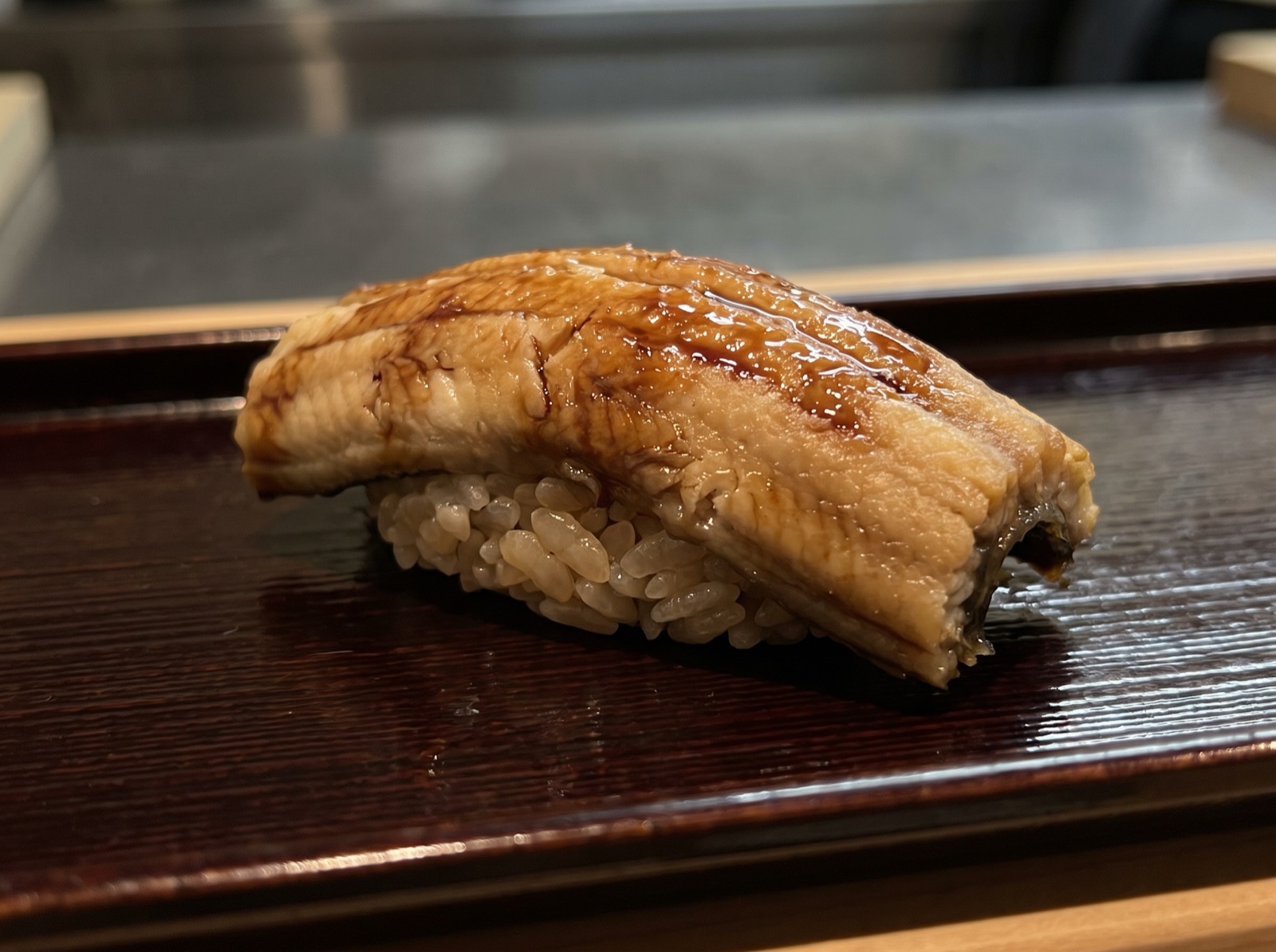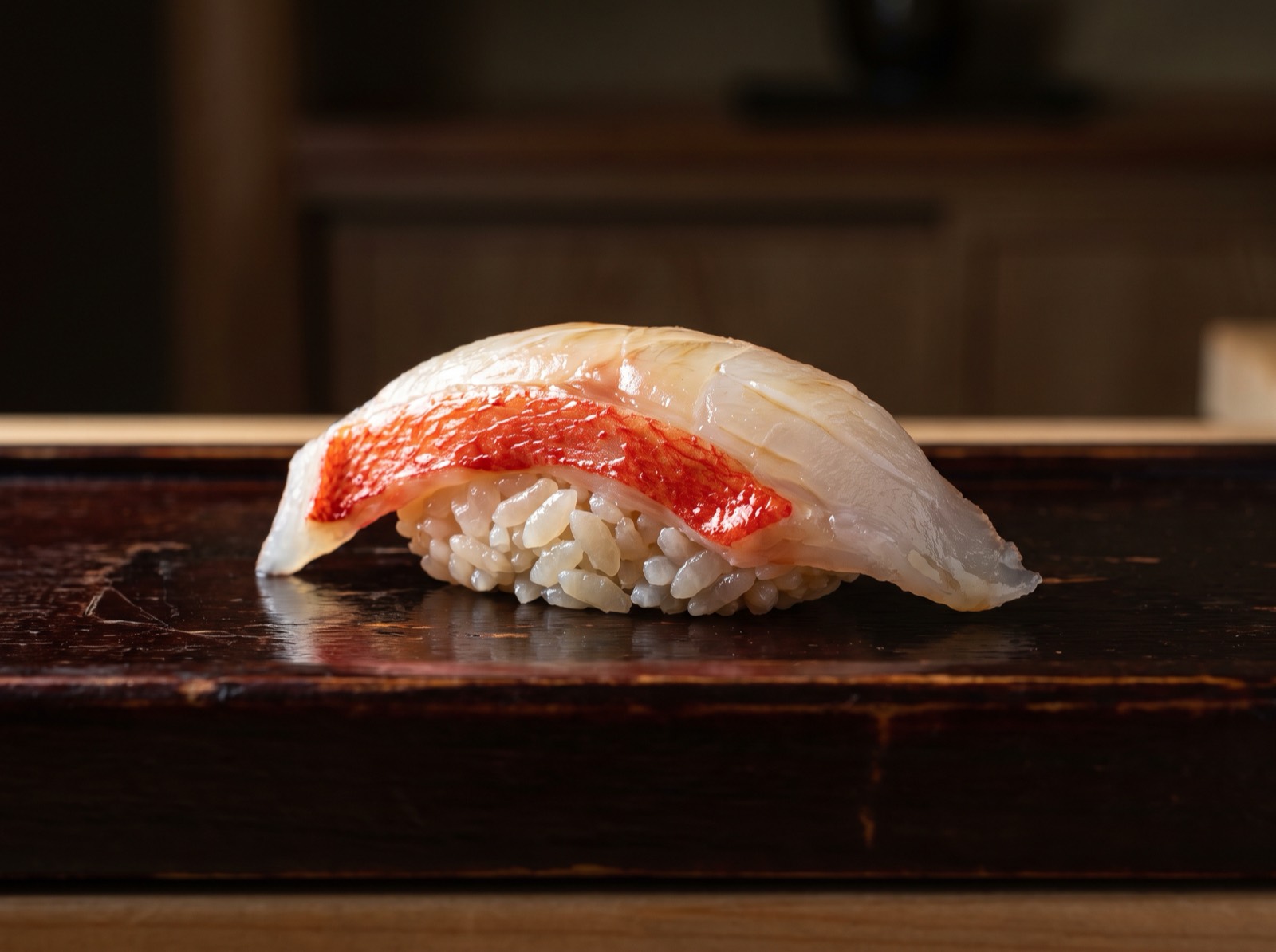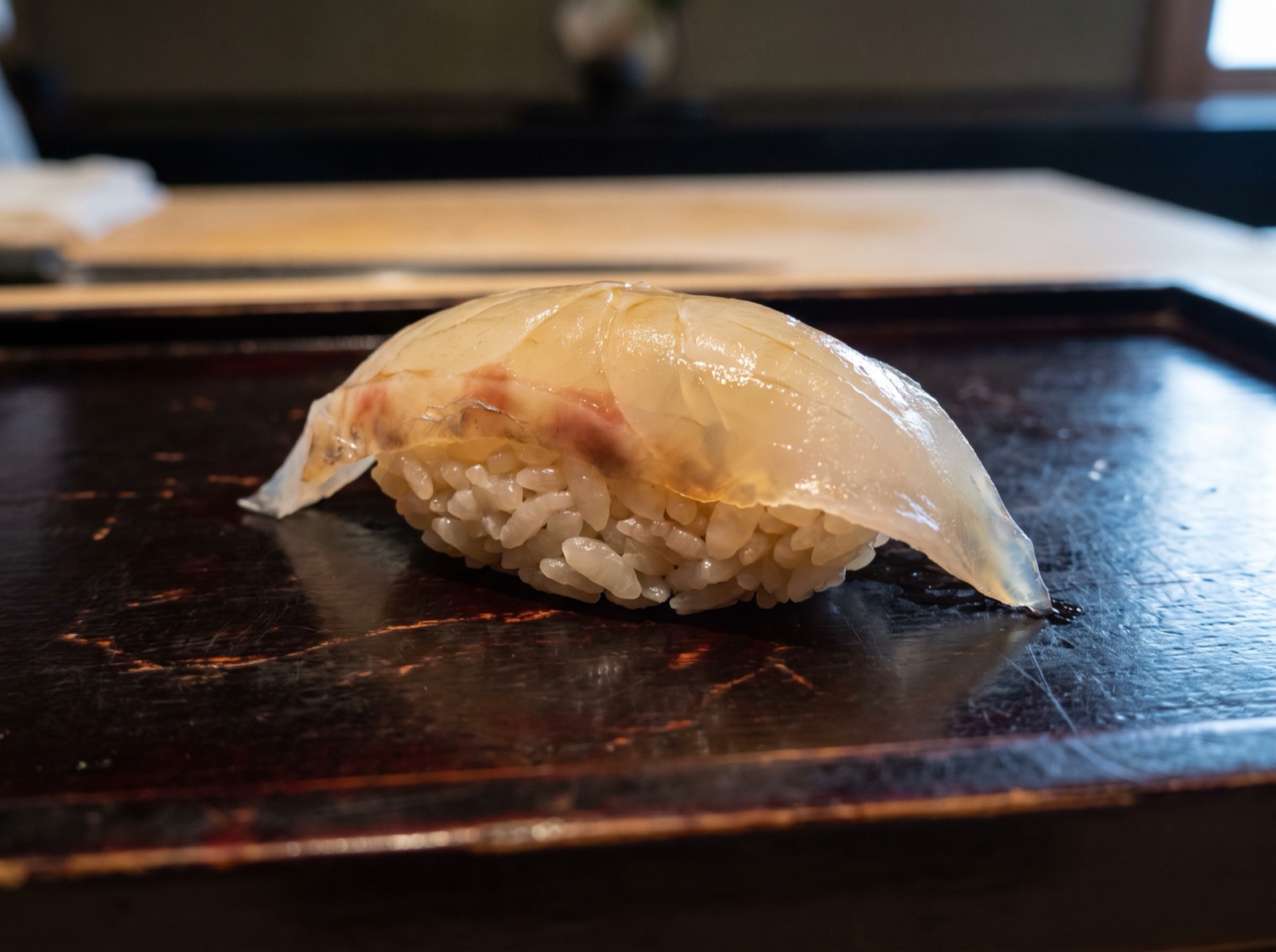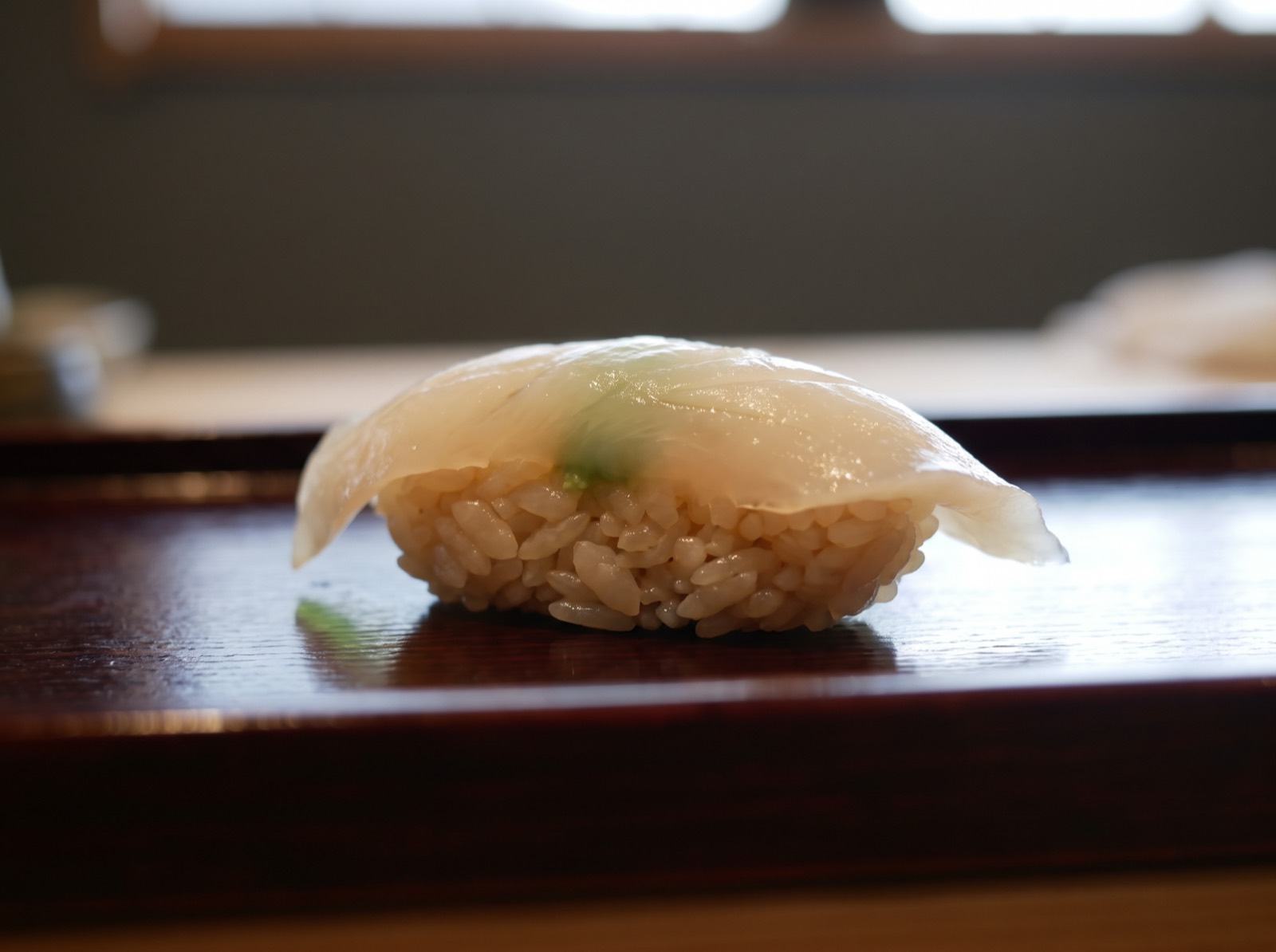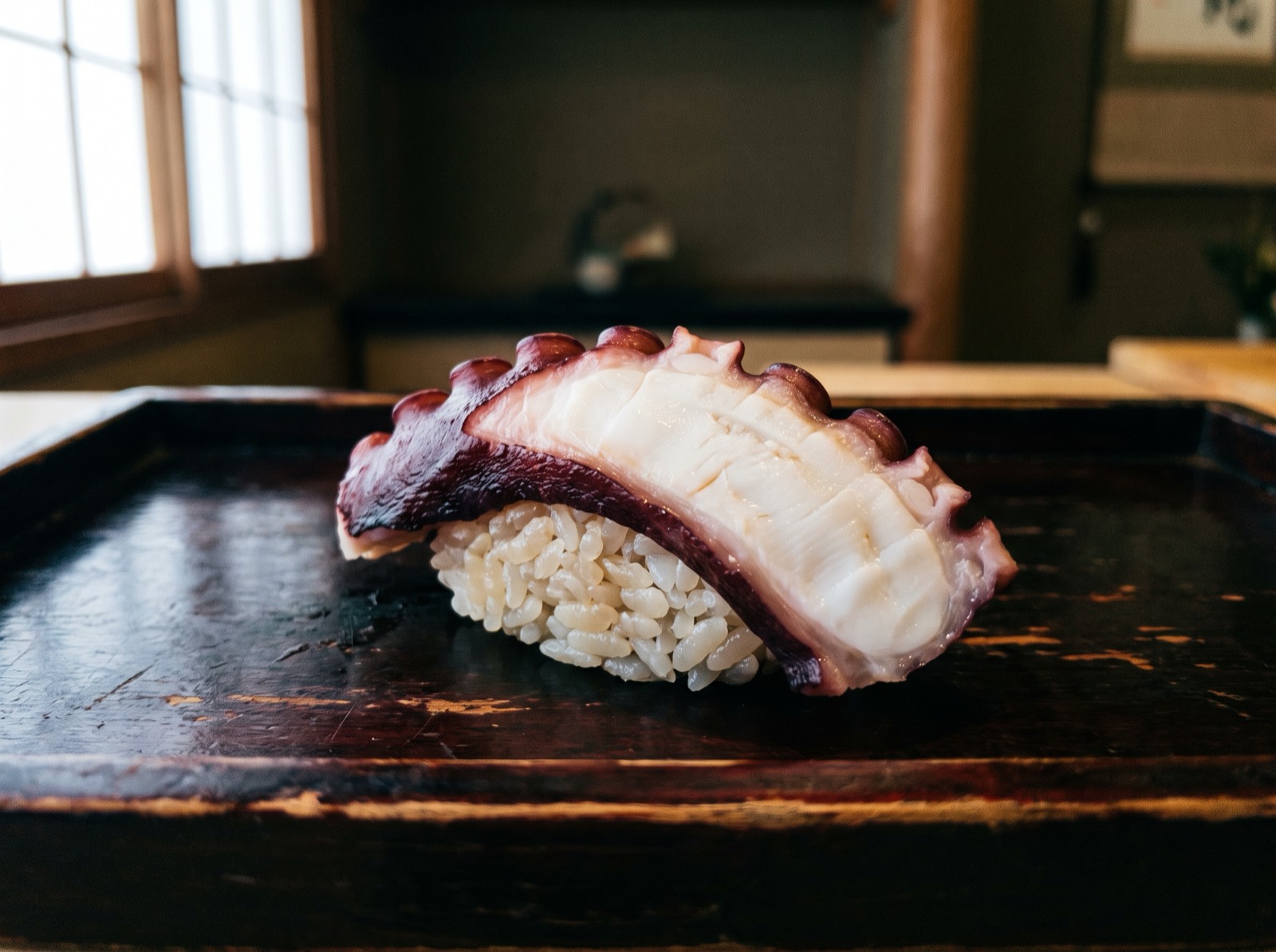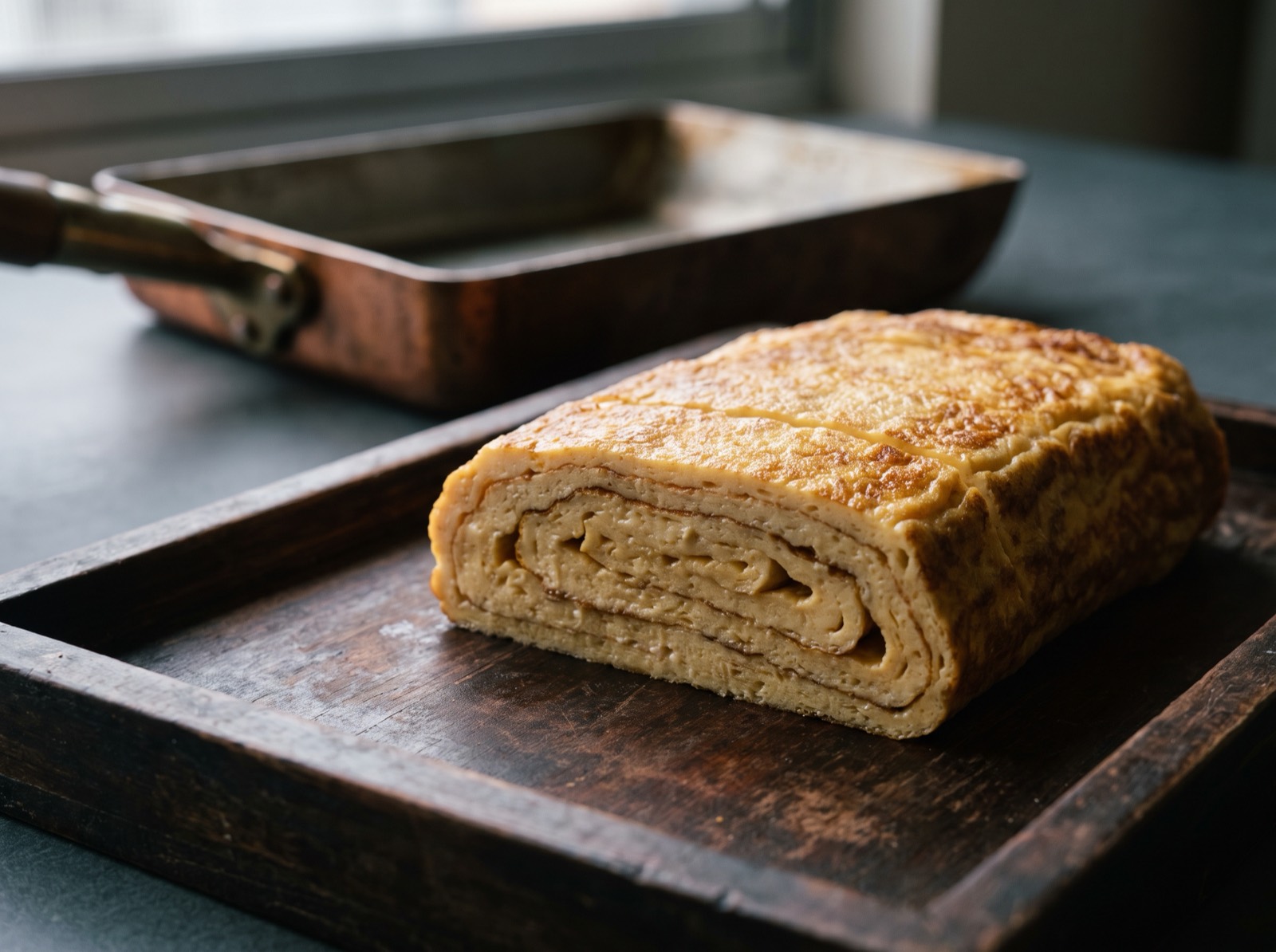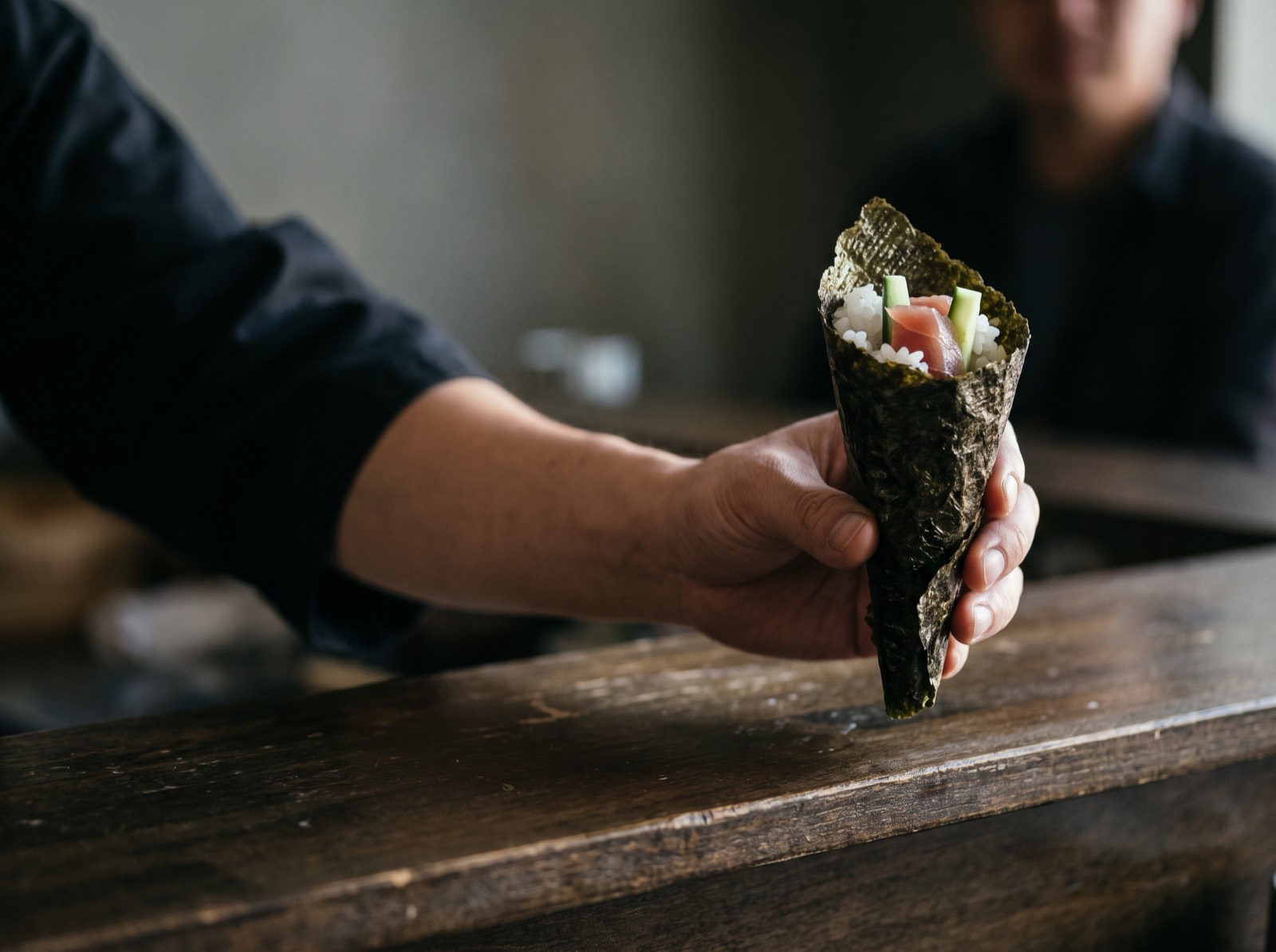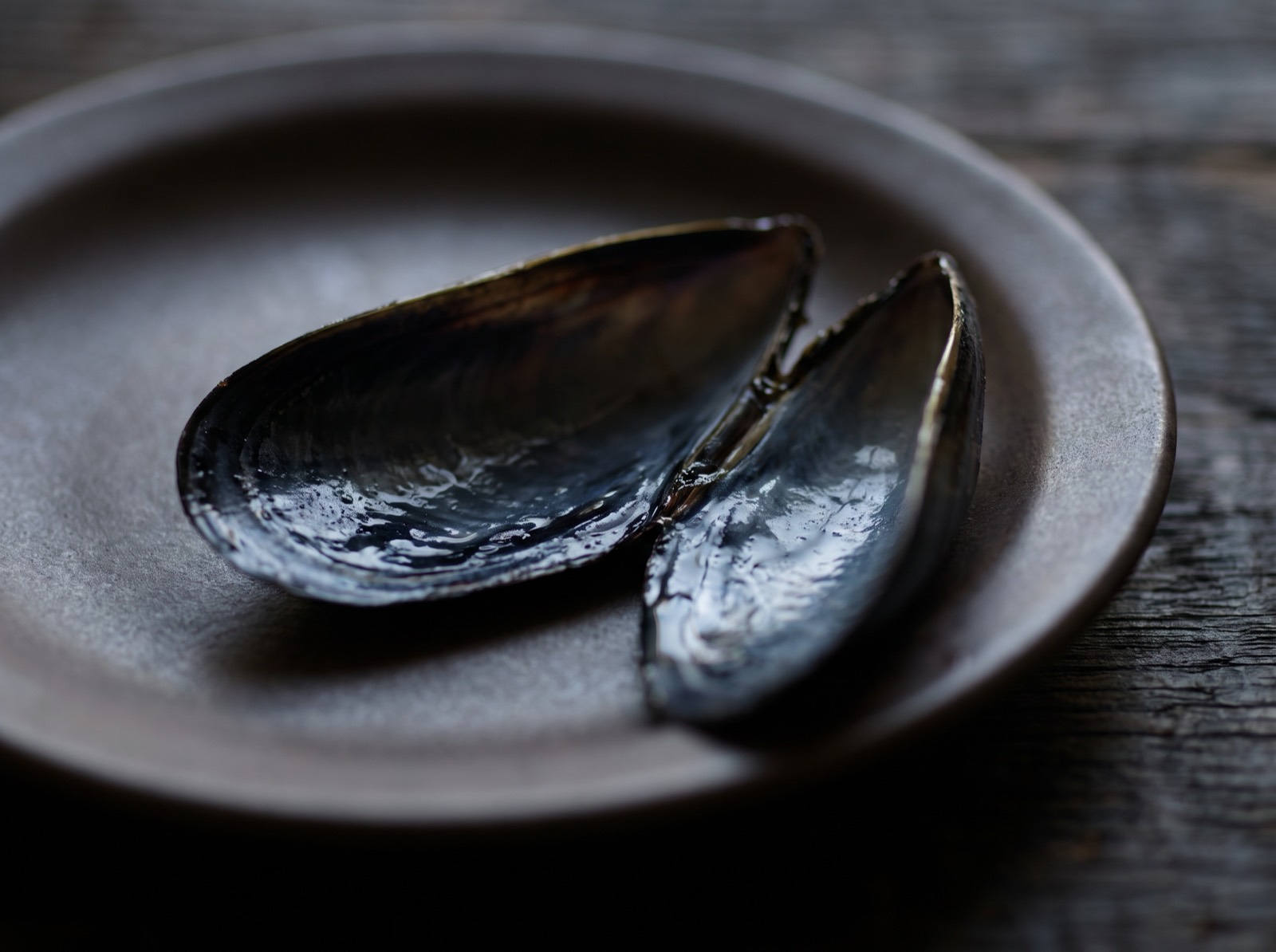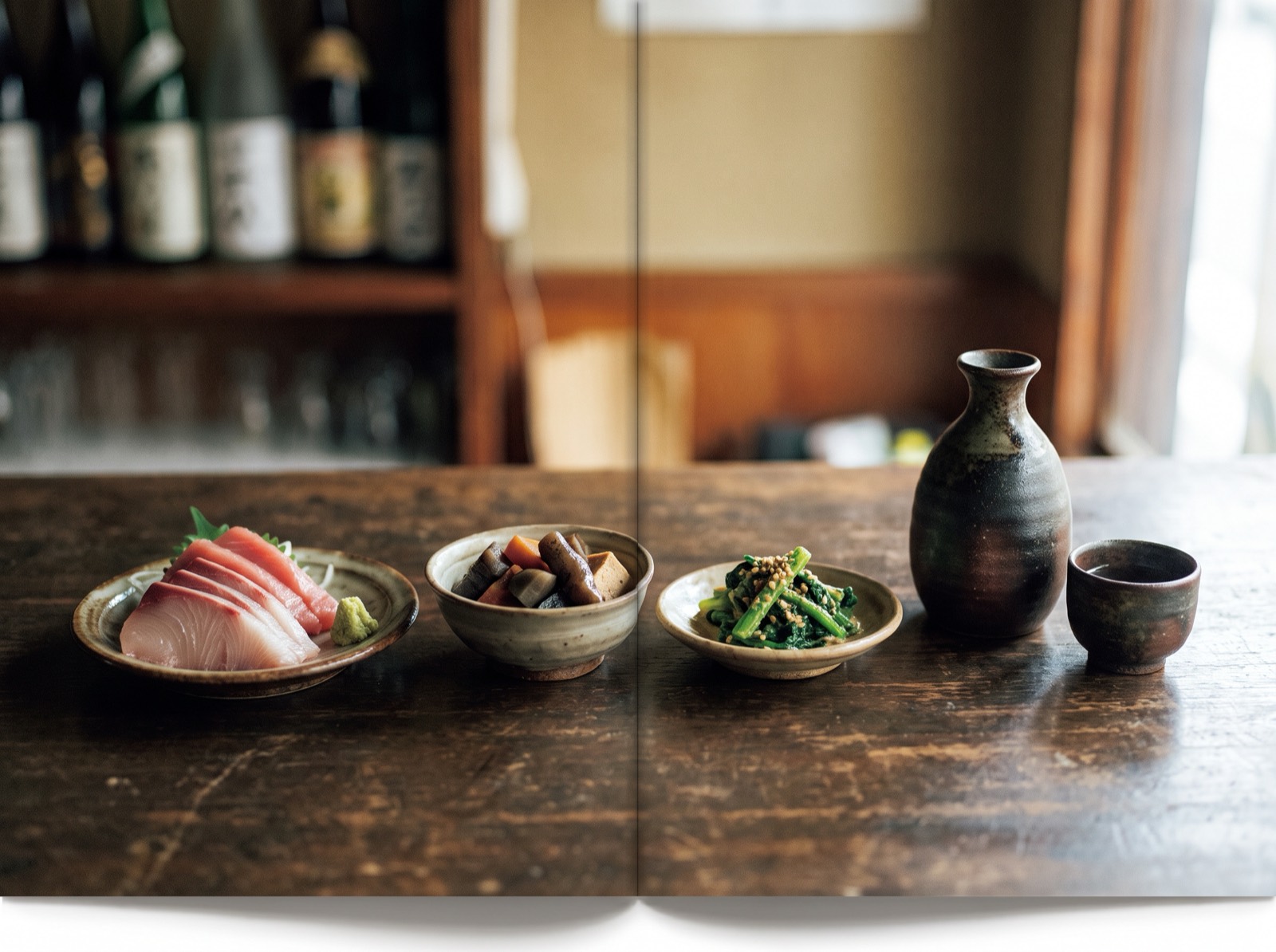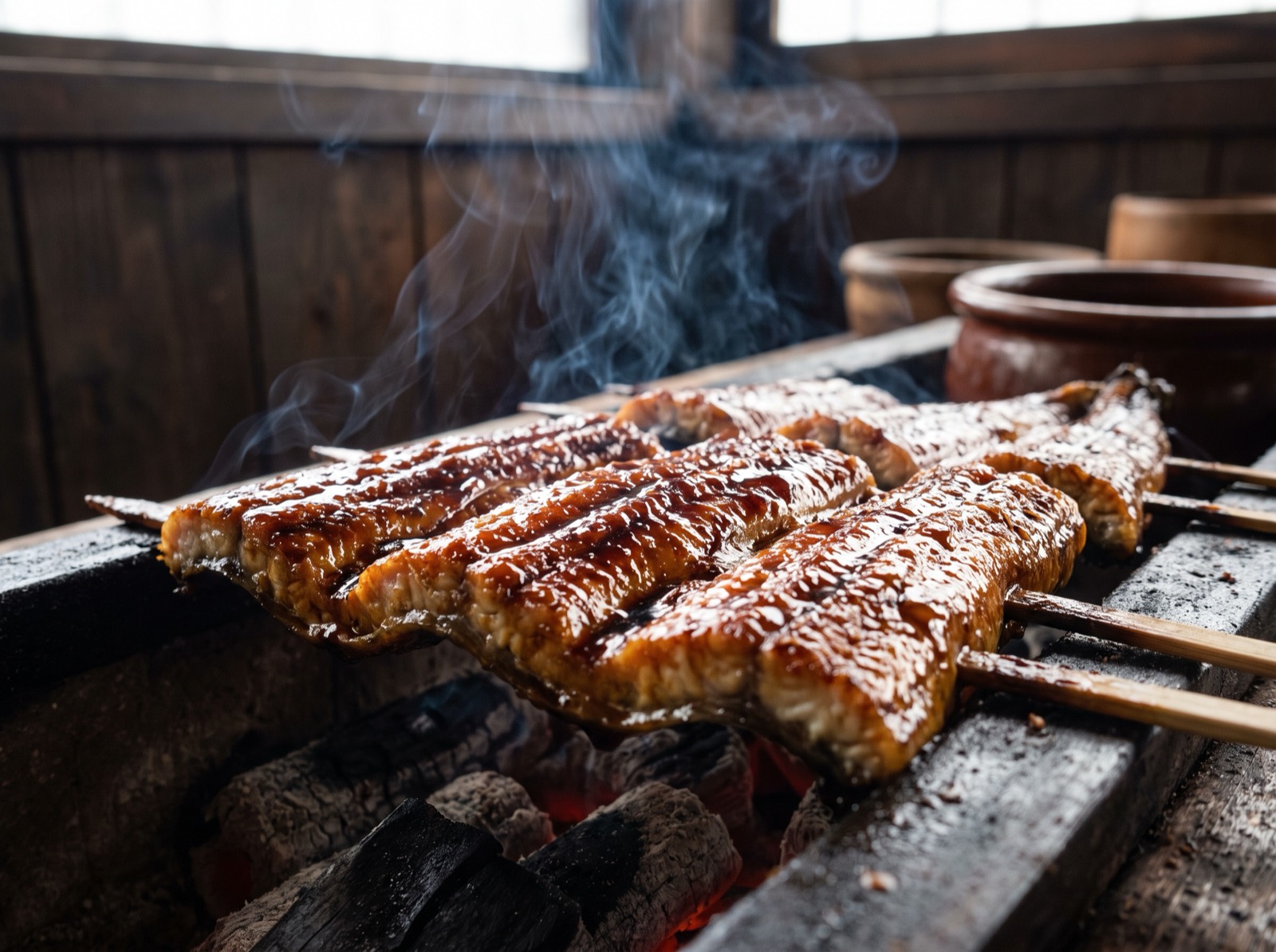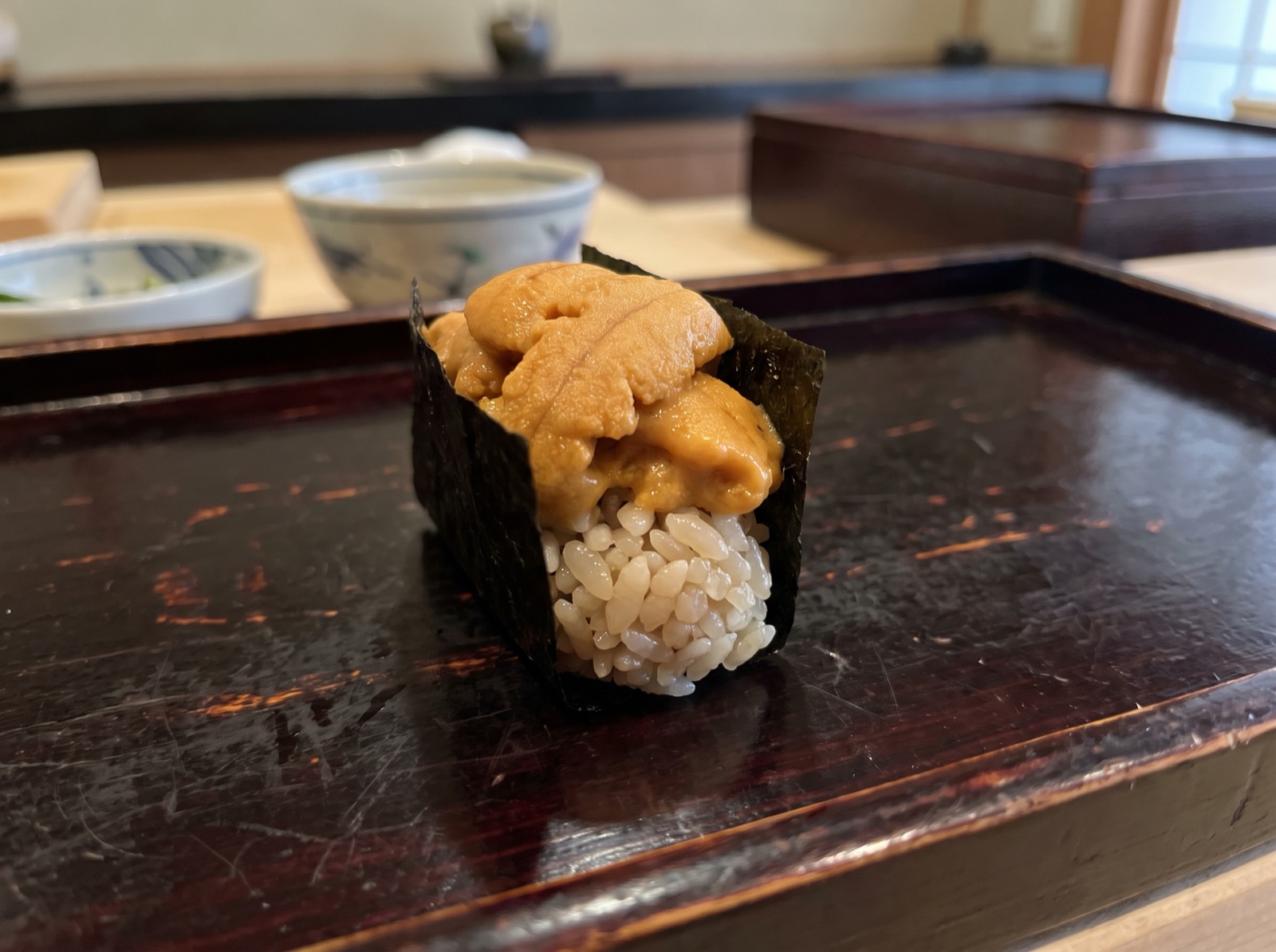
Stories, profiles, and essays on the art of Japanese sushi — the fish, the hands, the rooms, and the rituals that make a meal worth flying for.
It is not a tasting menu. It is a series of decisions made in front of you, in real time, using seafood selected before you woke up.
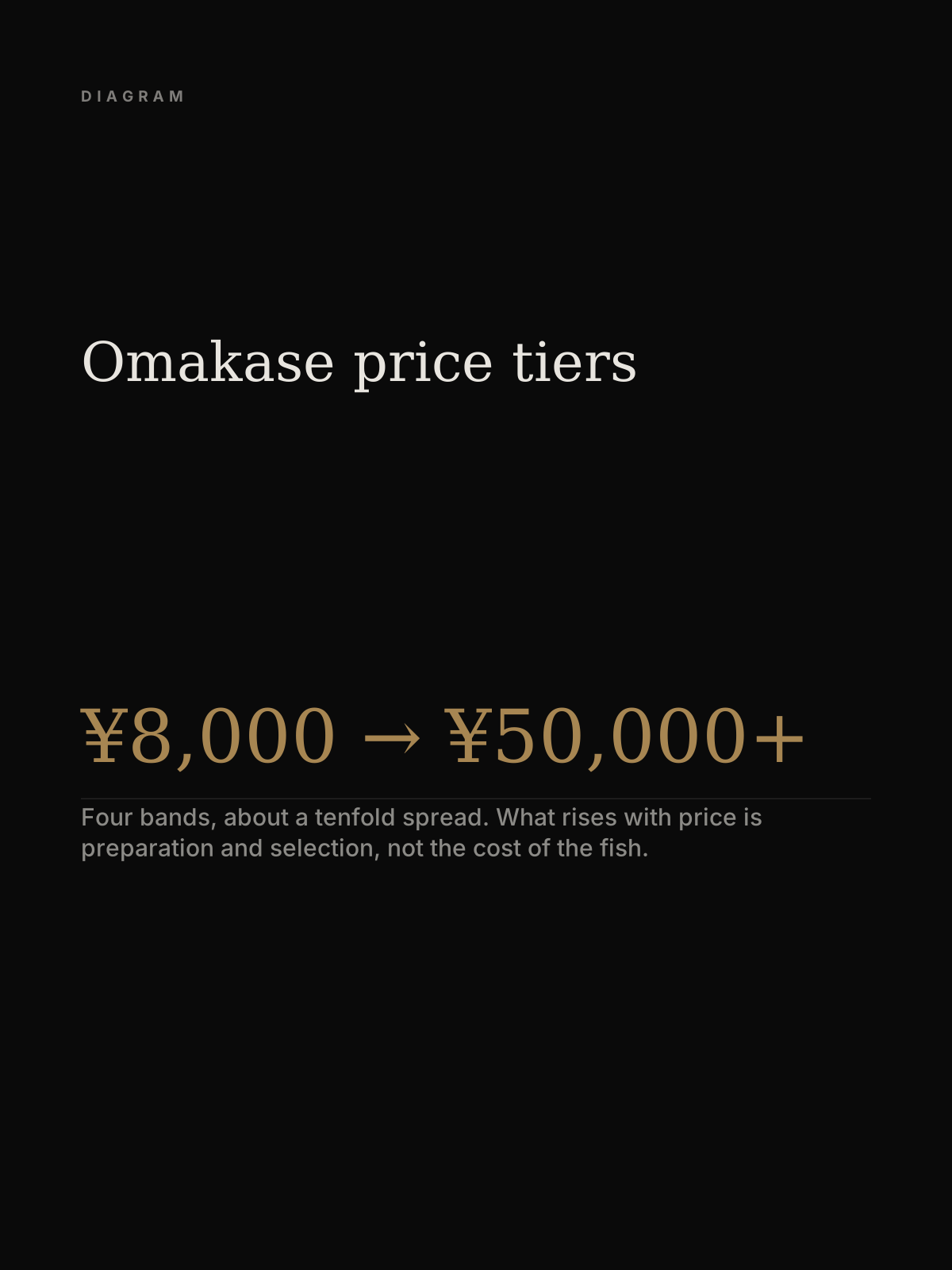
Read the guideThe listed price is almost never the price you actually pay. Here is what makes up the difference, and what separates each price band.
There is no test at the door. There is a short list of things that change how the food tastes, a slightly longer list of things that make you easy to serve, and a very long list of rules that exist mainly in English.

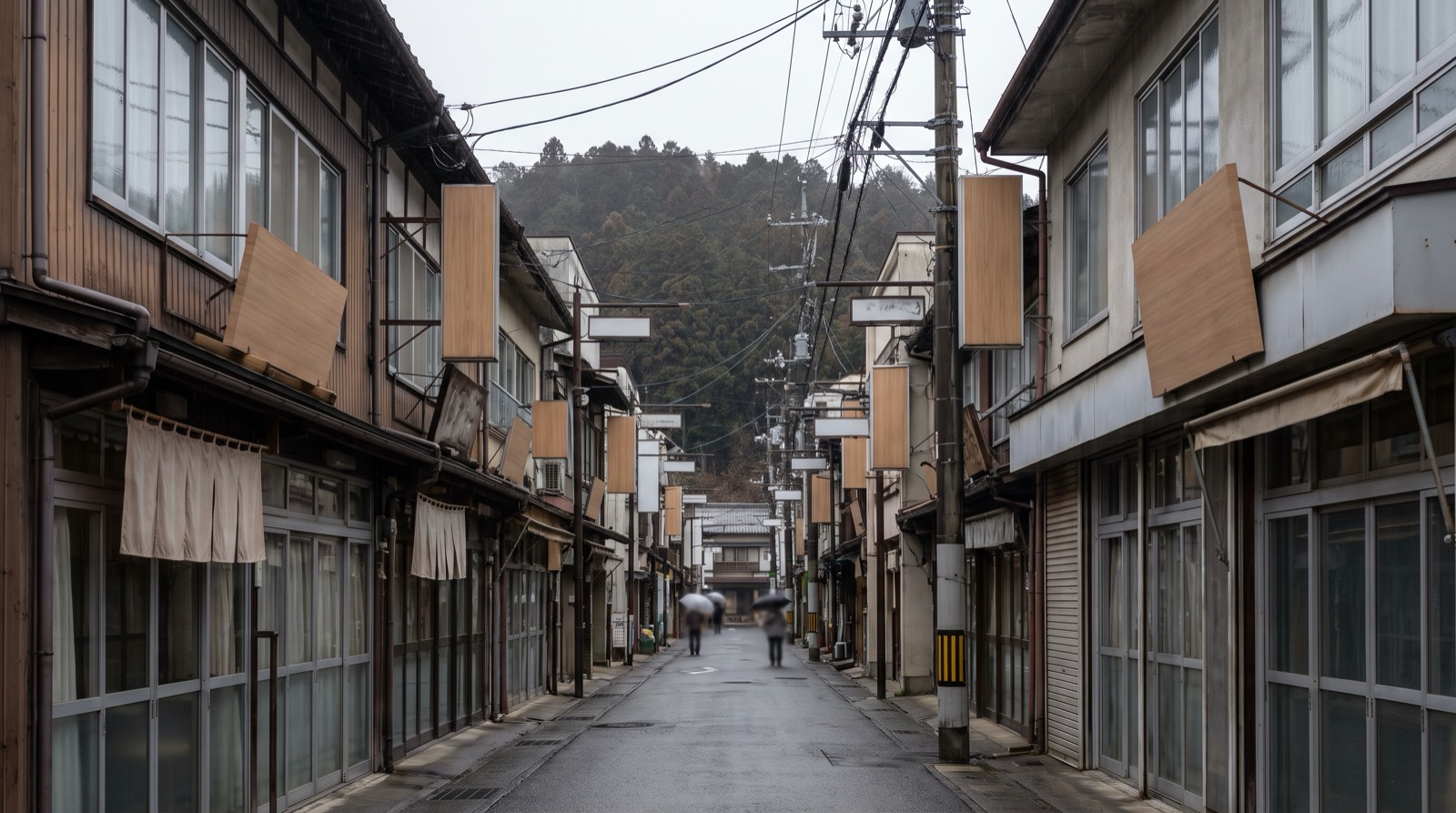
The wholesale auctions moved in 2018. The shopping street did not, and it remains the best place to spend a morning exploring Japanese seafood.

The word is on half the sushi signs in Tokyo. It means something specific, and you can check whether a shop means it within about three pieces.

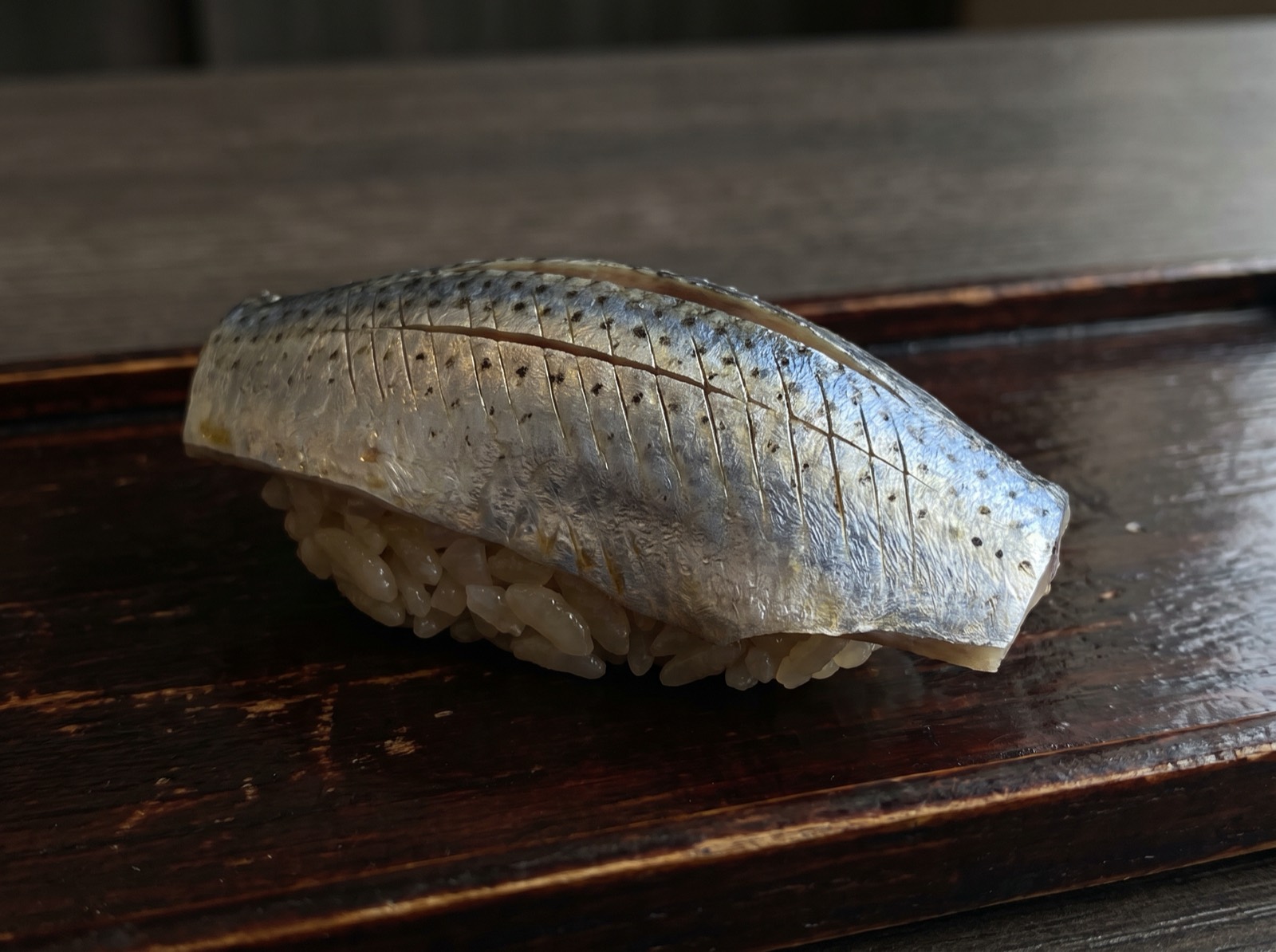
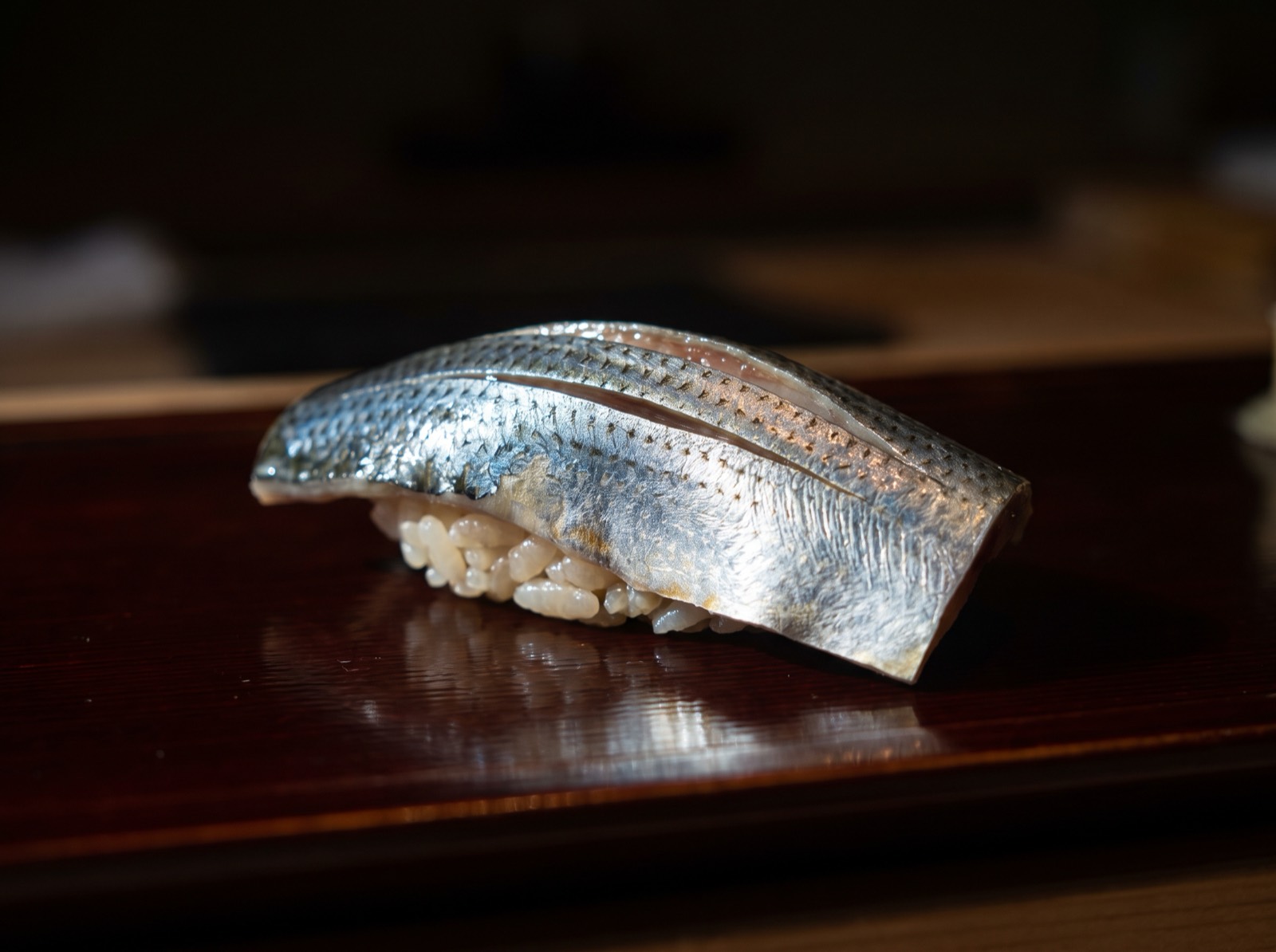
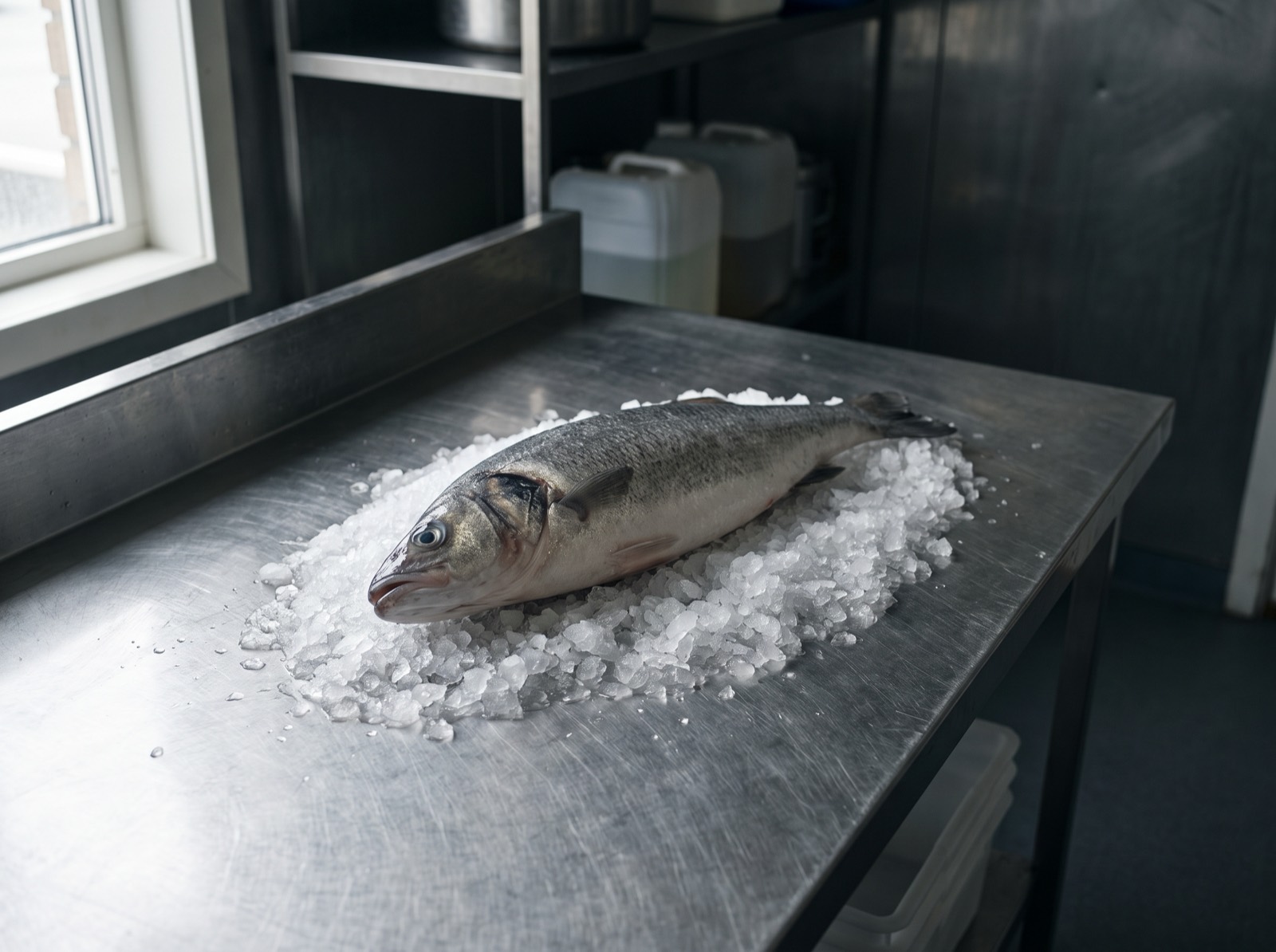
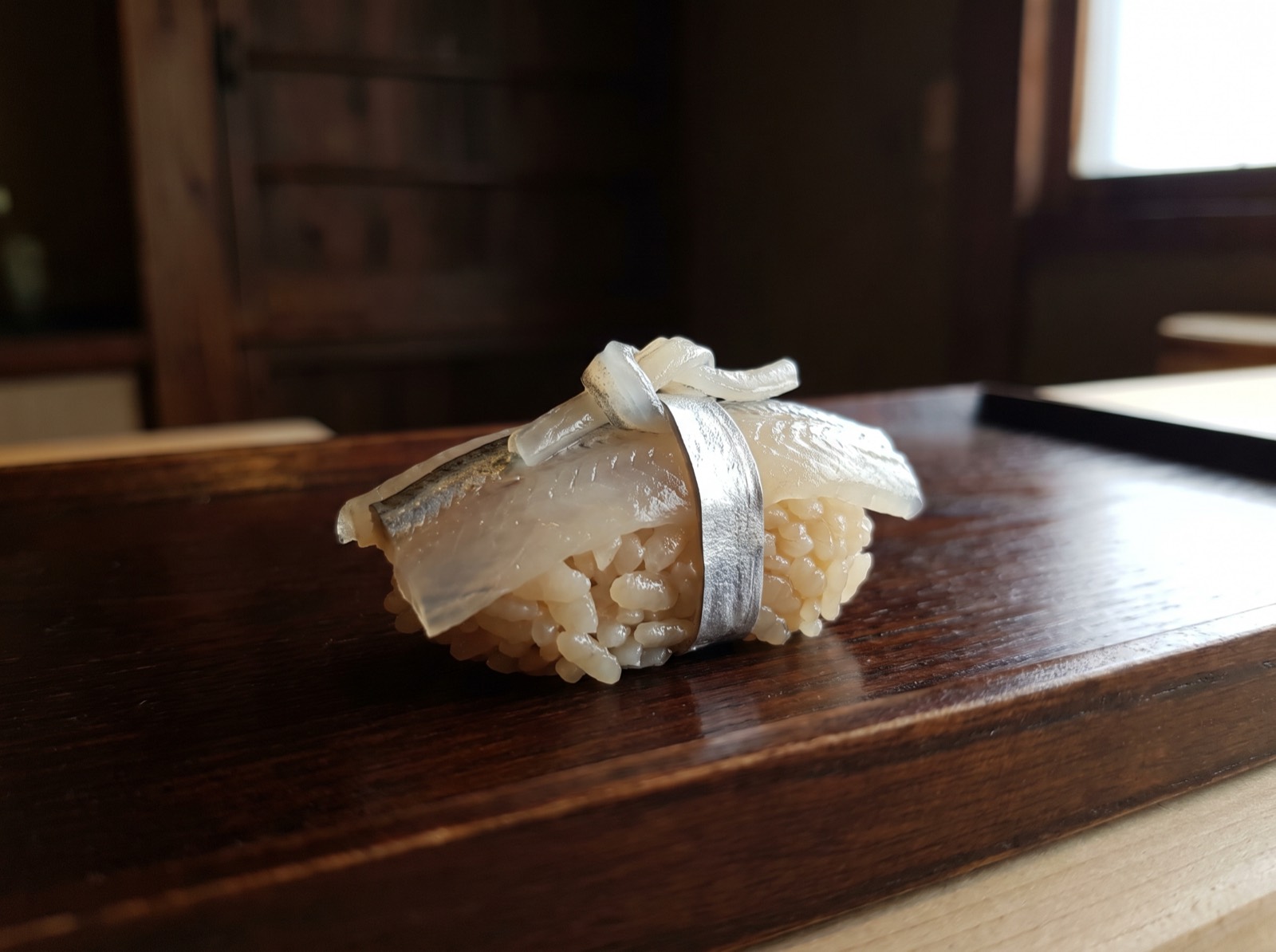
There is no expensive tuna to hide behind. Every variable — the salt, the vinegar, the timing, the size of the fish that day — is the chef's, and the result is on the plate in a single silver piece.
English writing treats Tokyo's style as sushi and everything else as a variant. Osaka got there first, and its answer is still the better one for some fish.

Two decisions do most of the work: how much you intend to spend, and which format you are actually booking. The rest is reading signals that are already in front of you.

The booking is where most of the meal is decided — the count, the fish, the start time. How each channel actually works, and what to say once you get through.

The internet has produced a long list of sushi prohibitions and a short supply of reasons. Here is the version with the reasons attached — which turns out to be a much shorter list.

Etiquette is the social frame. This is the other half: the hand movements, the angle, the timing, and the reason each of them exists.

Handing the decisions to someone else changes what politeness consists of. Most of it happens on the phone, the day before.

Eight words will carry you through an evening. Another thirty are worth understanding and not saying — they belong to the people working, not to the people eating.

A short answer with the variables attached — because the difference between an hour and two and a half is mostly decided by things you can find out when you book.
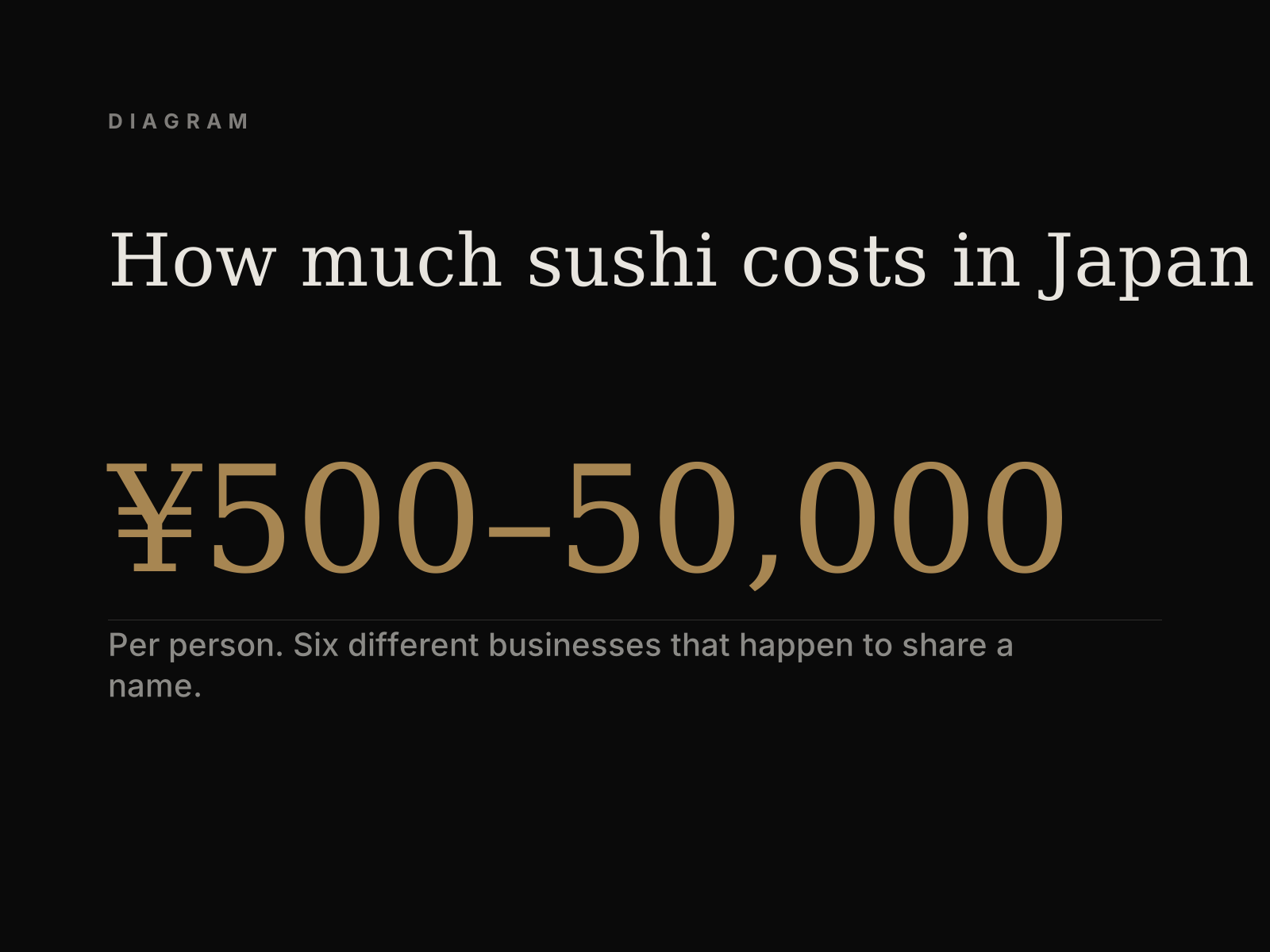
Six formats, six different price logics. Most price guides describe one of them and call it sushi.
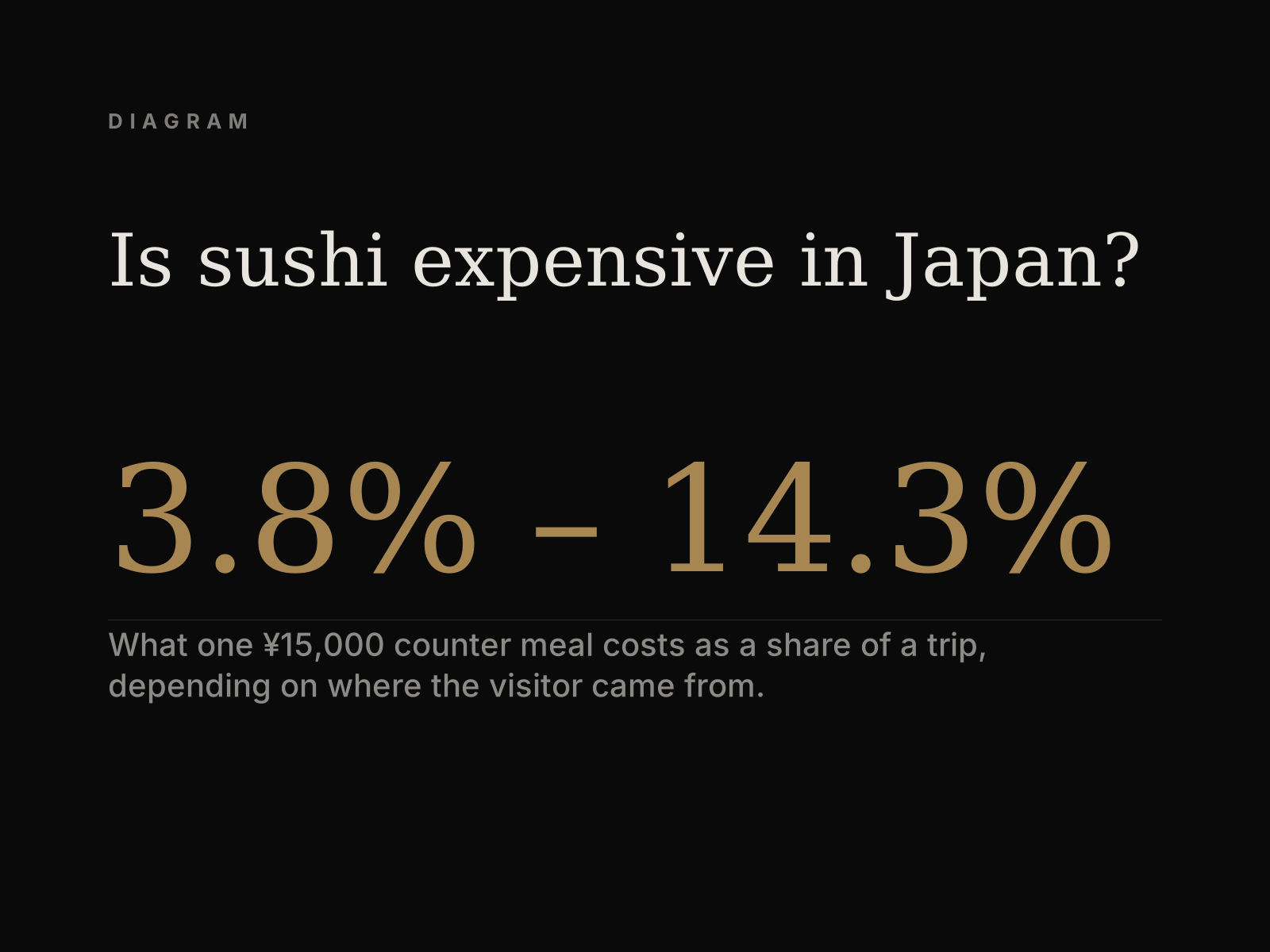
The honest answer is two answers, and the official statistics show why the same meal feels completely different depending on your passport.
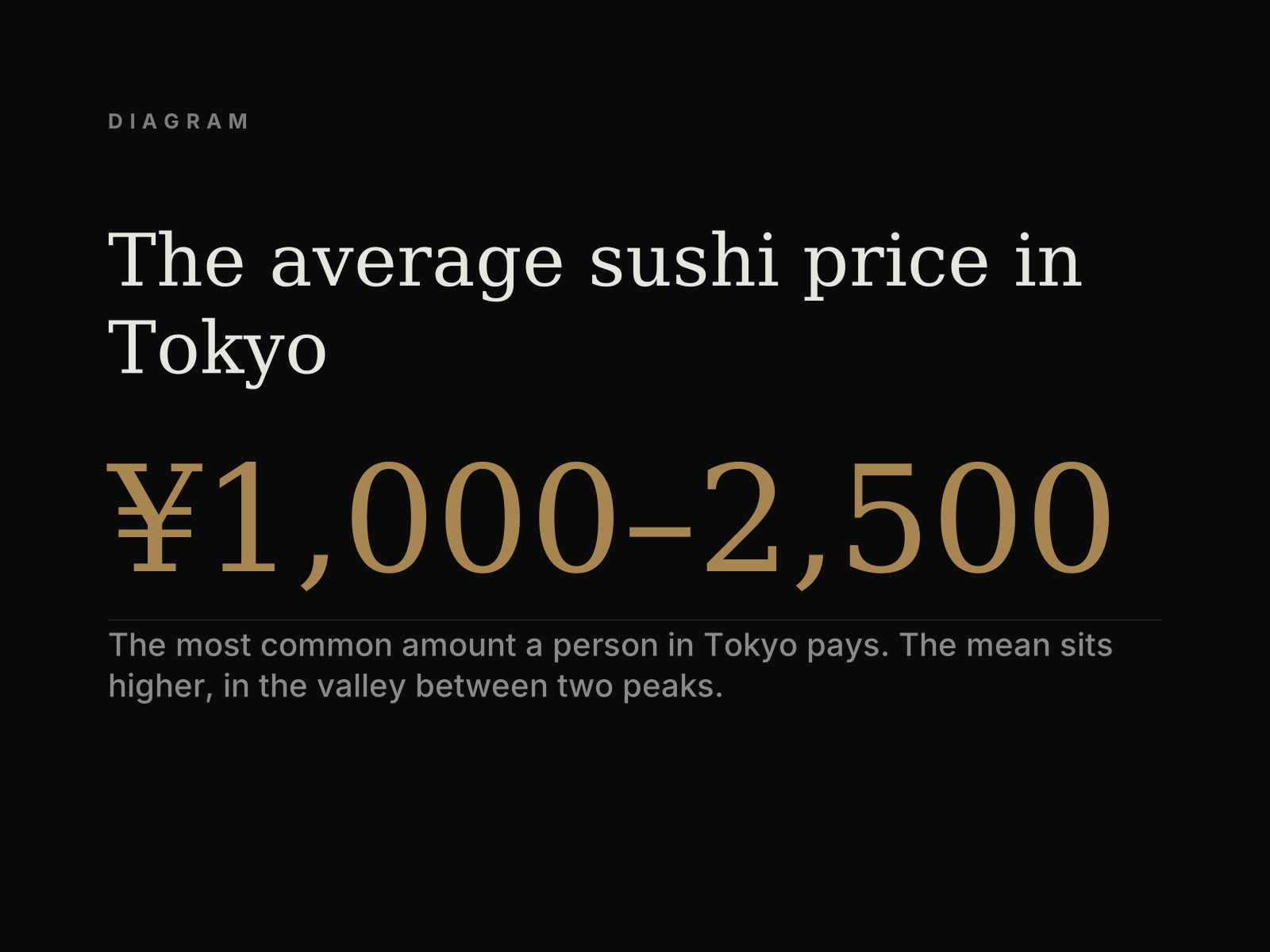
The question has an answer, but it is not a single number. A mean drawn across conveyor belts and counters describes no meal that anyone eats.
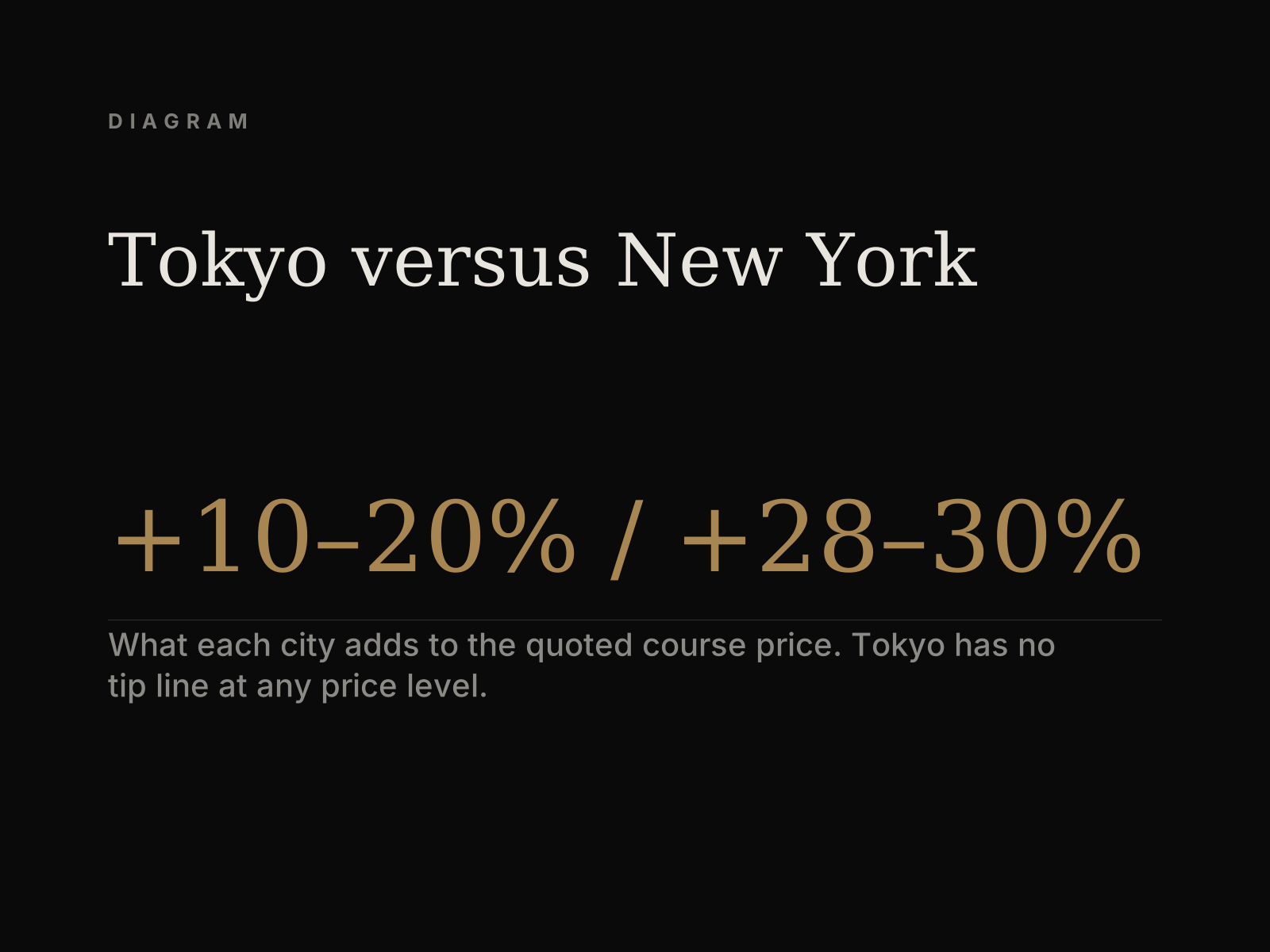
Both cities have counters where one person makes twenty pieces in front of ten people. What separates the bills is mostly not the sushi.

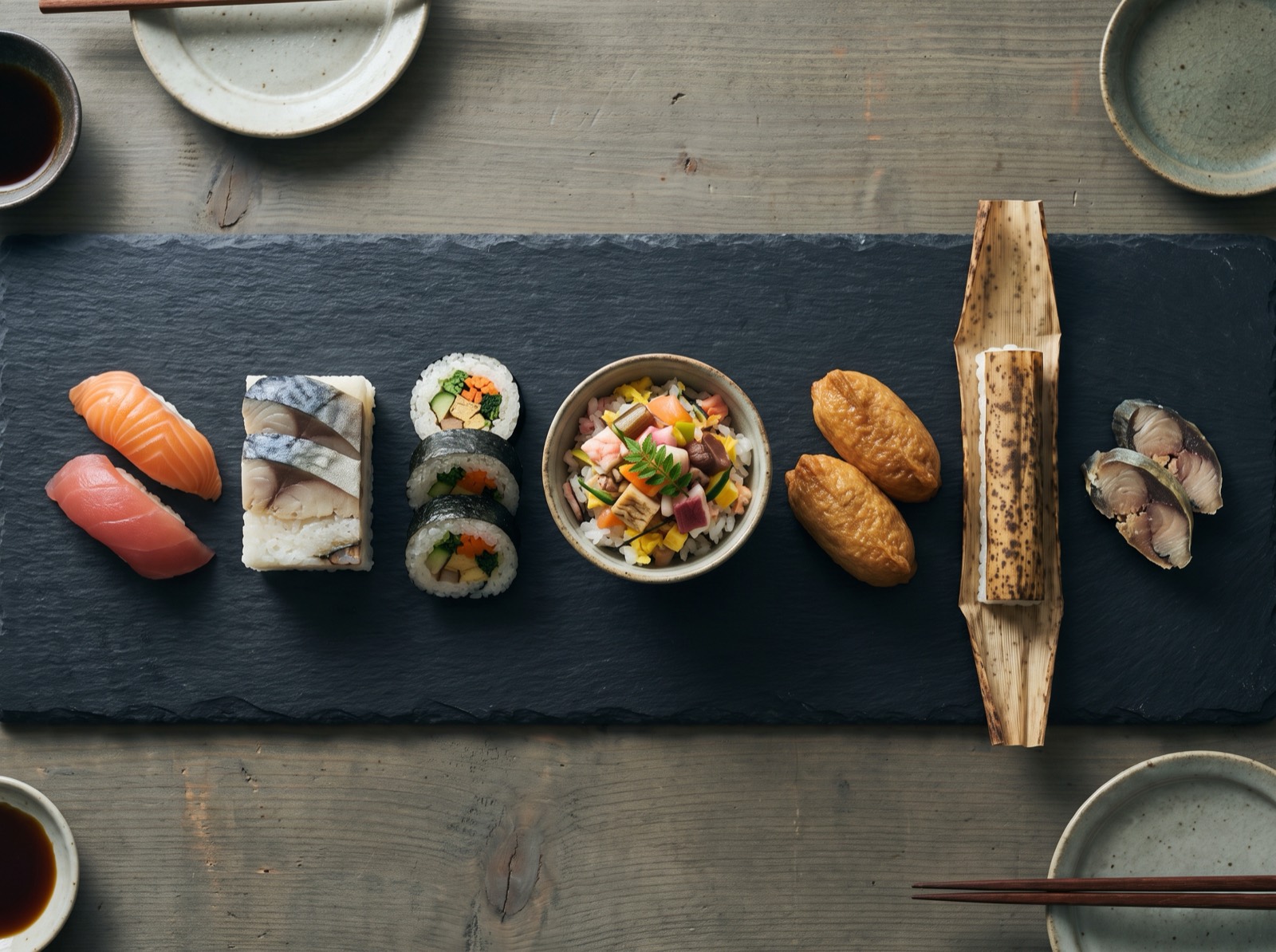
Most English lists of sushi types are lists of toppings. The Japanese categories are structural, and they run in historical order.

A short answer, and then the four consequences of it that actually matter when you are sitting down to eat.

The comparison people usually mean when they type “sushi vs sashimi”. Here the difference really is a single ingredient, and it changes the fish.

Not a hierarchy. Two formats built for different purposes, and a great many people eat both in the same week.
Tokyo, Osaka and Kyoto are not three grades of the same thing. They are three answers to different questions, and the one that suits you depends on how many dinners you have and what the rest of the trip is for.

A star is a reliable signal about one narrow thing. Most visitors use it as a signal about something else, and are disappointed for reasons that have nothing to do with the food.
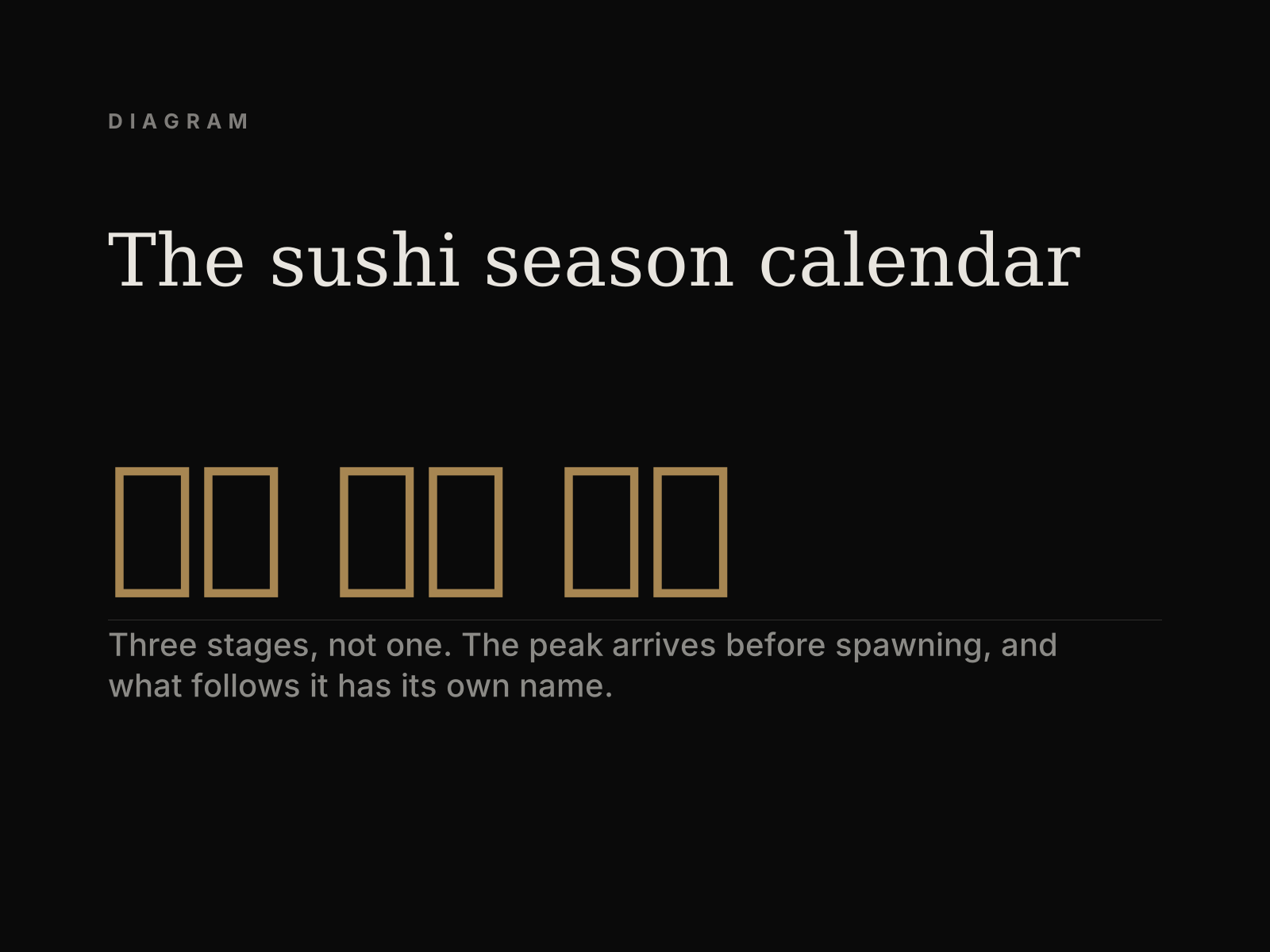
This page exists to hold the year together. It deliberately does not give you a fish for every month, and the reason is the most useful thing on it.
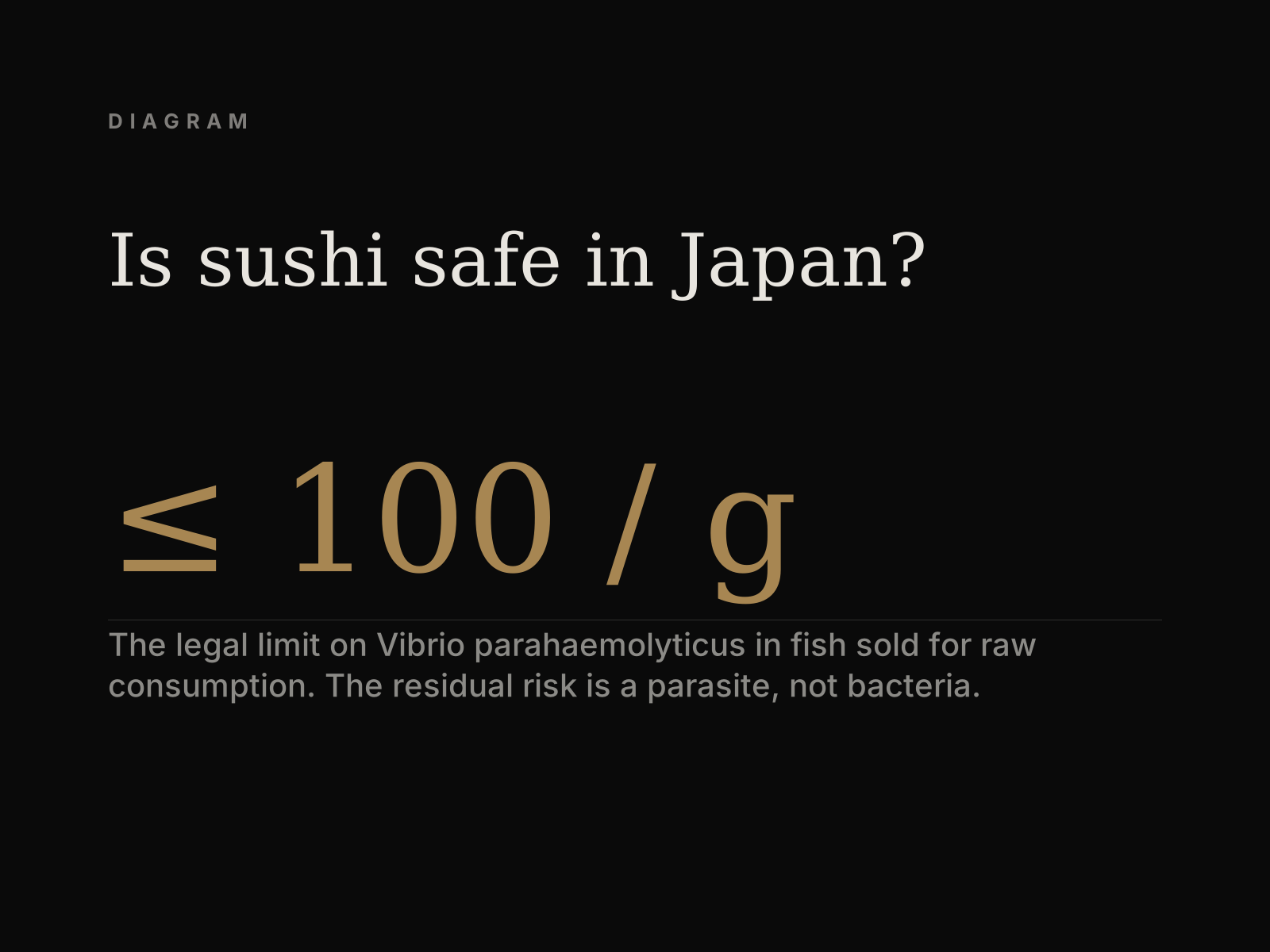
The question is reasonable and the answer is documented. Almost everything on this page comes from Japanese ministry and agency pages rather than from anybody’s reassurance.

The apprenticeship is a custom, not a rule. Japanese law asks almost nothing of the person making your sushi — and a great deal of the person making your fugu.
A sentence that appears in a great deal of English-language food writing, and that Japanese government pages contradict on two counts at once.
Three published figures, none of which match. The gaps between them are the most interesting thing about the question.

The district is a real answer to the question of where to eat, and also the most expensive way to arrive at it. Both of those are worth understanding before you book.

It is a functioning wholesale facility with a visitor route built into it — not a market street. That distinction decides whether the trip is worth your morning.

The city is not a cheaper Tokyo. It has an older sushi form, a food culture that does not treat the counter as the summit, and the strongest Korean-language demand of any sushi destination in Japan.

The old capital never had a harbour. Everything on a Kyoto counter arrived over a mountain pass or on a rail spur, and that one constraint explains the city's oldest sushi, its most famous summer fish, and where sushi ranks against the cooking Kyoto is actually known for.

The city has a word for its own sushi and no agreement about what it means. Three counters publish a definition and no two match — which turns out to be the most useful thing to know before booking anything here.

In this city the shop’s own website is usually not the way in. Knowing that — and knowing which two counters publish no price at all — is worth more before a trip than any list of names.

Three of these five counters are within a few minutes’ walk of each other, which makes the differences easy to read — and the differences are almost entirely about how much each shop is willing to put in writing before you commit.

Not a ranking. Five counters in one district, arranged by the thing that actually decides whether you eat at them — how the reservation is taken.

Not a ranking. Five counters in one district, arranged by how much of the price is knowable in advance — and by what happens when a shop's own pages disagree with each other.

Not a ranking. Five counters in one district, arranged by how much of describing itself each shop has given away — to a landlord, to a listing system, to a booking service, to a messaging app.

Not a ranking. Five counters in one district, arranged by how much their pages tell you about their own age — because a price with no date on it is not wrong, it is unverifiable.

Not a ranking. Five counters in one district, arranged by how far the shop’s page and the building’s page have drifted apart — because in Nihonbashi the shop is rarely the only one describing it.

Not a ranking. Five counters in the most visited district in Tokyo, arranged by how much of what they publish a reader can actually read — from a shop whose entire English provision is five characters in a link, to one that writes its own English and still cannot get you to the one page you need.

Not a ranking. Five counters arranged by the distance each one publishes from Ueno station — from a shop inside the station building that prints no walking time at all, to one that calls itself the Ueno sushi shop and tells you, in its own words, that Ueno station is fifteen minutes away.
Not a ranking. Five counters arranged by how much a reservation asks of you — from a shop whose reservations page holds two telephone numbers and nothing else, to one that shows you the guests it cannot take before it will let you near a form.

Not a ranking. Five counters arranged by how much the printed number is already carrying — from a price with a tilde after it and nothing written above it, to a shop that prints its cancellation percentages and its invoice registration number in the same table as its opening hours.

Not a ranking, and not a review of meals. Five Tokyo counters, and the lunch price each shop is willing to print on a page it controls — read against what is said about it everywhere else.

Not a ranking, and not a review of meals. Four counters inside a working wholesale market and one that never closes — and the published calendar that decides, before any of them, whether you eat at all.
Almost nothing in Tokyo turns a single diner away. What turns a single diner away is a mechanism — and the mechanism is published, if you know which line to read.

The telephone box on the two systems Tokyo sushi runs on holds 244 countries and merely defaults to Japan. What stops visitors is a card, a cancellation clock, a hidden fee — and a link the restaurant never shows you.

The question everybody asks is whether there is an English menu. We opened five of them, then opened the Japanese versions underneath. The menu was never where the fish was named — but a ¥4,100 course difference, a ten per cent discount and the word dashi all went missing in translation.

Everyone asks how late it is open, and gets one number back. On the pages we read there were three — when the shop closes, when the kitchen stops, when the door stops — and a full hour between the first and the last. At one address in Hiroo, the ground floor closes two hours after the first floor above it.

Everyone searches the phrase and assumes it means a short list of very expensive counters. In Tokyo it means fifty-seven restaurants, half of them with no award at all, and pages that tell you to contact the restaurant without giving you a way to do it.

Hakozushi is the dish Osaka was famous for before nigiri arrived, and the state now says the shops that can make it are decreasing. Five of those shops are still trading. Between them they cover 373 years, a trademark from 1920, a twenty-eight-year closure and a price list published as a PNG.

Kita is Umeda and Kita-Shinchi, and the five counters here run from ¥6,500 to ¥350,000. What actually separates them is not the price but who writes the website — the restaurant, a reservation platform, or the landlord. Each kind fails in its own way, and this is what each one leaves out.

Minami is Dotonbori, Namba, Shinsaibashi and Kuromon Market, and the sushi here is mostly sold by companies whose actual business is fish. Which kind of company you are buying from decides whether you can book, whether they sell out, who owns their closing days, and whether the thing you queued for is a meal or a performance.

Almost every sushi counter in Osaka sells lunch as a column of prices — standard, upper, special upper — and publishes the full contents of each one. Read them in order and the same thing happens at all five restaurants here: the price climbs faster than the sushi, and what fills the gap is sashimi, sea urchin, abalone, caviar and wagyu. At the top of one ladder, the sushi count goes down.

Osaka invented the sushi you do not book. Five counters here take no reservations or do not need one — a conveyor belt at the shop where the belt began, a standing counter run by a noodle company, an L-shaped counter trading since 1951, a nine-seat room that prices its best dishes at market rate, and a takeaway window with nine stools behind it. What separates them is not quality. It is the method each uses to tell you what the meal will cost.

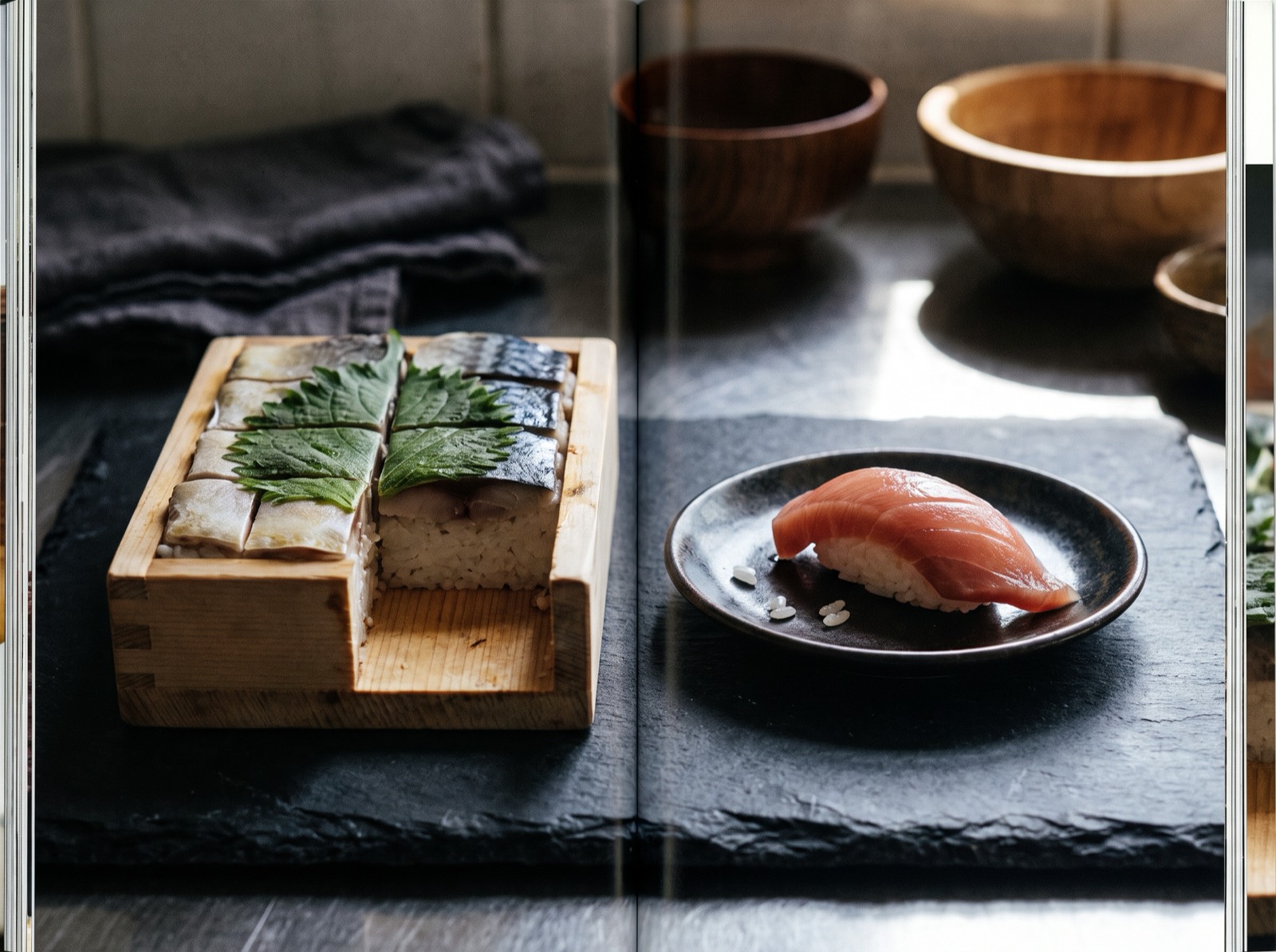
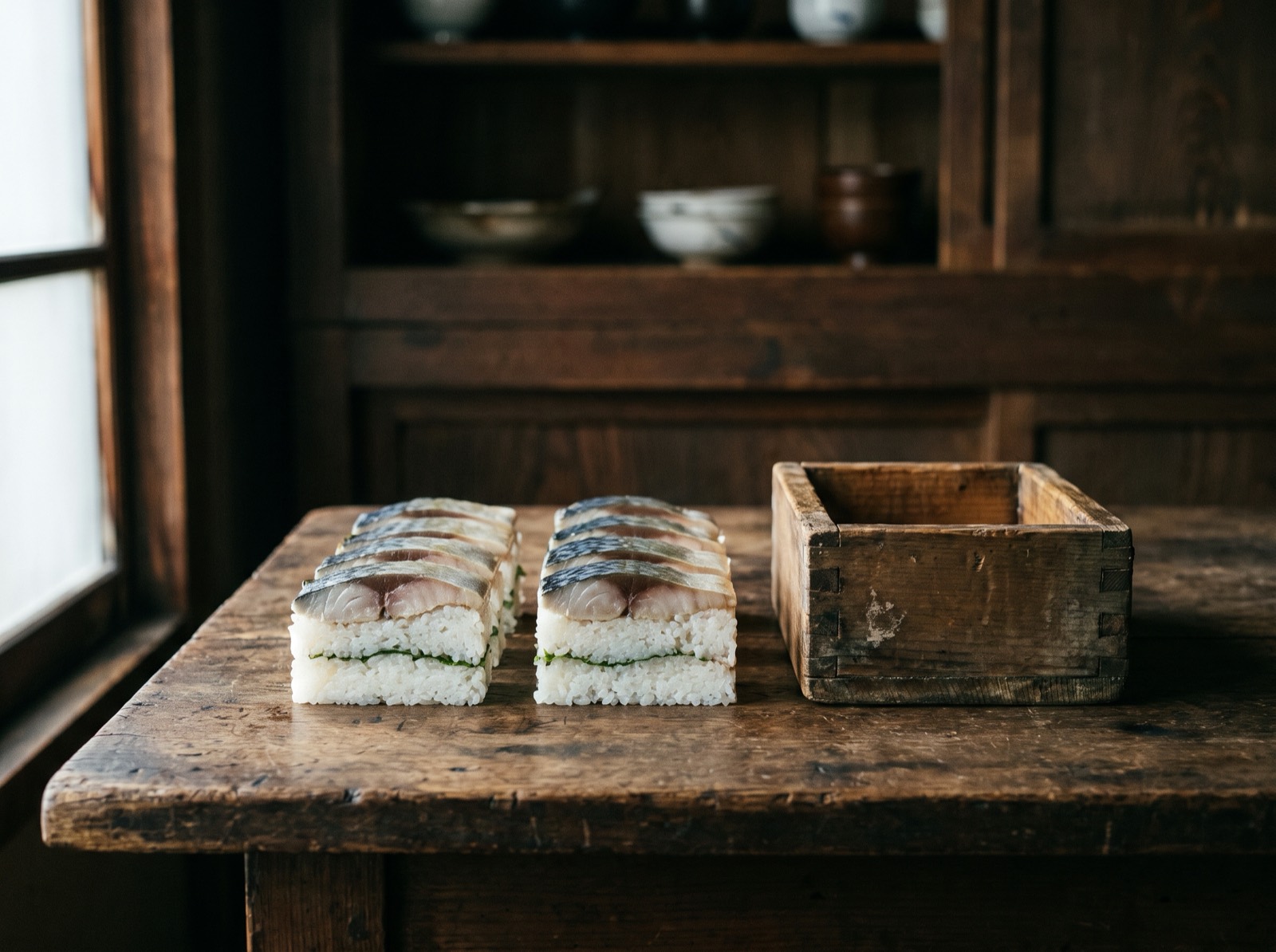
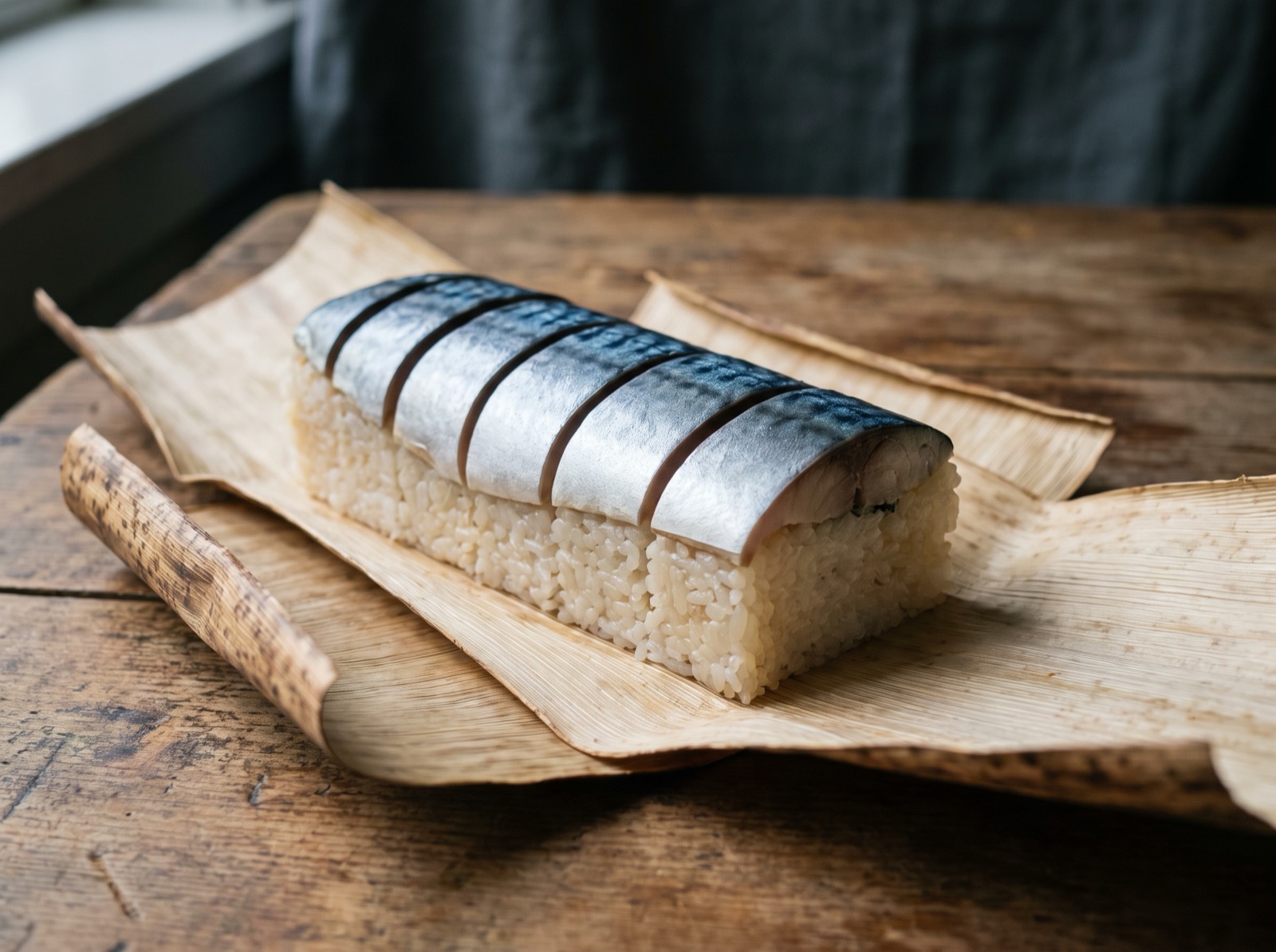
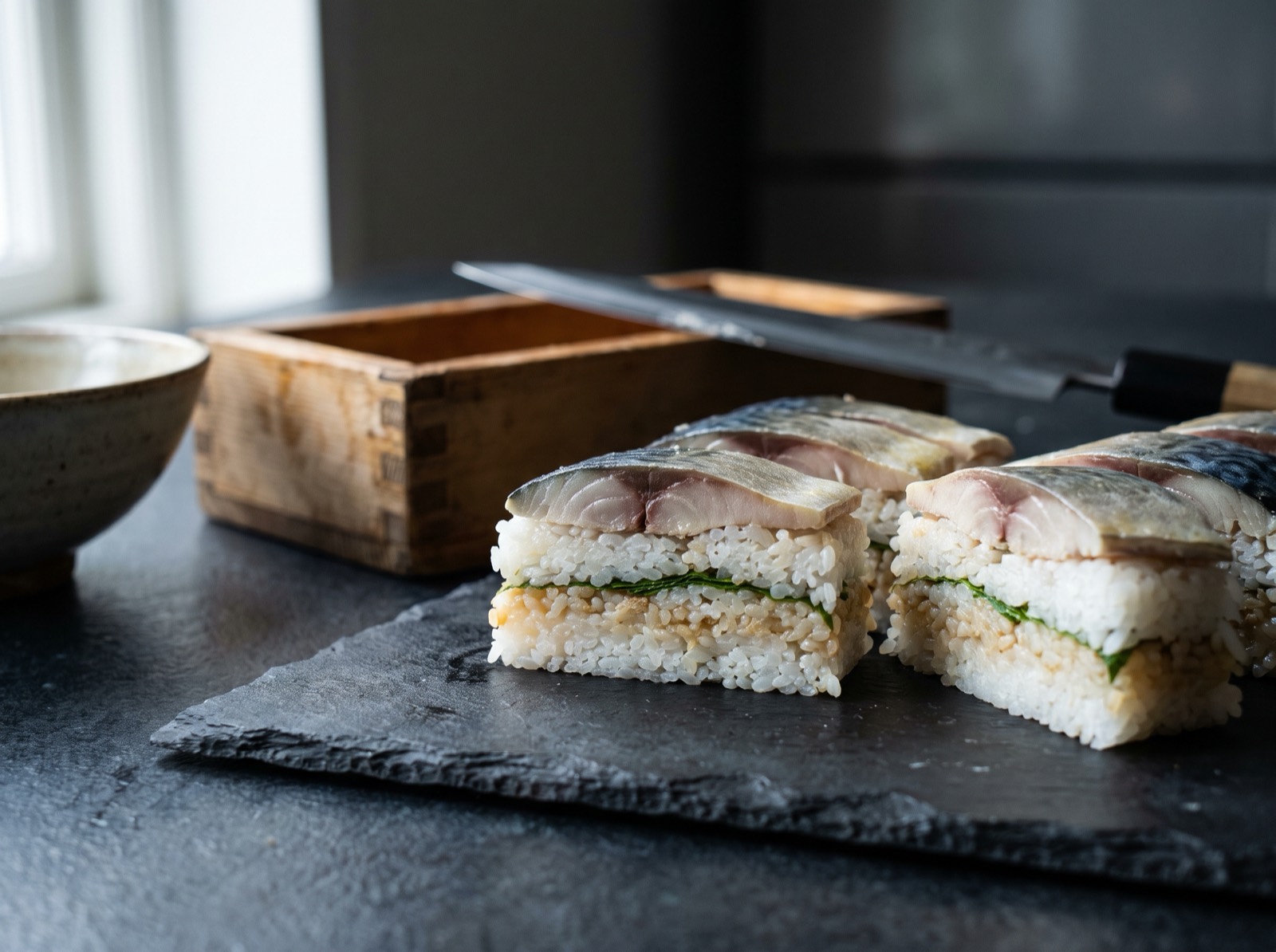
Mackerel pressed on rice and wrapped in kelp is the sushi of a landlocked capital, and the thing being sold is not freshness but a controlled amount of time. Five shops — 1781, the end of Meiji, 1913, an arcade unit with no website, and a hotel in front of the station — each publish a different answer to how long it lives, and the oldest houses give you the longest window.
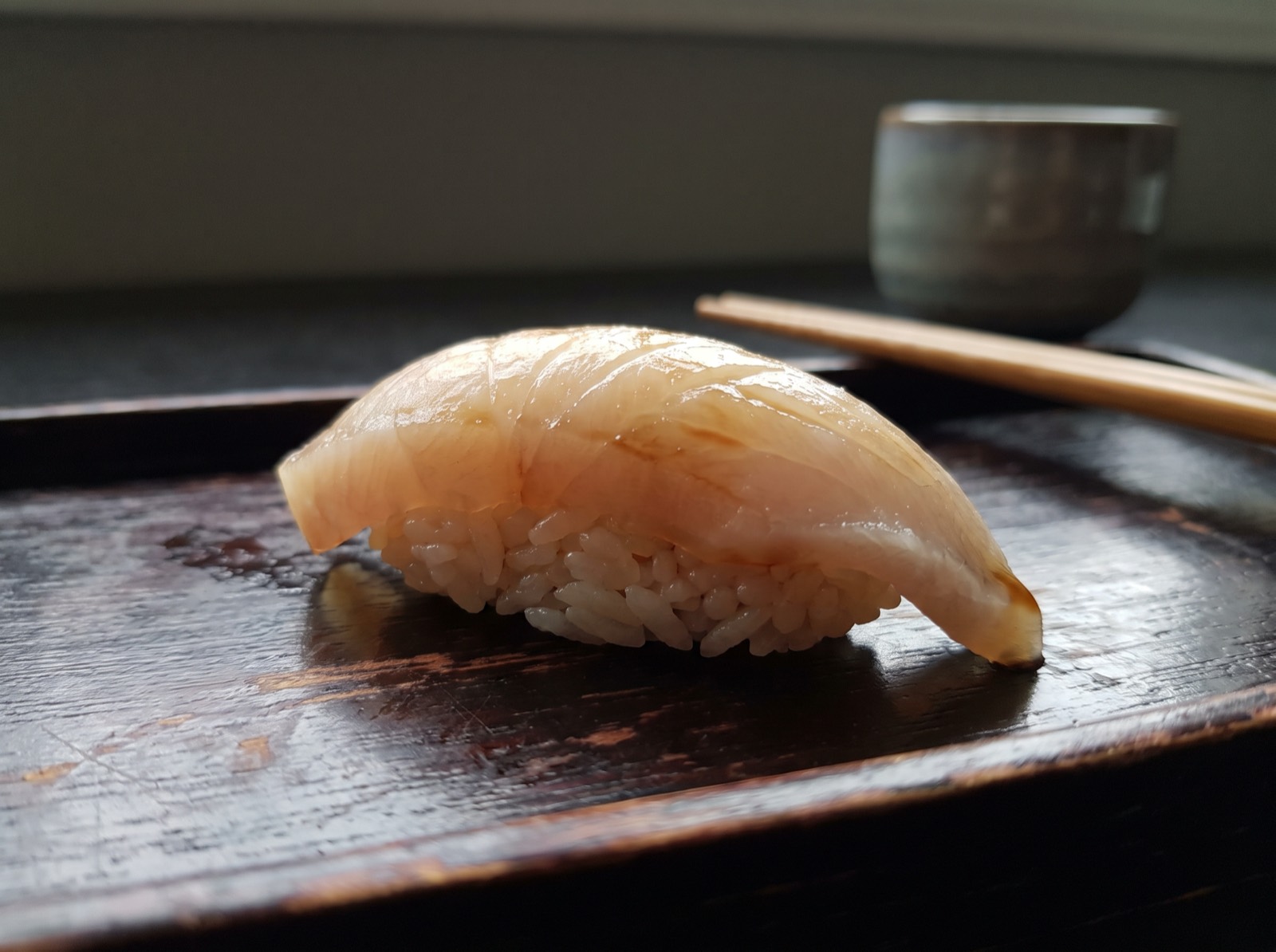
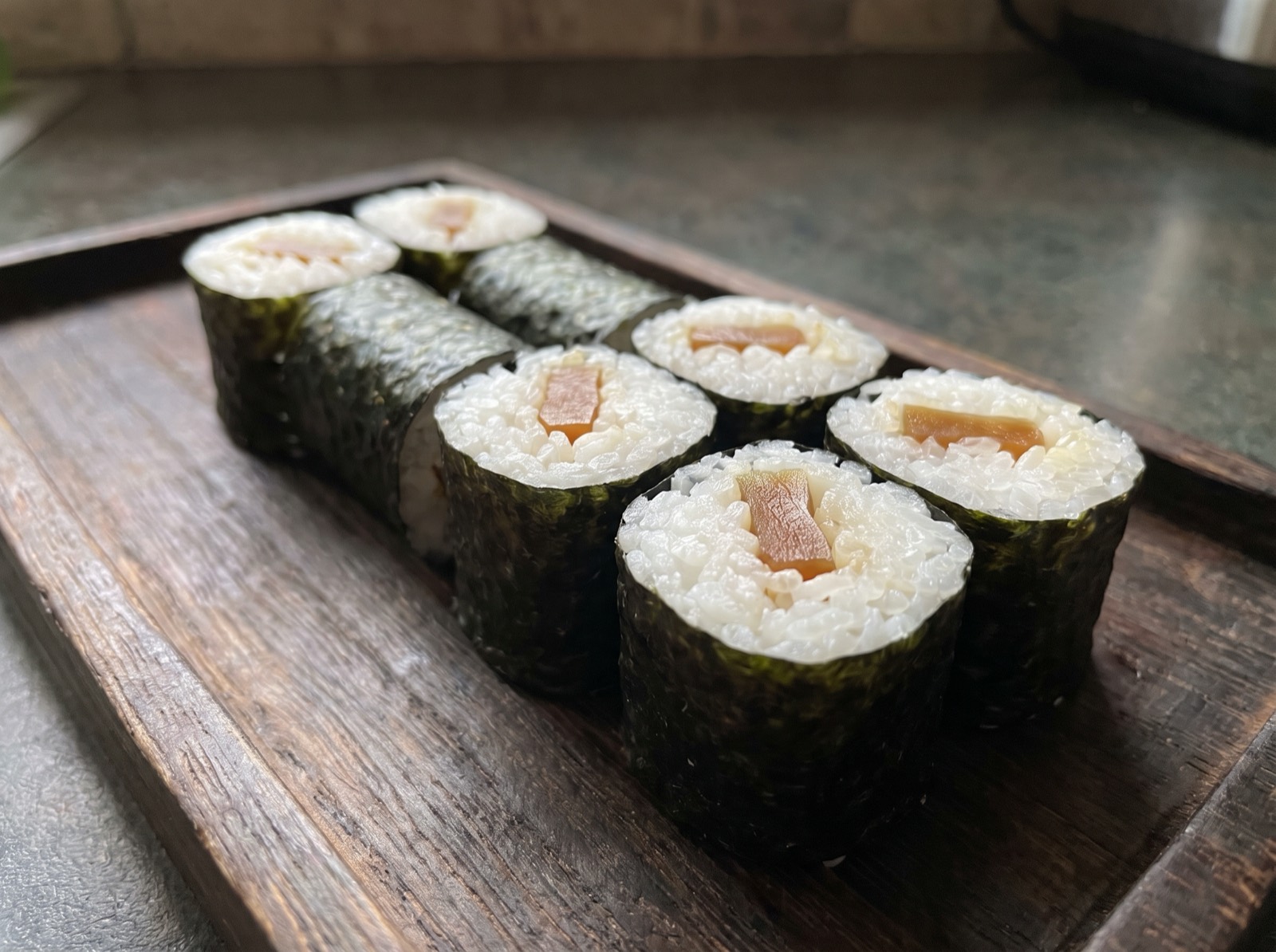
Nobody owns the phrase Kyoto sushi except eight shops who agreed to guard it in 1950. Five of them are here: a 200-year-old caterer that started as a boiled-food stall, a counter that sells pressed sushi one slice at a time, a Kawaramachi house that opened with a weighing scale on the counter, a Shimabara shop that can send for a courtesan, and a Fushimi shop with no website that wrote the best definition of the style in a single sentence of five verbs.

A sushi restaurant in Gion or Pontocho does not own its own front door. Its address, its hours, its closing day and even the word used for what it serves are held in somebody else’s register — a riverside cooperative, a shopkeepers’ association, a national booking platform, a shopping street office — and those registers were written at different times for different reasons and have never been reconciled. Five counters, read through the paperwork that describes them.

Lunch is when the Kyoto counter is available — and it is also the meal these restaurants document worst, because their pages are built to sell dinner. The conditions are itemised for the evening and stripped from the midday listing, leaving a reader unable to tell whether a rule does not apply or was simply never written down. Five counters, read only through the pages the restaurants themselves publish.

A conveyor-belt shop on Kawaramachi publishes seven price bands in three tax forms, an English name for every item and its annual revenue to the yen, and asks nothing of you. A restaurant with a five-language site, an English menu and a live availability calendar requires two guests on every course, so a solo traveller cannot book anything at all. The more a Kyoto sushi restaurant tells you, the more it tends to want — with one instructive exception.

Not a ranking. Five counters arranged by what they call the food — from a house that has used Hokkaido fish and the Edo-mae word for the work since 1971, through a shop that prints rules but no price, to two shops in the same building that define Ezo-mae differently on the ground floor and the sixth.

Not a ranking. Five counters arranged by how much of the way in belongs to the shop — from a counter that hands you to a listing site, through one that will not answer the telephone at all, to the one shop whose door is entirely its own and which tells you least of all.

Not a ranking. Five counters arranged by how much they are willing to write down before you sit — from a shop that prints its cancellation percentages with the reason attached, through one whose two prices are hidden inside its booking form, to a shop whose entire website is one line long.

Not a ranking. Five counters in Shinsaibashi, arranged by who built the page that calls itself official — from two shops that registered their own domain and wrote the whole site, to one whose only page is a booking platform’s template, to the one shop with both, whose phone number and opening hour do not agree.

Not a ranking. Five sushi counters around Tennoji and Abeno, arranged by how plainly each answers one question on its own page — which day it is closed — from two shops that write a weekday themselves to one shop whose two pages, signed with the same name, cannot agree on it.

Not a ranking. Five counters arranged by how many booking or ordering channels each one lists on its own page — from a shop whose site names no telephone number at all, to one that lists five, on a page the shop does not itself own.

Not a ranking. Five counters in one Osaka ward, arranged by how far a reader has to travel — inside pages the shop itself controls — before a genuinely published price actually appears.

Not a ranking. Five counters on one Kyoto street, arranged by how many pages answer for each shop and how well those pages agree with themselves — from a shop with no page of its own to two that disagree with each other.

Not a ranking. Five counters in Karasuma, arranged by the distance between a shop’s own name and the page that speaks for it — from a chain domain with a second page nobody reconciles, to a parent page that calls the shop something else entirely.

Not a ranking. Five counters in and around Kyoto Station, arranged by how far a price sits from the page you would actually land on — from a shop that names no product and no figure anywhere, to a hotel restaurant that prints every number for its sushi course next to the date the course is scheduled to end.

Not a ranking of five. Six official directories were checked for Arashiyama and Saga, and two sushi counters met the standard this series uses everywhere else — one of which says, on its own site, that it is the only one.

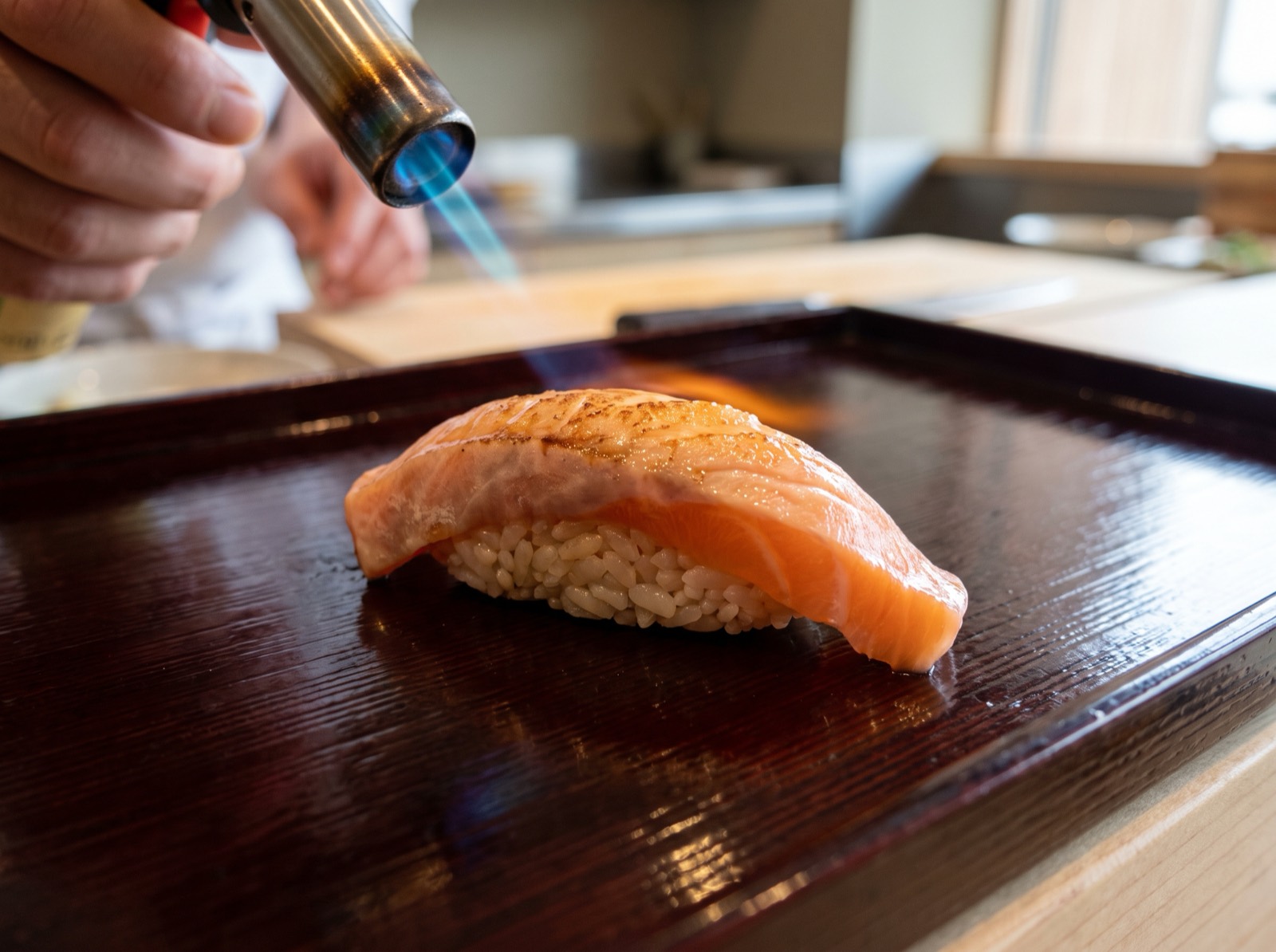
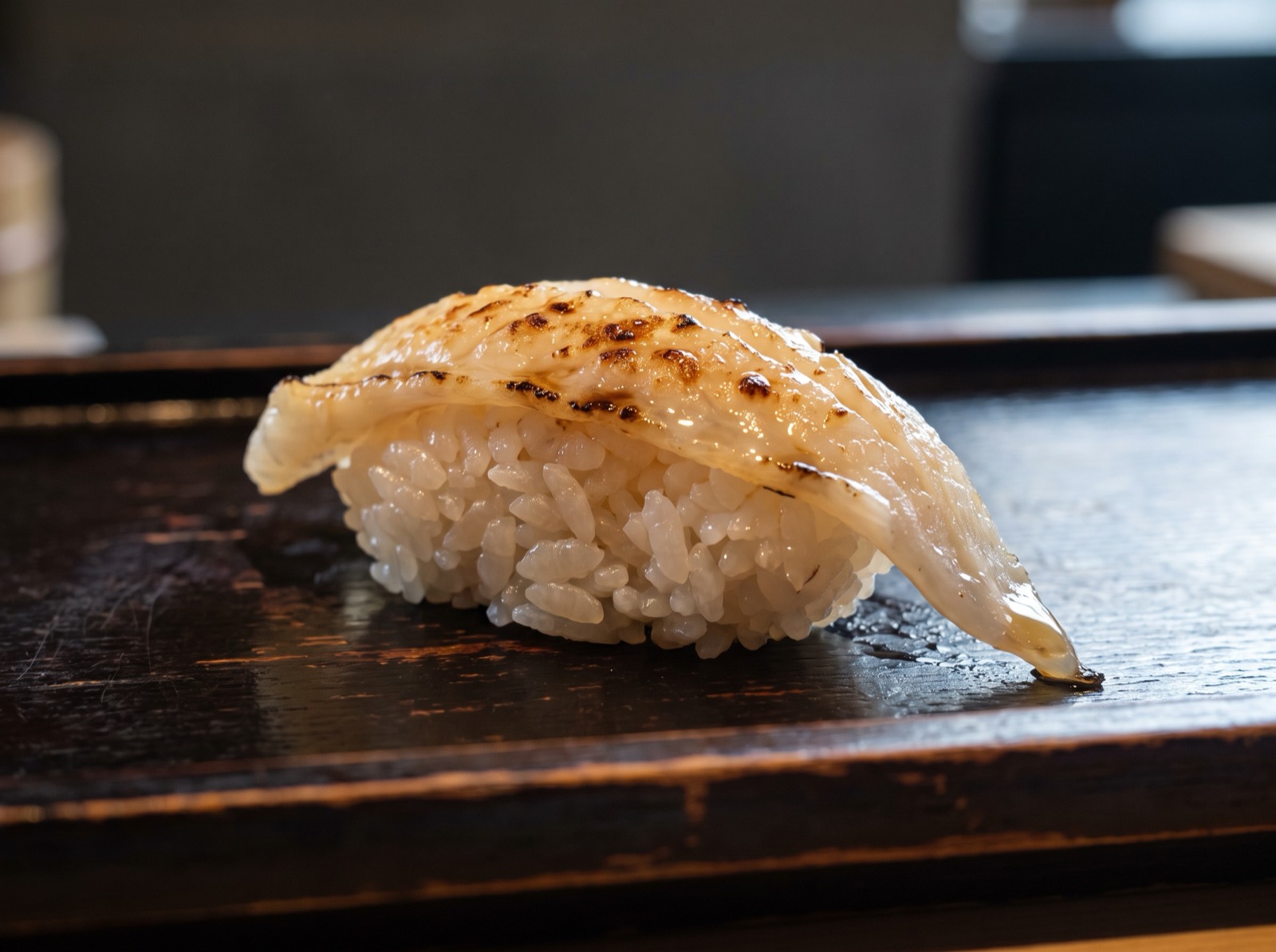
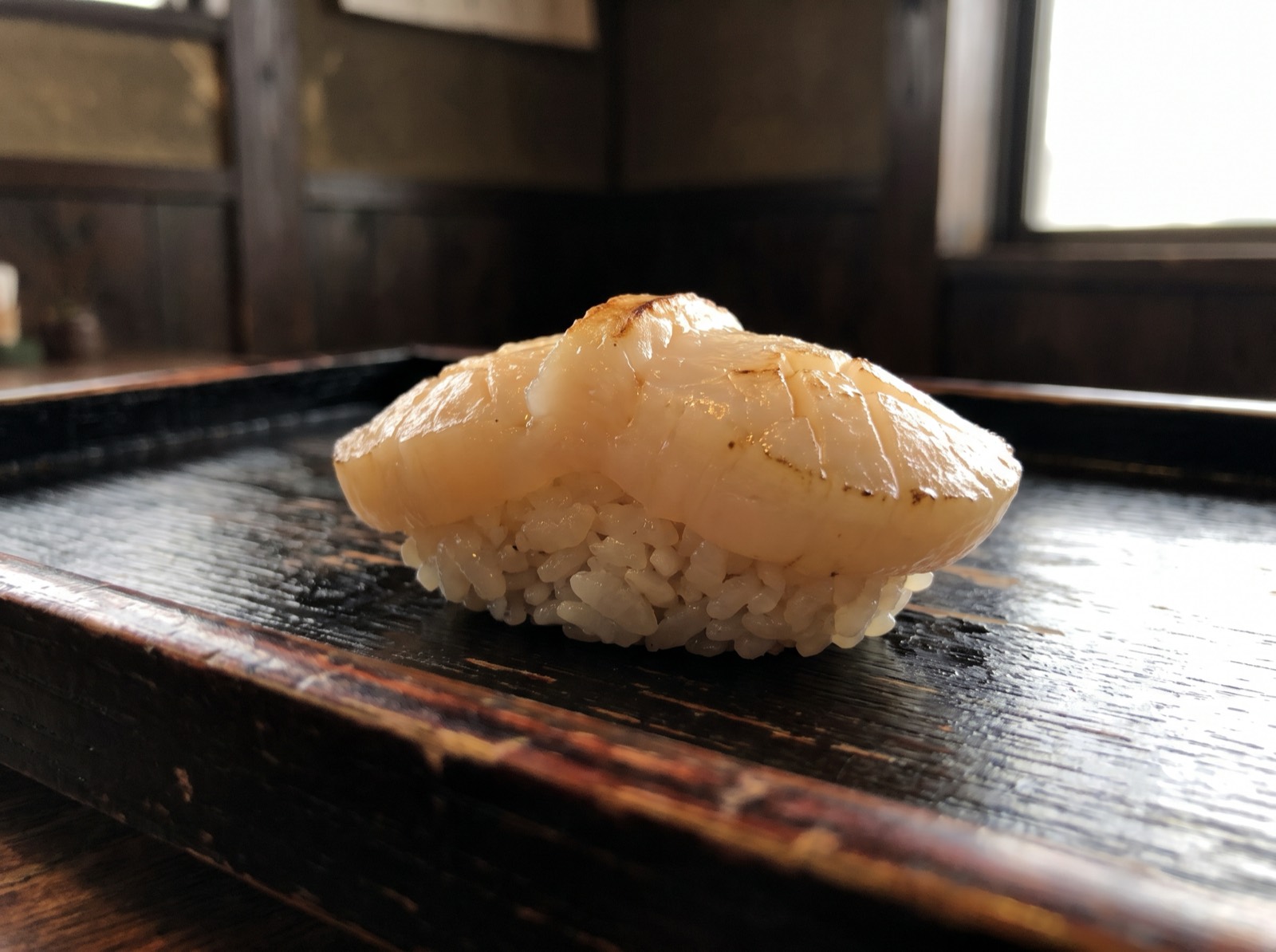
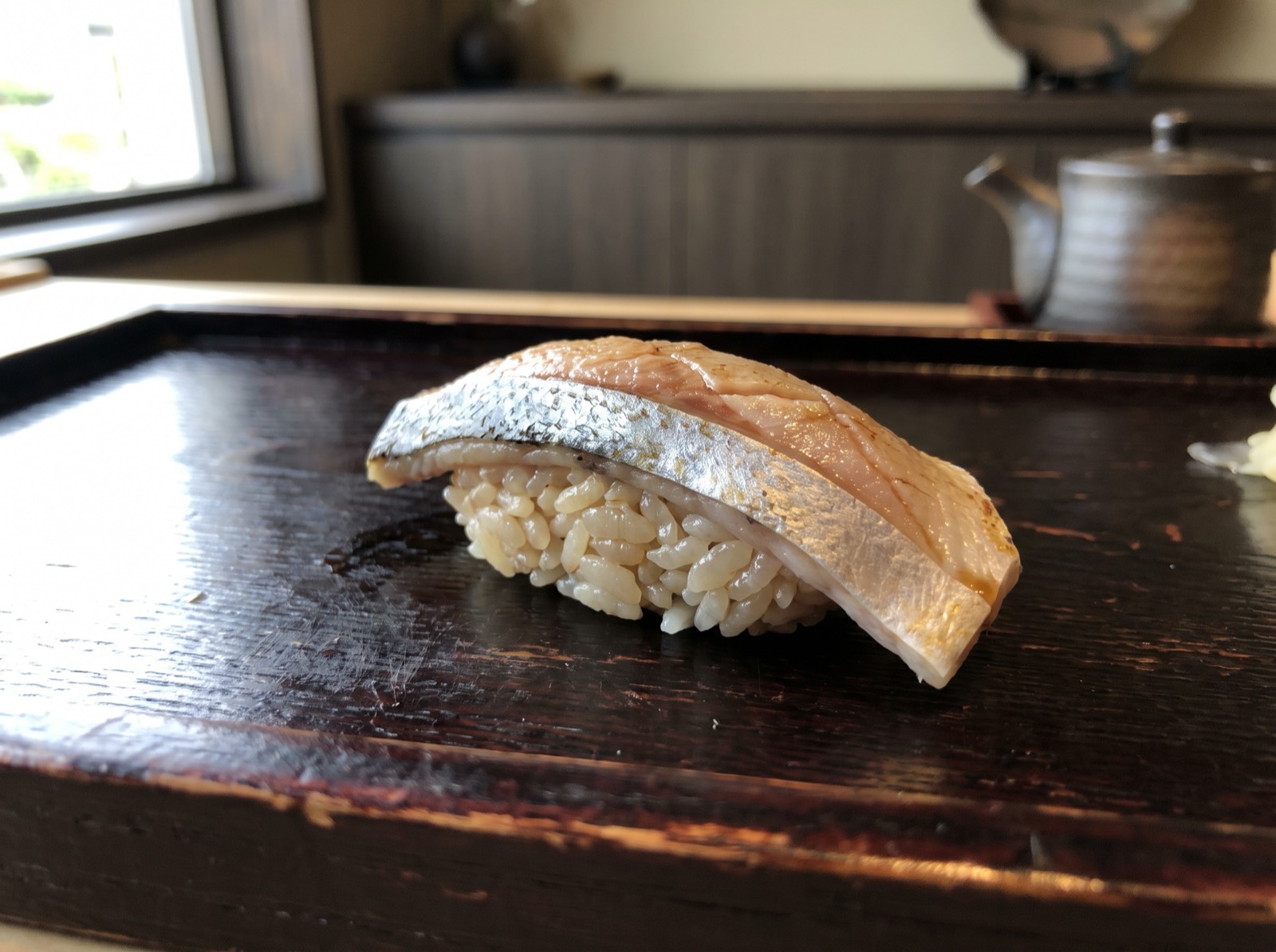
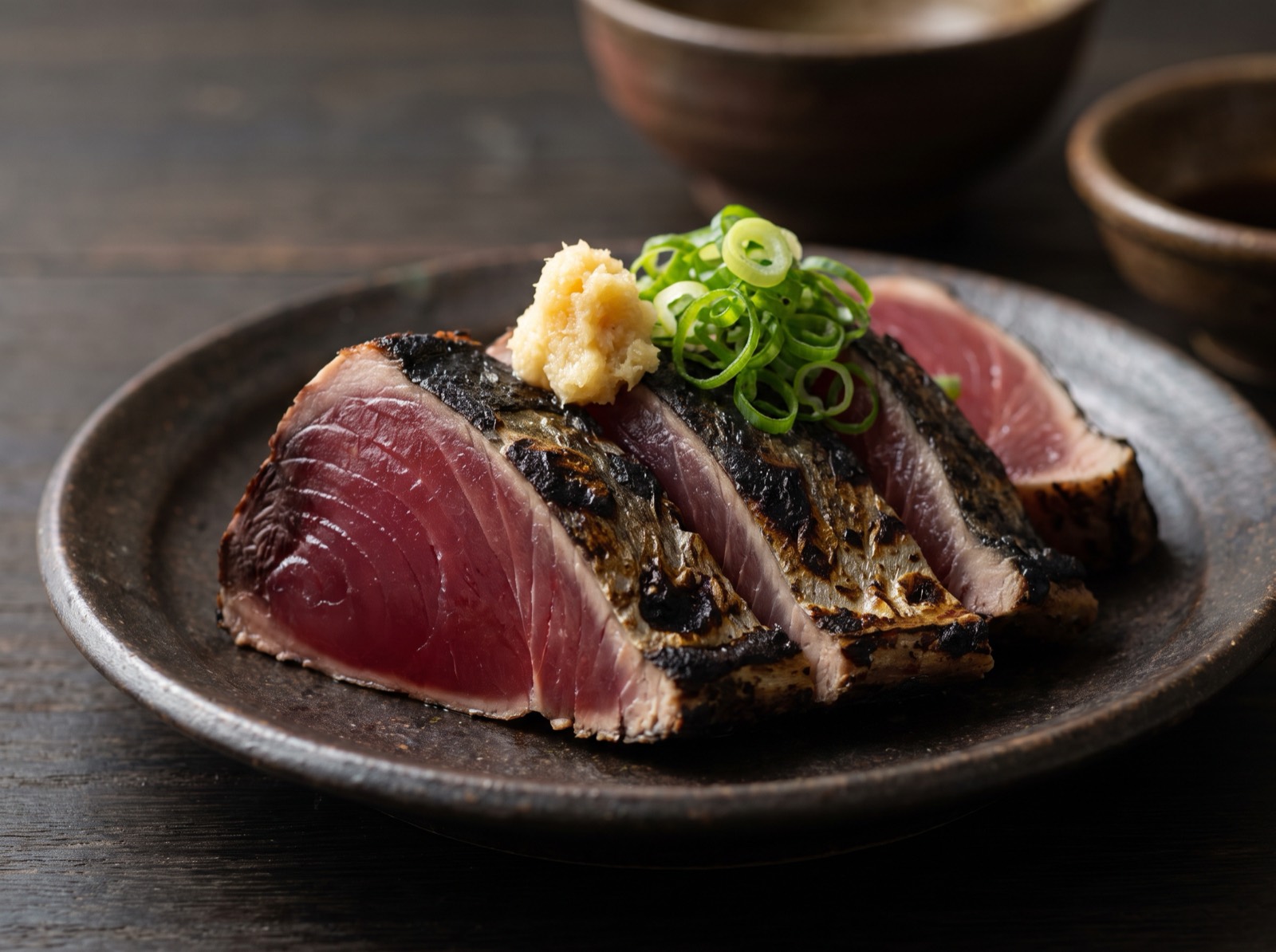
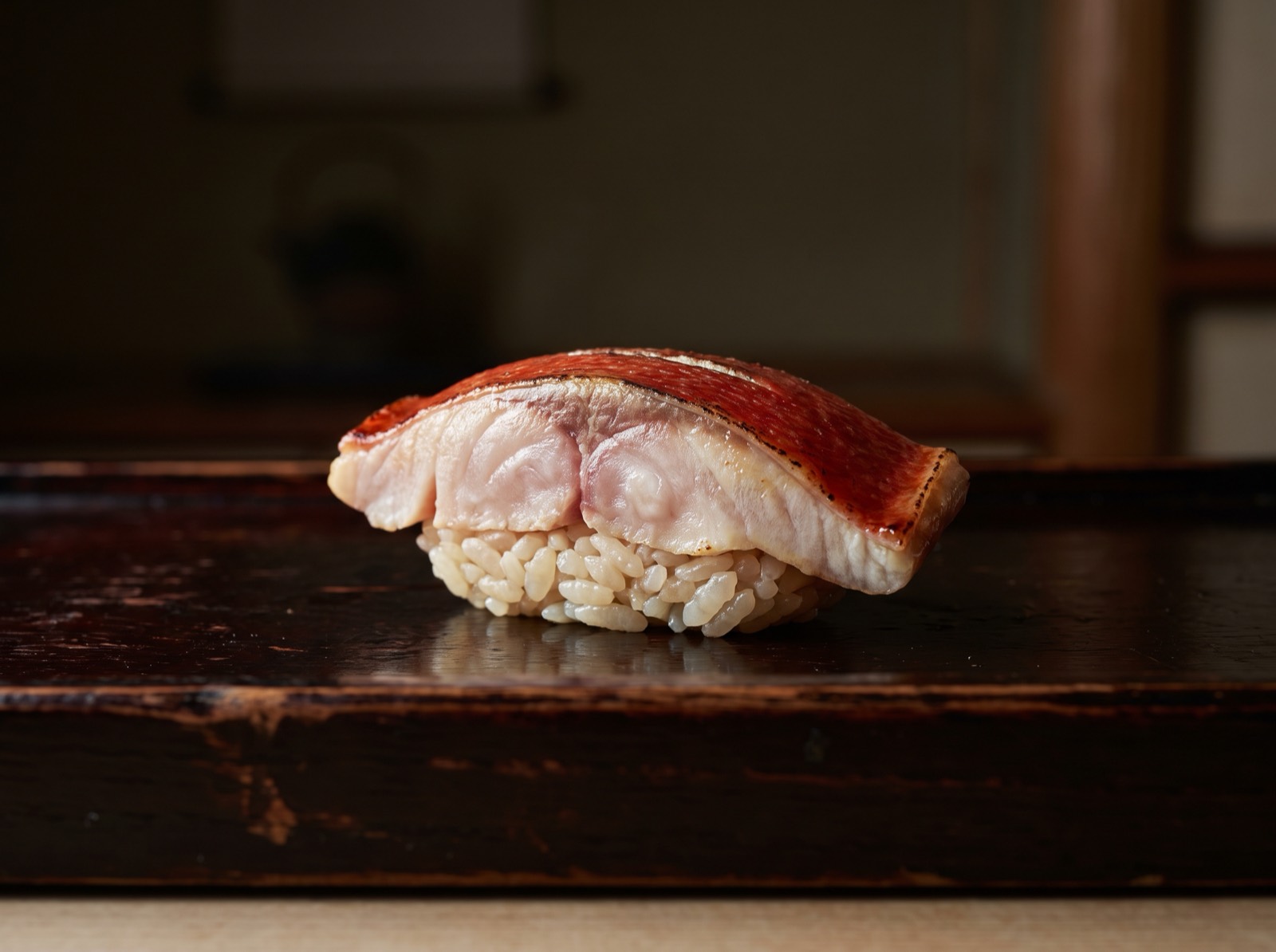
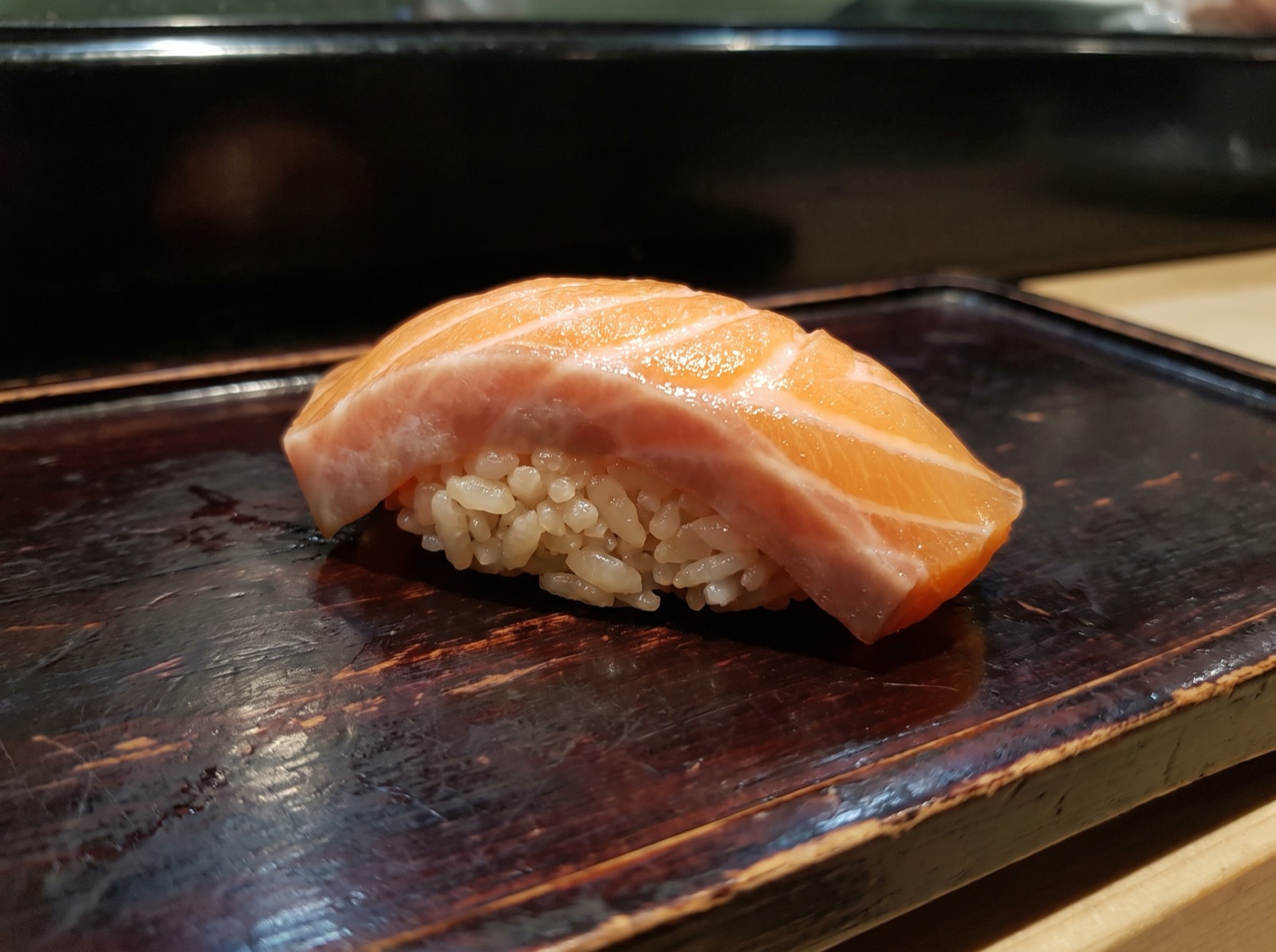
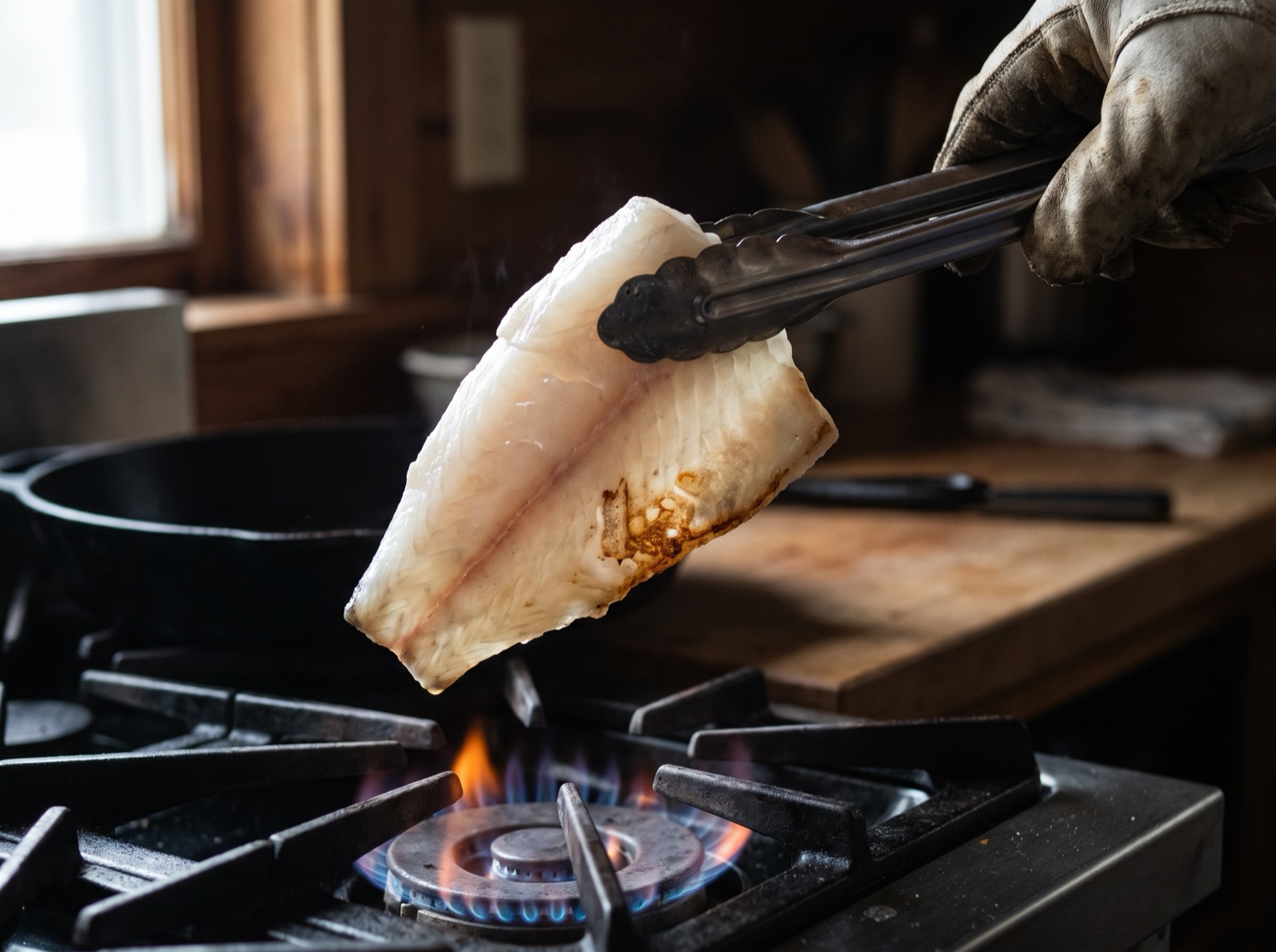
The flame never reaches the centre of the piece, and what it is for changes from one fish to the next — rendering away fat on one, adding a browned note that a mild fillet does not have on another.

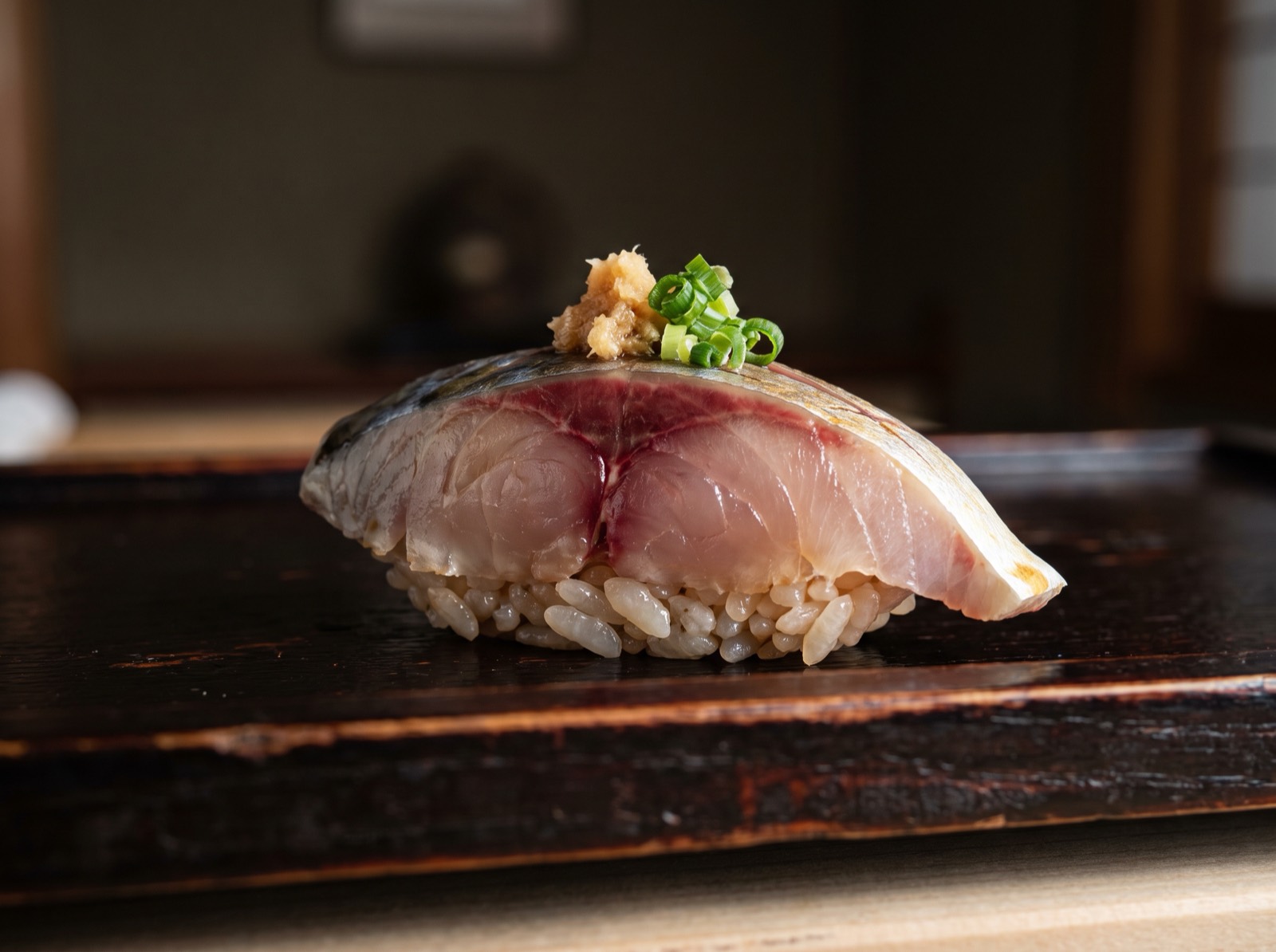
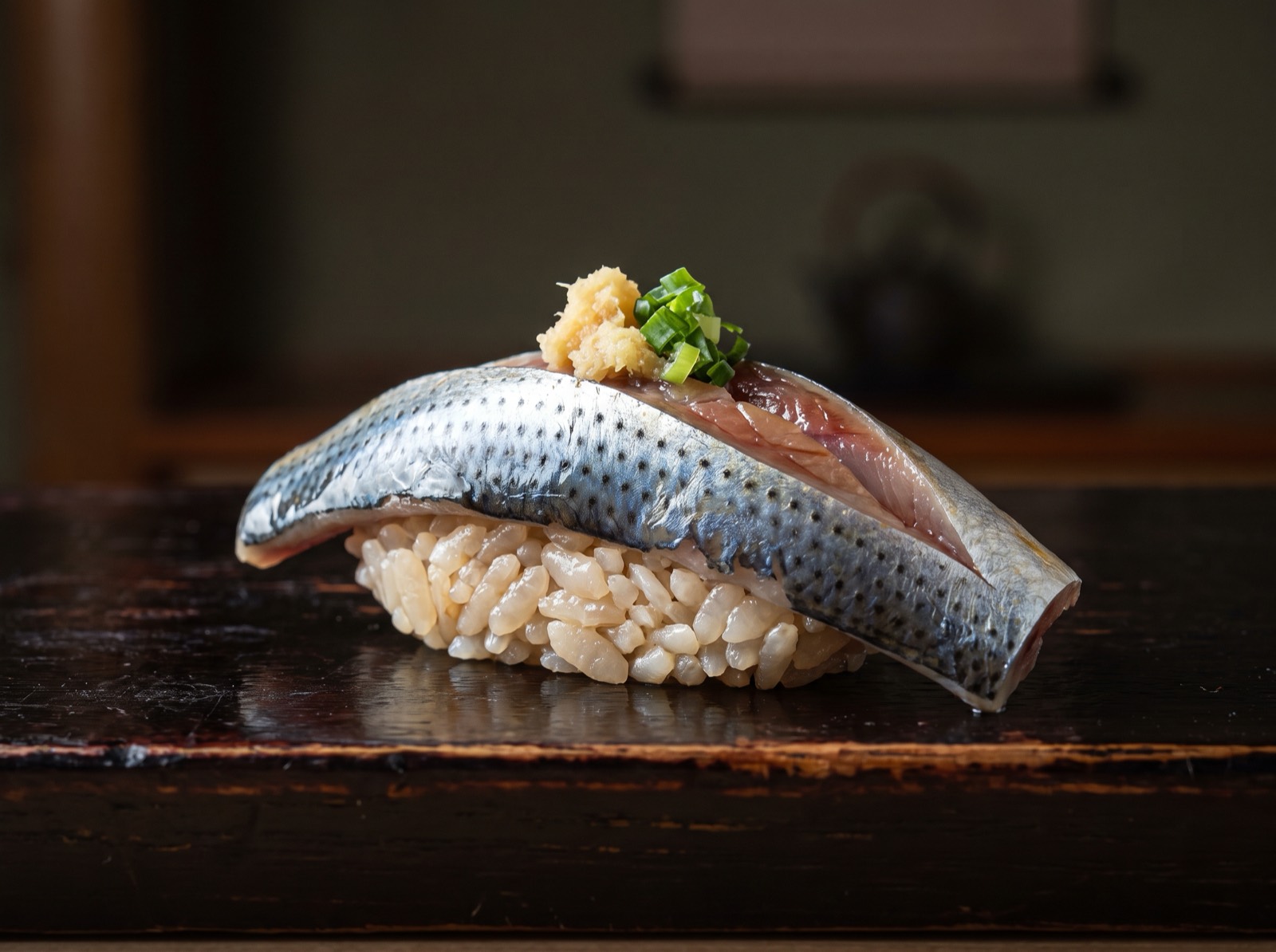
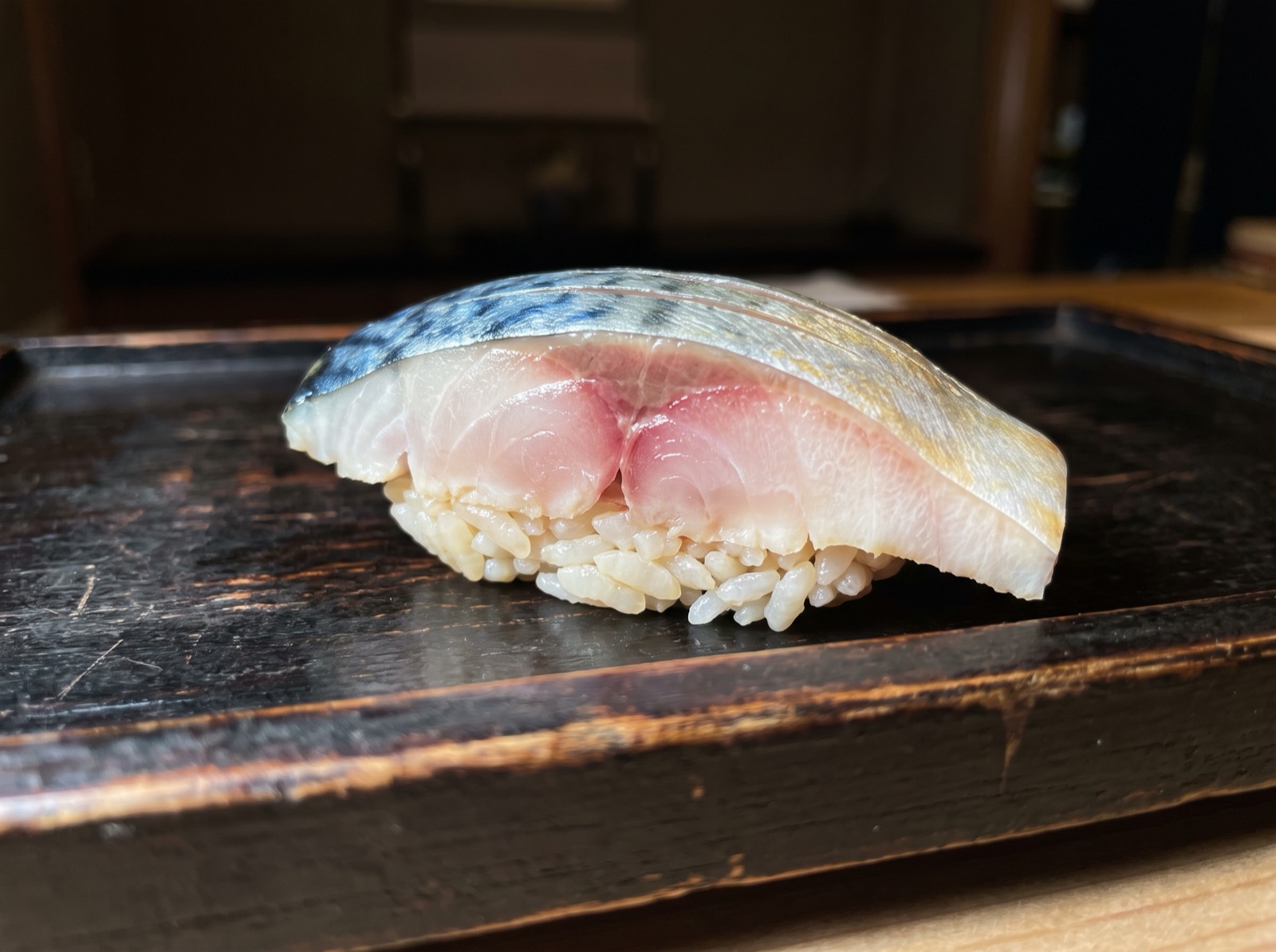
The other silver-skinned classics at an Edomae counter — kohada, saba — have been through salt and vinegar. This one arrives raw, with grated ginger and spring onion on top, and the reason is refrigeration.

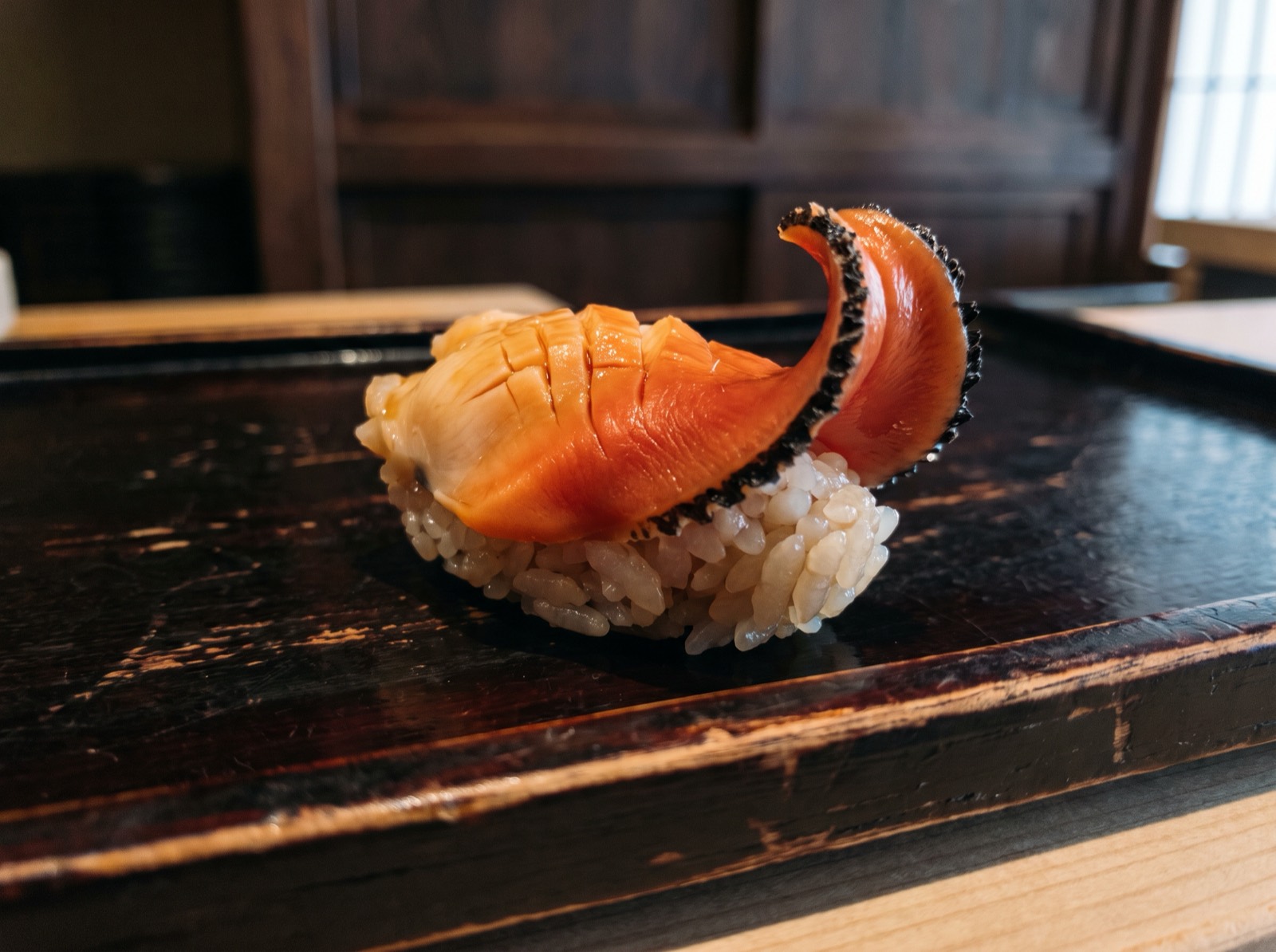
It arrives orange-red and curled, still tensing. Everything striking about it — the colour, the iron note, the theatre — comes from the same piece of biology.

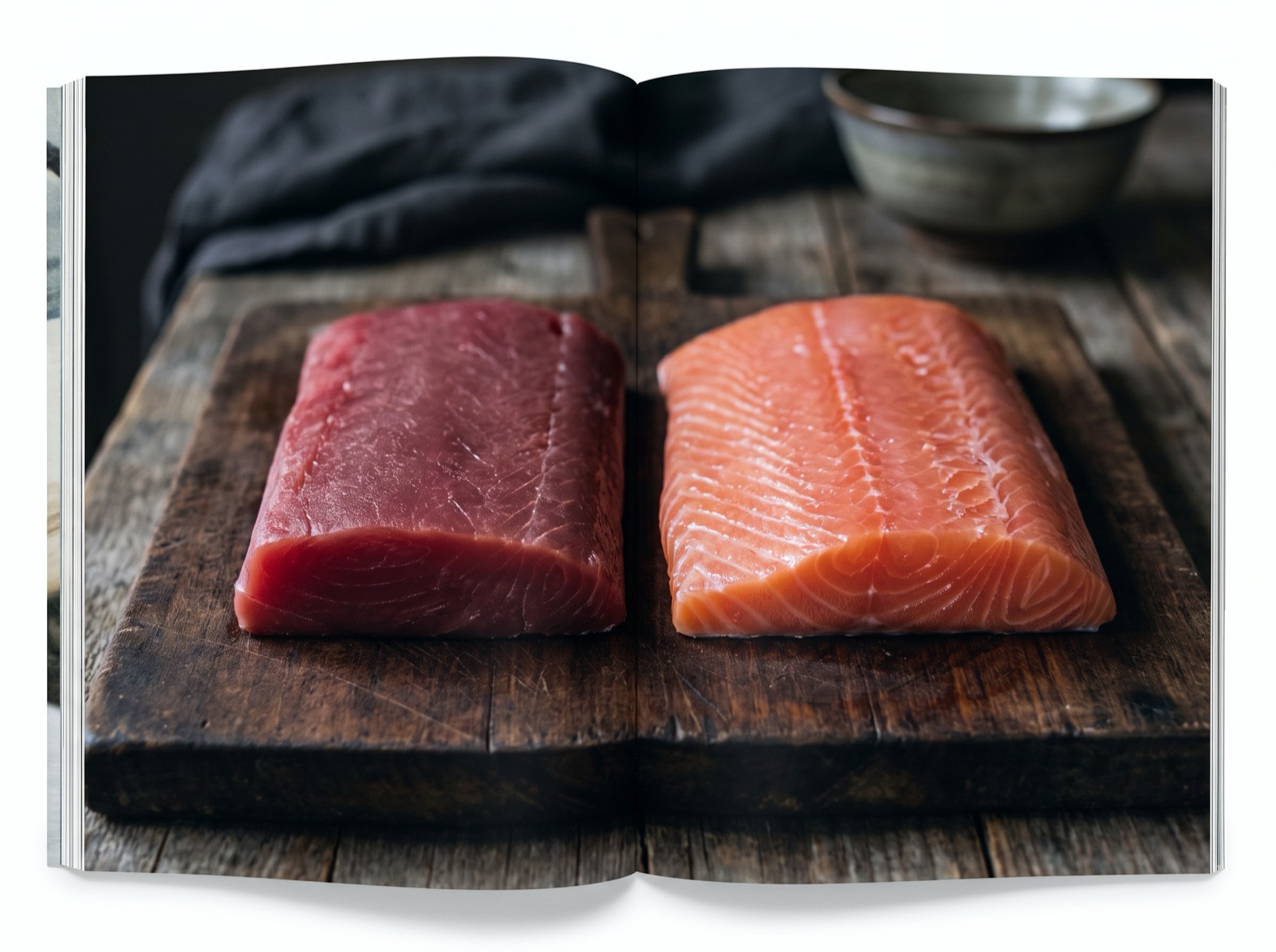
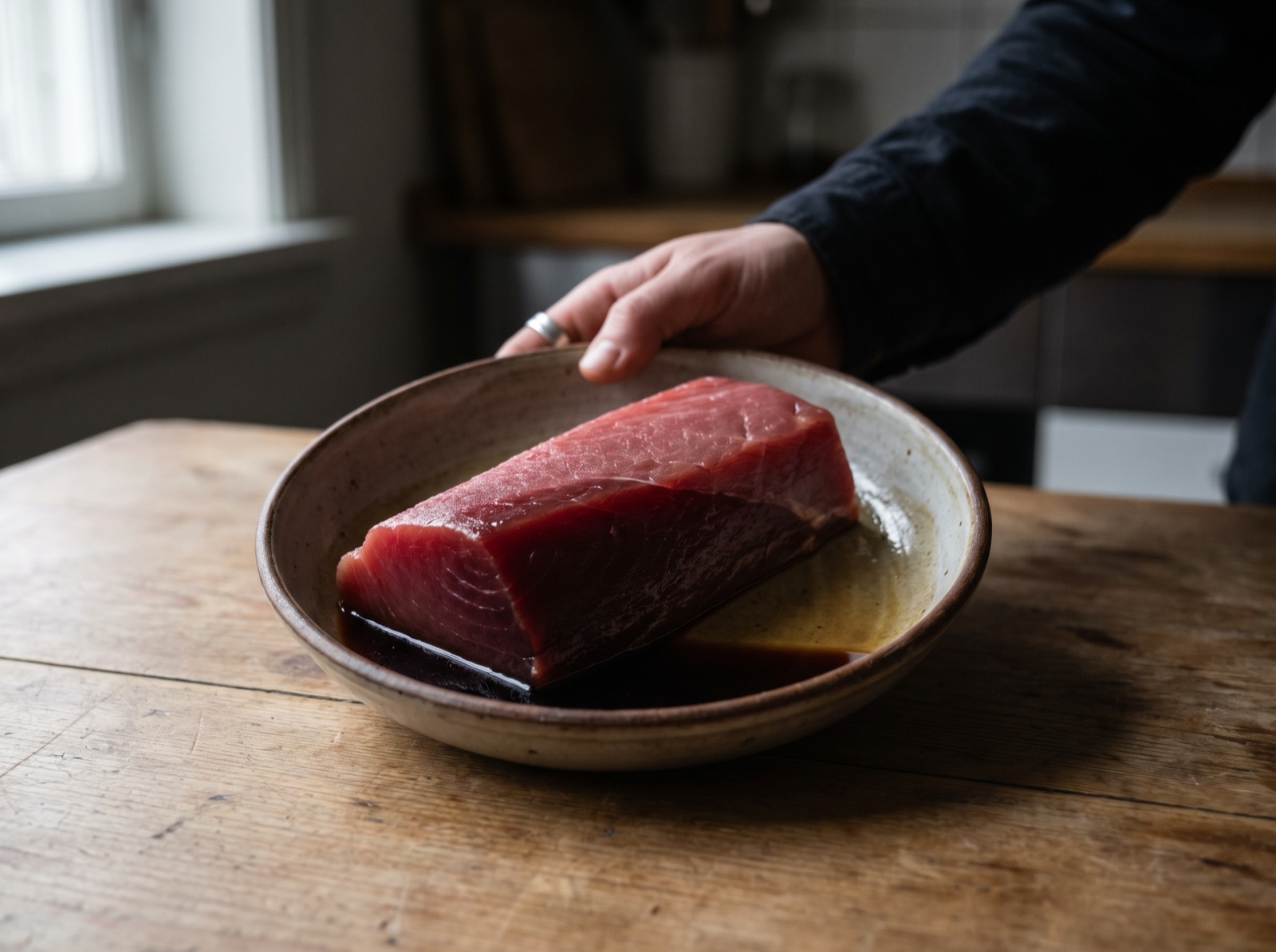
It has no fat to hide behind and no marbling to look at. What is left is the fish itself, the shop’s ageing, and a soy marinade older than refrigeration.

It is not rice vinegar with colour added. Akazu is fermented from sake lees rather than rice, and the choice between it and a clear rice vinegar says something about how a kitchen sees itself.

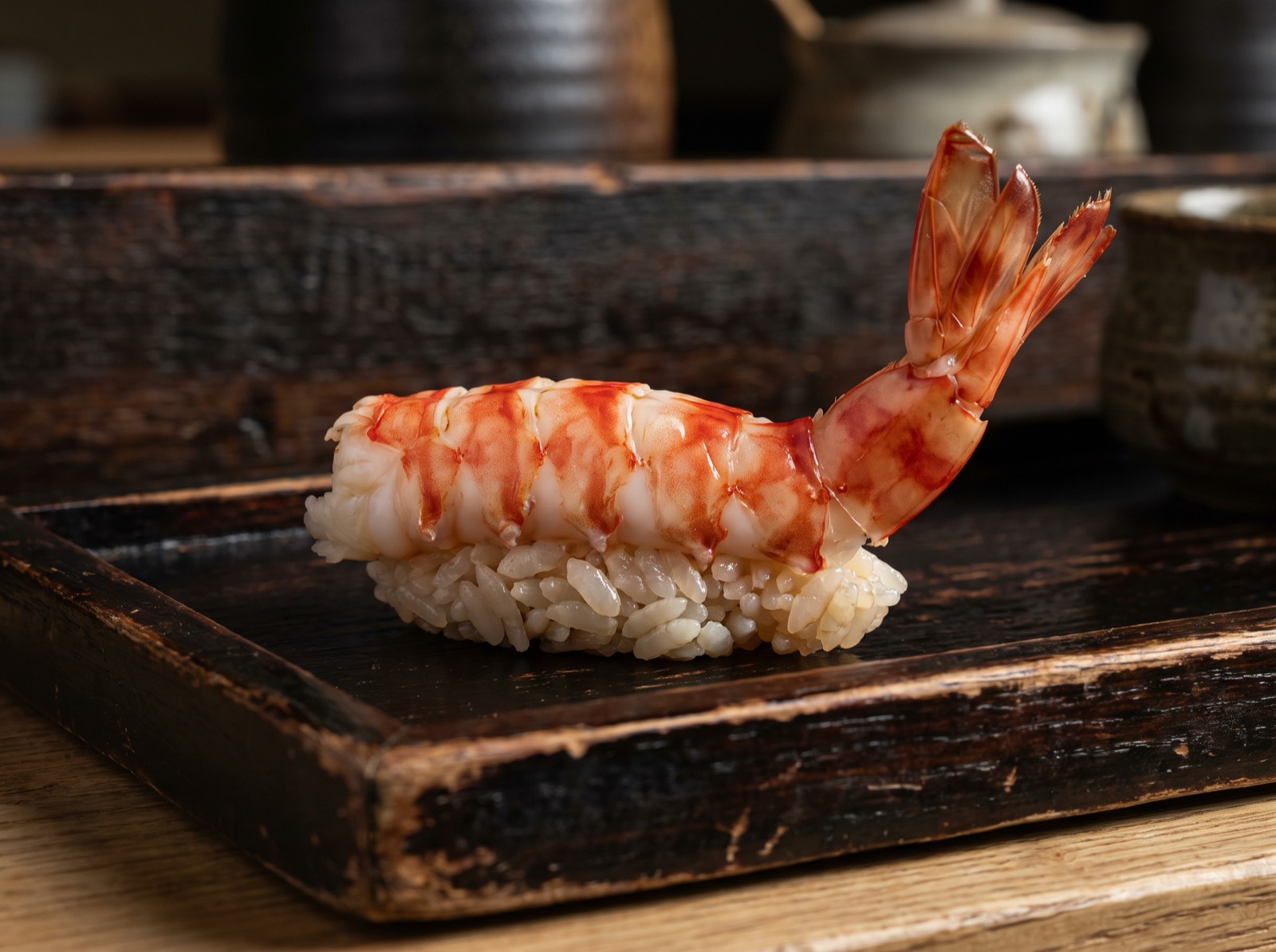
The name means “sweet prawn”. On the evidence behind this piece, that sweetness is not fully there at the moment the animal is caught — it has to be given time.

The piece traditionally served near the end of a course, and the one that most reliably separates a shop that simmers its own from a shop that buys it in.

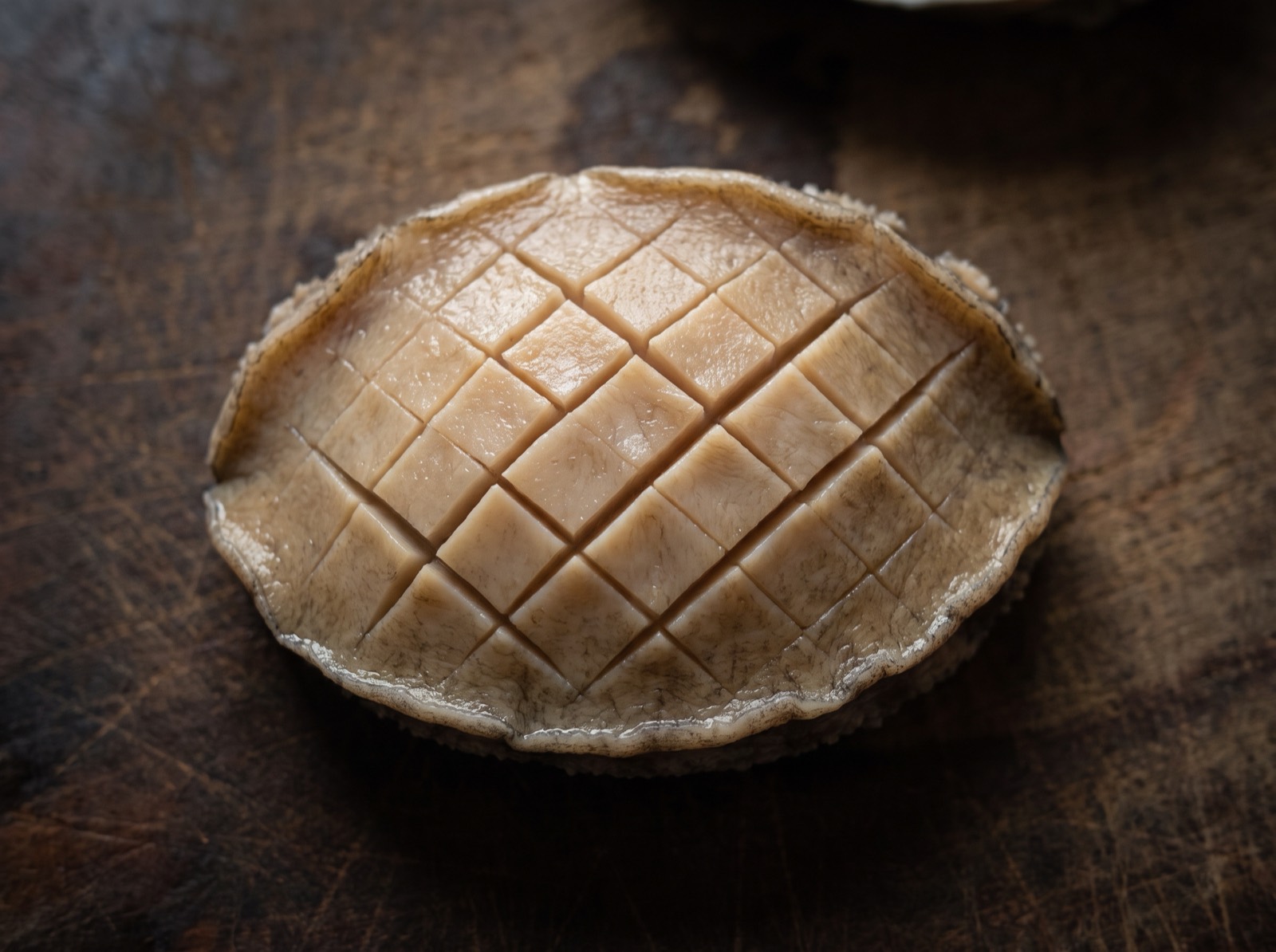
For most shellfish at a sushi counter, raw is the default and cooking is the exception. Abalone is one of the few where that is reversed — and a genuine raw tradition survives right alongside it, for the same animal.
No pressing, no forming, no per-piece decisions. A bowl of rice with the toppings arranged on top, and a name that covers more variation than it first suggests.

Two shops can cut the same fish and disagree about what to call the same slice. There is no measurement behind the word — only a judgement, made once, in the back.

The prawn most visitors picture on a piece of nigiri (pink, striped, butterflied) is boiled, and it is the oldest of the three at an Edomae counter.

The texture is the reason people order it — and the texture exists because the muscle spends its entire life in motion.

It is free, it is refilled, and it is the item most often used wrongly by visitors. A slice between pieces resets the mouth. A pile on top of the fish does something else.

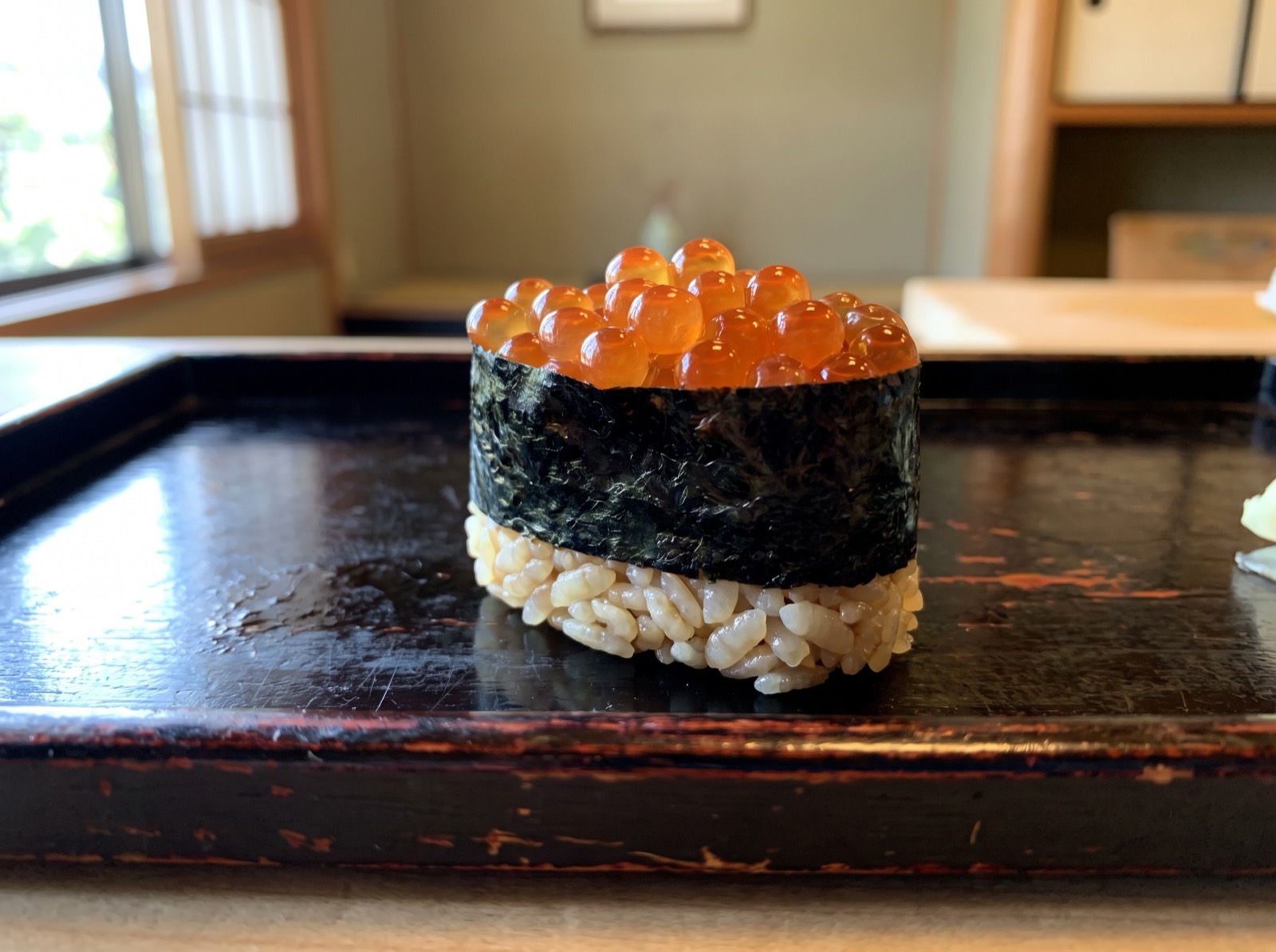
An ordinary nigiri topping holds itself against the rice. Gunkan is the shape built for the moment that stops being true.

Nearly every sushi menu outside Japan lists hamachi as though it were a fish. It is a name a fish is given for part of its life, in one half of one country, and it became the global word almost by accident.

Anago is what Tokyo does with an eel-shaped fish. Hamo is what Kansai does, and the two say almost everything about the difference between the cities.

This site’s own fact index defines the word with two clauses joined by “and”: fish sorted by their skin, and fish sorted by what was done to them before they reached the rice. Most fish satisfy both. Aji is the one that proves they do not have to.

It is the piece that proves freshness is not the point. Straight out of the tank it is springy and says nothing. The flavour arrives later, and somebody has to wait for it.

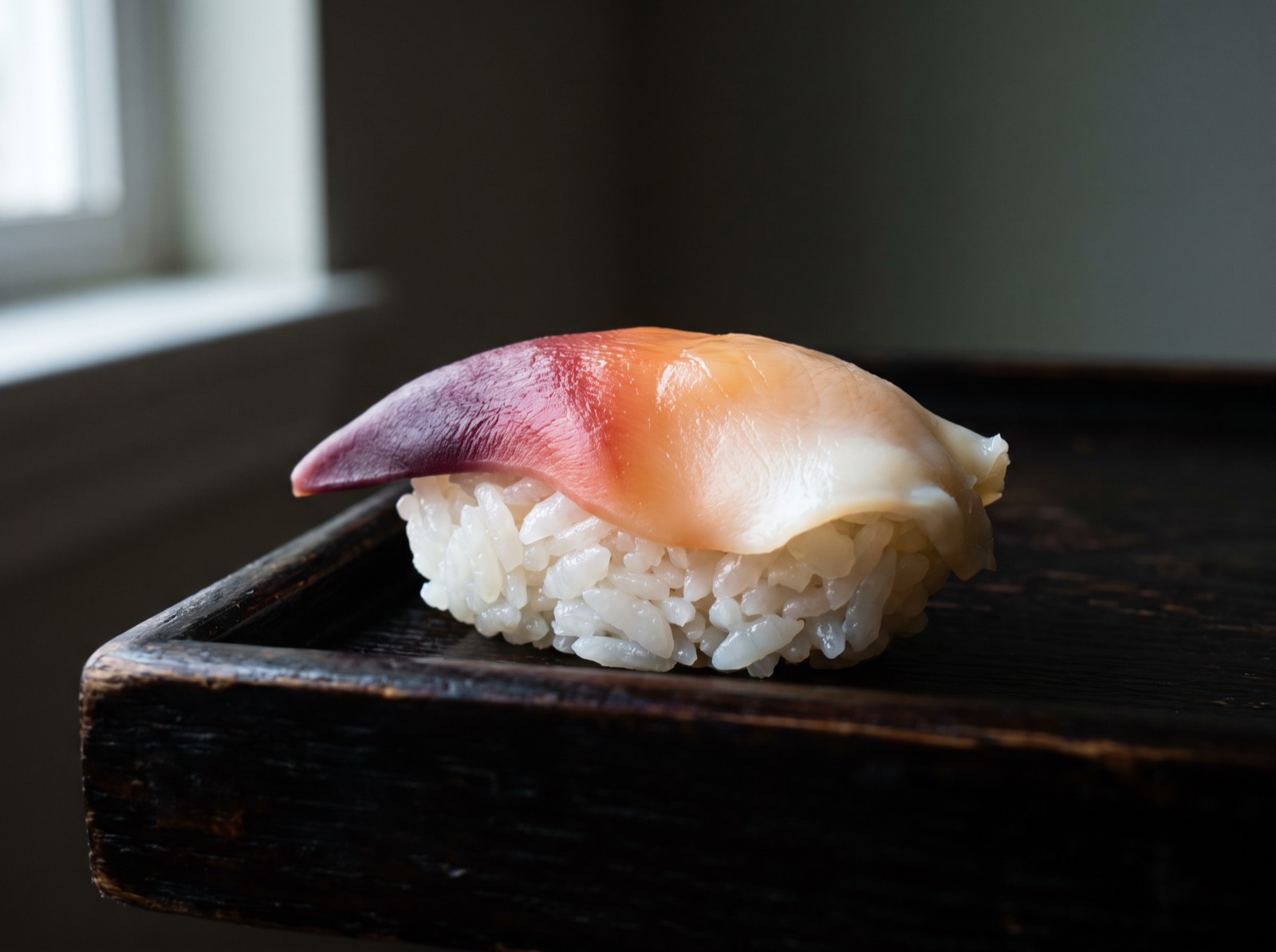
The two-tone clam on every conveyor belt in Japan. Almost nobody who eats it knows the colour was not there an hour earlier.

One muscle, cut thick, cool and yielding, with a sweetness that needs no explaining. It is the piece children like and the piece a chef can least hide behind.

Every other job at an Edomae counter happens close enough that a diner can watch it, or taste the evidence afterward. This one happens on a boat or at a dock, before the fish is ever sold, and the chef had no part in it.

Four different roes circulate in English under loosely interchangeable names. Only one of them comes from a salmon, and the word for it is not Japanese.

Most of Japan's prestige white fish are cold-weather items. This one arrives with the rain, and it is better for the contrast.

Cheap, oily, common, and gone within hours. It is one of the few pieces on a counter where the chef’s hands matter more than the knife.

Nothing is added and nothing is done to the fish directly. Jukusei is the decision to let time do the work instead — and the trade’s oldest argument is over how much of it to allow.

The word covers real crabs from different waters, sold as different products by sex, and — on more menus than diners notice — a manufactured stick with none of them in it.

Three fish are sold in English as if they were one. Kanpachi is the firmest of them, the one with the kanji for “eight” written on its face, and the one of the three whose name changes least as it grows.

No fish, no fat, no colour. A sweet-savoury brown strip in rice and seaweed, and one of the few pieces where there is absolutely nowhere for the kitchen to hide.

Sources agree that kasugo covers madai, chidai and kidai while they are still young. They do not agree on which of the three the name started with, and we are not going to choose one for them.

Edo paid absurd money for the first of them and wrote poems about it. The same fish, later in the year and a great deal fatter, is the one most people prefer.
Most white fish are sold for one thing: the flesh. This one comes with a second ingredient attached, and a shop that has a good one will say so.

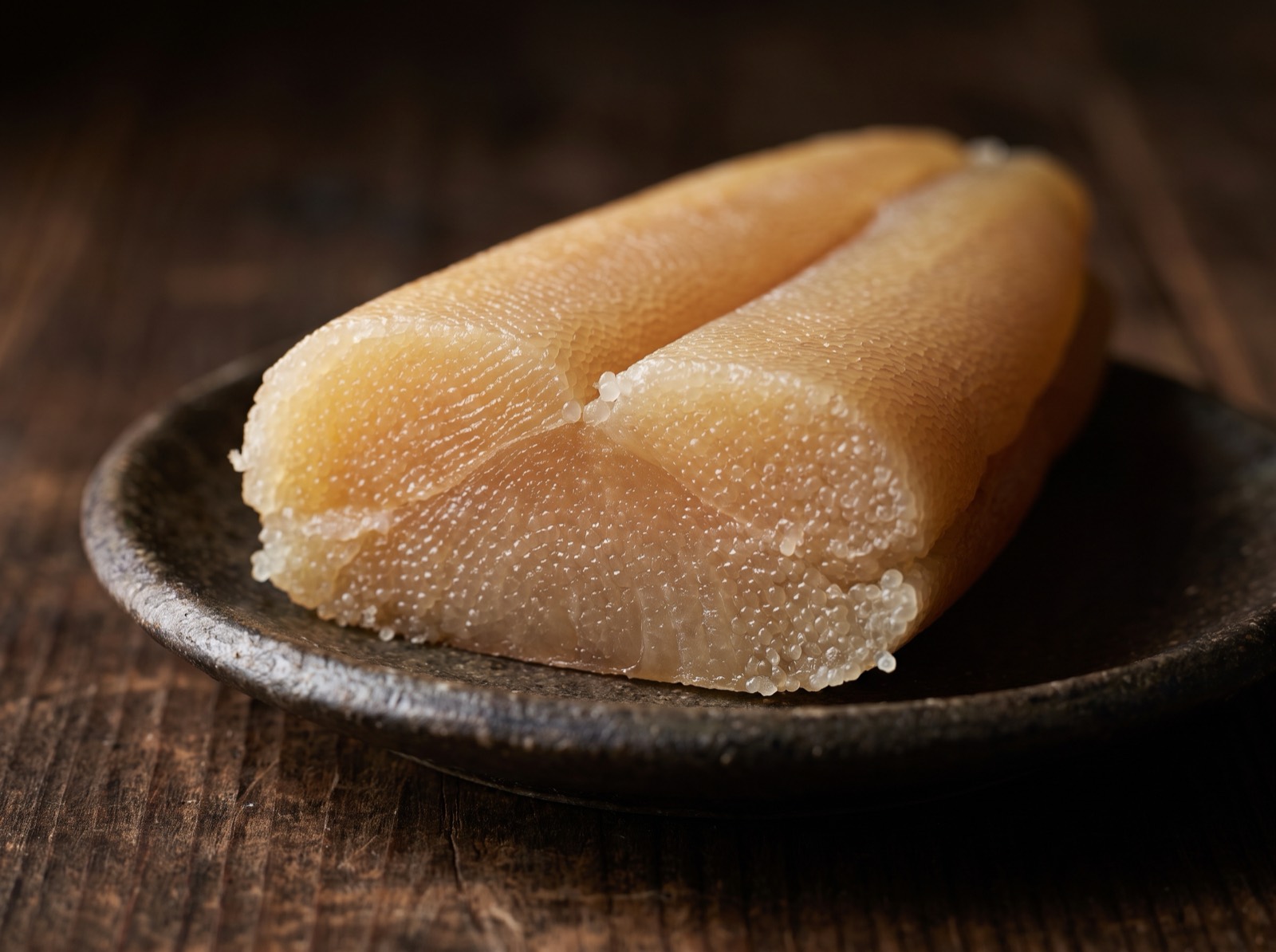
Every other roe on a sushi counter bursts. This one snaps, and the sound is the reason people buy it.

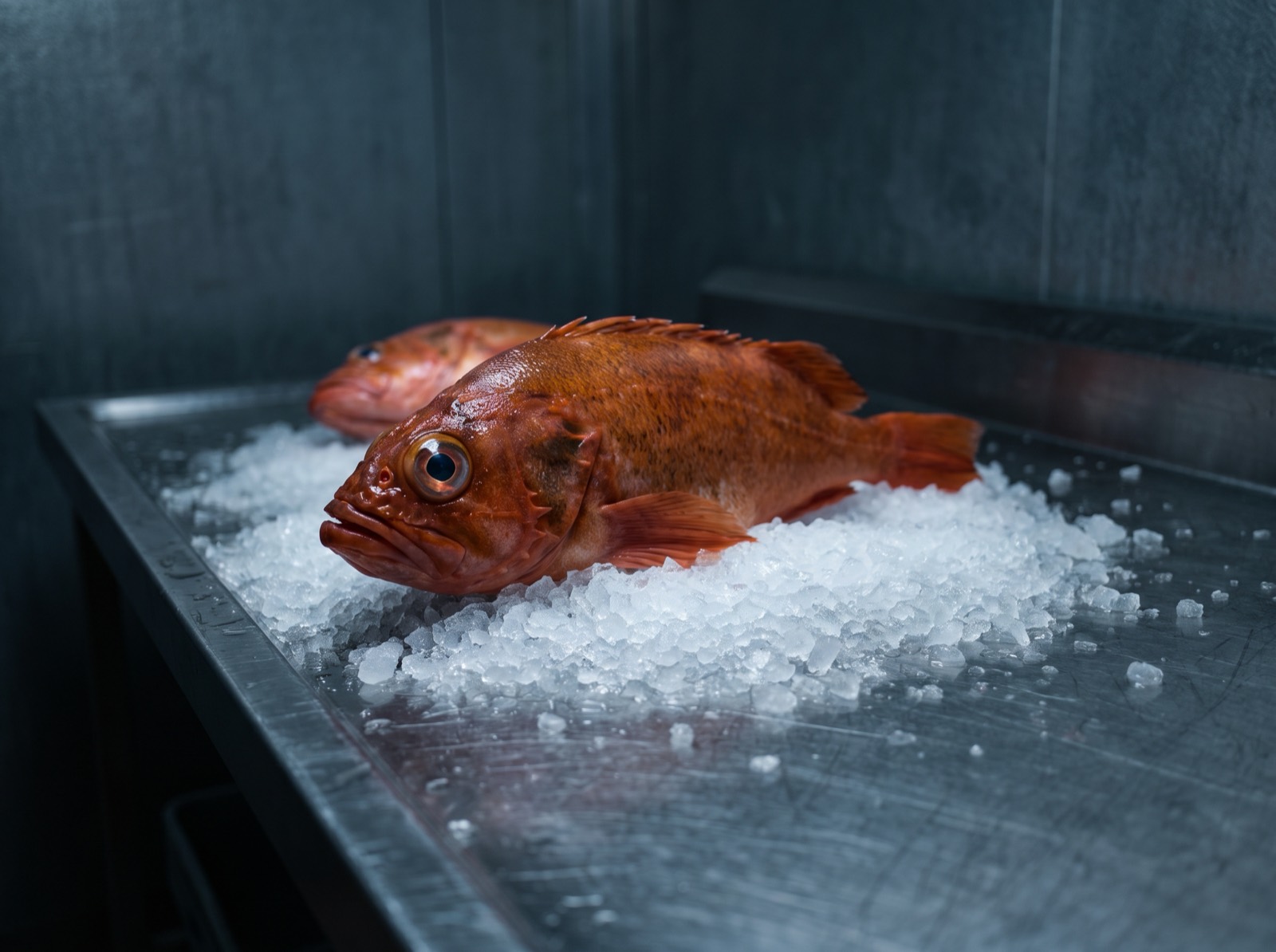
It carries dai in its name because red fish in Japan tend to. Everything else about it belongs to the deep water it comes from.

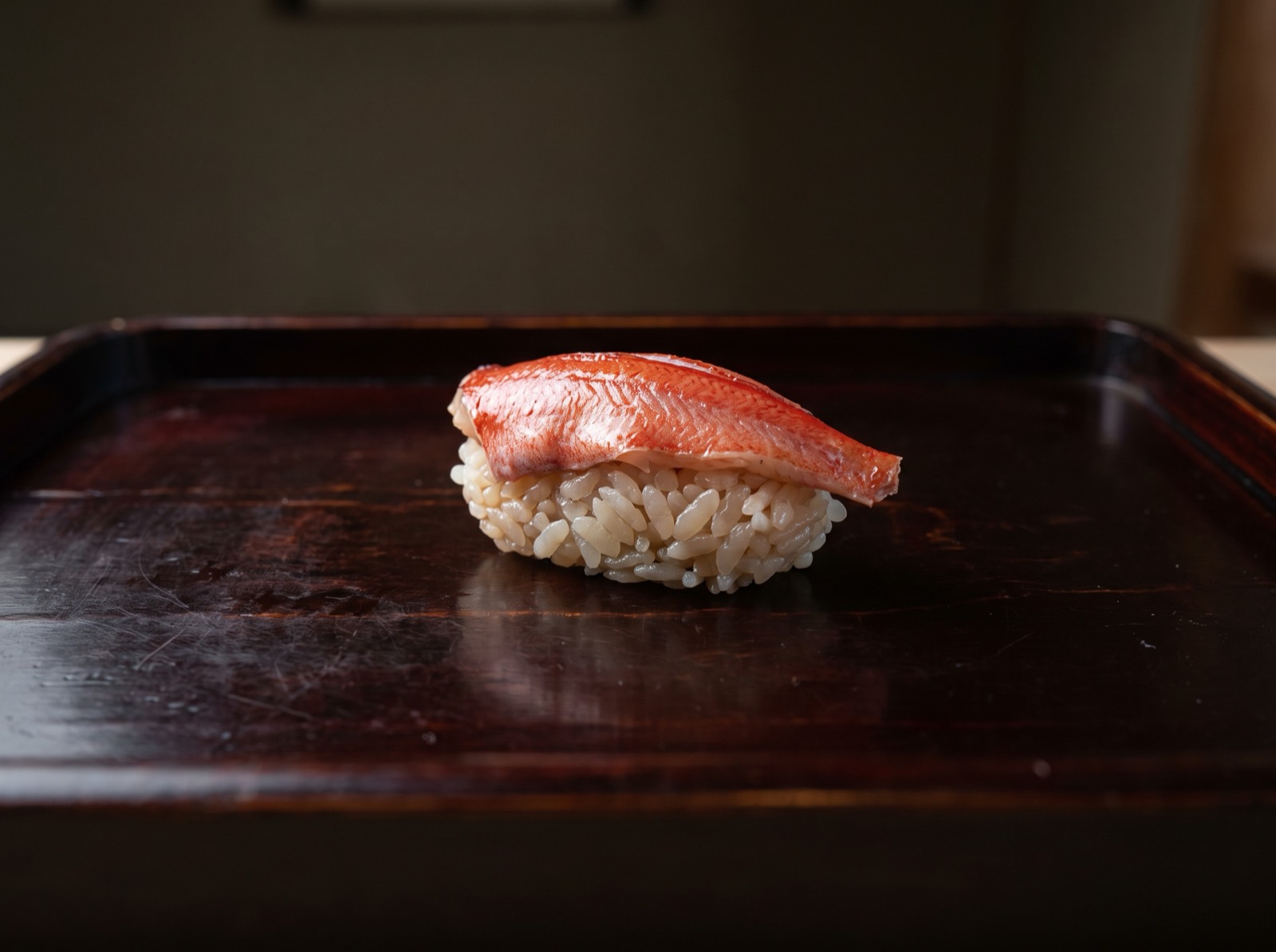
Its skin shines like kohada’s. Its flesh reads like hirame’s. For most of Edomae history the counter sided with the skin, and cured it.

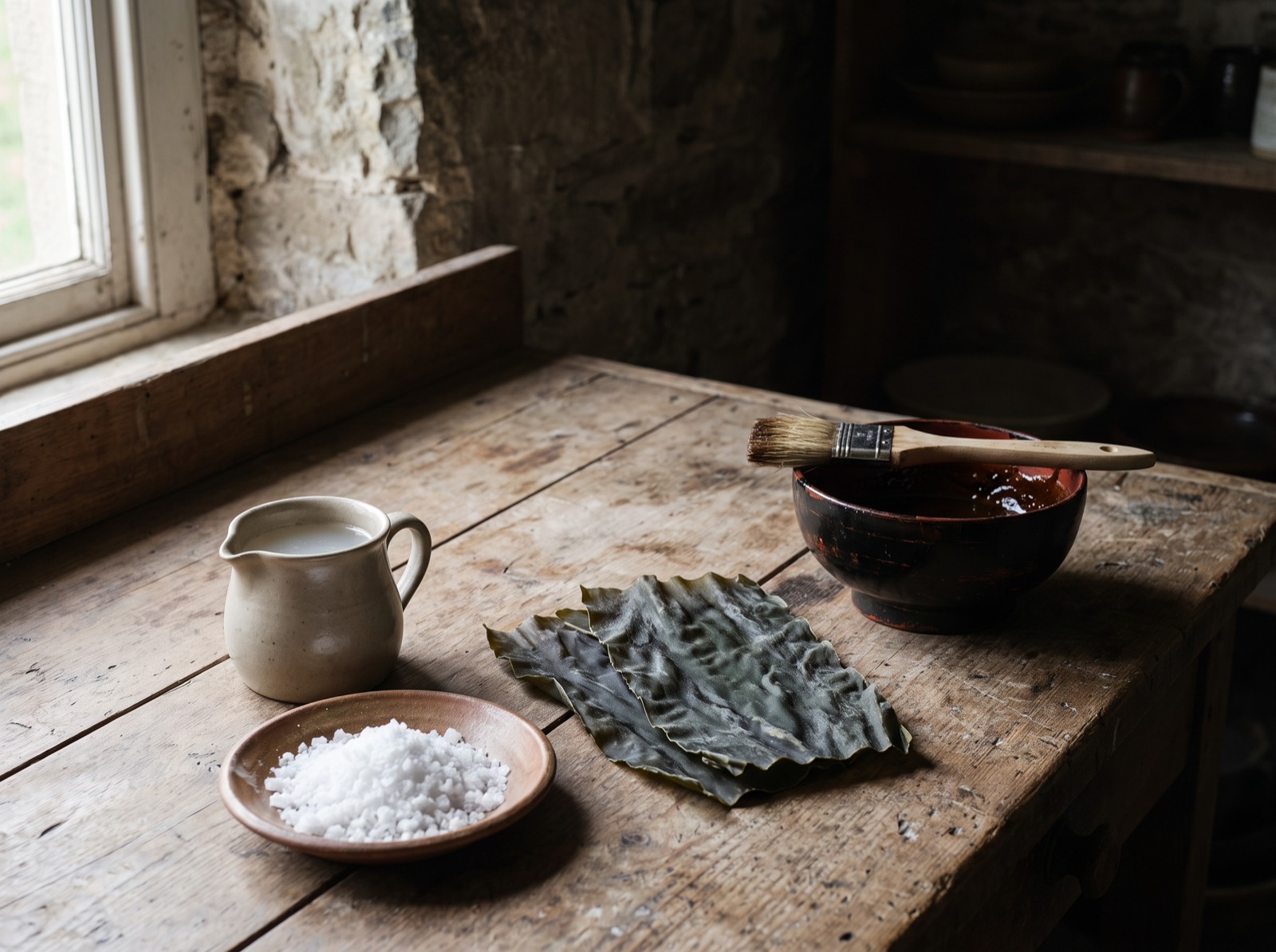
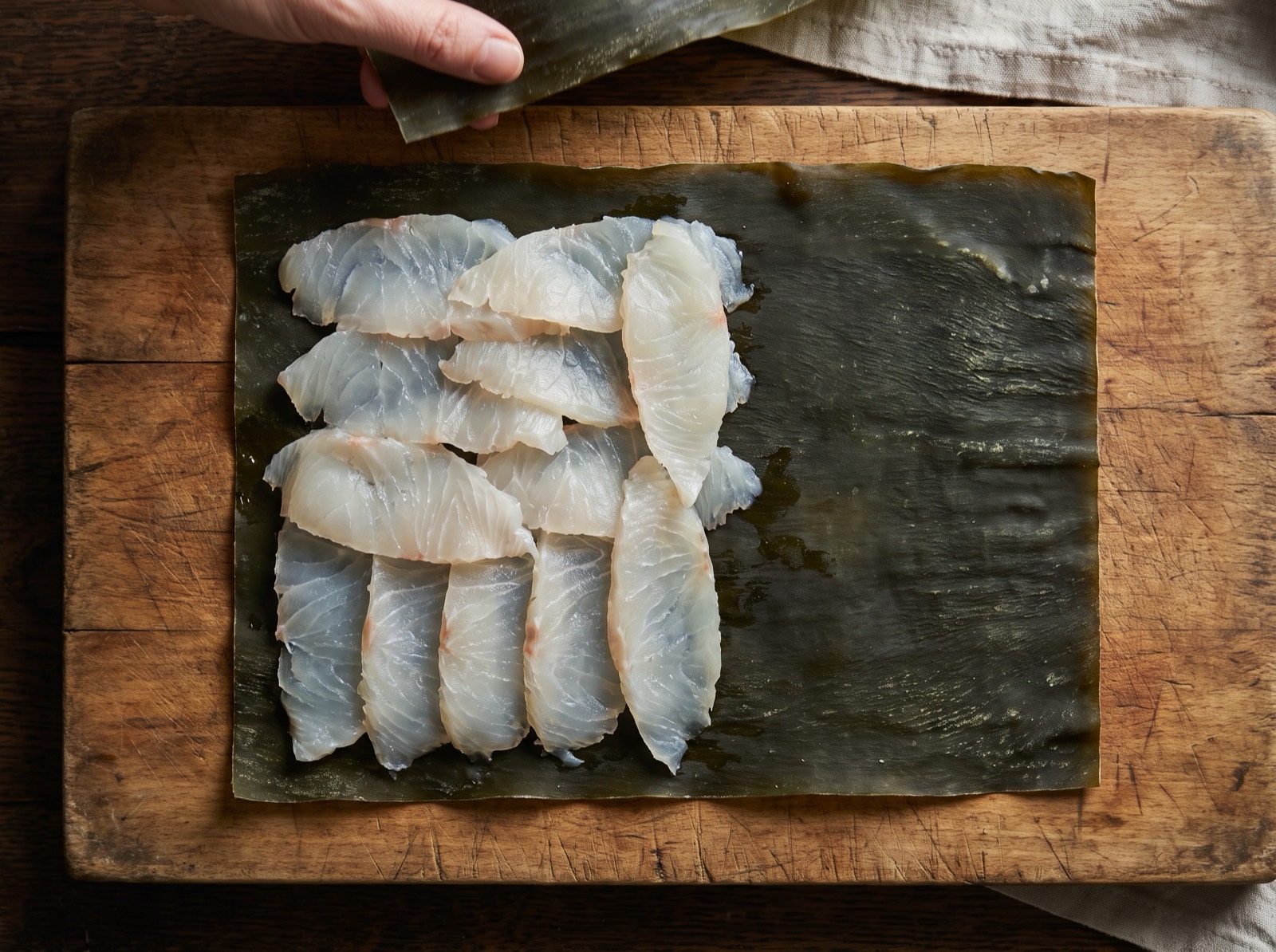
The same verb as su-jime, and almost nothing else in common: no vinegar, no acid, just a dried sheet of kelp trading the fish’s water for its own savour.

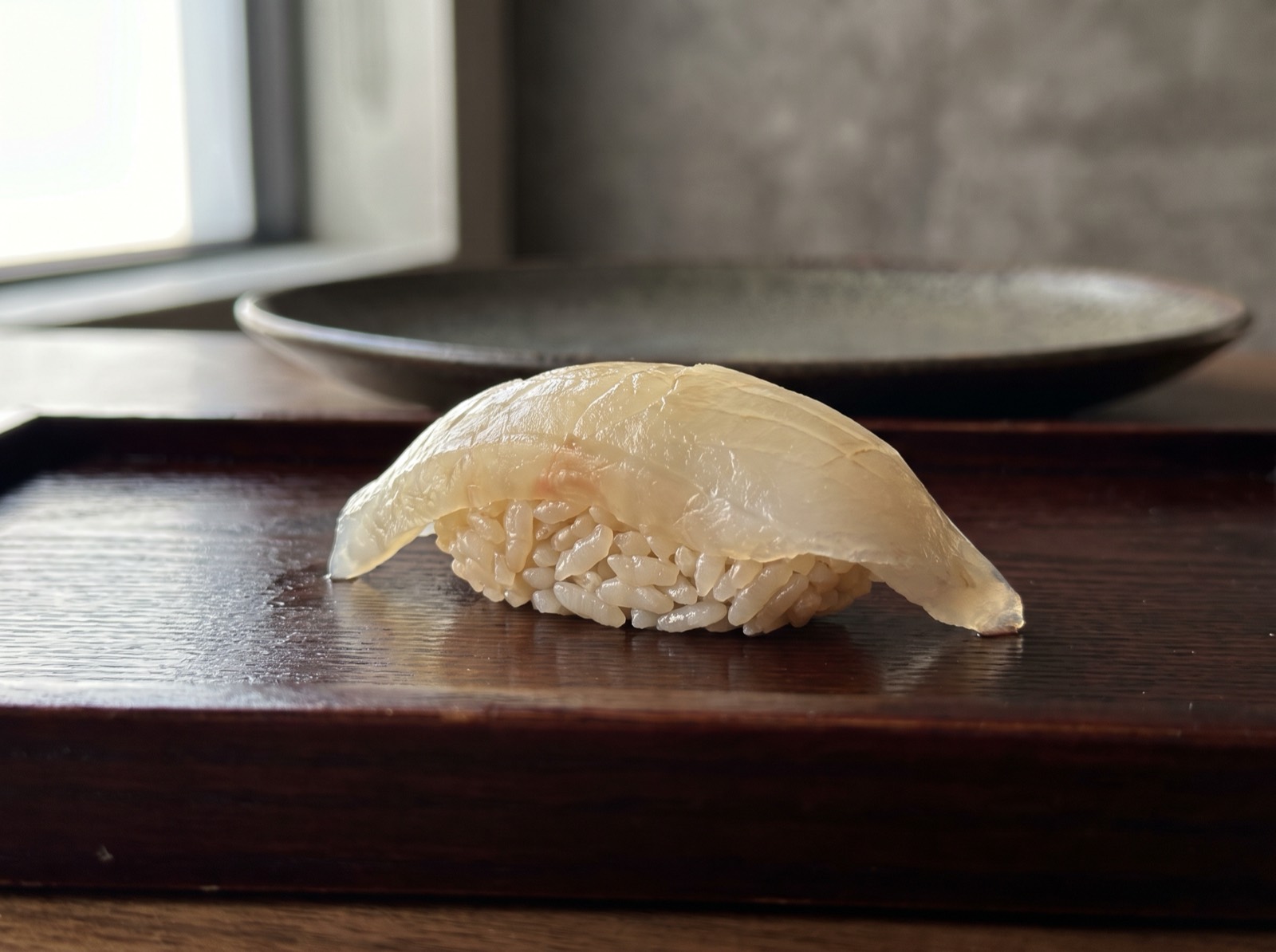
A lean white fish with almost no fat to hide behind. What a chef does to it in the hours before service is more of the piece than the fish itself.
The single most ordered word at a sushi counter is also one of the least specific. It names a category of fish, and leaves the rest of the sentence to the chef.
Rice on nori, filling in the middle, roll it up. The description takes one sentence. Getting the roll to come out round, centred and unbroken takes a great deal longer.
Most sushi clams are served whole, or close to it. This one is served for a single organ, and the rest of the animal never reaches the counter at all.

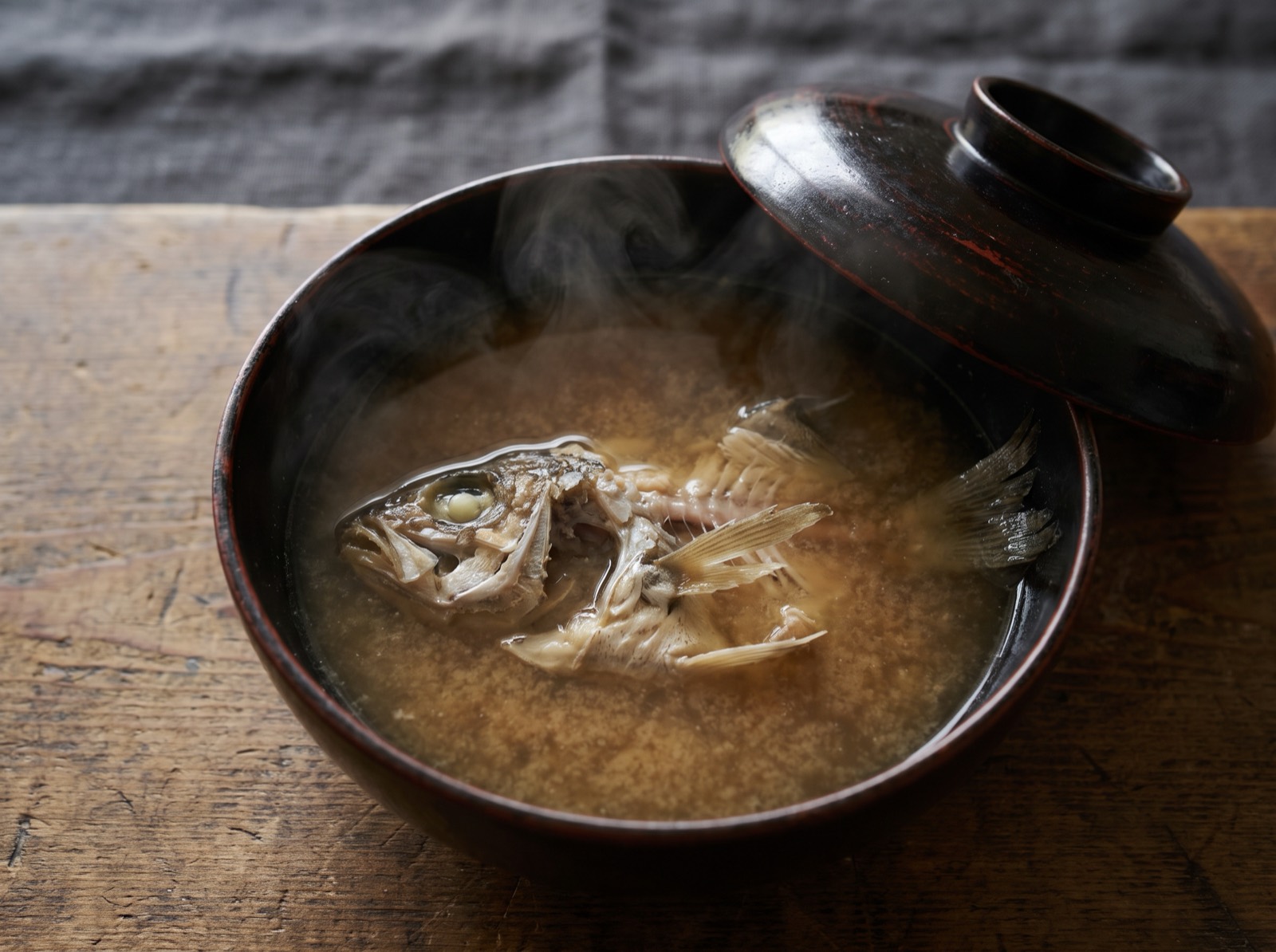
It might be miso, or it might not be. It might come last, mid-meal, or only if you ask for it. What ties most versions together is the base: not a general dashi, but often whatever was left of the fish once the nigiri was cut.

The same word covers a thrifty piece of counter craft and a manufactured product with added vegetable oil. Nothing on the label distinguishes them.
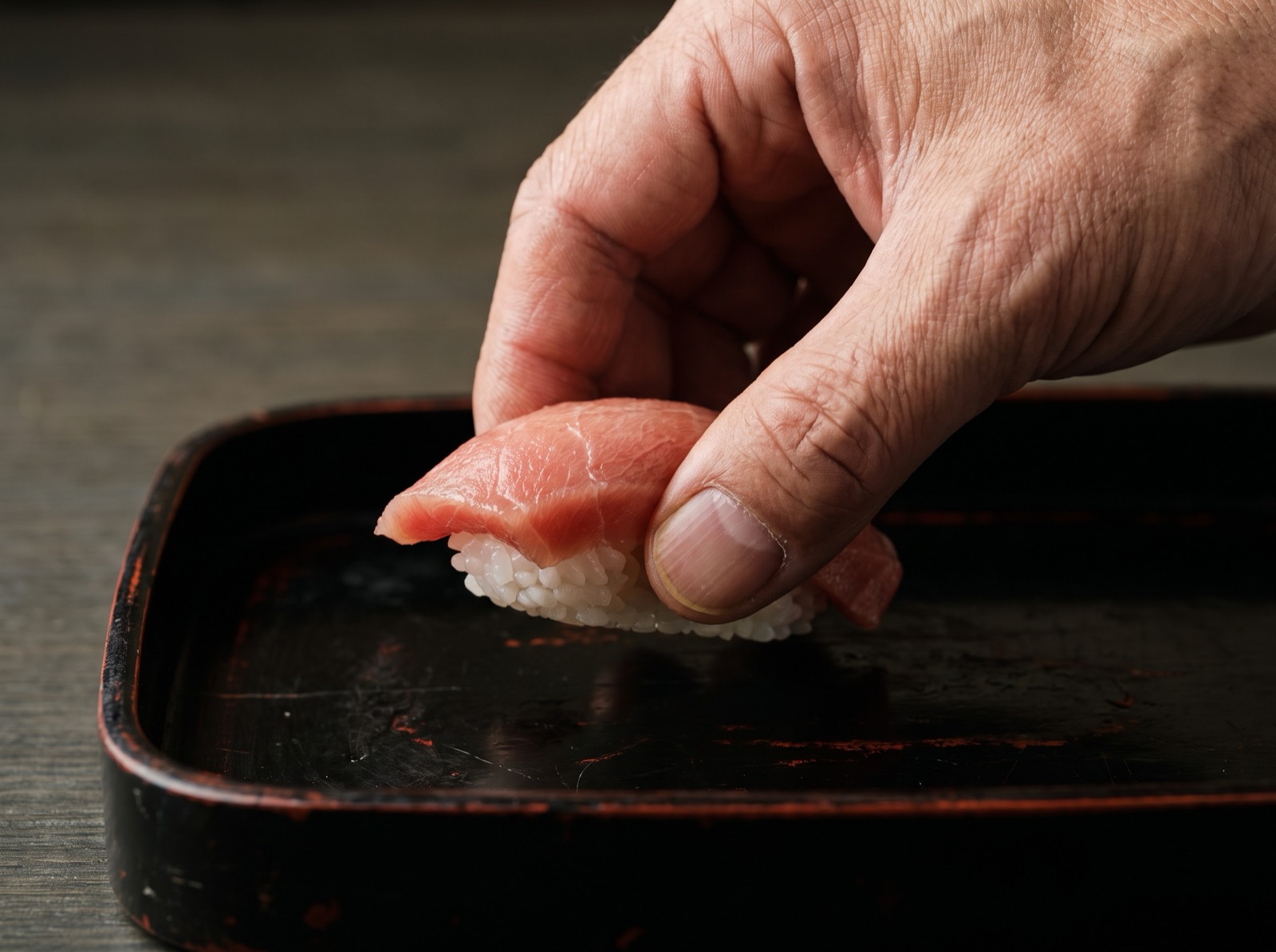
The word people reach for when they mean sushi at all. It names one specific thing: a topping pressed by hand onto rice, made new for every piece.

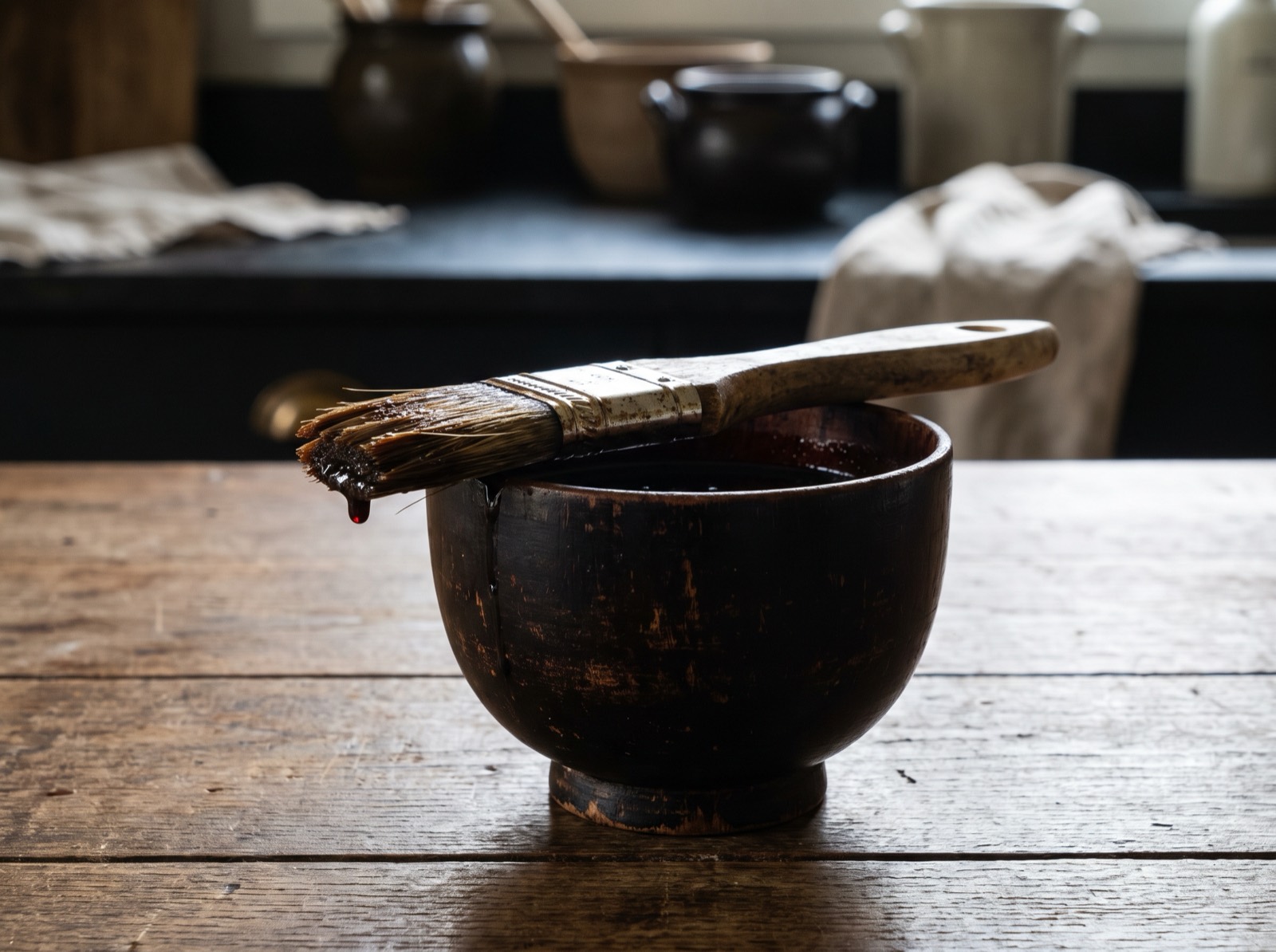
A small brush crosses the top of the fish, once, seconds before the piece reaches you. By the time it does, the seasoning decision has already been made — and it is not the same decision as the one behind the anago, or the one in the dish by your hand.

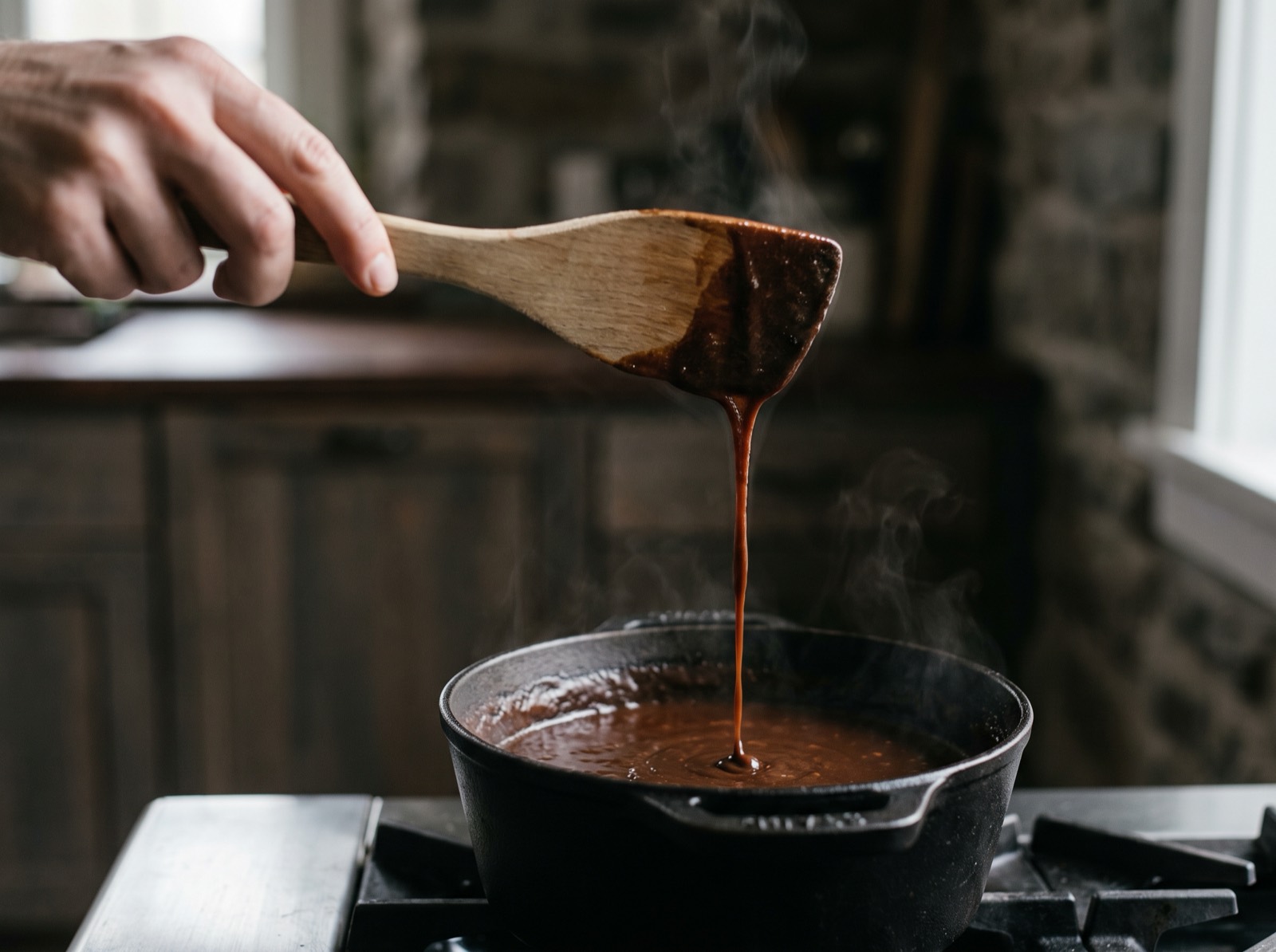
The same dark brushstroke turns up on conger, clam, octopus and mantis shrimp in a single evening, and none of them taste of quite the same pot. It is not a recipe. It is a decision, remade one reduction at a time.

The standard name is akamutsu. In the trade press that describes how chefs and shops actually talk about the fish, it survives mainly in parentheses. The popular name that replaced it, nodoguro, turns out not to be this fish's alone, either.

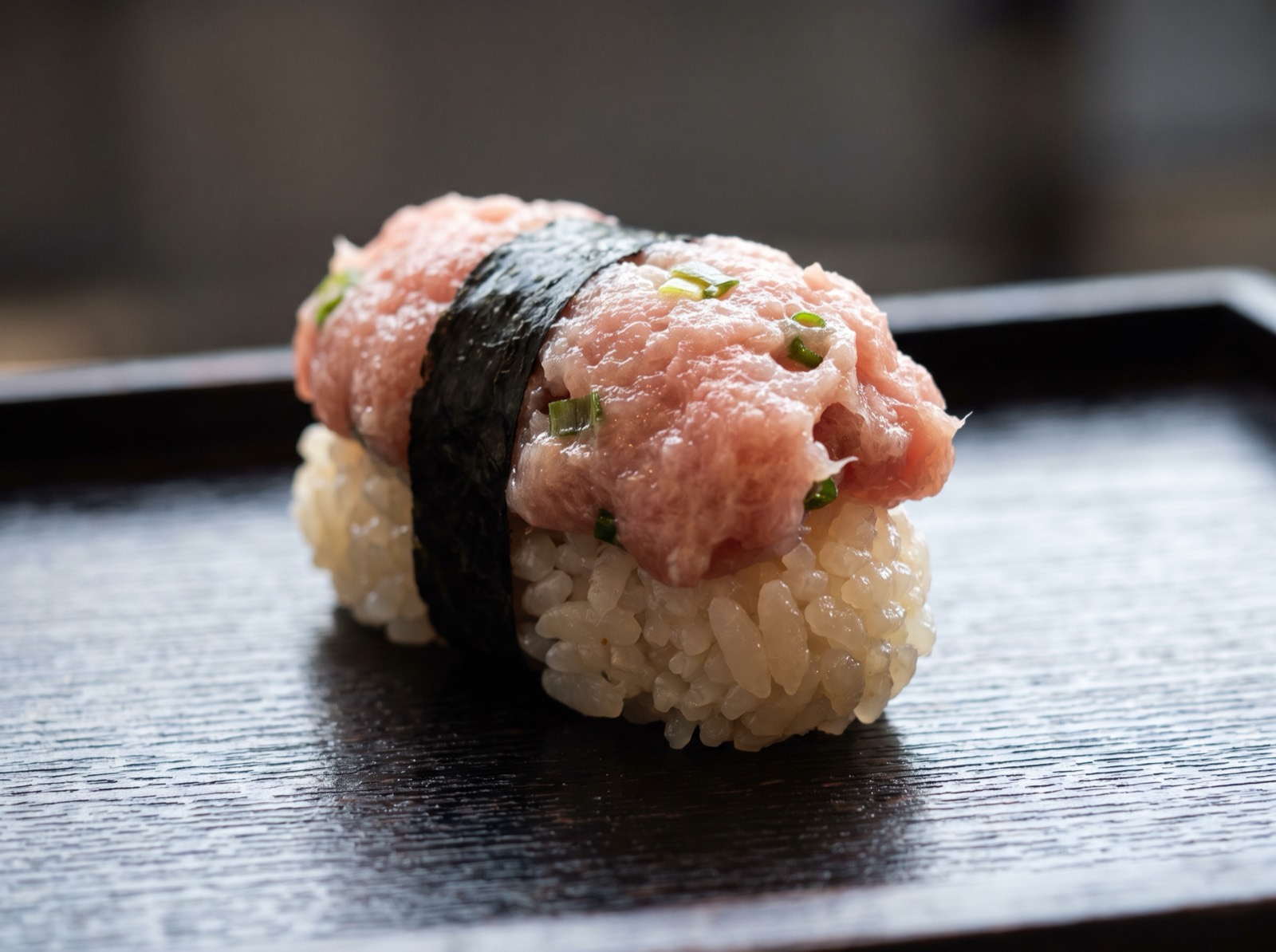
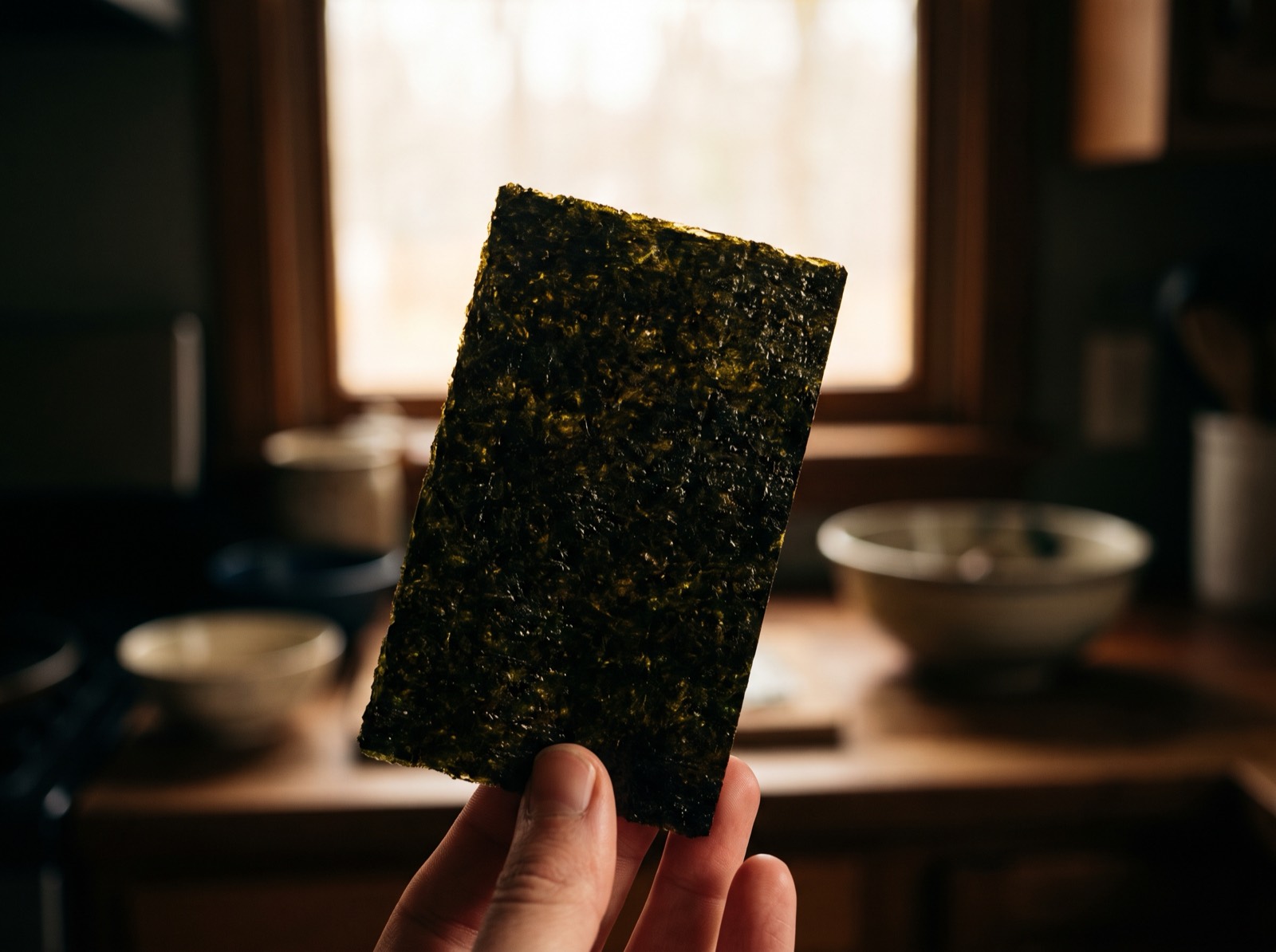
It is the only thing at a counter with a stopwatch on it. Everything about how gunkan and hand rolls are served follows from how fast a sheet of it gives up.

Nigiri is a performance that expires in seconds. Pressed sushi is the opposite proposition: made in advance, cut to order, and better for the wait.

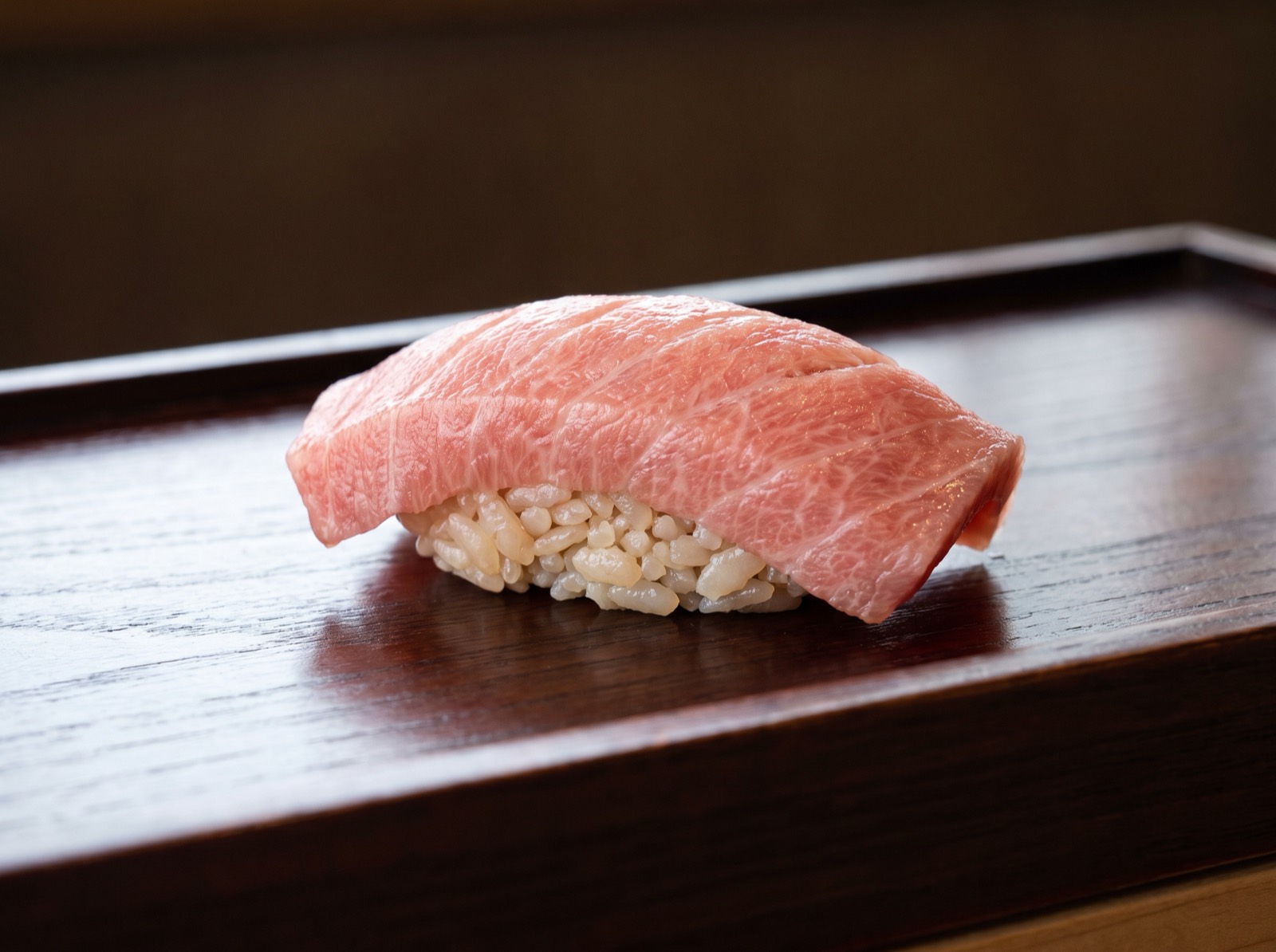
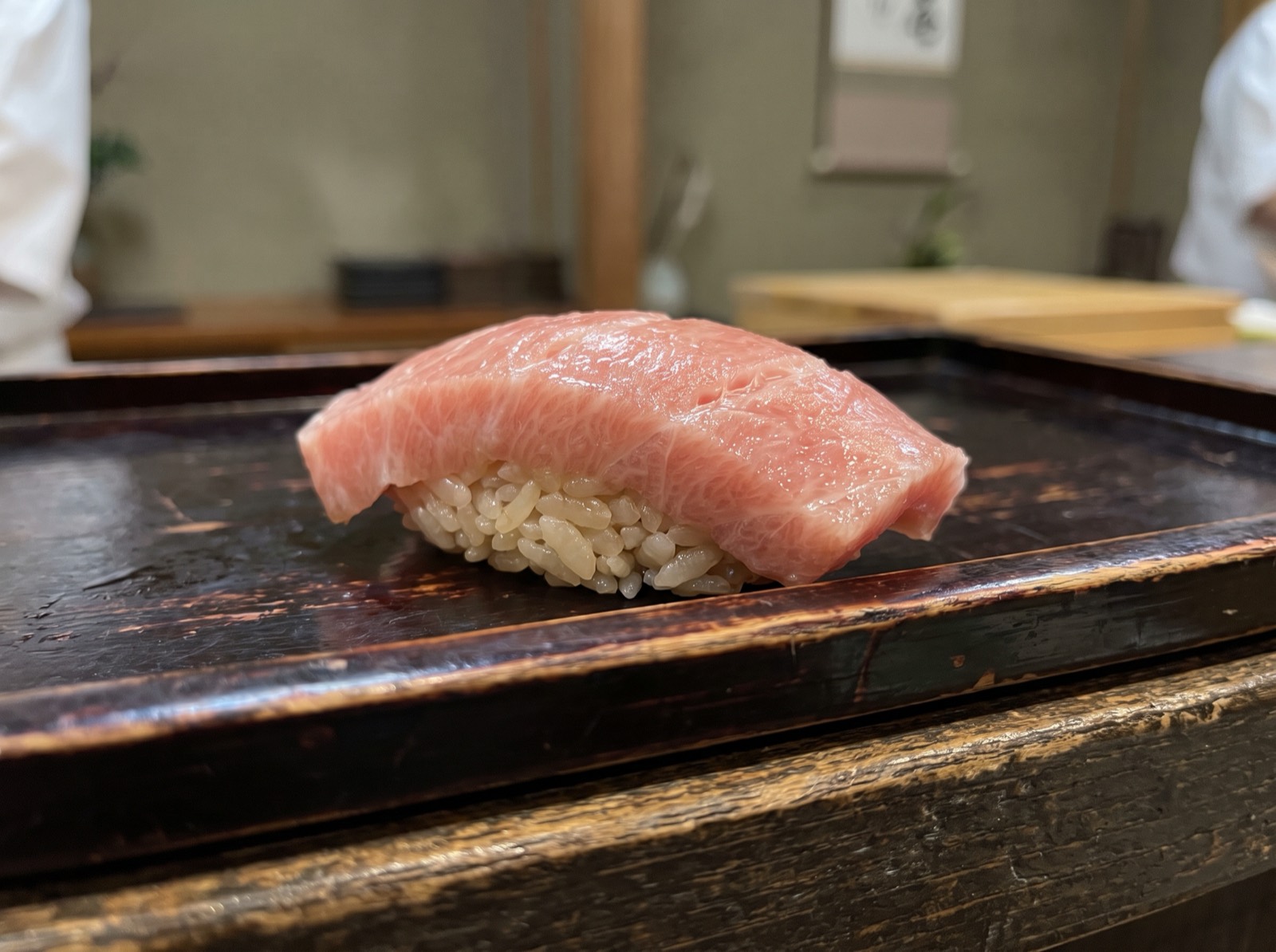
Before refrigeration, fat was a liability. The most prized cut at a modern counter was, within living memory, the part of the fish that was given to cats — and even they were said to step over it.

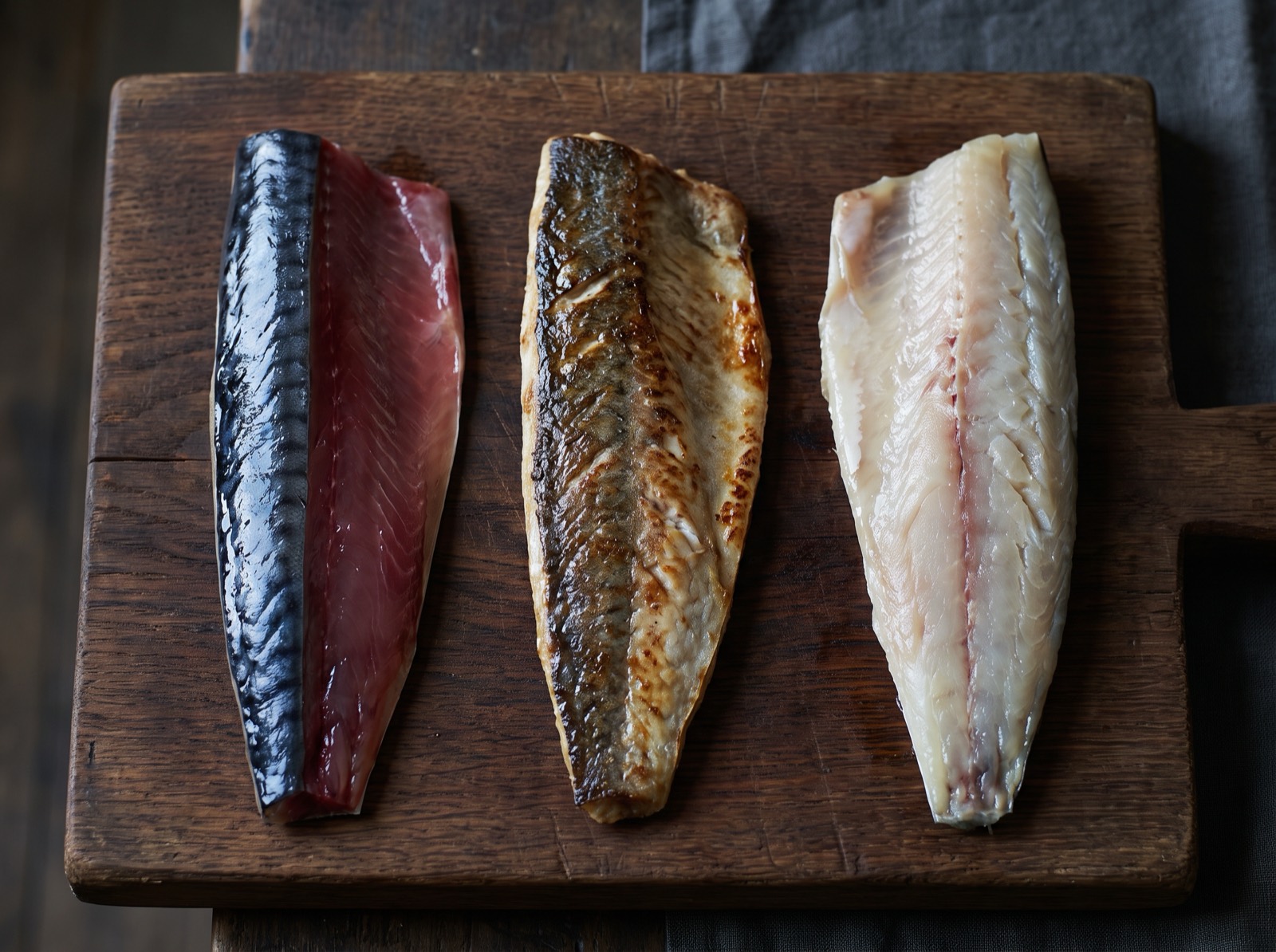
A Japanese proverb says this fish spoils while it is still alive. Everything done to it, from the cure to the pressed box in Osaka, follows from that one property.

Japanese kitchens knew this fish salted and grilled. Raw was a different question, and the answer was a parasite — what changed it was not taste but farming.

It is silver and oily like the fish this site already calls hikarimono, but whether a given counter cures it, sears it, or serves it as it is stays a decision the kitchen makes, not one the word settles.
The word describes a cut, not a category of food. Everything about how it is made follows from that one distinction.

The character on the menu names a season. Watch what a kitchen actually does with the fish, and the story gets less tidy fast.

Almost no fat, almost no flavour to lean on, and a body too thin to lie flat on rice. What is left for the chef to work with is the shape.

It looks like nothing else on the counter, it is not a prawn, and it used to come from the water Tokyo is built on.

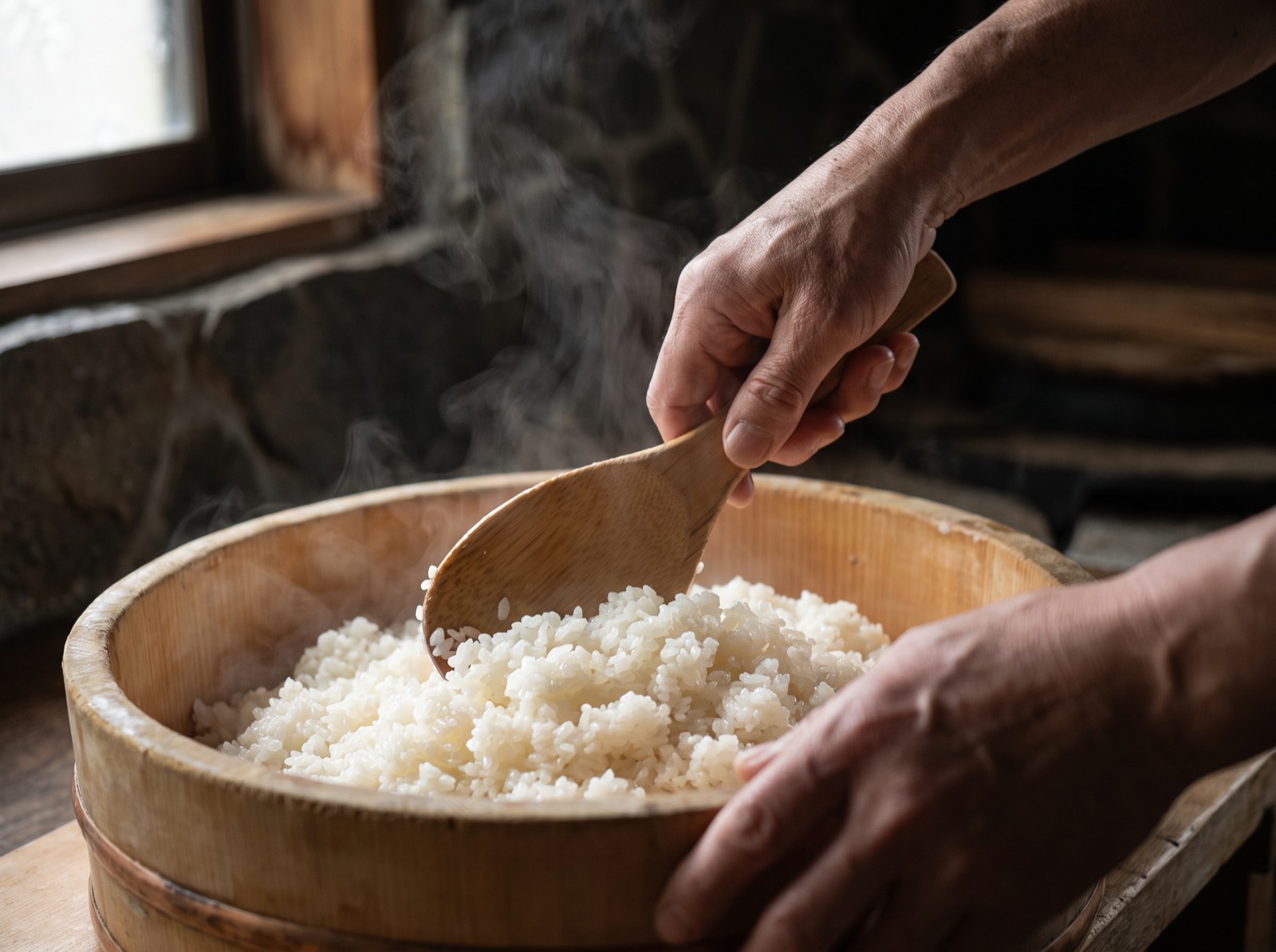
Visitors come for the fish. Chefs argue about the rice. Vinegar, salt, sugar, temperature and grain — five decisions that are made before the counter opens and cannot be corrected afterwards.

It belongs to the same family as the everyday horse mackerel and trades at several times the price. The difference is worth understanding.

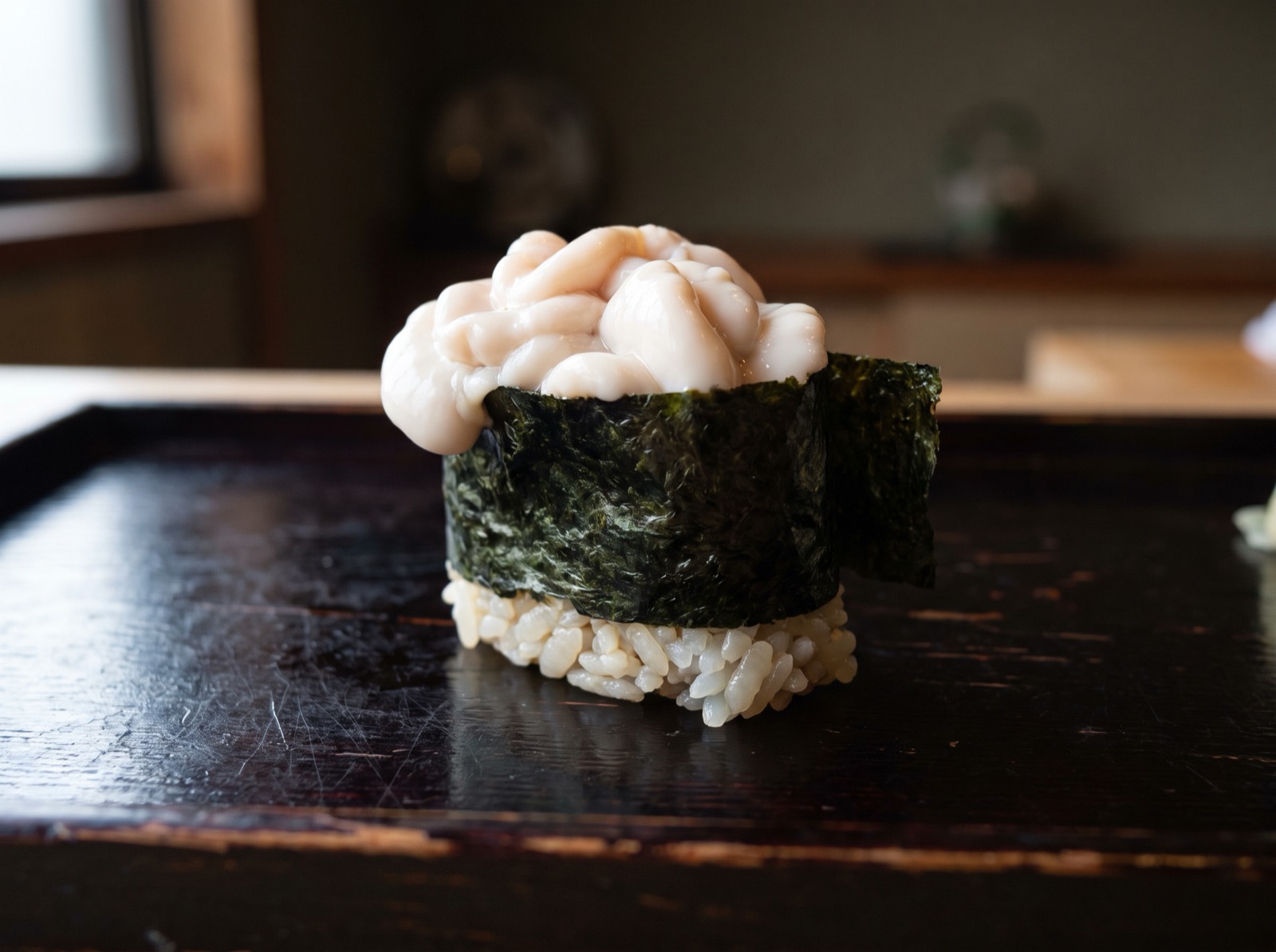
Every other item in this glossary that comes from inside a fish is roe, laid by a female. This is the corresponding organ from a male — and on one of its three source fish, the person allowed to handle it needs a licence.

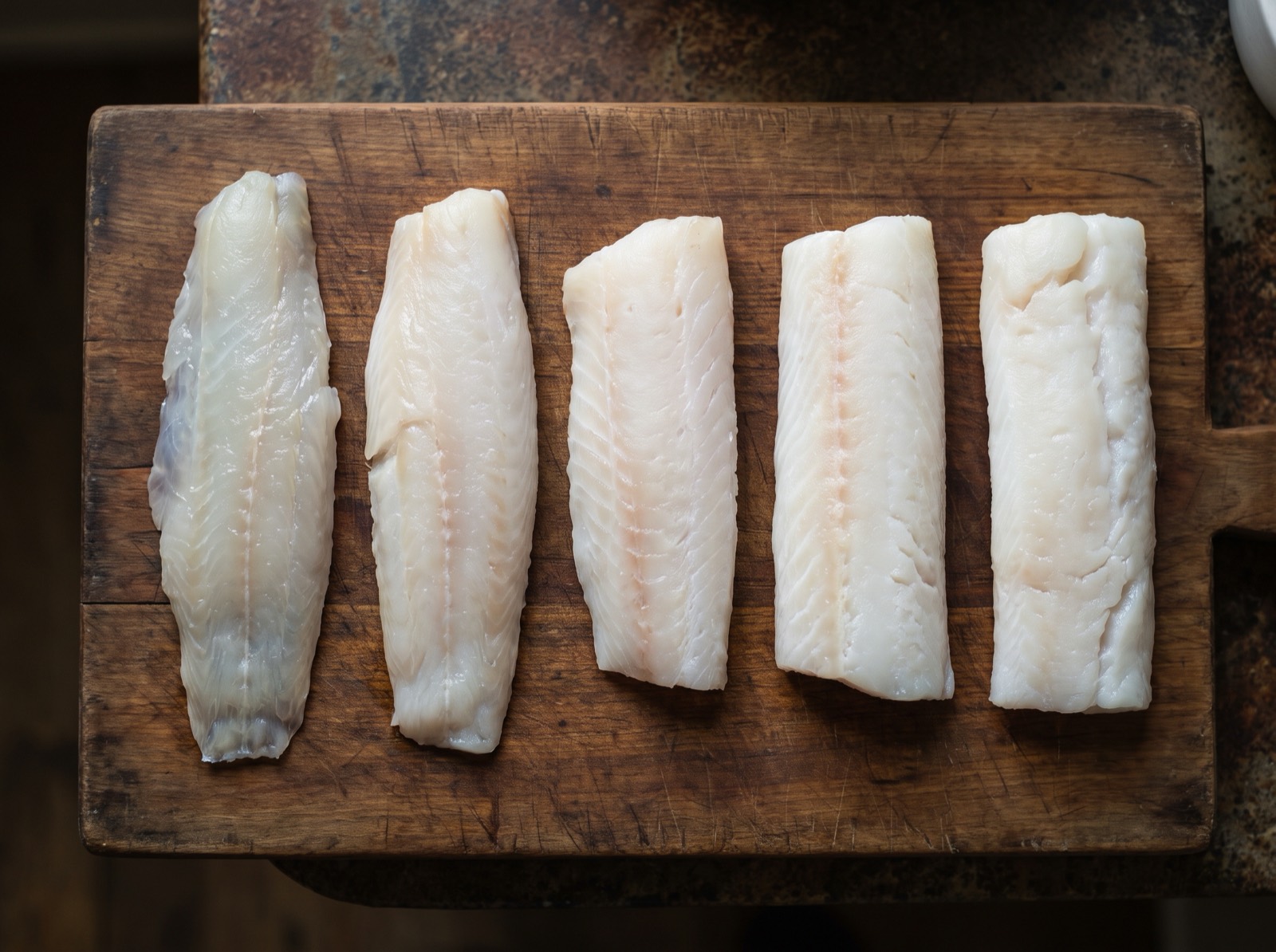
This site’s own fact index defines shiromi by one measurement — how much myoglobin the muscle carries — not by taste, not by name. Printed on a menu, it commits to that fact and nothing else. The fish is decided later, and told to you once, out loud.

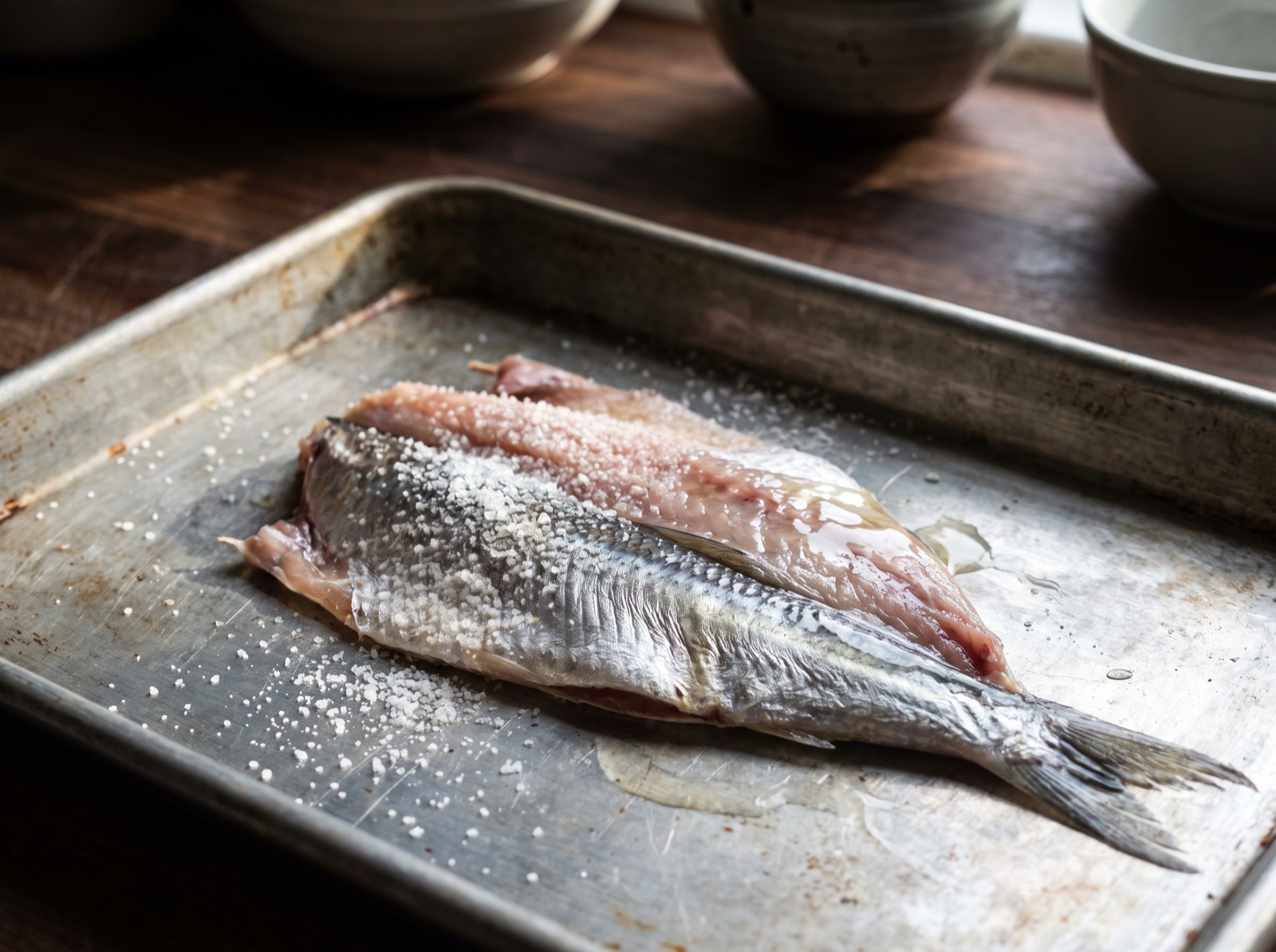
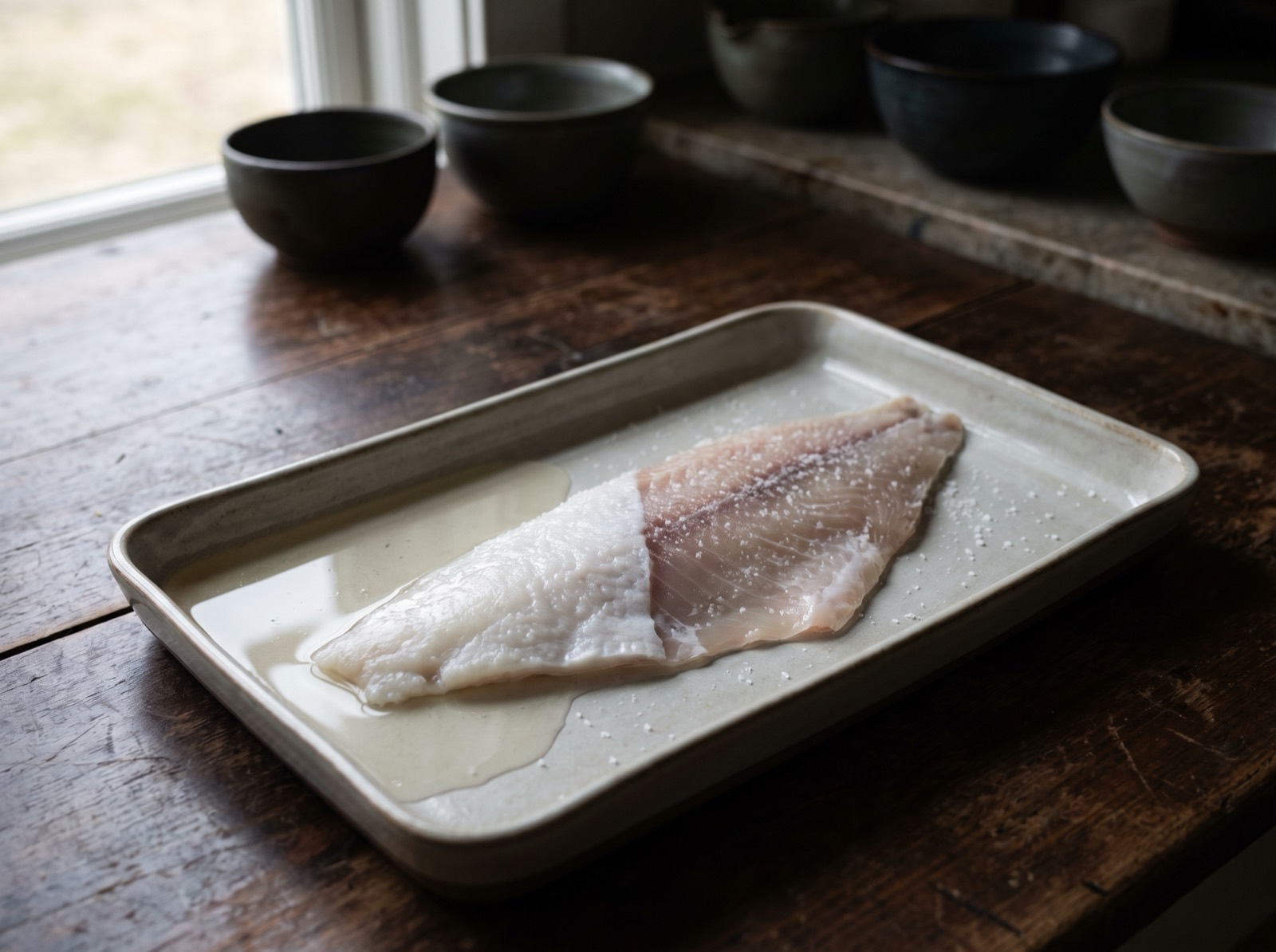
Salt first, then vinegar — two stages doing two different jobs, in an order this site’s own fact index treats as fixed even when the length of either stage never is.

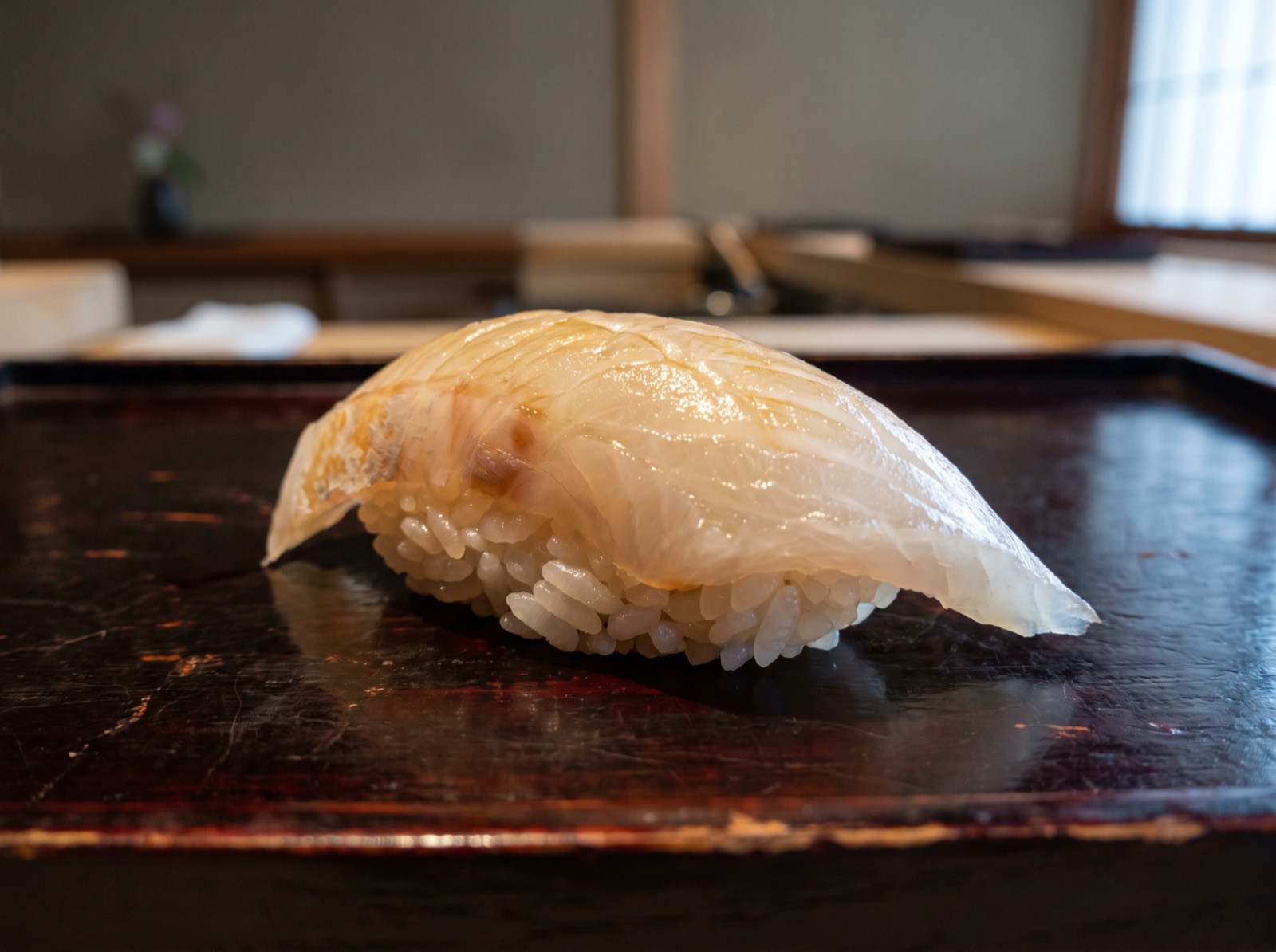
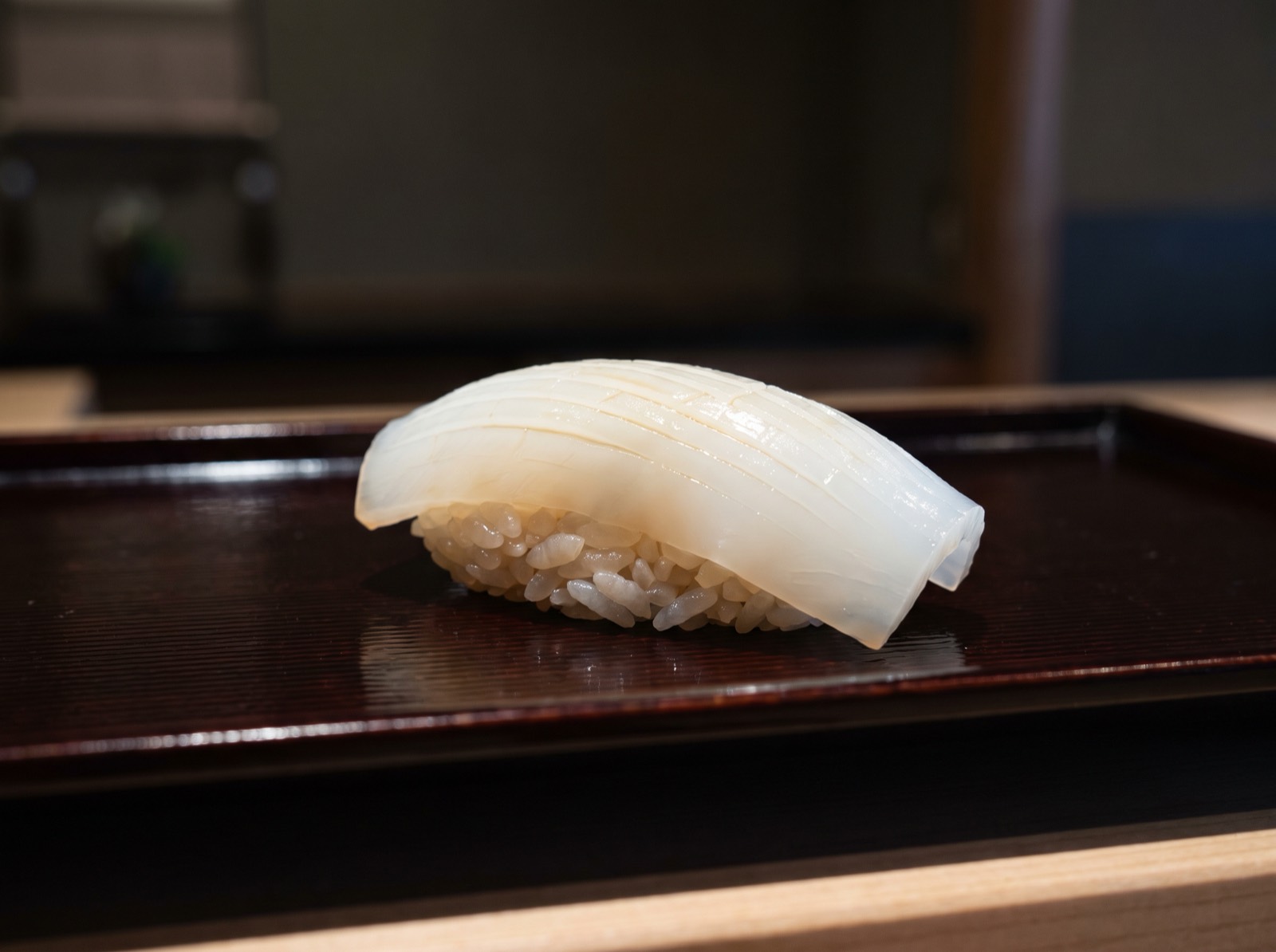
White, opaque, faintly sweet, and cut with a grid of shallow lines. Every one of those lines is doing a job.
The same fish carries three different names over its life, and only the last of them, the adult, is the one that reaches the counter as suzuki.

Order it beside hotate and you are eating the same organ twice, from two different animals. What differs is the cut, and everything that follows from cutting it the other way.

Boiled badly it is an eraser. Boiled well it is springy, sweet and faintly of the sea. There is very little in between, and no way to fix it afterwards.

Every other piece begins with something a chef bought. The egg begins with eggs, and everything after that is the kitchen's own decision.

Almost every rule of sushi etiquette is softer than visitors fear. This is the one item where a real rule exists, and it is about timing rather than manners.

Every other job at this counter can at least be watched beginning. This one is finished before the shell is ever shown to you — often finished before the piece ever reaches a kitchen at all.

The same word can mean a token dish before the rice, or half the evening in its own right — and which one you are getting is usually decided before you sit down.

The clearest surviving illustration of the Kanto–Kansai divide in Japanese cooking, and the fish whose peak season and peak consumption fall in opposite halves of the year.

Almost everyone who says they dislike uni has eaten uni that was chemically treated to hold its shape. The distinction is invisible on a menu and it decides the entire experience.

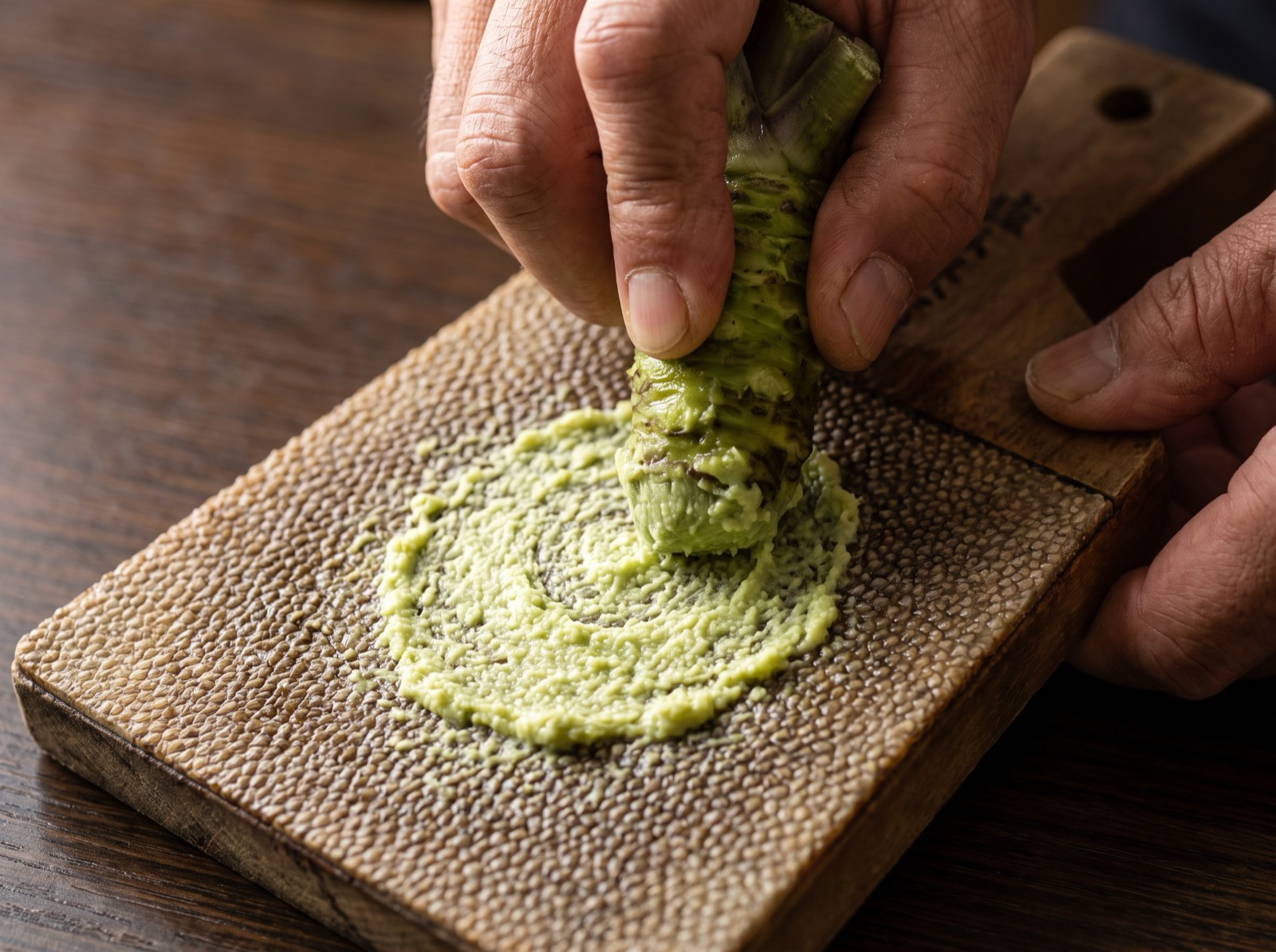
It is already in the piece. It is not a condiment you add, it does not kill anything, and the green paste most of the world has met is a different plant entirely.

Zuke was invented to keep tuna edible before refrigeration existed. That job disappeared decades ago — and instead of finding one new reason to survive, the technique split into two.
Last updated: