Book a counter for dinner at least a day ahead, and a well-known one considerably further. Give the shop four things when you do: how many of you there are, roughly what you want to spend, anything you cannot eat, and whether you intend to drink. All four change what the shop buys the following morning, which is the real reason a sushi booking is not the same as booking a table anywhere else.
Why the lead time is not a formality
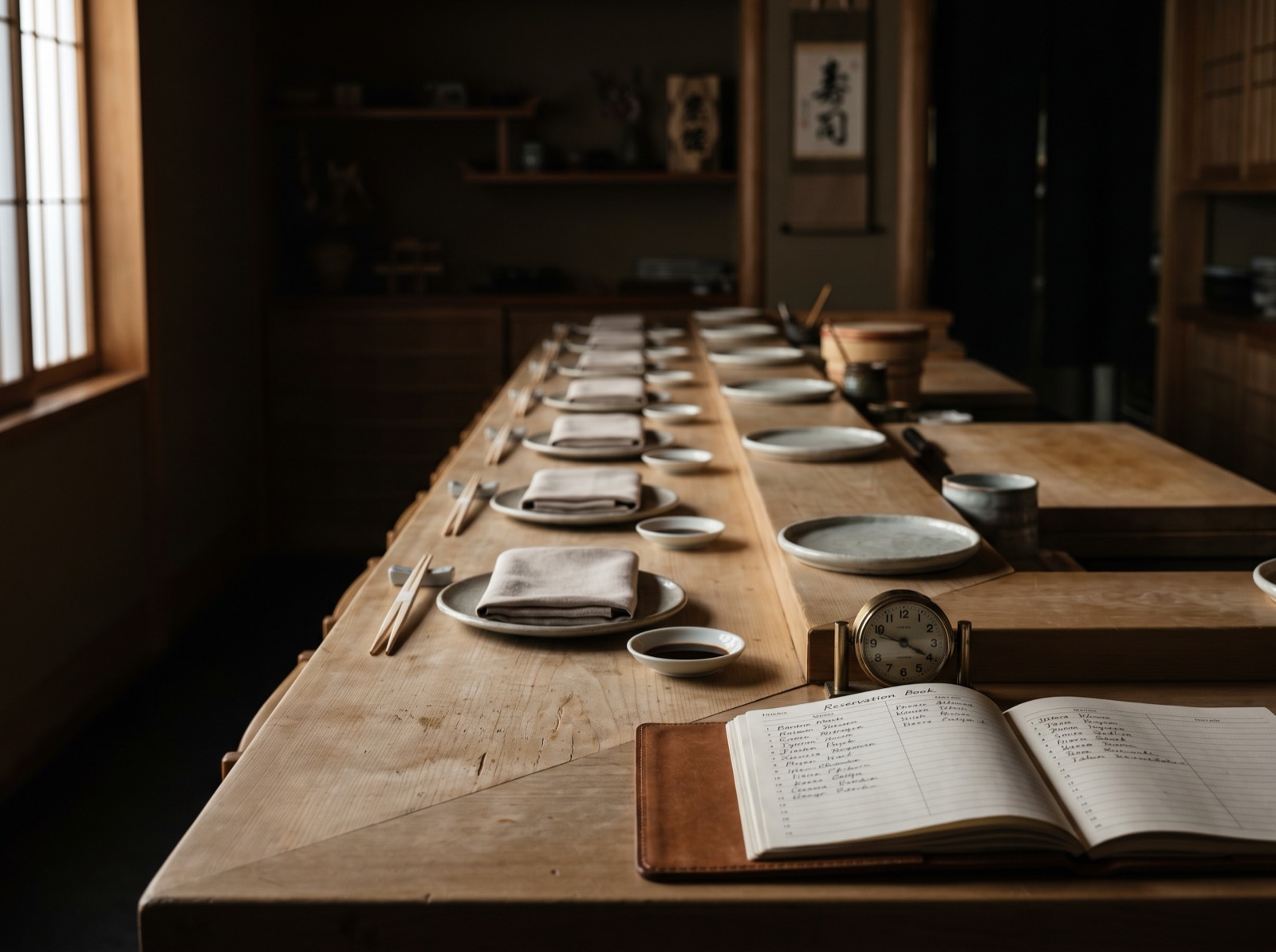
A counter buys fish for the number of people it expects. There is no store cupboard behind a sushi counter and very little that keeps; the order placed at the market is sized against the reservations book. Booking late does not merely inconvenience the shop, it changes what is available to serve you. Booking for four and arriving as two is worse still, and is the one discourtesy that Japanese books on the subject name explicitly.
As a rough shape: a neighbourhood counter, one or two days. A shop people travel for, several weeks to a few months, and the booking window often opens on a fixed date — the first of the month, two months out, that kind of rule. Conveyor-belt sushi generally takes no booking at all; you take a ticket from a machine at the door and wait for your number.
The four ways in
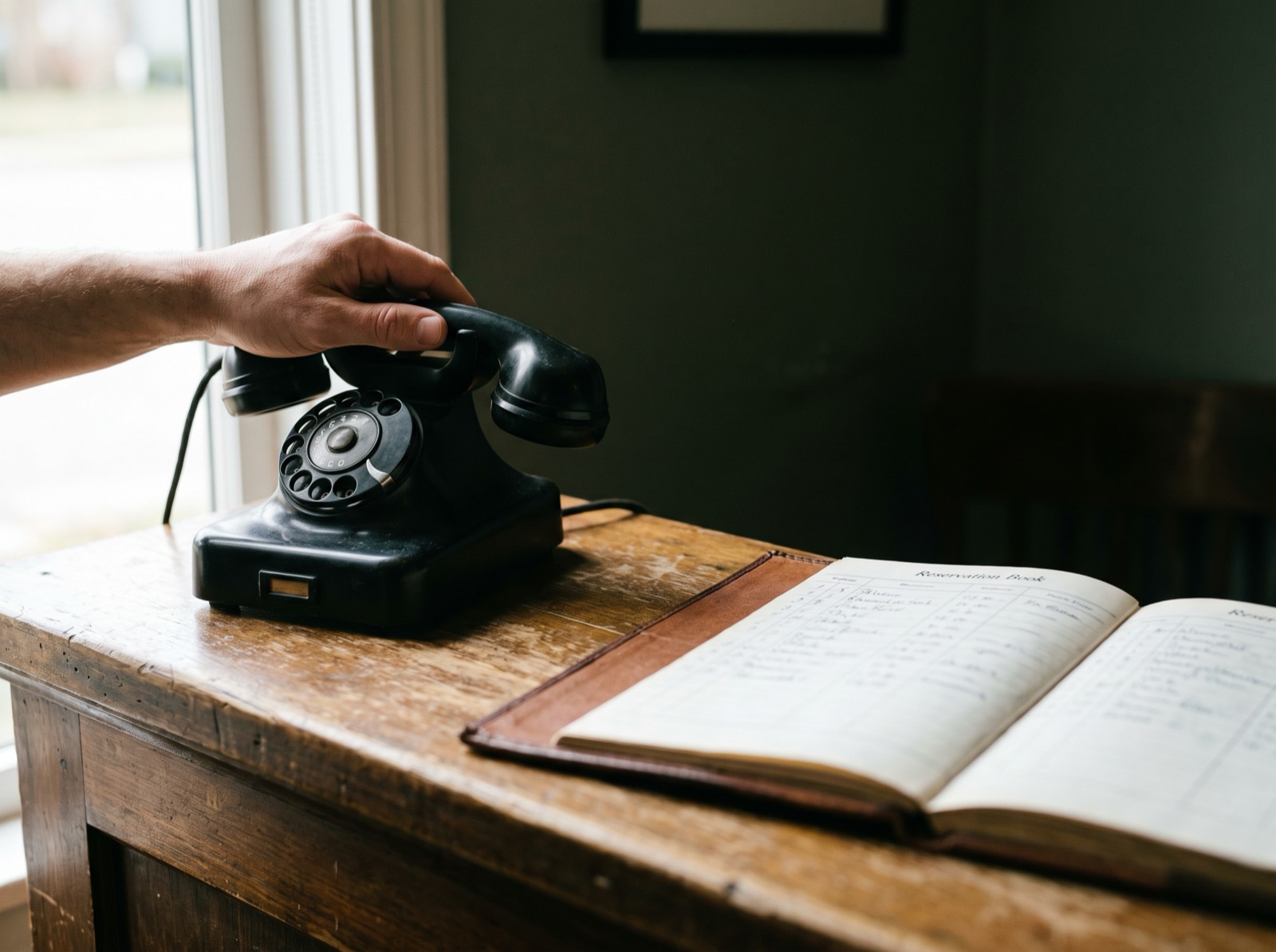
- The telephone. Still the only channel at a good many counters, and the fastest way to ask a question rather than fill in a box. Call just after opening time — that is the quietest moment and the most likely to reach somebody who can talk.
- The shop’s own online booking. Increasingly common, usually a calendar with a fixed set of start times. Convenient, but it will not answer a question, and the free-text box is often the only place to put a budget or an allergy.
- A reservation platform. Several operate in Japan, some with English interfaces, some taking card details as a guarantee. They are how a sizeable share of counter seats are now sold. We do not name or rank them, for the same reason we do not name shops.
- A hotel concierge. The most underused route by visitors, and the one that solves the phone-only problem outright. A concierge at a business or luxury hotel will make the call in Japanese, ask your questions, and pass on the answers. Give them the budget and the date; ask them to confirm what is included.
There is a fifth, which is walking in, and it works better than visitors expect at shops with twenty-odd seats and a menu of sets, and essentially never at an eight-seat counter running one sitting. Choosing between those two shapes of shop is covered in how to choose a sushi restaurant.
What to say when you get through
Japanese sushi books set out the content of the call in almost exactly this order, and it is worth having it written down before you dial.
- The date, the time and the number of people. Say the number twice if the line is poor; it is the single piece of information the shop will act on tomorrow morning.
- A budget. “Omakase, around this much per person” is a normal thing to say, and the shop will tell you plainly whether it fits or what their own figure is. If it does not suit you, thanking them and declining is entirely acceptable.
- Anything you cannot eat. Allergies, shellfish, raw fish for one member of the party, no alcohol. Said at the booking this is easy to accommodate; said at the counter it means a piece has to be remade.
- Whether you plan to drink. Shops lay in food to go with sake, and knowing in advance whether the evening is a drinking one changes what they prepare. It also changes your bill, since a quoted per-person price almost always covers the sushi only.
- Anything you particularly want. Name it now and the shop can buy it. Turn up hoping for it and it may well have gone by seven o’clock.
A sushi booking is not a request for a table. It is an order placed against your name at a market you will never see.
A few lines that will carry the call
Nobody at a Japanese counter expects a foreign caller to be fluent, and a handful of clear phrases will get further than a fluent sentence delivered fast. Say the numbers slowly.
- “A reservation, please.” — Yoyaku o onegai shimasu.
- “Two people, tomorrow at seven.” — Ashita, shichi-ji, futari desu.
- “Do you speak English?” — Eigo wa daijōbu desu ka.
- “How much is it per person?” — Hitori-mae ikura desu ka.
- “I cannot eat shellfish.” — Kai wa taberaremasen.
- “Thank you — I’ll call again.” — Arigatō gozaimasu, mata renraku shimasu.
Deposits, cards and what a no-show costs
Taking card details as a guarantee has become normal at the upper end and on the platforms, and a shop that does it will state its own terms at the point of booking. Read them, because the terms at a small counter are stricter than the terms at a restaurant with sixty covers, and for a defensible reason: an empty seat at an eight-seat counter is one eighth of an evening that was bought at the market that morning.
Typical published practice runs to a charge of some or all of the course price for a cancellation inside a day or two, tapering as the notice lengthens, with no charge at a week or more. The figures vary widely enough that quoting a standard one would be misleading. Assume that inside forty-eight hours you owe the shop something, and that the amount is on the page you agreed to.
If your numbers change
Tell them the moment you know, and do it by telephone rather than by email if the change is for today. Reducing a party of four to two is a material change and is best done with as much notice as you can manage. Increasing it is often harder than reducing it, since the seats may simply not exist; ask rather than assume, and be ready to be told no.
If you are going to be late, call. Ten minutes is a courtesy call at a shop with tables and a genuine problem at a counter running a single sitting, where a course is timed as a sequence and a late arrival is served a compressed version of the meal they booked. If you are going to be very late, say so honestly and offer to release the seat.
What a booking does not buy you
It does not fix the menu. At a counter the fish is whatever came in, and a course promised as twenty pieces may arrive as eighteen larger ones or twenty-two smaller ones depending on the morning. It does not usually fix the finishing time either — see how long omakase takes before booking a show afterwards. And a per-person figure quoted on the telephone is the sushi; drinks, an opening dish, a service charge at some shops and 10% consumption tax may sit on top.
None of which is a warning. It is simply the shape of the thing you are booking: not a table for two at eight, but a place in a sequence that somebody will begin planning at the market tomorrow morning.
Frequently asked questions
How far in advance should I book sushi in Japan?
A day or two for a neighbourhood counter. Several weeks to a few months for a shop with a strong reputation, where the booking window frequently opens on a fixed date each month. Conveyor-belt sushi generally takes no booking at all.
Can I book a sushi restaurant in Japan if I do not speak Japanese?
Yes. Many counters take online bookings, several reservation platforms operate in English, and a hotel concierge will make the call for you in Japanese and relay the answers. The phone-only shop with no English is the one case where the concierge route is genuinely the answer rather than a convenience.
Is it acceptable to state a budget when booking?
Yes, and Japanese books on eating at sushi counters recommend it. "Omakase, around this much per person" is an ordinary sentence. The shop will tell you whether it works or what their own figure is, and you may decline politely if it does not suit.
What happens if I do not turn up?
At a small counter, you will normally be charged, and the shop will have told you the terms when you booked. The seat was one eighth of an evening and the fish was bought against your name. Cancel as early as you can; inside a day or two, expect to owe something.
Can I change the number of people after booking?
Tell the shop as soon as you know. Reducing the party is a material change because the fish order was sized against it; increasing it may be impossible at a small counter. Either way, telephone rather than email if the date is imminent.
Do I need to book lunch?
Usually not at a shop serving set lunches, which is part of why lunch is such a useful way to try a counter before committing to its evening service. Small counters that open at lunch with a single sitting are the exception, and they will say so.