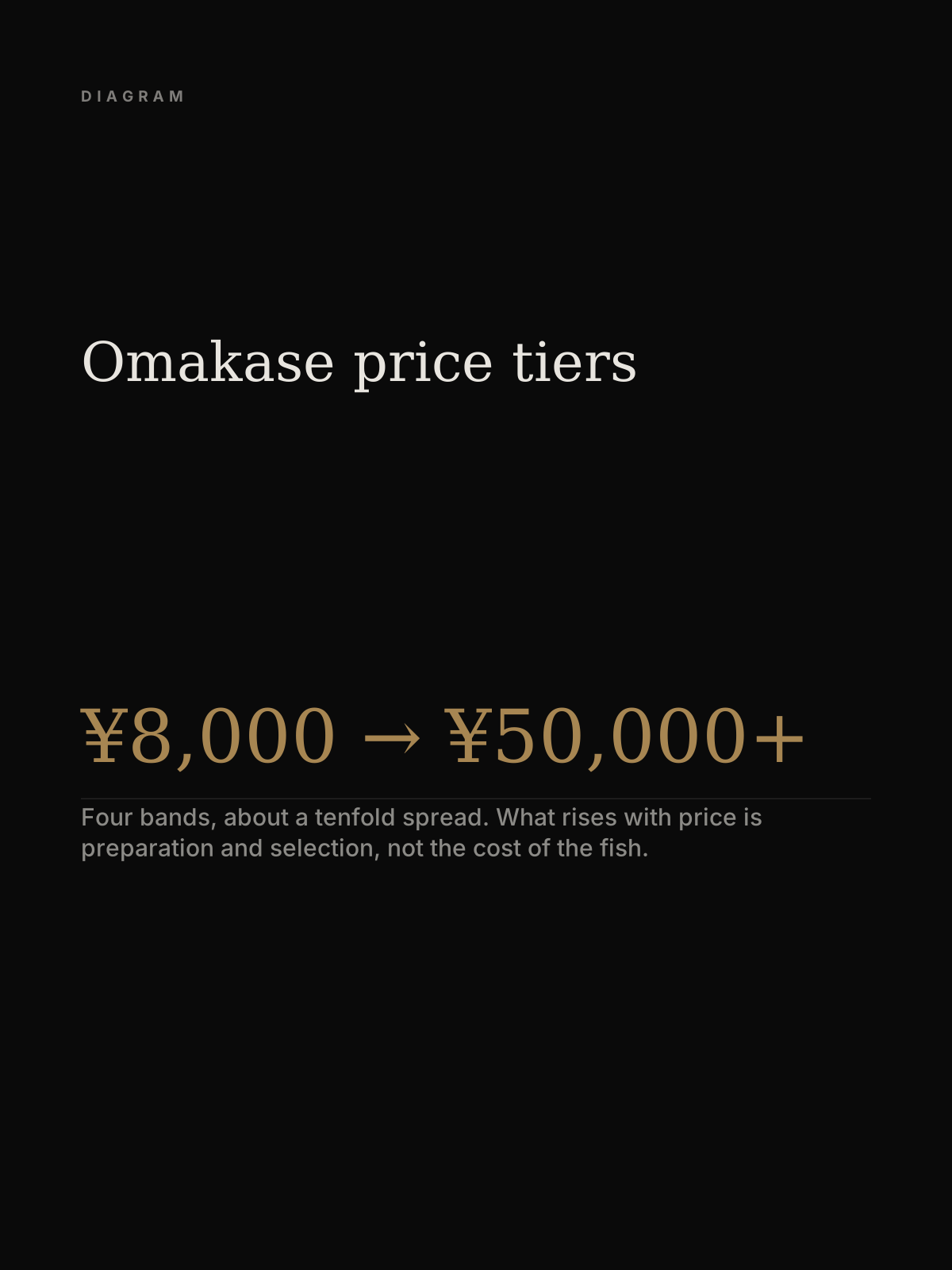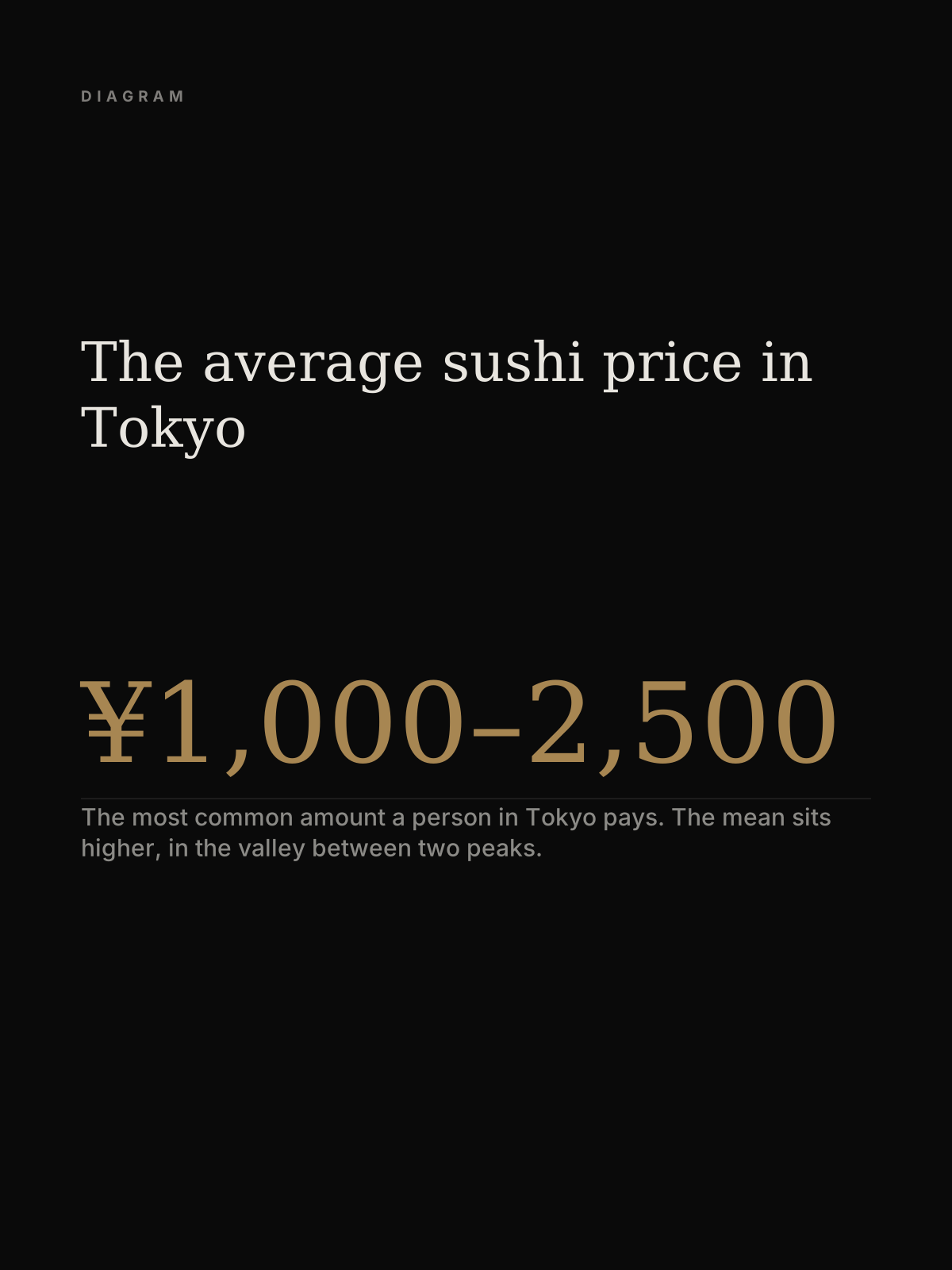
Set the number before you set the shortlist. In Japan the budget decides the format, the format decides the etiquette, and the shop follows from both. A ¥1,500 lunch, a ¥2,000 conveyor belt, a ¥12,000 neighbourhood counter and a ¥40,000 counter are four different meals rather than four grades of one, and choosing between them is the only decision that materially changes the evening. Everything after it is reading signals that are already in front of you.
Start with the number, not the name
The usual English-language method is to arrive at a shortlist of shops and then discover what they cost. Reverse it. Japanese books written for people eating at sushi counters agree on this: a budget belongs in the conversation from the first phone call, and saying one out loud is neither rude nor a loss of face. Omakase (お任せ) — “I leave it to you” — at around such-and-such a figure is an ordinary sentence at a Japanese counter, and the shop will tell you honestly whether it works. If it does not, they will tell you their own figure, and you may thank them and decline.
Naming a number also protects you from the arithmetic that catches visitors out. A quoted per-person price is normally the sushi alone. Drinks sit on top of it, and sake at a good counter is not cheap. Above the price, depending on the shop, may sit an opening dish you did not order, a service charge, and 10% consumption tax. Our breakdown of what each price band actually buys works through the whole bill.
Then decide which format you are booking
Format is a larger variable than shop. Two counters at the same price will resemble each other more than one counter resembles the belt shop two streets away. Decide the format first and the shortlist shrinks to something you can actually read. The prices attached to each format below are our own observation of what shops publish as of July 2026.
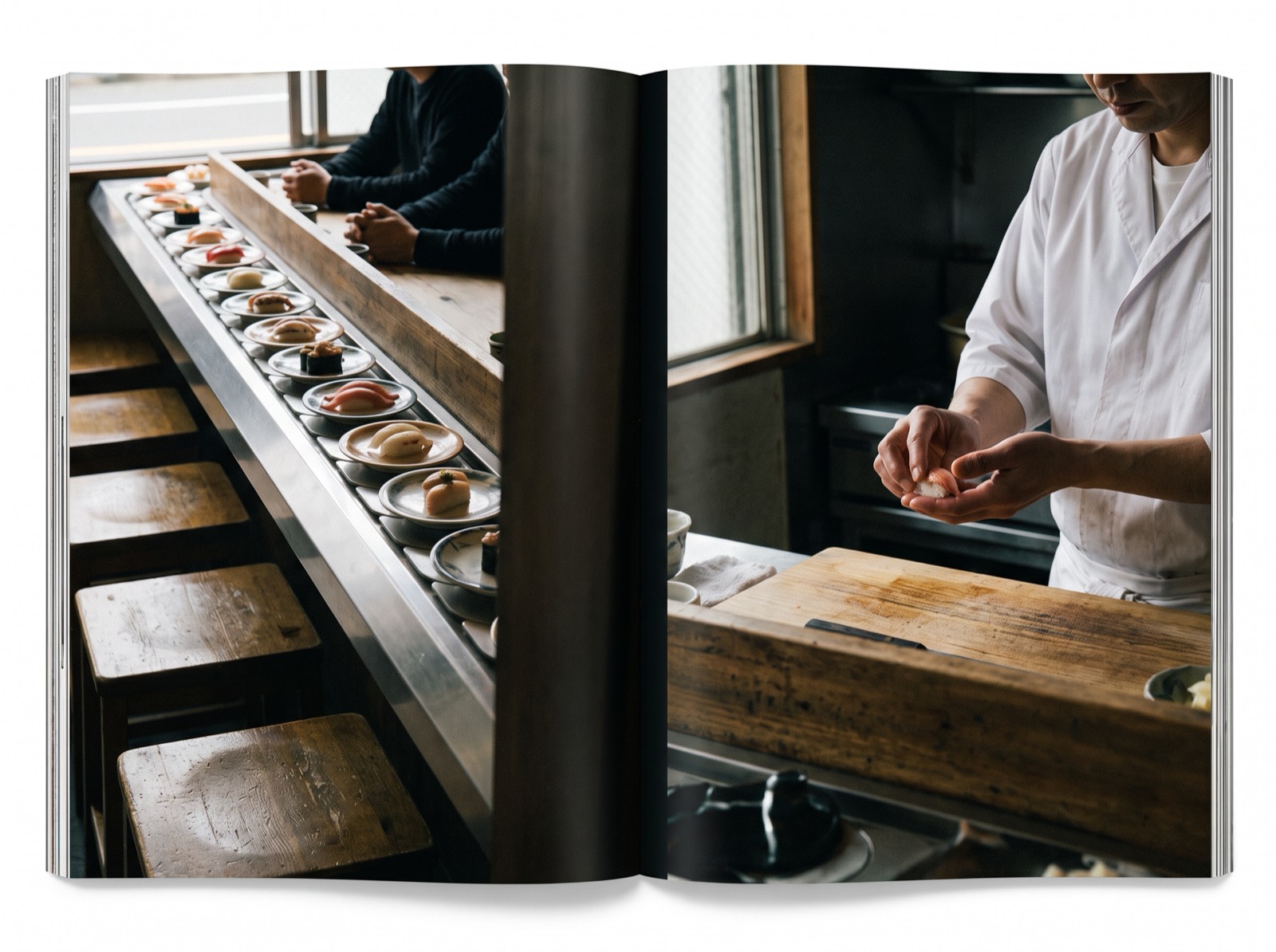
- Conveyor belt (kaitenzushi). Roughly ¥1,000–2,500 a head. No booking, no Japanese, no etiquette to learn, touch-screen ordering in English at most chains. The correct first sushi meal for most visitors, and not a compromise: see conveyor belt or counter.
- Lunch at a counter shop. Frequently a whole band cheaper than the same shop’s evening service, for closely related work. The cheapest way to find out what a shop is before committing to dinner there.
- A neighbourhood counter in the evening. Roughly ¥8,000–15,000. Booked a day or two ahead. Often a set course rather than a true chef’s choice, and none the worse for it.
- An established counter. ¥15,000–30,000 and upward. One sitting, a fixed start time, a fish order placed against your name. Cancellation matters here in a way it does not elsewhere.
- A supermarket or department-store pack. ¥500–2,000, and better than the equivalent almost anywhere outside Japan. Useful for a first night, a train, or a hotel room.
What the photographs can and cannot tell you
Listing photographs are worth more attention than listing text, because the text is written to sell and the photographs are, usually, just what the place looks like. Three things in them are genuinely informative, and one thing is not.
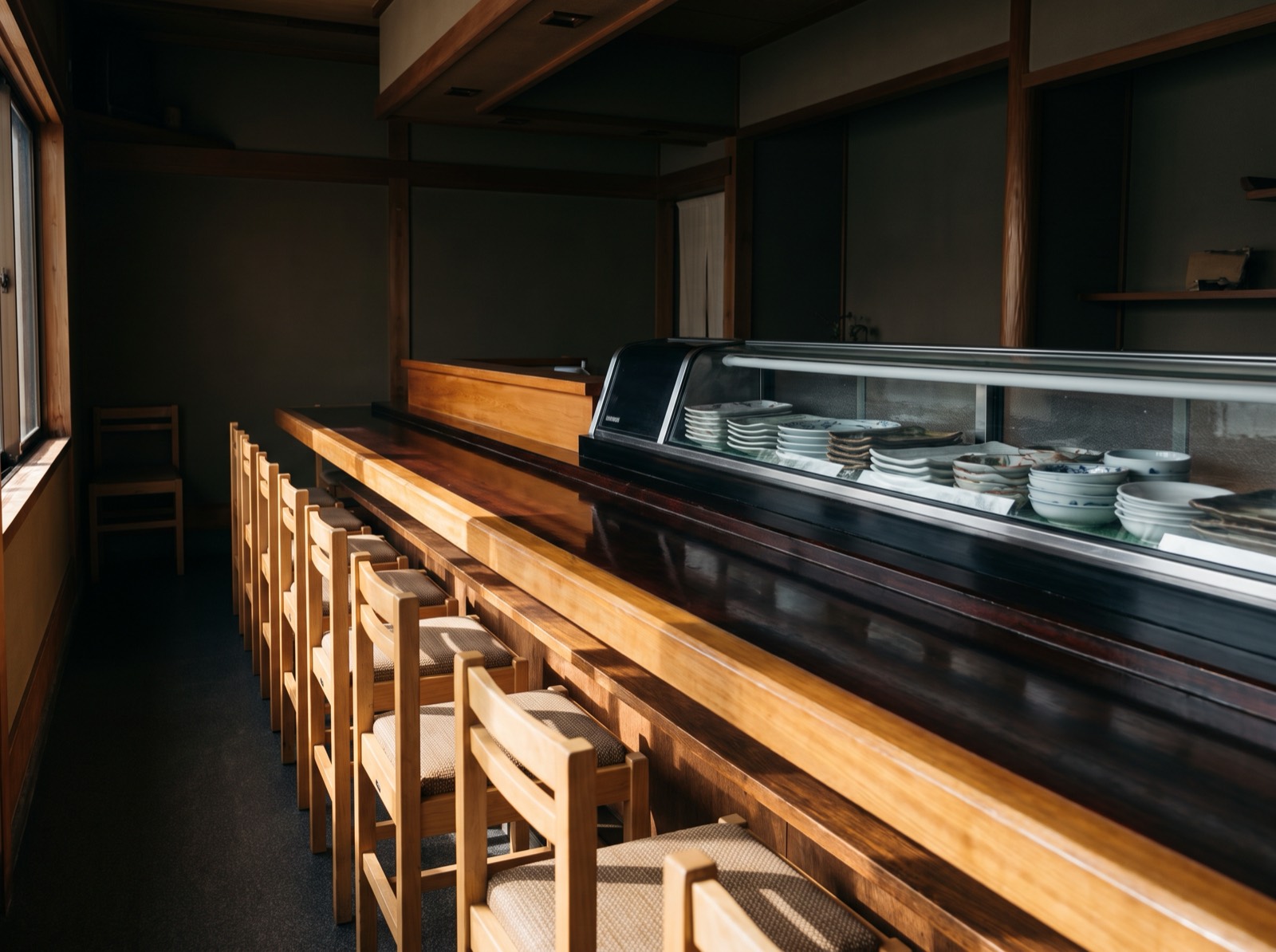
- The chilled case. A glass case of fish along the counter means the shop expects you to look at it and ask — that is, okonomi (お好み), ordering piece by piece, is likely to be possible. A counter with no case at all normally means everything is cut behind the scenes to a fixed running order, and the meal will be omakase or nothing.
- The ledge. If pieces are photographed sitting directly on a lacquered ledge rather than on a plate, that is the tsukedai (つけ台), and it tells you the piece is meant to be eaten as it lands, not collected.
- The seat count. Countable in almost any interior shot, and the single most predictive detail on the page. See below.
- The gloss on the rice is the one thing photographs do not reliably tell you. It is a lighting decision as much as a kitchen one. Judge the rice when you are eating it.
One practical note that is not about choosing at all: a shop hangs its noren (のれん), the split curtain over the door, when it opens and takes it in when it closes. A photograph will not tell you today’s hours, but standing in the street the curtain will.
Count the seats
A shop with eight or ten seats is not a smaller version of a shop with twenty-four. It is a different arrangement. Eight seats generally means one chef working alone, one sitting, a start time everybody shares, and fish bought that morning for the number of people who said they were coming. Twenty-odd seats with tables behind means several pairs of hands, a menu of sets, arrivals staggered through the evening, and far more tolerance for a group that wants to talk.
Eight seats is not a smaller version of twenty-four. It is a different contract: one start time, one chef, and a fish order placed against your name.
The seat count also decides where you should sit once you are there, and the Japanese books are more specific about this than English pages tend to be. On a first visit the end of the counter is an easier seat than the middle; the middle puts the head chef directly in front of you, and at some shops those seats are informally understood to belong to regulars. If you are a group of four who have come mainly to drink and talk to each other, the considerate choice is a table, and asking for one is not a demotion. The counter is for people who came to watch the work.
Ask which ways of ordering the shop takes
There are three, and a shop will usually tell you at the point of booking which of them it offers. Knowing the difference before you call is most of the battle.
- Omakase — the chef chooses. Both the fish and the order. You get the best of what came in that day, and the bill runs higher unless you name a figure in advance.
- Okonomi — you choose. Piece by piece, at your own pace, which is the older way to eat at a counter and still the most enjoyable once you know a few names. The bill is harder to predict, and anything priced at the market rate should be asked about before you order it. Asking gets a straight answer.
- Okimari — a set. A fixed count at a fixed price, often served all at once. Nothing to time, nothing to calculate. The most sensible choice on a first visit to a shop you cannot yet read, with the trade-off that the day’s best fish rarely fits inside a set price.
How to read the reviews
Read what is being praised rather than how highly it scores. A five-line review that mentions the temperature of the rice, the vinegar in a cured piece, or the brush of nikiri soy was written by somebody who was paying attention. A five-star review that says only that everything was fresh and the value was good has told you that the format worked, which you already knew.
- Praise that describes work — curing, ageing, the rice, the sequence — is a stronger signal than any score.
- Complaints about small portions at a counter usually describe the format behaving exactly as designed.
- Reviewer photographs are more useful than reviewer prose: piece size that is consistent across many visits tells you about the hands making them.
- A run of reviews noting that the chef explained things in English is worth more than a high score, if that matters to your evening.
- Recent beats highly rated. Chefs move, and a counter is one person.
About guides and ratings: we do not award them. What a Michelin star means for a sushi counter sets out what the best-known rating system is and is not measuring, which is worth reading before you let any score do your choosing. This publication does not rank restaurants and does not publish the names of individual shops; our editorial policy explains why.
Signals worth a second look
- No price anywhere, and no way to ask. A shop that publishes nothing, does not answer the phone and has no way of taking a question before you sit down is the one case where you genuinely cannot bound the bill in advance.
- A frontage built entirely from photographs of platters, in a district with heavy tourist footfall, is optimised for people who will come once. That is a business model, not a crime, but it is not the same business as the counter around the corner.
- All-you-can-eat at a counter shop. The economics of one chef making one piece at a time do not survive it.
- An empty counter at eight in the evening in a shop that only does one sitting. It may mean nothing. It usually means something.
Lunch is the cheapest audit
If you cannot place a shop’s level from the outside, eat lunch there. The lunch price is a reliable indicator of the evening price, the room is the same room, and the hands are usually the same hands. It is standard advice in the Japanese literature and it costs a fraction of getting the evening wrong. The one caveat is that a good many counters do not open at lunch at all.
A sequence that works
- Fix a figure per head, and decide whether drinks are inside it or outside it.
- Choose the format from that figure, not the other way round.
- Shortlist on seat count and on whether a chilled case is visible in the photographs.
- Read five reviews for what they praise rather than how they score, and check the dates.
- Book — by telephone for a first visit, and just after opening time, which is the easiest moment to get somebody who can talk.
- At the booking, give the number of people, the budget, anything you cannot eat, and whether you intend to drink. All four change what the shop buys.
That is the whole method. It works because none of the difficult information at a Japanese sushi shop is hidden — it is in the seat count, in the case, in what the reviews chose to mention, and in the answer you get when you ask a straight question on the telephone. How to make the booking itself is the next piece.
Frequently asked questions
Do I need to book a sushi restaurant in Japan?
For a counter, yes — at least a day ahead, because the shop buys fish for the number of people it expects. For conveyor-belt sushi, no: you queue or take a ticket. Standing counters and supermarket sushi need nothing at all.
Is it rude to ask the price before I sit down?
No. Japanese books on eating at sushi counters recommend it. Give the number of guests and a rough budget when you book, and ask the price per person if you cannot place the shop. Anything priced at the market rate can be asked about at the counter too, and you will get a straight answer.
How do I know whether a shop takes walk-ins?
Seat count is the best proxy. Eight to ten seats with no visible case usually means one sitting and one start time, so a walk-in is unlikely to work. Twenty-odd seats with tables behind is much more likely to seat you. When it matters, telephone and ask.
Are the highest-rated shops the best choice for a first visit?
Not necessarily, and often not. The counters with the strongest reputations tend to be small, tightly scheduled, and built around a chef assuming you know the form. A neighbourhood counter at a third of the price is a better place to learn what you like, and you can go up from there on a later trip.
Can I choose and book a sushi restaurant without speaking Japanese?
Yes, at every level except a handful of small counters that take bookings only by telephone in Japanese. Conveyor-belt chains have English touch-screens; many counters take online bookings; a hotel concierge can call on your behalf, which is what they are for.
Tokyo or Osaka?
Different traditions rather than different qualities — Tokyo is the home of the counter-and-nigiri form, Osaka of pressed and boxed sushi, and both cities do both. If you are choosing between them for one meal, read Osaka and Tokyo sushi compared.