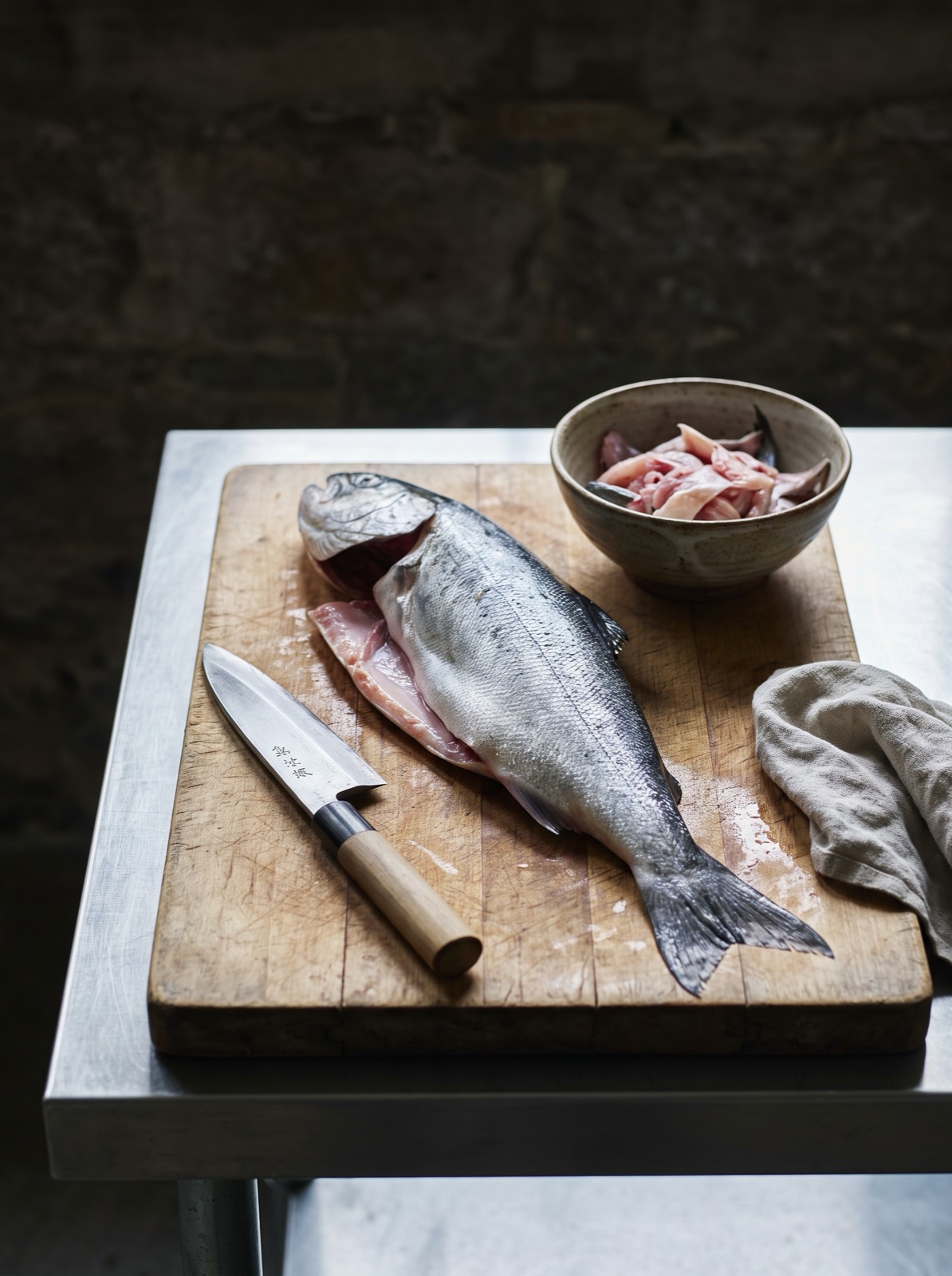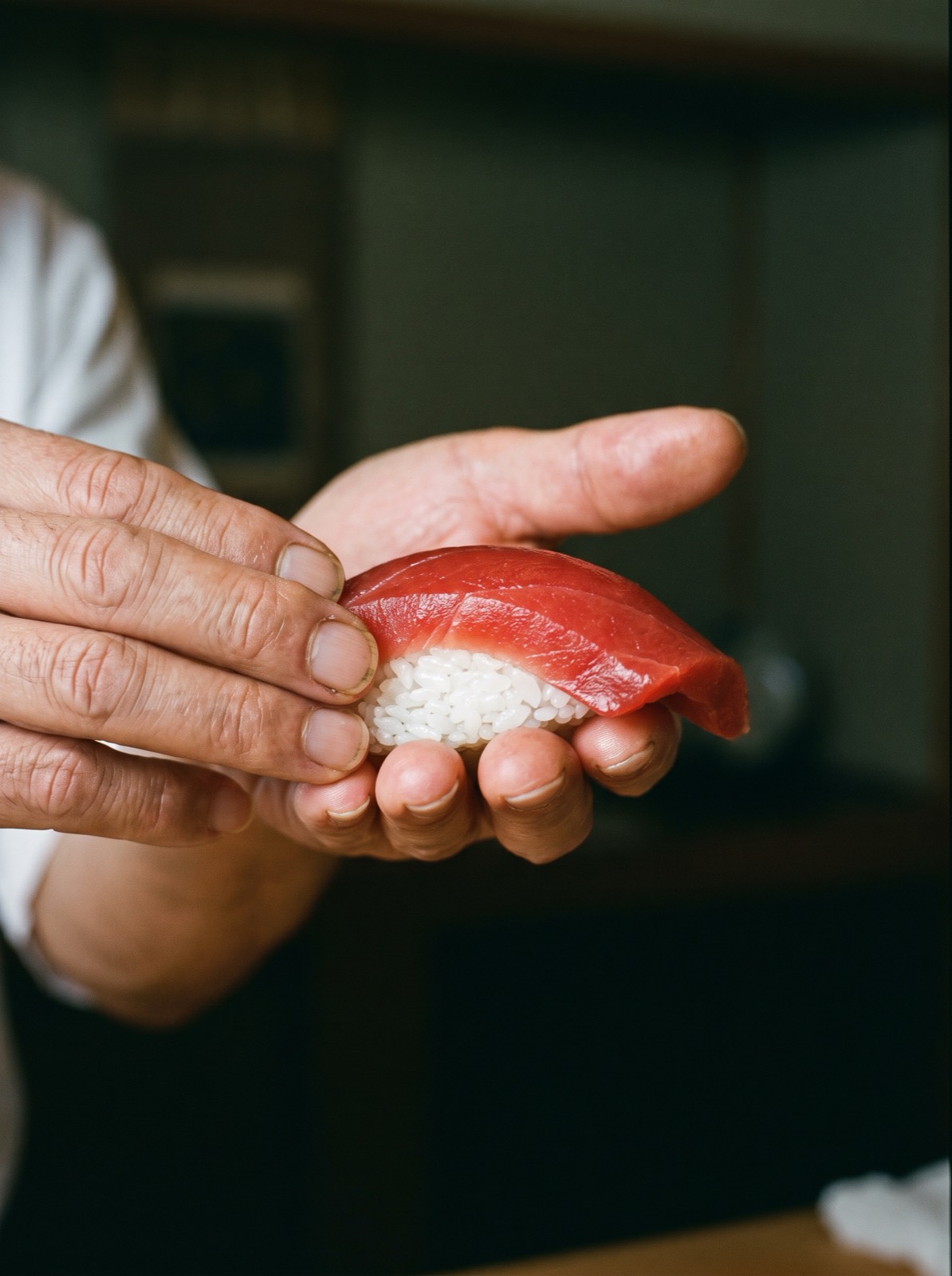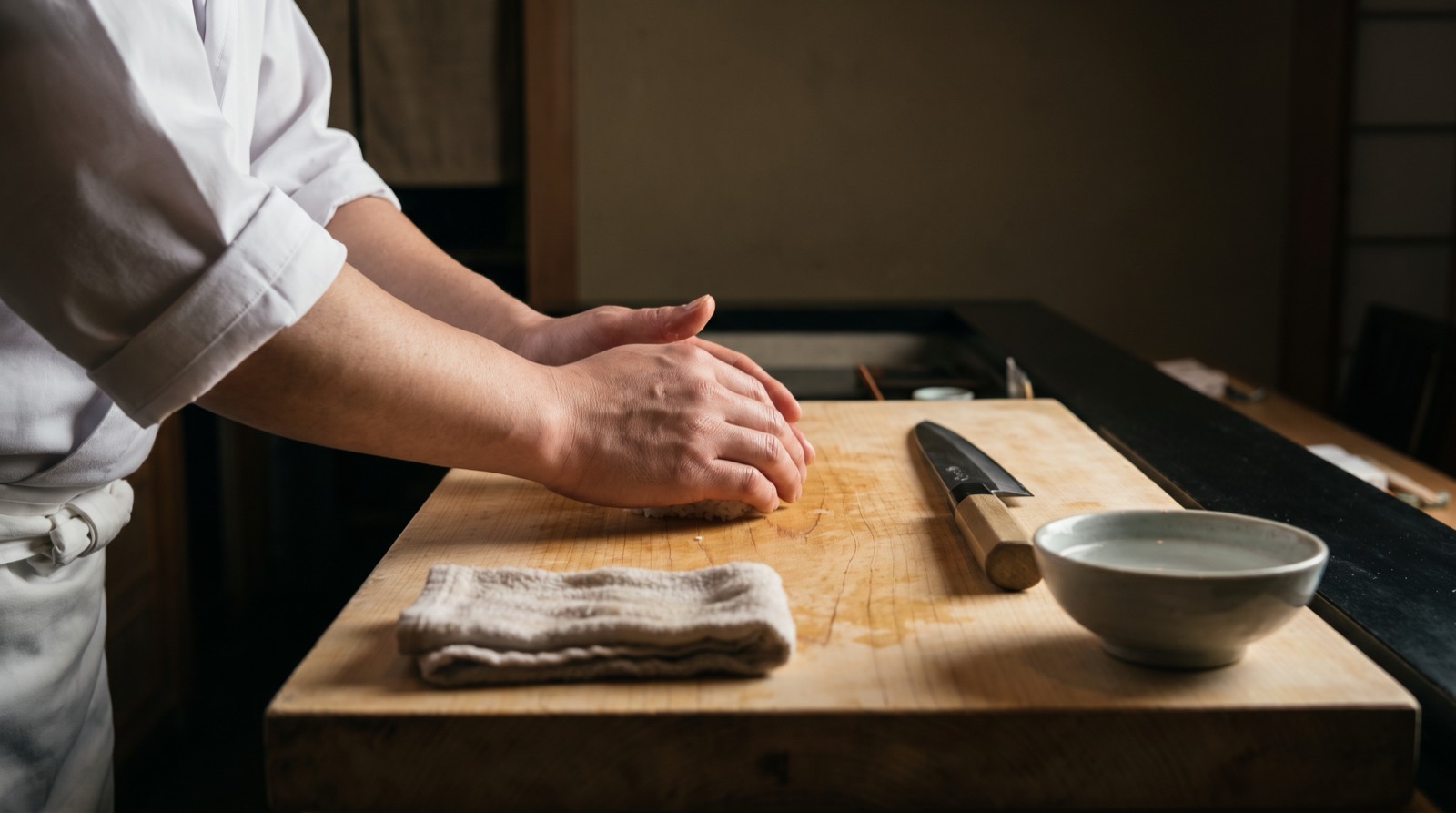
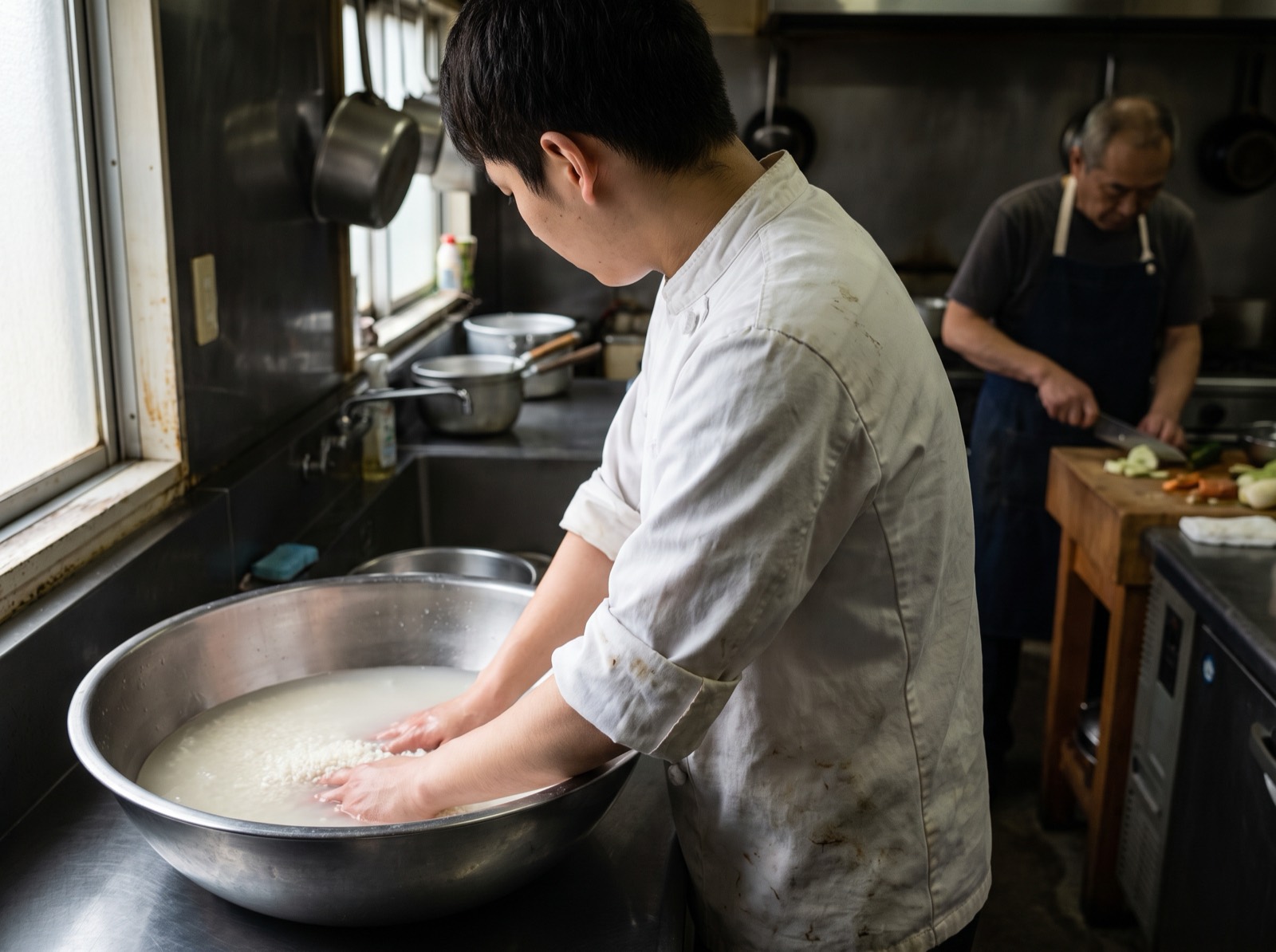
There is no licence to become a sushi chef in Japan. The training is long, and the trade’s own figure for it is about ten years — but that figure is a convention inside the craft, not a legal requirement. Nothing obliges the person forming your nigiri to hold any qualification at all.
What Japan licenses is a title. The Cook’s Licence Act of 1958 defines a chōrishi as a person licensed by a prefectural governor to use that title while working in cooking, and its eighth article says only that nobody else may use the title, or one confusingly similar to it. It protects the word. It does not reserve the work: no licence is needed to cook, to stand behind a counter, or to open a restaurant.
And one fish. Pufferfish may be handled only by a person a prefectural governor recognises as able to identify the species and remove the toxic parts — and since national criteria were issued in 2019, that recognition has had to be confirmed by examination. The criteria say plainly that practical experience is difficult to assess objectively and is not appropriate as a criterion on its own, which is a striking thing to find in a trade that measures everything else in years served.
So the country that asks nothing of the person slicing your tuna requires a written and practical examination before anyone touches a fugu. Read together, the two rules show where Japanese food law puts its attention: on hazards it can define, and not on craft it cannot. The ten years are left entirely to the trade, which has never needed a statute to enforce them.
Read the full guide — how you become a sushi chef, including the stations, the proverb behind the ten years, and what the arguments against the apprenticeship actually are.