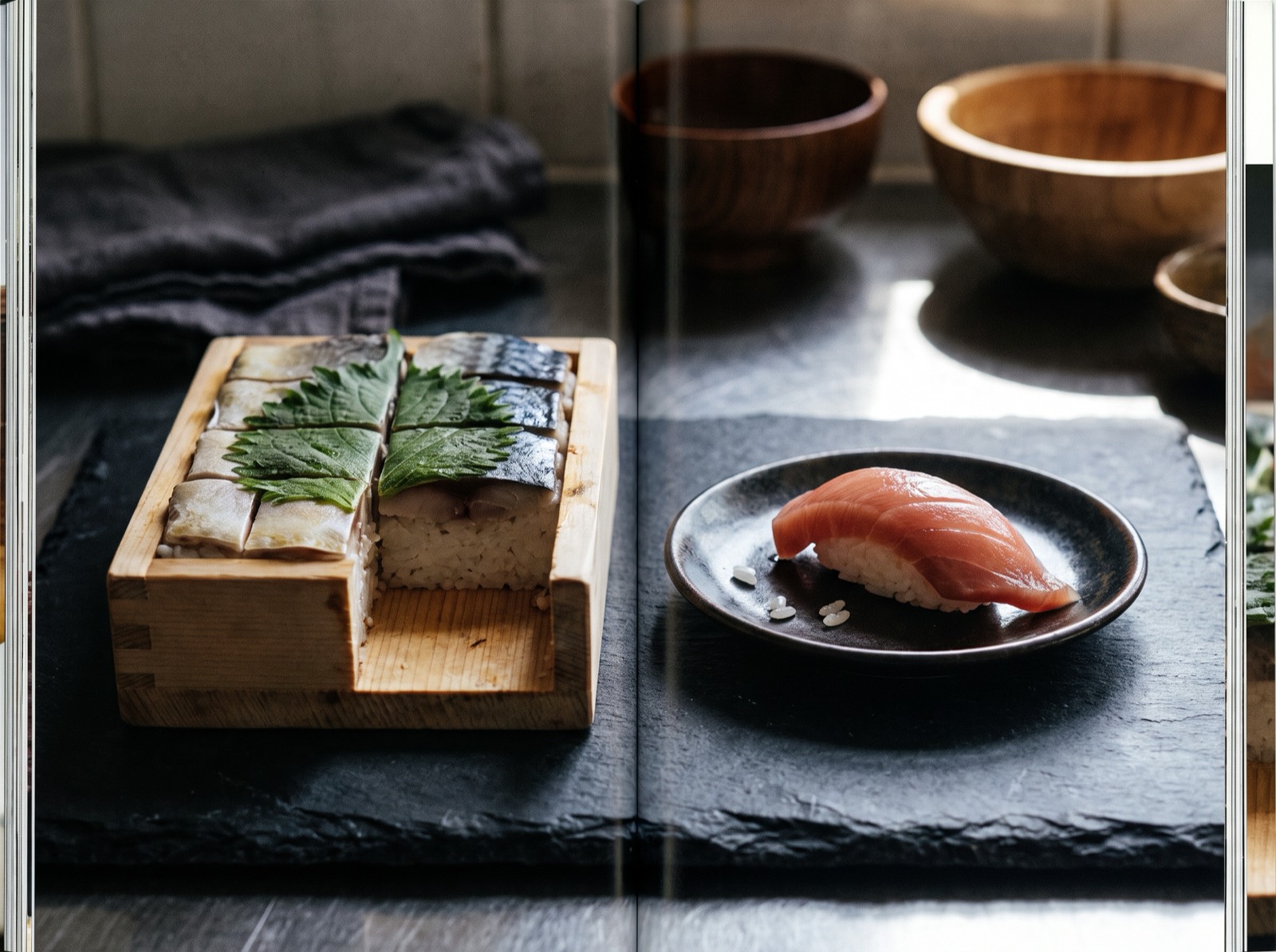
Osaka has two sushi traditions running side by side. One is Edomae (the Tokyo style, hand-formed nigiri at a counter), and the city has plenty of it, generally at prices below the Tokyo equivalent for comparable work. The other is Osaka's own: oshizushi and hakozushi, rice and topping pressed in a wooden box and cut into squares, a form that is centuries older than nigiri and still made here as a speciality rather than a museum piece.
Osaka sushi is not Tokyo sushi
The distinction is worth getting right before you book anything, because it changes what you should be looking for.
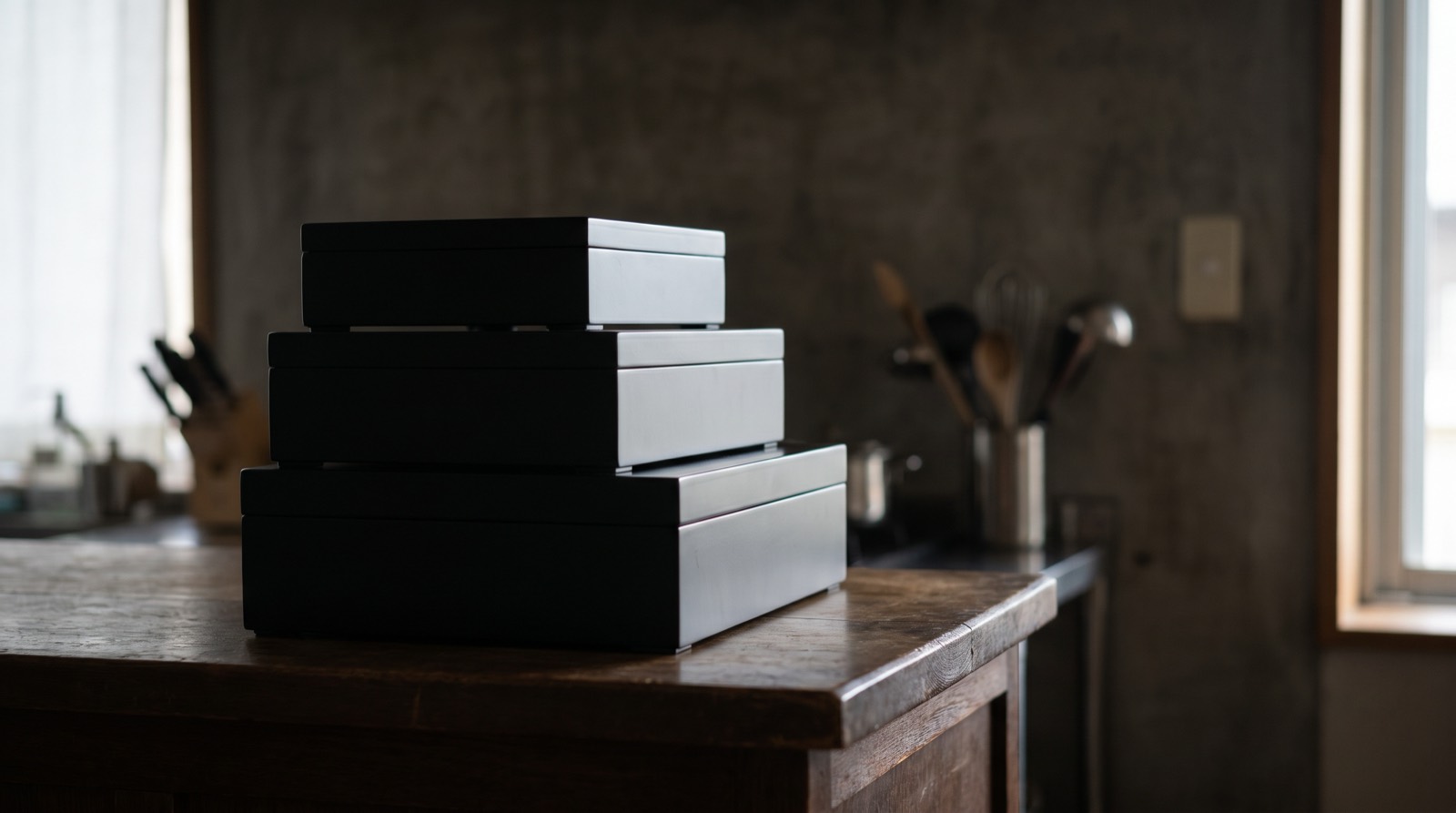
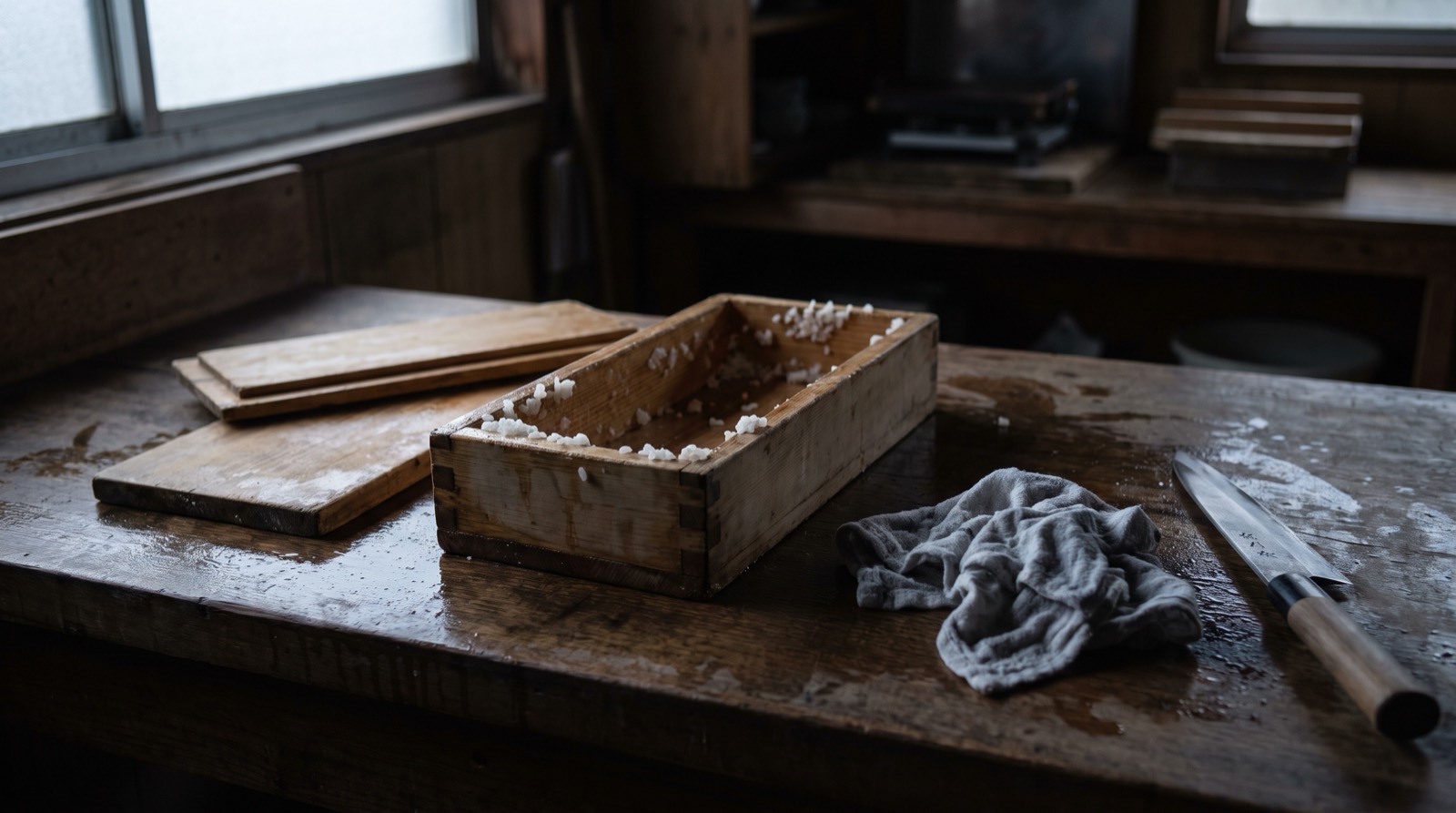
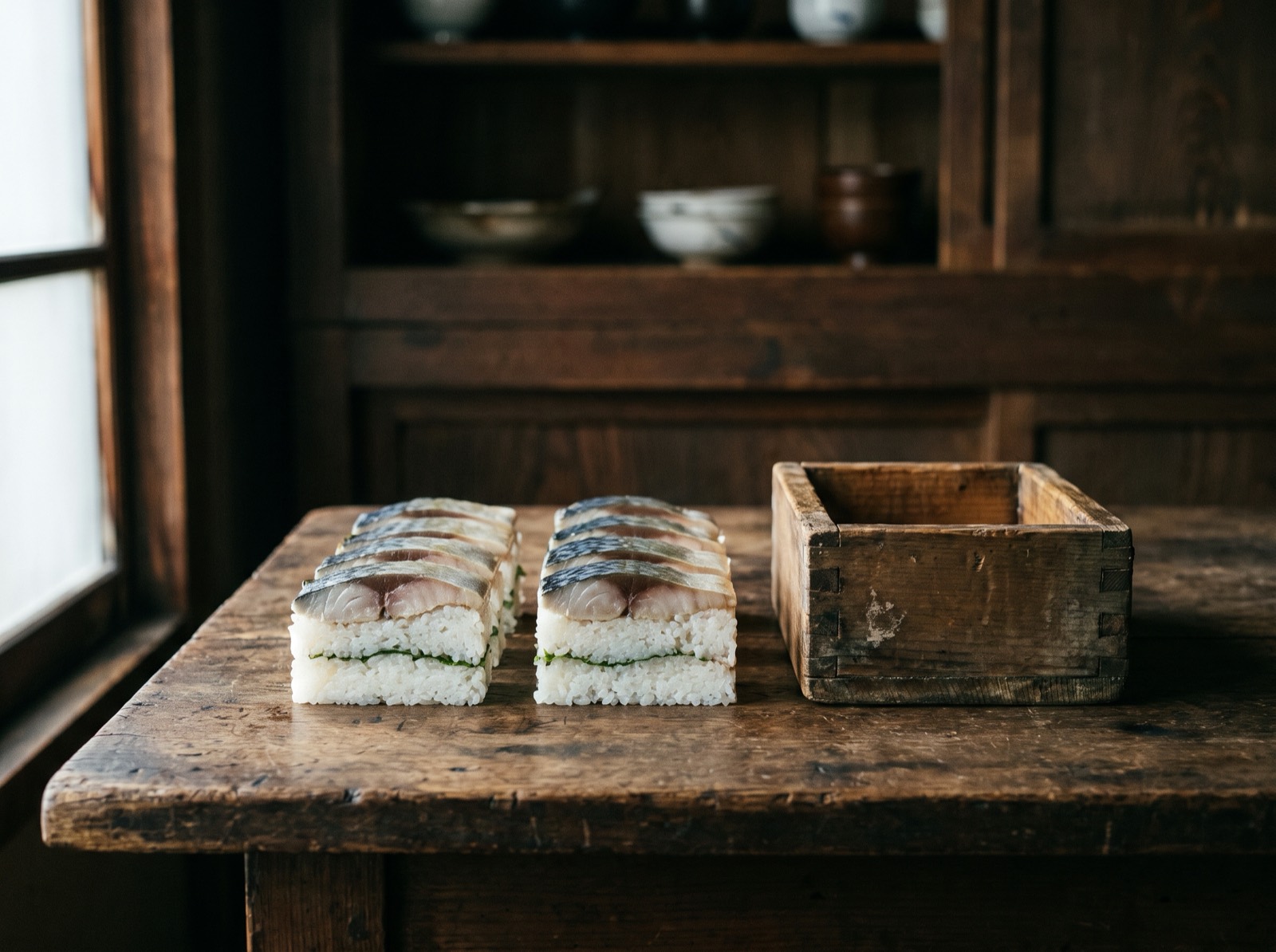
Once vinegar production made it possible to sour rice directly rather than ferment it, sushi could be assembled in a mould: rice and topping packed into a wooden box, pressed, then cut. That is hakozushi, box sushi, and it was widespread by the middle of the Edo period. Nigiri, by contrast, was invented in Edo around 1820 as street food. Osaka's form is the older one.
The best-known example is battera — mackerel cured in salt and vinegar, pressed under a sheet of translucent kelp. It is a form built around a strongly flavoured, oily fish that historically could not be served raw: the cure cuts the oil, the pressure binds the flesh to the rice, and a few hours of rest finishes it. Where nigiri is made in seconds and eaten immediately, pressed sushi is made in advance and is often better for the wait. We set the two forms against each other in Osaka vs Tokyo sushi.
Osaka is not a discount Tokyo. It is a city where sushi is one item on a very long street.
Where to eat, by area
Three parts of the city account for most of what a visitor will realistically consider.
- Kitashinchi. The city's high-end dining quarter, north of the river and adjacent to the Umeda station complex. This is where the serious counters cluster — small rooms, set courses, reservations expected, and the closest thing Osaka has to Ginza. If you are booking one expensive omakase in Osaka, it is most likely here.
- Shinsaibashi and the streets south of it. The broad middle. Counters at every level, from twenty-seat rooms doing full courses to standing places doing a handful of pieces, mixed in among everything else the district sells. Better for walking in, worse for certainty.
- Kuromon Market. A covered market street that has become a food destination in its own right. Not a place for a course meal; see below.
Kuromon Market
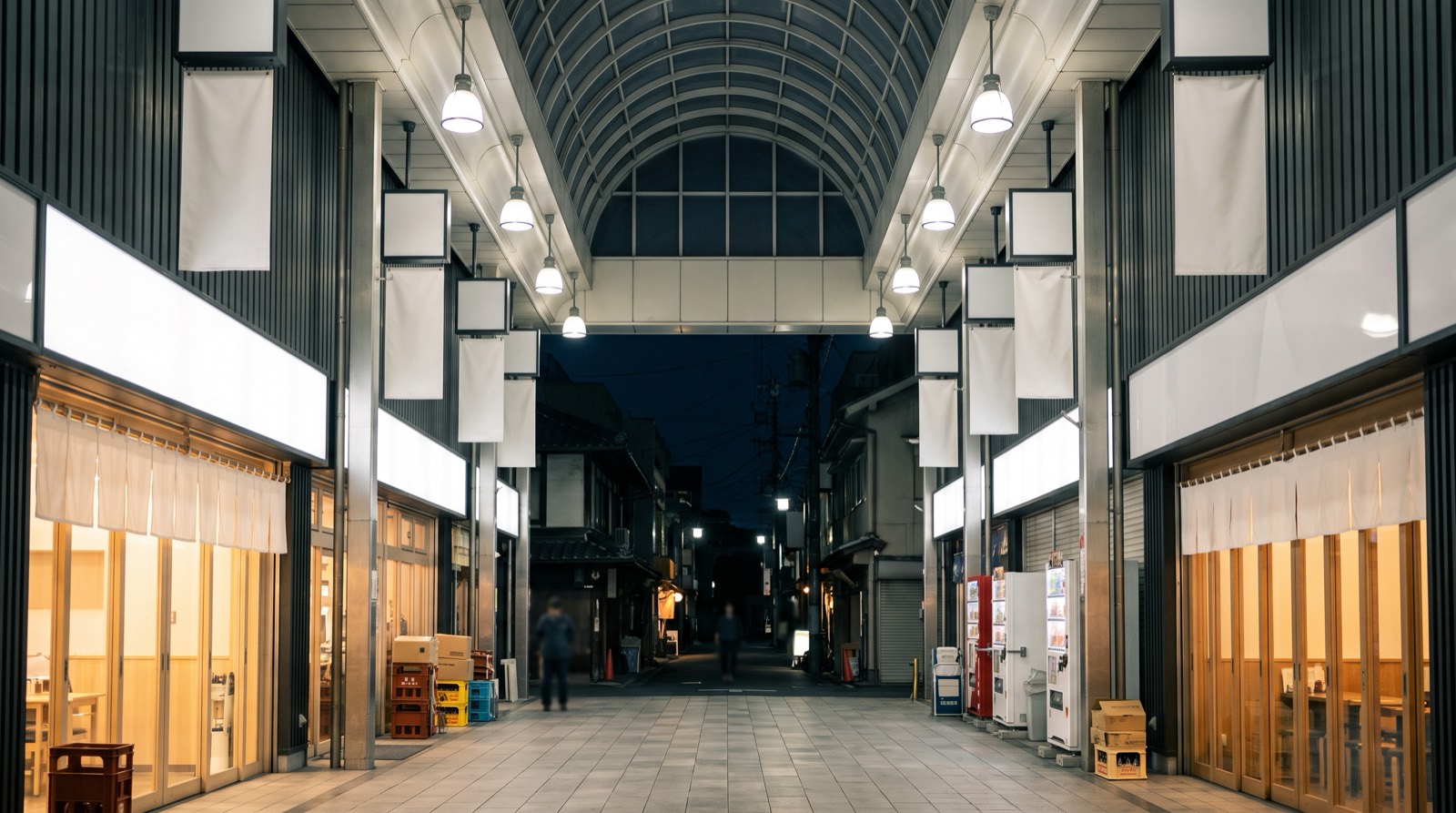
Kuromon is a covered shopping street of fishmongers, produce sellers and food stalls that, over the last decade, has reoriented substantially towards visitors. Many stalls now grill, slice and serve on the spot: skewers, sea urchin in the shell, scallops, tuna cut to order.
Two things to know before you go. First, it is a market, not a restaurant district: you eat standing, in short bursts, and the pleasure is in the sequence of small things rather than in a meal. Second, prices at the visitor-facing stalls are set for that trade and are not a guide to what seafood costs in Japan generally; the same fish bought as a shopper rather than as a snack costs a good deal less.
It is worth an hour, in the morning, on a day when you are not also booked for a counter lunch. It is not a substitute for one. The same logic applies to Tokyo's market street, which we cover in Tsukiji Outer Market.
What it costs
Osaka sits roughly one band below Tokyo for equivalent work. In practice that means a counter omakase that would be quoted at ¥15,000 in central Tokyo is frequently ¥10,000–¥12,000 here, and the entry level for a proper counter course starts lower. That comparison is our own observation of quoted prices, not a published index.
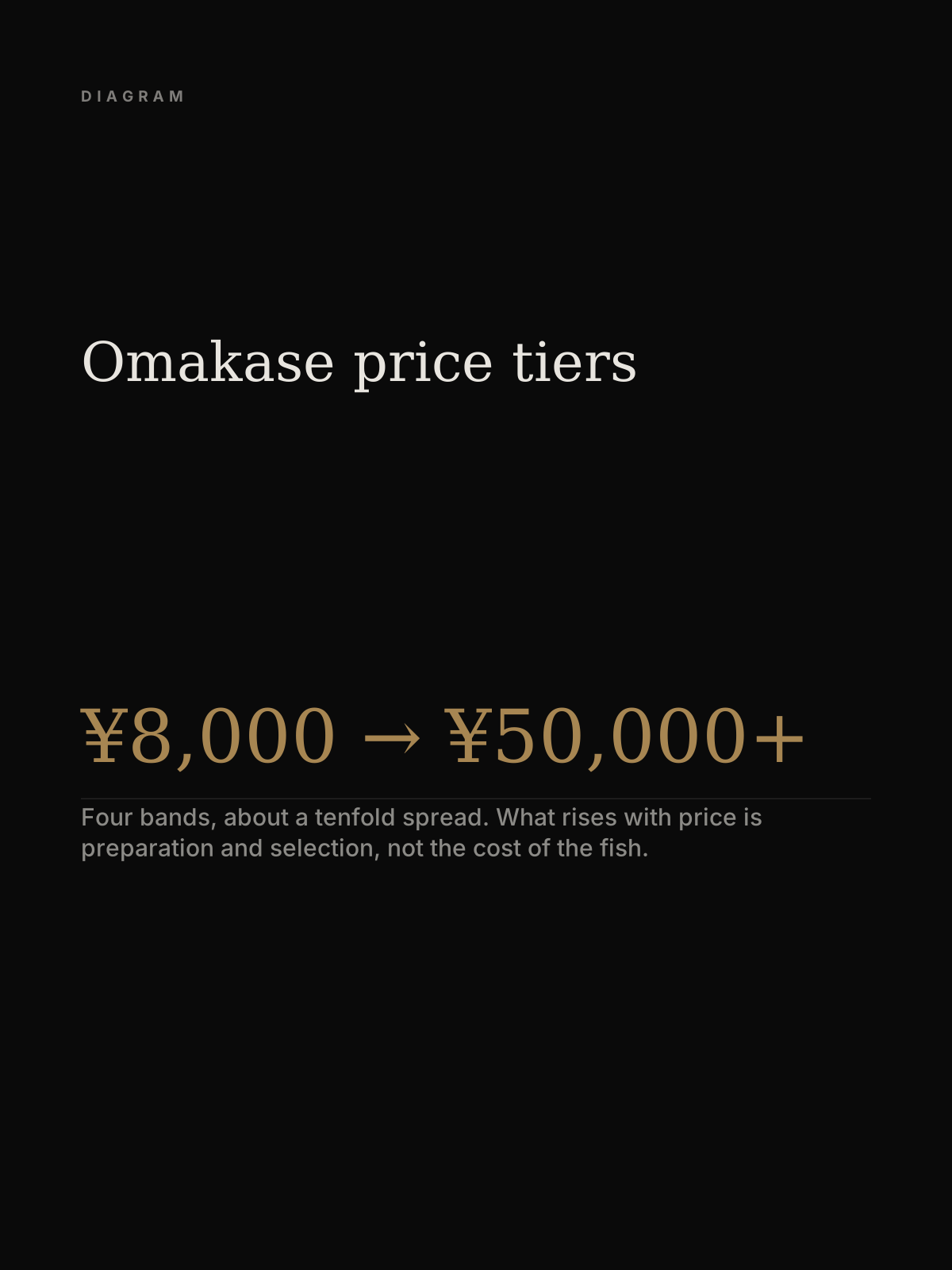
The bands themselves work the same way in both cities, and the difference between them is not the fish — it is the number of covers, the amount of preparation, and the rent. Our price tiers guide explains what each band actually buys, and how much sushi costs in Japan covers the range from conveyor belt upwards. Per-shop figures change, and a stale number is worse than no number.
Booking from Korea or Taiwan
Osaka is a short flight from Seoul and Taipei, and it behaves like it. Our own measurement of search demand found Korean-language interest in Osaka sushi running at roughly 1.8 times the equivalent Tokyo demand, the only place in this project where a non-English, non-Japanese language leads.
What that means practically, for a visitor booking from either market:
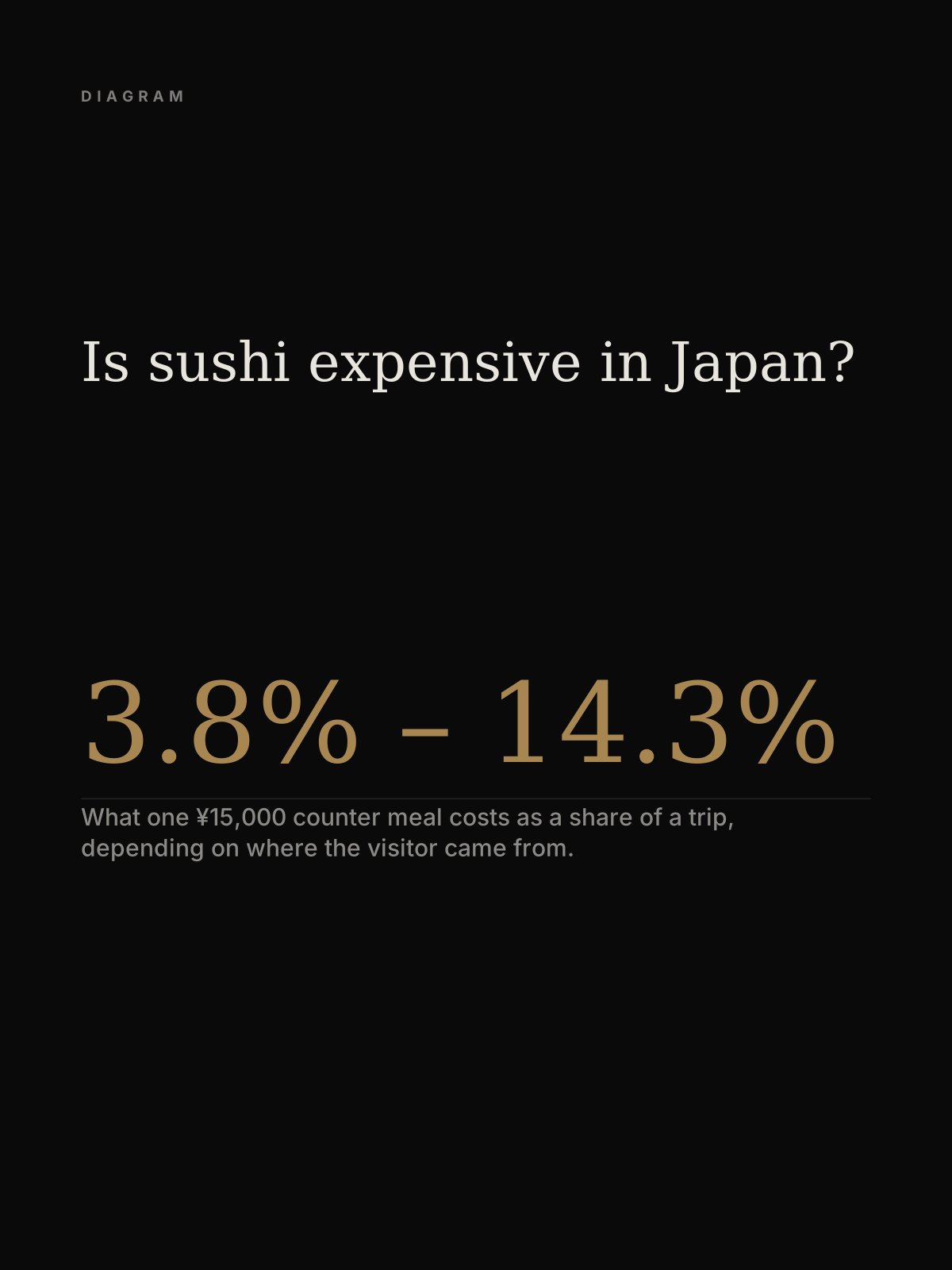
- Short trips concentrate the spend. Government survey data puts average in-Japan spending per Korean visitor at ¥105,058 for the whole trip, against ¥339,708 for an American visitor. A ¥15,000 counter meal is a very different decision at those two numbers: a seventh of the trip against a twenty-third. We work through that arithmetic in is sushi expensive in Japan.
- Weekend demand is real demand. Osaka's proximity produces genuine two- and three-night weekend traffic from both markets, which concentrates bookings on Friday and Saturday evenings. Lunch on a weekday is the least contested slot in the city, and at most counters it is also the cheapest way into the same kitchen.
- Language at the counter varies more than in Tokyo. Larger Kitashinchi rooms and hotel counters generally handle English; smaller neighbourhood shops often do not, in any language. Booking through your accommodation is the reliable route where a shop takes no online reservations.
- Book before you fly for the top band, not for the middle. The small high-end rooms fill weeks out. Everything below that is realistically bookable a few days ahead, and walk-in at lunch.
Frequently asked questions
Is sushi in Osaka different from Tokyo?
Yes, in one specific way. Alongside the same Edomae-style counters found in Tokyo, Osaka has its own older tradition of pressed box sushi (oshizushi, hakozushi and battera) made in a wooden mould and cut into squares, usually with cured or cooked toppings.
Is sushi cheaper in Osaka than Tokyo?
Generally about one band below, for comparable work. A counter omakase quoted at ¥15,000 in central Tokyo is often ¥10,000–¥12,000 in Osaka. The difference is rent, covers and preparation rather than the quality of the fish.
Where should I eat sushi in Osaka?
Kitashinchi for high-end counters, Shinsaibashi and the streets south of it for the broad middle, and Kuromon Market for standing snacks rather than a meal. This site does not publish shop-level listings until they meet a published verification standard.
Is Kuromon Market worth visiting?
For an hour in the morning, yes, as a sequence of small standing bites. It is a market, not a restaurant district, and stall prices are set for visitor trade rather than being representative of seafood prices in Japan.
What is battera?
Osaka pressed sushi made with mackerel cured in salt and vinegar and topped with a sheet of translucent kelp. The name is generally traced to the Portuguese bateira, a small boat, after the shape of the mould.
Do I need to book sushi in Osaka in advance?
For the small high-end rooms in Kitashinchi, yes: weeks ahead, and Friday and Saturday evenings go first. Everything below that band is realistically bookable a few days out, and weekday lunch is the least contested slot in the city.