Tsukiji Outer Market is a street-food market, not a place to sit down for omakase. It opens early (most shops are busy from around seven in the morning and many close by early afternoon), and most of it is shut on Sundays, public holidays and some Wednesdays. The wholesale auction moved to Toyosu in 2018. The outer market stayed.
Is it worth going?
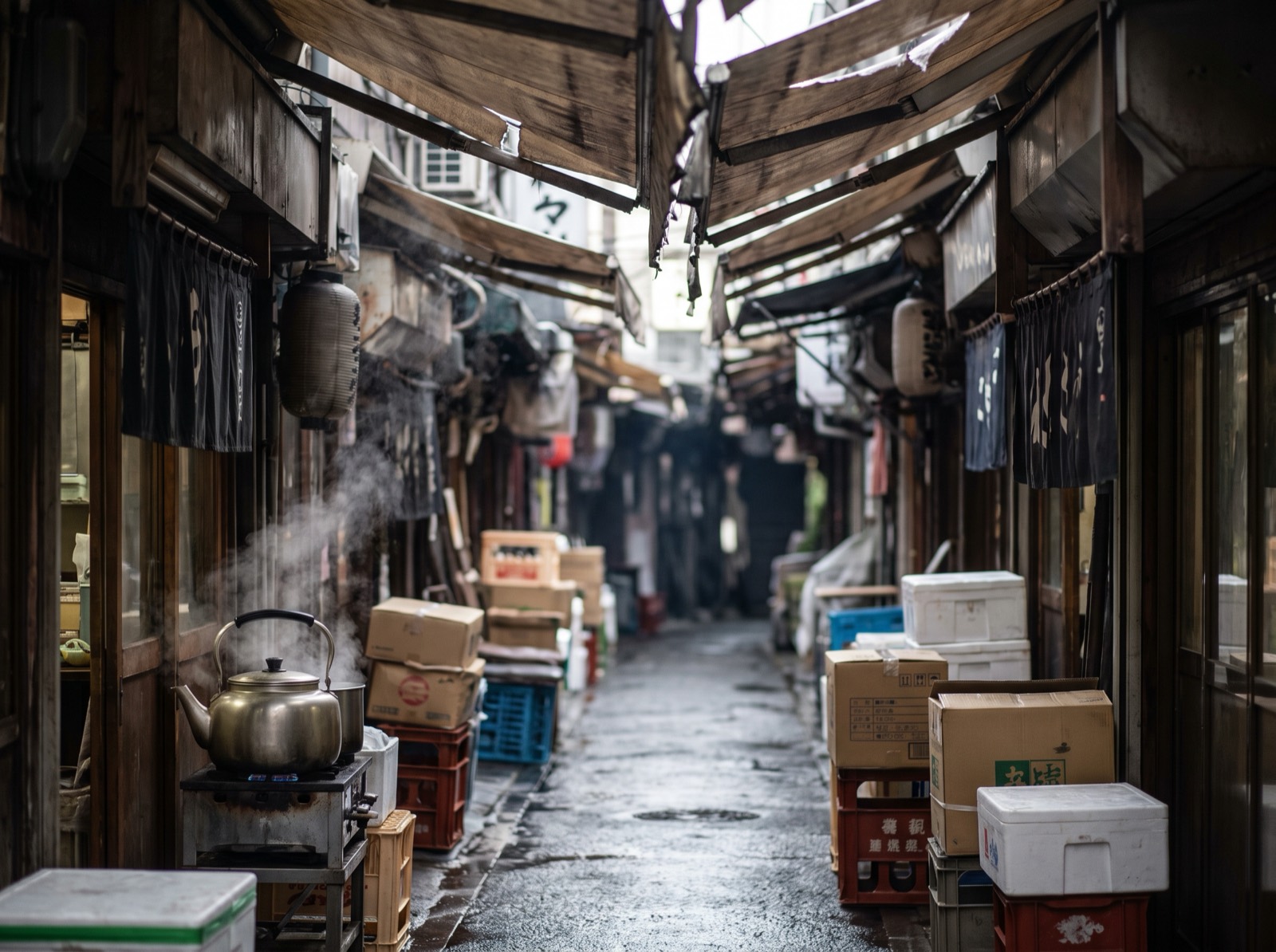
Yes, with one condition: go for what it is rather than what the photographs of the old auction floor suggested. It is a dense few blocks of fishmongers, knife shops, dried-goods dealers, tea sellers, egg-omelette stalls and standing counters, several hundred businesses deep, most of them long-established and many still selling to trade as well as to visitors.
What you get is unusual and hard to replicate: the raw material of Japanese cooking laid out at eye level, at working prices, being bought by people who cook for a living. What you do not get is a meal in the sense that a counter serves one. Those are different activities and it is worth being clear which you are booking.
The auctions left. The knife shops, the tea sellers and the egg-omelette stalls did not, and they were always the part you could actually use.
What time should you go?
Early. The market's rhythm is a trade rhythm: shops open when the deliveries land, do their serious business in the morning, and shut when the produce is gone rather than when a clock says so.
- Before 8am: the market working as a market. Fewest visitors, most trade activity, and the best of the produce still on the ice.
- 8am to 11am: the busiest window, and the one most visitors experience. Queues at the well-known stalls, full streets, everything open.
- After midday: shops progressively shutting. By mid-afternoon a substantial share are closed and the street is noticeably emptier.
- Late afternoon: do not plan on it. This is not an evening destination.
Individual shops keep their own hours and we deliberately do not publish per-stall opening times here; they vary by business and change, and a guide carrying a stale opening hour is worse than one carrying none.
What days is it closed?
The outer market largely follows the trading calendar of the wholesale market it grew up alongside, which means the pattern is:
- Sundays: closed, or close to it. A handful of businesses open; most do not.
- Public holidays: generally closed, on the same basis.
- Some Wednesdays: the wholesale calendar closes on certain Wednesdays each month, and much of the outer market closes with it. This is the one that catches visitors out, because it is not every Wednesday; it varies month to month.
- New Year: an extended closure, followed by the busiest trading days of the year immediately before it.
- Mondays to Saturdays otherwise: open, subject to the above.
Because the Wednesday closures move, the only reliable answer is the published calendar rather than a rule of thumb. The market association publishes the current month's trading days, and the Tokyo Metropolitan Central Wholesale Market publishes the wholesale calendar that most of the street follows. Check one of them for the actual date you intend to go. This is the single most common wasted morning in Tokyo.
Can you eat while walking?
Assume not, and you will be right almost everywhere.
The convention in the street is that you eat at or immediately beside the stall you bought from: most have a standing ledge, a few stools, or at minimum a bin. Walking away down a crowded lane holding an open skewer is what the rules are aimed at, and as visitor numbers have climbed the street has tightened the norm and put up signage saying so.
Two practical points that follow from it. First, buy one thing, eat it where you bought it, then move on; this is also simply the better way to eat the market. Second, take your rubbish back to the stall that served you; there is very little public bin provision in Japan generally and the market is no exception. Signage in the street states the current rule, and it is worth two seconds of reading when you arrive.
Tsukiji or Toyosu: which do you actually want?
You do not need both. Say that plainly, because a great deal of English travel writing implies otherwise and it costs people a morning.
- Tsukiji Outer Market is a shopping street you participate in. You walk it, you buy things, you eat standing up, you can buy a knife or a slab of dried bonito and take it home. It is central, it is a short walk from Ginza, and it takes about two hours.
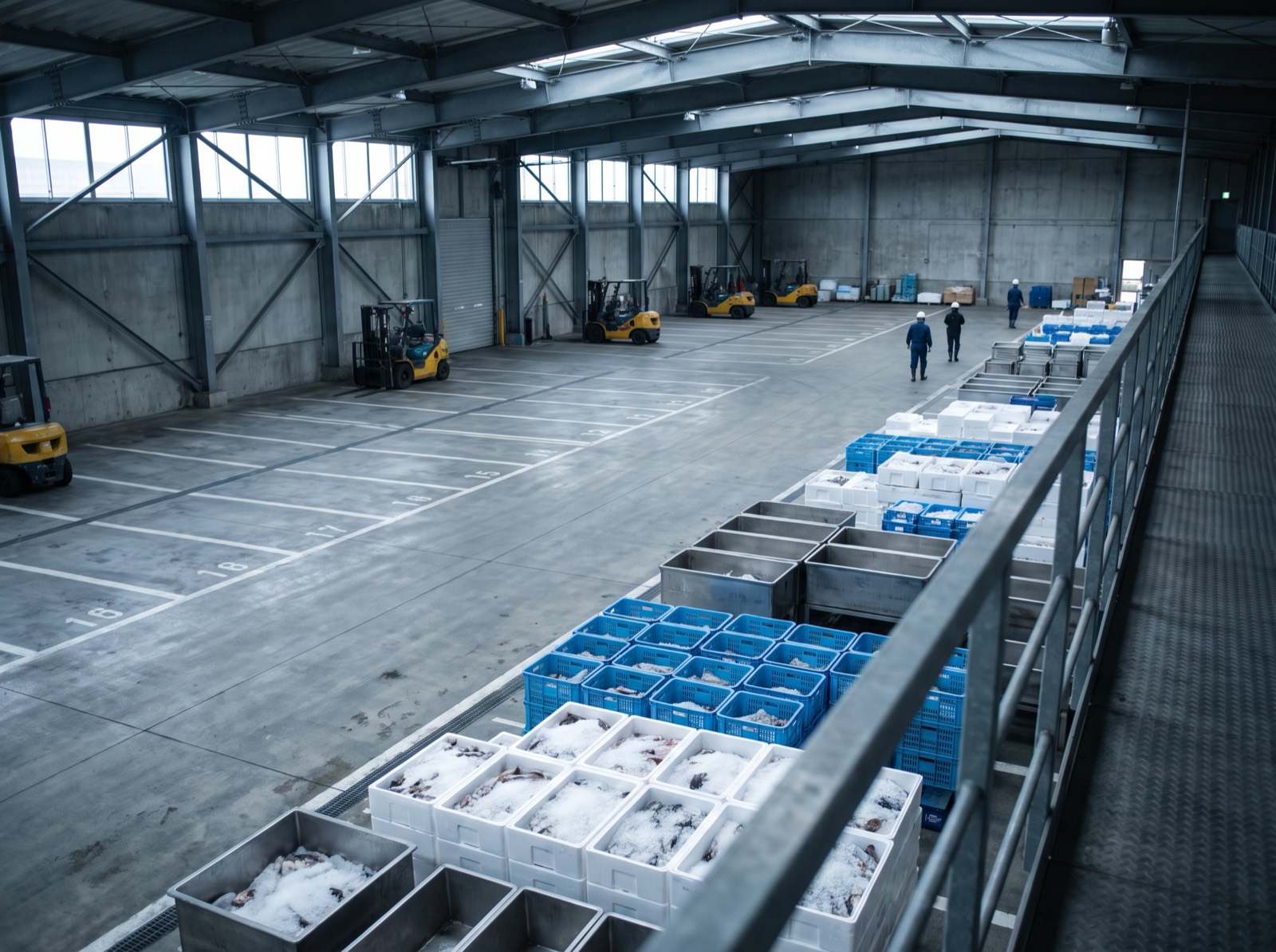
- Toyosu Market is a wholesale facility you observe. Enclosed, climate-controlled, visitors on a separate route above the trading floor, viewing the tuna auction through glass. It is out on reclaimed land, it needs an early start and a dedicated trip, and it shows you the trade at a scale nothing else does.
If you have one food excursion in your trip, Tsukiji is the higher-value use of it for most people. If you are specifically interested in how fish moves from boat to counter, go to Toyosu and accept that it is a viewing gallery rather than a market street.
What to eat, in order
A workable sequence for a first visit, built around what the street does better than anywhere else rather than around specific shops.
- Start with tamagoyaki. The rolled egg omelette, sold hot on a stick from stalls that make nothing else. It is sweet, dense and costs very little, and it is the correct first thing because it tells you something real: at a sushi counter, the egg is often the last piece and is treated as a test of the kitchen. See our entry on tamago.
- Then a tuna skewer. Grilled over charcoal at the stall, usually a fatty cut, eaten immediately. This is the market showing off its raw material with the minimum of intervention.
- Then, if you want one substantial thing, a kaisendon. A bowl of rice covered in assorted raw seafood. It is the market's own idea of a meal — generous, unsubtle, and nothing like nigiri, because the rice is plain and the fish is untreated. Worth understanding as its own dish rather than as cheap sushi.
- Fill the gaps with single items. Grilled scallop, sea urchin in the shell, a piece of grilled eel, oysters in season. One at a time, at the stall.
- Buy something dry to take home. This is the part visitors most often skip and most often regret. Dried bonito, kombu, sesame, tea, a knife. It keeps, it travels, and it is the market at trade prices.
What not to do: treat a market bowl as your sushi experience for the trip. The fish is good and the work is minimal by design — no curing, no ageing, no seasoned rice built for a specific piece. That work is the whole subject of Edomae sushi, and it happens at a counter.
Getting there
The market occupies a few blocks in Tsukiji, Chuo ward, immediately south-east of Ginza. It is a walk of roughly ten to fifteen minutes from central Ginza, and is served directly by the Tsukiji and Tsukijishijo subway stations.
The practical planning point: Tsukiji and Ginza are adjacent, and the market's hours and Ginza's are almost exactly opposite. A market morning followed by a Ginza lunch is one of the few genuinely efficient pairings in central Tokyo.
Frequently asked questions
Is Tsukiji Market still open?
The outer market is, and it is what most visitors mean by Tsukiji. The inner wholesale market (the auctions and licensed wholesalers) moved to Toyosu in October 2018. The street of shops and stalls did not move.
What time does Tsukiji Outer Market open?
Most shops are trading by around seven in the morning and many close by early afternoon. Individual businesses set their own hours. Before 8am is the market working as a market; after midday it is progressively shutting.
What days is Tsukiji Outer Market closed?
Sundays and public holidays, plus certain Wednesdays that vary month to month because they follow the wholesale market's trading calendar, plus an extended New Year closure. Because the Wednesday closures move, check the published calendar for your actual date.
Can you eat while walking at Tsukiji?
Assume not. The convention is to eat at or immediately beside the stall you bought from, and the street has tightened this as visitor numbers rose. Signage states the current rule. Take your rubbish back to the stall that served you.
Should I visit Tsukiji or Toyosu?
Almost nobody needs both. Tsukiji Outer Market is a shopping street you eat in, ten minutes from Ginza, about two hours. Toyosu is a wholesale facility you observe from a walkway, out on reclaimed land, needing an early start and a dedicated trip.
What should I eat at Tsukiji Outer Market?
Tamagoyaki on a stick first, then a grilled tuna skewer, then a kaisendon if you want something substantial, filling gaps with single grilled items. Buy something dry — bonito, kombu, tea, a knife — to take home.
Is Tsukiji a substitute for a sushi counter?
No. Market food is deliberately minimal: no curing, no ageing, no rice seasoned for a specific piece. That preparation is the entire point of an Edomae counter and it does not happen at a stall.