Toyosu Market opened on 11 October 2018 in Koto ward, taking over the wholesale function that Tsukiji had performed since 1935. It handles roughly 1,342 tonnes of seafood a day, worth about ¥1.54 billion, alongside 997 tonnes of fruit and vegetables: figures published by the Tokyo Metropolitan Central Wholesale Market for 2019, the first full year of operation.
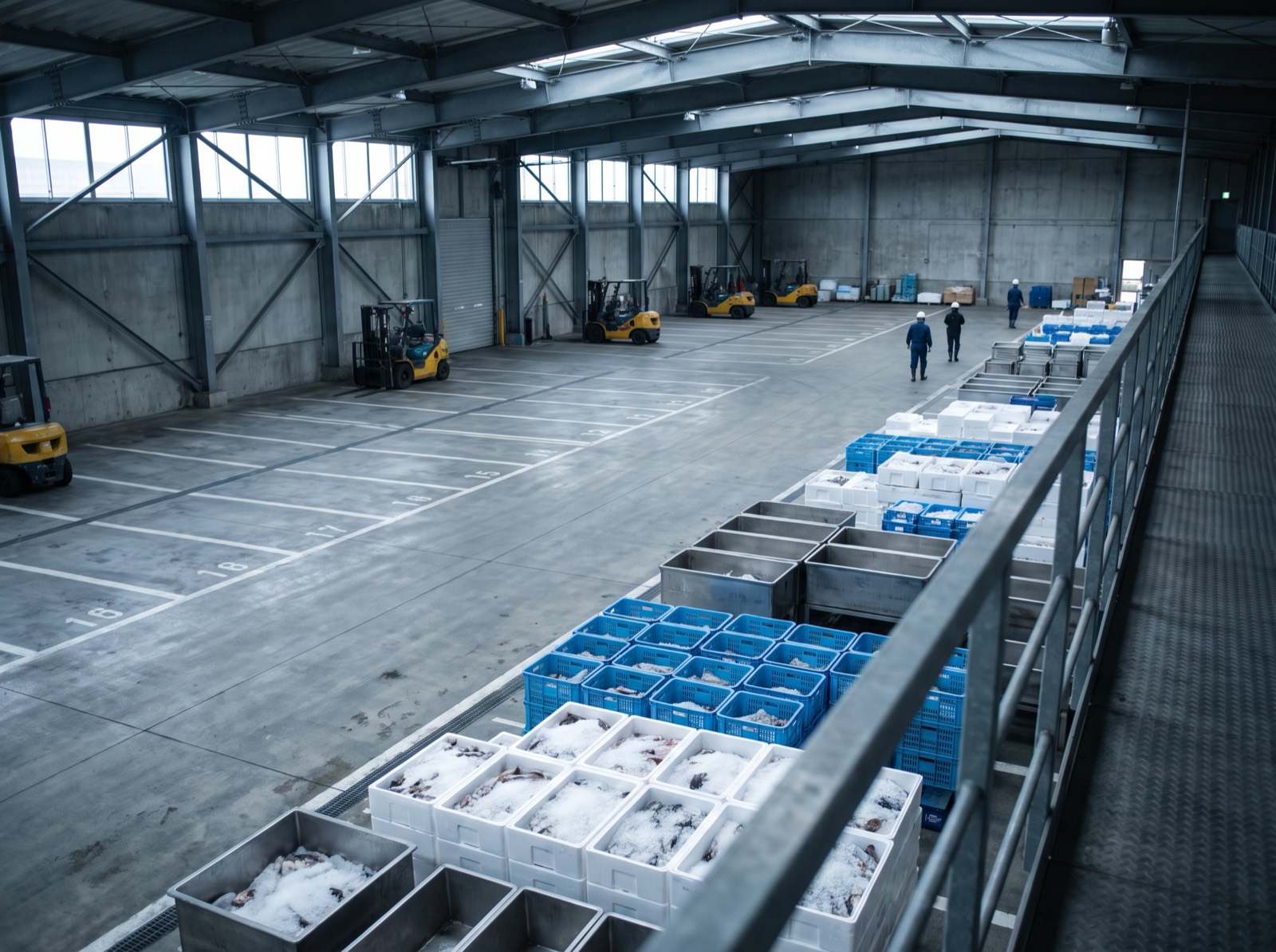
It is a working facility first and a visitor attraction second, and the two are physically separated: the trading floors are enclosed and climate-controlled, and the public moves through on a separate route with viewing windows above. This is the single biggest difference from old Tsukiji, where visitors and forklifts shared the same floor.
Toyosu is not Tsukiji, and Tsukiji still exists
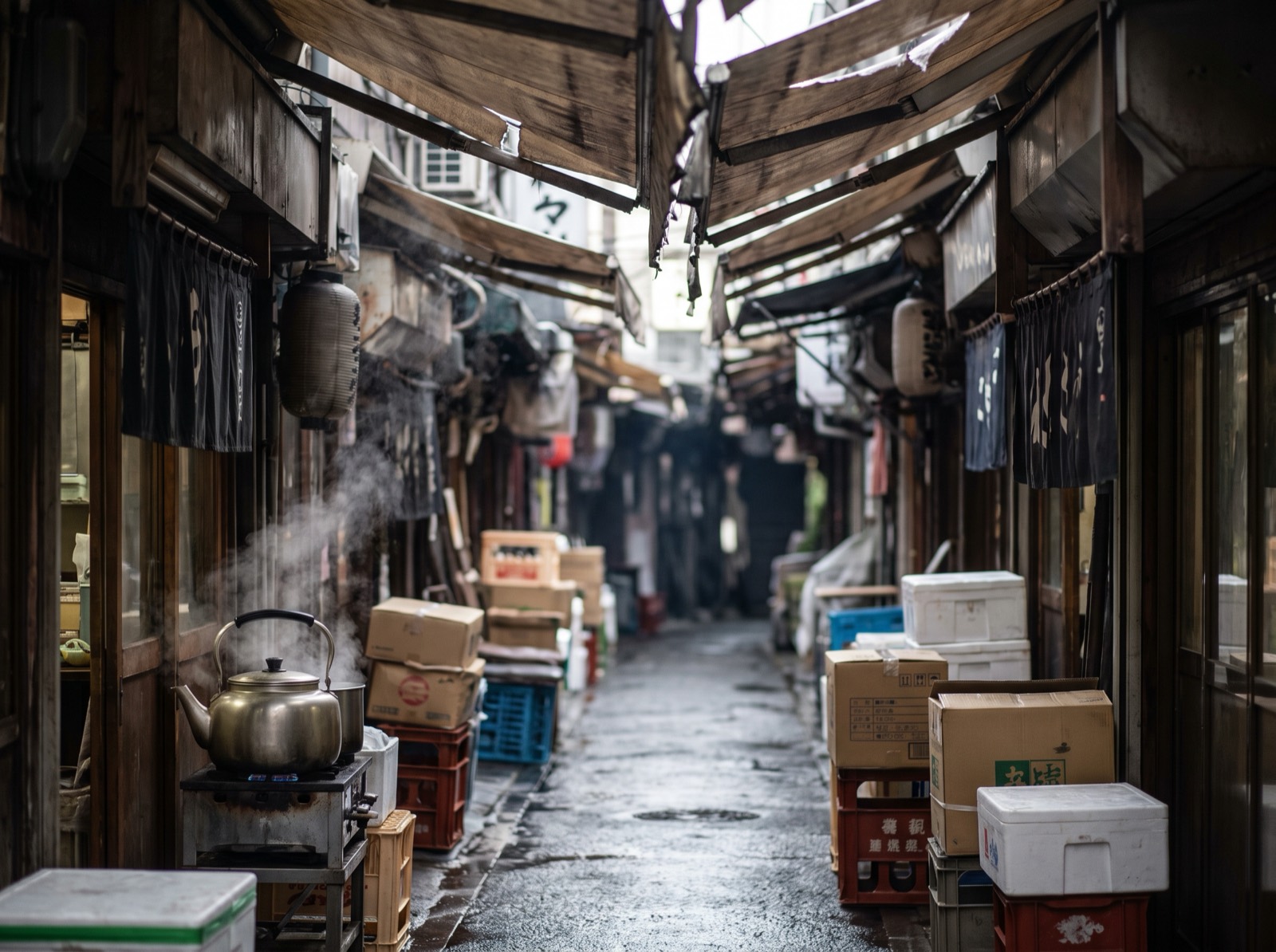
The most common confusion in English coverage. What moved to Toyosu in 2018 was the inner market: the wholesale auctions and the licensed intermediate wholesalers. The outer market at Tsukiji, the street of shops and stalls that most visitors actually mean when they say ‘Tsukiji’, did not move and is still operating.
So the choice is not ‘the old market or the new one’. It is between a wholesale facility you observe and a shopping street you eat in. We compare them directly in Tsukiji Outer Market.
One is a place you look at. The other is a place you eat in. Almost nobody needs both in the same trip.
What a visitor can actually see
- The tuna auction, from above. Frozen and fresh tuna laid out in rows on the floor, buyers inspecting tail cuts with torches, the auction itself conducted in a specialist calling style. Viewing is from a dedicated deck, through glass on the upper level, at a distance. It is genuinely worth seeing and it is not the intimate scene that old Tsukiji photographs suggest.
- The intermediate wholesalers' floor, from a walkway. Hundreds of stalls, band saws, styrofoam, ice. Again observed from above rather than walked through.
- The restaurants and shops. Toyosu has its own restaurant floors, including the shops that relocated with the market. These are open to the public and are the reason most visitors stay past the viewing decks.
- The rooftop lawn. An open deck with a view back across the bay to central Tokyo.
The auction viewing arrangements (deck access, any advance application, and the very early hours involved) are set by the market operator and have changed more than once since opening. Check the Tokyo Metropolitan Central Wholesale Market's own site for the current arrangement before you plan a morning around it; we deliberately do not print an hour here, because a stale opening time is the single most damaging thing a guide can carry.
What you are looking at is a managed quota
The rows of bluefin under the lights are not simply the morning’s catch. Pacific bluefin has been under numerical management since 2015, when catch limits were introduced through the Western and Central Pacific Fisheries Commission, and since 2018 that has run as statutory catch-quota management in Japan. The trigger was a stock assessment: spawning stock biomass had fallen to about 9,800 tonnes in 2010.
The management splits the fish by weight. Under 30 kilograms counts as a small fish, 30 kilograms and over as a large one, and each category carries its own separate cap. From January 2015 the allowance for small fish was cut to half of the 2002 to 2004 annual average. The interim recovery target was met in 2019, and the quota for large fish was raised in 2022.
We set out the years and the figures without an assessment attached, because both of the conclusions English writing normally draws from this material go further than the published data does. What is useful on the viewing deck is narrower and more concrete: the scale below you is regulated scale, and the size of the fish being sold is itself a regulatory category, which is part of why buyers are reading tail cuts so carefully.
Who should go
- Go if you are interested in the trade itself: in how a fish gets from a boat to a counter, in scale, in logistics. Toyosu shows you that better than anywhere else in the world.
- Go if you want an early breakfast of very good seafood and do not mind an early start and a train ride to a reclaimed island.
- Do not go expecting atmosphere. It is a well-run, well-lit modern building. The romance people are chasing belongs to the market that closed in 2018.
- Do not go instead of a counter meal. Nothing you eat at a market is a substitute for what a chef does with the same fish over several hours. See Edomae sushi for what that work consists of.
Getting there
Toyosu Market is on reclaimed land in Koto ward, at Toyosu 6-chome, and is served by the Yurikamome line rather than the subway network most visitors are using. It is not somewhere you pass on the way to anything else — it is a deliberate trip, in the early morning, to an island.
The practical consequence is that a Toyosu morning consumes a morning. If your trip has room for exactly one food-related excursion and one counter meal, our advice is to spend the excursion on the market street at Tsukiji, which is closer, warmer, and something you participate in rather than watch.
Why it moved at all
Tsukiji's inner market had been operating in buildings put up in 1935, designed for rail delivery and open to the weather, in a city where refrigeration standards, hygiene expectations and vehicle sizes had all changed beyond recognition. Toyosu is closed, temperature-controlled, and laid out for lorries.
The move was contested, delayed and politically fraught, and there is a considerable Japanese literature on that. What is not contested is the technical case: a modern cold chain is not something you can retrofit into an eighty-year-old open shed.
The cold chain is also where a legal requirement becomes a physical one. Fish sold for raw consumption must be held at 10°C or below, and a closed, temperature-controlled building is how a market of this size meets that every day; see is sushi safe to eat in Japan for the specification itself.
Frequently asked questions
What is Toyosu Market?
Tokyo's central wholesale seafood and produce market, opened on 11 October 2018 in Koto ward. It handles about 1,342 tonnes of seafood a day, worth roughly ¥1.54 billion, along with 997 tonnes of fruit and vegetables, per Tokyo Metropolitan Government figures for 2019.
Did Tsukiji Market close?
Only partly. The inner market (the wholesale auctions and licensed wholesalers) moved to Toyosu in October 2018. The Tsukiji outer market, the street of shops and stalls most visitors mean by 'Tsukiji', did not move and still operates.
Can you watch the tuna auction at Toyosu?
Yes, from a dedicated viewing deck above the floor, through glass. Access arrangements and hours are set by the market operator and have changed since opening, so check the Tokyo Metropolitan Central Wholesale Market's own site before planning around it.
Is Toyosu Market worth visiting?
Worth it if you are interested in the seafood trade itself or want an early seafood breakfast. Not worth it if you are chasing the atmosphere of the old Tsukiji inner market; Toyosu is a modern, enclosed, well-lit facility and is observed rather than walked through.
Toyosu or Tsukiji: which should I visit?
Almost nobody needs both. Toyosu is a wholesale facility you look at; Tsukiji outer market is a shopping street you eat in. If you have one morning, Tsukiji is closer and more participatory; if you care about the trade, go to Toyosu.
How do you get to Toyosu Market?
It sits on reclaimed land at Toyosu 6-chome in Koto ward, served by the Yurikamome line rather than the main subway network. It is a deliberate early-morning trip rather than somewhere you pass on the way to anything else.