Edomae sushi is the Tokyo style that began as preservation. Before refrigeration, fish was cured with salt and vinegar, marinated in soy sauce, simmered, or deliberately aged, because raw fish could not be held. Those techniques outlived the problem they solved, because they improve the fish rather than merely preserving it. A shop working in the Edomae style seasons each piece itself, before serving it.
“In front of Edo”
Edomae means literally in front of Edo: the waters of the bay the city sat on. It described where the fish came from, and by extension the way that fish was handled by the sushi stalls of the city from around 1820 onward.
Nigiri sushi was invented in Edo around that date and began as street food, eaten standing. What made it possible was not refrigeration, which did not exist, but a set of treatments that let fish be held safely for a day or more. The style and the techniques are the same thing: Edomae is not a region on a menu, it is a list of jobs.
The four jobs
The trade word is shigoto, literally “work”, and it means everything done to a topping before it reaches the rice. Four families of treatment cover most of it.
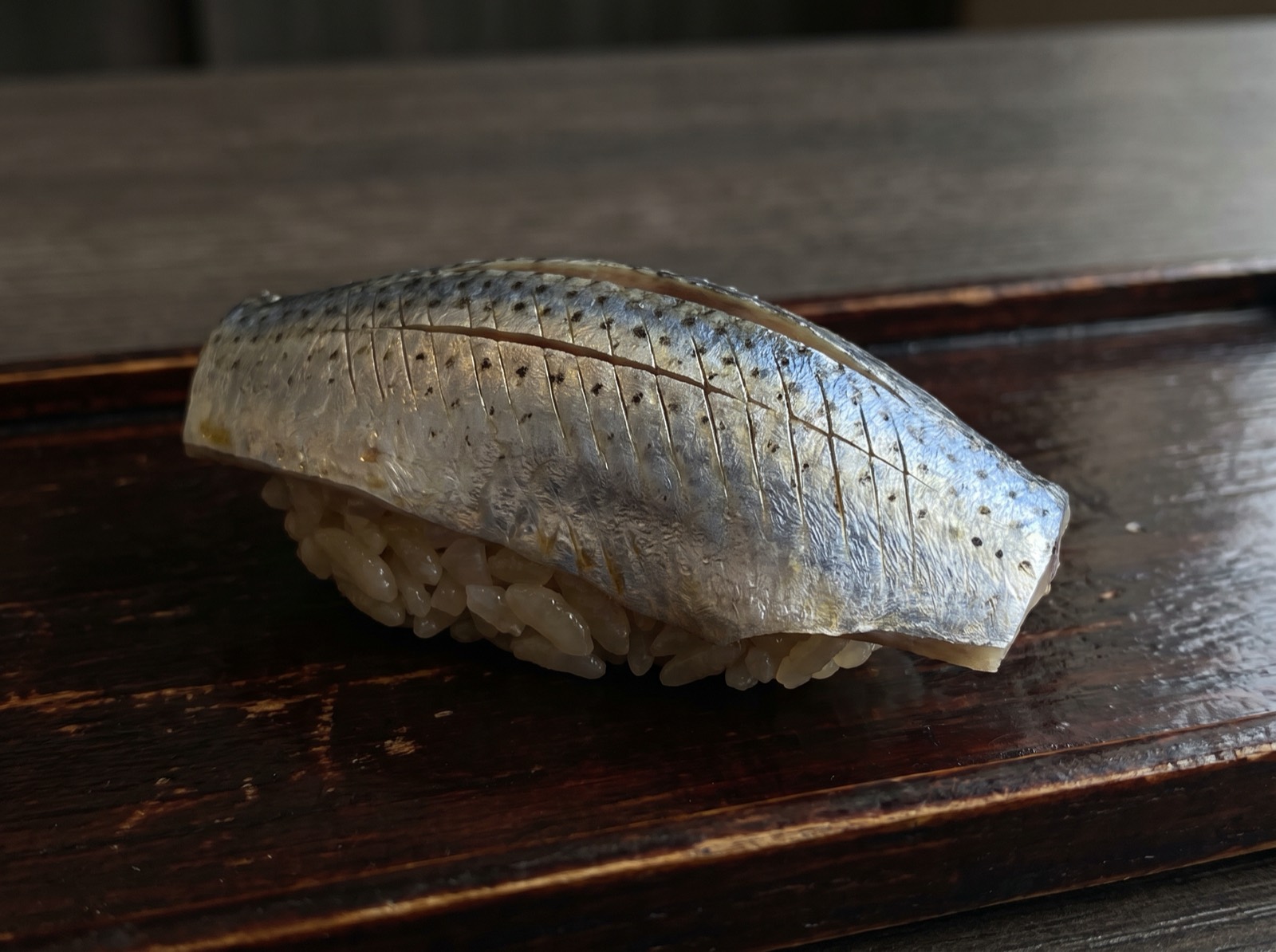
1. Curing: su-jime (酢締め). Salt the fish, rinse it, then steep it in vinegar, plain or sweetened. Salt draws out water and firms the flesh; vinegar firms it further and changes the flavour outright. This is the treatment that defines the silver-skinned fish, gizzard shad above all, and the degree of it is the single most revealing decision a sushi chef makes. Too little and the fish is slack; too much and it is a pickle.
2. Marinating: zuke (漬け). Steeping the fish in soy sauce, most commonly lean tuna. It was originally how tuna was kept, in an era when tuna was cheap and the fatty belly was thrown away. It survives because soy-marinated lean tuna is a distinct and excellent thing, darker and denser than the untreated cut beside it.
3. Simmering and glazing: nitsume (煮詰め). Conger eel, clams and octopus are simmered, and brushed with tsume, a sweet reduction built from the cooking liquid. A shop's tsume is often years old, topped up rather than remade, and it is one of the few things at a counter with a continuous history.
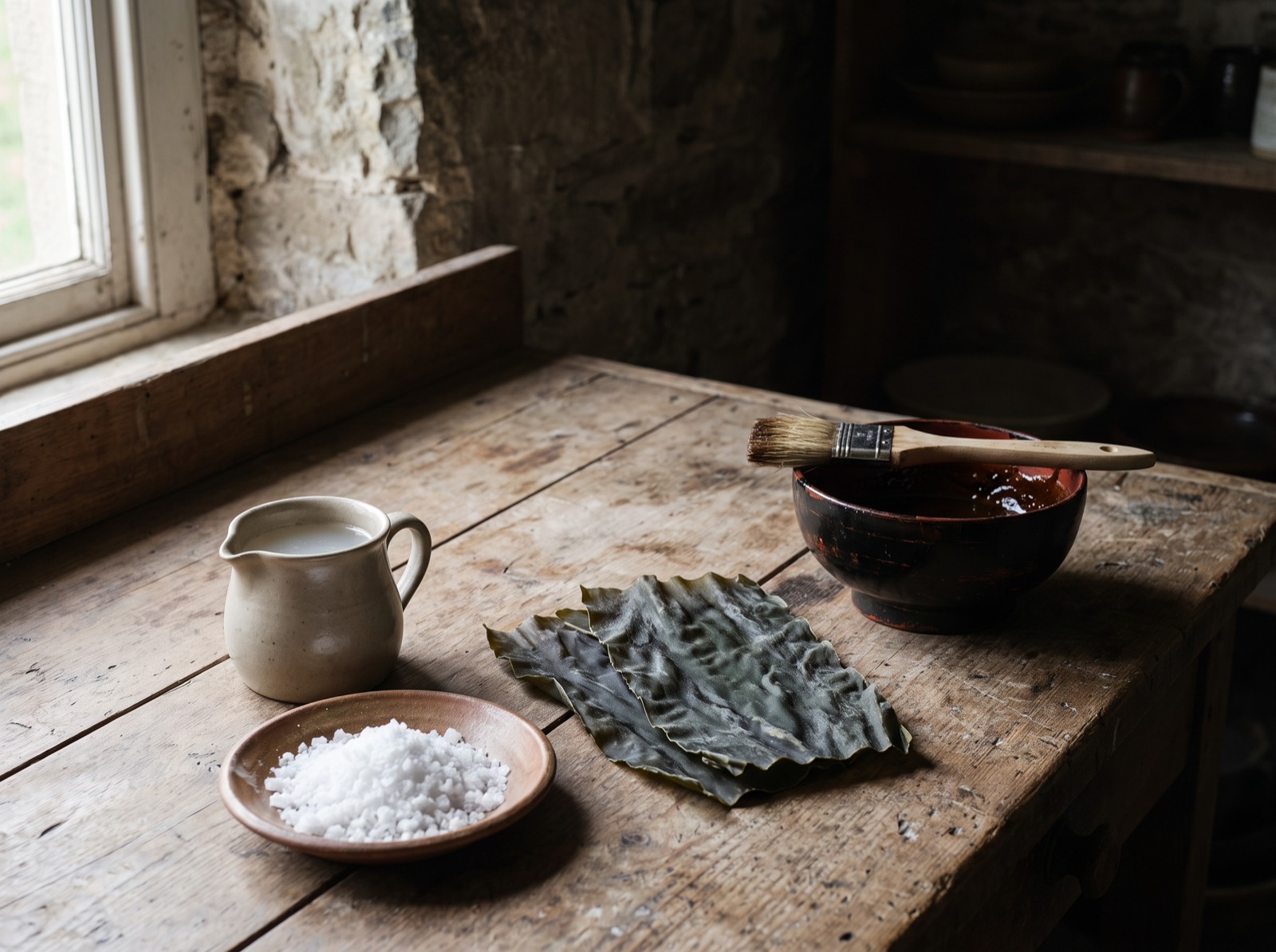
4. Ageing: jukusei (熟成). Holding fish, sometimes for over a week, to let it break down and deepen. This is the most modern of the four in its current form and the most contested within the trade. Related is kobujime, laying fish between sheets of kelp overnight, which is a kind of ageing by contact.
Standing behind all of them is ikejime: killing the fish instantly with a blade at the point of catch, which slows the loss of its savoury compounds. That happens before the shop ever sees the fish, and it is the reason a modern counter can age anything at all.
Every one of these techniques was invented to solve a problem that no longer exists. All four survived, because it turned out they were making the fish better the whole time.
What changed: preservation became flavour
This is the part of the story that gets left out of English introductions, and it is the interesting part.
Manufactured ice arrived in the Meiji period, and for the first time raw fish could be served as raw fish. On a purely functional account, the four jobs should have disappeared at that moment. They did not. What happened instead is that they were reinterpreted: a chef curing gizzard shad today is not extending its life, because the shop has a refrigerator. They are making a decision about acidity, texture and how the fish will sit against warm rice.
The same shift happened with seasoning. In the Edomae style the customer never dipped a piece; the fish arrived already seasoned, brushed with soy, glazed with tsume, or marinated. That was partly practical, since a street stall could not hand out dishes of soy sauce. But it is also a claim about authorship: the chef, not the diner, decides how much salt is on the fish.
There is a local ingredient in this history too. Edo bought its soy sauce at high prices from Kansai until the early 1800s, when the region around the city began producing the darker koikuchi type, which then took over the market. Edomae sushi grew up with that soy sauce and tastes the way it does partly because of it.
What a modern Edomae counter looks like
Ten to fourteen seats, one chef and perhaps an assistant, a wooden counter kept bare, and a case of fish that is smaller than you expect. The meal opens with small dishes and moves into nigiri, one piece at a time, each handed over directly or set on the wood in front of you.
What you will notice, if you are watching for it, is how little happens at the counter. The cutting is quick and the forming takes seconds. Almost all the work was done that morning, or yesterday, or last week. The counter is the last small fraction of the process, performed in public.
How to tell whether a shop is actually doing it
Three checks, in order of reliability. None of them require you to know anything about fish.
- Is there a dish of soy sauce in front of you, and is it being used? At a shop working in the style, most pieces arrive already seasoned — brushed with nikiri, thinned soy, or glazed with tsume. If the soy dish sits untouched for most of the meal, that is the strongest single signal.
- Is there a cured fish, and a marinated one? Look for gizzard shad or another silver fish that has been salted and vinegared, and for lean tuna that has been steeped in soy. A case of nothing but untreated slices is a different, and newer, kind of shop.
- What temperature is the rice? Not cold. Edomae rice is held near body temperature, and the contrast against cool fish is the point of the whole form. Cold, dense rice means the shop is prioritising something else.
A fourth, softer signal: the cheap fish. A shop that is serious about this style will serve gizzard shad, horse mackerel, squid and its own egg with the same attention as the tuna, because those are the items the technique actually shows on. They are also the ones it cannot buy its way past.
Edomae and Osaka: two different answers
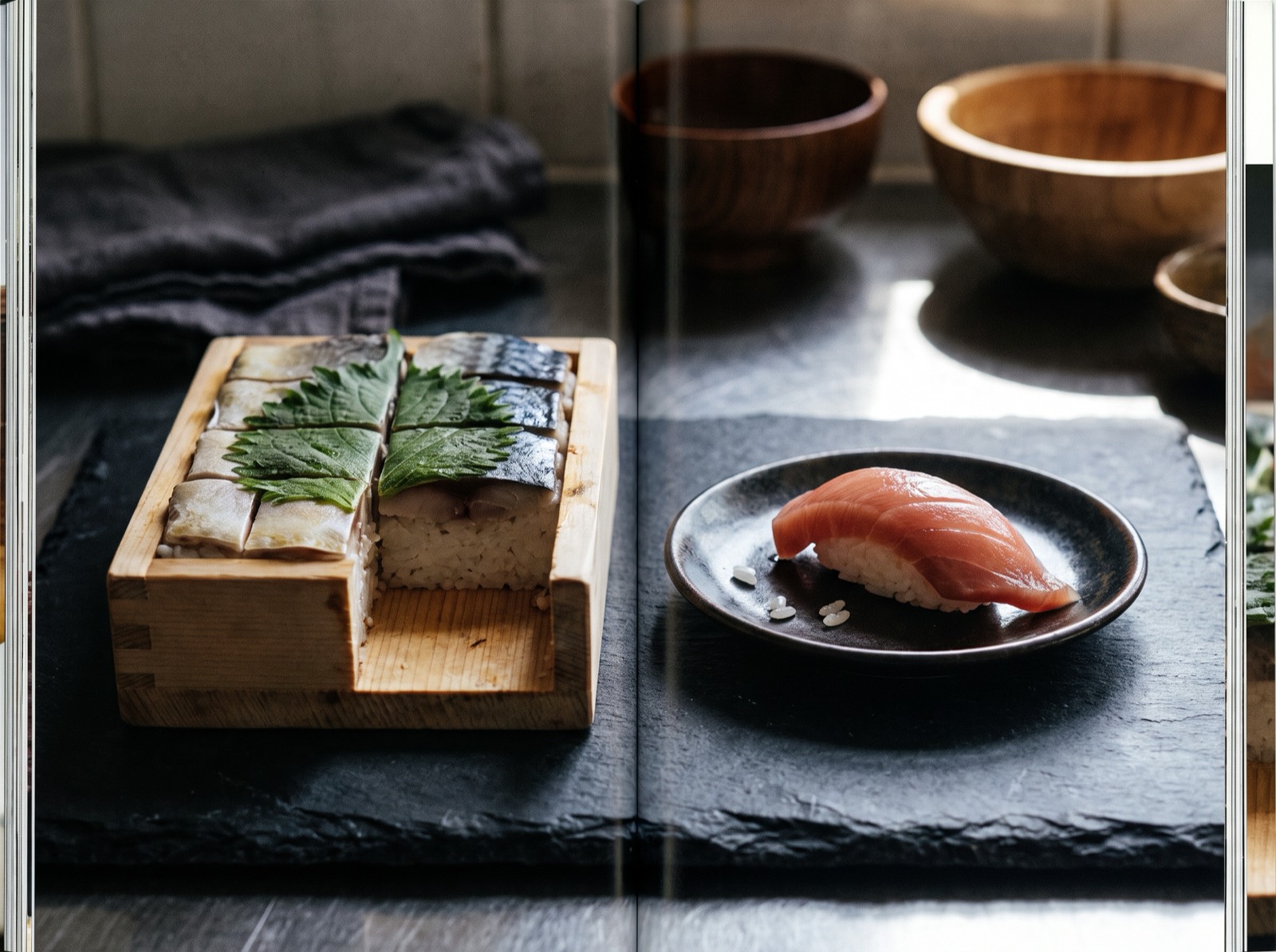
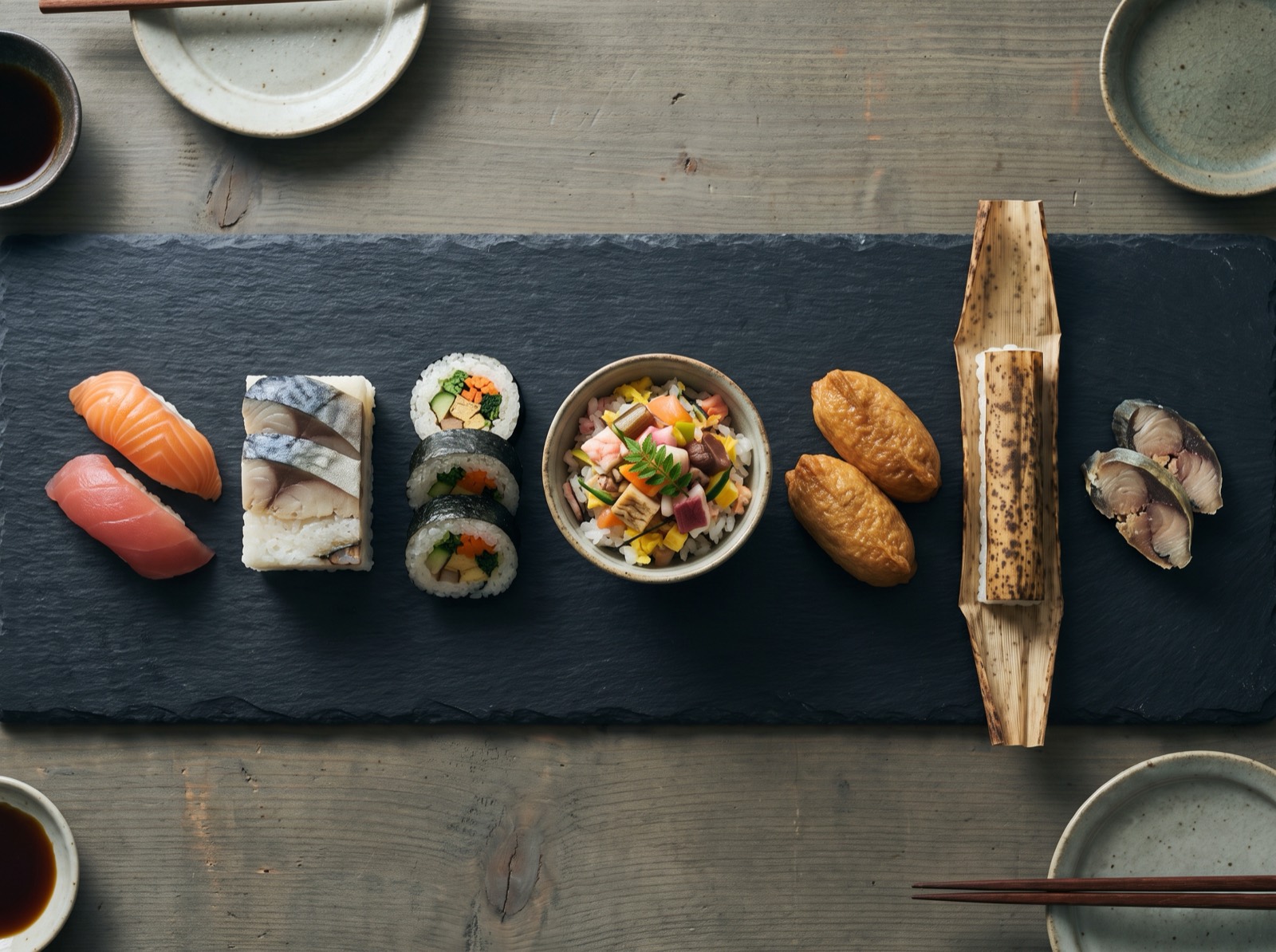
Edomae is not the only Japanese sushi tradition, and it is not the oldest. Osaka's style is oshizushi or hakozushi: rice and topping pressed together in a wooden box and cut into squares, which predates nigiri by centuries.
The two styles resolve the same problem (how do you serve fish safely and well) in opposite directions. Edo built a form around speed and a piece made to order. Osaka built one around pressure, curing and time, in a form that keeps and travels. Both are complete answers, and Osaka's has been badly under-represented in English. Neither is what keeps the fish safe today. That is a statutory framework with a date on it, set out in is sushi safe to eat in Japan. See Osaka versus Tokyo sushi and eating sushi in Osaka.
Where to eat it
Edomae counters are spread across Tokyo, and the highest concentration of the expensive ones is in Ginza and the surrounding wards; see Ginza. But the style is not a price band. A neighbourhood shop at ¥10,000 that cures its own gizzard shad is doing Edomae; a ¥40,000 counter that serves everything untreated is doing something else, whatever the sign says.
For what the price bands actually buy, see omakase price tiers. For the forms this style sits inside, types of sushi. For the words, our Sushi A–Z. The treatment is the tradition. Not the address, and not the bill.
Frequently asked questions
What is Edomae sushi?
The Tokyo style that began as preservation. Before refrigeration, fish was cured with salt and vinegar, marinated in soy, simmered or aged; those techniques survived because they improve the fish. A shop working in the style seasons each piece itself before serving it.
What does Edomae mean?
Literally "in front of Edo": the waters of the bay the city sat on. It described where the fish came from, and came to describe how that fish was handled.
What are the Edomae techniques?
Four families: su-jime, curing in salt then vinegar; zuke, marinating in soy sauce; simmering with a sweet tsume glaze; and jukusei, deliberate ageing, with kobujime (kelp-pressing) closely related.
Is Edomae sushi the same as nigiri?
Nigiri is the form: a hand-formed finger of rice with a topping. Edomae is what is done to the topping before it gets there. Nearly all Edomae sushi is nigiri, but not all nigiri is Edomae.
How can I tell if a sushi restaurant is really Edomae?
Check whether the soy dish goes unused because pieces arrive already seasoned; whether there is a cured silver fish and a soy-marinated tuna on the menu; and whether the rice is near body temperature rather than cold.
Why do Edomae chefs season the sushi for you?
It is inherited from the street stalls, which could not hand out dishes of soy sauce, and it is a claim about authorship: the chef decides how much seasoning the fish gets, having already decided how it was cured.
Is Edomae sushi better than other styles?
It is the dominant style and the most documented, not the only complete one. Osaka's pressed box sushi answers the same problem through pressure and curing rather than speed, and predates nigiri by centuries.