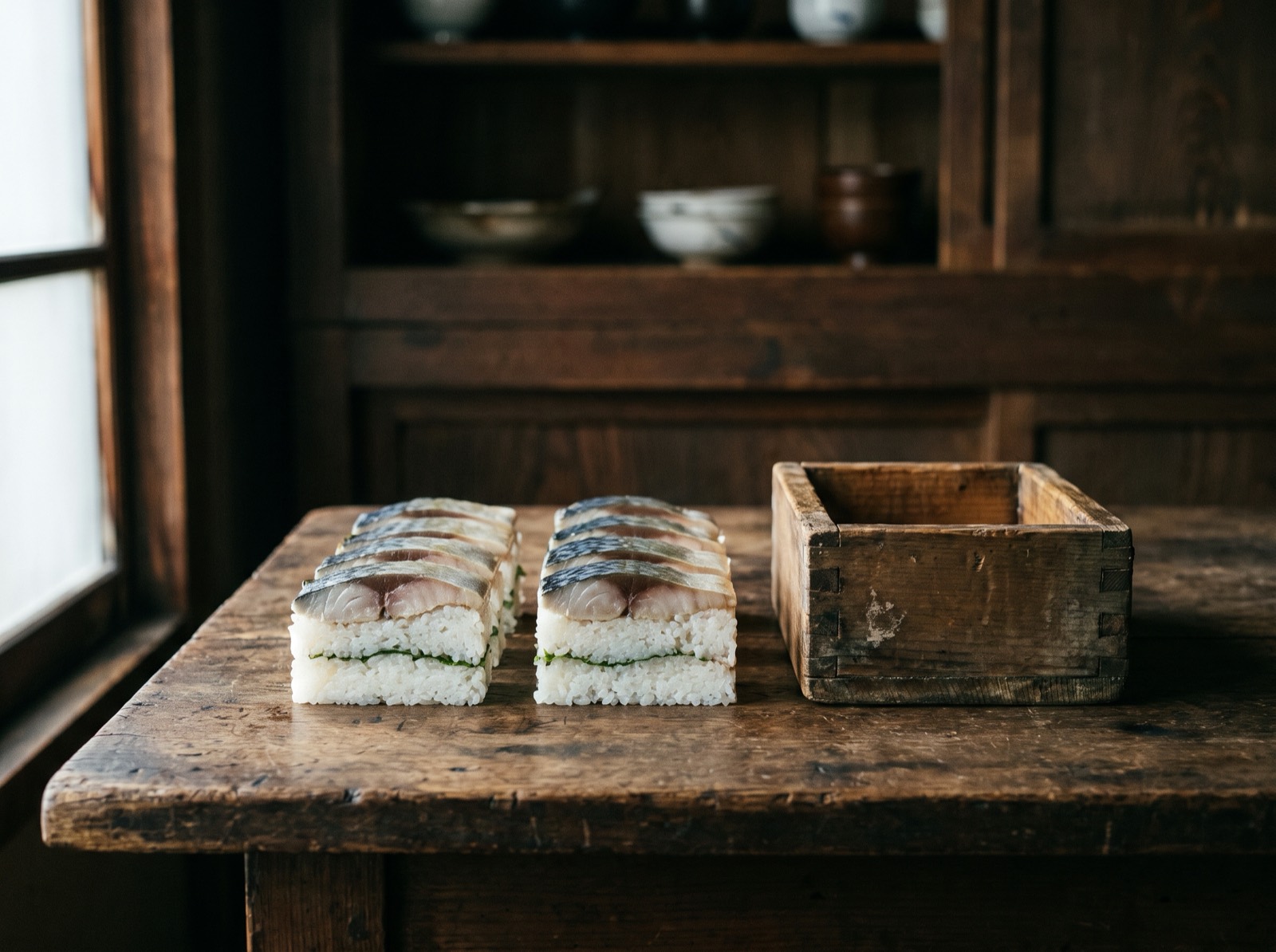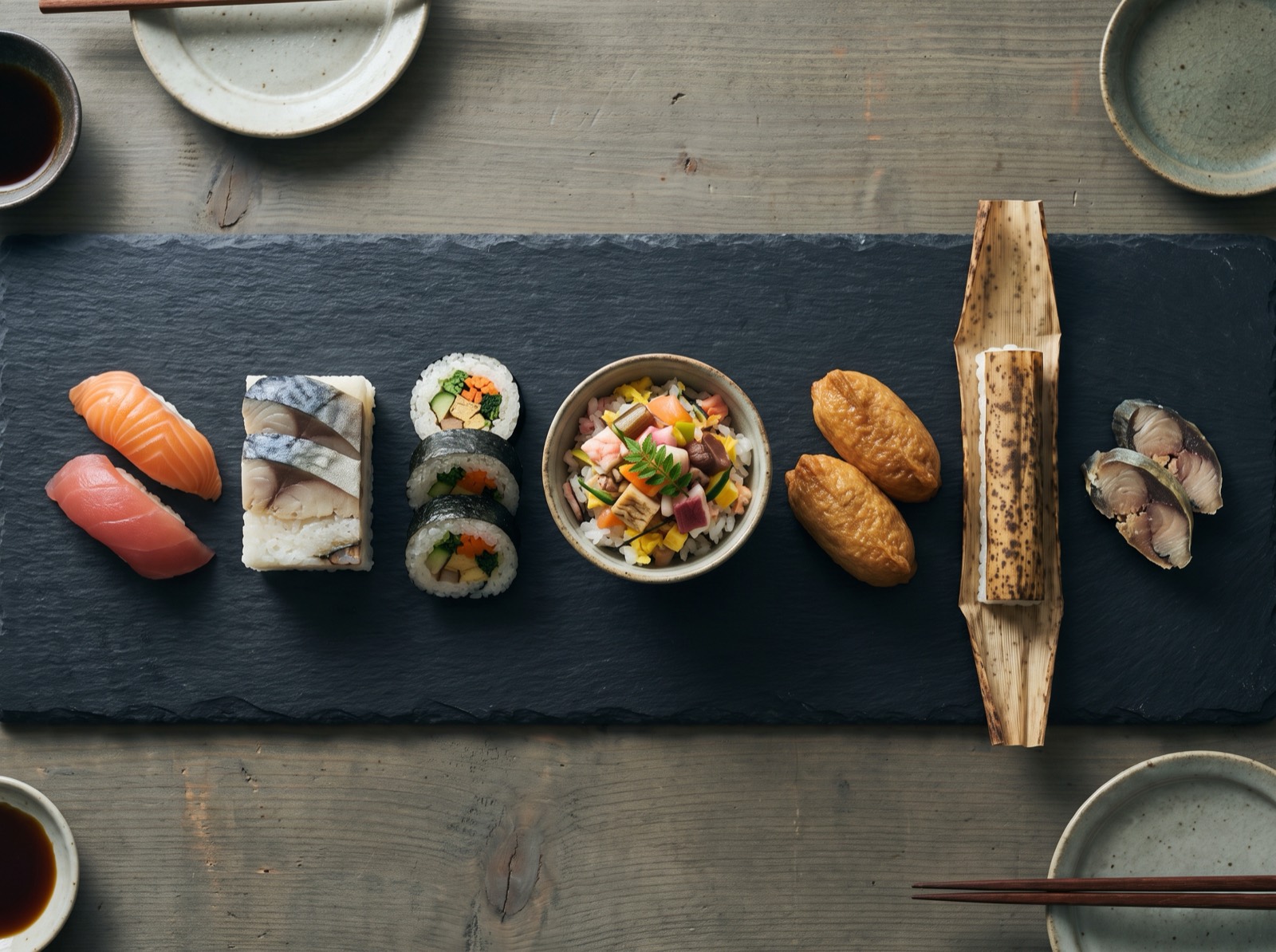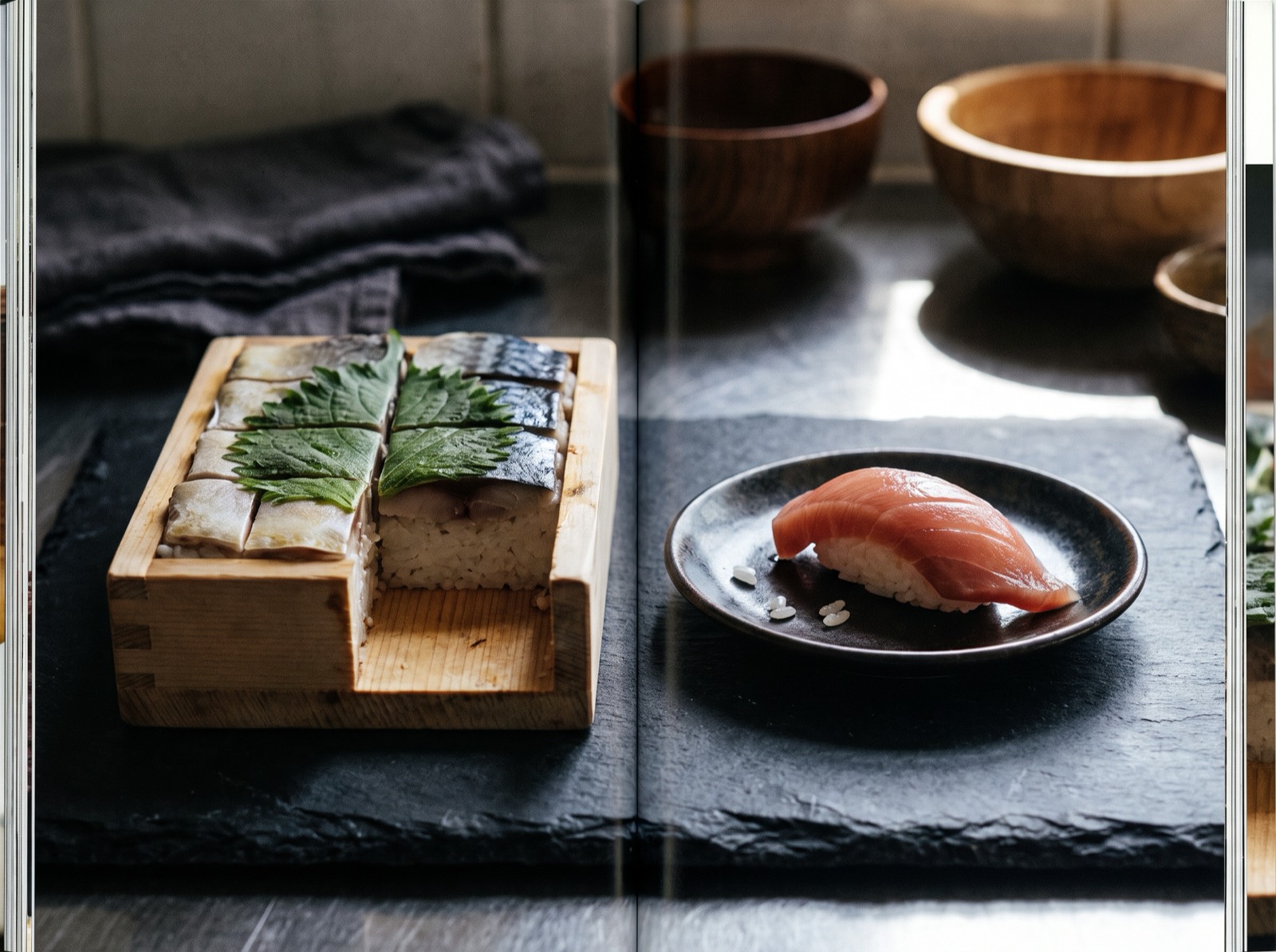
Tokyo's style is Edomae: nigiri, hand-formed to order, seasoned by the chef, eaten immediately. Osaka's is oshizushi or hakozushi: rice and topping pressed together in a wooden box and cut into squares, usually with cured or cooked toppings. Osaka's form is centuries older, and it keeps and travels in a way nigiri cannot.
Which came first
Osaka's, comfortably. Once vinegar was being produced in the Muromachi period, the long lactic fermentation that sushi began as could be replaced outright: you could sour the rice directly. That produced hayazushi, fast sushi, and with it the box: rice and topping packed into a wooden mould, pressed, and cut. By the middle of the Edo period box sushi was widespread.
Nigiri arrived around 1820, in Edo, as street food. Its whole design is a response to a different problem (feeding people quickly, standing up, in a city of workers), and it is the newer of the two by several centuries. Tokyo's style is the one that went global, which is why English treats it as the default and everything else as regional colour.
The two answers, side by side
- Made to order vs made in advance. Nigiri is formed in front of you and has a shelf life measured in seconds. Pressed sushi is made ahead, rests, and is often better for the wait.
- Loose vs compressed rice. The hardest thing in nigiri is leaving air in the rice so the piece collapses in the mouth. Pressed sushi does the opposite on purpose: dense, sliceable, structural.
- Raw vs treated toppings. Edomae serves plenty of raw fish today. Osaka's box form leans on cured, simmered and vinegared toppings, because those hold up to pressing and time.
- One piece vs a cut portion. Nigiri is a single unit with a fixed proportion. Pressed sushi is a slab cut into squares, so the proportion is decided by the knife.
- Eaten there vs carried away. This is the practical crux. Pressed sushi keeps, which is why the boxed sushi sold at Japanese railway stations is almost always pressed rather than hand-formed.
Battera, and the fish that suits pressing
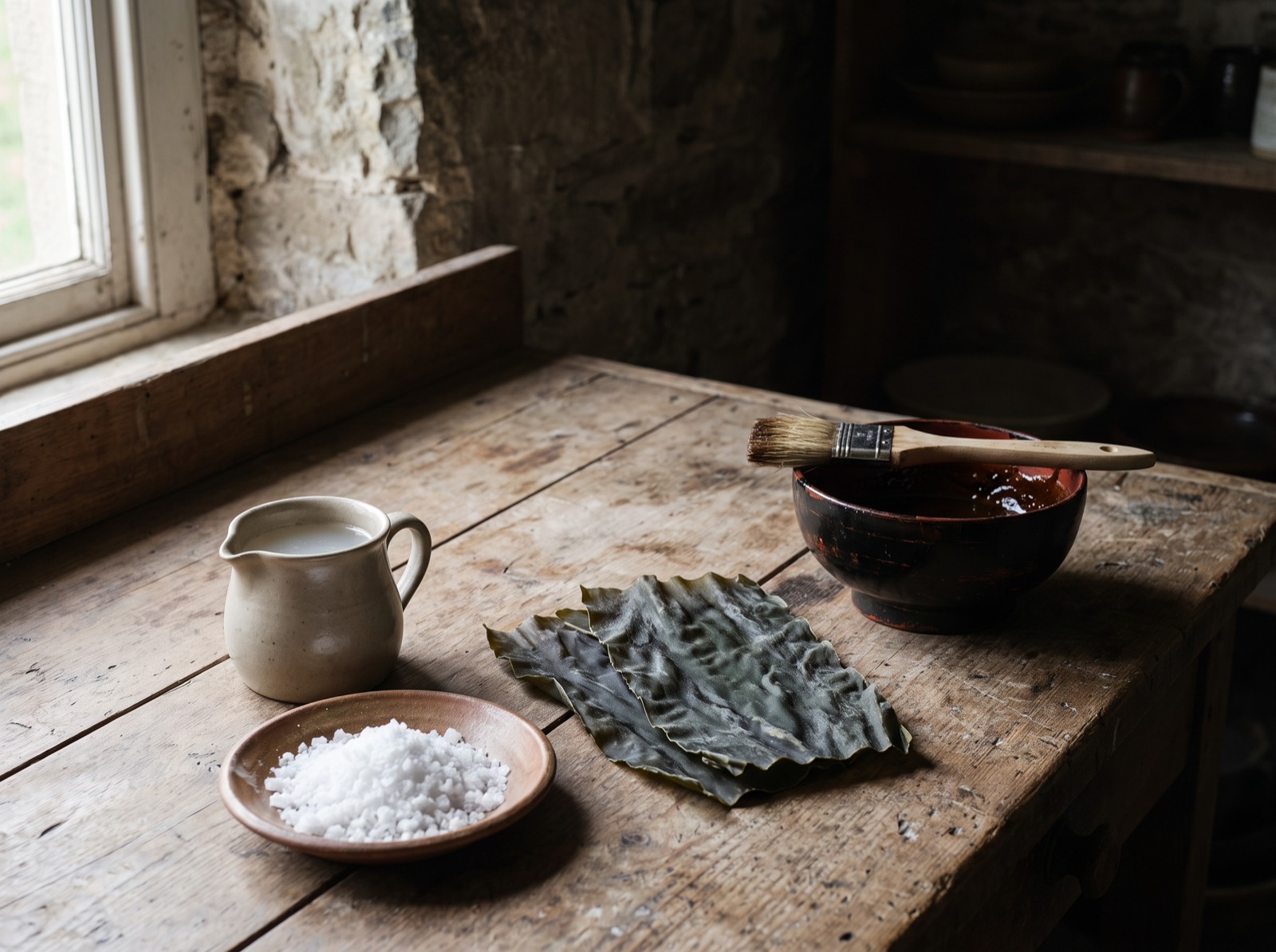
The best-known Osaka pressed sushi is battera — mackerel, cured in salt and vinegar, pressed with a sheet of translucent kelp over the top. The name is generally traced to the Portuguese bateira, a small boat, after the shape of the mould.
Mackerel is the argument for the whole style. It is an oily, strongly flavoured fish that historically could not be served raw, and curing plus pressure turns those liabilities into the point: the acid cuts the oil, the pressure binds the flesh to the rice, and a few hours of rest does the rest. Nigiri can serve cured mackerel and does. But battera is a form built around that fish rather than adapted to it.
Edo solved the problem with speed. Osaka solved it with pressure and patience, and got there first.
The seasoning underneath both of them
One difference sits below the forms and rarely gets mentioned: the two cities were not working with the same soy sauce. Edo bought its soy from Kansai at first, and it was expensive. From the early 1800s the region around Edo began producing its own, and the darker, stronger koikuchi type took over the market. That is the soy sauce Kanto now simply calls soy sauce, and Edomae sushi grew up on it.
The timing is not a coincidence. Nigiri appears in Edo around 1820, in the same decades that a cheap local supply of dark soy arrived, and the style leans on it heavily: fish marinated in soy as zuke, nikiri brushed on at the moment of serving, the sweet reduction of tsume on simmered toppings. A form in which the chef seasons every piece needs a seasoning that is close at hand and affordable. Kansai kept a lighter soy and a cuisine built around dashi, and its pressed sushi leans on salt, vinegar and kelp instead. The two cities did not just choose different shapes. They had different pantries.
What is actually different about eating in Osaka
Less than the styles suggest, and more than nothing. Osaka has a full complement of Edomae-style counters, many of them excellent, and a visitor who books an omakase in Osaka will get a meal recognisably like a Tokyo one, usually for somewhat less money.
What Osaka additionally has is the box tradition, alive in specialist shops and in the food halls of department stores, and a general food culture that treats sushi as one item among many rather than as the summit. The city's reputation is built on the whole street, not on the counter. Our guide to eating sushi in Osaka covers where that plays out.
Is one better?
They are not competing at the same thing, and the honest comparison is fish by fish.
- Delicate white fish, and anything served raw: nigiri, clearly. Pressing would destroy it.
- Fatty tuna: nigiri. The warm rice against cold fat is doing work that pressure cannot.
- Cured mackerel: a real contest, and many people would take the battera.
- Anything you want to eat in two hours' time, on a train: pressed, without argument.
- The full arc of a meal: nigiri, because the form is built for sequence, one piece at a time, adjusted as it goes.
How Tokyo’s version became the national default
Nigiri did not spread because it won an argument. Two specific events moved it. The Great Kanto earthquake of 1923 destroyed much of Edo-style Tokyo and scattered its sushi chefs, many of whom went back to the regions they had come from and opened counters there. Then, after the war, a rule allowed sushi shops to trade by turning a fixed measure of a customer’s rice into sushi, which kept the trade alive through rationing and standardised what a shop produced.
Within a couple of generations the Edo street snack was the thing the whole country meant by sushi, and it was that version, not the box, that boarded a plane in the 1980s. Osaka’s form did not decline so much as stay put. It is worth remembering when English writing describes pressed sushi as a regional variation on the real thing: the sequence runs the other way round.
The bigger point
The reason this comparison matters is not regional pride. It is that Tokyo's style is so dominant in English that its assumptions get mistaken for the definition of sushi itself: that sushi is raw, that it is made in front of you, that it is eaten within seconds, that it comes one piece at a time.
None of those are true of sushi in general. They are true of one two-hundred-year-old form, which happens to be the one that travelled. Osaka's box is a useful corrective, and fermented narezushi (still made, still sour, still nothing like anything in this article) is a stronger one. See types of sushi for the full range, and Edomae sushi for what Tokyo's style actually consists of. Tokyo's version is one answer. It was never the question.
Frequently asked questions
What is the difference between Osaka and Tokyo sushi?
Tokyo's Edomae style is nigiri: hand-formed to order, seasoned by the chef, eaten at once. Osaka's is oshizushi or hakozushi: rice and topping pressed in a wooden box and cut into squares, usually with cured or cooked toppings. Osaka's form is centuries older.
Which is older, nigiri or pressed sushi?
Pressed sushi. It dates from the Muromachi period, once vinegar production made it possible to sour the rice instead of fermenting it. Nigiri was invented in Edo around 1820.
What is battera?
Osaka pressed sushi made with mackerel cured in salt and vinegar, topped with a sheet of translucent kelp. The name is generally traced to the Portuguese bateira, a small boat, after the shape of the mould.
Is sushi in Osaka cheaper than in Tokyo?
Generally somewhat, for comparable work at a counter. Osaka has plenty of Edomae-style counters alongside its own pressed tradition, and prices for equivalent shops tend to sit below Tokyo's.
Why is pressed sushi sold at train stations?
Because it keeps. Pressing binds the rice, and the toppings are typically cured or cooked, so a box made in the morning is still good hours later. Nigiri has a shelf life measured in minutes.
Should I eat Osaka-style sushi if I only have one meal?
If that meal is a counter omakase, you will get Edomae-style nigiri in either city. Pressed sushi is better treated as an addition (a box from a specialist shop or a department store food hall) rather than a substitute for the counter.