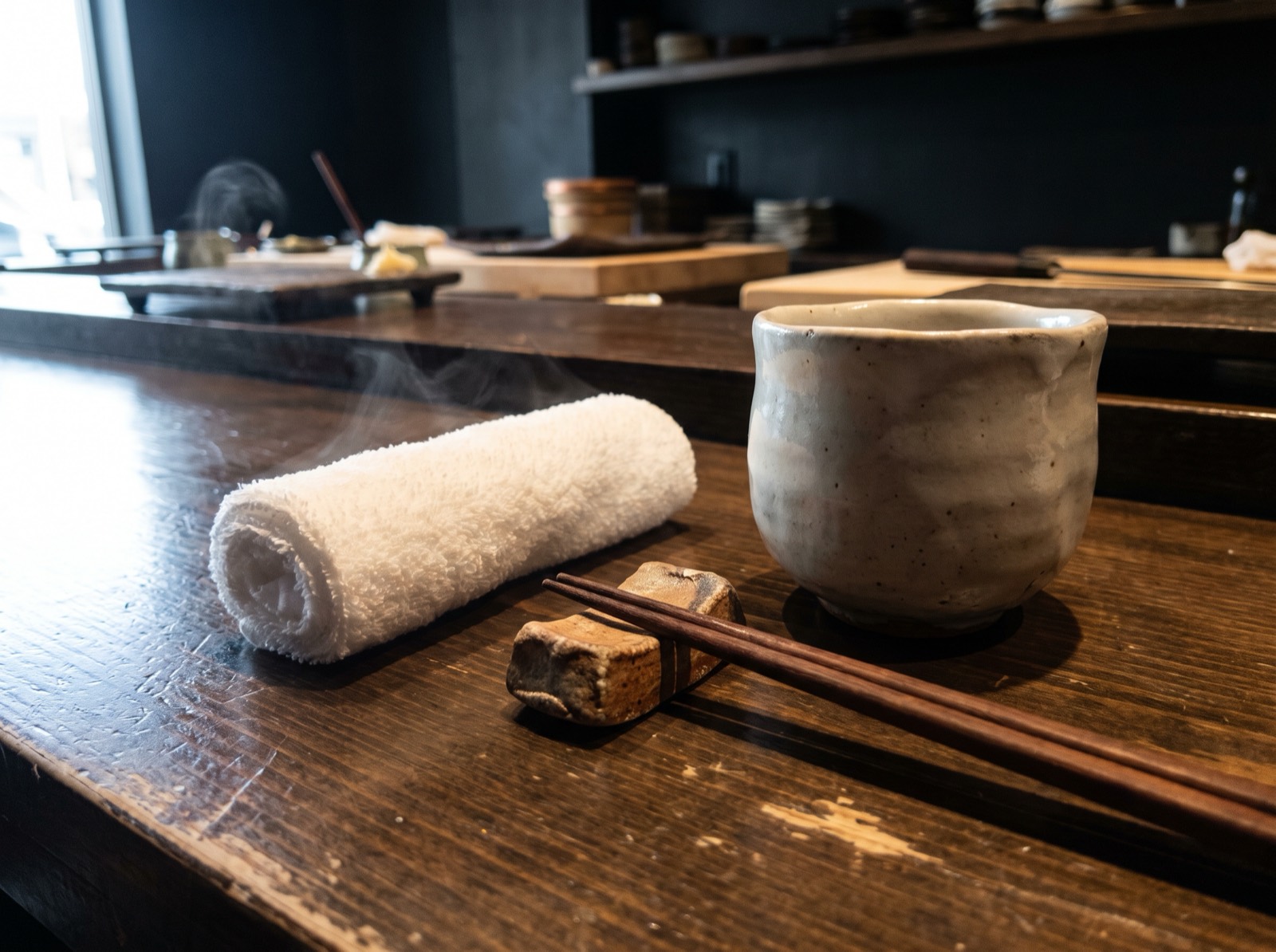
Omakase means “I’ll leave it to you.” At a sushi counter it is not a fixed course: the chef decides each piece as the meal runs, based on what was bought that morning, what the rest of the room is eating, and how you are eating. A Tokyo omakase typically runs somewhere between fifteen and twenty pieces across sixty to ninety minutes, and the price is agreed before you sit down rather than discovered afterwards.
“I leave it to you” — but that is not the useful part
The literal translation is accurate and almost content-free. Omakase (お任せ) is built from the ordinary verb makaseru, to entrust, with the honorific o-; you can use it at a barber. What it means at a sushi counter is specific, and it is defined by contrast with the two other ways of ordering.
- Omakase (お任せ): the chef chooses both the fish and the order. You get the best of what the shop bought that day. The bill runs higher than you might expect unless you name a budget.
- Okonomi (お好み): à la carte. You order piece by piece, at your own pace, in whatever order you like. Harder to predict what it will cost.
- Okimari (お決まり): a set. A fixed number of pieces at a fixed price, often served all at once and named after the pine-bamboo-plum grades. A beginner never has to time the next order.
Read that way, omakase is not primarily about surrendering choice. It is about handing over sequencing — and sequencing is the part of a sushi meal that a guest is least equipped to do well, because it depends on information the guest does not have.
What the chef is actually deciding
This is the part that is hard to see from outside, and it is why an omakase at a good shop is not reproducible from a menu.
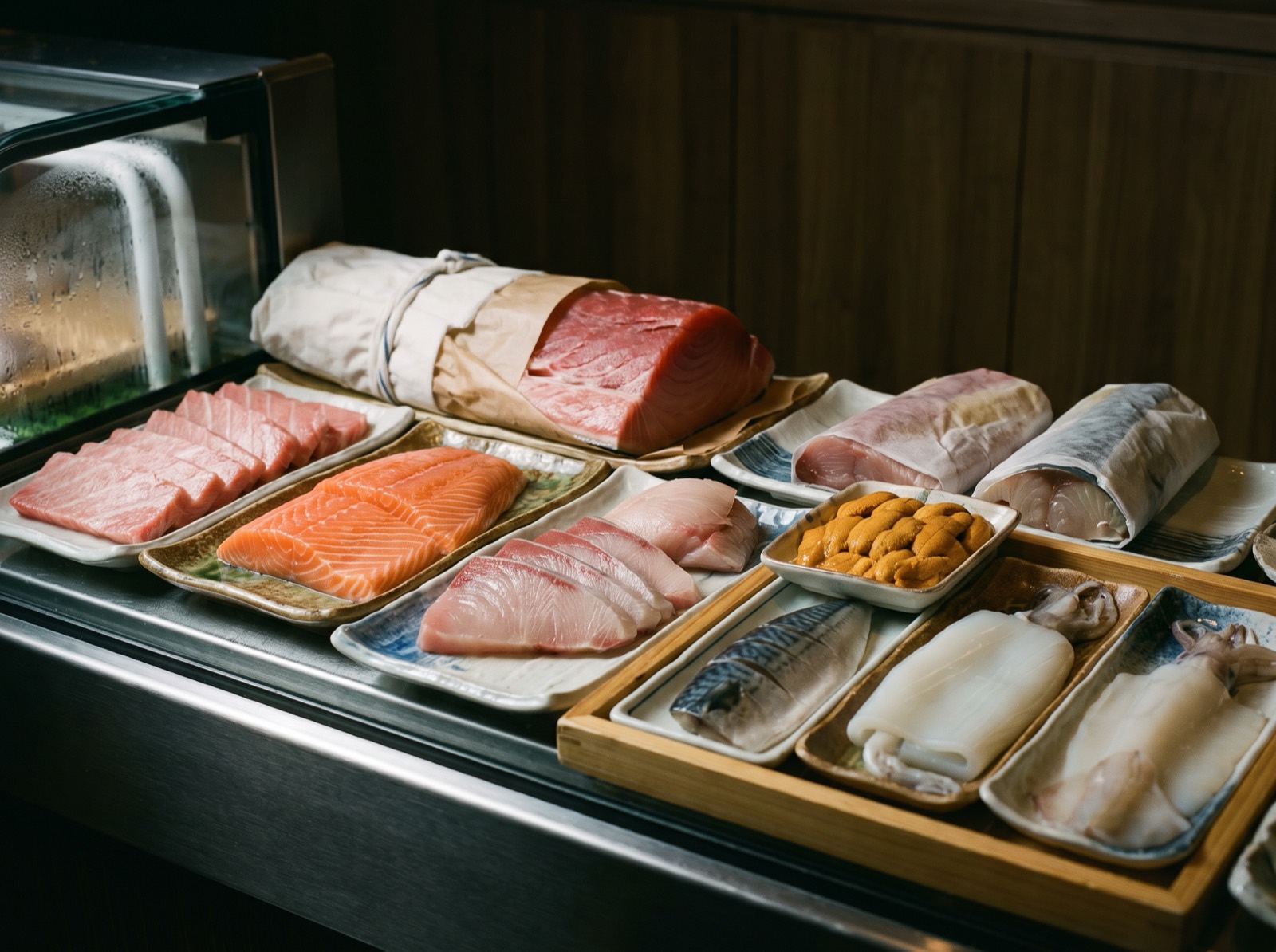
First: what exists. The shop bought a finite quantity of a finite list of fish, before dawn, on the basis of the bookings in the diary. There is no storeroom of alternatives. Every piece the chef gives you is a piece someone else now cannot have, which is why a request made at booking is easy and the same request made at the counter may be impossible.
Second: what is ready. Fish at a counter is not uniformly available across an evening. Something cured that morning becomes correct at a particular hour. Something aged for four days is at its point tonight and will not be tomorrow. The chef is not working through a list; they are working through a set of windows, several of which close during service.
Third: you. The pace is set by watching. How fast you eat, whether you are drinking, whether you left the rice, whether you visibly enjoyed the last piece — all of it feeds the next decision. Two guests seated at the same counter on the same night can receive different meals, and neither is being shortchanged.
An omakase is not a menu the chef memorised. It is a sequence of windows, several of which close while you are sitting there.
Fourth: the shape of the whole. A meal that is all rich pieces exhausts the palate by the middle; a meal that saves everything good for the end wastes the beginning. The running order (light to rich, with rinses in between) is a structure, and the chef is holding it in mind while also managing the four other people at the counter, who started at different times.
Omakase in Japan, and “omakase” abroad
Outside Japan the word has drifted, and it is worth knowing in which direction before you book something at home and expect the same thing.
In much of the English-speaking world, “omakase” has come to name a format: a seated, fixed-length, fixed-price tasting menu at a counter, often with a published number of courses and a published price, sometimes with two seatings an evening. That is a real and often excellent thing. It is also, structurally, closer to what a Japanese shop would call a course: the sequence is largely decided in advance and repeated nightly.
The Japanese usage keeps more of the improvisation, and keeps the price conversation at the booking stage rather than on the menu. Neither is a corruption of the other; they are two answers to the same word. But if you have eaten a fifteen-course counter menu in New York or London and are expecting the identical experience in Tokyo, the difference you will notice first is that the Tokyo version is less announced, less narrated, and more variable from night to night.
What happens, in order
A conventional Tokyo omakase has a shape, even though the contents change daily.
- Tsumami (つまみ), the opening. Sashimi, something simmered, something dressed. This is where drinking is expected to happen, and where the chef gets a first look at your pace.
- Nigiri (握り). The body of the meal, generally running light to rich: white fish, then red, then the silver-skinned fish, then gunkan, then the sweet-glazed pieces.
- Maki (巻き). Rolls, which at many shops signal that the meal is closing. If you want more nigiri, say so before they arrive.
- Tamago (玉子). The sweet omelette, traditionally last. It is also the piece most often used to judge a shop, since it is made in-house and hides nothing.
- Soup, usually after the sushi rather than before.
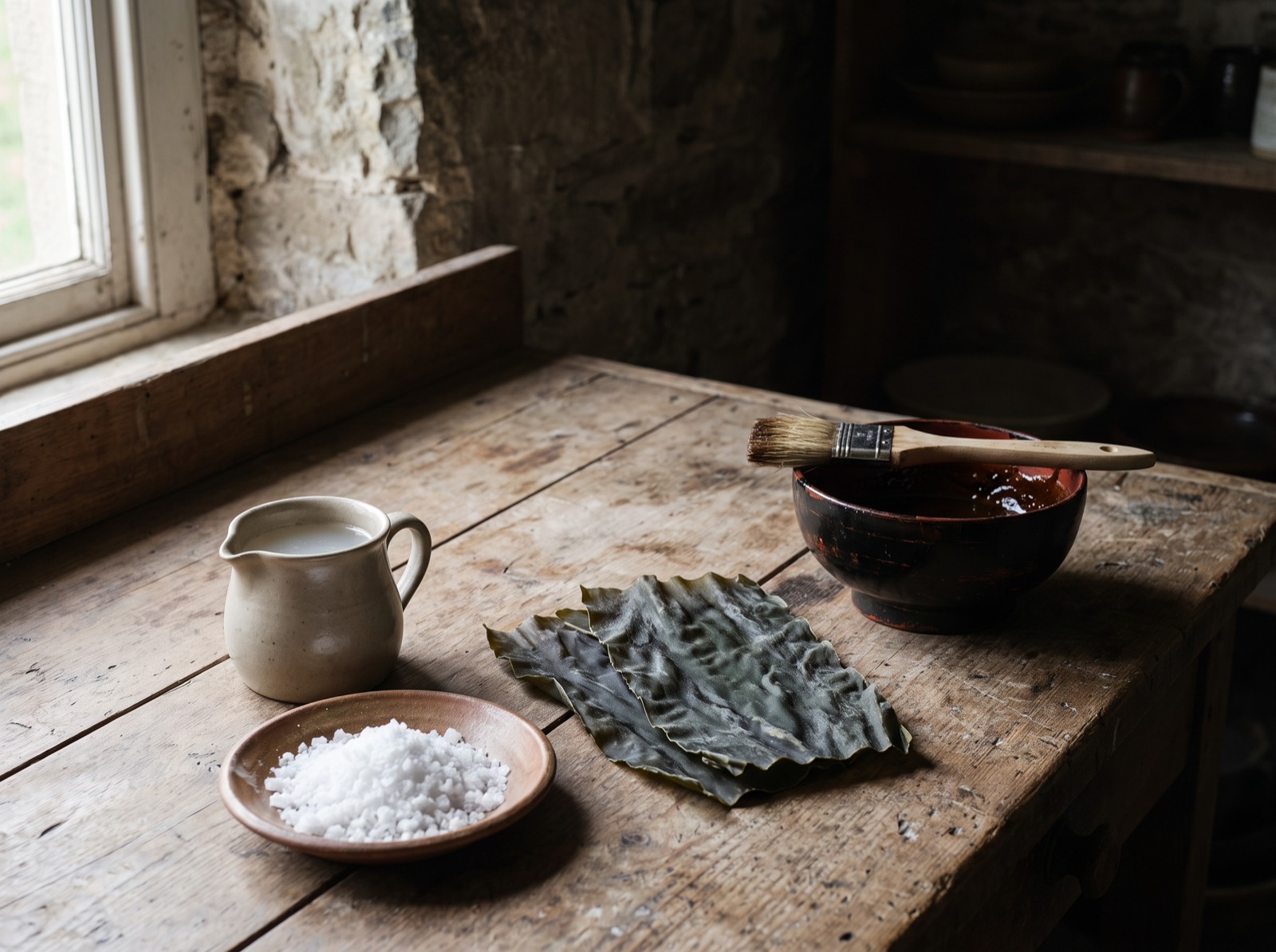
Almost every piece arrives already seasoned, brushed with nikiri, or with the thicker sweet tsume on simmered toppings. The soy dish in front of you may go untouched all evening, and that is the intended outcome. For the mechanics, see how to eat sushi.
How long it takes
Sixty to ninety minutes is the usual span for a full omakase at a Tokyo counter. It can run shorter at lunch, and longer at a shop that opens with an extended tsumami section and expects you to drink through it.
The variable most people underestimate is themselves. The chef is pacing to you; a table that talks between pieces stretches the meal, and one that eats promptly compresses it. Where a shop runs two seatings in an evening the end time is real, and it is worth confirming when you book whether the seat is yours for the night. We treat this at length in how long omakase takes.
What you are expected to do
Less than you fear. Eat each piece as it is set down, within about ten seconds, because it is built from warm rice and cool fish and starts changing immediately. Use your hands or chopsticks; both are correct. Do not add wasabi, which is already inside. Answer when the chef speaks to you, and do not feel obliged to keep a conversation going otherwise.
Three things are genuinely worth doing before you arrive. Say at booking if you have an allergy or something you cannot eat; at the counter it is far harder to accommodate. Say if you plan to drink, so the shop can lay in dishes for it. And be on time, which the Japanese reference books name as the manner that matters most. The whole social frame is in our guide to sushi etiquette.
What it costs
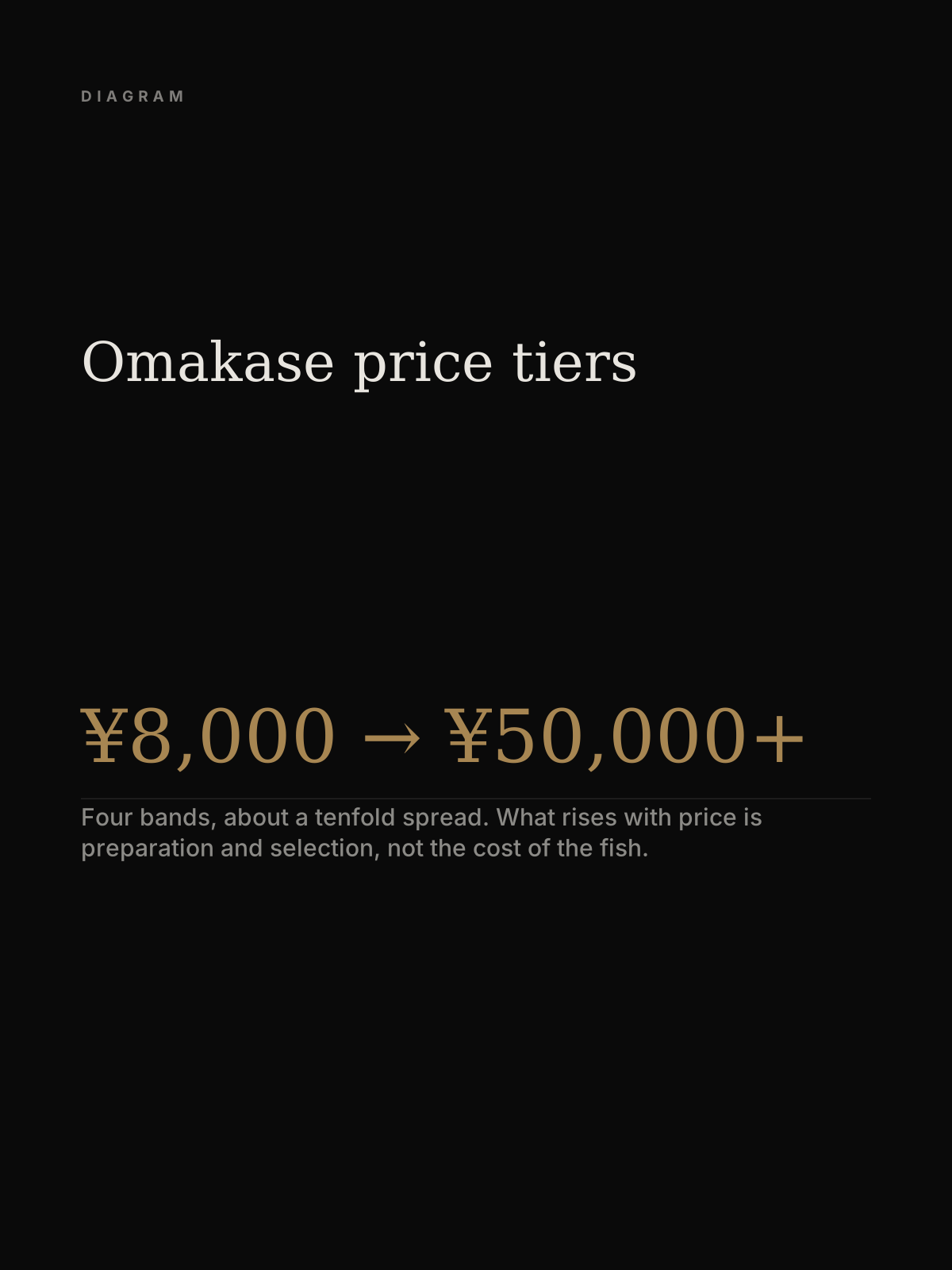
The price is a conversation you are allowed to have, and having it at the booking stage is normal rather than gauche. Saying “omakase, around this much” when you call is standard practice; if the number does not work for the shop, they will tell you their level and you can thank them and try elsewhere. That exchange is not a loss of face for anyone.
Two things to know about what the quoted figure covers. It is usually the sushi only; drinks are extra, and at some shops the opening dishes are too. And market-rate items can move the bill substantially, so asking the price of something before ordering it is a perfectly ordinary question at a Japanese counter. Our breakdown of what changes between price levels is in omakase price tiers.
Frequently asked questions
What does omakase mean?
Literally "I'll leave it to you." At a sushi counter it means the chef chooses both the fish and the order, deciding each piece as the meal runs rather than following a printed menu.
Is omakase the same as a tasting menu?
Not quite. A tasting menu is largely decided in advance and repeated nightly. A Japanese omakase is assembled from what the shop bought that morning and adjusted to how each guest is eating, so it varies night to night and guest to guest.
How many pieces are in an omakase?
Commonly fifteen to twenty at a Tokyo counter, usually preceded by a few tsumami dishes and closing with rolls and tamago. The number is not fixed and depends on the shop and the price level.
How long does omakase take?
Usually sixty to ninety minutes. It stretches if you are drinking through the opening dishes and compresses if you eat promptly, because the chef paces the meal to the guest.
Can I ask for a specific fish during omakase?
Better to ask when you book. The shop buys a finite quantity of each fish for the evening, so a request made in advance can be planned for and the same request at the counter may simply be impossible.
Can I control the cost of an omakase?
Yes. Saying "omakase, around this much" when you book is normal practice in Japan. If your figure does not fit, the shop will tell you their level. Note that the quoted price usually covers sushi only, with drinks extra.
What is the difference between omakase, okonomi and okimari?
Omakase means the chef chooses. Okonomi is à la carte, ordering piece by piece at your own pace. Okimari is a fixed set: a set number of pieces at a set price, often served all at once.