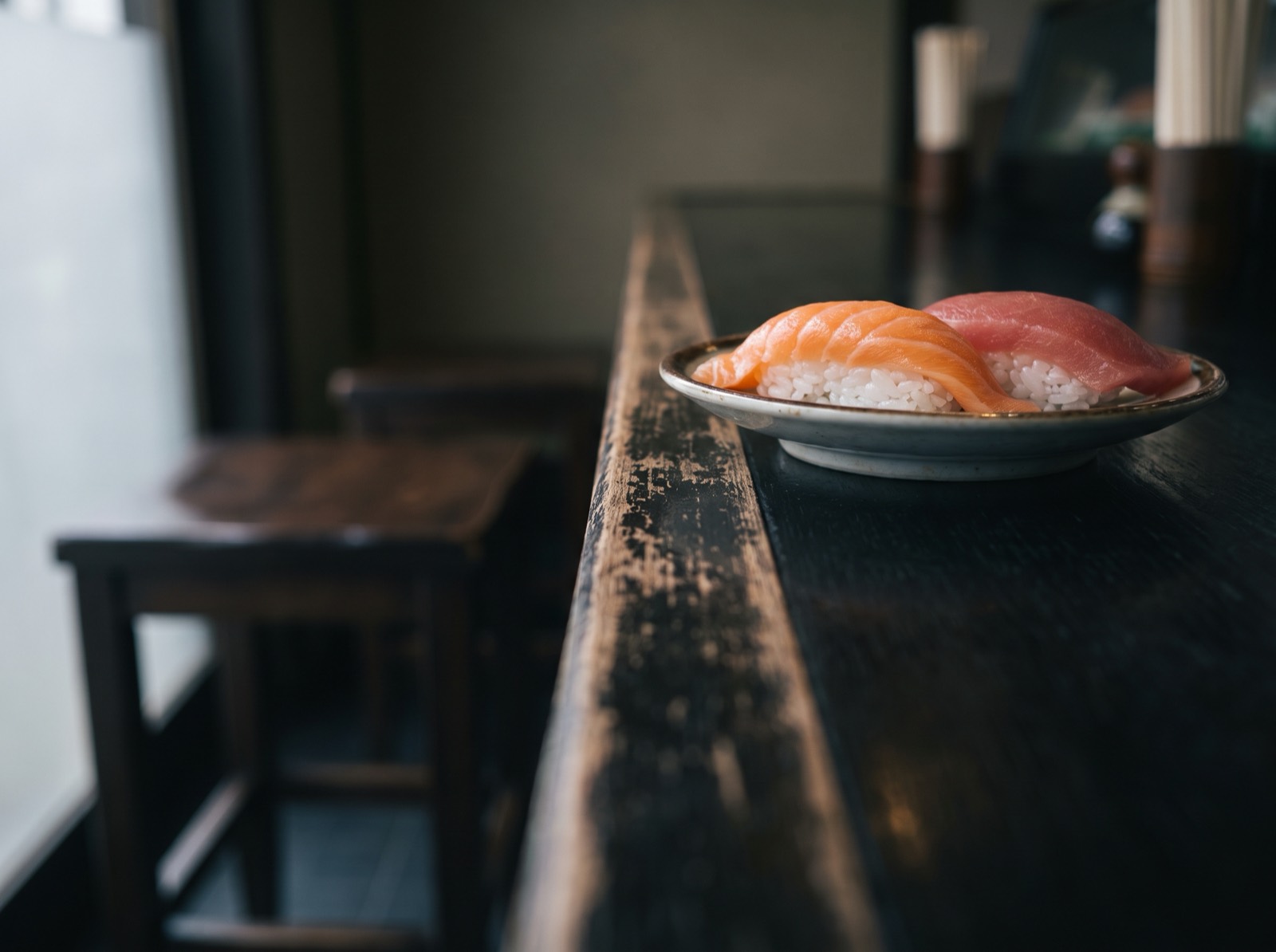
Sushi etiquette is simpler than most guides suggest. Eat each piece within about ten seconds of it being set down. Use your hands or chopsticks — both are correct. At a traditional counter, do not add wasabi, and do not reach for the soy sauce before checking whether the piece has already been brushed with it — most of them have. Everything beyond that is preference rather than rule, and several of the rules you have read in English are not printed in any Japanese book we have consulted.
What sushi etiquette actually is, and what it is not
Open an English-language etiquette guide and you get a list of prohibitions. Open the Japanese equivalents (the reference books a trainee cook or a curious diner in Japan would actually buy), and you get something different in kind. They are mostly about how to get more out of the meal: when to book, what to say, what the work in front of you is, and how not to let good food go cold while you photograph it.
That difference matters, because a rule invented to sound authoritative tends to make people anxious at exactly the moment they should be paying attention. So this guide separates three things: what genuinely changes the taste, what makes you a considerate guest, and what is simply not a rule in Japan whatever you have been told.
The Japanese books are not lists of prohibitions. They are instructions for enjoying yourself more.
Before you sit down
Most of what an experienced diner does happens before the first piece arrives, and this is the part English guides skip almost entirely.
- Book at least a day ahead. A sushi shop buys fish for the number of guests it expects. A walk-in on a busy evening is not just inconvenient for the shop; it means the fish bought for that evening has already been allocated.
- Phone, for a first visit. Online booking is now common, but a first call lets you confirm the details that matter. Just after opening time is the easiest moment to get someone.
- Give a number of guests and a rough budget. Asking the price per person is normal, not rude. If the answer is beyond you, thank them and try another shop; that is a completely standard exchange in Japan.
- Name the fish you want when you book. Turn up and ask on the night and it may be gone.
- Say if you plan to drink. The shop can lay in dishes that go with sake rather than improvising.
- Arrive hungry and sober. Eating or drinking beforehand is considered poor form, and it is also a waste of the meal.
- Be on time. Turning up late without calling is named in the Japanese books as the single worst breach of manners at a sushi counter. Not soy sauce. Lateness.
Two smaller points that almost never appear in English. Take off your watch and rings before you eat: they scratch the counter, which at a good shop is a single piece of wood that has been maintained for decades. And skip strong perfume: you are sitting inside arm's reach of the food, and so is everyone else.
One practical warning for visitors: plenty of sushi shops in Japan still do not take credit cards. Ask when you book.
Hands or chopsticks?
Both. This is the single largest gap between what English guides assert and what Japanese books say.
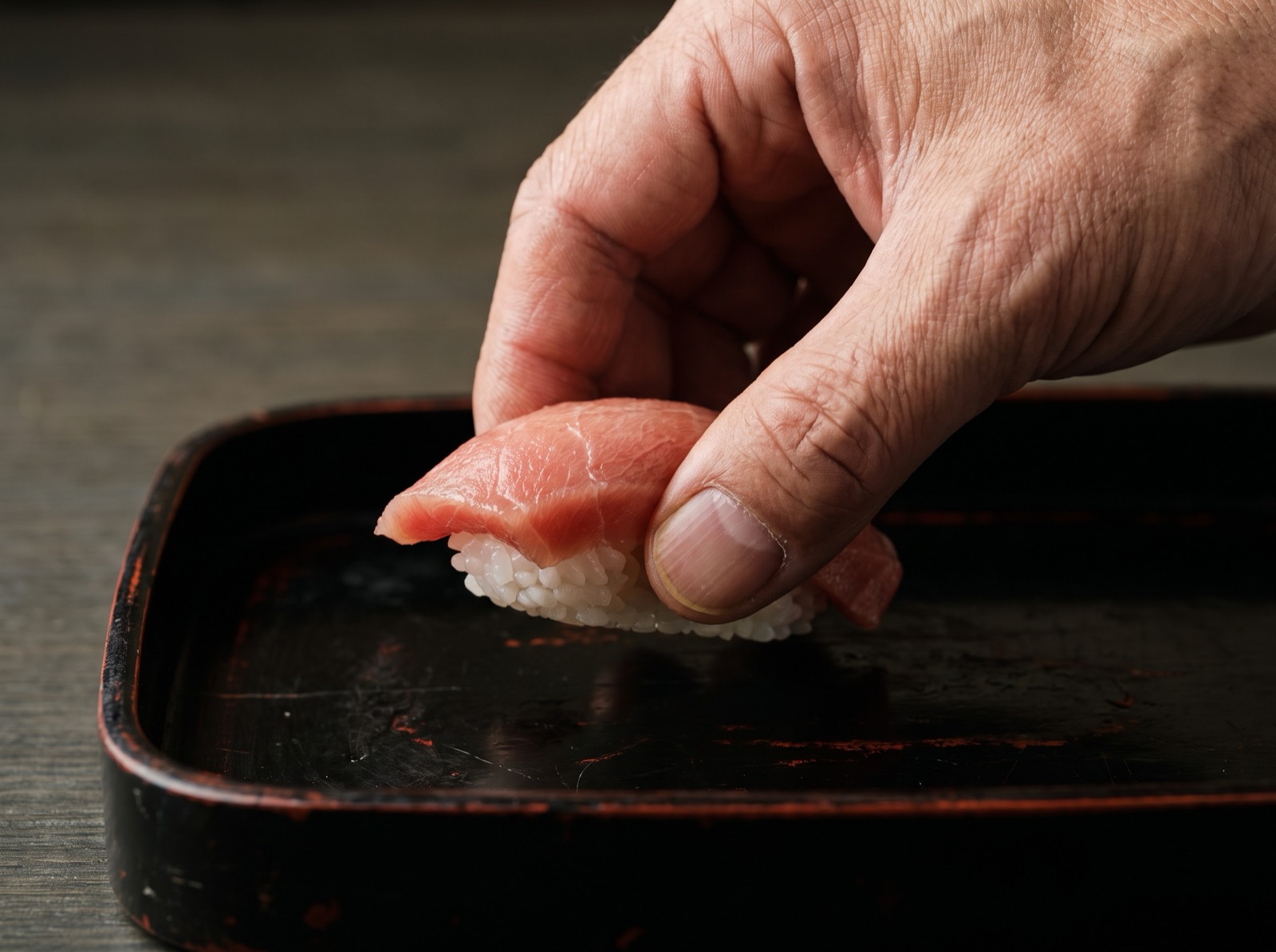
The English version of the rule is usually stated as a correction: nigiri is finger food, so put the chopsticks down. The Japanese books put it the other way round. Eating with your fingers is entirely proper (it is a survival from the era when nigiri was street food eaten standing at a stall), and it keeps a good rhythm at the counter. But it is a habit, not a requirement, and chopsticks are equally correct. Shops that expect hand-eating tend to hand you a separate small cloth for your fingers in addition to the oshibori; take that as the signal.
If you use chopsticks, there is a technique worth knowing. Tip the piece onto its side and take it from the side, holding slightly less than halfway along so your grip catches the topping as well as the rice. Gripping from directly above splits the two apart, which is the actual reason the advice exists. Gunkan, the pieces wrapped in a band of nori, can be picked up from the side too; the nori holds them together.
One more, rarely mentioned in English and immediately visible to everyone around you: do not snap disposable chopsticks apart sideways with your elbows out. Hold the lower stick still and lift the upper one quietly.
Soy sauce: what the chef already did for you
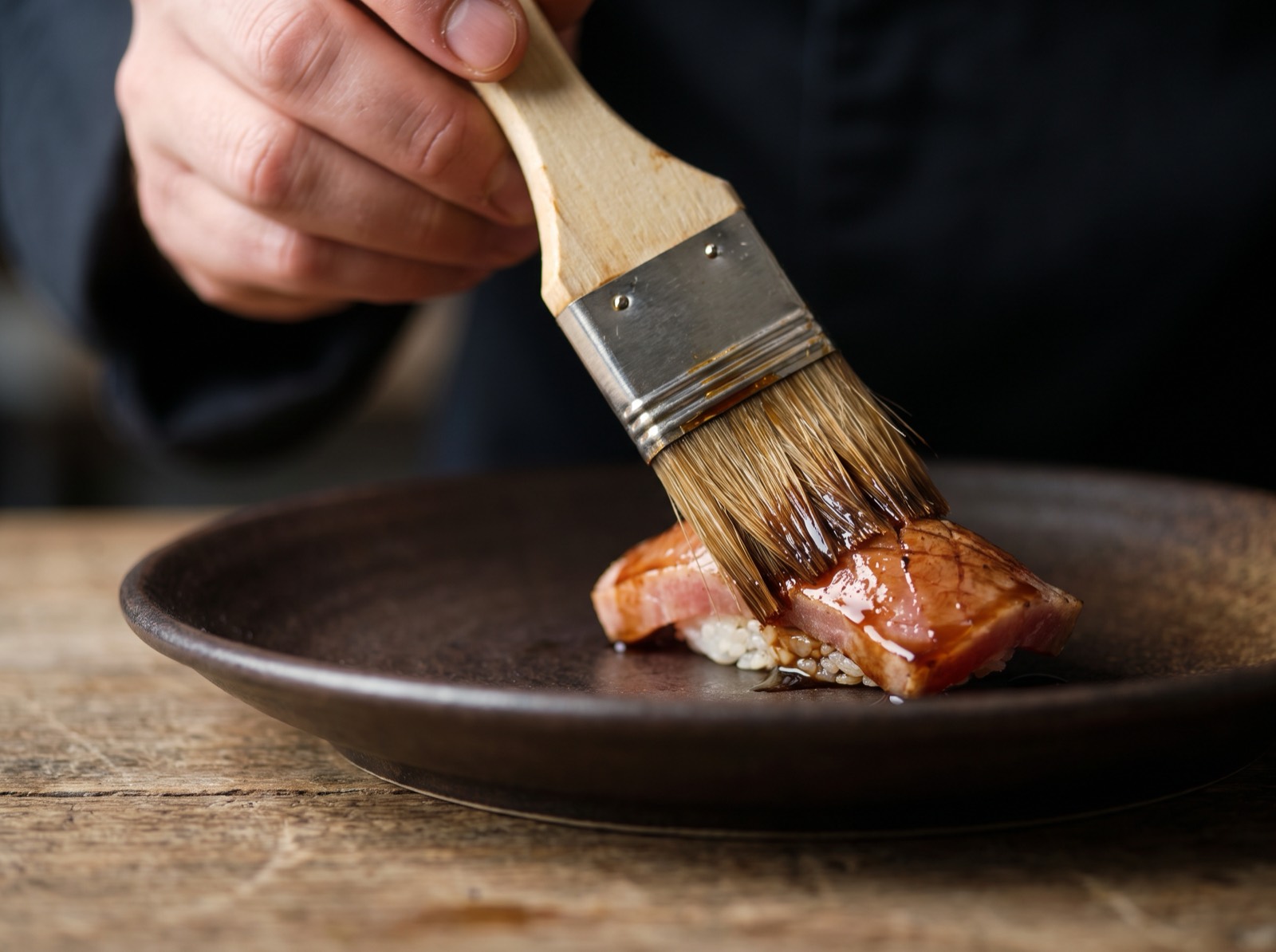
At a traditional counter, much of the seasoning has already happened before the piece reaches you. The chef brushes it with nikiri (煮切り), dark soy sauce simmered briefly with mirin and dashi, applied with a small flat brush. Every shop mixes its own to match its own rice and its own fish. Simmered toppings such as anago and clam get tsume (ツメ) instead, a thicker and sweeter reduction. In the original Edomae style the customer never dipped at all: the piece arrived seasoned, or cured as zuke, and the soy dish on the counter is a later convenience.
So if a piece arrives glossy, eat it as it is. And if you are not sure, ask — “do I dip this?” is a normal question at any counter, not an admission of ignorance.
When you are dipping, here is where we have to be honest: the two Japanese reference books we rely on disagree, and we are not going to pretend otherwise.
- One says: fish side only. Dip the rice and it soaks, swells and falls apart in the dish.
- The other says: tilt the piece and touch both at once. Its argument is that if you keep the fish facing upward the soy never really reaches it, and the taste stays flat. A light, angled touch seasons the fish without saturating the rice.
What both agree on is the failure mode: a soaked piece. So the transferable advice is about pressure and angle rather than which surface. Turn the piece onto its side, touch it briefly, do not press. And fill the dish only about halfway; a full dish encourages over-dipping and most of it is wasted.
Gunkan are the awkward case, and the Japanese books give three solutions that English guides almost never mention. Hold a slice of ginger in your chopsticks and use it as a brush. Pour a few drops straight from the cruet. Or hold the piece upright and touch only the bottom edge of the nori to the dish. Whichever you use, do not let the spout of the cruet touch the fish. And if you used ginger as a brush, that slice is now salty; leave it.
Wasabi, gari, and the order of things
Wasabi is already inside the piece, between the fish and the rice, in a quantity the chef chose for that fish. Mixing more into the soy sauce, a habit widespread outside Japan, overrides two decisions at once. If you would rather have none, say so: sabi-nuki de onegai shimasu. Asking for less is equally fine. Asking for a lot more, at a serious counter, is asking the chef to unmake the piece.
Gari, the sweet-vinegared ginger, is there to clear the previous piece off your palate and cut oil. A pinch is enough; a pile of it leaves your mouth burning and you will taste nothing for two courses. It has a second job as the soy brush described above.
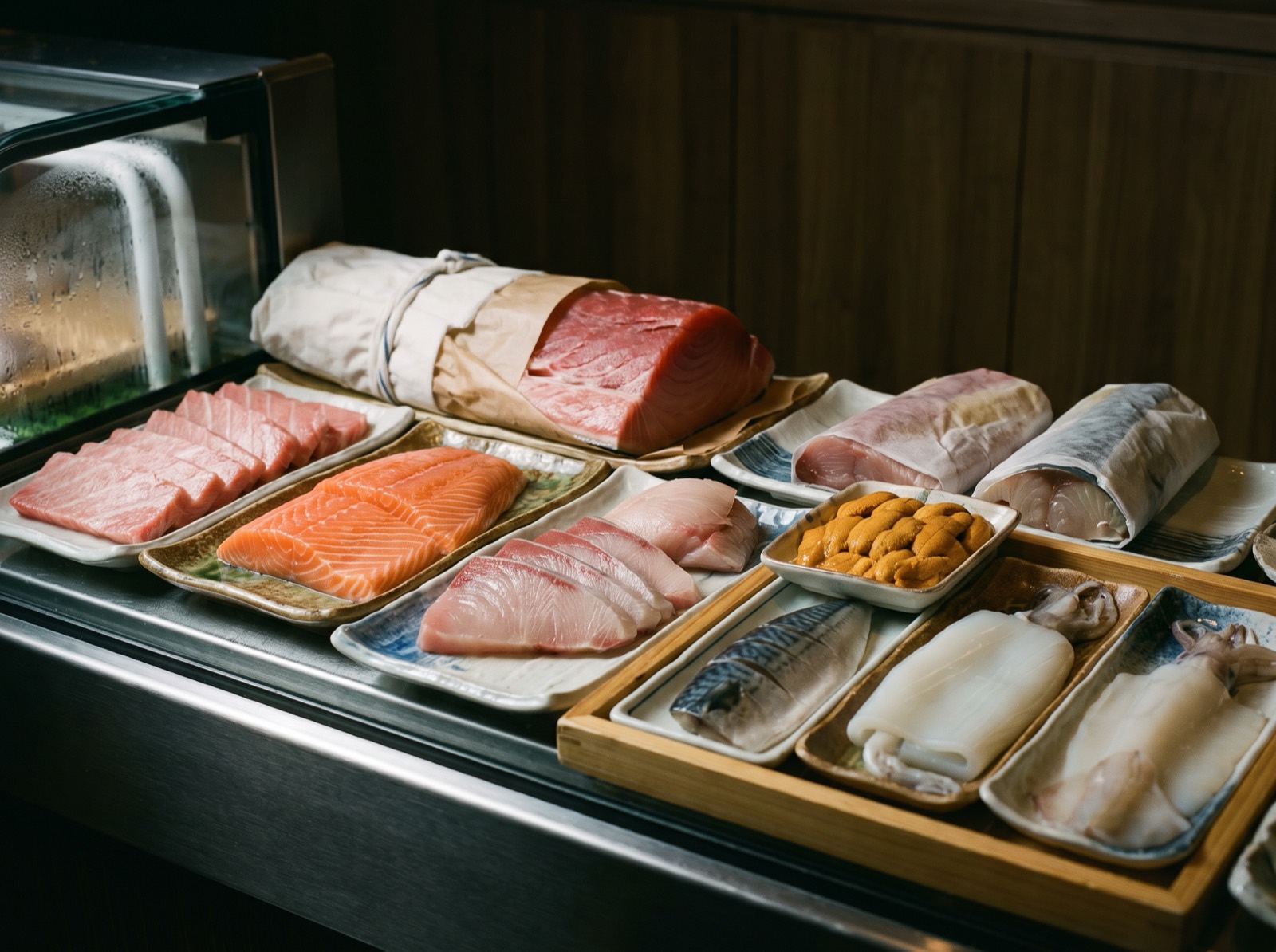
As for the order of the meal: there is no fixed one, and English guides that print a required sequence are inventing it. Ordering what you want, when you want it, is the entire point of a counter. What exists is a sequence that tastes better, running from light to rich — white fish, then red, then the silver-skinned fish, then gunkan, then the sweet-glazed pieces, then tamago, then rolls. Within tuna, lean akami before fatty otoro. Among the silver-skinned fish, the raw ones before the vinegar-cured ones.
Even that is not universal. One shop's omakase opens with chutoro; another opens with the most delicate white fish it has. Both are normal. The modern view in the Japanese books is that you should rinse with tea or ginger between rich pieces rather than police the order.
The ten seconds after it is served
This is the one rule we would defend against all comers, and it is the one most often left out.
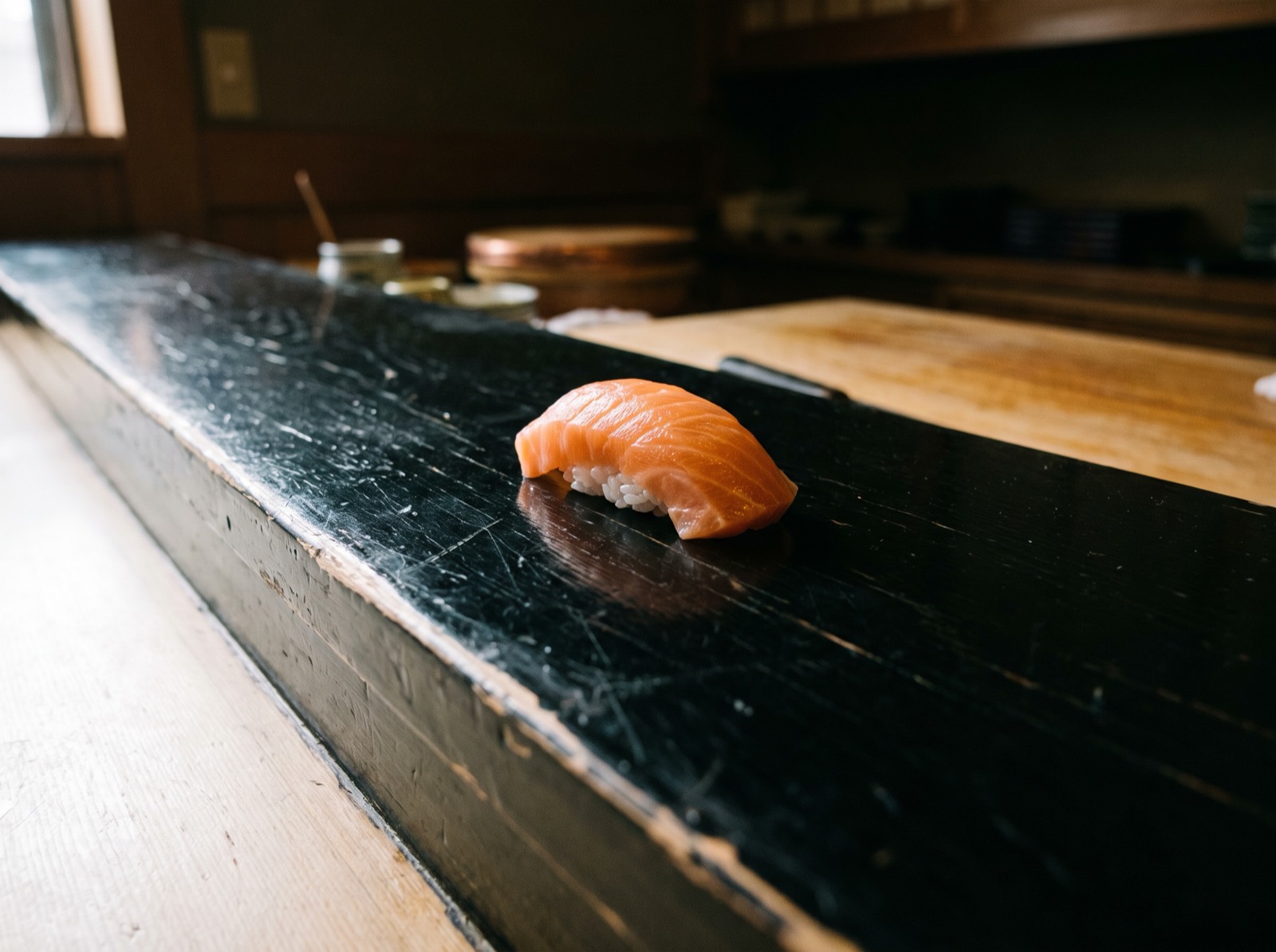
Nigiri is built at a temperature. The rice is at roughly body heat; the fish is cool. Against warm rice, fat begins to soften and move almost immediately, the surface of the fish begins to dry, and the rice itself starts to lose the loose structure the chef pressed into it. A piece eaten as it lands is not the same object as the same piece eaten ninety seconds later, and no amount of correct chopstick technique compensates.
Eat it when it lands. That is the manner that matters most — and the only one the food itself enforces.
Eat each piece in one mouthful; do not cut it in half, because it will not survive the operation. If the pieces are too large for that, the fix is not heroics: ask for smaller pieces or less rice. That is a normal request. So is asking the chef to slow down if they are outpacing you.
Rolls are the same rule with a shorter fuse: nori goes soft quickly, so take them from the side and eat them at once. And if soup arrives, it usually comes after the sushi rather than before. Hold the bowl with four fingers underneath and your thumb on the rim, drink from the rim without slurping, and take the solids with chopsticks. There is no spoon, and despite what you may have read about noodles, soup at a sushi counter is drunk quietly.
What the chef actually notices
It is worth reframing the question. A chef standing across a metre of hinoki is not scoring your technique. They are reading a much shorter list, because they are making decisions in real time about what to serve you next and how fast.
- Whether you eat it straight away. Everything above. It is also the clearest signal you are paying attention.
- How fast you are going. The pace of the meal is being set to you. Falling far behind or racing ahead both make that harder.
- Whether you said anything at booking. Allergies, a budget, a dislike, a fish you came for. All of it is usable the day before and much less usable at the counter.
- Whether you look up. You do not have to make conversation (answering when spoken to is enough), but a counter seat is an offer, and the shop knows whether it was taken.
Note what is not on that list: which hand you used, which side you dipped, whether you knew the word for the ledge in front of you. It is tsukedai (付け台), and nobody will ask.
One structural point worth knowing, because English guides get it backwards. They almost universally say: always sit at the counter. The Japanese books split. Yes, the counter is where you can watch the work and talk to the chef, and a table halves that. But if you are a group of four who came mainly to drink and talk among yourselves, the same books say a table is the more considerate choice: you will order more dishes and you will occupy counter seats with a private conversation. On a first visit, the end of the counter is an easier seat than the middle; the middle puts you directly opposite the head chef, and at some shops those places are informally held for regulars.
Etiquette that only applies in Japan
A great deal of English-language sushi advice is really advice about sushi restaurants in the United States, which is a different institution with different conventions. Four differences are worth stating plainly.
- Tipping. Not expected in Japan, at any price level, and leaving cash can create an awkward exchange in which someone chases you down the street. The service is included in the way the business is priced.
- The bill. Do not ask for it by saying oaiso. It is staff slang, and its root means something close to “lost patience with you.” Say okanjo onegai shimasu or okaikei onegai shimasu.
- Rolls. Invented rolls are a genuine and well-loved American form. They are not on the menu at an Edomae counter, and asking for one is a small social misfire rather than a crime: the shop simply does not have the ingredients.
- Cards. Assume cash unless you have checked.
And two things that are fine, whatever you have read: eating with your fingers, and asking questions. Both are normal in Japan and neither marks you as a tourist.
Frequently asked questions
Do you eat sushi with your hands or with chopsticks?
Either. Japanese reference books treat both as correct. Eating with your fingers is a survival from the street-stall era rather than a rule, and chopsticks are equally proper: tip the piece onto its side and take it from the side so the topping does not separate from the rice.
Should you dip the rice or the fish in soy sauce?
The Japanese books disagree. One says fish only, because dipped rice falls apart; the other says to tilt the piece and touch both lightly at once, because fish kept facing upward never really meets the soy. Both agree that a soaked piece is the failure. Touch briefly, do not press, and fill the dish only halfway.
Is it rude to add wasabi to soy sauce?
At a traditional counter it overrides the chef, who has already placed wasabi inside the piece in a quantity chosen for that fish. It is not a scandal, but it is not done. If you want less, ask for sabi-nuki when you order.
Do you tip at a sushi restaurant in Japan?
No. Tipping is not expected anywhere in Japan and can cause confusion. Service is built into the price.
How quickly should you eat each piece?
As soon as it is set in front of you, within roughly ten seconds. Nigiri is assembled with warm rice and cool fish, and the balance starts changing immediately. This is the etiquette point that actually affects the food.
Do I have to sit at the counter?
No. The counter is better if you came to watch the work and talk to the chef. Japanese books suggest a table is more considerate for a group that came mainly to drink and talk. On a first visit, the end of the counter is an easier seat than the middle.
Is it rude to ask the price before ordering?
No. Items priced at the daily market rate can be expensive, and asking is normal; you will get a straight answer. Giving a rough budget when you book is also standard practice, not a faux pas.