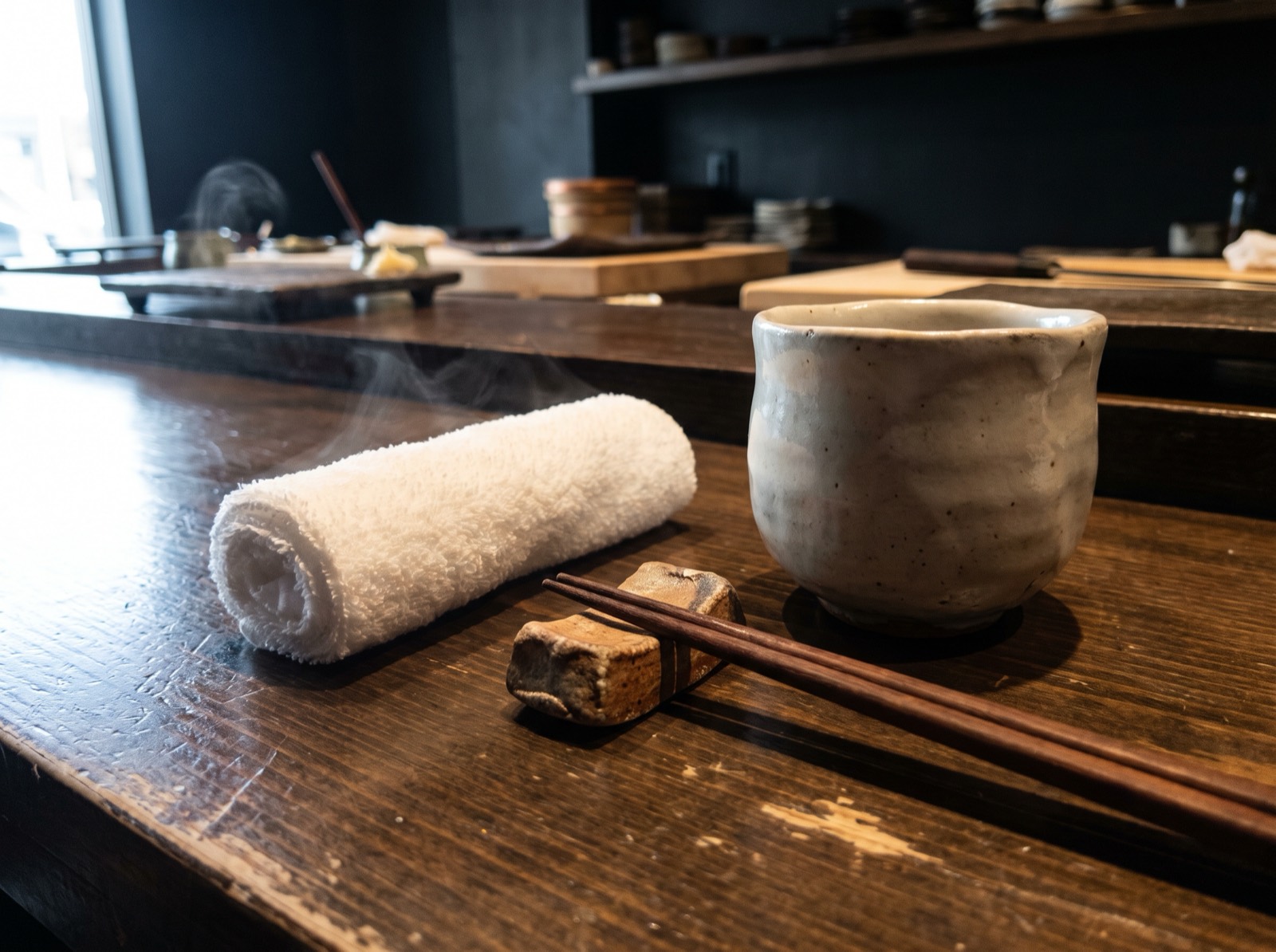
Omakase etiquette is mostly ordinary sushi etiquette with one addition: because the chef is choosing, the useful conversation happens at booking rather than at the counter. Name your budget, your allergies and any fish you particularly want when you reserve. Then arrive on time, eat each piece as it lands, and keep up. Almost everything else follows from those two facts.
What is different about an omakase
At okonomi, ordering piece by piece, the guest holds the decisions and the chef executes them. At omakase the relationship inverts, and three things change with it.
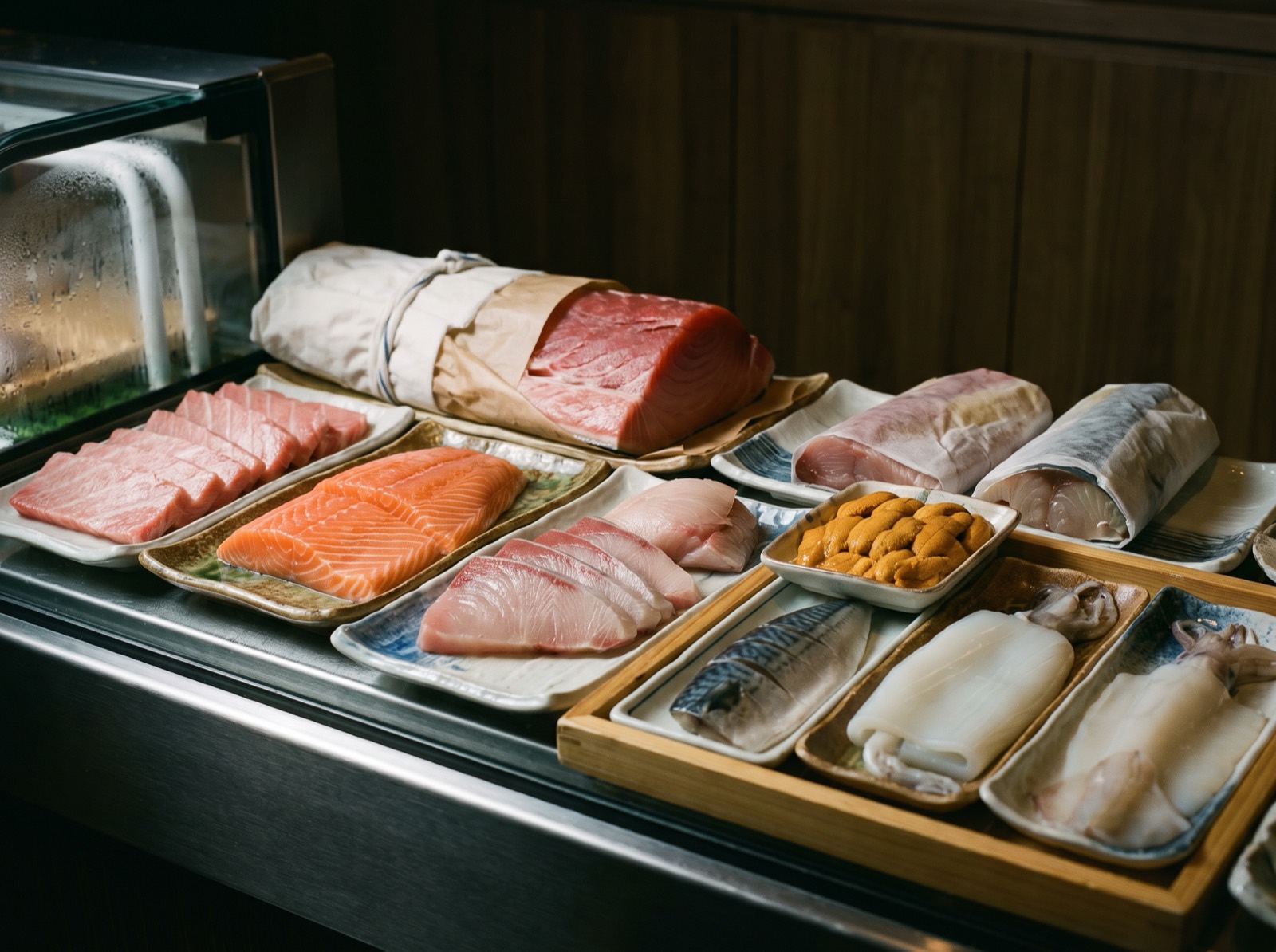
- The shop bought fish for you specifically. Not for a menu; for the number of people in the diary. That is why a late cancellation is a real cost and a late arrival displaces the evening.
- Your requests are planning inputs, not orders. A day early, a request shapes what gets bought. At the counter it competes with the eight portions already allocated.
- The pace is a shared object. The chef is making the next piece when the last one is gone. You are setting the tempo whether or not you mean to.
At booking: the four things worth saying
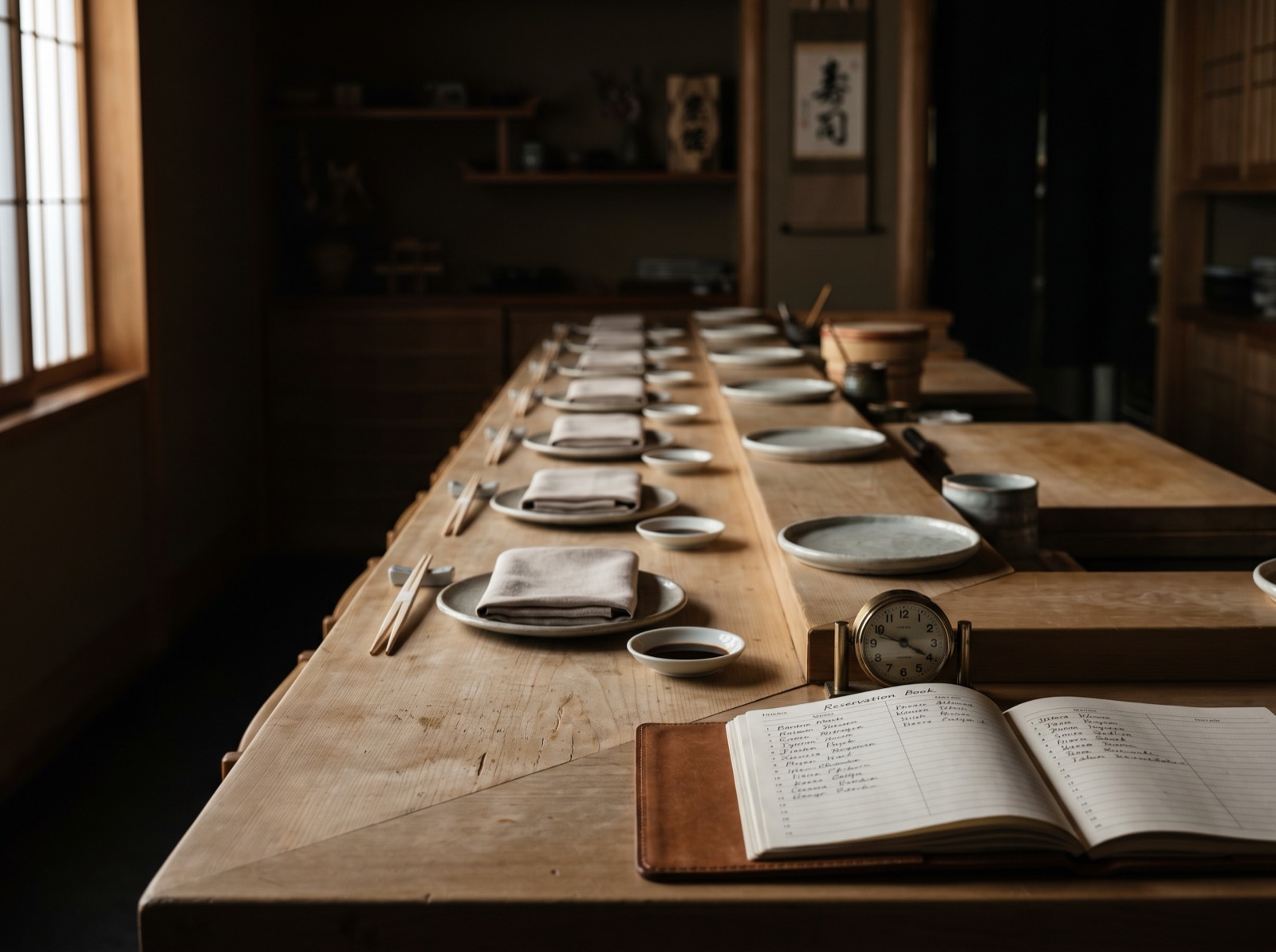
The Japanese reference books treat the booking call as part of the meal, and English guides almost never mention it. Say these four things and the rest of the evening looks after itself.
- Numbers and a budget. “Omakase, around this much” is a normal sentence in Japanese. If the figure does not fit the shop, they will tell you their level; thanking them and trying elsewhere is a complete and unembarrassing exchange.
- Allergies and genuine restrictions. These are workable a day out and much harder at the counter, where the alternative may not have been bought. Say “allergy” rather than “dislike” if it is one; the shop treats them differently and should.
- A fish you came for. If you are travelling for a specific piece, name it. Turn up and ask on the night and it may already be spoken for.
- Whether you plan to drink. The opening dishes are laid in for it. A shop that knows will build a different first half.
Two practical questions to ask in the same call: whether there is a second seating (which tells you if the end time is hard) and whether they take cards, because a great many sushi shops in Japan still do not. For a first visit, phoning rather than booking online gets you all of this in ninety seconds, and just after opening time is the easiest moment to get someone.
Being on time is the whole of it
Japanese books name arriving late without calling as the worst breach of manners at a sushi counter, ahead of anything involving soy sauce. At an omakase the reason is mechanical rather than moral: the fish was bought for a specific count at a specific hour, several preparations are timed to service, and at a shop with one seating the whole room is waiting.
Arriving very early is a smaller version of the same problem, because the seat is not free and the room is the size of a corridor. And arrive hungry — eating or drinking beforehand is considered poor form, and it wastes the thing you booked.
Everything the guest controls at an omakase happens before they sit down, or within ten seconds of each piece landing.
At the counter: what to do with a chef's choice
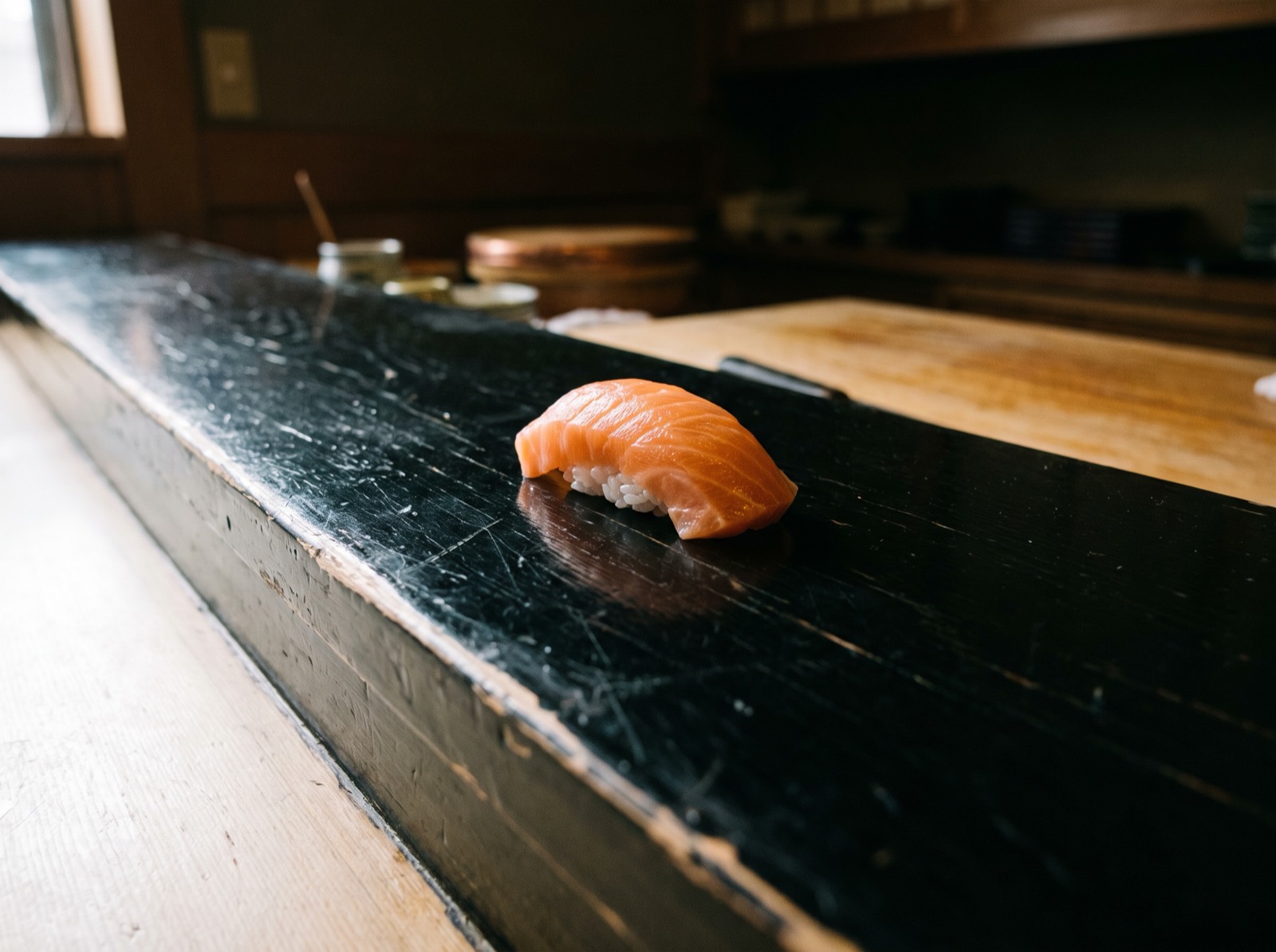
Eat it when it arrives. Within about ten seconds. Nigiri is warm rice and cool fish and the balance starts moving immediately. At an omakase this matters more than elsewhere, because the chef is timing the next piece to the last one and a stalled guest stalls the sequence.
Do not add wasabi, and check before you dip. Most pieces at an omakase arrive already brushed with nikiri, or with the sweeter tsume on simmered toppings. The soy dish may go unused all evening. “Do I dip this?” is a normal question.
Say if you are falling behind. Or getting ahead. Both are ordinary requests and both are better made early.
You do not have to talk. Answering when the chef speaks to you is enough. A counter seat is an offer of conversation, not an obligation to perform one, and the Japanese books are explicit about this.
Watch what you ask for. Requesting extra wasabi, a specific piece out of sequence, or a substitution runs against the premise you agreed to at booking. Small adjustments (less rice, smaller pieces, one at a time) are normal and most shops accommodate them. A few traditional counters will decline, and that is their prerogative.
Asking for more, and knowing when it is ending
At many shops rolls signal the close, followed by tamago. If you want more nigiri, say so before the rolls arrive rather than after. Once the shop has started closing your sequence, reopening it means going back into the case for something that was allocated elsewhere.
Asking for additional pieces at the end is generally welcome and generally charged separately. Asking what something costs before you order it is a perfectly ordinary question in Japan, particularly for market-rate items, and you will get a straight answer.
Paying
Do not ask for the bill by saying oaiso. It is staff slang, and its root means something close to “lost patience with you.” Say okanjo onegai shimasu or okaikei onegai shimasu.
Do not tip. It is not part of how restaurants in Japan are priced and attempting it usually produces someone following you into the street. And expect the quoted omakase figure to cover the sushi only: drinks are extra, and at some shops the opening dishes are too.
On the way out, gochiso-sama deshita — thank you for the meal. It is the one phrase worth learning, and it is said to the chef, not to the till.
What English guides get wrong about omakase specifically
- “You cannot control the cost.” You can. Naming a figure at booking is standard practice in Japan, and the shop will tell you honestly whether it works.
- “You must sit at the counter.” For an omakase, the counter genuinely is the format, but if you are a group of four who came to drink and talk among yourselves, Japanese books say a table is the more considerate choice.
- “Never ask questions.” Asking what a fish is, or whether a piece is already seasoned, is ordinary counter conversation.
- “There is a required order.” At an omakase the order is the chef's, so the question does not arise, but the underlying claim, that a fixed correct sequence exists, is not in the Japanese books either.
- “Never drink sake with sushi.” Japanese books recommend it, and give the shared grain as the reason.
The general etiquette that applies to any sushi meal is in our guide to sushi etiquette; the physical mechanics are in how to eat sushi; and what is actually being decided across the meal is in what omakase actually is.
Frequently asked questions
What should I say when booking an omakase?
Four things: how many people and roughly what budget, any allergies or genuine restrictions, any fish you particularly want, and whether you plan to drink. All four are easy to accommodate a day ahead and much harder at the counter.
Is it rude to name a budget for omakase?
No. "Omakase, around this much" is standard practice in Japan. If it does not fit, the shop will tell you their level and you can decline politely; that exchange is completely normal.
Can I make requests during an omakase?
Small ones, yes: less rice, smaller pieces, one at a time. Requests that change the chef's sequence or ask for something not bought that day usually cannot be met, and run against the premise of the meal. Some traditional shops decline all of them.
Do I need to talk to the chef?
No. Answering when spoken to is enough. Japanese reference books are explicit that a counter seat does not oblige you to keep a conversation going.
How do I ask for more pieces?
Say so before the rolls arrive: at many shops rolls signal the meal is closing. Extra pieces are normally welcome and charged separately, and asking the price first is an ordinary question.
Do I tip after omakase in Japan?
No. Tipping is not expected anywhere in Japan. To pay, say okanjo onegai shimasu rather than oaiso, which is staff slang with an unflattering root.