A full omakase at a Tokyo sushi counter usually takes sixty to ninety minutes. Lunch tends toward the shorter end and can run forty-five minutes; a dinner that opens with an extended set of tsumami dishes and expects you to drink through them can reach two hours. The largest single variable is whether the shop runs one seating an evening or two, and that is a question you can settle when you book.
The short answer, with the caveats attached
- Lunch omakase: roughly 45–75 minutes. Often a shorter piece count, and the shop has a dinner service to prepare for.
- Standard dinner omakase: roughly 60–90 minutes. Fifteen to twenty pieces, with a few opening dishes.
- Dinner with a long tsumami section, or where you are drinking: 90–150 minutes.
- A counter running two seatings: whatever the shop's slot is, and it is real. Assume the later guests are already outside.
Those are the working bands rather than a survey. Ask the shop when you book and you will get their number, which is better than any average.
Why the range is so wide
Because an omakase is not a fixed-length product. Four things move it, and only one of them is under the chef's control.
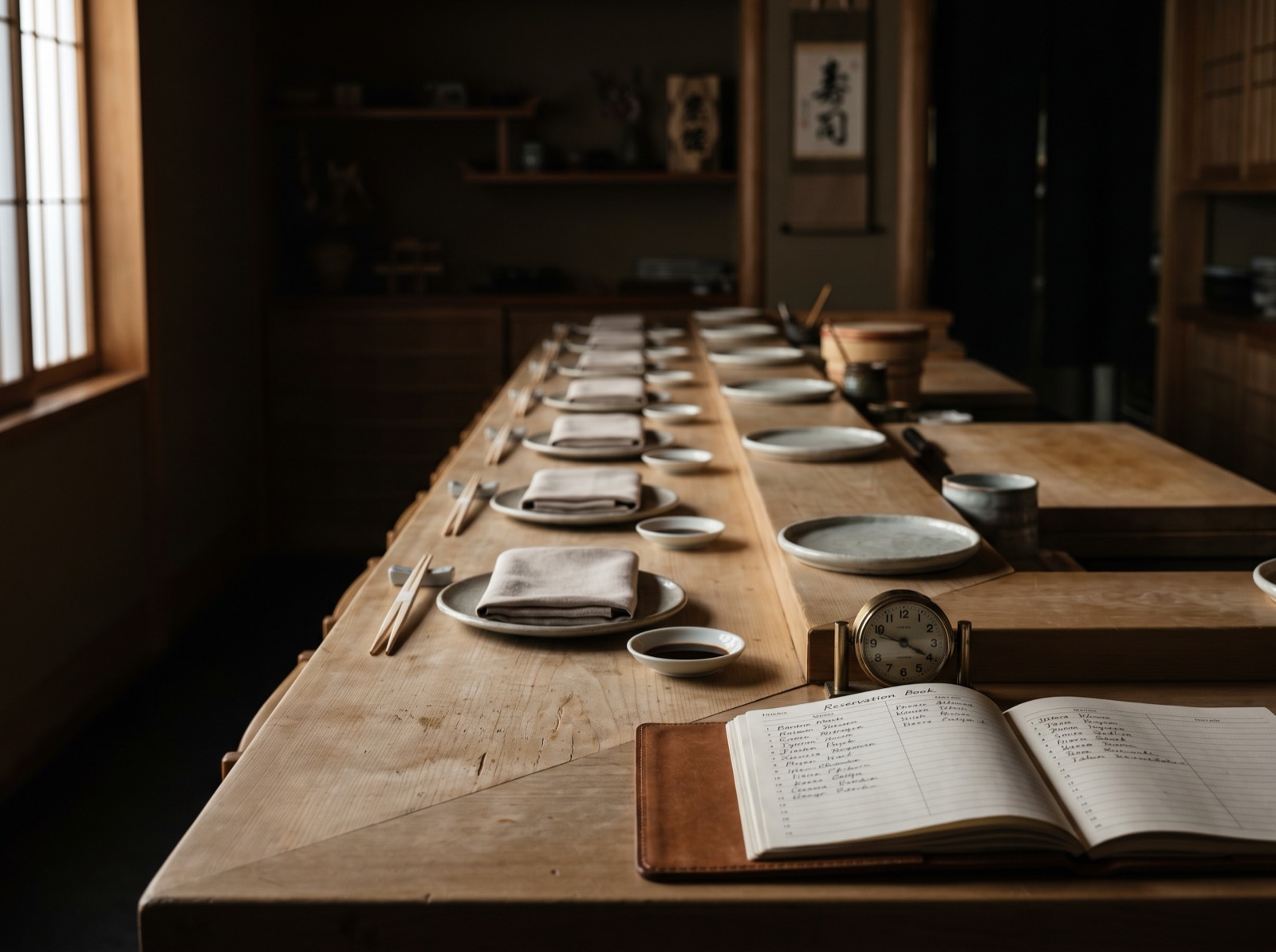
How many seatings the shop runs. A counter with eight seats and one seating a night has no reason to hurry you, and the meal ends when it ends. A counter running two (increasingly common in Tokyo, and normal at the high end) has a hard boundary in the middle of the evening. Neither is better; they are different businesses. But the second kind will not tell you to leave, and you may only discover the constraint by watching the next party arrive.
Whether you are drinking. The opening tsumami section exists partly to give drinking something to happen alongside. A table that orders sake stretches that section considerably, and the nigiri that follows is paced to it. If you want a quick meal, say so, and skip the opening dishes.
How fast you eat. This is the one guests consistently underestimate. The chef is pacing the meal to the guest; the next piece is made when the last one is gone. A counter of four people who eat promptly finishes noticeably earlier than the same meal served to four people who talk between pieces. You are setting the tempo whether or not you intend to.
The chef is not working to a clock. They are working to you — which means the length of the meal is partly your decision.
How many pieces the shop serves. Piece count scales with price level, but not linearly: a more expensive counter often serves a similar number of pieces with more preparation behind each. What lengthens the meal at the top end is usually the opening dishes and the pauses, not the nigiri.
Where the time actually goes
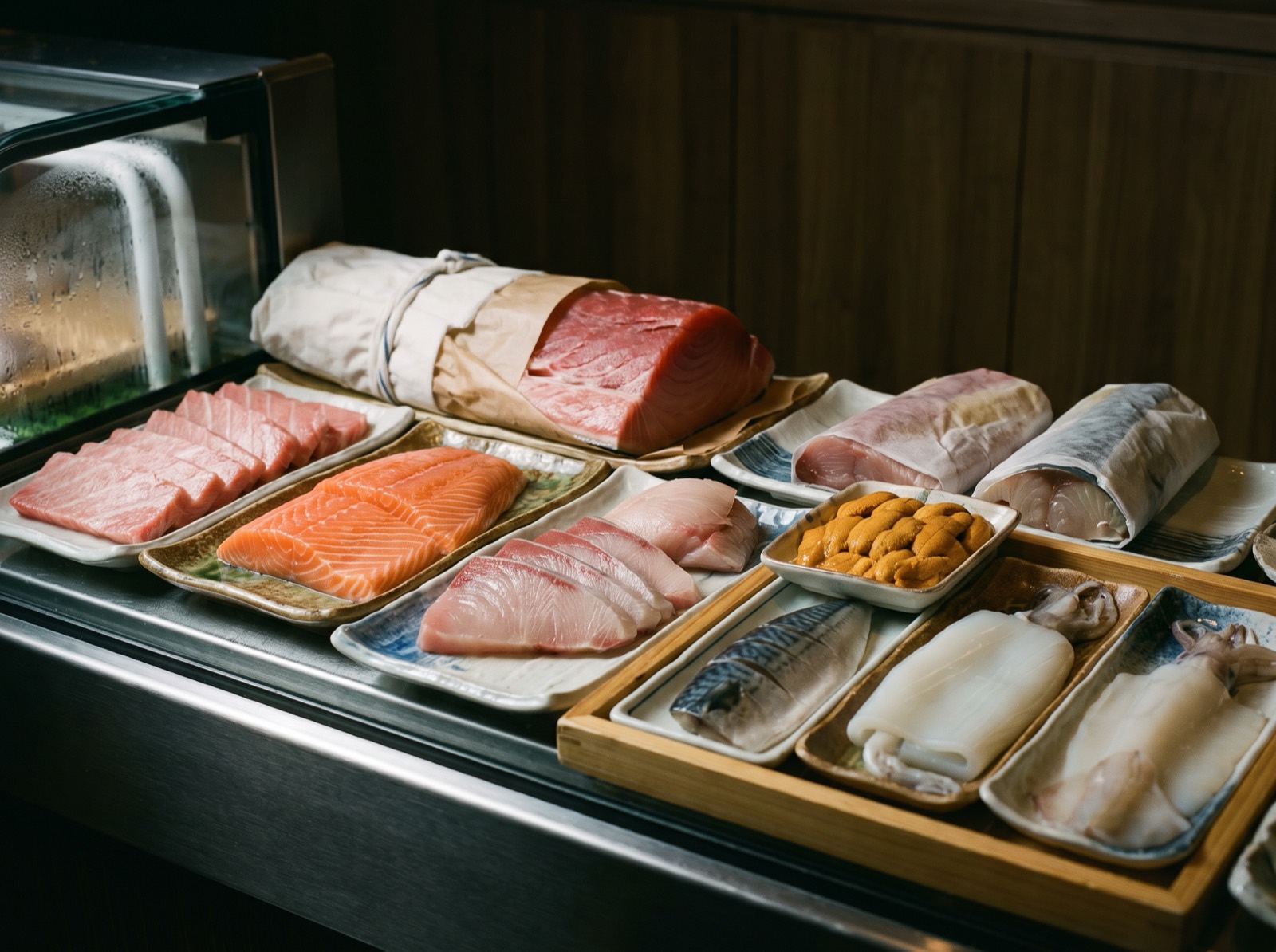
A counter meal has a shape, and knowing it tells you roughly where you are. It opens with small dishes, tsumami, which are the drinking half and the most elastic part of the evening. Then the nigiri run, one piece at a time, which is the least elastic: the chef is making each piece to the moment you are ready for it, so this section is paced by the table rather than by the kitchen. Then rolls, which at some shops are the signal that the meal is ending, and tamago. Soup usually comes after the sushi rather than before it, which surprises people expecting a Western sequence.
The practical consequence is that the opening dishes and the pauses are where a meal grows long. The nigiri run is fairly predictable at fifteen to twenty pieces. If you need the evening to be shorter, the tsumami are the part to shorten.
If you are on a schedule
This comes up constantly for visitors with a theatre booking, a train, or a second reservation, and the Japanese convention here is friendlier than people expect: say so.
- Tell the shop when you book that you need to leave by a given time. A counter can shorten the opening dishes, tighten the pace, or tell you honestly that it will not work.
- If you realise mid-meal that you are running late, say it then rather than at the end. Asking the chef to speed up is a normal request; so is asking them to slow down.
- Skip the tsumami and ask for nigiri only. Some shops offer this as a named option; others will simply do it.
- Consider lunch instead. It is shorter, cheaper, and at many shops the same chef and the same fish.
What does not work is quietly checking your watch and hoping. The chef is reading your pace, not your calendar.
What to establish when you book
The duration question is really four booking questions, and asking them is ordinary practice in Japan rather than an imposition:
- Is there a second seating? This tells you whether the end time is soft or hard.
- How long do you usually run? Shops know their own number.
- What does the price cover? Usually the sushi only. Drinks are extra, and at some shops the opening dishes are too.
- Do you take cards? Unrelated to timing, but a great many sushi shops in Japan still do not, and finding out at the end costs everyone time.
One more, if you care about the fish rather than the clock: name what you want when you book. The shop buys for the evening it expects, and a request made the day before is easy where the same request at the counter may be impossible.
Arriving, and what happens if you are late
The Japanese literature on sushi manners is mild about almost everything and blunt about exactly one thing: turning up late without calling is named as the single worst breach. That is harsher than it sounds elsewhere, and the reason is structural rather than ceremonial. A shop with eight or ten seats bought fish for the number of guests it expected, and at a counter running one seating the meal cannot really begin until the counter is full. Your empty seat is not a table waiting quietly. It is the room stalled.
So call. Not a message, not an app note, a call, and as early as you know. Shops absorb lateness far better than they absorb silence, and the request to hold a start or compress a course is an ordinary one.
Two smaller conventions attach to the same moment. Arrive hungry and sober, because the meal is built as a sequence and drinking beforehand is considered bad form. And when it ends, it ends: the convention is to linger over the meal rather than after it. If a shop runs two seatings that boundary is real, and even when it does not, the counter is not a bar.
Related reading
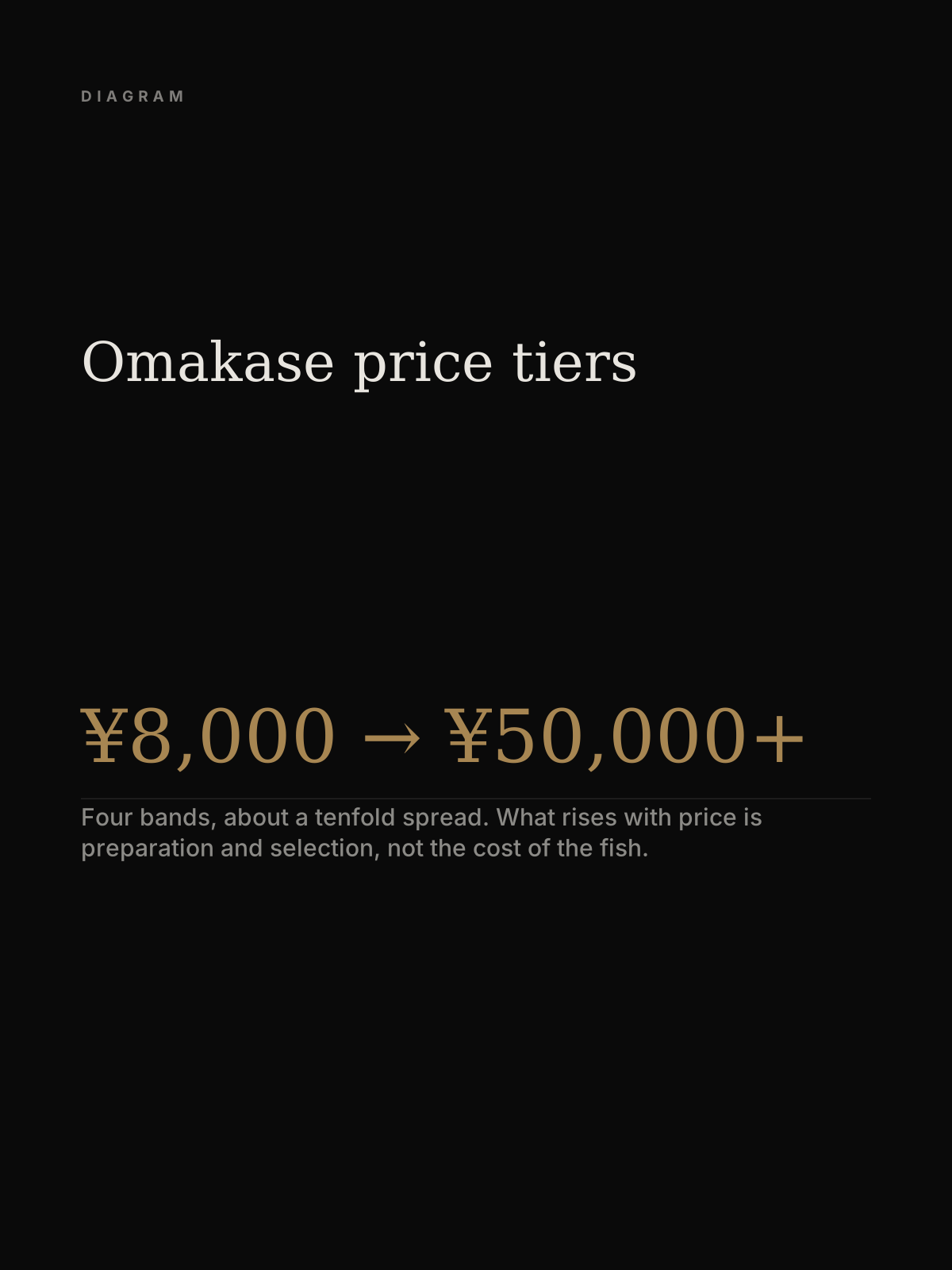
For what is actually being decided across those ninety minutes, see what omakase actually is. For the conventions specific to a chef's-choice meal, see omakase etiquette. And for what the number on the booking page does and does not include, see omakase price tiers.
Frequently asked questions
How long does omakase take in Tokyo?
Usually sixty to ninety minutes for dinner and forty-five to seventy-five for lunch. A dinner with a long opening tsumami section, or one where you are drinking, can run to two hours or more.
Do sushi restaurants have a time limit?
Some do, in effect. A counter running two seatings in an evening has a hard boundary in the middle; a counter running one seating generally does not. Ask which it is when you book; the shop will tell you.
Can I ask the chef to go faster?
Yes. Asking the chef to speed up or slow down is a normal request at a Japanese counter, and it is far better than sitting through a meal at the wrong pace. Say it early rather than at the end.
Is lunch omakase shorter than dinner?
Generally yes: often forty-five to seventy-five minutes, with a shorter piece count and fewer opening dishes. At many shops it is the same chef and the same fish at a lower price.
Does drinking make the meal longer?
Noticeably. The opening tsumami dishes exist partly to accompany drinking, and the nigiri that follows is paced to how you are eating. If you want a short meal, skip the opening section.
What happens if I am late for a sushi reservation?
Call as soon as you know. Japanese sushi manners are relaxed about most things and blunt about this one: arriving late without calling is named as the worst breach. The shop bought fish for your seat, and at a counter running a single seating the meal is held up until the counter fills. Shops handle lateness easily; they cannot handle silence.