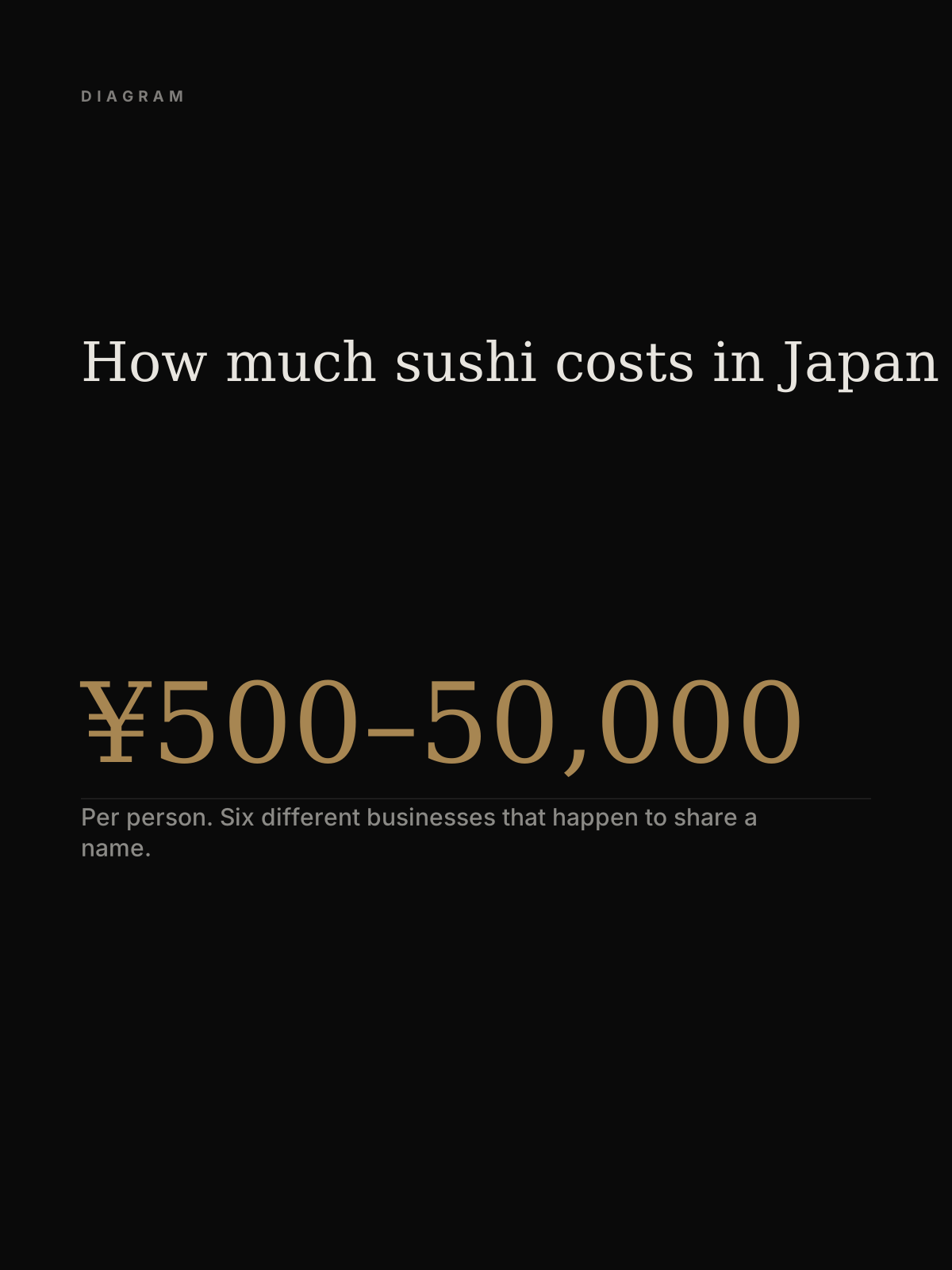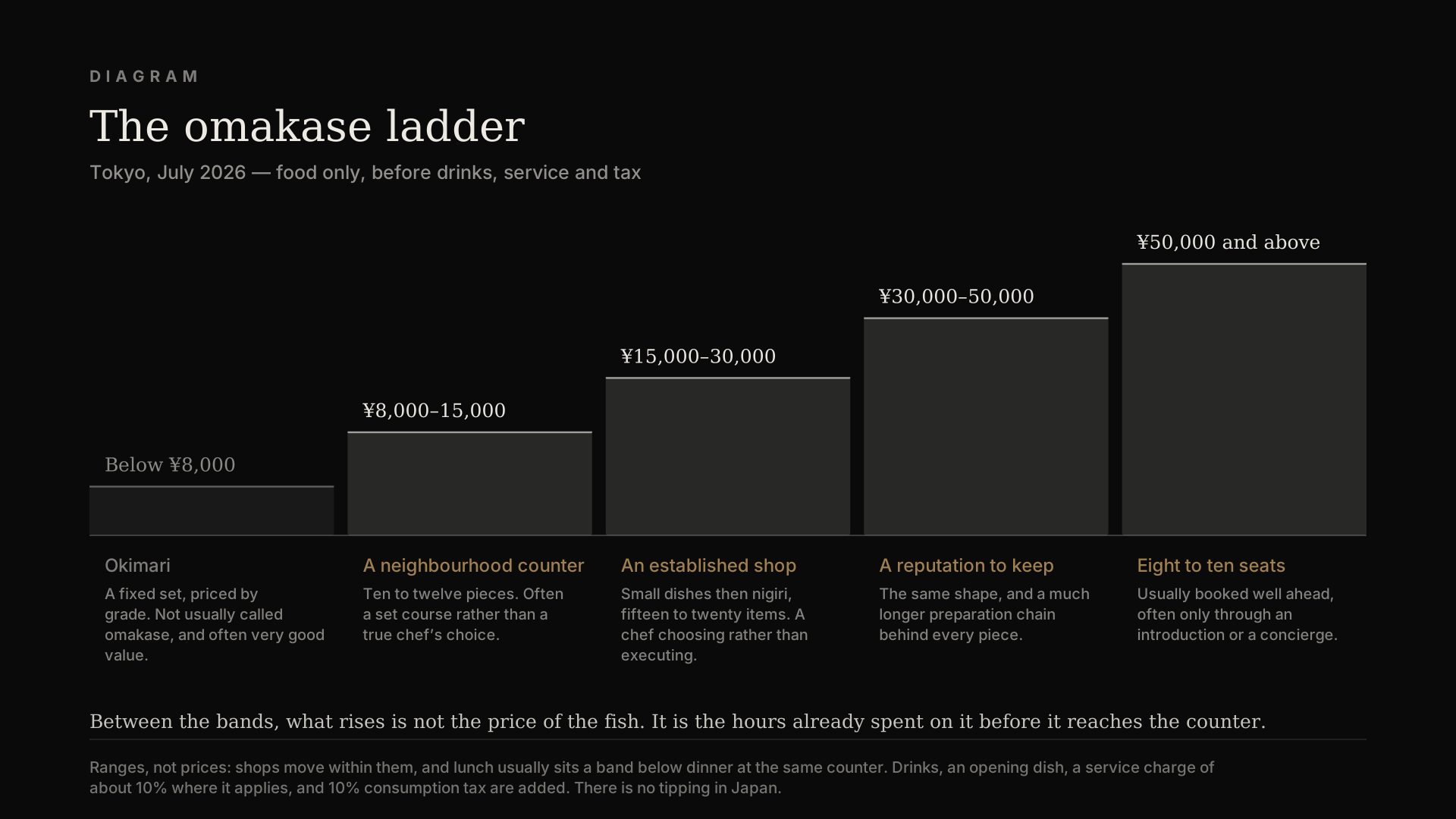
In Tokyo, omakase runs roughly ¥8,000–15,000 at a neighbourhood counter, ¥15,000–30,000 at an established shop, and ¥30,000–50,000 or more at a shop with a reputation to protect. The published figure is normally the food only: drinks, an opening dish and a service charge are added on top. Consumption tax on eating in is 10%; whether it is already inside the quoted figure varies by shop, so the number to ask for is the tax-inclusive one. Tipping is not expected anywhere in Japan.
That is the short answer, and it is the one most English-language pages stop at. The more useful question is what the extra money is actually buying, because the intuitive assumption (that a ¥40,000 counter serves fish four times as expensive as a ¥10,000 counter) is not how the economics work.
The four bands, at a glance
These are the bands you will see when booking in Tokyo as of July 2026. They are ranges, not prices: shops move within them, lunch usually sits a band below dinner at the same counter, and Osaka and the regional cities generally run lower than Tokyo for comparable work. The bands are our own reading of what shops publish, not a survey.
- ¥8,000–15,000, a neighbourhood counter. Roughly ten to twelve pieces, sometimes with a few small dishes first. Often a set course rather than a true chef's choice.
- ¥15,000–30,000, an established shop. Small dishes then nigiri, fifteen to twenty pieces in total, a chef choosing rather than executing a set list.
- ¥30,000–50,000, a shop with a reputation to keep. Same shape, more of it, and a much longer preparation chain behind each piece.
- ¥50,000 and above, a small number of counters, usually eight to ten seats, usually booked well ahead and often only through an introduction or a hotel concierge.
- Below ¥8,000, not usually called omakase. That is okimari territory: a fixed set, priced by grade, which is a different thing and often very good value.
One caution before the detail. Per-shop figures change, and a stale number is worse than no number. Almost every shop that takes bookings publishes its own current price; that is the figure to trust.
¥8,000–15,000: what actually arrives
You sit at a counter, usually with eight to fourteen seats, sometimes with tables behind. The chef may be working alone or with one assistant. What arrives is around ten to twelve pieces of nigiri, possibly opening with two or three small dishes, and closing with a roll, tamago and a bowl of soup.
The fish is good. It came through the same market as the fish at four times the price, and on any given day the difference in the raw material may be small. What is compressed at this level is time: fewer pieces are cured, marinated or aged, more are served straight, and the sequence is more likely to be fixed in advance than decided that morning.
This band is where the best value in Tokyo sits, and it is systematically under-covered in English because it does not photograph as an event. Lunch at a shop whose dinner sits a band higher lands here too, and is the single most efficient way to eat well cheaply.
¥15,000–30,000: the established shop
The structure changes shape rather than scale. The meal now opens properly with tsumami (small dishes to be eaten with a drink, some of them cooked) before moving into nigiri. Fifteen to twenty items in total is typical, and the split between the two halves is a deliberate decision rather than a formality.
This is also where the chef begins visibly choosing. The order is being built around what came in that morning and, at a good counter, around how fast you are eating and what you have reacted to. Pieces that require a preparation started days earlier (a fish cured in salt and vinegar, a tuna cut resting in soy, an aged white fish) start to appear as a matter of course rather than as a highlight.
¥30,000–50,000: the shop with a reputation to keep
From the outside, the plate looks similar to the band below. The difference is almost entirely upstream of the counter, and it is worth naming precisely, because it is the part that price guides never explain.
- Selection. The shop is buying a smaller share of what is available, more often, and rejecting more. That is a cost that never appears on a plate.
- Preparation depth. More of the menu has been through a process with a name — su-jime (salt then vinegar), zuke (marinated in soy), kobujime (pressed with kelp), jukusei (deliberate ageing). Each is days of attention per piece.
- Labour per guest. Fewer seats, more hands. The ratio of people working to people eating is the quiet driver of the whole price ladder.
- Consistency. What you are paying a premium for is not the best possible evening but the narrowest possible spread between evenings.
¥50,000 and above
A small number of counters in Tokyo sit here. They are usually tiny, usually one or two seatings a night, and frequently difficult to book; some take reservations only from existing guests or through a hotel concierge. At this level the constraint on your evening is availability, not money.
It is worth saying plainly: the gap in eating quality between this band and the one below it is much smaller than the gap in price. What widens is scarcity, room, service and the certainty of the outcome. Whether that is worth the difference is a question about you, not about sushi.
Between the bands, what rises is not the price of the fish. It is the number of hours that have already been spent on it before it reaches the counter.
What changes between tiers, and what does not
This is the part worth carrying away. Almost every English-language explanation of sushi pricing describes it as a ladder of ingredient cost: cheap fish at the bottom, expensive fish at the top. The Japanese literature describes something else.
What rises with price: the proportion of the menu that has been worked on rather than simply cut; the number of hours of preparation behind each piece; the strictness of selection at the market; the number of staff per guest; and the consistency between one evening and the next.
What does not rise proportionally: the cost of the fish itself. Tuna spans an enormous range, the same species runs from a few thousand yen a fish to the ceremonial first-auction figures that make the news, but a ¥30,000 counter is not simply buying the top of that range for every piece. It is buying carefully at several points on it. Meanwhile the fish that define a serious counter's reputation are frequently the cheap ones: gizzard shad, horse mackerel, squid, the egg. They are cheap to buy and expensive to get right, which is exactly why the trade judges a shop by them.
What does not change at all: rice, vinegar, salt and, in most shops, sugar. Every counter in every band is making the same decisions about the rice, and a ¥10,000 shop that makes them well will beat a ¥30,000 shop that makes them badly. Rice is where the trade actually looks.
The total you actually pay
The quoted omakase figure is the food. Five things get added to it, and knowing which ones apply at your shop is a booking-time question, not a bill-time surprise.
- Drinks. The largest and most variable addition. Beer, sake by the glass or a bottle can add anywhere from a few hundred to many thousands of yen a head, and sake at a good counter is not cheap.
- The opening dish (otoshi or tsukidashi). At some shops a small charge covers a dish you did not order. It is not a scam; it is the seat charge in another form, and it is normally a few hundred yen.
- Service charge. Common at hotel counters and at the upper bands, uncommon at neighbourhood shops. Usually 10%, and it should be stated when you book.
- Consumption tax. 10% on food eaten in the restaurant, and 10% on alcohol always. Japan's reduced 8% rate applies only to food taken away, so a counter meal is always taxed at the standard rate. Whether the menu price already includes it varies; the tax-included figure is the one to ask for.
- Tipping: none. There is no tip line, no expected percentage, and no cultural equivalent. Attempting to tip usually results in someone following you out to return the money. The answer to "do you tip 20% at omakase in Japan?" is simply no.
A workable rule for budgeting: take the quoted figure, add 20–40% if you plan to drink, and add 10% again if the shop takes a service charge. That will not be exact, but it will not surprise you.
Converting to your own currency
There is no conversion table here, deliberately: any dollar, dollar-equivalent or won figure printed today would be wrong within weeks, and pages that carry stale conversions are a large part of why price information about Japan is so unreliable online. The yen figure is the stable one. Convert it on the day, at the rate you will actually get.
What is worth holding on to instead is the shape. A mid-band Tokyo omakase is a meal in the same class as a tasting menu at a well-regarded restaurant in any large city, and by the standards of what an equivalent counter charges in New York or London, it is markedly cheaper for the same number of hands doing the same work. We look at that comparison directly in Tokyo versus New York.
How to find out what a specific shop costs
Three methods, in order of reliability.
- Name a budget when you book. "Omakase, around this much" is an entirely normal sentence in Japan, and the shop will tell you honestly whether it fits. Japanese books on eating at sushi counters recommend doing exactly this.
- Go at lunch first. An old piece of advice in the Japanese literature: if you do not know a shop's level, eat lunch there. The lunch price tells you what the evening will be, and lunch at a good shop is frequently a band cheaper for closely related work.
- Ask before you order anything priced at market rate. Asking the price of a specific item is ordinary, not rude, and you will get a straight answer. This matters most for items whose cost genuinely moves day to day.
For what you are actually buying with the money, see what omakase actually is; for the whole range from conveyor belt upward, see how much sushi costs in Japan; and for whether any of this counts as expensive, is sushi expensive in Japan?
Frequently asked questions
How much is omakase in Tokyo?
Roughly ¥8,000–15,000 at a neighbourhood counter, ¥15,000–30,000 at an established shop, and ¥30,000–50,000 or more at the top end. The figure quoted is normally food only; drinks and service charge are added, and 10% consumption tax applies, though some shops quote tax-inclusive prices.
Do you tip at omakase in Japan?
No. Tipping is not part of how restaurants in Japan are priced, there is no tip line, and attempting it usually results in the money being returned to you. This applies at every price level.
Why is one omakase ¥10,000 and another ¥40,000?
Mostly preparation and selection, not ingredient cost. The higher price buys more curing, marinating, ageing and rejection at the market, plus more staff per guest and greater consistency. The fish that define a shop's reputation — gizzard shad, squid, the egg — are among the cheapest things it buys.
Is tax included in the omakase price?
It varies by shop. Eating in a restaurant is taxed at Japan's standard 10% rate, and alcohol is always 10%; the reduced 8% rate applies only to food taken away. Ask for the tax-included figure when you book.
What is the cheapest real omakase in Tokyo?
Around ¥8,000 for dinner, and less at lunch. Below that, what you are usually looking at is okimari (a fixed set priced by grade), which is a different format and often excellent value.
Is lunch omakase cheaper than dinner?
Usually, and often by a full band at the same counter for closely related work. Japanese reference books recommend lunch as the way to find out what a shop is like before committing to its evening price.