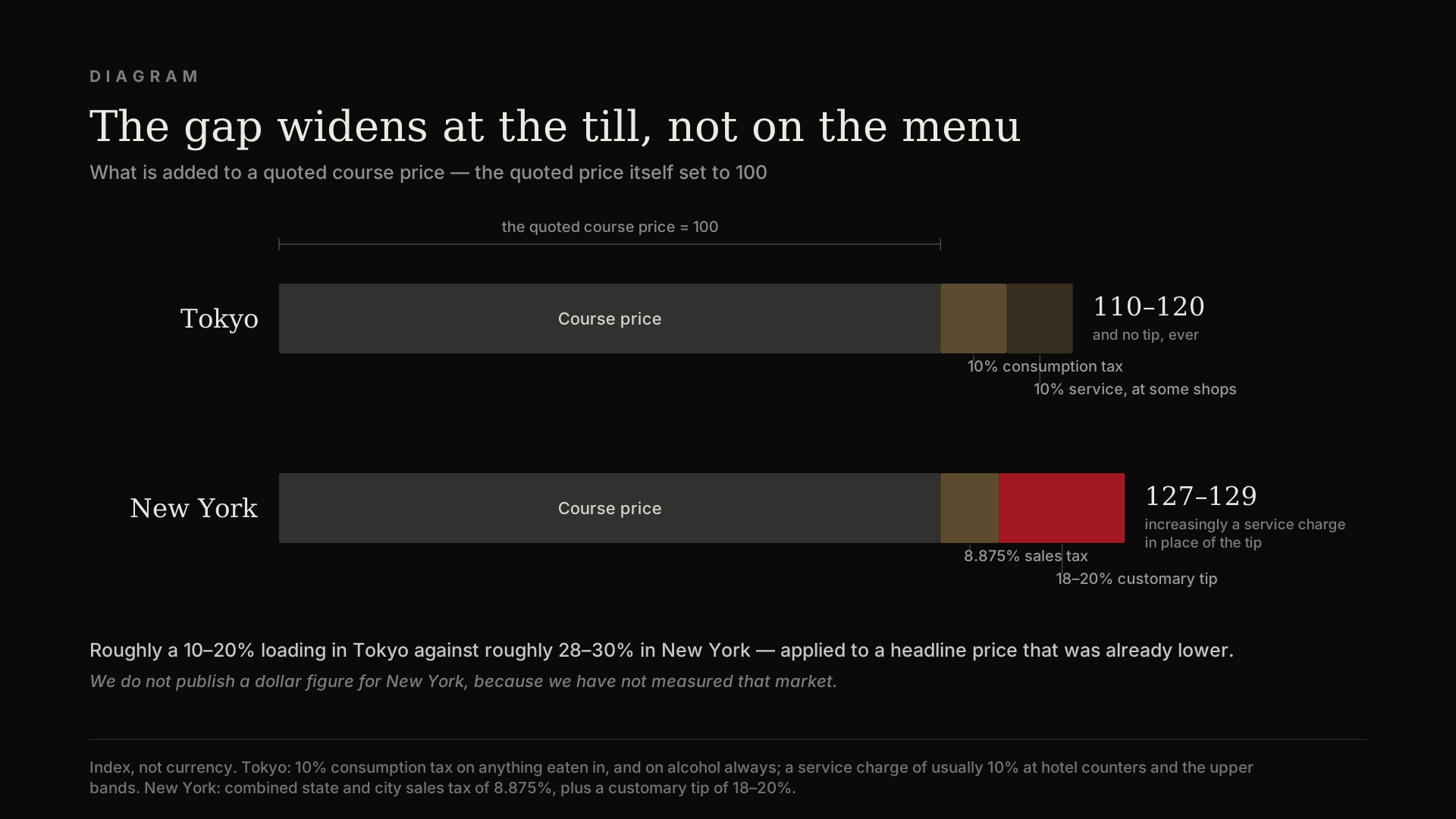
A comparable counter omakase costs less in Tokyo than in New York, and the gap widens once the bill arrives: a New York bill takes a customary tip of 18–20% plus city sales tax of 8.875% on top of the menu figure, while in Tokyo the menu figure is by law the tax-included total, and the only thing that may be added is a service charge of around 10% at some shops — and no tip at all, ever.
That is the reliable part of the comparison. The unreliable part is the headline figure, and this article is deliberately organised around the difference between the two.
Why we do not print a dollar figure
You will find New York omakase prices quoted everywhere — in videos, in listicles, in the AI answers that summarise them. Nearly all of them are one restaurant's price presented as a market rate, usually the most expensive restaurant the writer could find, because that is what gets watched.
The Tokyo bands are given in yen, without a live conversion, because a currency figure written today is wrong within weeks and stale conversions are a large part of why price information about Japan is unreliable. What compares cleanly is the structure on each side, which does not move.
What is added to the bill, in each city
- Tokyo. 10% consumption tax on anything eaten in the restaurant, and on alcohol always — but a price displayed to consumers has to include it, so the figure on the menu is normally the figure with the tax already in. What can still be added is a service charge of usually 10%, common at hotel counters and the upper bands, uncommon at neighbourhood shops, and sometimes a small opening-dish charge. No tip. A quoted ¥20,000 course realistically becomes ¥22,000 where a service charge applies, before drinks. Shops that display no price at all — jika (時価), market price — sit outside the display rule, and that, rather than the tax, is the thing to ask about.
- New York. Combined state and city sales tax of 8.875% on the meal, plus a customary tip of 18–20% on top, and increasingly an added service charge in place of, not in addition to, the tip. A quoted $200 course realistically becomes $255–265 before drinks.
That is roughly a 10–20% loading in Tokyo against roughly 28–30% in New York, applied to a headline price that was already lower. The additions alone move the two cities apart by about a sixth. The tax rates are published; the tip is customary practice. The Tokyo course prices are our own observation, and we publish no figure for the New York market.
Where the underlying costs genuinely differ
Three of the differences are real economics rather than accounting.
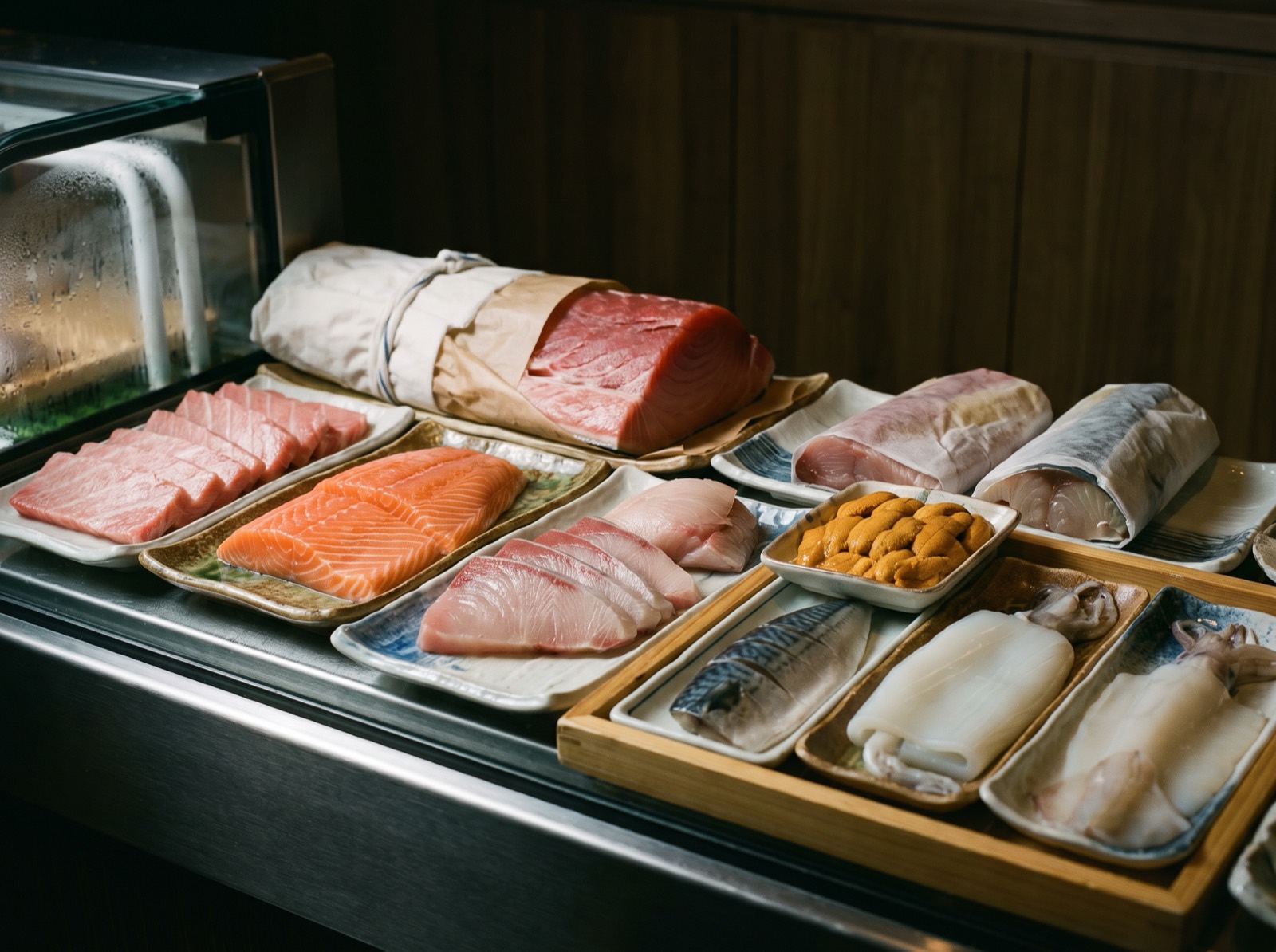
- The fish has to fly. A New York counter serving Japanese fish is paying air freight, an importer's margin and a smaller, less frequent selection window. A Tokyo counter buys from a market a short drive away, several times a week, and can reject freely because there is more to choose from. This is a genuine cost difference and it favours Tokyo.
- Labour costs more in New York. Wages, benefits and the cost of employing people are all higher, and a counter is a labour-intensive format by design. This favours New York's prices being higher for reasons that have nothing to do with quality.
- Rent. A ten-seat room in Manhattan and a ten-seat room in Tokyo are not comparable line items, and a ten-seat room cannot spread its rent across many covers.
Add those up and the honest conclusion is that a New York omakase at a higher price is not necessarily worse value. It is paying for the same number of hands doing similar work under a materially more expensive cost structure, with a supply chain that is one long flight further from the fish.
The Tokyo advantage is not that the sushi is cheap. It is that the fish is local, the cost structure is not New York's, and nobody takes a fifth at the end.
What you cannot buy in New York at any price
Two things, and they are worth naming because they are what the price comparison keeps missing.
Depth of the everyday range. Tokyo's remarkable feature is not its top counters, which have peers in several cities. It is that ¥1,500 at lunch and ¥12,000 at dinner both buy something serious. That middle and lower range simply does not exist abroad at the same density, because it depends on a distribution system that supplies supermarkets, chains and counters from the same source.
Fish that never travels. Several of the pieces a Tokyo counter is judged on (the cured gizzard shad, the small silver fish, the squid handled the same morning, the seasonal shellfish) are difficult or uneconomic to export in the condition that makes them worth serving. A New York counter can serve superb tuna and superb uni. The rest of the case is a harder problem.
The direction the market is moving
One measurement is worth attaching to the price question. The biennial government survey that counts restaurants treated locally as Japanese recorded a fall in its 2025 round, the first in the history of the series, with Asia down about 10 percent while Latin America, the Middle East and Africa each grew by roughly a fifth. Over the same period arrivals in Japan reached an annual record of 42,683,600, up 15.8 percent in a single year. The figures are set out in our piece on the UNESCO claim.
The point for a diner is narrow. The export version of this food is not expanding into the gap; the number of people flying to eat the original is. That does not make a New York counter worse, and none of the cost structure above changes because of it. It does mean the comparison is being made by a rapidly growing number of people, which is most of the reason a Tokyo counter is harder to book this year than last.
The comparison that actually helps you plan
- If you eat omakase regularly in New York: the Tokyo equivalent of your usual counter will cost less, and one band up from your usual will cost about what you already pay. Book a band higher than you would at home.
- If a counter omakase is a once-a-year purchase for you: Tokyo's ¥15,000–20,000 band is the sweet spot, and the top band is not worth the stretch for a first visit.
- Either way: spend at lunch. A lunch omakase in Tokyo has no real equivalent in New York, and it is the single largest value gap between the two cities.
- Do not budget a tip. Budget drinks instead, which are the largest variable in a Tokyo bill.
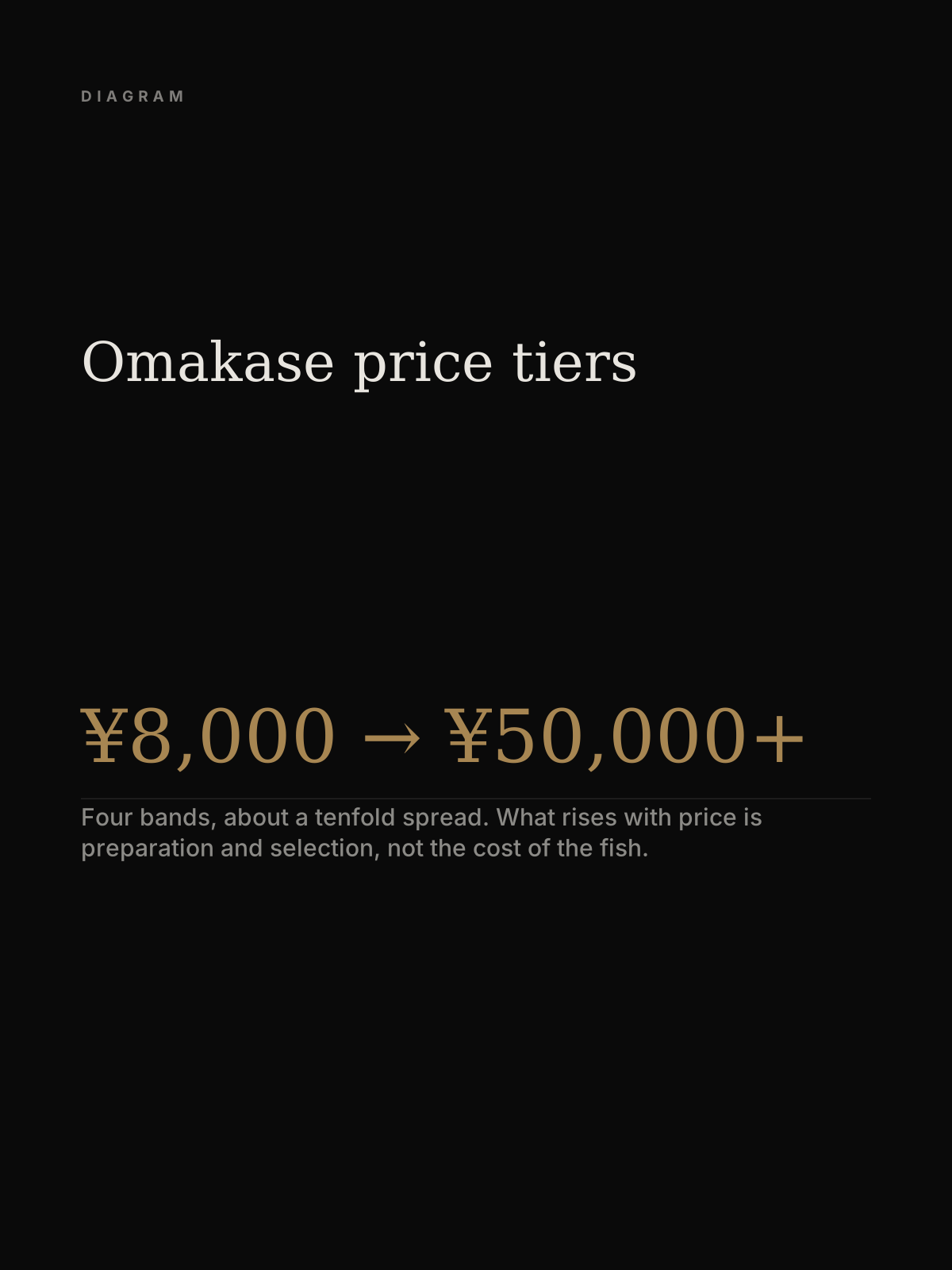
For the Tokyo bands in detail, see omakase price tiers; for what the money buys, what omakase actually is; and for the whole range of formats, how much sushi costs in Japan.
Frequently asked questions
Is omakase cheaper in Tokyo than in New York?
Generally yes for a comparable counter, and the gap widens once the bill arrives. A New York bill adds 8.875% sales tax plus a customary 18–20% tip on top of the menu price. In Tokyo the menu price already includes the 10% consumption tax, because Japanese law requires a displayed price to be the tax-included total; the only common addition is a 10% service charge at some shops, with no tipping at all.
How much does omakase cost in New York?
Most numbers circulating online are a single restaurant's price presented as a market rate. What is worth knowing is what gets added to it: 8.875% sales tax plus 18–20% customary tip.
Do you tip for omakase in Tokyo?
No. Tipping is not part of restaurant pricing in Japan at any level, and attempting it usually results in the money being returned. This is the single largest difference between a Tokyo and a New York bill.
Why is sushi cheaper in Japan?
The fish does not have to be flown in, the market is close enough to buy from several times a week, and the distribution system that supplies the counters also supplies the everyday formats. Labour and rent in New York are also higher, which raises prices there for reasons unrelated to quality.
Is a New York omakase worse than a Tokyo one?
Not necessarily, and not at the top. The clearer difference is in the middle and lower range: Tokyo has serious sushi at ¥1,500 lunch prices, and fish — cured gizzard shad, the small silver fish, seasonal shellfish — that is hard to export in serving condition.