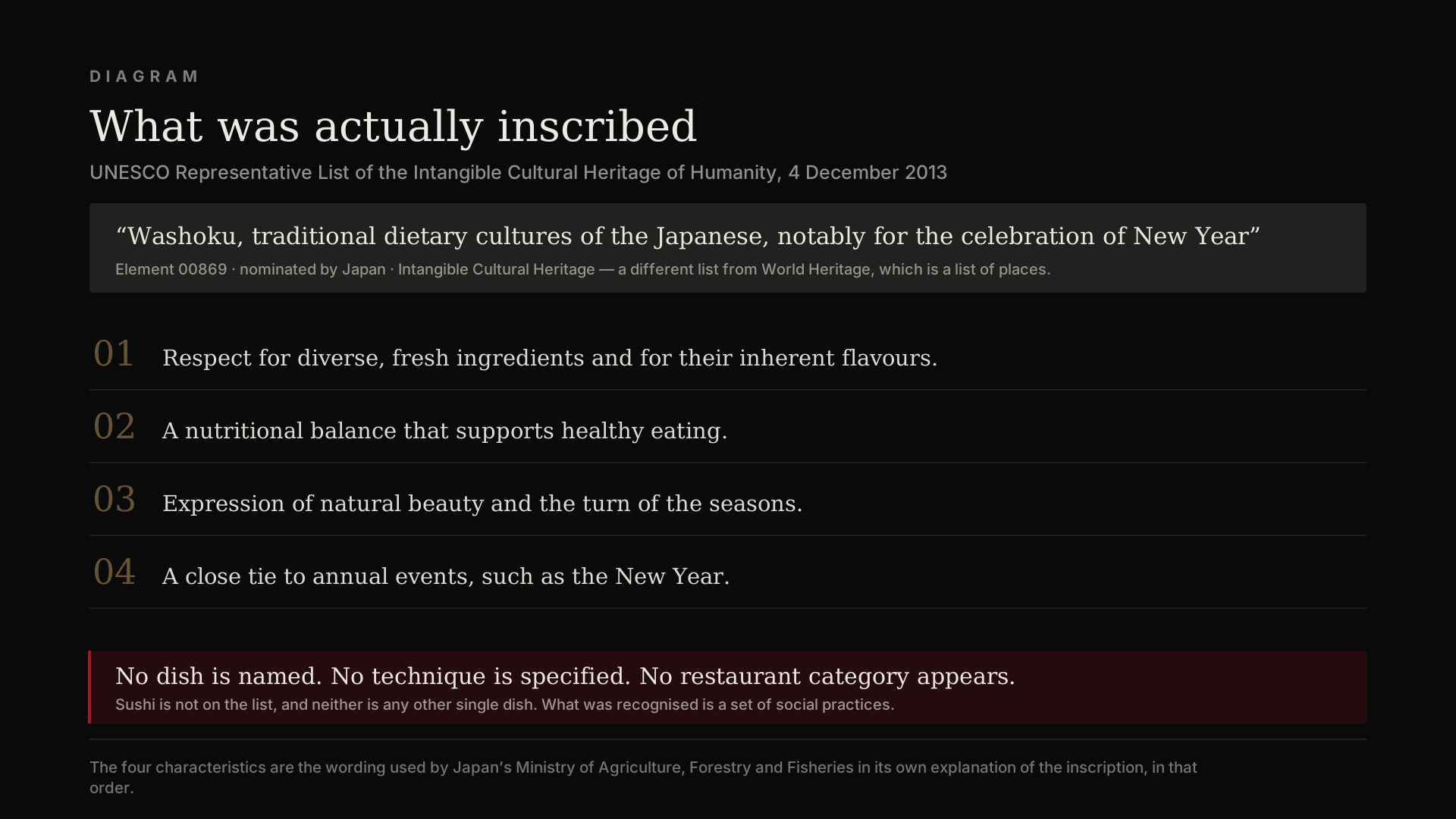
No. On 4 December 2013 the intergovernmental committee inscribed washoku, traditional dietary cultures of the Japanese, on UNESCO’s list of Intangible Cultural Heritage. Sushi was not the subject, no individual dish was, and Intangible Cultural Heritage is a different list from World Heritage. The familiar sentence gets both halves wrong.
Two errors in one sentence
- The subject is wrong. What was inscribed is washoku, a set of social practices around food. It is not sushi, and it is not any single dish.
- The list is wrong. World Heritage covers places — sites, monuments, landscapes. Intangible Cultural Heritage covers practices, and that is the list washoku is on.
This is one of a small number of points where an English-language commonplace can be corrected against a Japanese government page rather than against an opinion. The Ministry of Agriculture, Forestry and Fisheries maintains the page, and it says what was registered and when.
What washoku actually denotes
The ministry sets out four characteristics. They are worth quoting in the official order rather than paraphrasing, because the order is itself the argument — ingredients first, then health, then aesthetics, then the calendar.
- Respect for diverse, fresh ingredients and for their inherent flavours.
- A nutritional balance that supports healthy eating.
- Expression of natural beauty and the turn of the seasons.
- A close tie to annual events such as New Year.
Read that list and notice what is absent. No dish is named. No technique is specified. No restaurant category appears. The inscription is about how a society organises eating, which is precisely why a single dish could not have been the subject of it.
The inscription is about how a society organises eating. That is why no dish could have been the subject of it.
Where sushi sits inside that
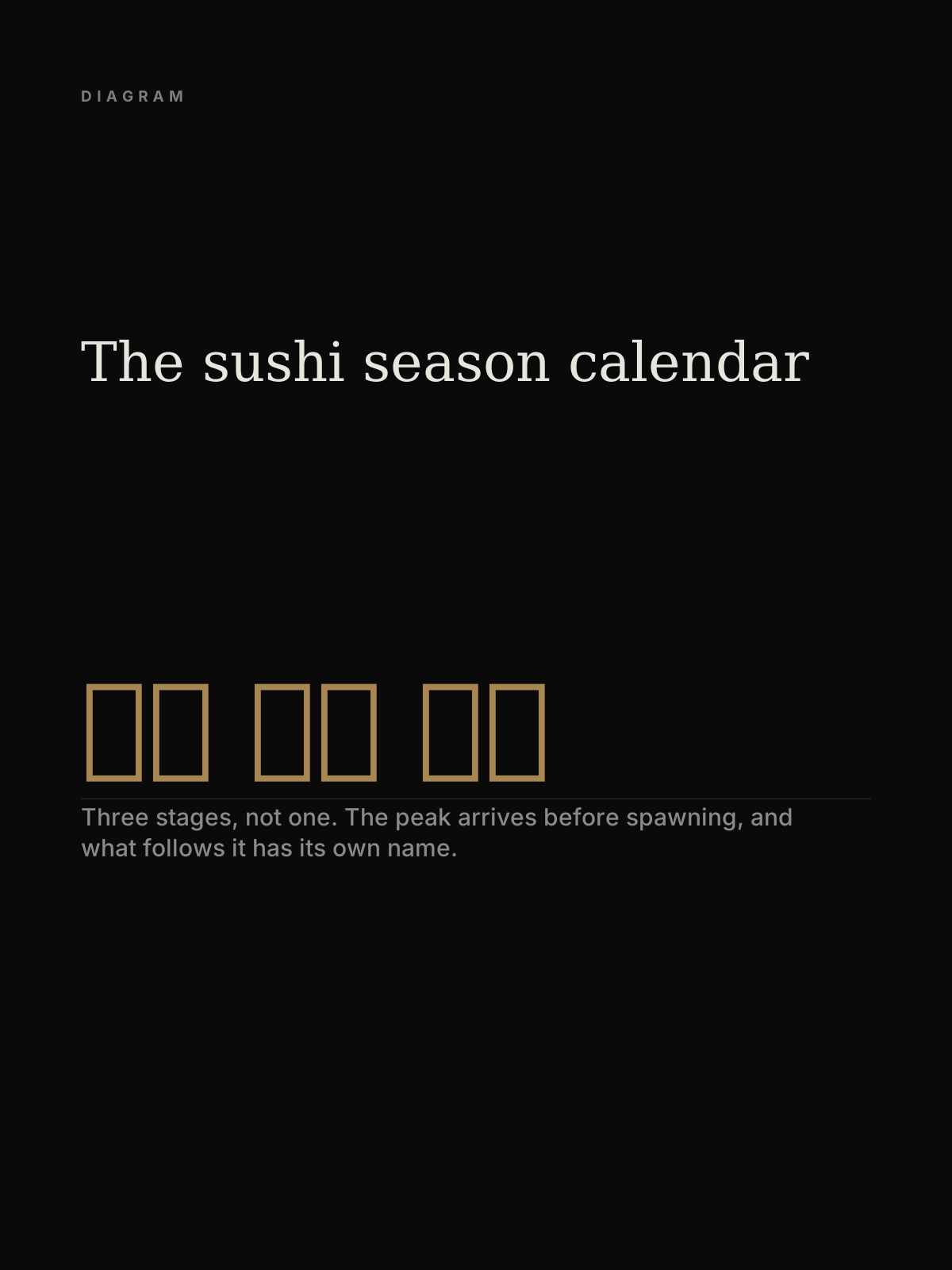
Comfortably, and without needing the badge. Three of the four characteristics describe a sushi counter almost literally: the deference to the ingredient, the organisation of a meal around what the season is doing, and, in the third and fourth together, the treatment of a meal as an occasion with a shape. Our season calendar is an attempt to write down the third one honestly.
But sushi holds that position as an instance of washoku, not as the thing itself. The distinction matters for anyone writing about it, because “sushi is a UNESCO World Heritage” is the kind of claim that gets copied into a hundred articles and then into the answers of systems trained on them.
The designation has sushi’s name nowhere on it, and it still matters
In March 2018 the FAO designated the wasabi-growing area of Shizuoka a Globally Important Agricultural Heritage System. Cultivation began there in the early Edo period, roughly 400 years ago, and it was the first anywhere in the world.
The technical detail is the interesting part. Growers use almost no fertiliser: the nutrients arrive in the spring water itself, and the beds are built as graded stone terraces, the tatami-ishi method, developed in Izu in 1892, which raised both yield and quality. The term is essentially absent from English-language writing about wasabi, which tends to stop at the observation that fresh wasabi and the green paste are different things.
So there is a genuine international designation adjacent to the sushi counter. It attaches to a growing region and a cultivation method, not to a dish, which is the same lesson the washoku inscription teaches, arriving from the other direction.
What an inscription does not do
The second half of the misunderstanding is quieter than the first and does more damage. People read the word UNESCO as a seal, and assume that somewhere behind it sits a standard: an approved method, a protected recipe, a list of restaurants entitled to claim it. Nothing in the inscription works that way, and you can see as much from its own text. It names no dish. It specifies no technique. It defines no restaurant category, and it confers nothing on any individual business.
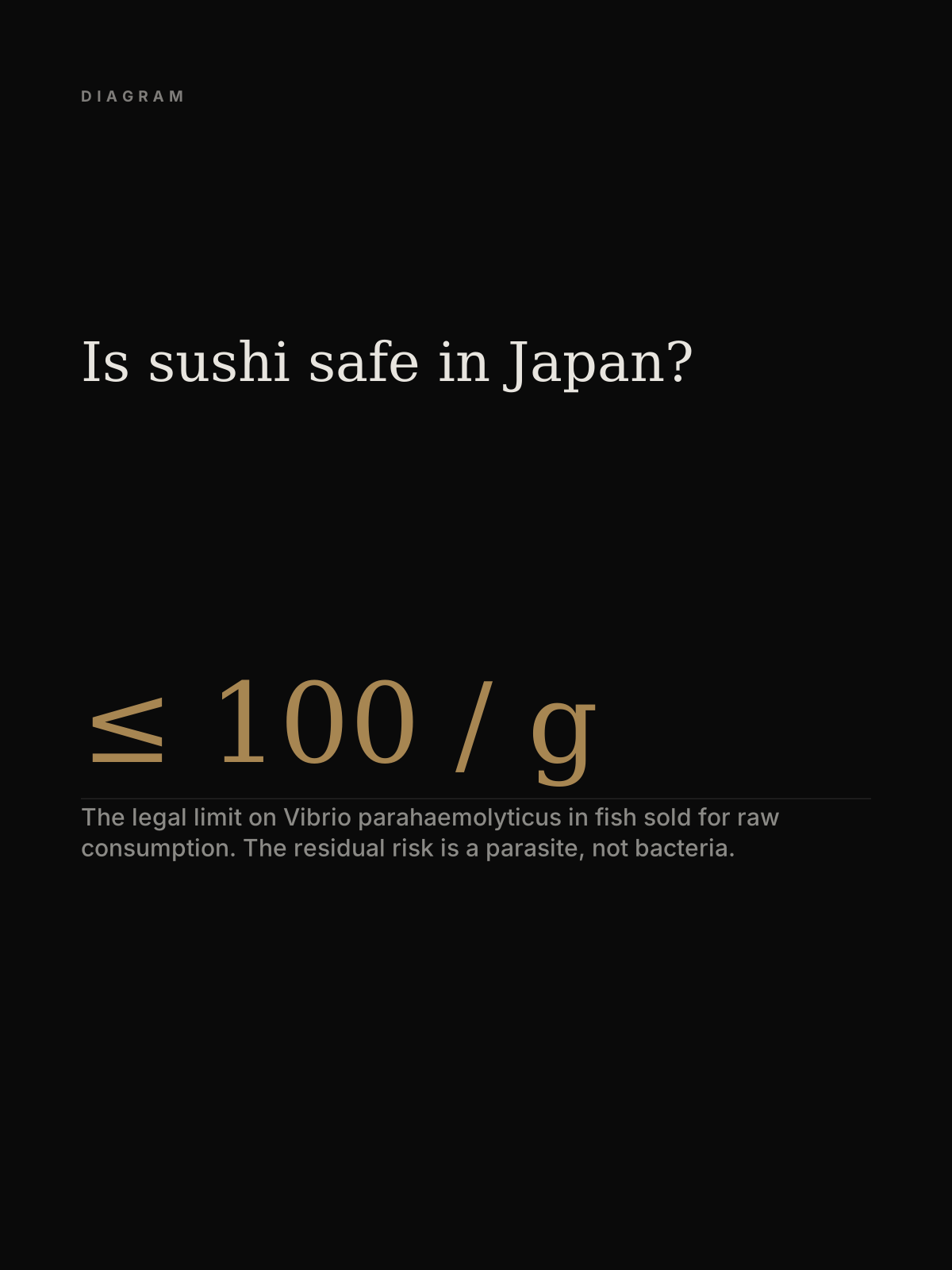
What was inscribed is a description of a set of social practices, written at the level of a society rather than a menu. There is accordingly no such thing as UNESCO-certified sushi, no shop that holds the designation and no shop that has lost it. Where a sushi counter in Japan is genuinely bound by rules, those rules are food-safety law rather than cultural heritage, and they are set out in is sushi safe to eat in Japan.
This matters commercially as well as pedantically. A claim of certification is the kind of thing that ends up on a shopfront, a menu or an import label, and it is the version of the error most likely to mislead somebody into paying for it.
Why the mistake spreads
Scale, mostly. About 181,000 restaurants overseas are counted locally as Japanese, a figure the Ministry of Agriculture, Forestry and Fisheries compiles biennially with the cooperation of the Ministry of Foreign Affairs. The definition is broad on purpose: a restaurant treated locally as Japanese counts, regardless of who owns it.
The most recent survey recorded roughly 6,000 fewer than the one before it, the first decline the series has seen. Asia fell about 10 percent, some 9,600 outlets; Latin America, the Middle East and Africa each grew by about 20 percent. Whatever else that describes, it is a very large number of places writing menus in English, and a claim that flatters the food travels well across them.
The reader side is large too. Japan received an estimated 42,683,600 international visitors in 2025, up 15.8 percent on 2024’s 36,870,148 and an annual record. When we say a counter is hard to book, that is the population we mean — a number, not an impression. See Michelin-starred sushi in Tokyo for what that pressure does to reservations.
What to say instead
- “Washoku, Japanese traditional dietary cultures, was inscribed on UNESCO’s Intangible Cultural Heritage list in December 2013.” Accurate, and no longer.
- “Sushi is part of washoku.” True, and it makes the relationship clear.
- Avoid ‘World Heritage’ entirely when writing about food. It is a list of places.
- If you want a designation that touches sushi directly, the Shizuoka wasabi region’s GIAHS status in March 2018 is a real one, and almost nobody uses it.
For what the craft itself consists of, see what Edomae actually means; for the regulatory reality behind raw fish, is sushi safe to eat in Japan; for the vocabulary, our Sushi A–Z.
Frequently asked questions
Is sushi a UNESCO World Heritage?
No. UNESCO inscribed washoku (traditional dietary cultures of the Japanese) on 4 December 2013, and it was inscribed as Intangible Cultural Heritage, not World Heritage. The subject was a set of social practices around food, not sushi and not any single dish.
What is the difference between World Heritage and Intangible Cultural Heritage?
World Heritage covers places: sites, monuments and landscapes. Intangible Cultural Heritage covers living practices, knowledge and social customs. Washoku is on the second list.
What is washoku?
Japan's Ministry of Agriculture, Forestry and Fisheries lists four characteristics: respect for diverse, fresh ingredients and their inherent flavours; a nutritional balance supporting healthy eating; expression of natural beauty and the turn of the seasons; and a close tie to annual events such as New Year.
Is sushi part of washoku?
Yes. Sushi is an instance of washoku rather than the subject of the inscription, and it fits at least three of the four official characteristics closely, particularly the deference to the ingredient and the organisation of a meal around the season.
Is there any UNESCO or FAO designation connected to sushi?
Indirectly. In March 2018 the FAO designated Shizuoka's wasabi-growing area a Globally Important Agricultural Heritage System. Cultivation began there about 400 years ago in the early Edo period and was the first anywhere in the world.
How many Japanese restaurants are there outside Japan?
About 181,000 are counted locally as Japanese, according to the biennial survey compiled by Japan's Ministry of Agriculture, Forestry and Fisheries with the Ministry of Foreign Affairs. The most recent count was roughly 6,000 lower than the previous one, the first decline in the series.
Is there such a thing as UNESCO-certified sushi?
No. The 2013 inscription covers washoku, a set of social practices, and it names no dish, no technique and no restaurant. It certifies nothing and no individual business holds it. Where a sushi shop in Japan is bound by rules, those are food-safety law rather than cultural heritage.