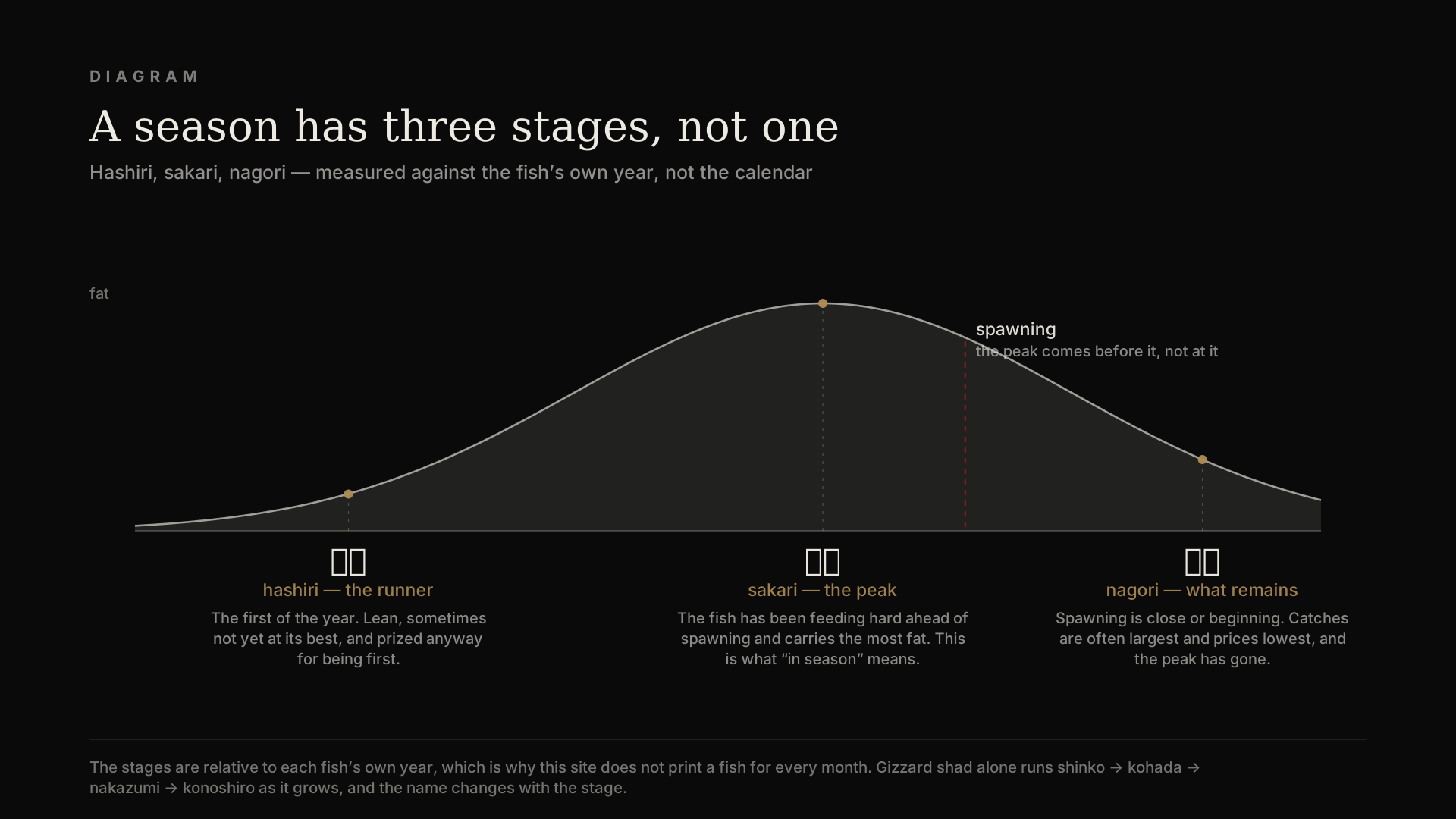
Shun is the window in which a fish is at its fullest and fattest — and it has three stages, not one. Hashiri is the first of the year, sakari the peak just before spawning when the fish has been feeding hard, and nagori the tail end, when catches are large but the best has passed. The season generally falls before spawning, and it shifts with latitude.
Why we do not print a fish for every month
Almost every English page on this subject is a twelve-row table: January, this fish; February, that one. There is no such table here, deliberately, and the reason is worth two paragraphs.
Japan runs a very long way north to south. The same species spawns at genuinely different times at the two ends of that range, so the peak for a fish landed in Kyushu and the peak for the same fish landed off Hokkaido can be months apart. Regional preference and local custom vary on top of that. Japanese reference books are explicit that assigning a single national month to a fish is not really possible, and they are the sources the English tables are supposedly derived from.
So what follows is the structure of the year rather than a lookup table. Each of our glossary entries carries the seasonal detail for that fish, with the regional variation stated. This page is the hub that ties them together, and we would rather say that plainly than publish twelve rows of false precision.
The three stages, which is the part worth learning
- Hashiri (走り): the runner. The first of the year. Lean, sometimes not yet at its best, and prized anyway for being first. Edo made a cult of this: the first bonito of the year, hatsugatsuo, commanded absurd prices and was worth going into debt for, which the city's own writers found funny at the time.
- Sakari (盛り): the peak. The fish has been feeding hard ahead of spawning and carries the most fat. This is what “in season” means if it means one thing.
- Nagori (名残): what remains. Spawning is close or beginning. Catches are often at their largest and prices at their lowest, and the peak has gone. Nagori is not a failure state; it is a recognised stage with its own character, and there is no English word for it.
Knowing these three lets you ask a genuinely useful question at a counter: not “is this in season?” but “where is this in its season?” The answer tells you what the chef is doing with it, because a lean early fish and a fat peak fish are handled differently.
English has “in season” and “out of season.” Japanese has three stages, and the middle one is not the interesting one.
Why the peak comes before spawning
As a rule the season falls before spawning rather than during it. A fish preparing to spawn feeds hard and lays down fat; a fish that has spawned has spent it. This single rule explains most of the calendar without any table at all, and it is why the same fish can be superb and ordinary within a few weeks.
It also explains the exceptions, which are mostly about roe. Herring roe and salmon roe are wanted precisely when the fish is carrying them, which puts their season at the point where the flesh is heading in the other direction.
The shape of the year
In broad terms, and with the caveat above doing real work:
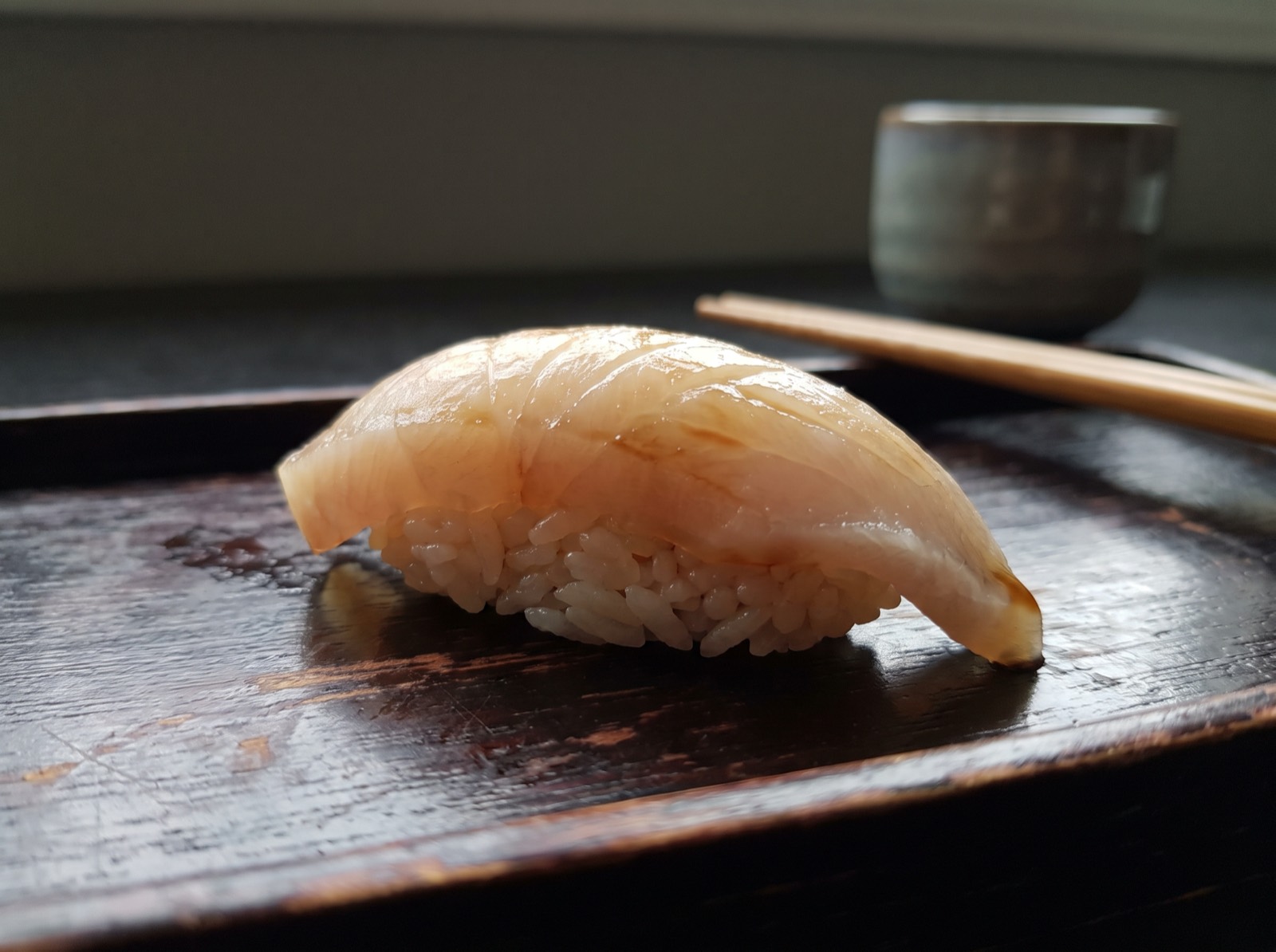
Winter. Cold water and pre-spawning fat. This is when the big migratory fish are at their heaviest (yellowtail taken in cold water has its own name in Japanese for exactly this reason) and when much of the shellfish is at its best. It is the least ambiguous part of the year.
Spring. The season of hashiri. Fish are moving north and arriving lean, and the interest is in firstness rather than fat. The first bonito of the year belongs here, and so does a general sense at a counter that the case is changing week to week.
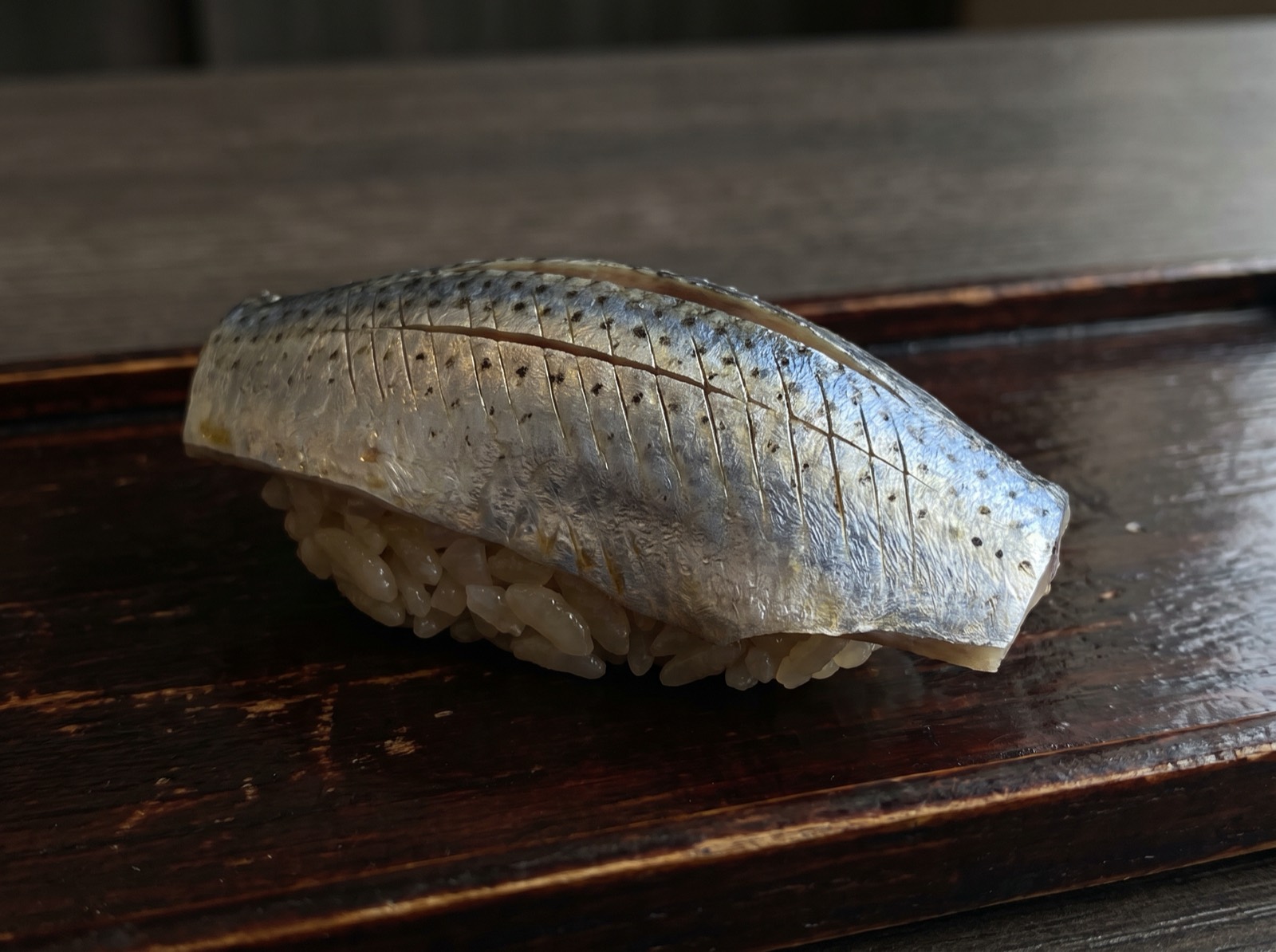
Summer. The small silver fish, and the young stages. This is when the immature form of gizzard shad, shinko, appears — tiny, requiring several fish for a single piece, expensive out of all proportion to its size, and one of the events of the sushi year in Tokyo. Summer is also when the counter's cured and vinegar-treated work is most visible, which is not a coincidence.
Autumn. Fish returning south with fat on them, and roe. The autumn bonito running back down the coast is a different fish from the spring one, fatter and treated differently. Salmon roe belongs to this part of the year.
Fish that change their name as they grow
A complication that is also a gift: some fish are shusseuo, promotion fish, which take a new name at each stage of growth. The custom is borrowed from samurai and scholars, who took a new name on coming of age or promotion, and the fish are considered auspicious for it, which is why they turn up at celebrations.
- Yellowtail, in Kanto: wakashi → inada → warasa → buri.
- Yellowtail, in Kansai: mojako → wakana → tsubasu → hamachi → mejiro → buri.
- Japanese sea bass: seigo → fukko → suzuki.
- Gizzard shad: shinko → kohada → nakazumi → konoshiro.
Two things follow. First, the names for the younger stages are not standardised and differ by region, so the same fish at the same size can have two names four hundred kilometres apart. Second, a great deal of English-language confusion (particularly between hamachi, buri and kanpachi) comes from treating stages of one fish and a different species as though they were the same kind of category. See hamachi and kanpachi.
How the season changes what the chef does
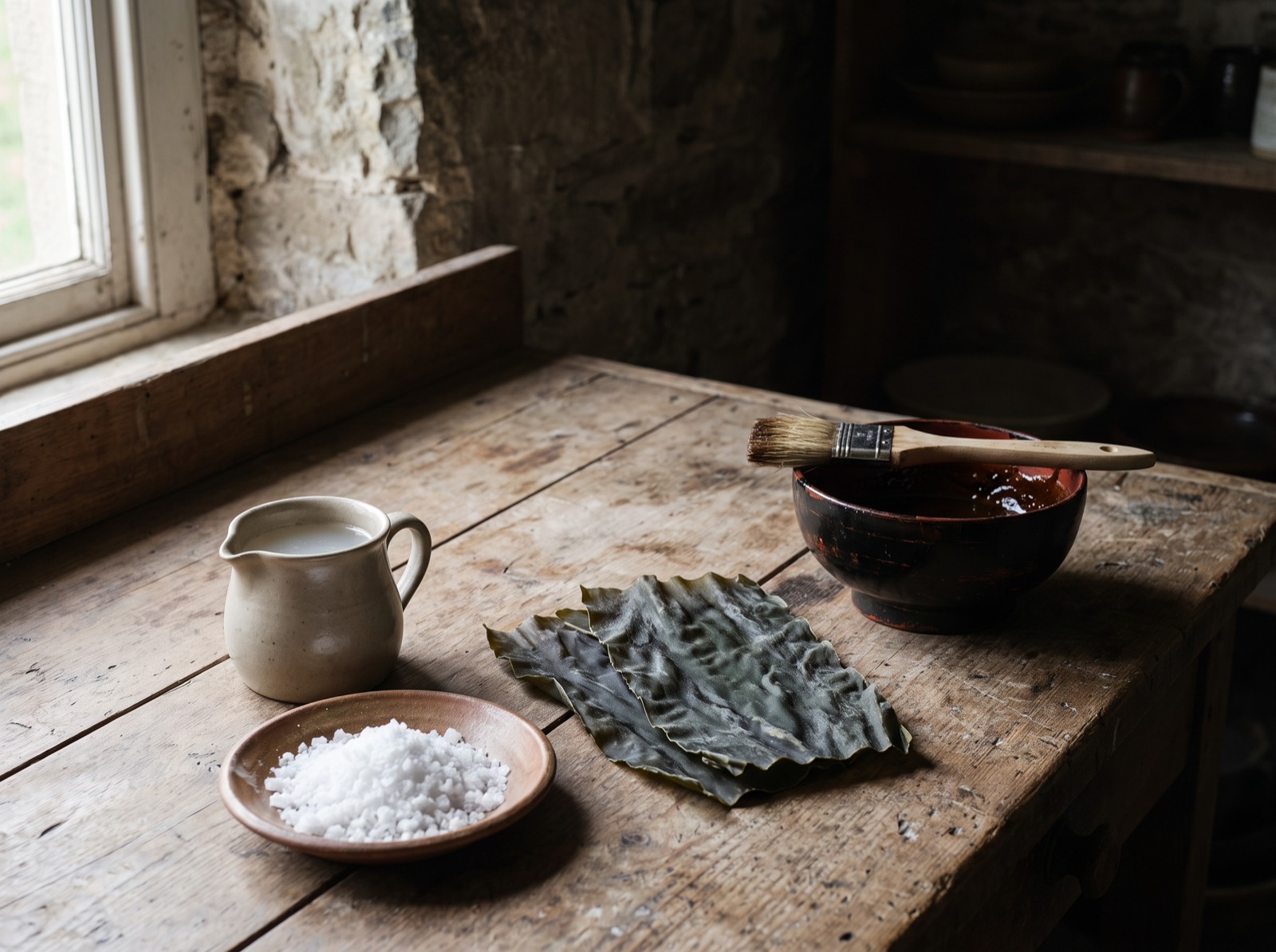
Season is not only about what is available. It determines the treatment. A fat winter fish may be served with minimal intervention; a lean early one may be cured, kelp-pressed or aged to give it what the water has not. The techniques are the same ones described in Edomae sushi, and the season is the reason a chef reaches for one rather than another.
This is why an omakase in winter and an omakase at the same counter in summer are not the same meal with different fish in it. They are different arguments.
What to actually ask
- “What is good today?” The only question that reliably works, and the one the format is built to answer.
- “Where is this in its season?” Better than asking whether it is in season. Invites the interesting answer.
- “Is this hashiri?” If you can use the word, you will get a fuller answer than you expected.
- Name a fish when you book, not on the night. If you are travelling for something specific, say so a day ahead. See omakase etiquette.
The seasonal detail for each fish lives on its own page in our glossary, with the regional variation stated rather than averaged away. Worth noting that the turn of the seasons is not a flourish borrowed for food writing: it is the third of the four characteristics Japan’s agriculture ministry lists in defining washoku, the thing UNESCO actually inscribed, which is not sushi, and not World Heritage.
Frequently asked questions
What does shun mean?
The window in which a fish is at its fullest and fattest. It has three stages: hashiri, the first of the year; sakari, the peak just before spawning; and nagori, the tail end, when catches are large but the peak has passed.
Is there a month-by-month sushi season calendar?
Not a reliable national one. Japan is long from north to south and the same species spawns at different times at each end, so a single month per fish is false precision. Japanese reference books say so directly.
When is fish in season in Japan?
As a rule, before spawning rather than during it: a fish feeds hard and lays down fat ahead of spawning, and spends it afterwards. Roe is the exception, since it is wanted precisely when the fish is carrying it.
What is hatsugatsuo?
The first bonito of the year, the classic example of hashiri. Edo made a cult of it and paid extraordinary prices for being first, at a point in the season when the fish is lean rather than at its fattest.
What is a shusseuo?
A fish that changes its name as it grows, named after the samurai custom of taking a new name on promotion. Yellowtail and Japanese sea bass are the sushi examples, and the names for the younger stages vary by region.
Does the season change how the sushi is prepared?
Yes. A fat winter fish may be served with little intervention, while a lean early one is more likely to be cured, kelp-pressed or aged. The season is often what determines which technique the chef reaches for.