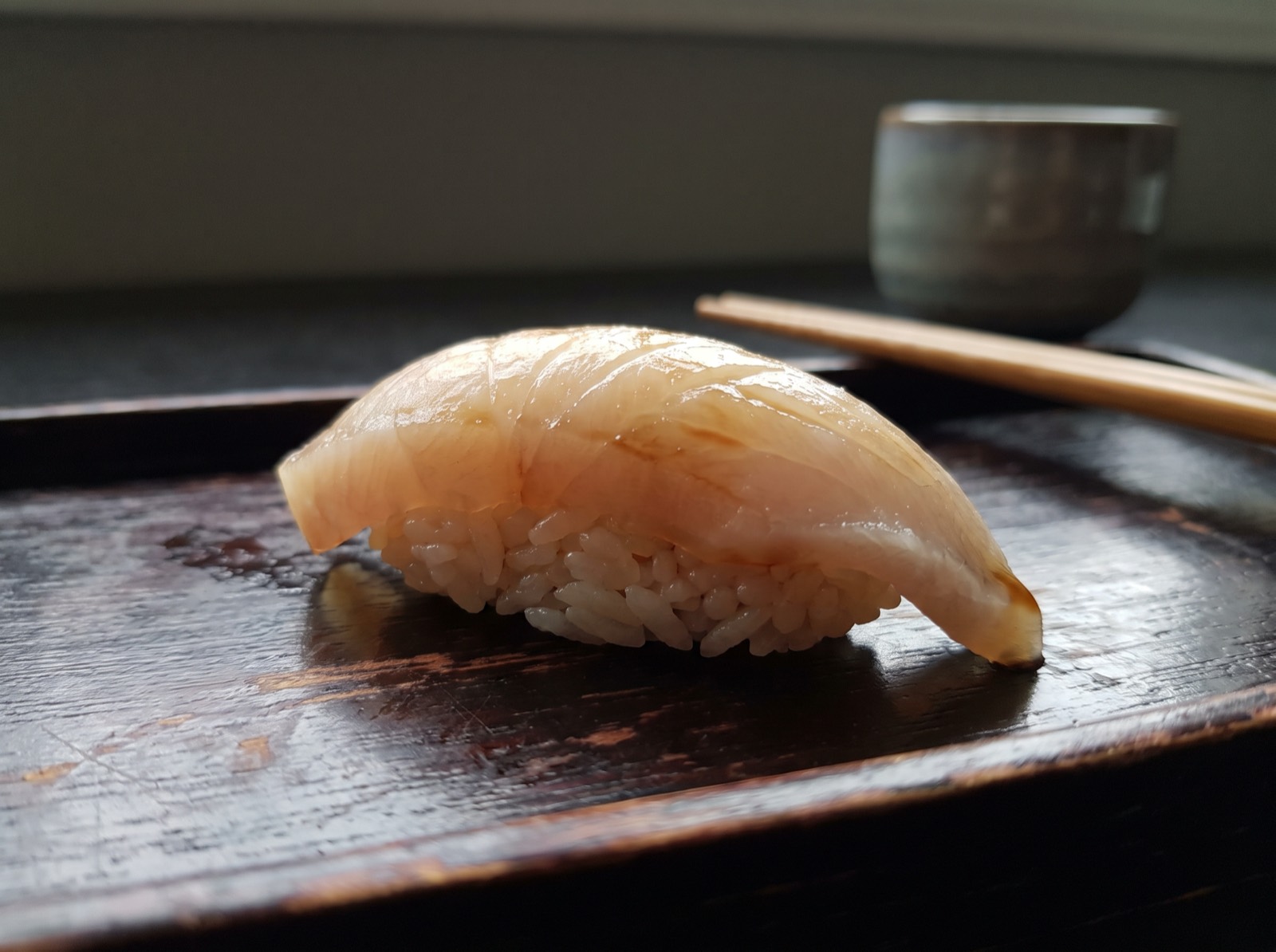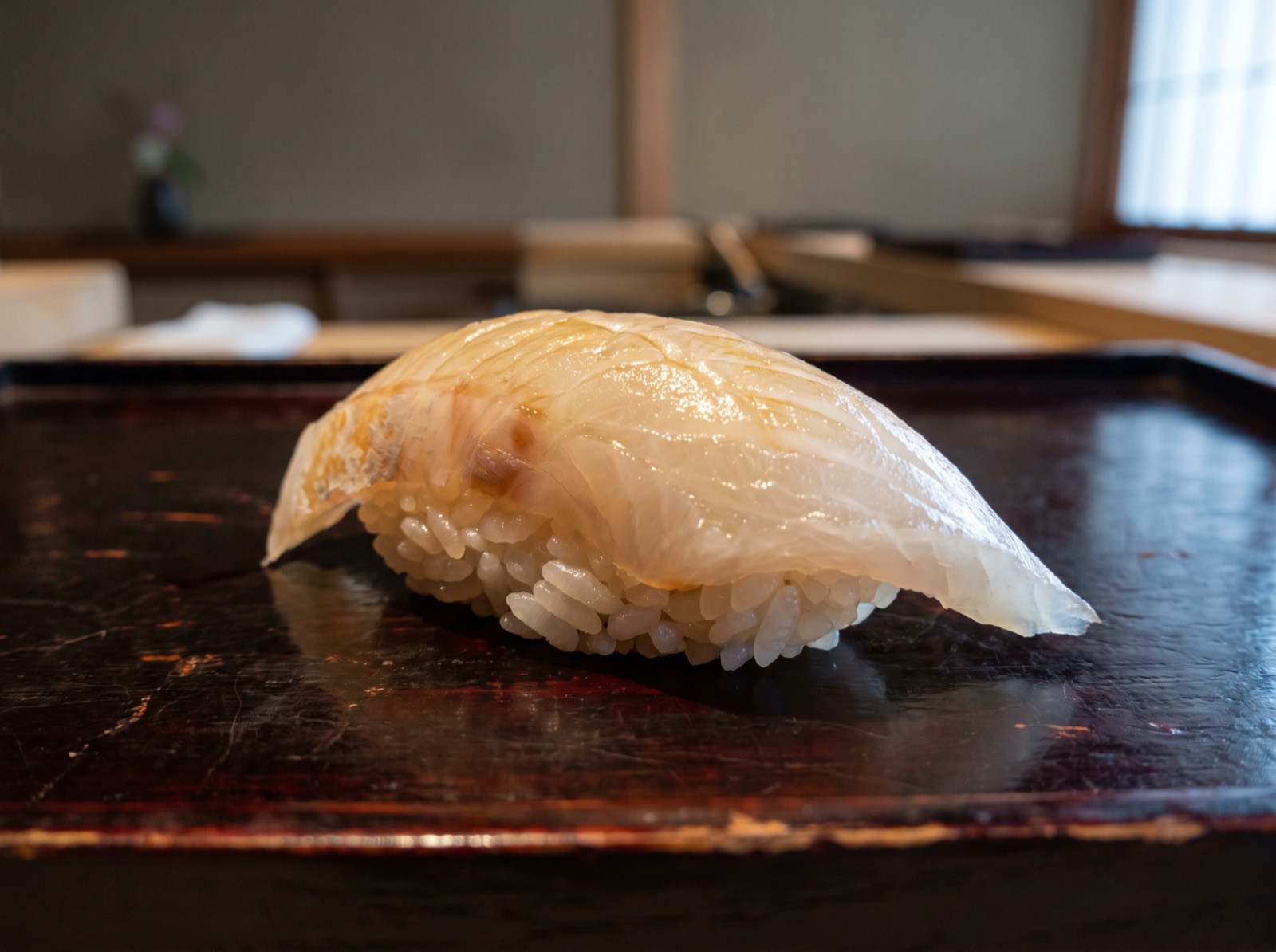
Hamachi (ハマチ) is a young buri (Japanese amberjack, Seriola quinqueradiata) at one particular stage of its growth, under the name used in Kansai. It is not a separate species, it is not a different fish from buri, and outside Japan it has drifted further still: on most Western menus “hamachi” now means farmed yellowtail of more or less any size.
What it is
Buri is a shusseuo (出世魚), a “success fish”, given a new name at each stage of its growth. The custom borrows from the old practice of taking a new name on coming of age or on promotion, which is part of why these fish are considered auspicious and turn up at New Year and at celebrations.
The ladder differs by region, which is the root of the whole confusion:
- Kanto (Tokyo and eastern Japan): wakashi → inada → warasa → buri.
- Kansai (Osaka and western Japan): mojako → wakana → tsubasu → hamachi → mejiro → buri.
Hamachi is the fourth rung of the Kansai ladder. A Tokyo counter serving a fish of the same size would more naturally call it inada or warasa. So when a menu anywhere in the world says hamachi, it is using a western-Japanese word, which is a small piece of evidence about how the fish got out of the country.
Why hamachi became the global word
Because farming did. Yellowtail is one of Japan's oldest large-scale marine aquaculture industries, developed in the sheltered warm water of the Seto Inland Sea — western Japan, where hamachi is the word in use — and built around raising fish to roughly the size that region calls hamachi. When Japanese seafood began being exported at volume in the second half of the twentieth century, farmed young yellowtail was among the most exportable things available: consistent, fatty, available year-round, and robust enough to ship.
So the word that travelled was the producing region's word for the size being produced. Buri, the mature winter fish that Japanese eaters most prize, barely made the journey.
The word that conquered the world’s menus is a regional name for a farm size.
When it is best
For the mature fish, winter, decisively. Kan-buri (寒ブリ), “cold buri”, is fish taken in the coldest months, when fat is at its maximum before spawning, and it is one of the genuinely unambiguous seasonal peaks in Japanese cooking. The Sea of Japan coast is where the reputation sits: Toyama Bay, and Himi in particular, along with Noto and Sado.
For hamachi as such, the honest answer is that the question does not quite apply. The great majority of hamachi is farmed and is held at a steady fat level through the year, which is the entire commercial point of it. If you want the seasonal experience, what you want is buri, in the coldest months, and it is a different and considerably better fish.
What the chef does to it
Yellowtail is fatty, soft and mild, and Edomae practice generally treats it lightly:
- Nikiri (煮切り), the pre-seasoned soy reduction, brushed on so that you do not dip. Standard.
- Rest under paper. Filleted into saku blocks and held under refrigeration wrapped in absorbent paper, drawing off surface moisture and letting the flesh settle.
- A light sear, sometimes. Aburi works on fatty fish and some shops use it here.
- Occasionally a brief cure. Salt or a short vinegar contact tightens flesh that can otherwise eat slack, particularly on farmed fish. This is a shop-by-shop decision rather than a rule.
What you will meet outside Japan (yellowtail with jalapeño, with ponzu, with citrus and chilli oil) is not Edomae and does not pretend to be. It is a modern restaurant dish built for a fish whose fat carries acid and heat well, and it is often very good. It is simply a different tradition.
How it differs from what it is confused with
- Hamachi and buri are the same species at different ages. Buri is bigger, fattier in winter, and more strongly flavoured.
- Hamachi and kanpachi are different species. Kanpachi is greater amberjack (Seriola dumerili): leaner, firmer, cleaner, and its name changes far less as it grows.
- Hiramasa (ヒラマサ), Seriola lalandi, is the third of the group, sitting between the two. Together the three are the aomono gosanke (青物御三家), the “big three” of the blue-backed fish.
- “Yellowtail” in English is applied loosely to the whole Seriola genus, which is precisely why the confusion is impossible to resolve from a menu alone.
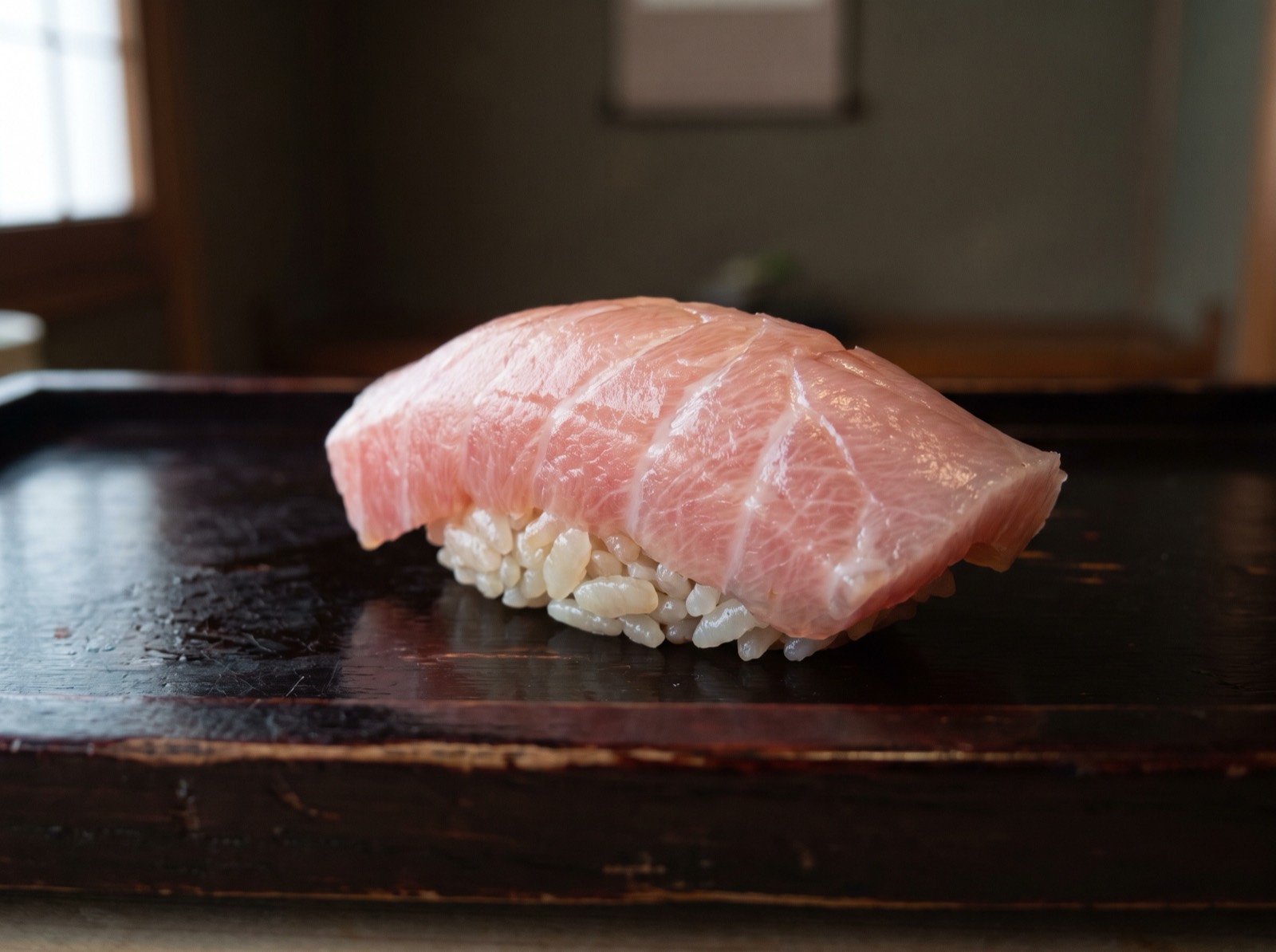
- Yellowtail is not tuna, despite “yellowfin” sitting one letter away. Different family entirely.
How to say it
hah-MAH-chee will be understood anywhere. Strictly it is three beats of equal length, ha-ma-chi, with no stressed syllable. As with every Japanese fish name, the improvement available to an English speaker is to flatten the stress rather than to learn a new sound.
Edomae and Kansai
In this entry the regional split is the whole story. Hamachi is a Kansai word; Tokyo's ladder produces inada and warasa at the same sizes. A Tokyo Edomae counter is more likely to serve you buri in winter and to name it as such, while the farmed fish that the word hamachi refers to is a western-Japanese product by origin and by industry.
In practice both cities use both words today, and a Tokyo shop writing ハマチ on a menu is not making an error; the word has long since spread. The distinction is worth knowing because it tells you what you are being offered: a young, generally farmed fish, rather than a mature winter one.
Where you will see it, and roughly what it costs
Everywhere, at every price level, and it is one of the two or three most common fish in the world's sushi restaurants. Farmed yellowtail is a conveyor-belt staple and a supermarket staple; at an omakase counter in winter, the same family arrives as kan-buri from a named bay and behaves like a different animal.
No per-piece figure from us, for the reason we give throughout: the honest range spans a hundred-yen plate and a course piece. The useful ordering within the family is that striped jack (shima-aji) trades highest, kanpachi below it, and buri and hamachi below that, with winter wild buri the exception that breaks the ranking. See omakase price tiers. Hamachi is an age, not an animal.
Frequently asked questions
What is hamachi?
A young buri (Japanese amberjack, Seriola quinqueradiata) under the name used in western Japan. It is not a separate species. Outside Japan the word has drifted further and is now used for farmed yellowtail of almost any size.
What is the difference between hamachi and yellowtail?
None, in practice. 'Yellowtail' is the loose English name for the Seriola genus, and hamachi is one Japanese name within it. The imprecision is on the English side: the same word covers several distinct species.
What is the difference between hamachi and buri?
Age. Buri is a shusseuo, renamed at each growth stage, and hamachi is the fourth rung of the western-Japanese ladder. Buri is the mature fish: larger, fattier in winter, and more strongly flavoured.
What is the difference between hamachi and kanpachi?
Different species. Kanpachi is greater amberjack (Seriola dumerili): leaner, firmer, cleaner-tasting, and its name changes far less as it grows. Hamachi is a stage of Seriola quinqueradiata and is fattier and softer.
When is yellowtail in season?
Winter, for the mature fish. Kan-buri (cold buri, taken in the coldest months when fat peaks before spawning) is one of the clearest seasonal peaks in Japanese cooking, associated with Toyama Bay and the Sea of Japan coast. Farmed hamachi is held at a steady fat level year-round.
Is hamachi farmed?
Mostly. Yellowtail is one of Japan's oldest large-scale marine aquaculture industries, developed in the Seto Inland Sea, and farming is why the word became the international one: farmed young yellowtail was consistent, fatty and exportable.