Michelin has published a Tokyo guide since 2007, and from its first edition the city has held more starred restaurants than any other in the world. Sushi is unusually well represented within that total, and for a visitor deciding where to spend ¥30,000, that is genuinely useful information. It is also the most over-read signal in Japanese dining, and this page is mostly about the gap between the two.
How many starred sushi restaurants are there in Tokyo?
We deliberately do not print a number here, and the reason is worth a paragraph.
The selection is republished annually. Shops gain stars, lose them, close, move, or change chef, and every edition redraws the list. A count published on a website in July 2026 is wrong by the following winter, and the great majority of the counts circulating in English are considerably older than that and carry no year at all. On a site whose entire proposition is that the numbers are checked, a figure we cannot keep current is worse than no figure.
What is stable enough to say: Tokyo has consistently held more starred restaurants than any other city since the guide launched there, sushi counters are unusually well represented within that, and the current authoritative answer is one click away at the guide's own site. Look it up for the year you are travelling. Any page that gives you a bare number without a year is not helping you.
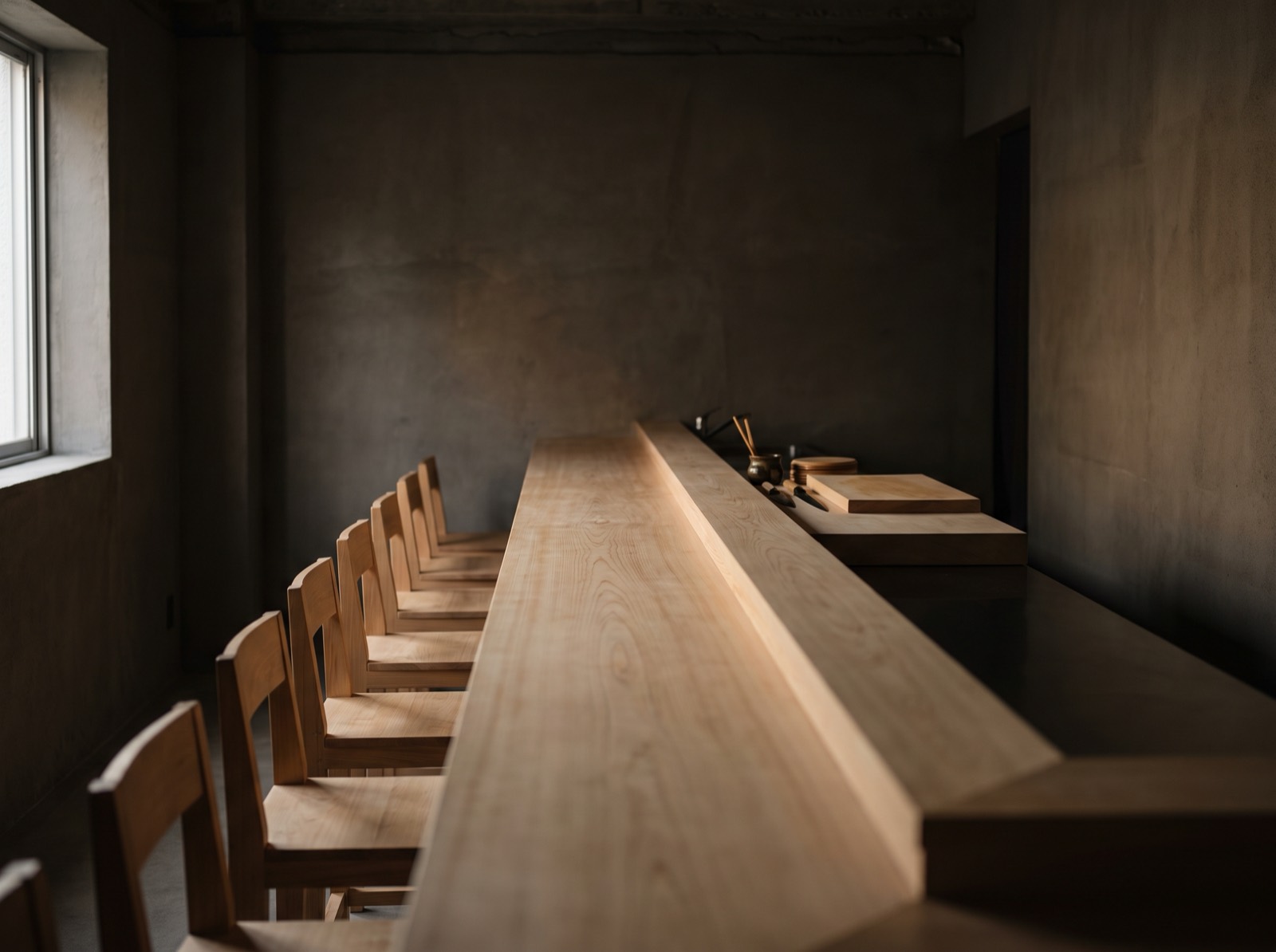
A star is an assessment of the plate. At an eight-seat counter, a great deal of what decides your evening is not on the plate.
What a star actually measures at a counter
Michelin's inspection criteria are about the food: quality of the ingredients, mastery of technique, the personality of the chef expressed in the cooking, value, and consistency between visits. Comfort and service are rated separately, by the cutlery symbols, and are explicitly not what the star is for.
Apply that to a sushi counter and you get a rating that is very good at answering one question (is the fish sourced and handled at the top level, and is it like that every time) and silent on almost everything else that shapes the meal:
- Whether you will understand what you are eating. Some starred counters explain each piece in English as a matter of course. Others say nothing at all, in any language, for ninety minutes.
- Pace. A rated shop may serve twenty pieces in fifty minutes because the second sitting is waiting. That is not a fault of the cooking and it is not reflected in the star.
- Whether you can talk. Some of the highest-rated rooms in the city are close to silent, by design.
- Whether they will take your booking. Consistency of the food and accessibility of the reservation are unrelated variables.
- Whether you will enjoy it. Which is, for most visitors, the actual question.
None of this is a criticism of the rating. It is a criticism of using a technical assessment of food quality as a general-purpose recommendation for a stranger's evening.
What it costs
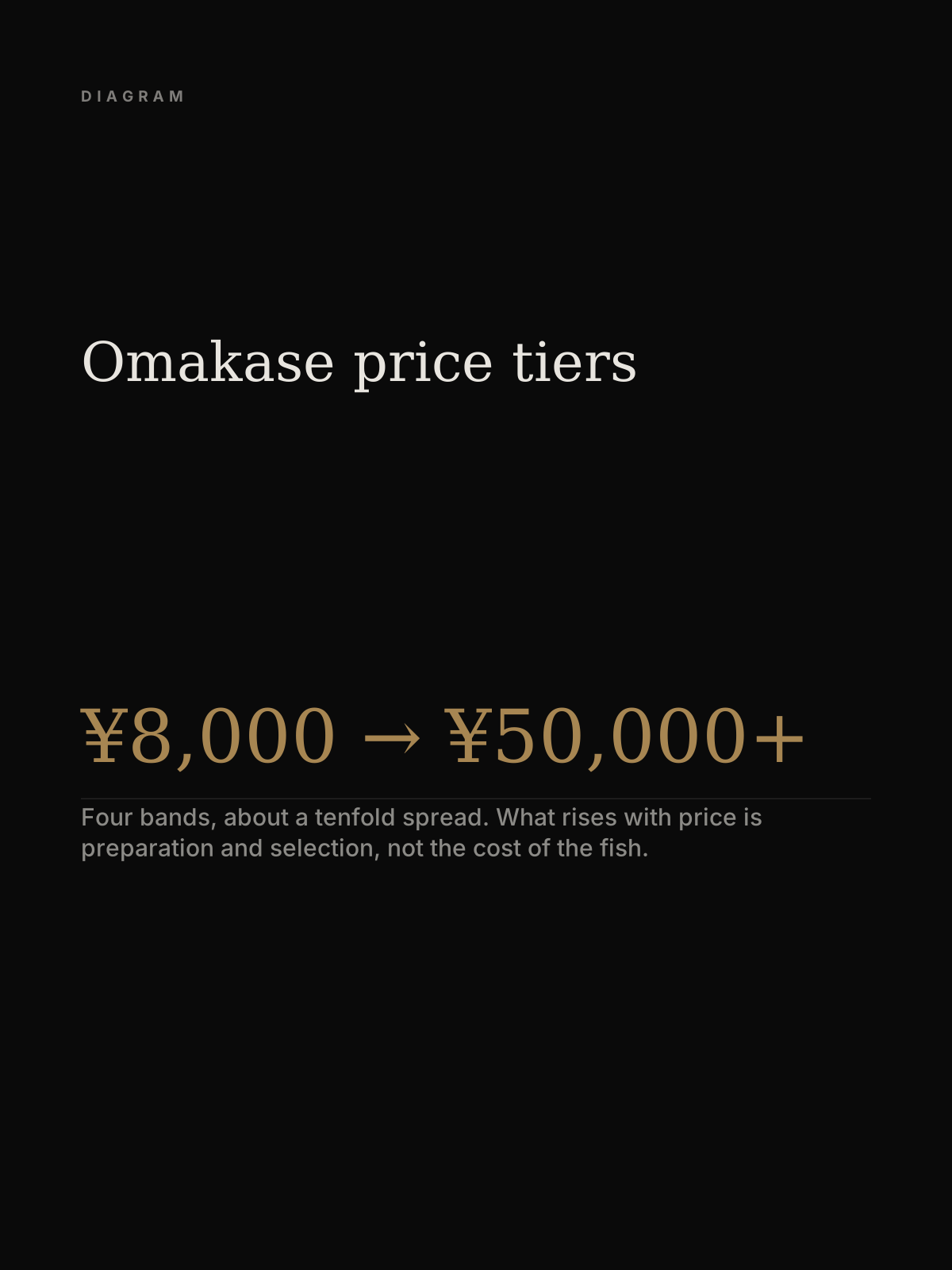
Starred sushi in Tokyo sits at the top of the market, and as of July 2026 the realistic evening range is ¥30,000 and upwards, with the highest-profile counters well beyond that. Lunch, where a shop serves it, is often a large fraction cheaper for a shorter course out of the same kitchen. It is the single most useful piece of price information on this page. That range is our own market observation rather than a published statistic.
Two things to add to whatever figure you are quoted: consumption tax at 10% (a sushi counter counts as eating in, so the reduced 8% takeaway rate does not apply, and alcohol is 10% regardless), and a service charge at some shops, typically around 10%. There is no tipping in Japan. Our price tiers guide sets out what each band buys, and Tokyo vs New York works through why the same meal carries a much heavier loading abroad.
Can you book as a foreign visitor?
At the top of the market, this is the real constraint — more than money, and more than knowing which shop to want.
An eight-seat counter sells eight covers on one sitting a night, sixteen on two. Demand for a well-known starred shop is a large multiple of that, every night, indefinitely. Every shop has to ration somehow, and the mechanisms you will meet are:
- Online reservation, opening on a fixed date. The most accessible case: bookings for a month open at a set time and are gone quickly. Know the date, be there at the minute.
- Telephone only, in Japanese. Common. This is what hotel concierges are for, and asking is entirely normal.
- Through a hotel or a restaurant concierge service. Some shops hold allocations for particular hotels. If you are staying somewhere with that relationship, use it: ask at the time you book the room, not on the day.
- Introduction only. A real practice at a small number of shops: they take bookings from existing customers, or from people existing customers vouch for. It is not aimed at foreign visitors specifically; it is how a shop with eight seats avoids a permanent queue.
Three practical rules. Book before you fly, not after you land. Treat the reservation as fixed: a no-show at an eight-seat shop is a substantial loss and it is remembered. And if you are declined, understand that a shop that cannot seat you is usually not making a judgement about you.
Starred, versus the shop your Japanese friend actually goes to
This is the reason the article exists.
Ask a Tokyo resident who eats sushi regularly where they go, and the answer is very rarely a starred counter. It is usually a shop near their office or their home, in the ¥10,000–¥20,000 band, where the chef knows them, where they can talk, where a booking is available this week, and where they have been going for years. That shop is not underrated. It is a different product.
- The starred counter optimises for the plate. Sourcing at the very top of the market, ageing and curing done to the limit of what the shop can control, absolute consistency. You are paying for the last five per cent of technical execution, which is genuinely the most expensive five per cent.
- The neighbourhood counter optimises for the evening. Very good fish, competently handled, in a room where you are a person rather than a cover, at half to a third of the price, bookable on Tuesday for Thursday.
- Both are Edomae. The four jobs (the curing, the marinating, the simmering, the seasoning of the rice) are the same craft in both rooms. See Edomae sushi.
- The failure mode is asymmetric. A bad night at a neighbourhood shop costs you ¥12,000 and an ordinary dinner. A bad night at a starred shop (rushed, silent, incomprehensible, at the end of a long travel day) costs you ¥40,000 and the memory of the meal you had been anticipating for six months.
Our recommendation, given plainly: if you have one counter meal in your trip and have not eaten omakase before, book the mid-band shop. If you have two, book the mid-band shop first and the starred one second, so that you arrive at the expensive room already knowing what you are looking at. If you have one and you are experienced, book the star and enjoy it properly.
How to check the current selection
The guide publishes its own list, updated with each edition, searchable by city and cuisine. That is the only source worth using for the question of who currently holds what, and it is free to consult. Everything else (aggregator lists, travel articles, this page) is downstream of it and going out of date from the moment it is written.
When you look, note the edition year at the top of the page. If a source will not tell you which year its list belongs to, that is the tell.
Frequently asked questions
How many Michelin-starred sushi restaurants are in Tokyo?
The number changes with every annual edition, and we do not print one here for that reason. Tokyo has consistently held more starred restaurants than any city in the world since the guide launched there in 2007, with sushi unusually well represented. Check the guide's own site for the year you are travelling.
What does a Michelin star mean for a sushi restaurant?
It assesses the food: ingredient quality, technique, the chef's personality in the cooking, value, and consistency between visits. Comfort and service are rated separately. It says nothing about pace, English explanation, atmosphere, or whether you can get a booking.
How much does Michelin-starred sushi cost in Tokyo?
As of July 2026, realistically ¥30,000 and upwards for an evening course, with the best-known counters well beyond that. Add 10% consumption tax and, at some shops, around 10% service. There is no tipping. Lunch, where offered, is frequently much cheaper for a shorter course from the same kitchen.
Can foreign visitors book starred sushi in Tokyo?
Often yes, but the mechanism matters: fixed-date online release, telephone booking in Japanese, hotel or concierge allocation, or introduction-only. Book before you fly, use your hotel where the shop takes no online reservations, and never no-show an eight-seat counter.
Is starred sushi better than a normal sushi restaurant?
It is better at the plate: top-of-market sourcing, maximal curing and ageing, absolute consistency. A good ¥10,000–¥20,000 neighbourhood counter is often better at the evening: conversation, pace, availability, and a chef who knows you. Both are the same Edomae craft.
Should I book a starred restaurant for my first omakase?
Usually not. If you have one counter meal and no experience of the form, the mid-band shop is the better meal. If you have two, do the mid-band first so you arrive at the expensive room knowing what you are looking at.