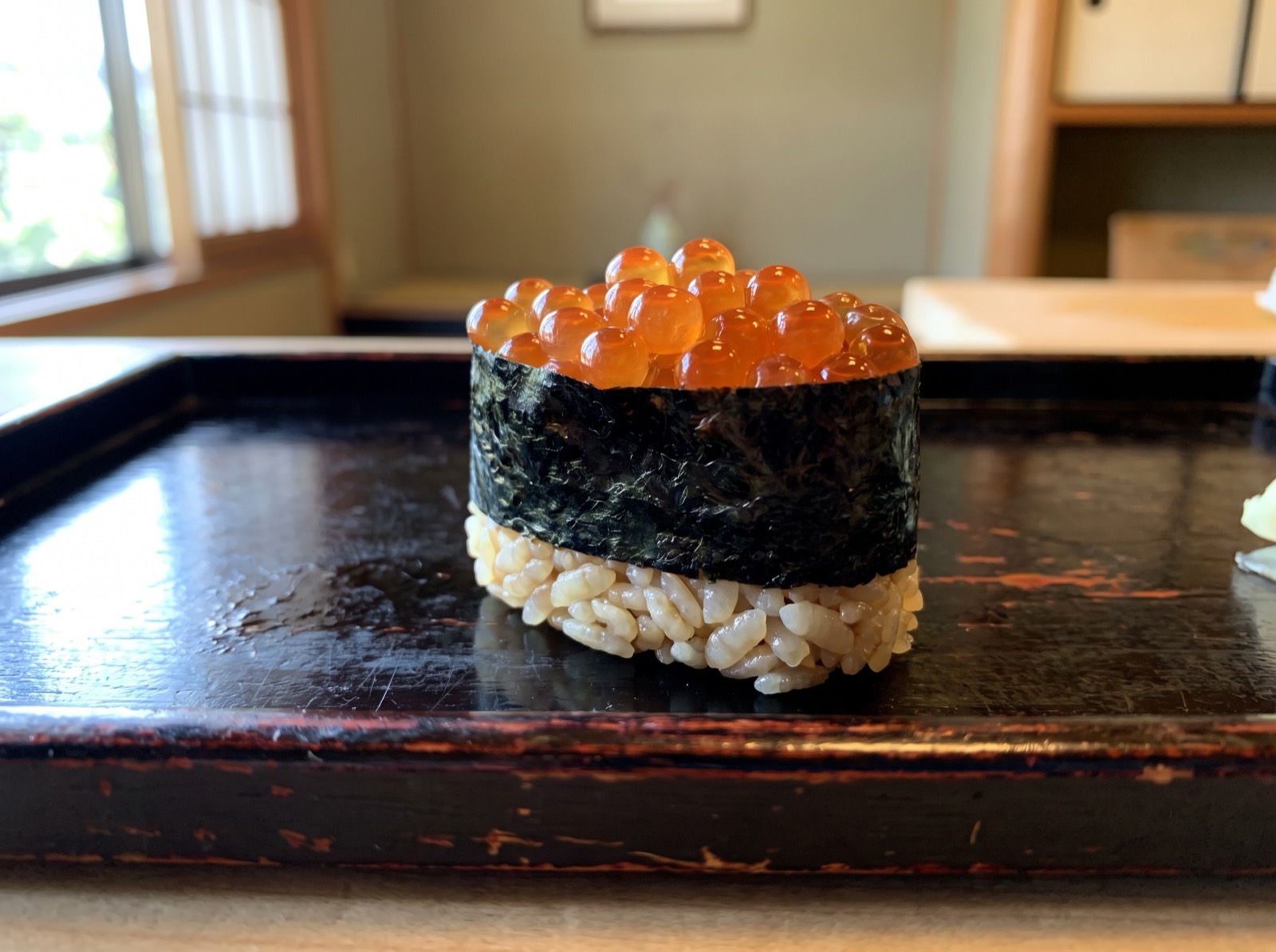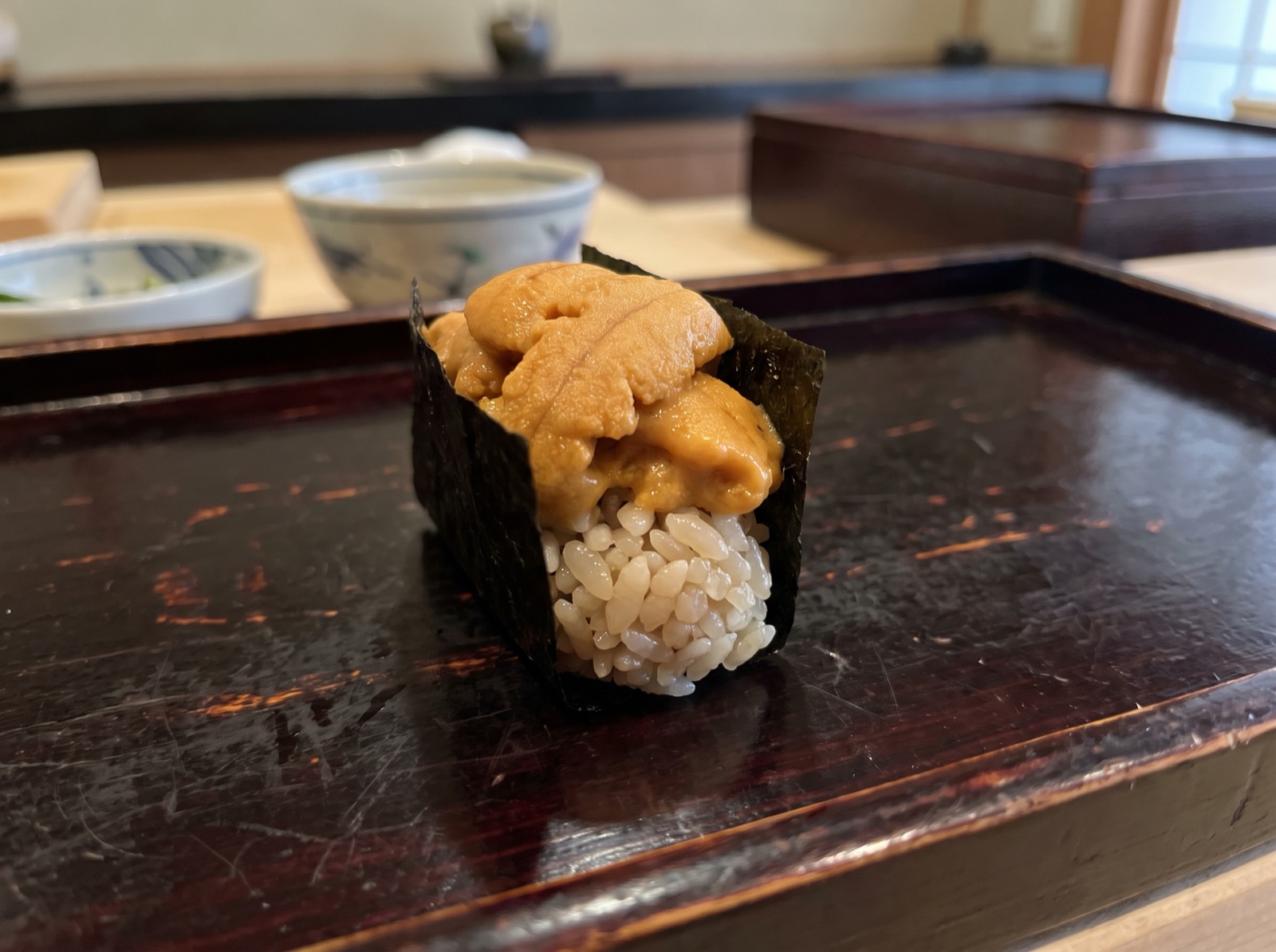
Uni (雲丹 or 海胆) is sea urchin, served at a sushi counter as gunkan: a band of nori wrapped around the rice to hold a topping too soft to shape. It is one of the two or three most expensive items on most menus, one of the most divisive, and the one where the gap between a good example and a bad one is widest.
What it is
The orange lobes are not roe, though nearly every English menu calls them that. They are the animal's gonads (five of them, arranged around the inside of the shell), and they are harvested from both males and females. The distinction matters mainly because it explains the texture: this is soft organ tissue, not a mass of individual eggs, which is why it dissolves rather than bursting.
Two market types account for most of what reaches a Japanese counter:
- Bafun uni (バフンウニ), literally “horse-dung urchin” after the shape of the shell: short-spined, and in its northern form ezo-bafun uni (エゾバフンウニ) the most prized of all. Deep orange, dense, sweet, with a long finish.
- Murasaki uni (ムラサキウニ), the purple urchin, and its northern relative kita-murasaki uni (キタムラサキウニ). Long-spined, paler, a light yellow rather than orange, cleaner and more delicate, with less of the marine intensity.
Neither is better. Bafun is the one people mean when they describe uni as overwhelming; murasaki is the one to try if you have disliked it before. Both are served the same way, and a good counter will tell you which you are being given if you ask.
When it is best
Summer, broadly, for the northern fisheries that supply most of the top end. Hokkaido's season runs through the warm months, and Rishiri and Rebun, the islands off its northern tip, are the names that come up most in the trade. The urchins there feed on kelp, and the quality of that kelp is the standard explanation for the quality of the uni.
Broadly is doing work in that sentence. Species, latitude and local regulation all move the dates, and Japanese fisheries operate under season closures that differ by prefecture. Karatsu in Saga, on the other side of the country, runs on a different calendar from Nemuro in eastern Hokkaido. As with every fish on this site, a printed season is a tendency and not a schedule; see what shun actually means.
What the chef does to it
Almost nothing, and that is the point. Uni is placed on the rice as it comes; the only common intervention is a brush of nikiri (the pre-seasoned soy reduction), applied with a strip of gari rather than an actual brush, which would tear it.
The decisions that matter were made before the chef received it, and they are worth understanding because they are the single largest cause of bad uni in the world:
Most people who think they dislike uni have only ever eaten uni preserved with alum.
- Ita uni (板ウニ), “board uni”, arranged in flat wooden trays. Sea urchin gonad collapses within hours of being removed from the shell, so to hold that shape through distribution most tray uni is briefly bathed in a solution of myōban (ミョウバン), potassium alum. It firms the tissue and it works. It also leaves a distinct astringent bitterness and a faint metallic edge.
- Shiomizu uni (塩水ウニ), “salt-water uni”, packed loose in chilled seawater with no alum at all. It cannot be arranged neatly, it does not travel as well, it costs more, and it tastes like sea urchin: sweet, oceanic, with no bitterness whatsoever.
- In the shell. Occasionally served opened at the table, mostly in producing regions and at the top of the market.
If uni has ever tasted to you like bitter metal, this is almost certainly why, and it is not a judgement on your palate. A good counter uses shiomizu or shell uni, and it is an entirely reasonable thing to ask about.
How it differs from what it is confused with
- Uni is not roe. It is gonad tissue from urchins of both sexes. Ikura, sujiko, tobiko and masago are all actual fish eggs and behave completely differently in the mouth.
- Uni is not always Japanese. Substantial volumes reach Japan from North America, Chile and Russia, and a counter serving imported uni is not doing anything improper. It is worth asking about origin the same way you would with tuna.
- “Sea urchin” on a Western menu is often the alum-treated tray product, which is a different eating experience from the one being described in Japanese sources.
How to say it
OO-nee is close enough to be understood everywhere. Two beats, u-ni, flat, with no stress on either. The common English error is to stretch the first syllable into “yoo”, which makes it a different word.
Edomae and Kansai
Little regional divergence in the fish itself, since the supply is national and the top of it comes from Hokkaido regardless of where you are eating. The difference is in context: at a Tokyo Edomae counter uni arrives as gunkan in the run of the course, while in Osaka you will also meet it outside the sushi tradition entirely — in a bowl, over rice, at a market stall. Osaka's own pressed sushi tradition has no place for it, since it cannot be pressed.
Where you will see it, and roughly what it costs
Everywhere, at wildly different prices for what is nominally the same item. Conveyor-belt uni exists and is almost always alum-treated tray product; the same word on an omakase course may mean shiomizu uni from a named producer, harvested that week, at a multiple of the price.
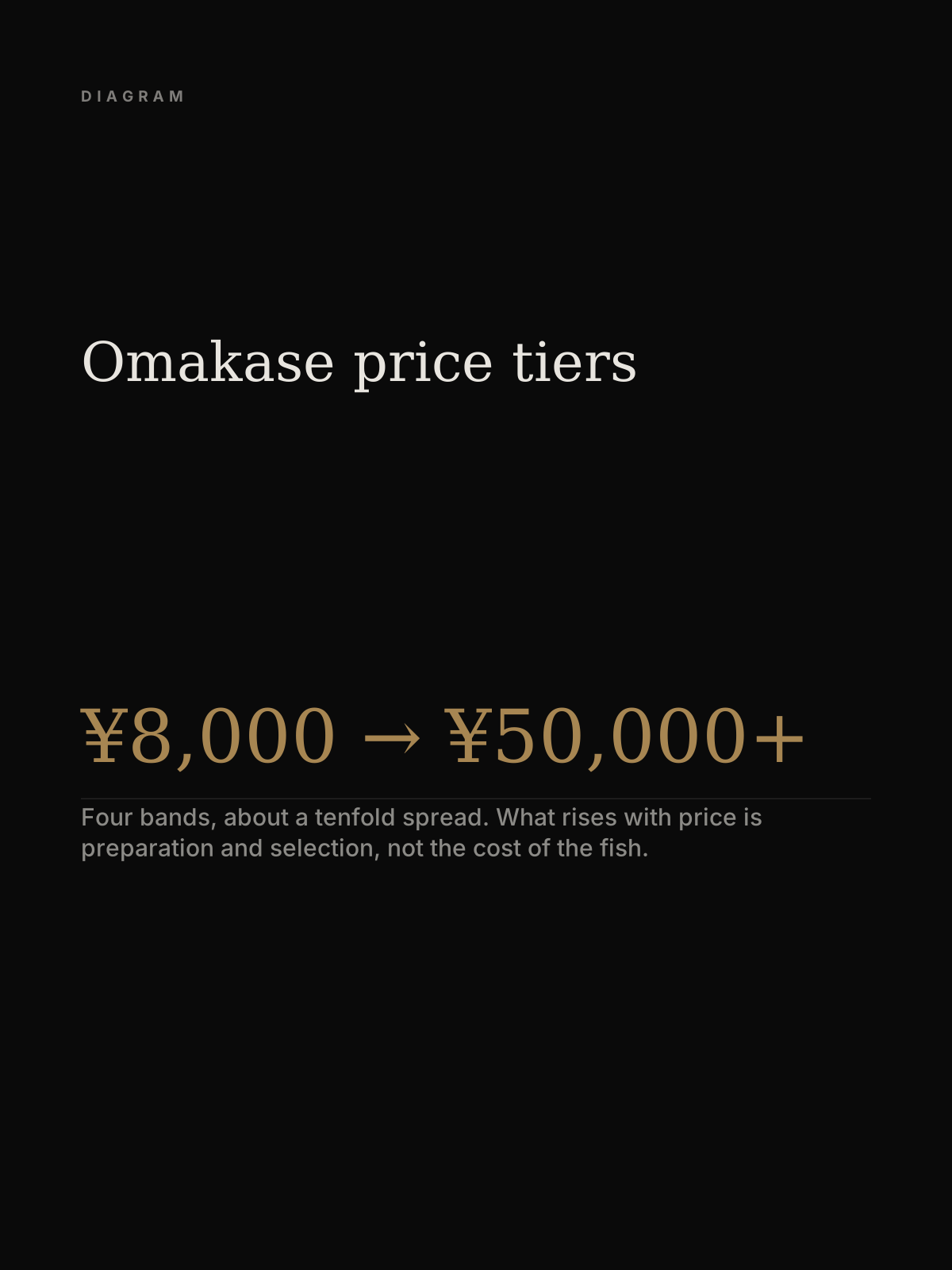
We are not printing a per-piece figure, because the honest range spans a ¥150 conveyor plate and a piece that a Ginza counter has paid several thousand yen for. What is reliable is the ordering: bafun above murasaki, Hokkaido above most other origins, shiomizu above ita, and shell above everything. For what a whole meal costs, see omakase price tiers.
Frequently asked questions
What is uni?
Sea urchin gonad, served at sushi counters as gunkan, a band of nori around the rice holding a topping too soft to shape. Despite what English menus say, it is not roe: it is organ tissue taken from urchins of both sexes.
Why does uni sometimes taste bitter?
Almost always because it was preserved with potassium alum. Uni arranged in flat wooden trays is usually bathed briefly in alum so it holds its shape in distribution, which leaves an astringent, faintly metallic bitterness. Uni packed in chilled seawater without alum has none of it.
What is the difference between bafun uni and murasaki uni?
Bafun uni is short-spined, deep orange, dense and sweet with a long finish. Murasaki uni is long-spined, pale yellow, cleaner and more delicate. Neither is better; murasaki is the gentler introduction if you have disliked uni before.
When is uni in season?
Broadly summer for the northern Hokkaido fisheries that supply the top of the market, including Rishiri and Rebun. Species, latitude and prefectural season closures move the dates considerably, so it is a tendency rather than a schedule.
Why is uni so expensive?
Each urchin yields five small lobes, it is extracted by hand, it degrades within hours of shucking, and the best of it is packed in seawater that makes it heavier and more fragile to ship. Almost every part of the process resists scale.
Is uni the same as sea urchin roe?
It is what English calls sea urchin roe, but the term is inaccurate. The lobes are gonads, harvested from both males and females, which is why the texture dissolves rather than bursting like fish eggs do.