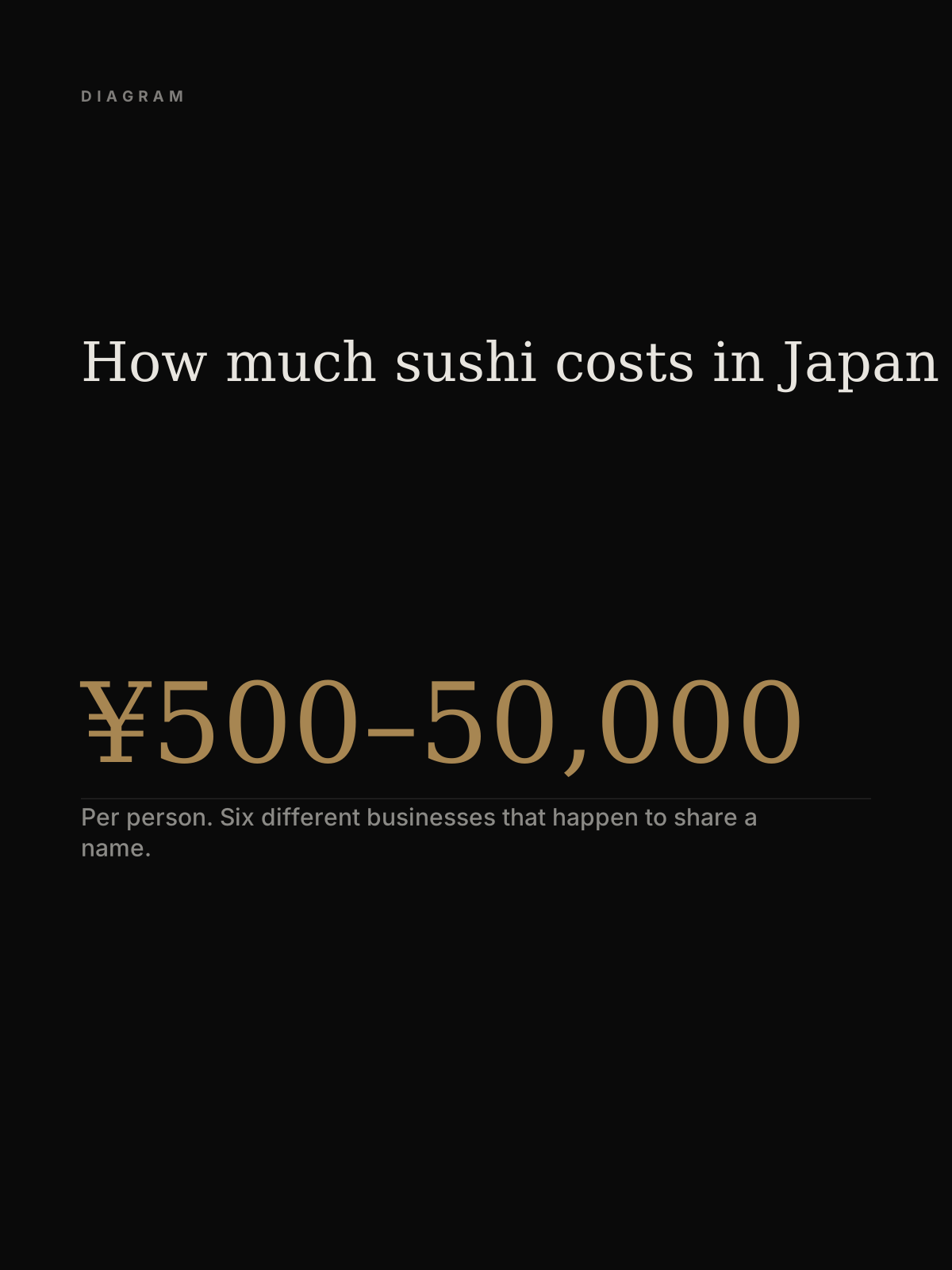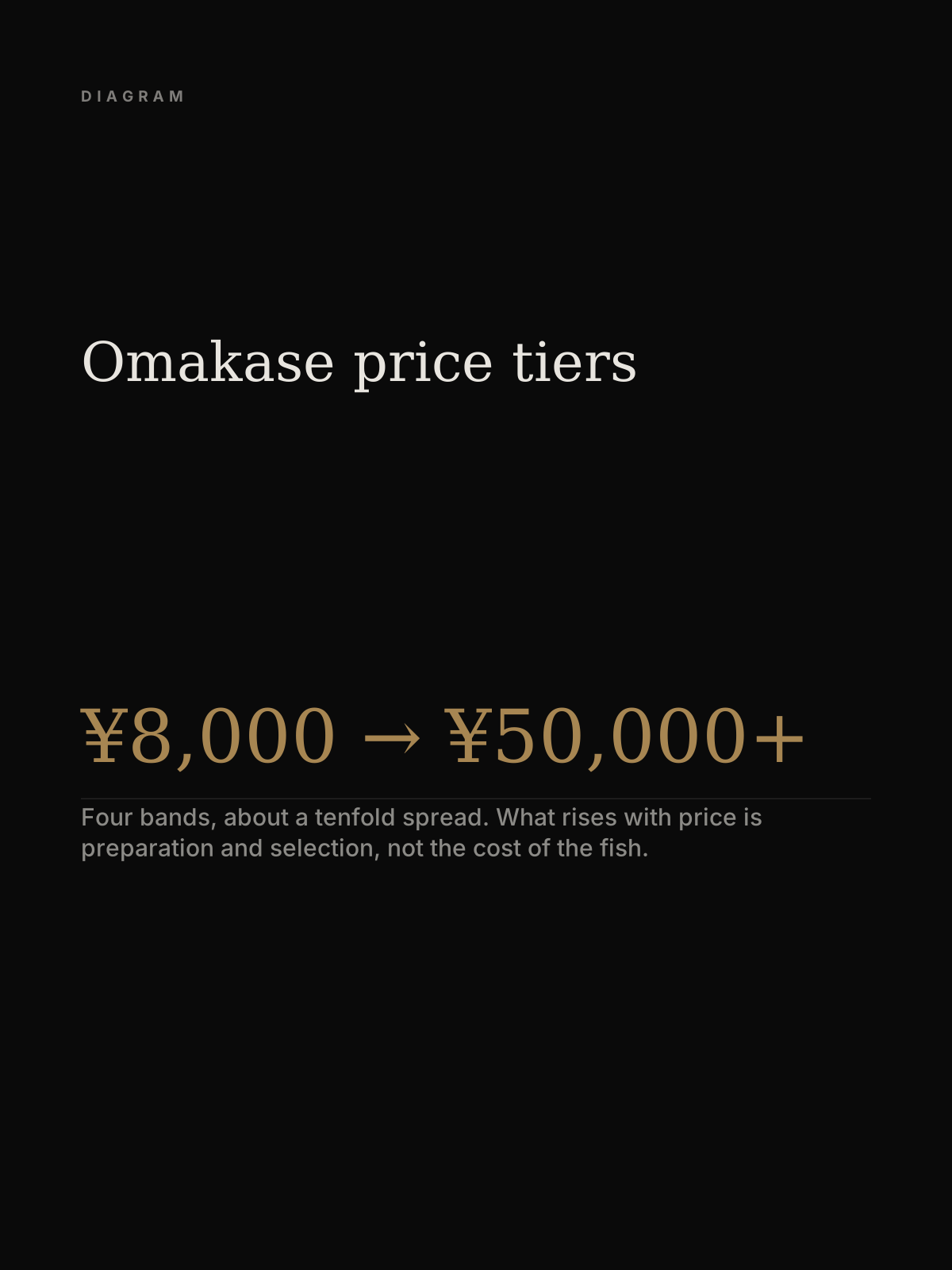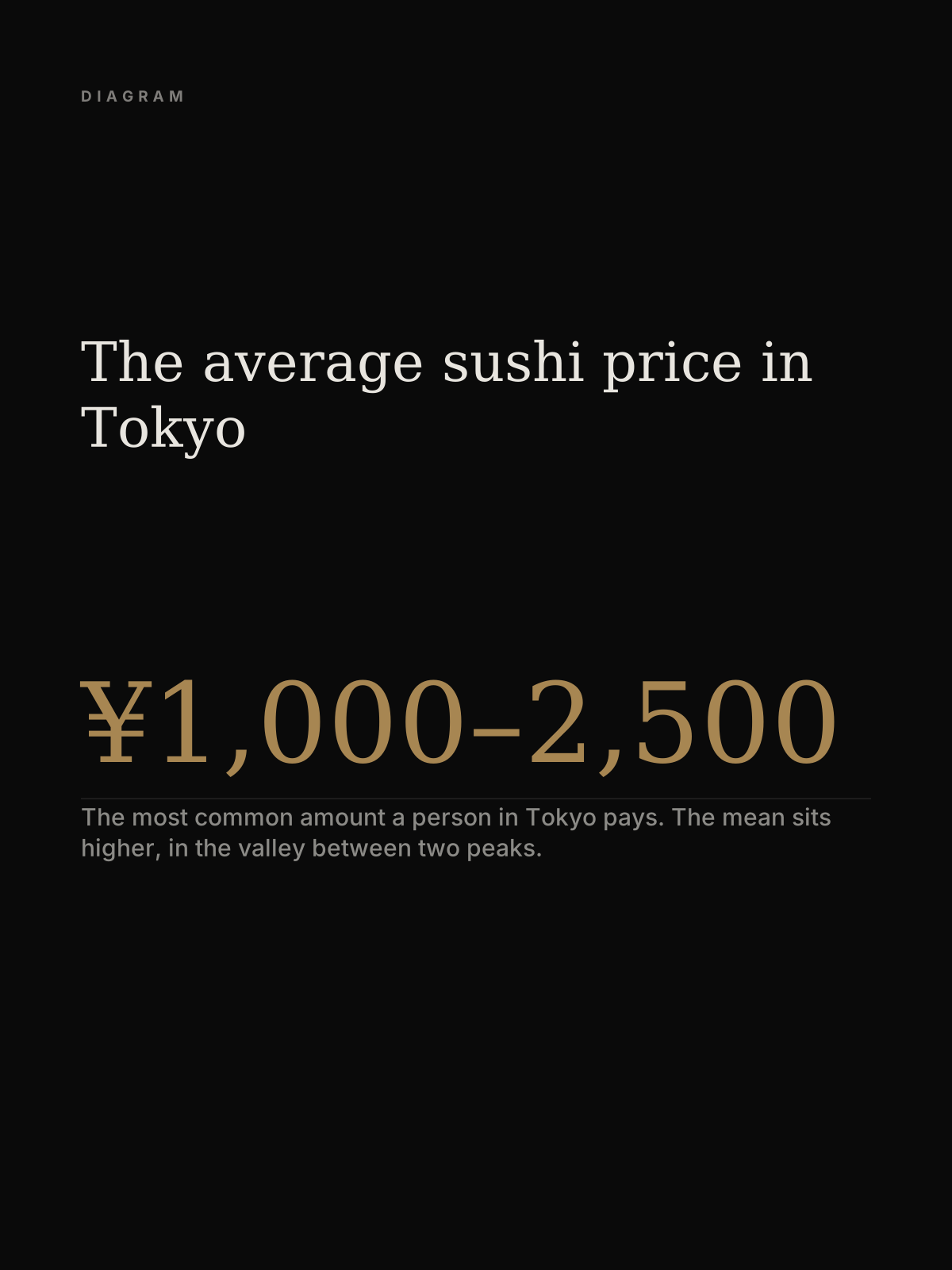
No for everyday sushi, yes at the top. A conveyor-belt meal in Japan costs ¥1,000–2,500 a head and a supermarket pack ¥500–1,500, cheaper and better than the equivalent almost anywhere else. A counter omakase costs ¥8,000–50,000, which is expensive by any standard. Both statements are true, and most articles pick one. The yen figures here are our own observation of published prices as of July 2026; the visitor-spending figures come from the Tourism Agency.
The cheap end is genuinely cheap, and genuinely good
This is the part that surprises visitors most, and it is worth stating without hedging: the bottom of the sushi market in Japan is not a compromise. The distribution chain that supplies counter shops also supplies supermarkets and the conveyor-belt chains. Conveyor-belt sushi expanded through the 1980s and made sushi everyday food, and it did so without building a separate, inferior supply.
So a ¥1,500 conveyor-belt lunch in Japan is not the equivalent of a ¥1,500 sushi lunch in a country that imports its fish frozen from three time zones away. It is a different proposition entirely, and by international comparison it is cheap for what it is.
The expensive end is genuinely expensive
A mid-band Tokyo omakase at ¥15,000–30,000 is a significant meal by any measure, and the top band (¥30,000–50,000 and above) is a luxury purchase. Nothing about being in Japan makes those numbers small. Anyone telling you that sushi is cheap in Japan is talking about a different format from the one in the photographs that made you ask.
What the price buys is covered in omakase price tiers: preparation, selection and staff per guest rather than more expensive fish. But whether it is worth it is a separate question from whether it is expensive, and it is expensive.
How much of a trip is one counter meal?
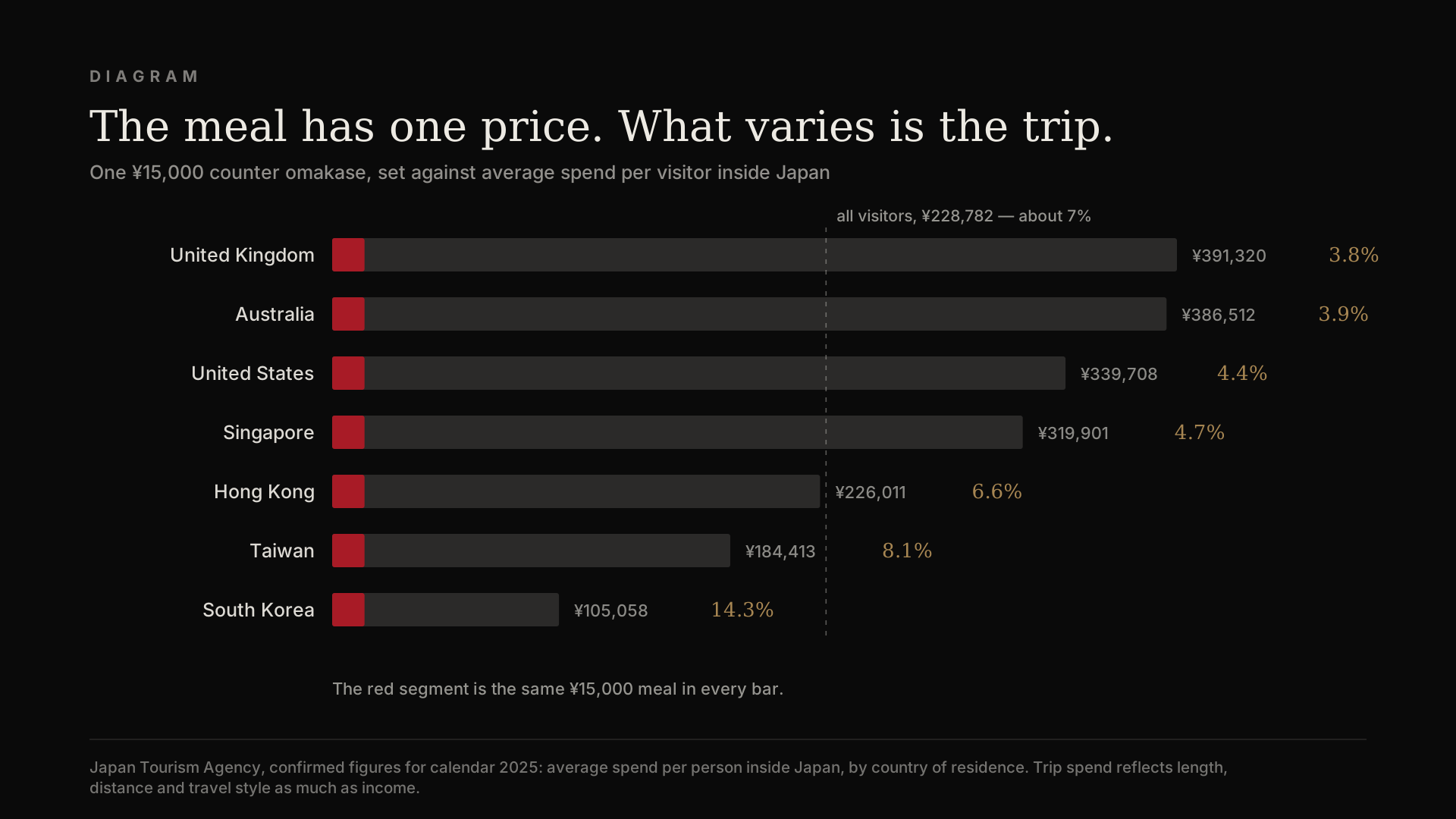
Here is where the question becomes answerable rather than rhetorical. Japan's Tourism Agency publishes what visitors actually spend per person during a trip, broken down by country of origin. Set a single ¥15,000 omakase against those figures and the same meal turns out to mean radically different things.
- United Kingdom, average trip spend ¥391,320. One ¥15,000 counter meal is 3.8% of it.
- Australia, ¥386,512. 3.9%.
- United States, ¥339,708. 4.4%.
- Singapore, ¥319,901. 4.7%.
- Hong Kong, ¥226,011. 6.6%.
- Taiwan, ¥184,413. 8.1%.
- South Korea, ¥105,058. 14.3%.
The average across all visitors is ¥228,782 per person, so a ¥15,000 omakase is roughly 7% of a typical trip. That is the Tourism Agency's confirmed figure for calendar 2025, published in March 2026 and covering spending inside Japan. The percentages are ours: their published spend divided into one ¥15,000 meal. Nobody publishes that ratio, and ¥15,000 is a representative counter price rather than a measured average of what anyone spends on sushi.
For a visitor from Britain a counter omakase is a nice dinner. For a visitor from Korea the identical meal is a seventh of the entire trip budget.
That spread, nearly four to one between the top and bottom of the list, is the actual answer to “is sushi expensive in Japan?” The meal has one price. What varies is what else that money was going to do.
Two things the comparison does not say
It is not a claim about wealth. Trip spend reflects trip length, distance, season and travel style as much as income. Visitors from Korea and Taiwan come often, sometimes for a weekend, sometimes several times a year. A short trip with a small total is a different pattern from a small budget. Someone on their fourth visit this year may reasonably decide that this is the trip for the counter meal.
It is not an argument against spending the money. The Tourism Agency's own survey finds that eating Japanese food is the single most common thing visitors do, 98.2% of them, and the single most common thing they want to do again on the next trip, at 70.7%, with a satisfaction rate of 95.2%. Food is not a side item in a Japan trip. It is, statistically, the main event.
What visitors get wrong about the cost
- “Sushi is cheap in Japan.” True of the everyday formats, false of the counter. The two are almost always conflated.
- “Expensive means better fish.” Mostly it means more preparation and stricter selection. The fish that mark out a serious shop (gizzard shad, squid, the egg) are among the cheapest it buys.
- “You need to eat at a famous counter to eat well.” You do not. Lunch at a good neighbourhood shop is one of the best-value meals available anywhere.
- “Budget 20% for a tip.” There is no tipping in Japan, at any price level. Budget for drinks and possibly a 10% service charge instead.
- “The listed price is the price.” At a counter, drinks, an opening dish, service and 10% consumption tax are typically added.
A practical way to decide
Treat the counter meal as one line item in the trip, not as the food budget. On a two-week trip, one ¥15,000–20,000 omakase plus thirteen days of conveyor belt, supermarket packs, standing counters and lunch sets will cost less than most visitors assume and will show you far more of what sushi in Japan is than three expensive dinners would.
And if the top band is out of reach, the honest position is that you are not missing much relative to the band below. The gap in price between ¥30,000 and ¥50,000 is much larger than the gap in eating. That is a real thing, and it is worth saying somewhere on the internet.
For the full range of formats and prices, see how much sushi costs in Japan; for the counter bands, omakase price tiers; for how Tokyo compares internationally, Tokyo versus New York.
Frequently asked questions
Is sushi expensive in Japan?
It depends on the format. Everyday sushi is cheap — ¥500–1,500 for a supermarket pack, ¥1,000–2,500 a head at a conveyor belt — and better than the equivalent almost anywhere else. A counter omakase costs ¥8,000–50,000 and is expensive by any standard.
Is sushi cheaper in Japan than in the US?
At the everyday end, substantially; and the quality gap runs the same way. At the counter end, a comparable omakase in Tokyo is generally cheaper than one in New York for the same amount of skilled labour, partly because there is no tipping and no equivalent service expectation.
How much should I budget for sushi on a trip to Japan?
A workable plan is one counter meal at ¥15,000–20,000 plus everyday sushi for the rest of the trip. Japan's Tourism Agency puts average per-person spending inside Japan at ¥228,782, so one counter meal is roughly 7% of a typical trip.
Why does sushi cost so much more at some restaurants?
Preparation and selection, not ingredient cost: curing, marinating, kelp-pressing and ageing take days per piece, stricter market selection means rejecting more, and there are more staff per guest. Consistency is the thing regular guests are really paying for.
Do I need to tip on top of the sushi price in Japan?
No. Tipping is not part of restaurant pricing in Japan at any level. What can be added is drinks, a small opening-dish charge, a service charge of usually 10% at the upper end, and 10% consumption tax.