The most common amount a person in Tokyo pays for a sushi meal is ¥1,000–2,500, a conveyor-belt or lunch-set price. The middle of the whole range sits nearer ¥3,000–5,000. Arithmetic means run much higher because a handful of ¥50,000 counters drag them upward, which is why we publish a distribution here rather than one number.
Why we do not publish a mean
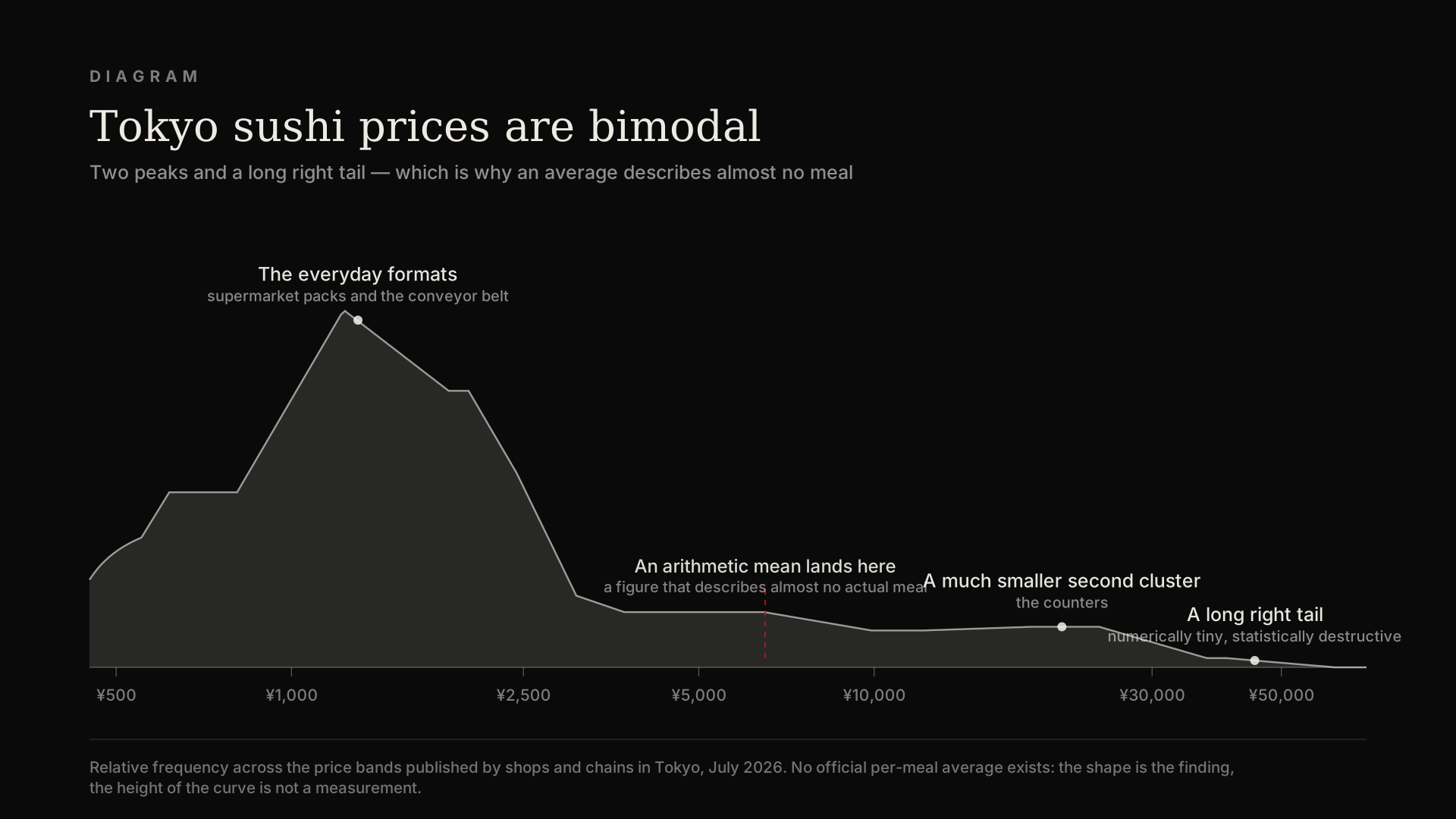
Sushi prices in Tokyo are not distributed in a bell around a centre. They are bimodal with a long right tail: a very large peak in the everyday formats, a much smaller second cluster at the counters, and a thin tail running out to figures ten and twenty times the first peak.
With a shape like that, an arithmetic mean lands in the valley between the two peaks — a figure that describes almost no actual meal. Say “the average sushi meal in Tokyo costs ¥6,000” and you have simultaneously misled the person planning a conveyor-belt lunch and the person booking a counter. This is the single most common failure in English-language writing about prices in Japan, and it is arithmetic rather than opinion.
A second problem sits underneath the first: there is no official per-meal average to quote. Japan's government publishes visitor spending, household expenditure and industry turnover, but nobody publishes “the mean price of a sushi meal in Tokyo.” Every figure you have seen presented as one was assembled by somebody from a sample they chose. We would rather show you the shape than invent a centre for it.
The distribution, by format
These are the bands as published by shops and chains in Tokyo as of July 2026. Read them as ranges and as relative frequencies, not as an index. We compile them ourselves from published menus and chain price lists. No Japanese government body publishes an average price for sushi, and we do not compute one.
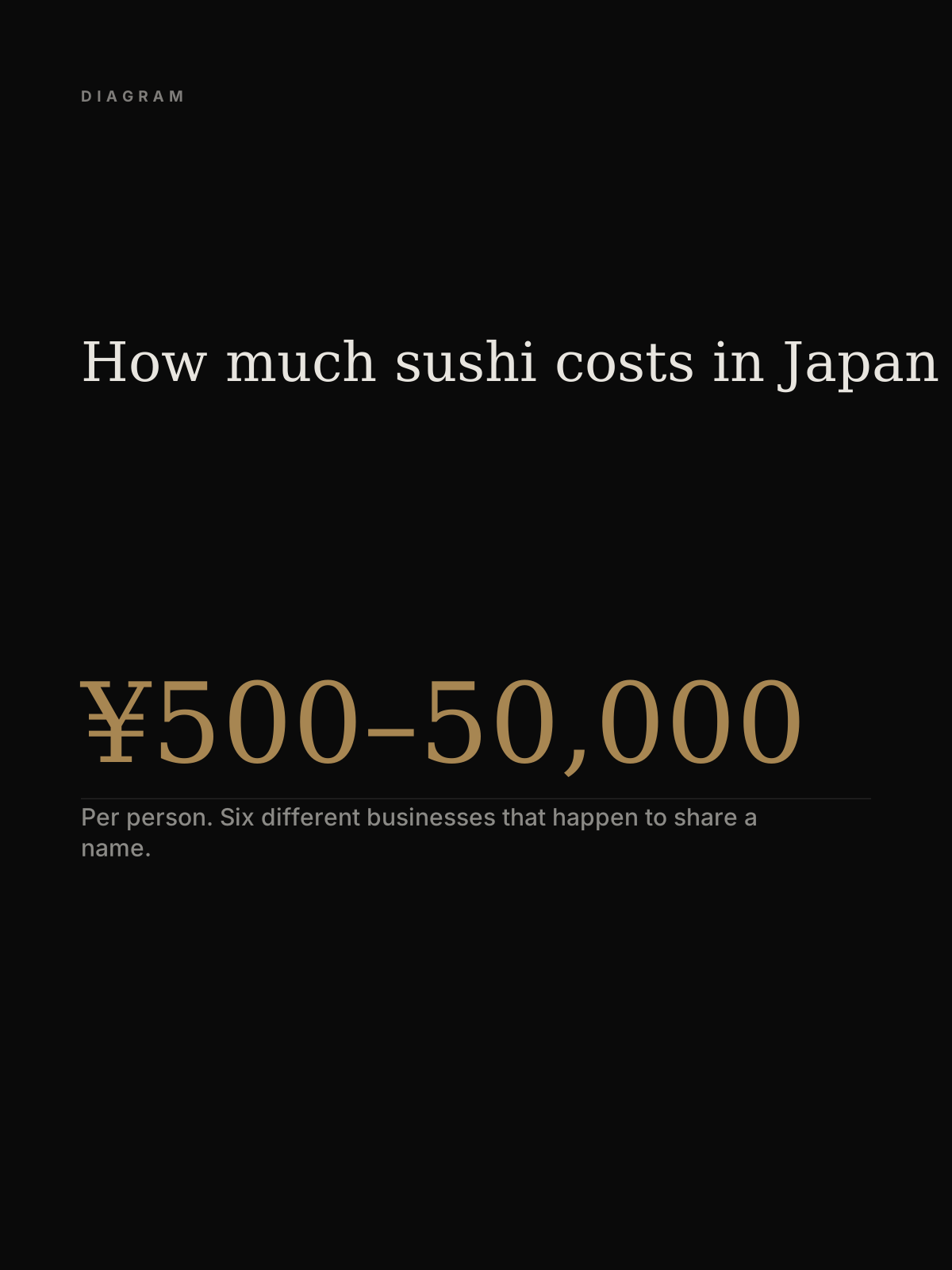
- ¥500–1,500: supermarket and convenience store. By volume, this is where most sushi in Tokyo is actually bought.
- ¥1,000–2,500: conveyor belt. The largest peak in restaurant sushi. If a single number had to represent “a sushi meal in Tokyo,” this band is the honest candidate.
- ¥1,500–3,000: lunch at a counter shop. A large and badly under-reported band. Same case, same hands, a fraction of the evening price.
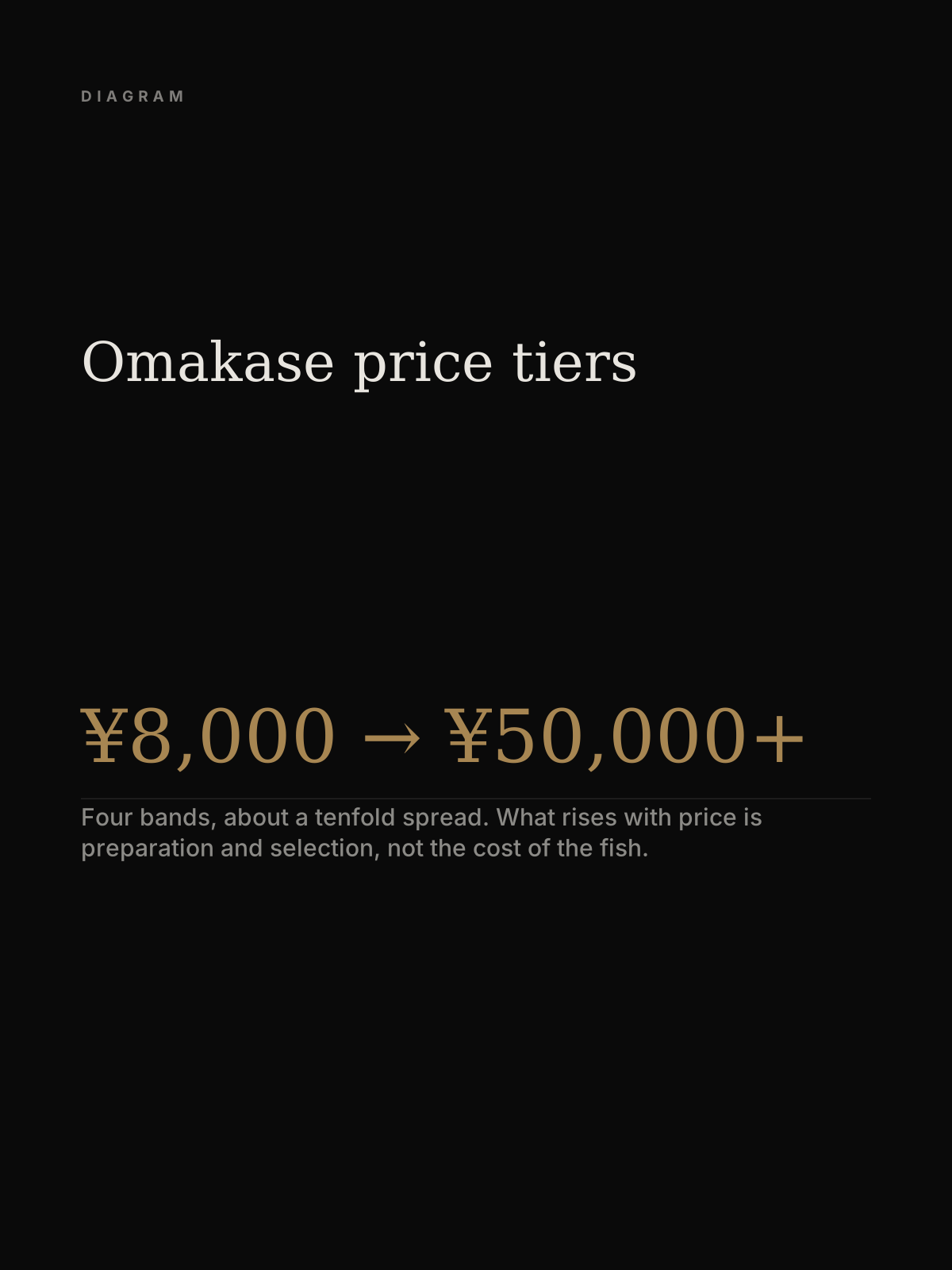
- ¥3,000–8,000: a fixed set (okimari) at dinner. The middle of the whole range, and the band an English reader is least likely to have heard of.
- ¥8,000–15,000: neighbourhood omakase. Where counter dining starts.
- ¥15,000–30,000: established counters. The band most visitors have in mind when they picture Tokyo sushi.
- ¥30,000–50,000+: the top. A small number of shops. Numerically tiny, statistically destructive.
The mean is dragged up by shops that most people in Tokyo have never eaten at, and never will.
Why the range is this wide in the first place
A spread this large is unusual for a single dish, and it has a history rather than a mystery behind it. Nigiri began in Edo as street food, eaten standing at a stall, and each piece was considerably larger than it is now. It was cheap because it was fast, and it stayed an ordinary food for most of the two centuries since. The counter as a quiet, expensive room is the recent development, not the old one.
The other end arrived in the 1980s, when conveyor-belt sushi expanded and put the dish into everyday life on a scale the counters never had. The two ends are not a quality gradient running smoothly from bad to good. They are two different businesses, and they buy from the same market. The wholesale system that supplies a counter in Ginza also supplies the chains and the supermarket trays, which is why the cheapest band in Tokyo is edible in a way that surprises visitors, and why the most expensive band cannot be explained by the fish alone.
So what should you budget?
Pick the band, not the average. That is the whole method.
- Eating normally in Tokyo: ¥1,000–2,500 a head covers it comfortably.
- One good counter meal on a trip: ¥15,000–20,000, plus 20–40% if you drink, plus a possible 10% service charge.
- Eating well cheaply: lunch at a shop whose dinner price you could not justify. This is the highest-yield decision available to a visitor.
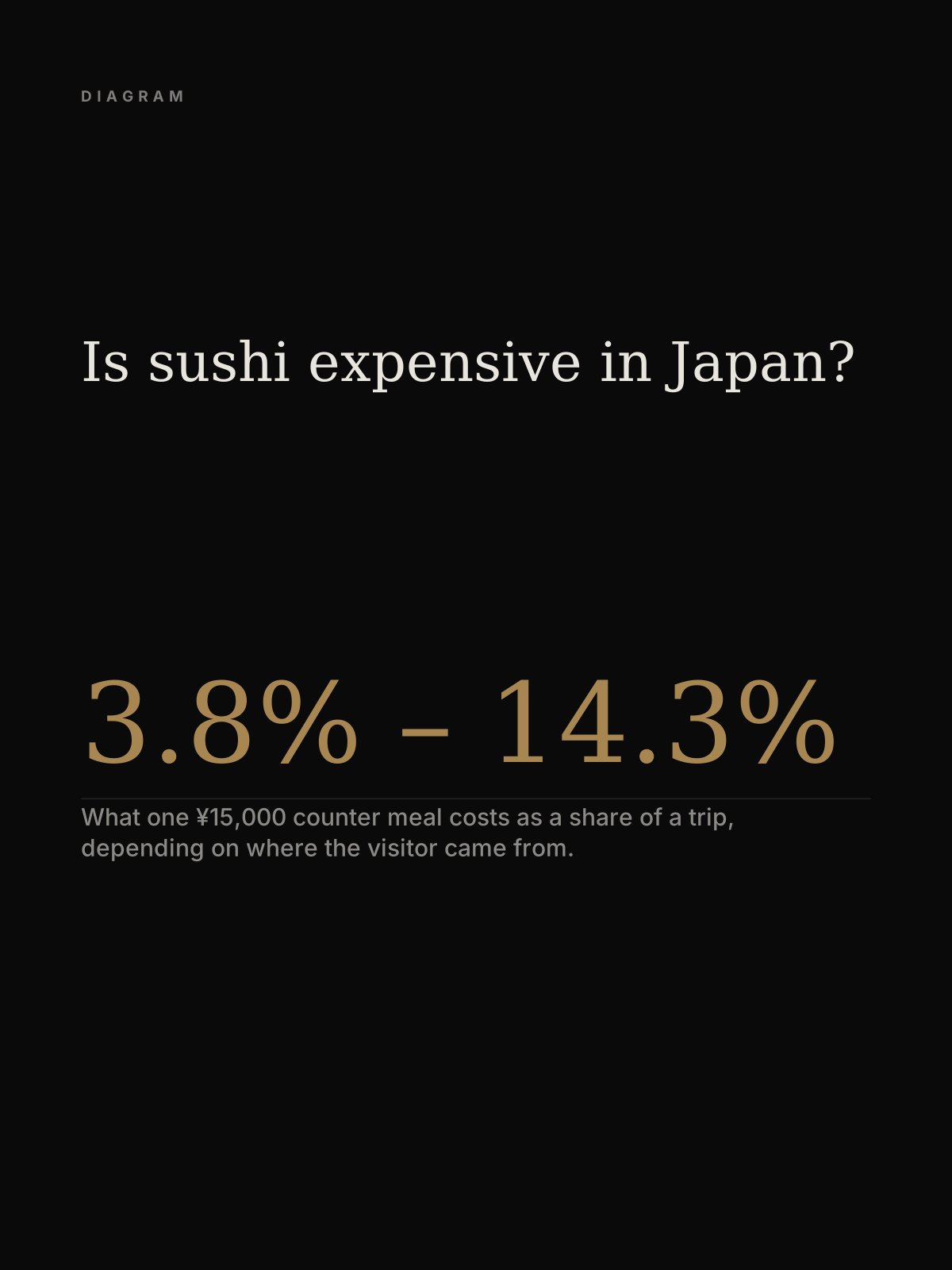
- The whole trip: Japan's Tourism Agency puts average per-person spending inside Japan at ¥228,782. One counter meal is roughly 7% of that.
What moves the number within a band
- Lunch versus dinner. The largest single lever, frequently a whole band at the same shop.
- Drinks. The largest variable addition at counters, and sake at a good shop is not cheap.
- Area. Ginza and the hotel districts sit above the city as a whole for comparable work. A residential neighbourhood counter is a different price for the same craft.
- Service charge and tax. 10% service where it applies, and 10% consumption tax on anything eaten in.
- Season. Market-rate items move genuinely and considerably; the course price at a fixed-price shop mostly does not.
How to check a specific shop rather than trusting an average
The parts of the bill people forget to price
The band tells you what the food costs. Three things sit on top of it, and only one of them is obvious.
- Drinks. At a counter this is the largest variable addition, and it is not a rounding error: 20–40% on top of the food is a normal outcome. Sake at a shop with a considered list is priced accordingly.
- Service charge. Roughly 10% where it applies, which is some counters and most hotel restaurants. It is stated in advance rather than sprung on you, and it is not a tip. There is no tipping in Japan at any price level.
- Consumption tax, which has two rates. Eating in is taxed at 10%. Food taken away is taxed at the reduced rate of 8%. Alcohol is 10% either way. Some menus quote tax-included prices and some quote pre-tax, so the figure worth asking for is the tax-included one.
The two tax rates produce a small effect that regularly confuses visitors: an identical packed box costs slightly less carried out than eaten at the counter, and the shop decides which rate applies at the moment it hands the box over. That is why you are asked whether you are eating in. It is a tax question, not a hospitality one.
Almost every shop that takes bookings publishes its own current price, and that figure is worth more than any city-wide statistic. Beyond that: name a budget when you book, which is entirely normal in Japan; eat lunch at a shop before committing to its dinner, which is standing advice in the Japanese literature; and ask the price of anything quoted at market rate, which is an ordinary question and gets a straight answer.
For the full set of formats, see how much sushi costs in Japan. For the counter bands specifically, omakase price tiers. For whether any of it is expensive by your own standards, is sushi expensive in Japan?
Frequently asked questions
What is the average price of sushi in Tokyo?
There is no meaningful single figure. The most common price paid is ¥1,000–2,500, the middle of the full range is nearer ¥3,000–5,000, and an arithmetic mean lands higher than either because a small number of very expensive counters pull it upward.
Why do different sites give different average sushi prices for Tokyo?
Because no official per-meal average exists. Every published figure was assembled from a sample somebody chose, and the answer depends almost entirely on whether conveyor-belt and supermarket sushi were included.
How much is a normal sushi meal in Tokyo?
For a resident eating normally, ¥1,000–2,500 a head at a conveyor belt or ¥1,500–3,000 for a lunch set at a counter shop. A fixed dinner set runs ¥3,000–8,000.
How much should I budget for one good sushi meal in Tokyo?
¥15,000–20,000 for an established counter, plus 20–40% if you drink and a possible 10% service charge, plus 10% consumption tax on anything eaten in. No tip.
Is sushi cheaper outside central Tokyo?
Generally yes for comparable work. Ginza and the hotel districts sit above the city average; a residential neighbourhood counter can be a full band cheaper for the same craft.
Is takeaway sushi cheaper than eating in, in Tokyo?
Slightly, and for a specific reason. Japan taxes food eaten in at 10% and food taken away at the reduced rate of 8%, so the same box is a little cheaper carried out. Alcohol is taxed at 10% either way. The difference is small and it is not a reason to change how you eat, but it explains why you are asked the question.