The first plates to reach the counter are almost never nigiri. Something raw, something cooked, something dressed with vinegar or citrus — small dishes arrive before the rice does, and the word for that stretch of the meal is tsumami (つまみ). English explanations of omakase tend to gloss it in a single clause and move on, the way a menu might gloss the soup. It deserves a slower look, because how much of it a shop serves is one of the clearest signals of what kind of evening is about to happen.
What it is
Tsumami is the general Japanese word for a small dish eaten alongside a drink — at an izakaya, at home with a can of beer, anywhere sake or shochu is being poured. At a sushi counter the word narrows. It names the course, or the loose run of dishes, that a chef serves before the nigiri begins: everything that is not built from rice and fish pressed together by hand.
The word comes from tsumamu (摘まむ), the ordinary verb for picking something up between the fingers, in a small amount — the same instinct as a pinch of salt. Add the honorific and it becomes o-tsumami, which is what most Japanese speakers say away from a sushi counter. At the counter itself the honorific tends to drop; the sense underneath either form is the same, something small, meant to be picked at rather than made into a meal on its own.
When it is used
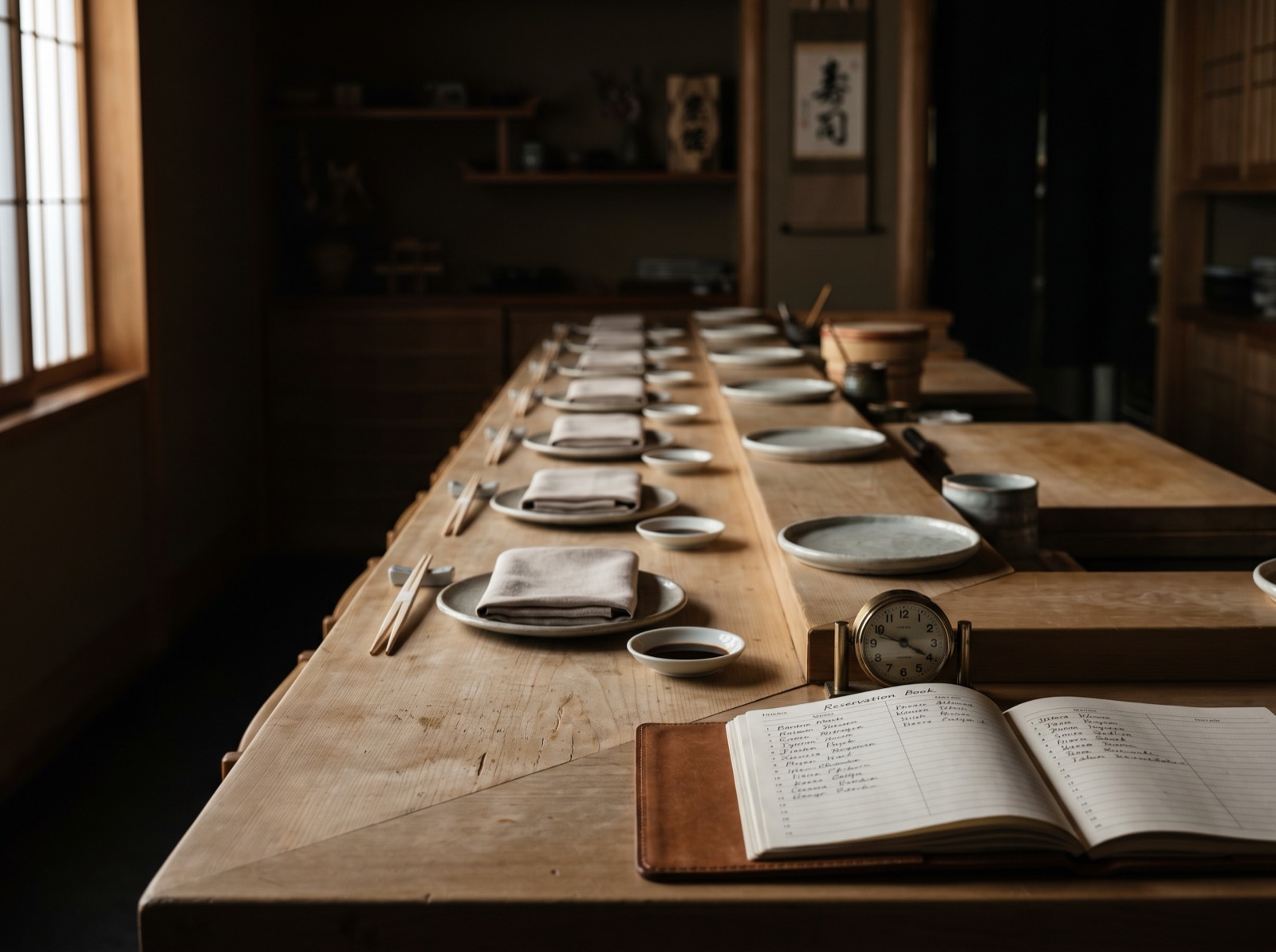
Tsumami opens the meal. In the shape a conventional Tokyo omakase takes — set out in full in our guide to what omakase actually is — it comes first, ahead of the nigiri, the rolls and the tamago, and it runs at whatever pace the table is drinking at rather than at the pace the rice demands.
It is also the part most easily removed. Some counters will run straight into nigiri if you ask, and a few name that as an option outright; our guide to how long omakase takes covers both the shops that offer it as a named choice and the ones that will simply do it if asked. Whether a given evening includes tsumami at all is closer to a request than a fixed feature of the format.
What actually arrives
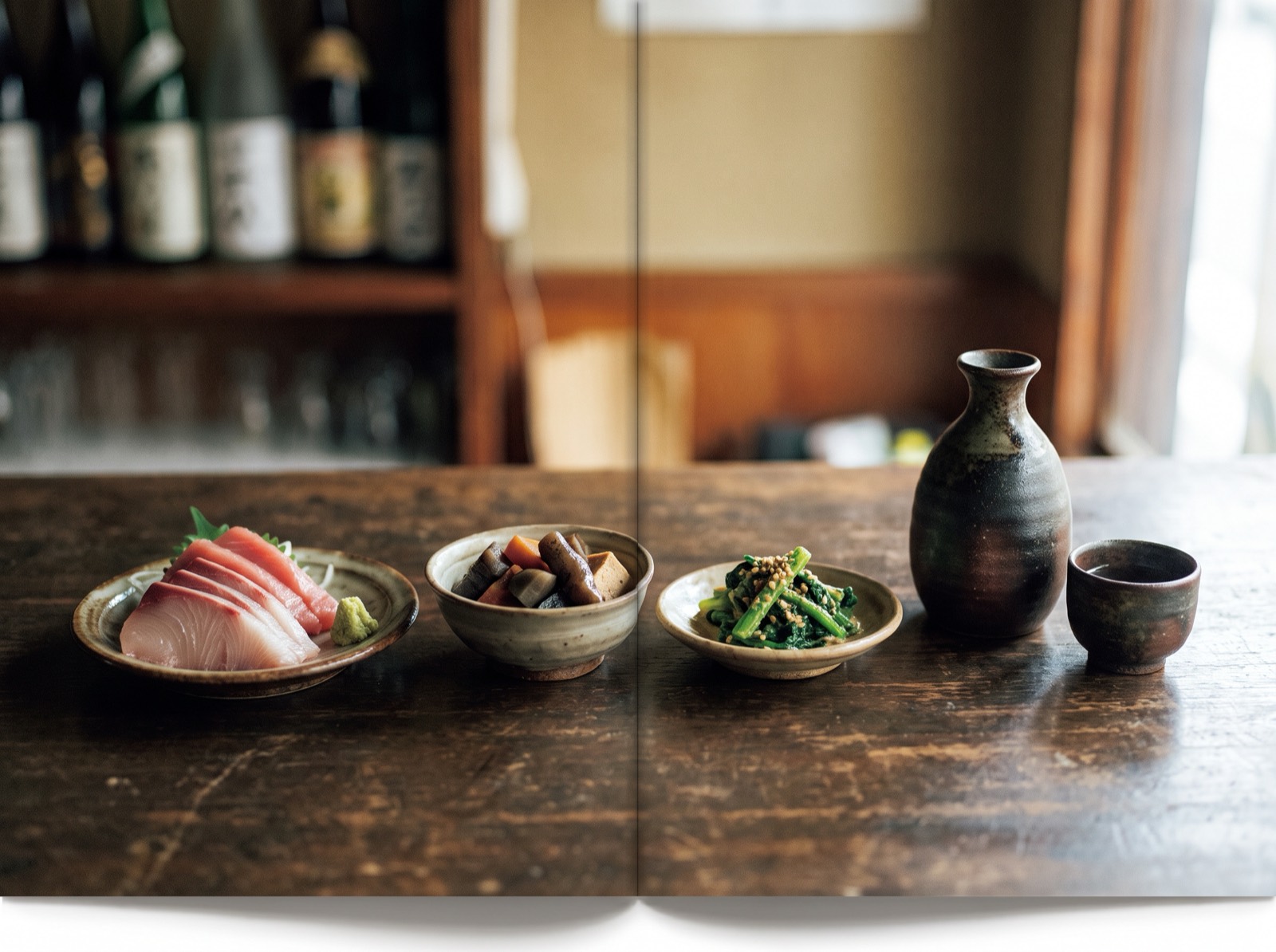
Nothing on a tsumami tray is nigiri, which is most of the definition by elimination. Japanese guidance on eating at a sushi counter treats this stretch as ippin ryōri (一品料理), individual dishes — grilled fish, sashimi, tempura, a bowl of something, sometimes dessert — that function as palate breaks between pieces of sushi, and that most people order to go with a drink. Soup and dessert sit on that same list, but in practice they land at the other end of the meal, after the sushi rather than before it, so what actually shows up in the opening tsumami run is narrower than the full category:
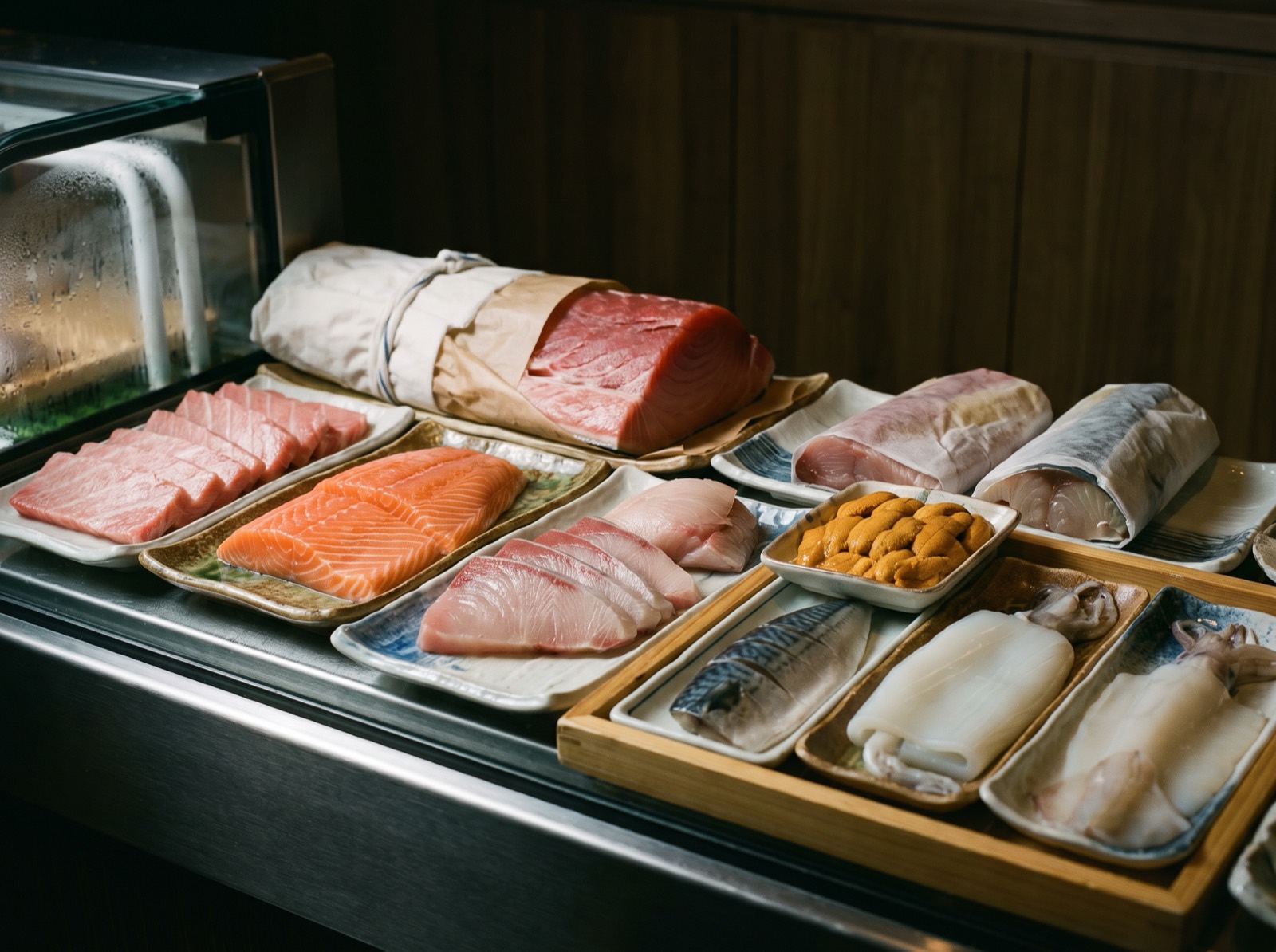
- Something raw. A cut of sashimi (お造り), off a larger piece of fish than a single nigiri topping would use.
- Something grilled. 焼き物 — fish or shellfish cooked over heat, which nothing in the nigiri run that follows will be.
- Something fried. 天ぷら at some counters, the one course in the meal built around batter and oil rather than rice.
None of that requires the fish case in front of you at all, which is part of the point: a tsumami course draws on the kitchen behind the counter as much as the one in front of it, and it is where a shop can put work that a strict nigiri sequence has no place for.
If you intend to drink through this part of the meal, saying so when you book is not a courtesy — it changes what the kitchen buys. Japanese guidance on sushi counters is specific on the point: mention your plans to drink at the time of booking, and the shop can lay in the food to go alongside it before the evening starts.
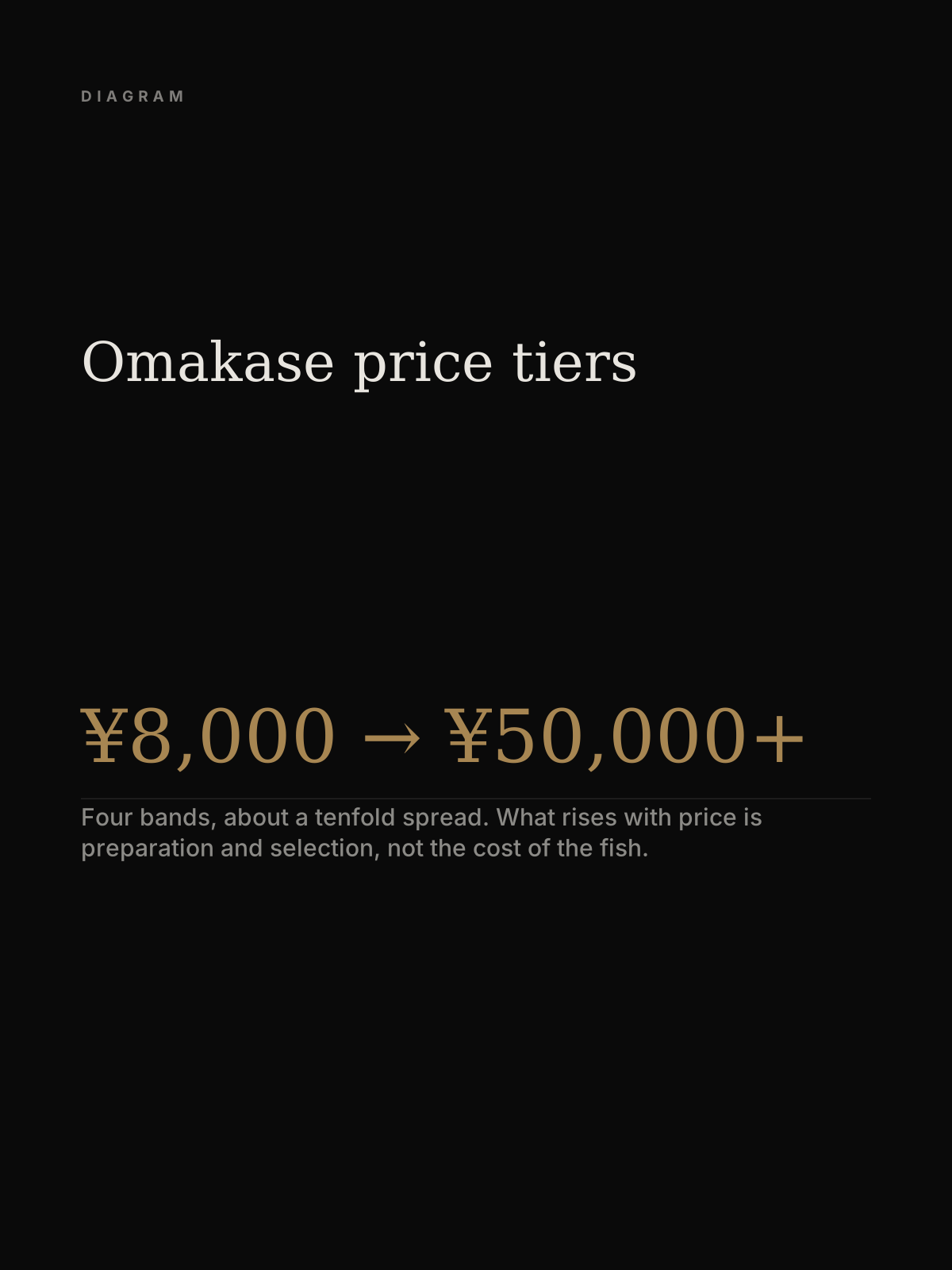
How much of the meal tsumami actually occupies is not fixed, and it is one of the clearest ways to tell what kind of evening you have booked before you sit down. At the least expensive end of Tokyo omakase, what comes before the nigiri is often minimal or skipped outright rather than a built course — see our guide to omakase price tiers for the full band-by-band picture. Higher up, that opening stretch stops being an afterthought: the number of tsumami dishes and the number of nigiri become two halves of the same course, weighed against each other on purpose rather than left to fall out however they fall out. Two shops can both hand you something called omakase, and mean two different ratios of hand-pressed rice to everything that came before it.
Two shops can both hand you something called omakase, and mean two different ratios of hand-pressed rice to everything that came before it.
Why it is done
The plainest reason is the one already covered: tsumami exists to give a table something to eat while it drinks, before the rice-paced part of the meal begins. That does not make the counter a bar. Japanese writing on sushi etiquette is direct about the boundary — the sushi is still the point, and treating a tsumami course as licence to occupy the counter for a long evening of drinking is not what the shop is built for.
A second reason has less to do with the guest than with the kitchen. Once the nigiri run starts, a chef is doing one thing, repeatedly, at speed: cutting and pressing rice to the pace of the room. Tsumami is where the same kitchen gets to grill, fry, dress and plate — work the nigiri sequence has no room for once it begins — and a course built that way says something about a shop’s range that the fish case alone does not.
How it differs from what it is confused with
- Tsumami and otsumami are the same word. The honorific is simply more likely to survive away from a sushi counter — at an izakaya, at home — than inside one, where the plain form is what gets used.
- Tsumami and an otoshi or tsukidashi are not the same thing, even though both can be the first dish set down in front of you. Tsumami is a course a table orders and eats through at its own pace, deciding how much of it there will be. An otoshi or tsukidashi is a single dish some shops set down whether it was ordered or not — our guide to omakase price tiers describes it as the seat charge in another form, not a course you chose.
- Tsumami is not simply an appetizer in the Western sense of a short opening act before the real meal starts. At a counter that builds it properly, this stretch of the evening can be half the meal in its own right, not a preamble to it.
How to say it
tsu-ma-mi, three even beats, none of them stressed harder than the others — the same flat rhythm as ko-ha-da or o-ma-ka-se. The honorific form, o-tsu-ma-mi, simply adds one beat at the front.
Where you will see it
Rarely as a printed line with a name over it. Tsumami is not the kind of word a shop tends to set on a menu the way it might name a piece of nigiri; more often it is the word a chef uses out loud, asking whether you are drinking, or the word a guide like this one uses to describe a stretch of the meal that a menu simply presents as a run of small dishes with no heading above them.
What that means in practice is that you will not learn how much tsumami a given evening holds by reading a menu. You learn it by asking, or by knowing the price band you have booked into, covered without repeating the figures here in our guide to omakase price tiers — and by saying, at the point of booking, whether you plan to drink.
Frequently asked questions
What is tsumami at a sushi counter?
The small dishes a chef serves before the nigiri begins — something raw, something grilled, sometimes something fried — timed to the table’s drinking rather than to the rice.
Is tsumami the same as an appetizer?
Not quite. An appetizer is a short opening act before the meal proper. At a counter that builds tsumami properly, this stretch can be half the meal in its own right.
Do all sushi counters serve tsumami?
No. Some run straight into nigiri, either as a named option or simply on request, and at the least expensive end of Tokyo omakase what precedes the nigiri is often minimal or skipped outright.
What is the difference between tsumami and otoshi or tsukidashi?
Tsumami is a course you order and eat through at your own pace. An otoshi or tsukidashi is a single dish some shops set down whether you asked for it or not, described elsewhere on this site as a seat charge in another form rather than a course you chose.
Should I tell the shop if I plan to drink?
Yes, ideally when you book. Japanese guidance on sushi counters is specific that saying so in advance lets the kitchen lay in the food to go alongside it.
How is tsumami pronounced?
Tsu-ma-mi, three even beats with none of them stressed. The honorific form, o-tsu-ma-mi, adds one beat at the front.