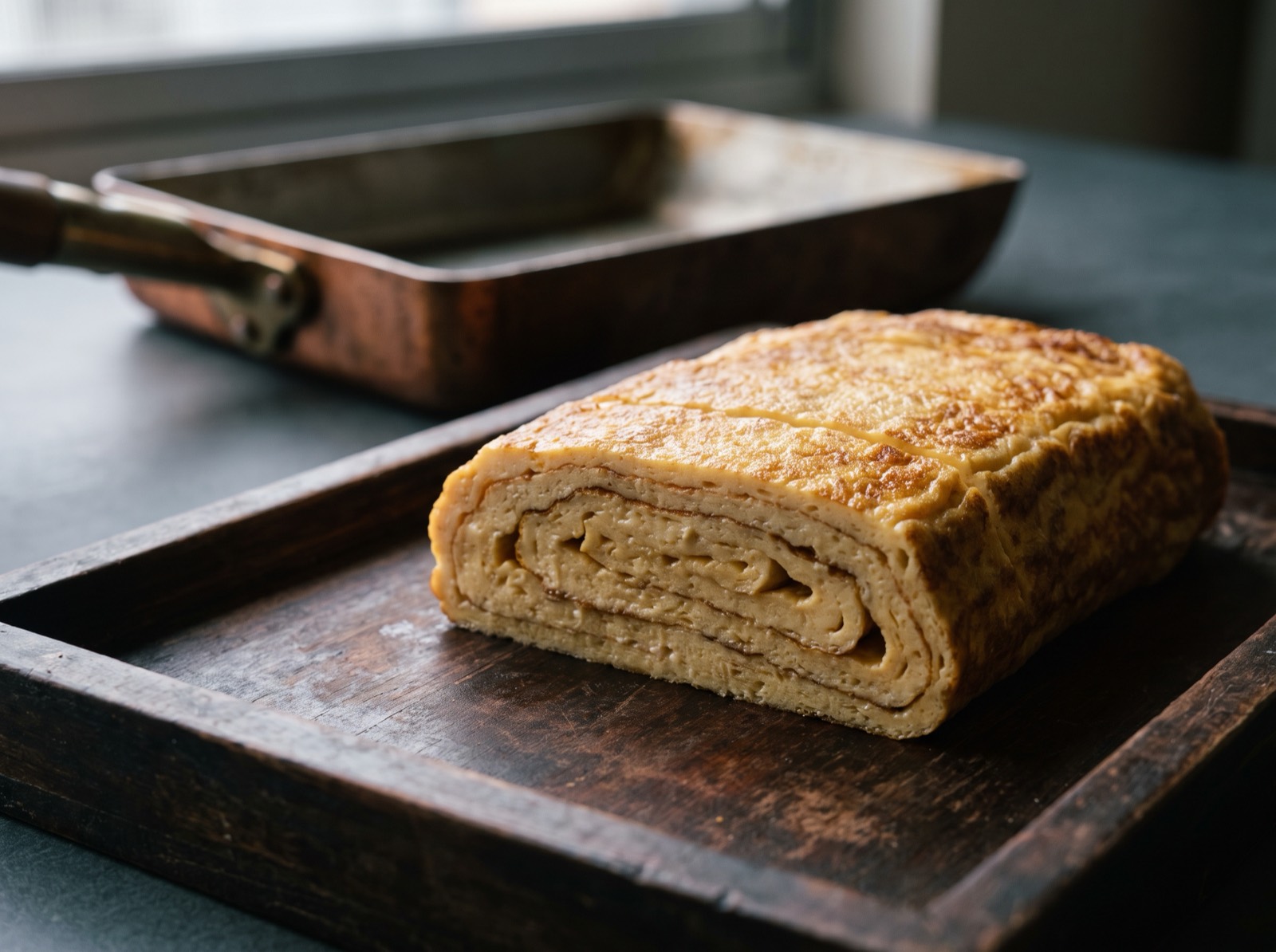
Tamago (玉子) at a sushi counter means the rolled egg: cooked in a square pan, cut into a slab, and either laid on rice or served on its own. It is the least glamorous thing on the menu and the most informative, because it is the only item a shop cannot buy ready-made and still call its own work.
What it is
Two quite different things travel under the same word, and telling them apart is most of what there is to know:
- The Edomae style, sometimes called kasutera tamago (カステラ玉子) after the Portuguese-derived sponge cake it resembles. Eggs are combined with ground white fish or prawn (surimi) along with sugar, and cooked slowly over low heat until the result is dense, faintly sweet and cake-like, with a browned surface. It is closer to a confection than to an omelette, and it is unmistakably a made object.
- The dashimaki style (だし巻き), rolled with dashi. Thin layers of seasoned egg poured and folded repeatedly in a square pan, producing something soft, juicy, savoury and barely sweet, which weeps a little stock when cut. This is the standard Japanese rolled omelette and many modern counters serve a version of it warm.
The first is the traditional Edomae answer and takes a long time and real skill. The second is lighter, more immediate, and is what most non-sushi Japanese restaurants serve. Neither is wrong, and a good shop will have decided deliberately which it makes.
When it is best
It has no season, which is part of why it works as the closing piece. Everything else on a counter is subject to the month; the egg is the constant against which the rest is measured.
What the chef does to it
For the Edomae version: the fish or prawn is ground to a paste and passed through a sieve, combined with beaten egg, sugar and usually a little mirin and stock, and poured into a square copper pan set over very low heat. It cooks for a long time, considerably longer than any omelette, and is turned once, so that both faces take a controlled colour. It is then cooled and cut.
For the dashimaki version: seasoned egg is poured into the hot pan a ladle at a time, each thin sheet rolled back over the previous one, building a cylinder of many layers. The skill is entirely in the rhythm of the pouring and folding, and it is done in minutes rather than an hour.
The pan itself is worth noticing if you can see the kitchen: rectangular, usually copper, and dedicated to this single job.
The egg is the one piece where a shop cannot borrow anyone else’s work.
Why it is a test
Every other item at a counter begins with a purchase. Excellent tuna can be bought by anyone with the budget; excellent egg cannot be bought at all. A shop that makes its own is spending an hour of a skilled person's morning on the cheapest ingredient in the building, which tells you something about how it thinks. A shop that buys the standard commercial product (and plenty do) is telling you something too.
The conventional advice, and it is sound, is to judge a counter by three things it makes rather than buys: the rice, the kohada, and the egg. See what Edomae actually means for why those three.
When it is served
Traditionally last, or close to it. It is sweet, cooked and room-temperature, and it works as a closing note in the way a dessert does without actually being one.
There is an older account, repeated in Japanese sushi writing, that a knowledgeable customer would order the egg first, on the reasoning that if the hardest-made item is good, everything bought in will be too. Whether that was ever common practice is disputed. It survives as a piece of counter lore rather than as a rule, and ordering it first today is more likely to read as a small display of knowledge than as a normal request. If you want the information without the performance, order it whenever it comes and pay attention.
How it differs from what it is confused with
- Tamago is not the same as a Western omelette in any respect other than being made of eggs: it is layered or slow-baked, sweetened, and eaten cold or warm rather than hot.
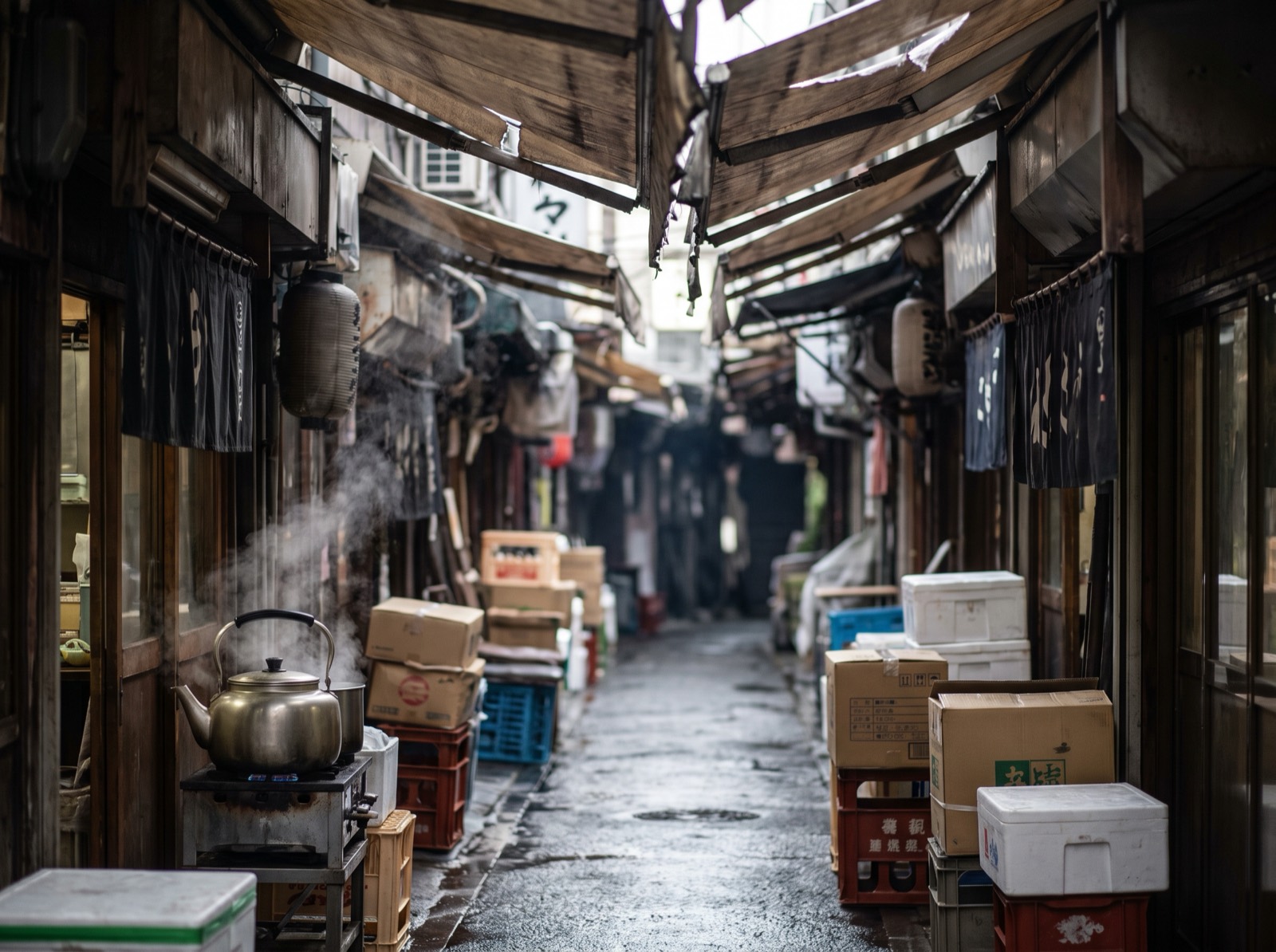
- Tamago is not tamagoyaki as sold at a market stall. The hot skewered omelette sold at Tsukiji is closer to the dashimaki style and is a snack rather than a sushi item — excellent, and a different thing.
- Tamago is not gyoku, exactly. Gyoku (ぎょく) is the counter’s own word for it, from an alternative reading of the same character. If a chef says gyoku, this is what is meant.
How to say it
tah-MAH-goh is understood. Three beats, ta-ma-go. The trade word gyoku is two beats and the initial gy is a single consonant sound, not “gee-yoh”.
Edomae and Kansai
The dense, sweet, surimi-enriched version is the Edomae one and belongs to Tokyo. Kansai's general preference in egg cookery runs to the dashi-rolled style (softer, more savoury, less sweet), which reflects a broader regional difference in seasoning that shows up well beyond eggs.
In practice both are served in both cities, and the choice today says more about the individual shop than about its address.
Where you will see it, and roughly what it costs
On every menu, at every level, and priced at almost nothing relative to the labour that the good version requires. That mismatch is the point: it is the item where price tells you least and the piece itself tells you most.
For the meal as a whole, see omakase price tiers.
Frequently asked questions
What is tamago at a sushi restaurant?
A rolled or slow-cooked egg, made in a square pan and cut into a slab. Two traditions exist: the dense, sweet Edomae style enriched with ground fish or prawn, and the lighter dashi-rolled style made of many thin folded layers.
Why is tamago used to judge a sushi restaurant?
Because it is the only item a shop cannot buy and still call its own work. Every other piece starts with a purchase from the market; the egg starts with eggs. Making it well takes an hour of skilled time spent on the cheapest ingredient in the building.
Why is sushi tamago sweet?
The Edomae version is deliberately sweetened and enriched with ground white fish or prawn, producing something closer to a sponge cake than an omelette. It closes a course the way a dessert would. The dashi-rolled style is barely sweet by comparison.
Should tamago be eaten first or last?
Last, or close to it, in normal practice. There is an old piece of counter lore that a knowledgeable customer orders it first as a test, but whether that was ever common is disputed, and doing it today reads more as display than as a normal request.
What is gyoku?
The counter's own word for the egg, from an alternative reading of the same character. If a chef says gyoku, they mean tamago.
Is sushi tamago the same as tamagoyaki from a market stall?
Related but not the same. The hot skewered omelette sold at market stalls is closer to the dashi-rolled style and is a snack. The sushi counter version, in the Edomae tradition, is denser, sweeter and served at room temperature.