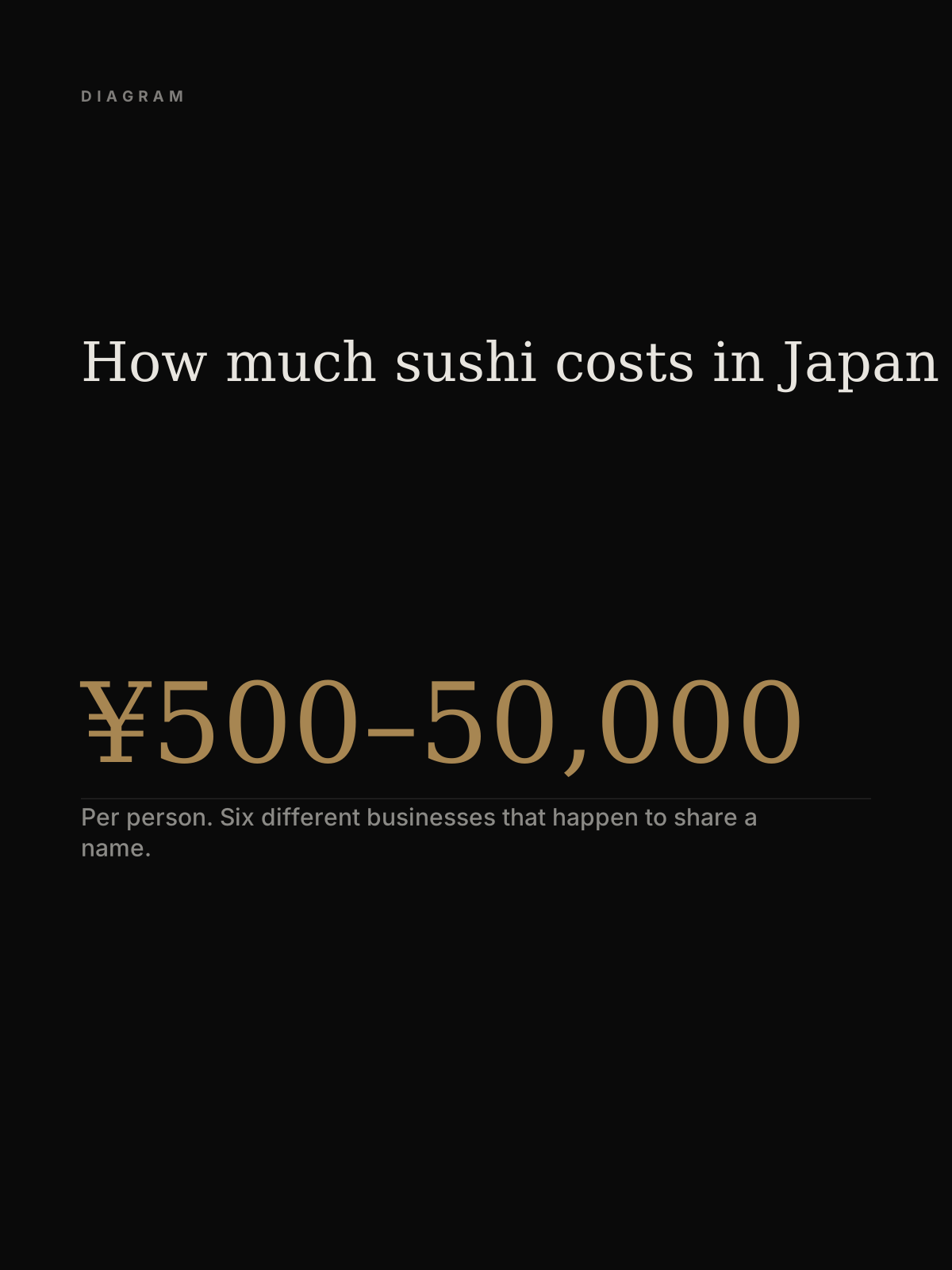
Conveyor-belt sushi (kaitenzushi) costs ¥1,000–2,500 a head, needs no booking, no Japanese and no etiquette, and is genuinely good. A counter shop costs ¥8,000–50,000, is booked ahead, and is a different experience rather than a better version of the same one. Most visitors should eat both, and most should start with the belt. The figures here are our own observation of what chains and shops publish as of July 2026; each chain publishes its own current plate prices.
They are not two grades of one thing
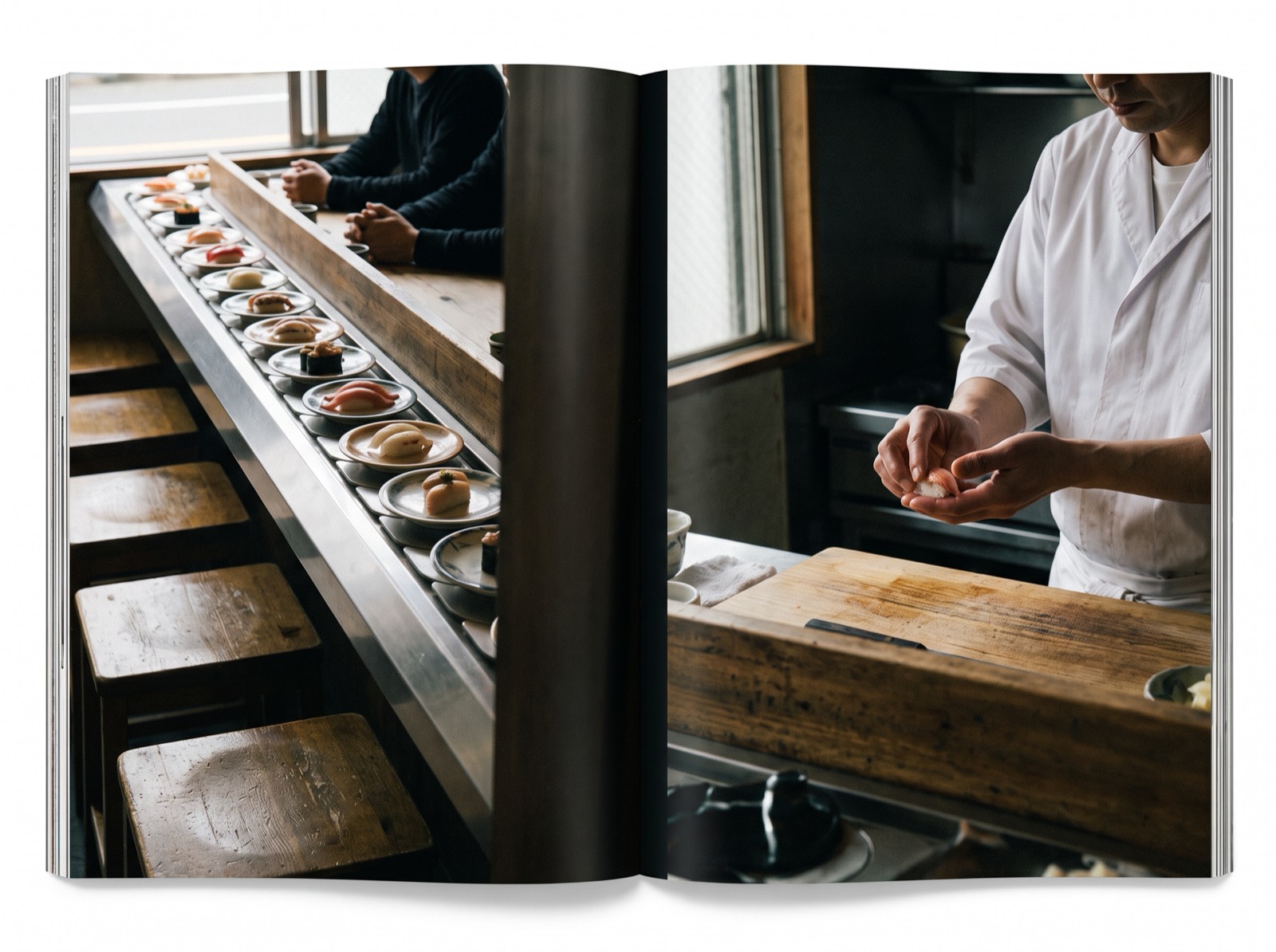
The English framing treats the belt as the cheap version and the counter as the real thing. It is more accurate to say they solve different problems. A conveyor-belt shop is engineered around throughput: a lot of people, fed quickly, at a predictable price, with the fish, at the larger chains, often prepared in a central kitchen and portioned to a standard. A counter shop is engineered around one person making one piece at a time in front of you, at a pace set by how fast you eat.
Conveyor-belt sushi expanded through the 1980s and is the main reason sushi in Japan became everyday food rather than an occasion. It was not a decline in standards; it was a distribution achievement, and it runs on the same supply chain the counters use.
What each one costs
- Conveyor belt: plates at the large chains run roughly ¥100–350, with premium items above. A normal meal is ¥1,000–2,500 a head. Prices have risen in recent years and each chain publishes its own current figures.
- Counter, lunch: ¥1,500–3,000 for a set at a shop whose dinner is far higher. The most under-used option in Japan.
- Counter, dinner set (okimari): ¥3,000–8,000, priced by grade and known in advance.
- Counter, omakase: ¥8,000–50,000+, chef's choice. See omakase price tiers.
What actually differs on the plate
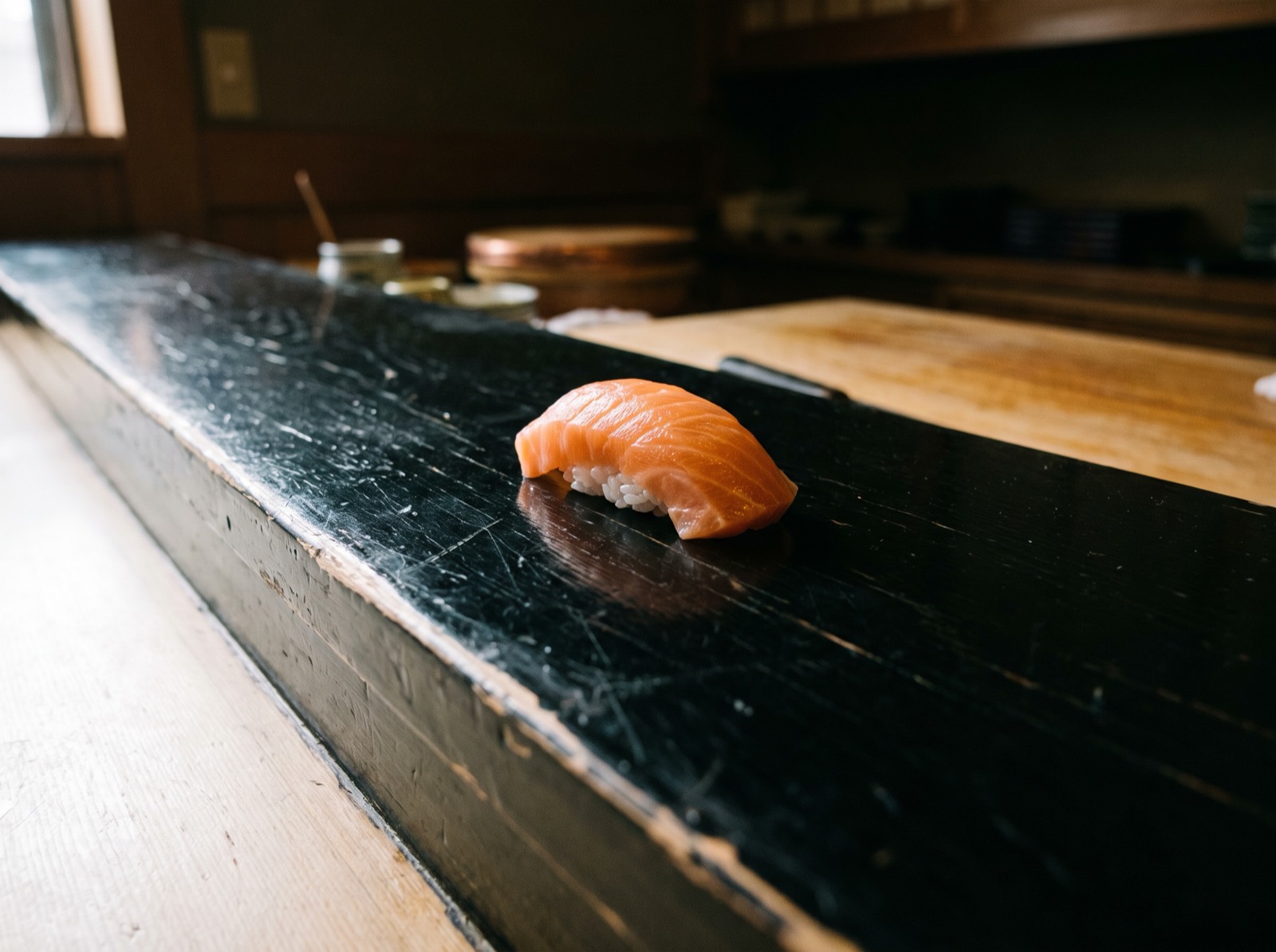
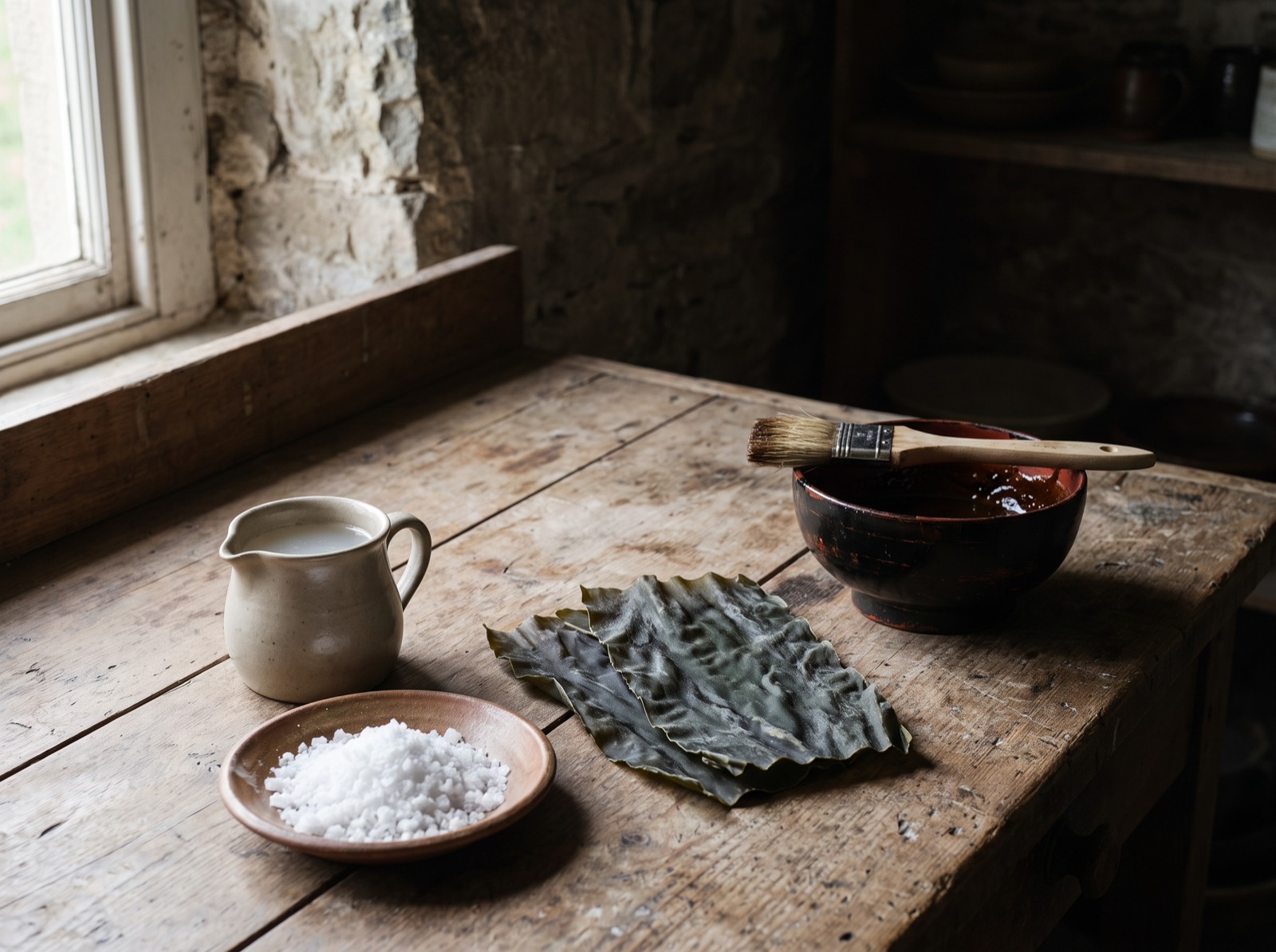
Preparation. This is the real gap. At a counter, a large share of what you eat has been cured, marinated, pressed with kelp, simmered or aged — days of work per piece, decided by one person. At a belt shop the fish is mostly served straight, portioned to a consistent standard, and that consistency is the product. What does not differ is the hygiene framework: HACCP-based management has been required of every food business in Japan since June 2021, belt shops included; see is sushi safe to eat in Japan.
Rice. A counter holds its rice near body temperature and adjusts it through service. A belt shop cannot, because pieces sit and travel. This is the single biggest sensory difference, and it is the one nobody mentions.
Timing. A counter piece is made for the ten seconds after it is handed to you. A belt piece is made to survive a circuit of the room. Everything else follows from that constraint.
Choice. A belt shop's touchscreen offers far more items than any counter, including things a counter would never serve — corn, hamburger steak, cake. That is not a failing; it is a family restaurant that happens to make sushi.
The belt is not worse sushi. It is sushi built to a different specification, and it meets that specification extremely well.
How a conveyor-belt shop works
- Take a seat, usually from a ticket machine at the door. No booking, no phone call.
- Order from the touchscreen. Most chains have English, Chinese and Korean, and most now deliver ordered plates on a separate express lane rather than the main belt.
- Take what you want from the belt itself, where one is still running. Do not take a plate, inspect it and put it back.
- Plates are counted at the end, by colour or by a chip in the plate. That is the bill.
- Green tea is free at the tap at almost every chain; powdered tea and a hot-water spout are at the seat.
- No tipping, no service charge, and normally you pay at a machine on the way out.
How a counter works, if you have not done it
- Book. Say how many people, name a budget, mention allergies. This is a normal conversation in Japan.
- Arrive on time and hungry. Arriving late without calling is the breach the Japanese books treat most seriously.
- Eat each piece as it lands, within about ten seconds.
- Check before you dip. Many pieces arrive already seasoned.
- Do not wear strong fragrance, and keep large bags off the counter.
- Ask for the bill as okanjo onegai shimasu, not oaiso. No tip.
The full version is in our guide to sushi etiquette.
Which should you go to?
- First sushi in Japan, no plan: the belt. It is cheap, immediate, requires nothing of you, and will still be better than what you are used to.
- Travelling with children: the belt, without hesitation. A counter is a difficult room for a child and most counters would rather you did not.
- You want to understand what the craft is: a counter, at lunch. The highest ratio of insight to money available in Japan.
- One special meal on the trip: a counter at dinner, ¥15,000–20,000 band, booked ahead.
- You are in a group of four who want to talk: the belt, or a table at a counter shop. A counter seat is for watching, and four people talking across it is the thing Japanese books actually complain about.
The thing worth carrying between them
Eat the same fish in both formats within a few days (gizzard shad, squid, the egg, a piece of horse mackerel), and the difference in preparation becomes obvious in a way no article can convey. Those are the cheap items, they are the ones a serious counter is judged on, and they are the clearest demonstration of what the price difference actually buys.
For the full price picture, see how much sushi costs in Japan. For the work that separates the two, Edomae sushi.
Frequently asked questions
Is conveyor-belt sushi in Japan good?
Yes. It runs on the same supply chain as the counters and is far better than the equivalent in most countries. What it does not have is the preparation work — curing, marinating, ageing — that defines a counter shop, and its rice cannot be held at serving temperature.
How much is conveyor-belt sushi?
Plates at the large chains run roughly ¥100–350, with premium items above, so a normal meal is ¥1,000–2,500 a head. No booking, no tipping, no service charge.
Do I need to book conveyor-belt sushi?
No. You take a ticket at the door and wait for a seat. Popular branches at weekend peaks can mean a wait of half an hour; most chains let you take a numbered ticket in advance from an app.
Should I go to a conveyor belt or a proper sushi restaurant?
Both, if you can. Start with the belt (it is immediate, cheap and asks nothing of you) and put one counter meal in the trip, ideally at lunch, where the value is highest.
Is it rude to take a plate off the belt and put it back?
Yes, and at some chains it is the one rule that gets enforced. Take what you intend to eat. Most chains now deliver ordered plates on a separate express lane, which sidesteps the issue entirely.
What is the main difference between conveyor-belt and counter sushi?
Preparation and timing. A counter piece is worked on for days beforehand and made for the ten seconds after it reaches you; a belt piece is portioned to a consistent standard and built to survive a circuit of the room.