This site’s own entry on hikarimono ends with a question worth asking at any counter: is the piece shime or nama, cured or raw? Shime is the answer su-jime earns. Salt first, then vinegar — the sequence turns up across this site’s other entries, named each time a particular fish needs it, without an entry of its own until now.
What it is
Su-jime (酢締め) names a two-stage cure: the fish is salted, rinsed, and then steeped in vinegar. This site’s own fact index gives the definition in exactly that order, and the order is not incidental. Salt and vinegar are doing two different jobs, one after the other, not one job twice. The word ends in the same -jime, “to firm,” that shows up in kobujime and ikejime, and all three treatments do, in fact, firm a fish. What differs each time is what is doing the firming.
The Japanese trade word for this whole family of treatments is shigoto, work done to a topping before it reaches the rice. Our own guide to what Edomae actually means lists curing first among the four historic jobs, names su-jime as the treatment that defines Edomae’s silver-skinned fish, and calls the degree of it “the single most revealing decision a sushi chef makes.” This entry is about what that degree is made of.
When it is used
Su-jime is not offered. Our entry on zuke draws the contrast directly: a case holding both a plain and a marinated tuna is deliberately giving a diner something to choose between, but nobody is asked whether they want their kohada cured. By the time the fish reaches the counter, the cure has already happened, hours or a day earlier, and the decision belonged to the chef, not the guest.
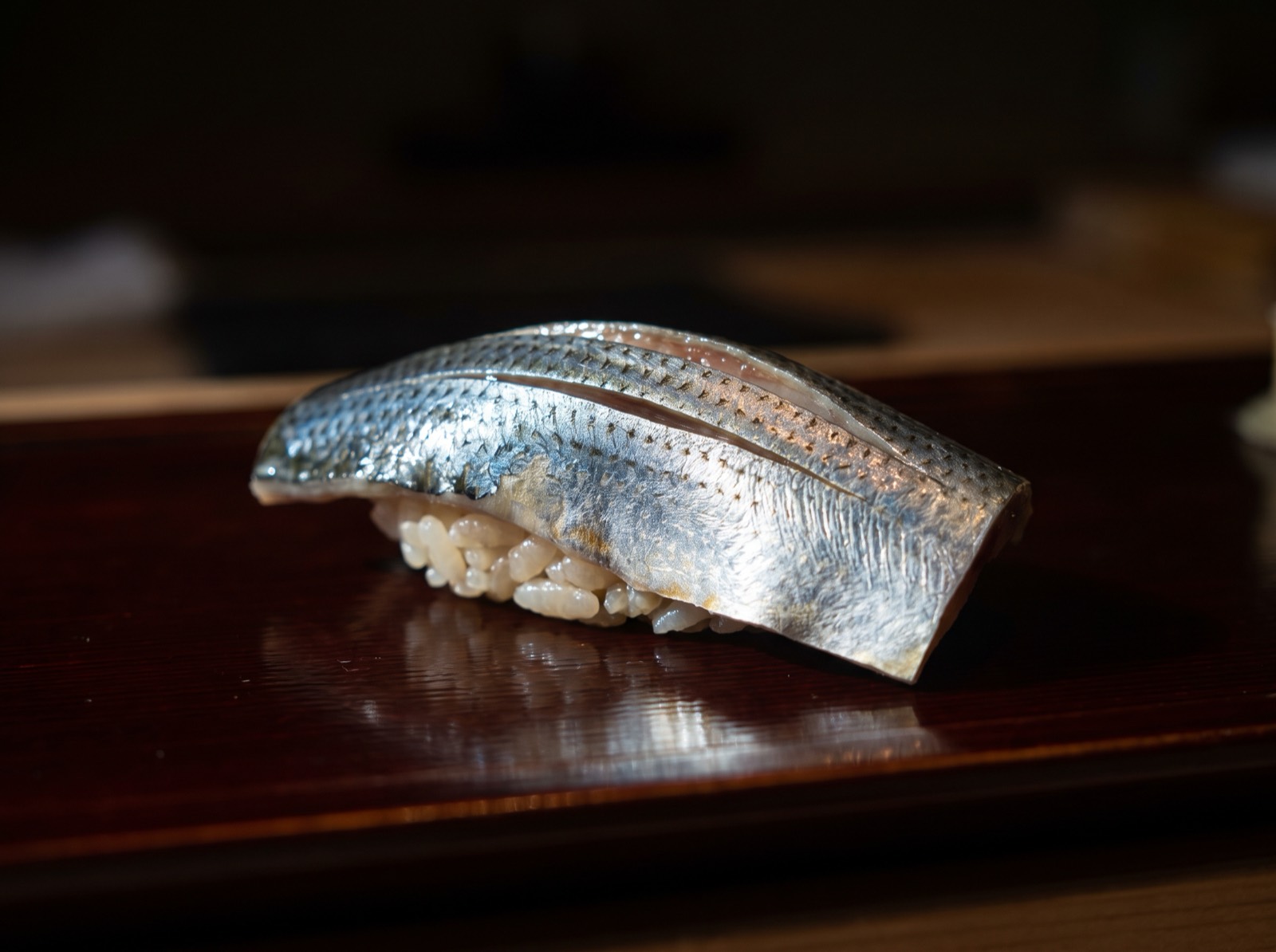
The fish that receive it are the ones our own entry on hikarimono sorts by two clauses at once — how the skin looks, and what has been done to it — and su-jime is that second clause doing the work. Which fish carry the tag is that entry’s subject, not this one. What belongs here is the job itself, and kohada is the fish our guide to Edomae names as the one this cure defines “above all,” the clearest single case on this site of what su-jime actually does.
What the chef actually does
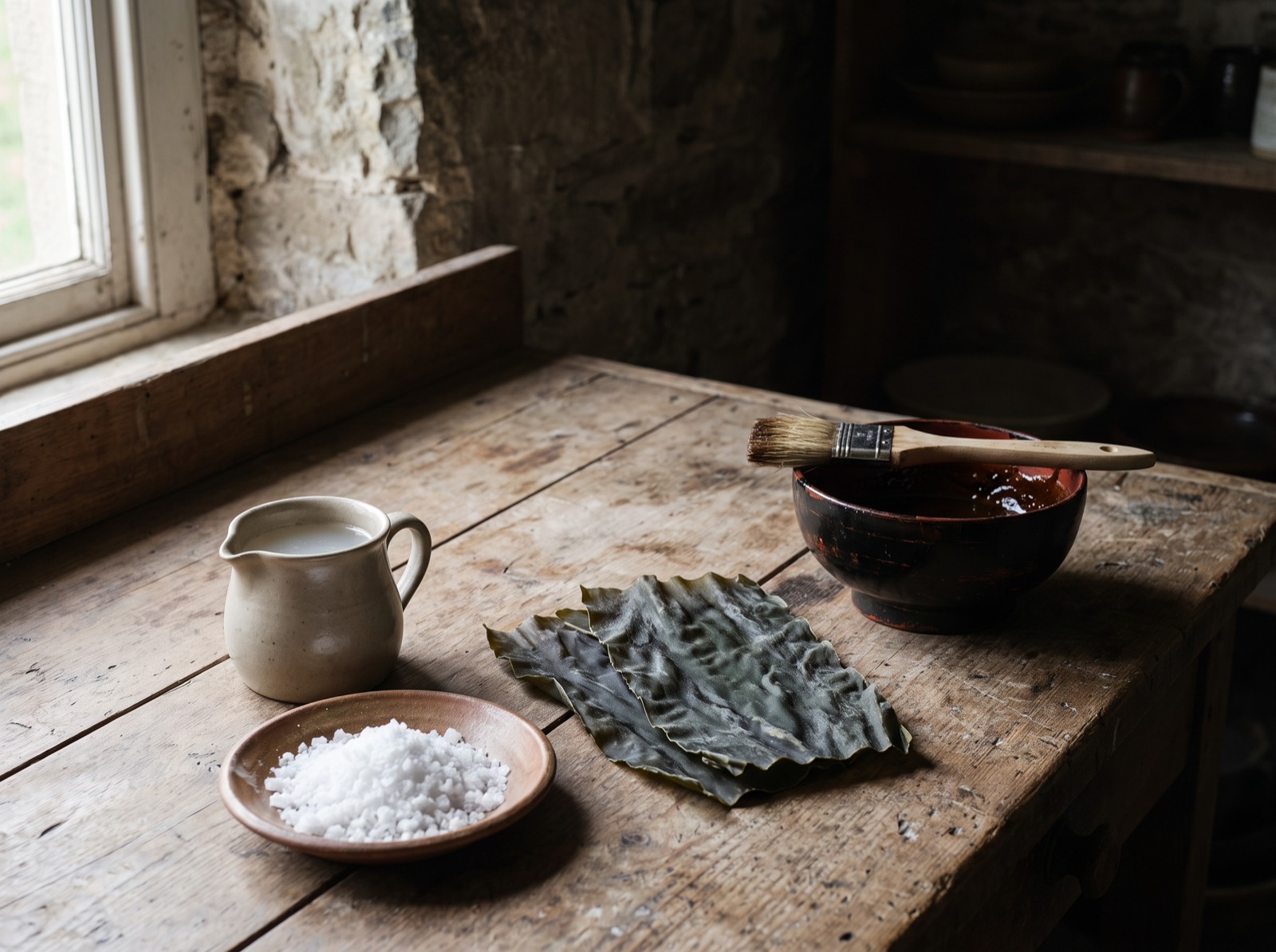
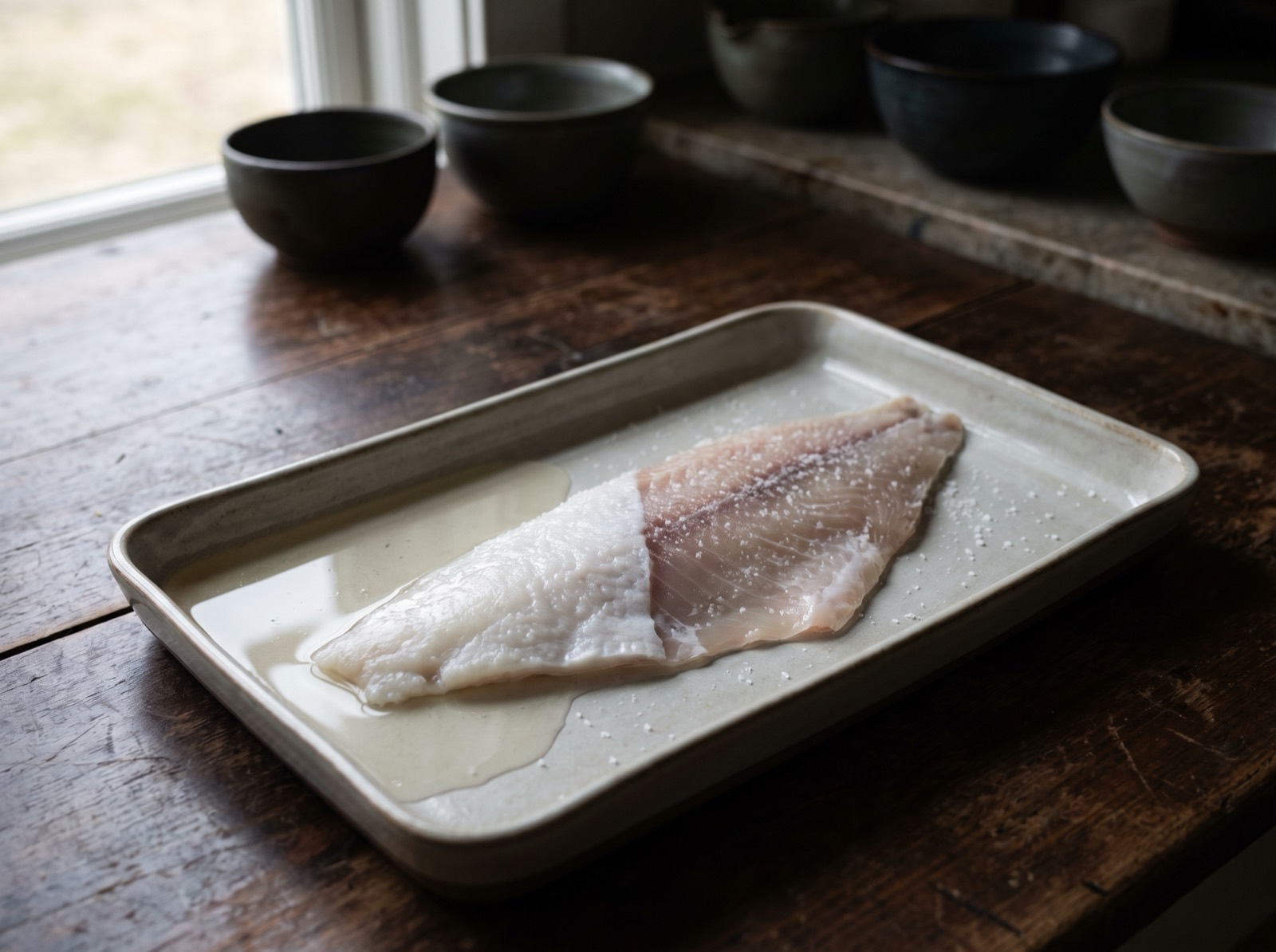
The fish arrives filleted, and the first thing that touches it is salt, not vinegar. Salt draws water out of the flesh and begins to firm it before any acid is involved — a preparation stage in its own right, doing a different job from the one that follows.
The salt is then rinsed off, in water or in vinegar depending on the kitchen, before the second stage begins. This step keeps the two seasonings from mixing on the fish: the vinegar meets a surface salt has already changed, not one still carrying the salt itself.
The vinegar cure comes second, and it does something the salt could not. An acid changes the fish’s flesh chemically, firming it further and altering its flavour outright rather than simply drawing out moisture. Plain vinegar or a sweetened one, depending on the kitchen and the fish in front of it — either way, this is the stage that gives su-jime its name and its result.
- Salt. Drawn over the filleted fish first, to pull out surface water and begin firming it.
- Rinse. Washed off before the vinegar stage, in water or in vinegar itself.
- Vinegar. A second, chemical stage: the acid firms the flesh further and changes its flavour, which salt alone cannot do.
- Rest. Many kitchens let the cured fish sit afterward, so the vinegar’s effect settles inward rather than staying sharp at the surface.
None of those four stages runs on a fixed clock. How long the salt sits, how long the vinegar does, depends on the fish in front of the chef that day — its size, its fat, how warm the kitchen is, how far into the season it was caught. The literature behind this site is consistent on the point: there is no recipe here, only a result a chef is trained to recognise, judged fresh against a different fish every morning.
Why it is done
Su-jime is Edomae’s oldest reason for existing, in the plainest sense. Before refrigeration, an oily, fast-spoiling fish held raw for a day would not have survived the day; salt and then vinegar slowed that spoiling long enough for the fish to reach a customer. The job was keeping the fish edible, not making it taste better.
Refrigeration removed that job decades ago, and the cure did not go with it, because a light hand and a heavy one leave visibly different fish behind. A brief cure leaves more of the flesh’s own translucency and a milder edge; a longer one pushes the flesh toward opacity and a firmer bite, with a sharper, more pronounced tang. Between those two ends sits the judgement described above — not a rule about how cured a piece of fish should be, but a decision a chef makes about this fish, today, and how far to take it.
Salt and vinegar are doing two different jobs, one after the other, not one job twice.
How it differs from what it is confused with
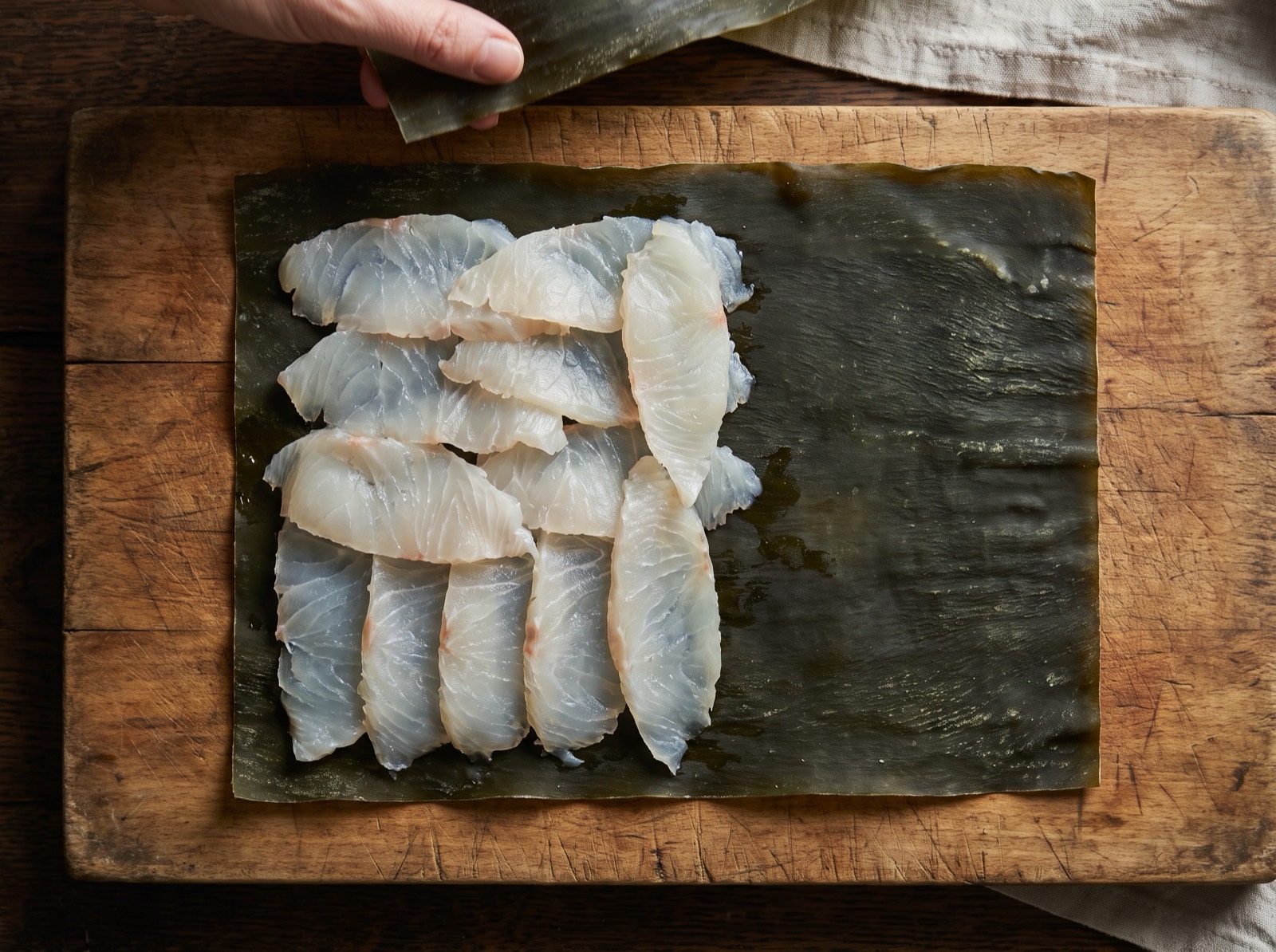
- Su-jime and kobujime share the same -jime ending and are often bundled together as “curing.” Su-jime cures with an acid; our entry on kobujime is direct that its own cure has “no acid in it anywhere” — kelp does that job instead, on a different, leaner class of fish.
- Su-jime and zuke both use something from the pantry to change a fish before it is served, but zuke steeps tuna in soy and is, by that entry’s own account, one of the few treatments a shop will actually offer as a choice. Su-jime is not offered; it has already happened by the time the fish reaches the counter.
- Su-jime and ikejime share three of four syllables and almost nothing else. Ikejime is killing the fish instantly with a blade at the moment of catch, done — in the words of our own guide to Edomae — “before the shop ever sees the fish.” Su-jime happens afterward, in the kitchen, on a fish already dead for hours.
- Su-jime is not the whole of hikarimono. Our entry on hikarimono defines that word with two clauses joined by “and”: a fish sorted by its skin, and a fish sorted by su-jime. A fish can satisfy either clause without the other — that entry’s own point, made through one fish that looks the part without being cured at all.
How to say it
su-ji-me, three even beats, no stress on any of them — the same flat pattern our own entry on aburi describes as common to almost every word in this glossary. Su (酢) is vinegar on its own and stays su here. That is not true of every compound in this family: kombu becomes kobu inside kobujime, but nothing shifts when su is joined to -jime.
Where you will see it
Printed on a menu, it is usually the two characters, 酢締め, set beside the name of the fish. What su-jime itself leaves behind is not a mark but a colour and a texture: the flesh turns a shade more matte, a little firmer to the bite, than it was raw. Any decorative knife scoring a diner notices on the skin is a separate cut, not the cure — the cure is in the flesh underneath it, and it is on the tongue that a diner actually meets it.
Which brings the question back to where this entry started. Shime or nama, cured or raw — su-jime is the answer that comes with two stages, a fixed order, and no fixed clock, judged fresh on a different fish every morning it is served.
Frequently asked questions
What is su-jime?
Su-jime is a two-stage Edomae cure: the fish is salted, rinsed, and then steeped in vinegar. The salt draws out water and begins to firm the flesh; the vinegar, an acid, firms it further and changes its flavour outright. It is one of four historic jobs done to a sushi topping before it reaches the rice.
What is the difference between su-jime and kobujime?
Su-jime cures with vinegar, an acid. Kobujime uses no acid at all: a fillet is pressed between sheets of dried kelp instead, on a different, leaner class of fish. The two share the same -jime ending but change the fish by entirely different means.
What is the difference between su-jime and zuke?
Su-jime is a cure worked with salt and vinegar into oily, fast-spoiling fish, and it is not offered as a choice. Zuke is a soy marinade, most often for tuna, and a shop holding both a plain and a marinated cut is deliberately giving a diner something to pick between.
Why is fish salted before it is cured in vinegar?
Salt and vinegar do two different jobs. Salt draws water out of the flesh and begins to firm it; vinegar, an acid, firms the fish further and changes its flavour, something salt alone cannot do. The fish is rinsed between the two stages so they do not mix.
How long is fish cured in su-jime?
The sources do not give a fixed time, and we do not print one. How long the salt and the vinegar each sit depends on the fish in front of the chef that day — its size, its fat, the temperature, the point in the season — and is a judgement, not a measurement.
How do you pronounce su-jime?
su-ji-me, three even beats with no stress on any of them. Su, vinegar, keeps its own form here; it does not shift the way kombu becomes kobu inside kobujime.