Ask a Tokyo counter, “anything hikarimono today?” and two different chefs, at two different counters, will reach for two different fish — one because of what the skin looks like, one because of what was done to it before it reached you. Both answers are correct. That is the whole problem with the word.
What it is
This site’s fact index defines hikarimono (光り物), “the shining things,” with two clauses joined by and: the small fish whose skin catches the light in silver, and the fish that are cured in vinegar before they are served. Neither half is the whole word on its own. Together, they are.
That is not a translation looseness. It is how the term is defined in the Japanese-language reference we drew it from: one clause for what a fish looks like, one clause for what has been done to it, joined as though the two sets were always the same fish. For most of the fish that carry the name, they are. For a few, they are not, and that gap is what this entry is about.
Which fish
Seven fish on this site already carry the tag, and this entry leans on those seven rather than adding names it has not researched itself:
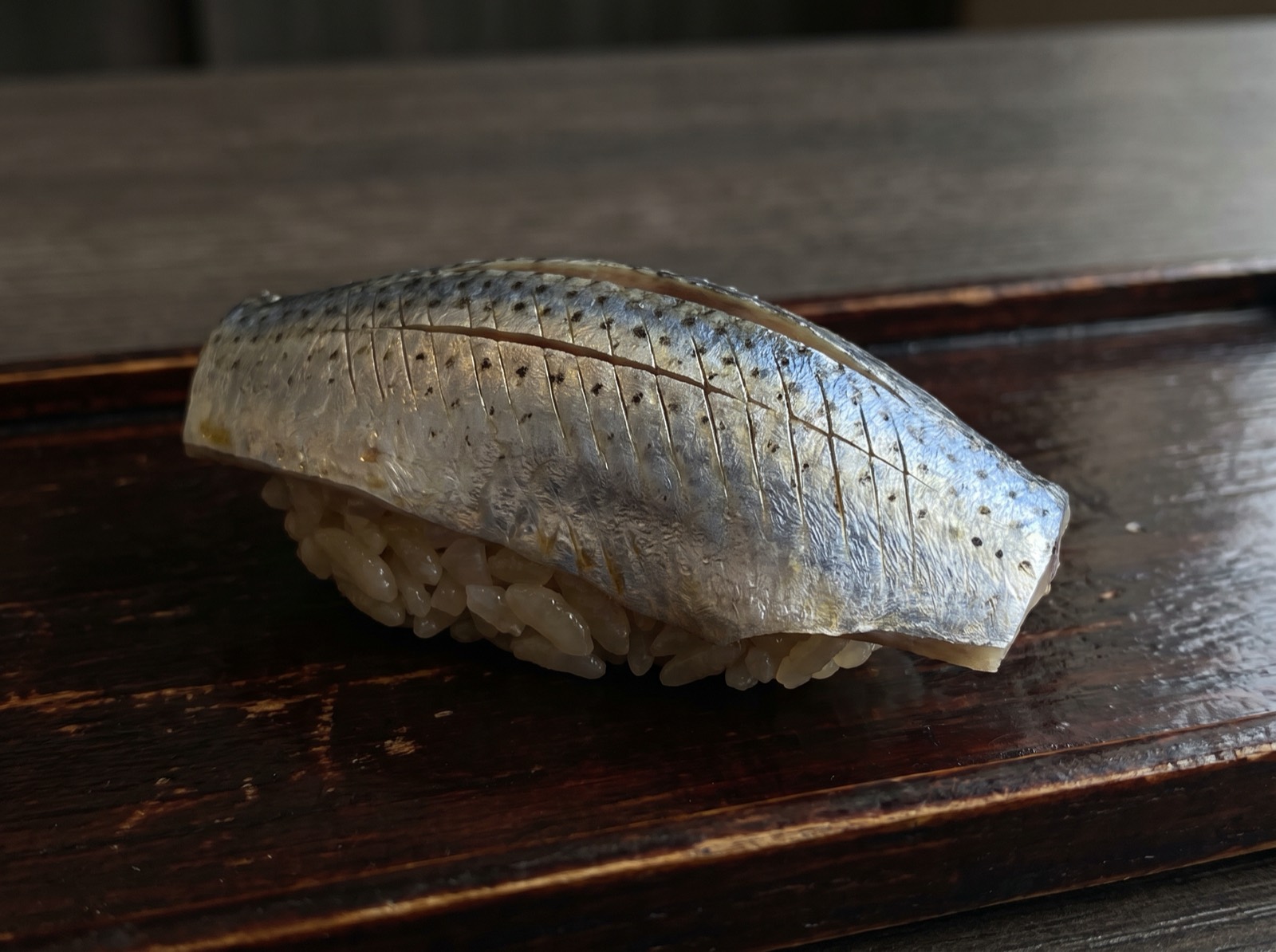
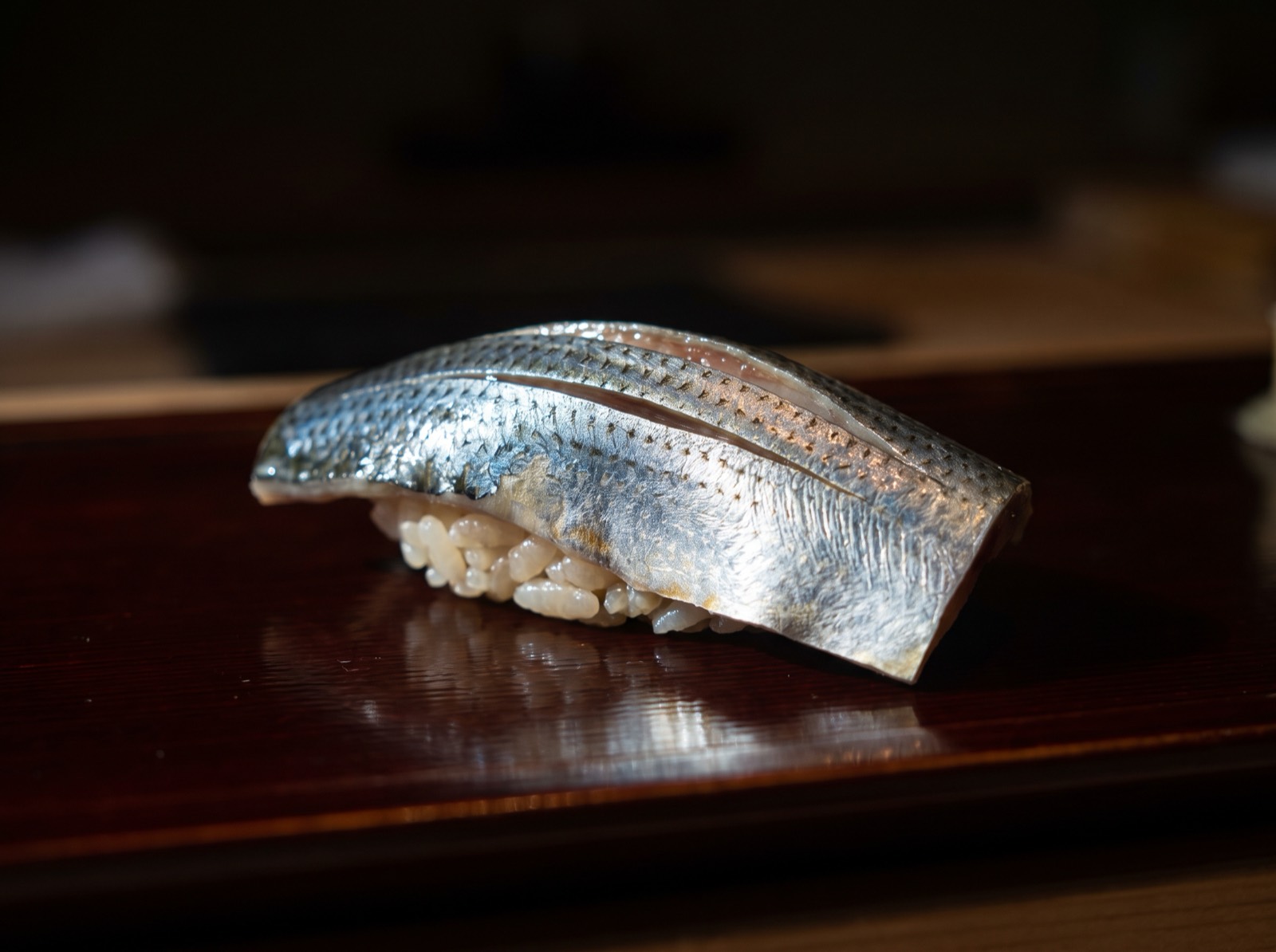
- Kohada. Cured in salt and then vinegar before it is served — on this site, the clearest case of hikarimono meaning the fish that has been worked on.
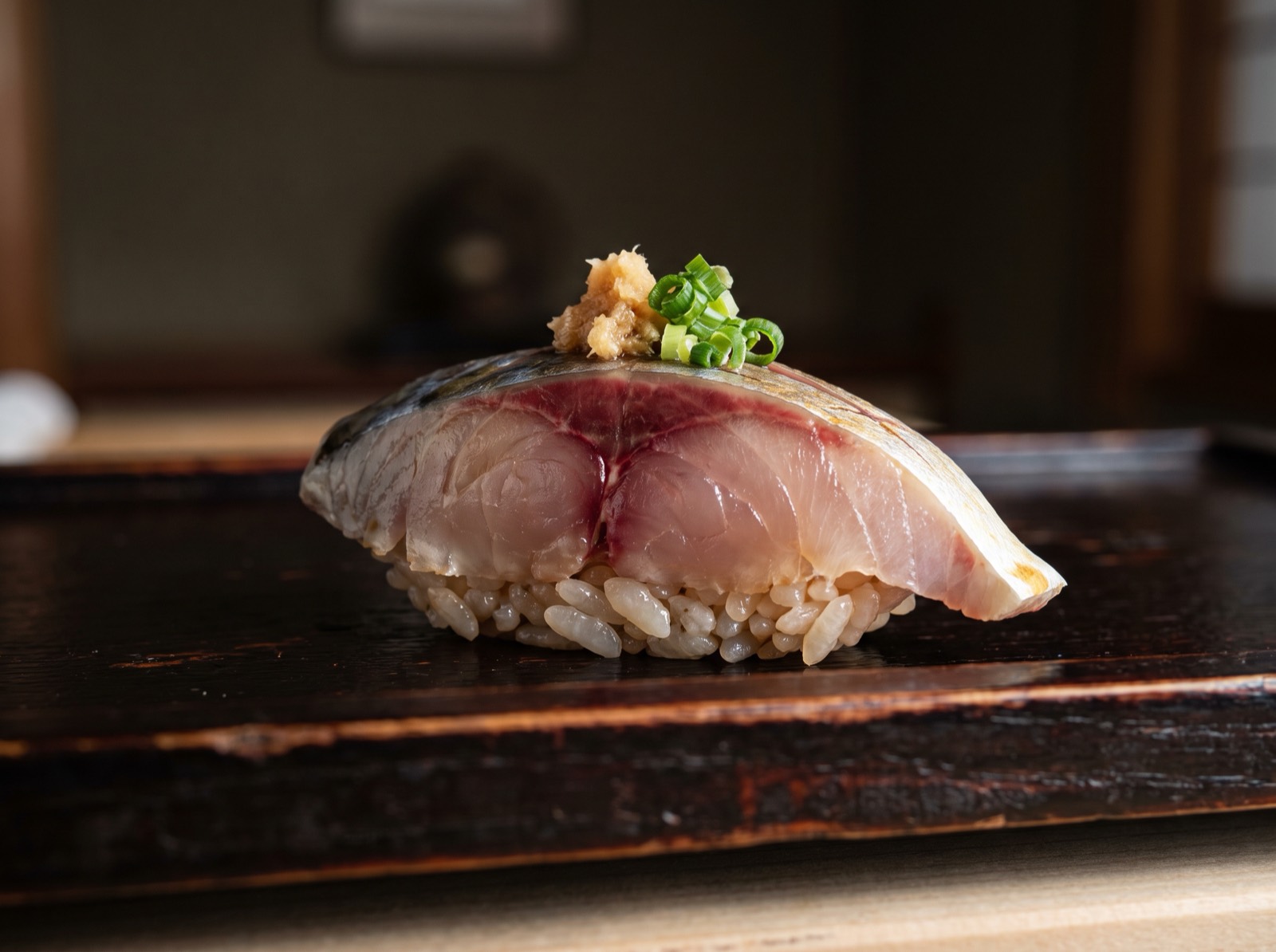
- Aji. Horse mackerel, silver-blue on the flank, and — unlike most of the fish beside it here — usually served raw rather than cured.
- Iwashi. Sardine, blue-black skin over a row of dark spots, opened by hand and given at most a brief salting or a short vinegar touch, never the full cure kohada takes.
- Saba. Mackerel, blue-backed and oily by this site’s own description of it, and almost always cured — hikarimono by both halves of the definition at once.
- Sayori. Halfbeak, silver-striped, folded or tied rather than cured; our own entry on it calls the fit with hikarimono a loose one.
- Kasugo. Young madai, chidai and kidai, given the same salt-then-vinegar cure as kohada and served skin on — not, our own entry notes, because the fish is oily, but because it is not yet grown.
- Kisu. Japanese whiting, pale and lean enough to read like a white fish such as hirame, yet sorted among hikarimono for the same two reasons as kohada: a bright, lustrous skin, and a long history of being cured rather than served untouched.
The trade literature groups further fish under the same heading.
Why the two definitions do not match
Start with what each half of the definition is actually sorting by. The first clause sorts by the fish’s own body: does the skin carry that particular bright, silver cast. The second sorts by a decision a chef made: was the fish salted and then set in vinegar before it reached the rice. A fish can qualify on either ground by itself.
Aji is the cleanest case of the split. It is silver-blue on the flank, unmistakably hikarimono by sight, and it is the one fish on this list that has, for the most part, stopped being cured at all. It satisfies the first clause and, in most modern kitchens, not the second.
Kohada and saba sit at the other end. Both are cured, both are silver-blue, and both satisfy the definition twice over, which may be why they are the two fish on this list most confidently called hikarimono without anyone stopping to ask which half of the word is doing the work. Iwashi and sayori sit in between: both are hikarimono by their skin, and both take only a brief, optional touch of salt or vinegar rather than the full cure kohada and saba are given.
Put one fish in front of a chef and ask whether it is hikarimono, and you have asked two questions at once: does it look the part, and was it cured. Aji is the fish that proves the two answers do not have to agree.
You have asked two questions at once: does it look the part, and was it cured. Aji is the fish that proves the two answers do not have to agree.
How it differs from aozakana
青魚, aozakana, sorts by a different fact about the same fish: whether the back, not the flank or the belly, runs blue. Our fact index calls this, strictly, a separate classification from hikarimono — and says plainly that the two words have largely merged in ordinary use, rather than having always meant the same thing.
- What each word measures. Hikarimono is decided by skin colour, by curing, or by both; aozakana is decided by the colour of the back alone.
- Where they overlap. A fish that is blue-backed and vinegar-cured, such as saba, satisfies both words for two different reasons at the same time.
- Where they can pull apart. In principle a fish can be blue-backed without being small, silver-skinned or cured, which would make it aozakana without qualifying as hikarimono under the older, stricter reading. Our fact index records that as a difference in what is being measured, not as a disagreement over any one fish.
The clearest place to watch the two words sit on top of each other is saba. Our own entry on it describes an oily, blue-backed fish that is almost always cured in salt and then vinegar — blue-backed by the older definition, hikarimono by both the skin and the job, and at most counters simply called hikarimono, with nobody reaching for the other word at all.
Where you will hear it
This word does get printed. Our reporting on Tokyo sushi menus found hikarimono set out as a course line in Japanese, and rendered into English two different ways at two restaurants one subway stop apart. What the printed line never carries is the fish. We do not repeat that reporting here; the point for this entry is narrower — that the word on the menu does not tell you, on its own, which half of its own definition is doing the work. The diner has to ask.
How to say it
hi-ka-ri-mo-no, five even beats, no stress on any of them. ao-za-ka-na is five beats as well; most speakers run the first two vowels together in ordinary speech.
What to ask at the counter
The practical answer to a word doing two jobs is not to memorise which fish sits on which side of it — the list moves with the season and the catch. It is to ask the more specific question hikarimono itself will not answer: shime or nama, cured or raw. That is the distinction the word leaves open, and it is one a chef can always answer in a sentence.
Which brings the counter scene back around. Two chefs reaching for two different fish under the same word were not making a mistake. The word has room for both meanings built into its own definition, and asking which one is in play is a better use of a diner’s Japanese than memorising a fish list the season will have moved on from by the next visit.
Frequently asked questions
What does hikarimono mean?
Two things at once, by this site's own fact index: the small fish whose skin catches the light in silver, and the fish that are cured in salt and then vinegar before they reach the rice. Most fish that carry the name satisfy both halves; a few, such as aji, satisfy only one.
Which fish are hikarimono?
On this site: kohada, aji, iwashi, saba, sayori, kasugo and kisu, each covered in its own entry. The trade literature groups further fish under the same heading; we list only what we have researched and published ourselves.
Is hikarimono the same as aozakana?
Not strictly. Aozakana sorts fish by the colour of the back alone; hikarimono sorts by skin colour, by curing, or by both. Our fact index calls them originally separate classifications that have largely merged in ordinary use, without treating that merge as complete.
Why is aji called hikarimono if it is not cured?
Because the definition has two clauses joined by 'and,' and a fish only has to satisfy one of them. Aji qualifies by its silver-blue skin. Unlike kohada or saba it is usually served raw rather than vinegar-cured, which makes it the clearest case of the word's two halves pulling apart.
How do you pronounce hikarimono and aozakana?
hi-ka-ri-mo-no, five even beats with no stress. ao-za-ka-na is also five beats, with the first two vowels often run together in speech.
What should I ask at the counter about hikarimono?
Ask whether the piece is shime or nama, cured or raw. That is the distinction the word itself does not resolve, and it is one a chef can always answer directly.