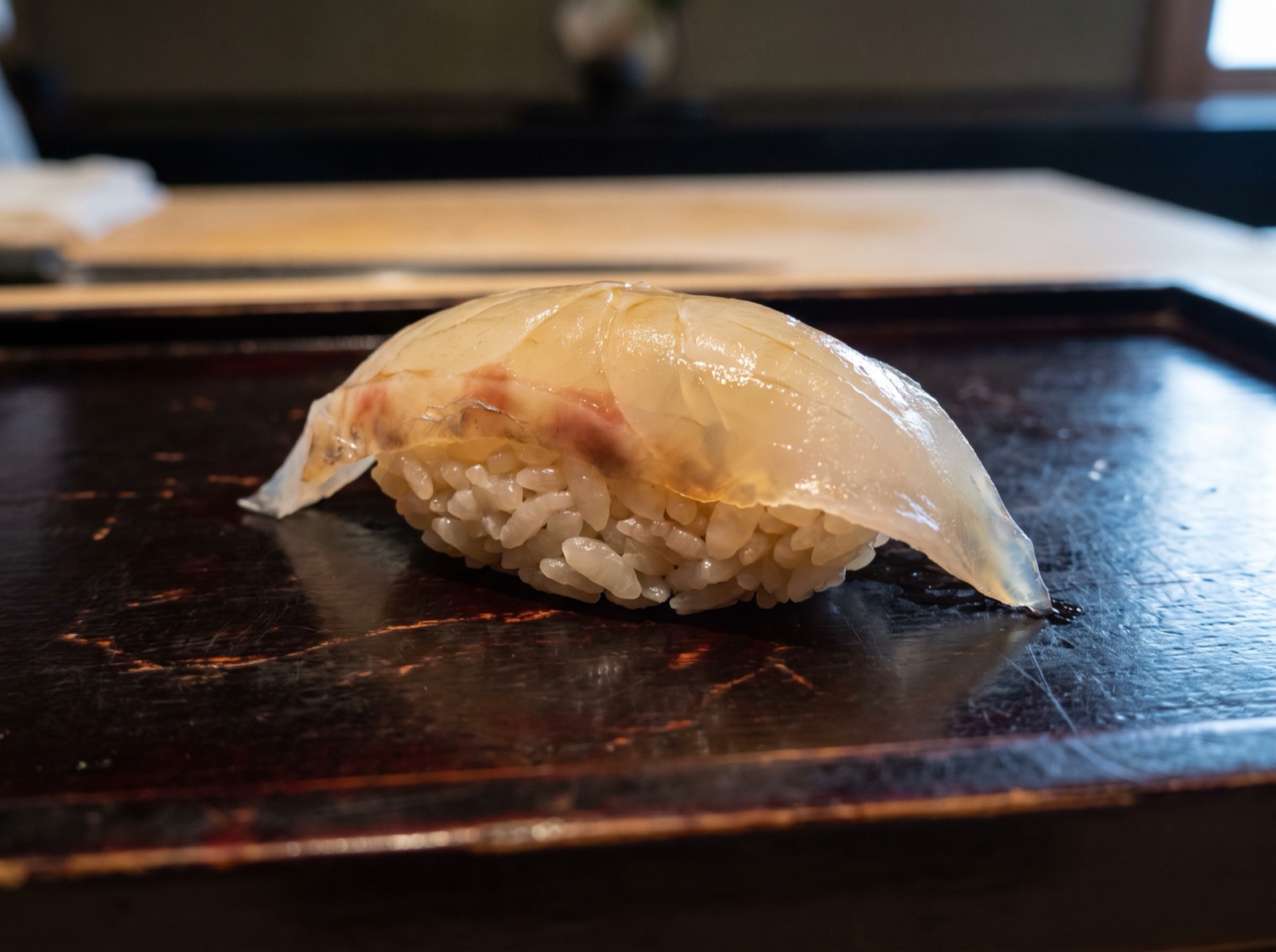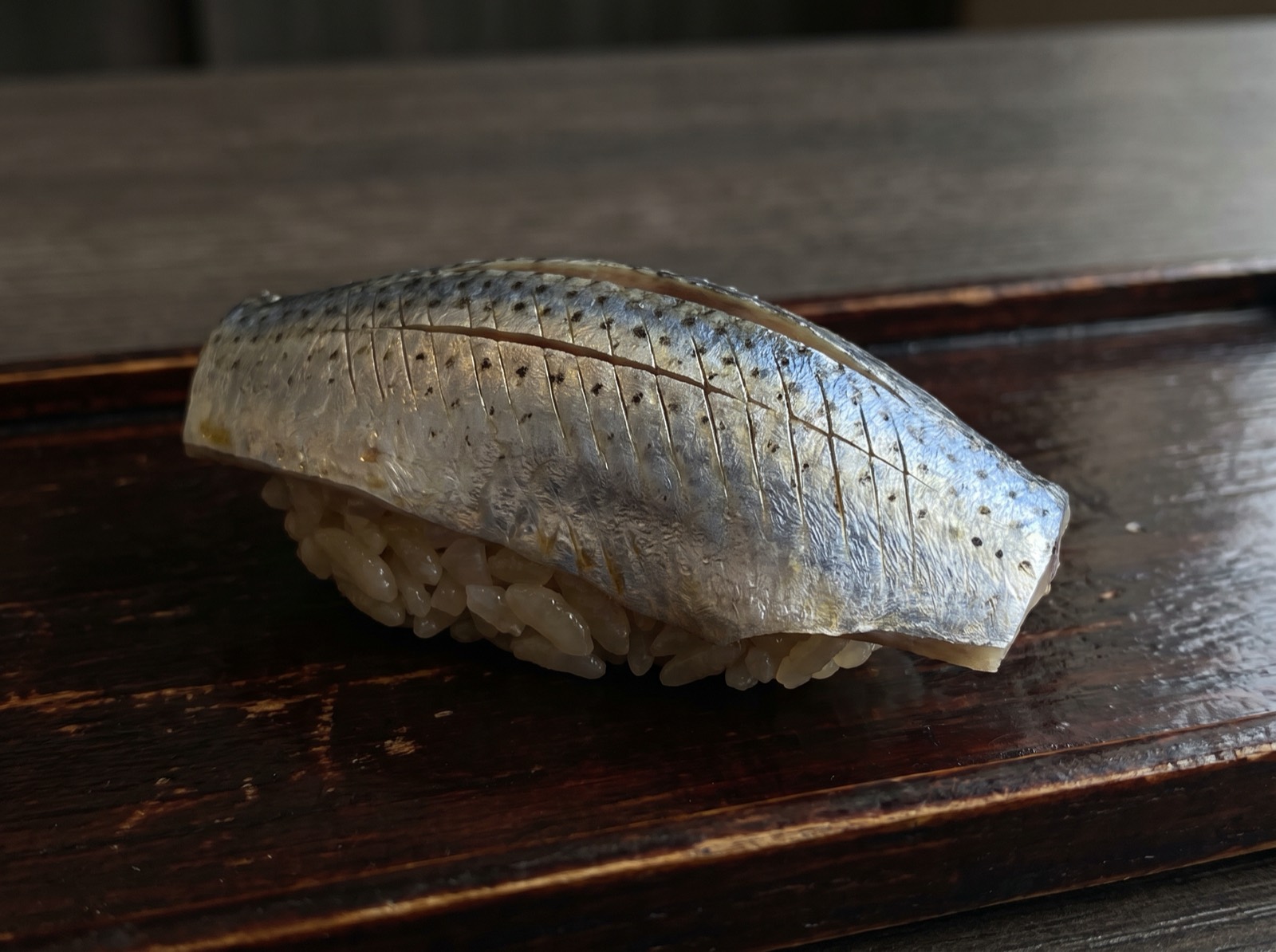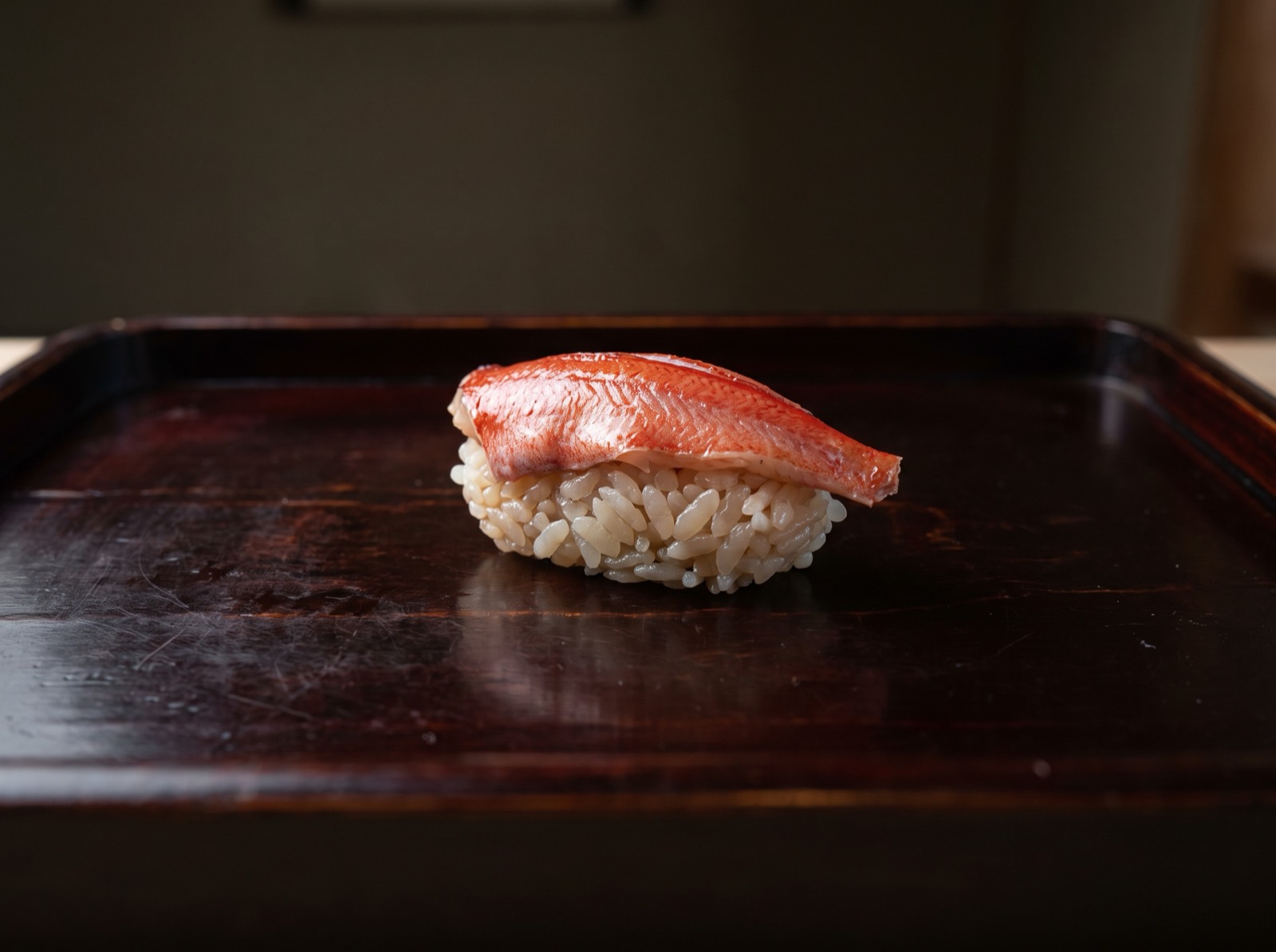
Order kasugo at a Tokyo counter and you may be served three different fish on three different visits, cut from three different animals that happen, for a few weeks each year, to share one name.
What it is
Kasugo (かすご, also written 春子) names the young of the red sea bream group at a shared early stage of their lives — principally madai, but market and kitchen usage extends the word to chidai and kidai as well, two close relatives that are almost never sold under their own names at this size. Grown, the three separate into three different fish, each with its own name and, on this site, its own entry. Young, for a stretch of the year, all three answer to kasugo.
Which of the three the word started with is a question our sources do not answer the same way. One reference traces kasugo to young madai, with chidai and kidai folded into the name later as the market widened it to cover anything that looked and cured the same way. Another reference traces it the other direction, to young chidai first, with madai and kidai added afterward. Both agree on what the name covers today. Neither agrees on where it began, and we are not going to manufacture a tie-breaker that our sources do not give us.
Not a growth ladder
This site has already described the other Japanese custom for renaming a fish as it grows, the shusseuo (出世魚): a single fish given a new name at each stage, buri being the clearest case and kohada’s own ladder from shinko to konoshiro another. Kasugo runs the opposite way. It is one name for several fish, and only for the stretch of their lives when all of them are still small enough to fit under it. Grow past that stretch and a kasugo stops being a kasugo. It becomes madai, chidai or kidai, each under its own adult name, with no shared word left to hold the three together.
When it is at its best
Kasugo is named for spring, and for madai — the group’s principal fish — that fits well. Our madai entry already covers the adult fish’s own spring peak, and by our sources’ account the young fish’s bright, near-vermillion skin is part of why the season and the name were linked in the first place. It fits chidai and kidai less neatly. Both spawn later, in summer and into autumn, so a kasugo that happens to be a young chidai or kidai can be furthest from its own best condition exactly when the name suggests it should be at its peak.
Why the young fish get a name of their own
One of our sources is specific that kasugo is Kanto usage, an eastern-Japan term for a fish local waters produce in quantity while it is still too small to be sold, or cut, the way an adult tai is. Before it could be handled as a topping in its own right — priced, prepared and served apart from the grown fish it will eventually become — it needed a name that did not belong to the adult stage at all.
Two stories for one name
Sources give two different explanations for the word itself, and do not settle between them. One ties it to the season and the colour just described: the young fish’s pink-red skin was thought to suit spring so well that the name came to be written 春子, “child of spring.” The other ties it to size rather than season or colour, a folk account that traces the word instead to a term for something small and slight. Neither is presented in our sources as more than an account. We give both, rather than choosing the tidier one.
What the chef actually does
This is not, in the end, a story about curing technique — that ground is already covered in our entry on kohada, and the steps below are close cousins of it rather than a new method. What differs here is the reason for reaching for salt and vinegar at all.
Kohada is cured because the grown fish is oily and, before refrigeration, needed preserving. Kasugo is cured for close to the opposite reason: the fish is immature. Raw, our sources describe the flesh as soft and short on flavour. Salting, then a brief vinegar treatment, firms the texture and brings out a taste the raw fish does not yet have on its own. It is a fix for youth, not for oiliness.
- Salt, then vinegar. The fish is filleted and given the same two-stage cure described in our kohada entry — salted first, rinsed, then set briefly in vinegar. Our sources give no fixed times for either stage, and we are not going to invent ones they do not provide.
- Yubiki, on the skin. A quick pass of boiling water over the skin side, chilled immediately after — the same treatment this site has already described for kinmedai. Here it is done to set the young fish’s colour, fixing the pink-red flush before it can dull.
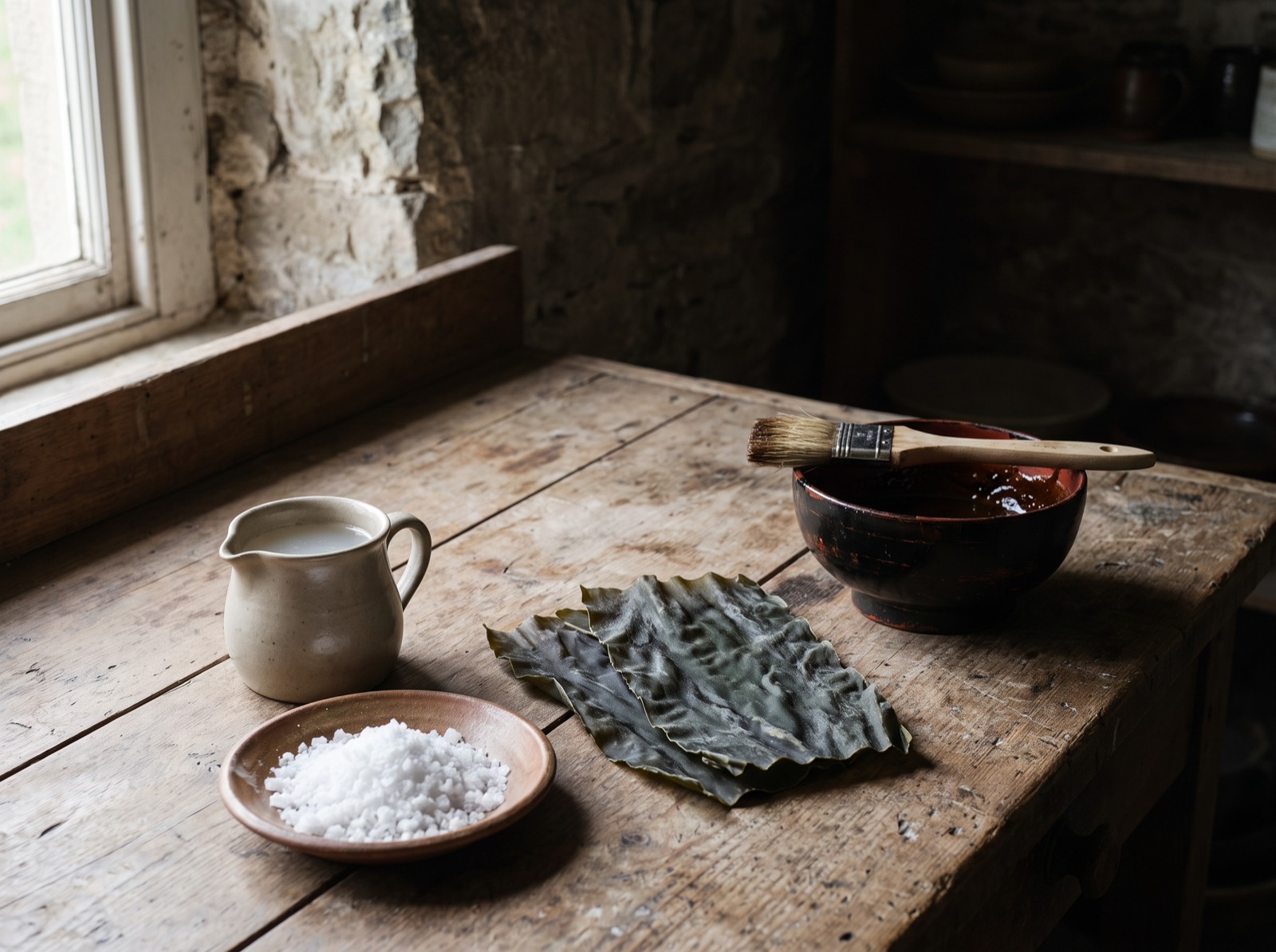
- Kobujime, sometimes. Some kitchens add a further step, laying the cured fish briefly between sheets of kelp — the technique covered in more depth in our madai entry, where it matters more to the adult fish’s drier, leaner flesh than it does here.
- Kazari-bôchô, on the skin. The same decorative scoring described in our kohada entry is cut into kasugo’s skin before it is formed into nigiri, for the same reasons: it helps the piece sit properly on the rice and changes how the skin gives against the teeth.
It is one name for several fish, and only for the stretch of their lives when all of them are still small enough to fit under it.
How it differs from what it is confused with
- Kasugo and kohada share a cure, not a reason for it. Kohada is cured because the grown fish is oily; kasugo is cured because the fish is not yet grown.
- Kasugo is not sakuradai. Sakuradai, covered in our madai entry, names the adult fish at its pre-spawn peak in spring. Kasugo names the same species years earlier, as a juvenile — and, because it also covers chidai and kidai, it is not madai’s word alone the way sakuradai is.
- Kasugo is not a shusseuo. A shusseuo such as buri is one fish renamed at each stage of its own life. Kasugo is one name three fish share, for only as long as they are all still small.
- Chidai and kidai are not madai. Both are separate species of tai in their own right, cooked and named on their own once grown. Kasugo is the one stretch of their lives when the three are gathered under a single word.
How to say it
kah-SOO-goh is close enough for most purposes. Strictly it is three even beats, ka-su-go, with no strong stress on any of them — the same flat rhythm as kohada. The characters most often given for it, 春子, do not spell out that reading in any straightforward way; it is a name chosen for what it means, spring’s child, rather than for how its parts are normally read aloud.
Where you will see it
On a Tokyo menu, kasugo turns up most often as nigiri, skin on and scored. Our sources also describe it pressed into hako-zushi, the boxed, pressed form more associated with Osaka — one of the few places an Edomae cure and a Kansai form share a plate. Kasugo is classified among the hikarimono, the skin-on family kohada belongs to as well, and the same advice holds here as there: shime or nama, cured or raw, is the more useful question to ask at the counter than the species name printed underneath.
Order kasugo and you are not naming one fish so much as naming a moment three fish share — madai, chidai and kidai, caught small enough, and coloured brightly enough, to be sold under one word before each goes back to being itself. Ask which of the three is in front of you. A good counter will know. The name on the menu will not tell you on its own.
Frequently asked questions
What is kasugo?
A market name for the young of the red sea bream group, principally madai but also chidai and kidai. It is not a single species; it is a shared early stage that several related fish pass through, before each reverts to its own adult name.
Is kasugo the same fish as madai?
Sometimes. A madai young enough to be called kasugo is the same species as the adult fish covered in our madai entry. But kasugo also covers young chidai and kidai, two related but separate tai, so the name as a whole is not madai's alone.
Which fish did kasugo originally mean?
Our sources do not agree. One traces the name to young madai, with chidai and kidai added to the label later. Another traces it to young chidai first, with madai and kidai added afterward. Both agree on what the name covers today. Neither can tell us where it started.
Is kasugo a shusseuo, renamed as it grows?
No. A shusseuo such as buri is one fish renamed at each stage of its own life. Kasugo runs the other way: one name, shared by three different fish, for only as long as they are all still small.
Why is kasugo cured in salt and vinegar, like kohada?
For a different reason. Kohada is cured because the grown fish is oily. Kasugo is cured because the fish is immature: our sources describe the raw flesh as soft and short on flavour, and the cure firms it and brings out a taste the young fish does not yet have on its own.
When is kasugo in season?
The name points to spring, and that fits madai, whose own peak is in spring. It fits chidai and kidai less well, since both spawn later, in summer and into autumn, so a kasugo that happens to be a young chidai or kidai is not necessarily at its best when the name suggests it should be.