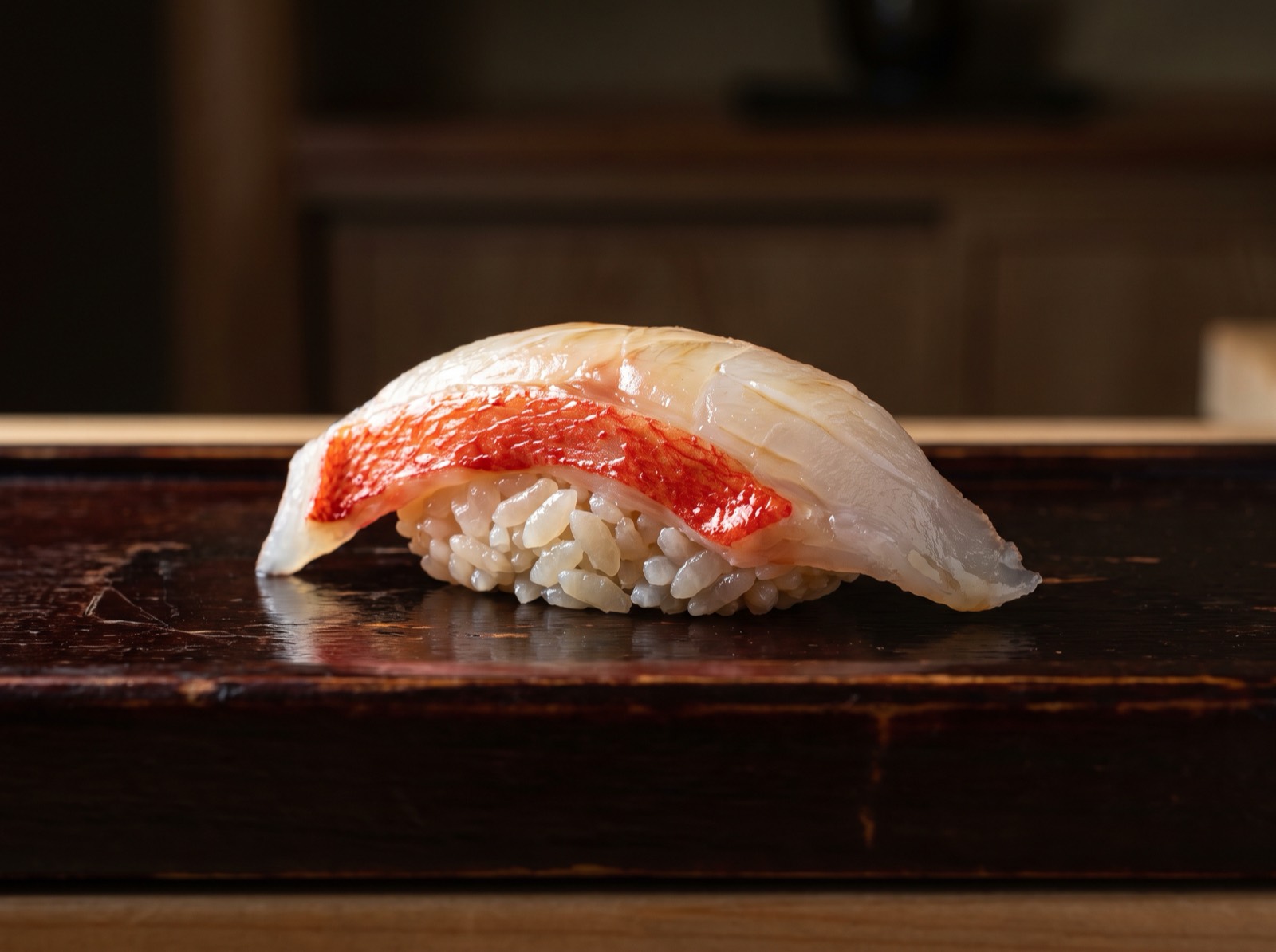
Madai (マダイ) is red sea bream, Pagrus major: a lean, firm, faintly sweet white fish, and the most culturally weighted animal in Japanese cooking. It is the fish of weddings, New Year and every kind of celebration, and it is one of the two or three items on a counter where the chef's preparation matters more than the raw material.
What it is
A pink-skinned sea bream, up to a metre in the wild, with white flesh that holds together firmly and a clean, restrained flavour. There is very little fat, which is the whole difficulty: nothing masks a mistake, and nothing carries a flavour that has not been deliberately introduced.
Its status comes partly from a pun. Tai sits inside medetai (めでたい), the word for auspicious, and a whole grilled sea bream is a fixture of celebratory tables for that reason as much as for how it eats. This is not incidental colour: it is why the fish is priced above what its eating quality alone would command, and why it is farmed at scale.
When it is best
Spring, and this is the textbook case for the rule that peak condition precedes spawning.
Sea bream feed heavily and reach their best condition ahead of spawning in spring. Fish taken then are called sakuradai (桜鯛), cherry-blossom bream, both for the timing and for the pink flush the fish takes on. Then they spawn, and the same fish becomes markedly poorer — thin, watery, and known in the trade as mugiwara-dai (麦藁鯛), straw bream, after the colour of the season's dried barley stalks.
Two words for one animal a few weeks apart, one complimentary and one not, is as clear a demonstration of shun as Japanese has produced. See what shun actually means. There is a second, lesser peak in autumn, when fish that have recovered condition are sometimes called momijidai (紅葉鯛), maple bream.
What the chef does to it
Lean white fish is where Edomae technique is most visible, because there is nothing else going on.
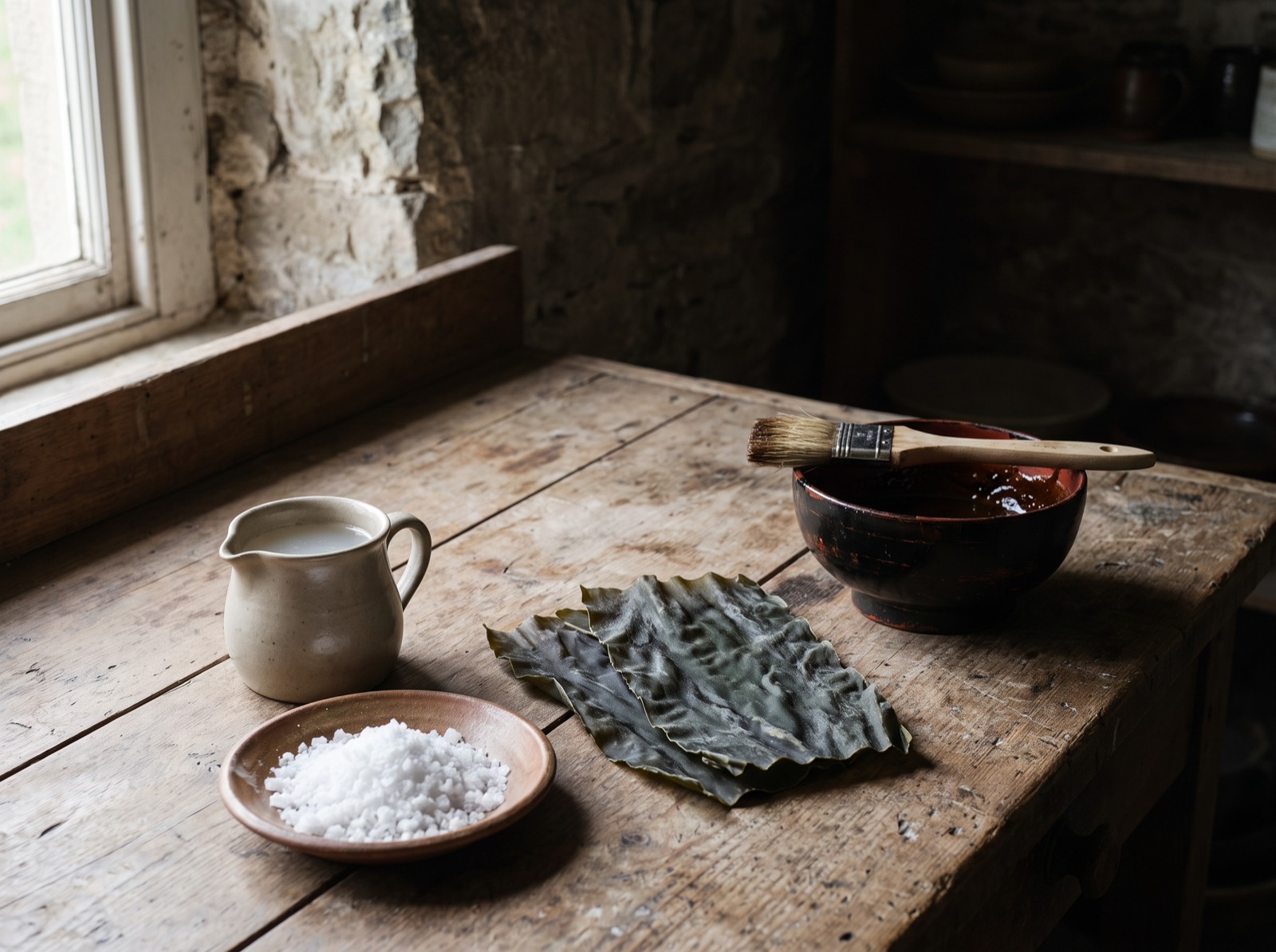
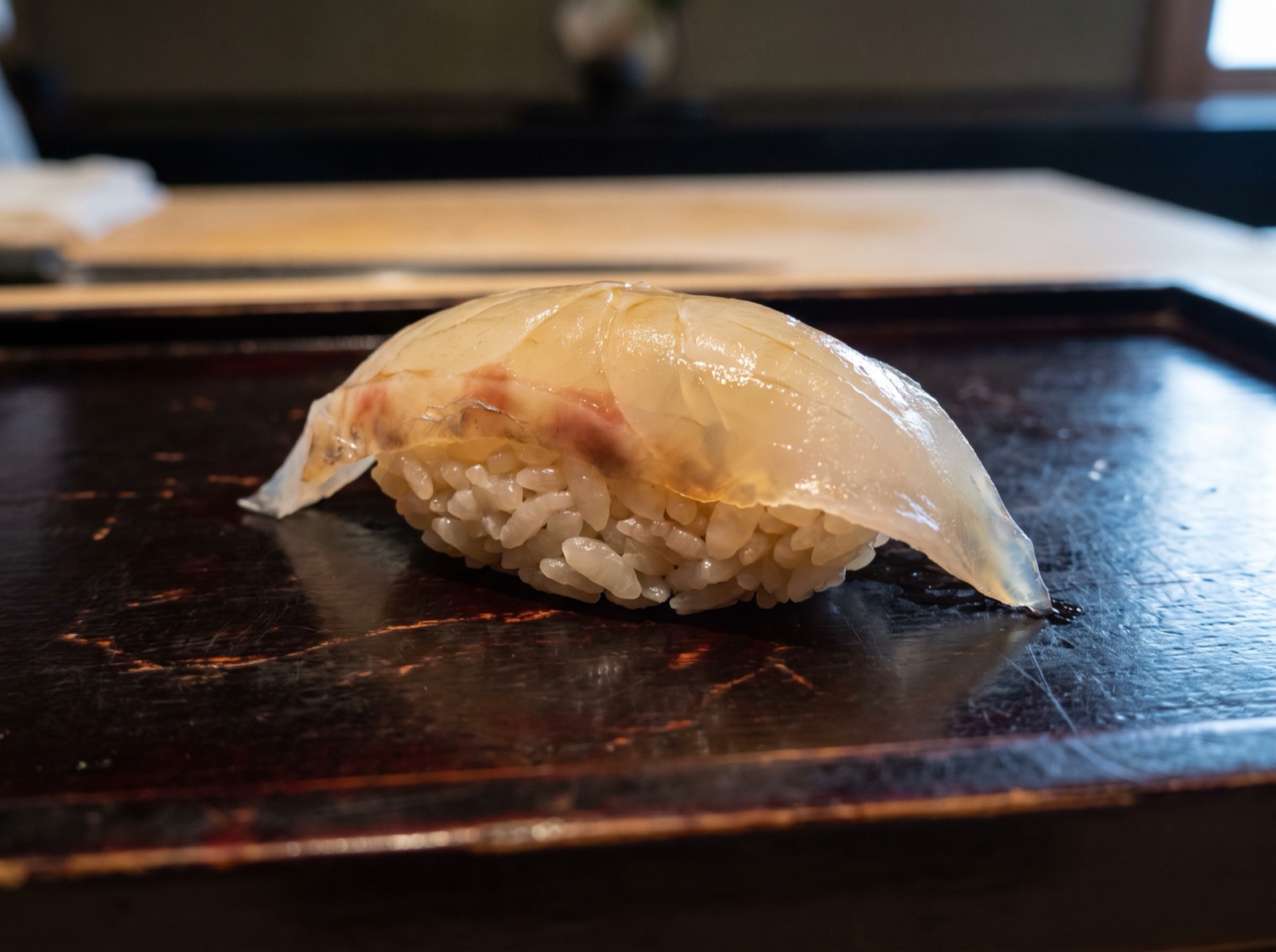
- Kobujime (昆布締め), kelp curing. The fillets are laid between sheets of kombu, sometimes after a light salting, and left for hours. The kelp draws out moisture and returns glutamates — savour — in exchange. The flesh firms, becomes slightly translucent, and gains a depth it did not have. Madai is the canonical subject of this treatment.
- Ageing (熟成). White fish generally improves with a day or more of controlled rest, as enzymes break down muscle and develop savour. A shop serving madai the day it was landed is serving a firmer, blander fish than one that waited.
- Matsukawa-zukuri (松皮造り), pine-bark cut. Boiling water is poured over the skin side, which is then immediately chilled. The skin softens enough to eat while the flesh beneath stays raw, and the pattern it leaves gives the technique its name. Used where the skin is worth keeping.
- Salt rather than soy. Many counters finish madai with salt and a squeeze of citrus instead of nikiri, on the grounds that soy overwhelms it.
There is no fat to hide behind. Whatever the chef did in the hours before service is what you taste.
Wild and farmed
Worth stating plainly, because the gap is unusually wide. Sea bream is farmed at large scale in Japan (it is one of the country's principal aquaculture species), and farmed madai is a perfectly reasonable fish: consistent, available year-round, and considerably fattier than wild.
It is also a different eating experience. Wild madai in spring is firmer, leaner, and has a clarity of flavour that the farmed fish does not attempt. Neither is a fraud, but a menu that says only tai is not telling you which you are getting, and at the top of the market the distinction is one of the things you are paying for.
How it differs from what it is confused with
Japanese names a great many unrelated fish -dai, and English then translates all of them as “sea bream” or “snapper”. Very few are actually related to madai:
- Kinmedai (キンメダイ), splendid alfonsino: a deep-water fish, red-skinned, fatty, and not a sea bream at all.
- Amadai (アマダイ), tilefish: also unrelated, and treated quite differently.
- Ishidai (イシダイ), striped beakfish: a different family again.
- “Red snapper” abroad is usually a genuinely different fish from a different ocean, sold under a name that borrowed madai’s reputation.
The general rule: -dai in a Japanese fish name often means “shaped a bit like a sea bream and therefore worth naming after one”, in the same way English attaches “-fish” to unrelated animals.
How to say it
mah-DYE is close. Three beats, ma-da-i, the final two vowels running together into something like “dye”. Ma- is a prefix meaning true or genuine, which appears across Japanese fish names and always signals the reference species of a group.
Edomae and Kansai
Sea bream leans west. The Seto Inland Sea is its historical heartland, Akashi in Hyogo carries the strongest regional reputation, and Kansai's cooking has traditionally favoured white fish where Edo favoured the oily and the cured.
In sushi terms the split shows in the treatment: kelp curing is strongly associated with the Japan Sea coast and the west, and it arrived in the Edomae repertoire as one technique among several rather than as the defining one. A Tokyo counter is more likely to age its madai; a Kansai kitchen more likely to cure it in kelp. Both do both.
Where you will see it, and roughly what it costs
Everywhere. Farmed madai is a supermarket and conveyor-belt staple; wild spring madai at a serious counter is a mid-to-upper item, priced well below tuna and well above the everyday white fish.
No per-piece figure from us. The useful signal is that madai is a piece where you can taste the kitchen: if a counter's white fish is dull, it is not the fish's fault. See omakase price tiers. The fish will not carry a careless kitchen.
Frequently asked questions
What is madai?
Red sea bream, Pagrus major: a lean, firm, faintly sweet white fish and the most culturally significant animal in Japanese cooking. It appears at weddings and New Year, partly because tai sits inside medetai, the word for auspicious.
When is madai in season?
Spring, before spawning, when fish are called sakuradai, cherry-blossom bream. After spawning the same animal becomes thin and watery and is known as mugiwara-dai, straw bream. There is a lesser autumn peak sometimes called momijidai.
What is kobujime?
Kelp curing. Fillets are laid between sheets of kombu, often after light salting, and left for hours. The kelp draws out moisture and gives back glutamates, firming the flesh and adding savour. Madai is the classic subject of the technique.
What is the difference between wild and farmed madai?
Farmed sea bream is consistent, available year-round and noticeably fattier. Wild spring madai is leaner, firmer and clearer in flavour. Neither is a fraud, but a menu that says only 'tai' is not telling you which you are being served.
Is kinmedai a kind of madai?
No. Kinmedai is splendid alfonsino, a deep-water fish that is not a sea bream at all. Japanese attaches -dai to many unrelated fish, much as English attaches -fish, and English then translates them all as sea bream or snapper.
Why is sea bream served at Japanese celebrations?
Largely because of a pun: tai sits inside medetai, meaning auspicious. A whole grilled sea bream is a fixture of celebratory tables, and the association raises the fish's price above what its eating quality alone would command.