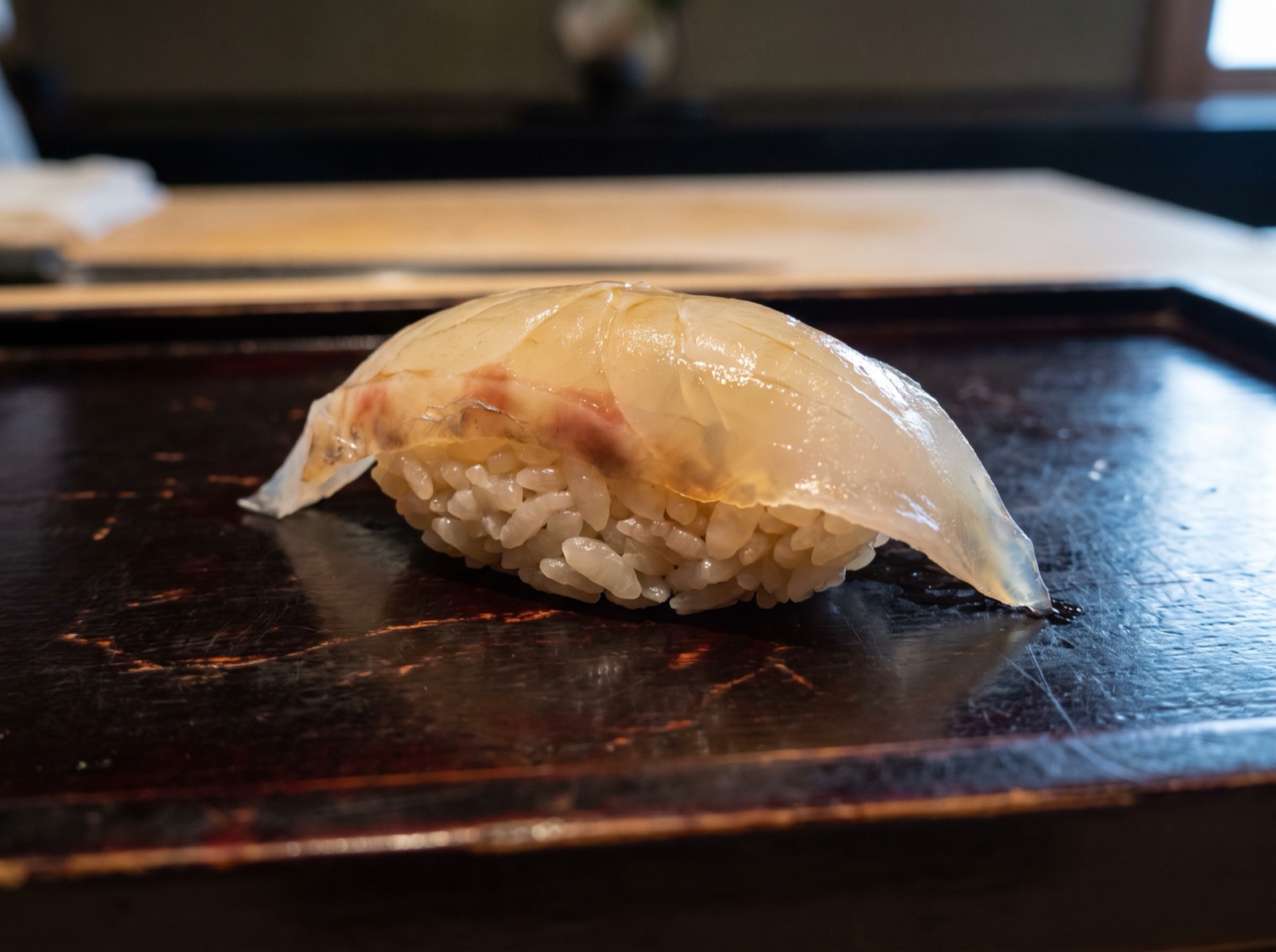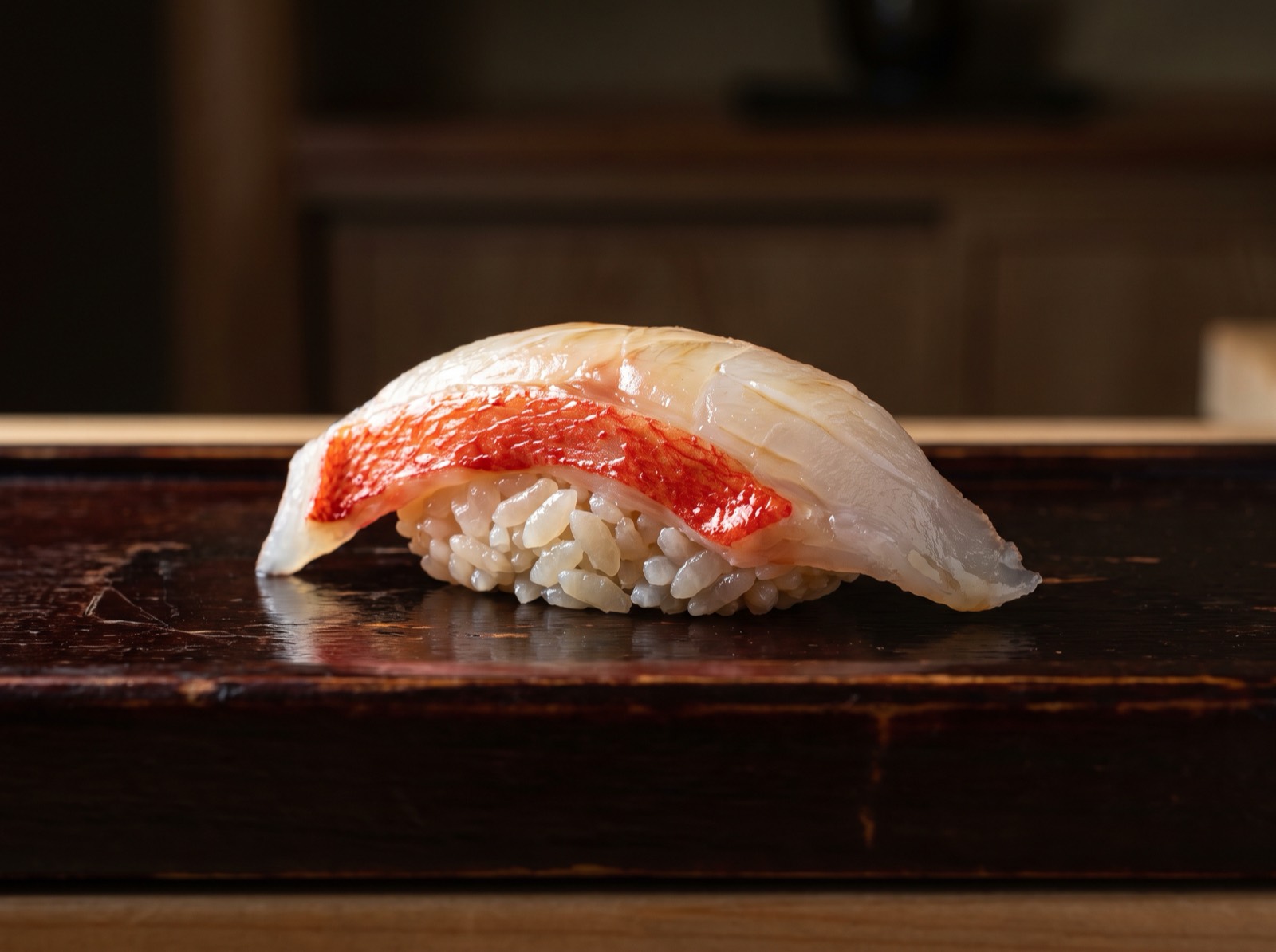
Kinmedai (キンメダイ, splendid alfonsino) is a deep-water fish with brilliant scarlet skin and a large golden eye, and it is not a sea bream. The name means “golden-eyed dai”, and the dai is borrowed, a habit in Japanese fish naming, where red and roughly bream-shaped is often enough to earn the suffix.
What it is, and why the name misleads
The true sea bream is madai, and Japanese has a long list of fish that carry dai without belonging to that family: kinmedai among them, along with several others. The convention is old and harmless, but it produces a specific confusion at the counter, because kinmedai eats nothing like madai.
Madai is lean, firm and subtle — a fish that rewards patience. Kinmedai is fat. It comes from deep, cold water, and deep-water fish carry fat as insulation and as reserve. The flesh is soft, white, and noticeably rich, and the fat sits close under the skin, which is why the skin is usually kept on.
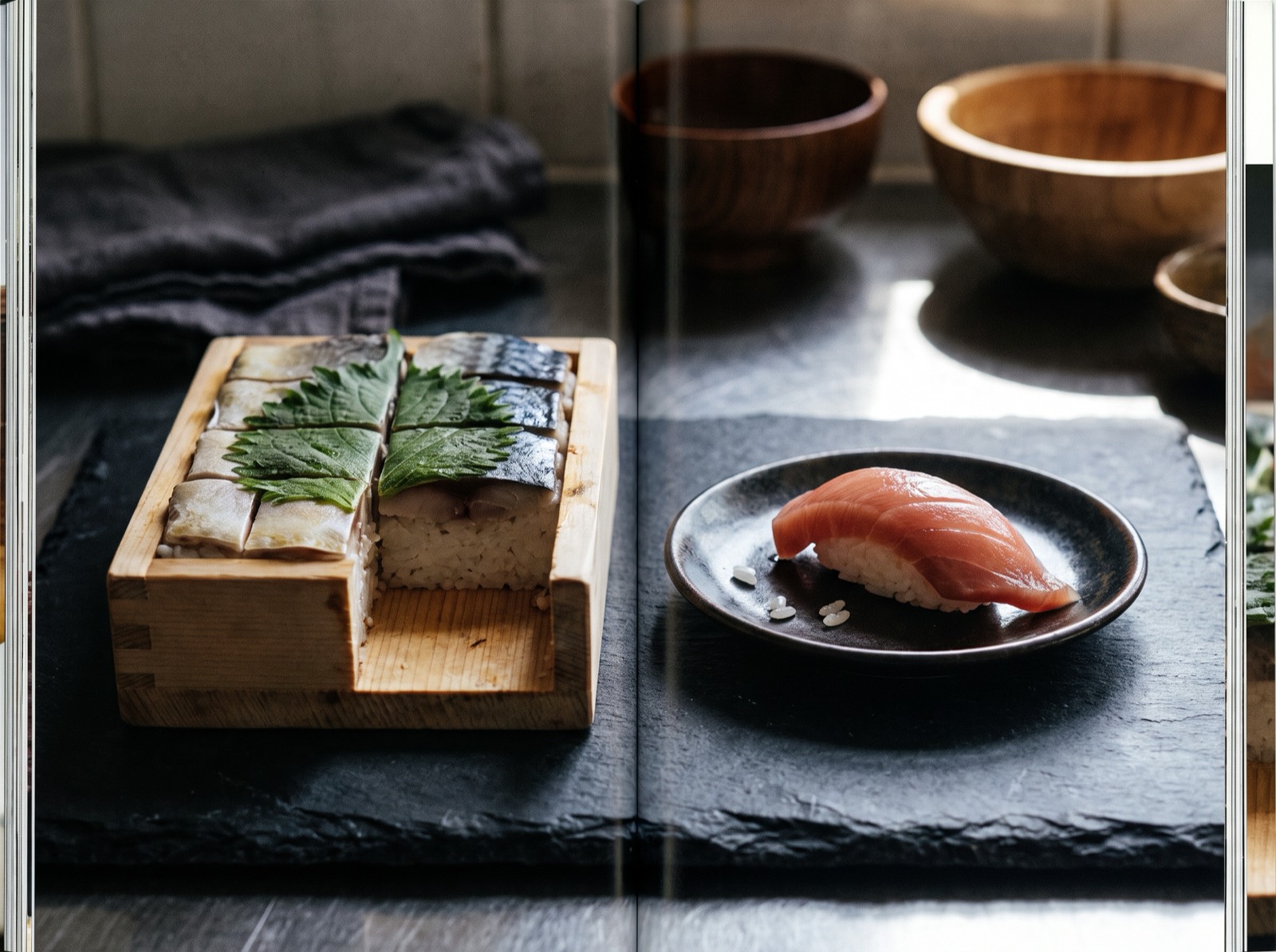
There is a second misreading underneath the first, and it is about colour. Kinmedai looks like a red fish and is not one. In Japanese practice the division between red-fleshed and white-fleshed fish is a real distinction with a physical basis: red-fleshed fish carry a great deal of myoglobin in the muscle, white-fleshed fish carry very little, and the dark strip called chiai is where those pigments concentrate. Tuna is the red case. Kinmedai, for all its scarlet, is emphatically a white-fleshed fish.
That is not a technicality. It is the whole reason the standard treatment looks the way it does. Leave the skin on, dress it with boiling water, and the piece arrives as a bright red band sitting on white flesh, which is a composition rather than an accident. Take the skin off and you have an anonymous fat white fish. The name says bream and the colour says tuna, and both are wrong in the same direction.
A fish can carry dai in its name without being a bream. Kinmedai is the case where the difference matters at the table.
When it is best
Winter, when the fat is heaviest. Kinmedai is available through the year (it lives too deep to be strongly seasonal in the way a coastal fish is), but the cold-season fish is unmistakably richer, and shops that carry it will feature it then.
Landings from the waters off Izu and the Bōsō peninsula are the ones the Tokyo trade talks about, and named local landings command a premium in the same way that named landings do for other prestige fish. Those distinctions are not something a customer can check at the counter.
What the chef does to it
Almost always something involving the skin, because the skin is where the fish makes its case.
- Yubiki (湯引き). Boiling water poured over the skin side, then immediately chilled. The skin softens enough to eat, the fat beneath it melts slightly, and the scarlet band stays intact against the white flesh. This is the standard treatment.
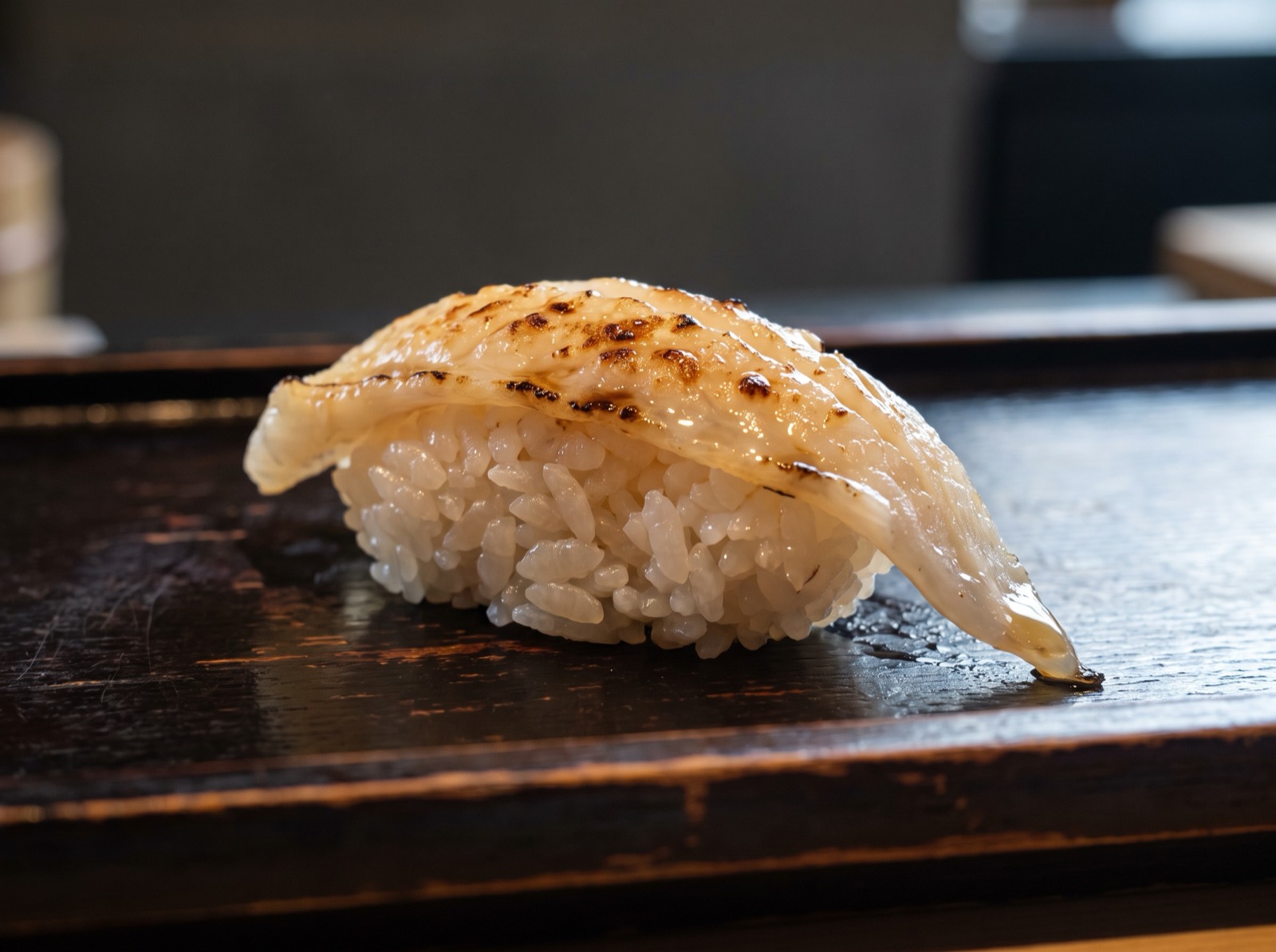
- Seared, aburi (炙り), with a flame rather than water. More smoke, more melt, a slightly firmer edge.
- Rested. Like most fat white fish, kinmedai improves for a day or two rather than being at its best the moment it is cut.
- Salt as often as soy. The fat is sweet and soy competes with it.
- Simmered. Outside sushi, nitsuke, a soy-and-sugar simmer, is the classic preparation for this fish, and is one of the great dishes of Japanese home cooking. If you see it on an izakaya menu, it is worth ordering.
How it differs from what it is confused with
- Kinmedai is not madai. Different family, different flesh, opposite handling. Madai is lean and served plain; kinmedai is fat and served with the skin treated.
- Kinmedai is not nodoguro (ノドグロ, blackthroat seaperch), though the two are frequently grouped as “the fatty white fish”. Nodoguro is fattier still and more expensive again.
- “Golden eye snapper” appears on English menus and is doubly wrong: it is not a snapper either. “Alfonsino” is the correct English name and almost nobody uses it.
- The red skin is the fish's own, not a dye or a cure. Some diners assume otherwise on first sight.
How to say it
kin-meh-DYE. Five beats in Japanese: ki-n-me-da-i. The n takes a beat of its own, and the final ai is as in “eye”. The same dai ending appears in madai and in a dozen other fish names.
Edomae and Kansai
Tokyo's fish, in practice. The landings that supply it are close to the Kantō region, and Edo-style counters have treated it as a standard winter item for a long time. Osaka's white-fish tradition centres on leaner fish handled with salt and kelp, and a fat, skin-on piece sits less naturally in that idiom; it appears, but it is not a signature. See Osaka vs Tokyo.
Where you will see it, and roughly what it costs
On winter omakase courses, on the better conveyor belts as a seasonal special, and in izakaya as a simmered dish. It is a mid-to-upper-range item (more than madai, less than the top-tier tuna cuts), and the price moves with the season and with the named landing.
For what a course costs, see omakase price tiers.
The one advisory that mentions it
Alfonsino appears in the Ministry of Health, Labour and Welfare’s mercury advisory for pregnant women, in the once-a-week band, on a standard serving of about 80 grams. It shares that line with swordfish, Pacific bluefin and bigeye tuna — which is to say, with the fish most people were going to order anyway. It is a frequency, not a prohibition: the advisory states in its own text that it is not asking pregnant women to avoid these fish.
It is also narrow. Infants, children, nursing mothers and adults who are not pregnant are outside it entirely. If none of that describes you, the paragraph above is the whole of it, and the simmered one is still worth ordering.
Frequently asked questions
What is kinmedai?
Splendid alfonsino: a deep-water fish with scarlet skin and a large gold eye. The flesh is white, soft and noticeably fatty, and it is usually served with the skin left on and treated with boiling water or a flame.
Is kinmedai a sea bream?
No. The dai in its name is borrowed: Japanese fish naming often gives that suffix to fish that are red and roughly bream-shaped. The true sea bream is madai, which is lean and firm and eats nothing like kinmedai.
Why is the skin left on kinmedai?
Because the fat sits directly beneath it and the colour is part of the piece. The skin is softened by pouring boiling water over it, or by searing, so that it can be eaten and the fat beneath melts slightly.
When is kinmedai in season?
Winter, when the fat is heaviest. It is available year-round because it lives too deep to be strongly seasonal, but the cold-season fish is distinctly richer.
What is kinmedai called in English?
Splendid alfonsino. Menus often say golden eye snapper, which is wrong twice over: it is neither a snapper nor a bream.
How do you pronounce kinmedai?
kin-meh-DYE, in five beats, with the n taking a beat of its own and the final ai sounding like eye.
Is kinmedai safe to eat during pregnancy?
The Ministry of Health, Labour and Welfare lists alfonsino in the once-a-week band of its mercury advisory, on a serving of about 80 grams. It is a frequency, not a ban — the advisory says in its own text that it is not asking pregnant women to avoid these fish. Infants, children, nursing mothers and non-pregnant adults are not covered by it at all.