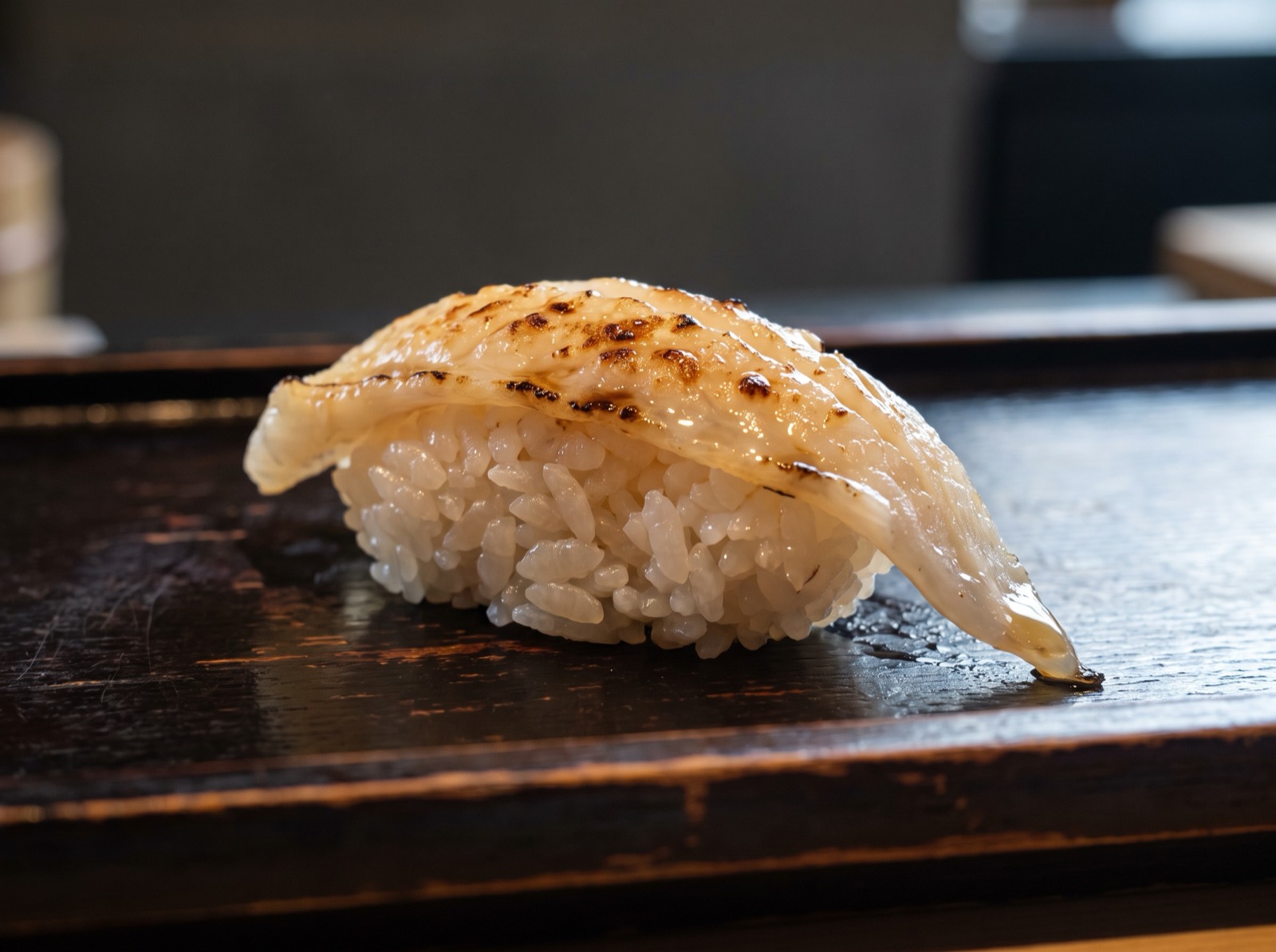
Engawa (えんがわ) is the strip of muscle along the fin margin of a flatfish: the band that drives the continuous rippling motion of the fin. It is springy, faintly crunchy, rich, and quite unlike any other cut on a sushi counter. It is also one of the most commonly substituted items in the trade.
What it is, and why the name
The word is borrowed from architecture. An engawa is the narrow wooden veranda that runs along the outside edge of a traditional Japanese house, between the interior rooms and the garden. The cut is named after it because it occupies the same position: a narrow strip running along the outer edge of the fish.
Anatomically it is the muscle that operates the dorsal and anal fins. A flatfish holds position and moves by rippling those fins more or less constantly, which means this muscle is working continuously in a way that the fish's body meat is not. Continuous work builds connective tissue, and the collagen content is what produces the texture people order it for: a resistance that gives way with a slight crunch rather than dissolving.
There are four strips per fish, and they are narrow. This is a cut whose scarcity is anatomical.
What fish it comes from
This is the part worth knowing, and it is rarely stated on a menu.
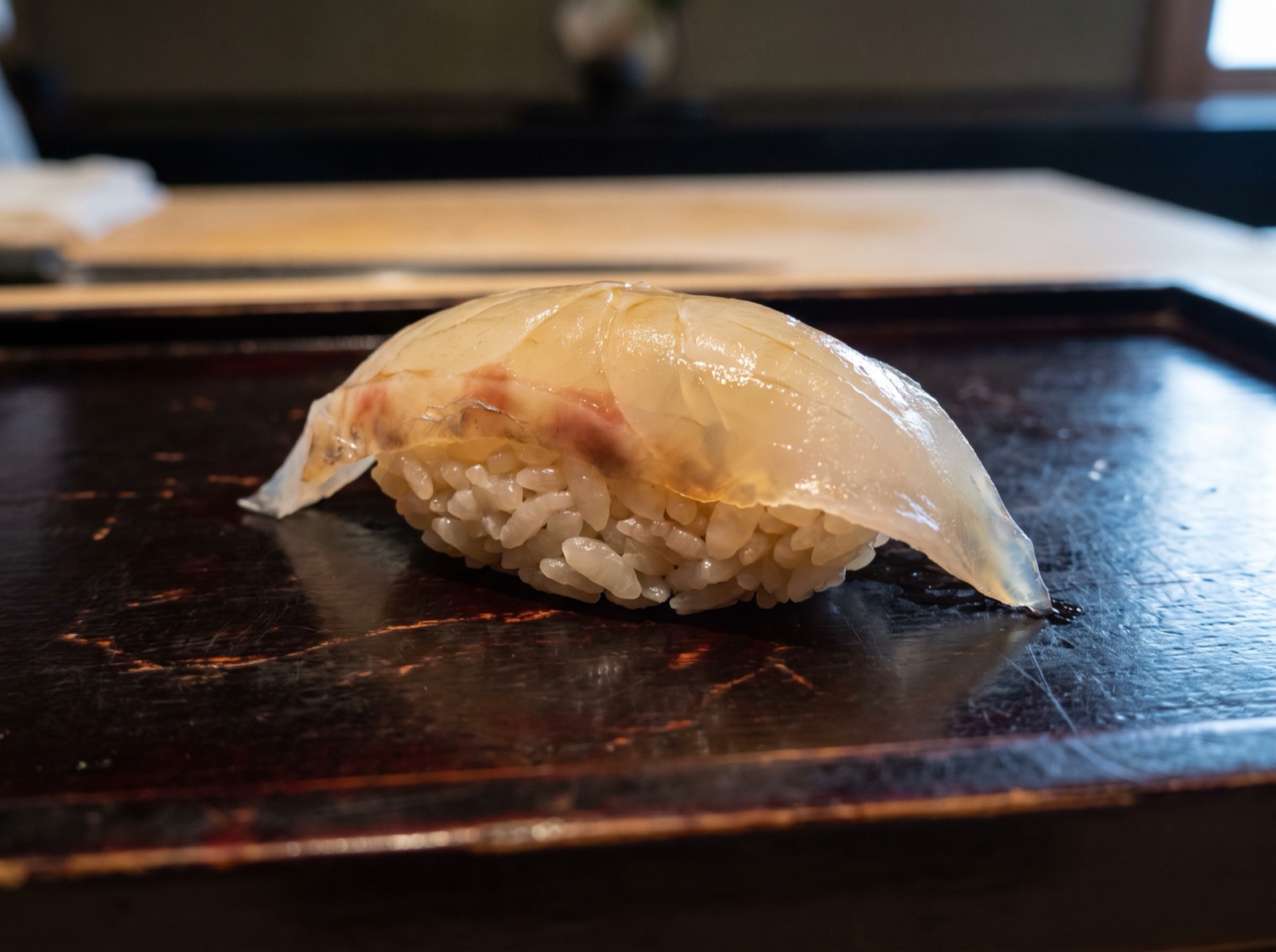
- At a good counter, engawa generally means hirame (ヒラメ), olive flounder, a prized winter white fish and a serious item in its own right. Its engawa is a small delicacy taken from an expensive animal.
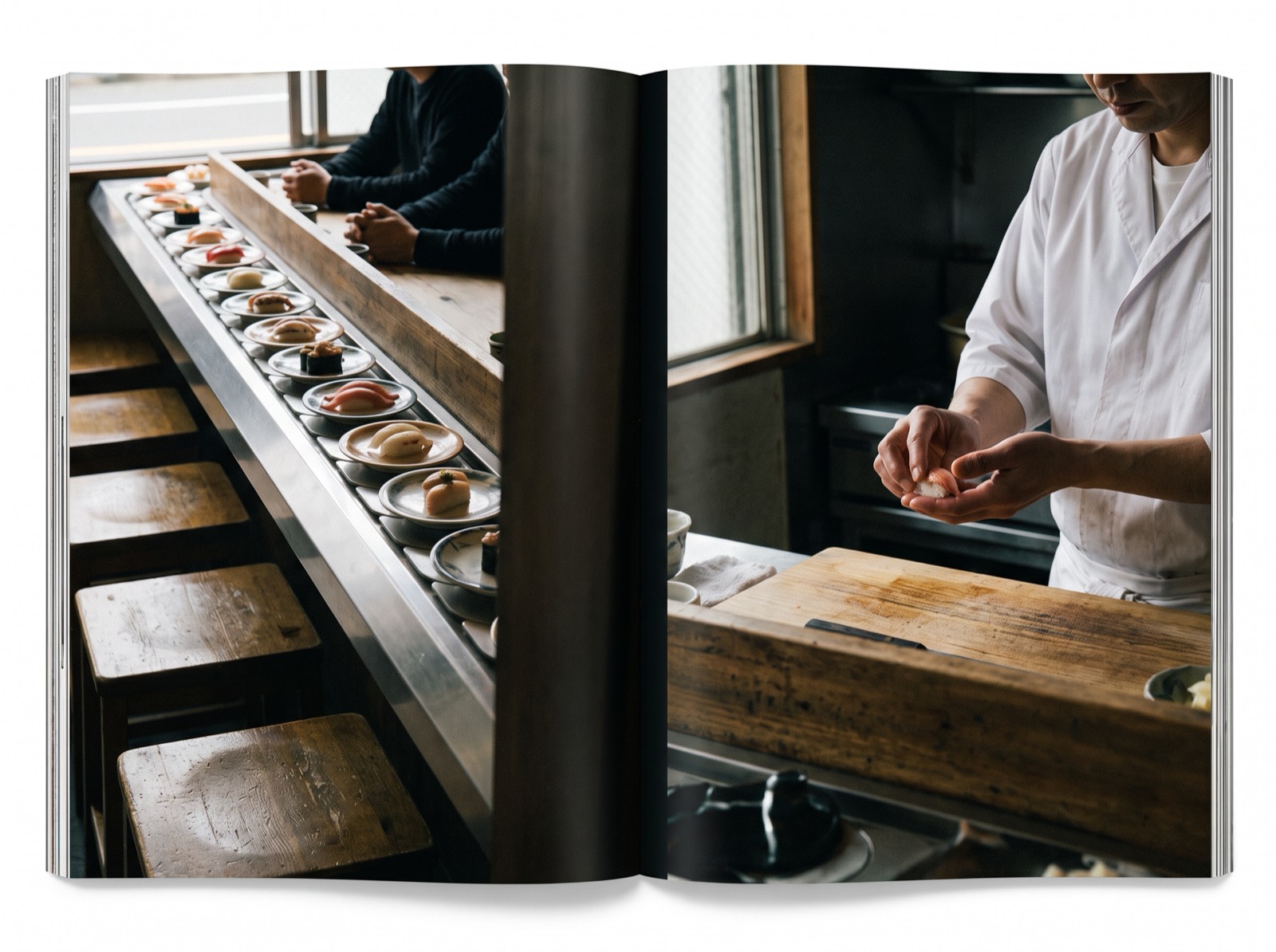
- At a conveyor belt or in a supermarket, engawa is overwhelmingly from ohyō (オヒョウ), Pacific halibut, or another large imported flatfish. These are big fish, so the strips are wide and long, and the price is a fraction of the hirame version.
- Neither is mislabelling. Engawa names a cut, not a species, and the halibut version is a legitimate product. But they are different foods, and the price difference between them is not a quality gradient within one fish.
The practical tell is size. A hirame engawa is small, narrow and pale. If the strip is broad, long and generously sized for the price, it is from a much larger fish.
Engawa names a cut, not a fish. What arrives at ¥100 and what arrives on a course are different animals.
When it is best
Winter, following hirame, which is a cold-season fish and is at its best in the coldest months. Imported halibut is available year-round and does not track a season in any meaningful sense.
What the chef does to it
- Trimmed and cleaned. The strip has to be separated from the fin rays and any remaining membrane, which is fiddly work for a small yield.
- Often seared, aburi (炙り). A quick flame softens some of the collagen and brings out the fat, and the contrast between a warmed surface and a cool centre suits the cut particularly well.
- Salt and citrus, commonly, rather than a soy brush. The flavour is rich but delicate and soy can flatten it.
- Sometimes kelp-cured. Where a shop is treating its hirame with kobujime, the engawa may go the same way.
How it differs from what it is confused with
- Engawa is not a fish. It is a cut, from any flatfish. This is the single most common misunderstanding.
- Engawa and hirame are the same animal at a good shop, hirame being the body meat, lean and firm and quite different in texture.
- Hirame and karei (カレイ) are the two flatfish groups in Japanese cooking, distinguished conventionally by which side the eyes sit on. Both have an engawa.
- Engawa is not scallop, though the springy texture leads some people to make the comparison. Different tissue entirely.
How to say it
en-GAH-wah is understood. Four beats: e-n-ga-wa. The n takes one of its own, as it does in Japanese generally. If you know the architectural sense of the word, you already know the pronunciation.
Edomae and Kansai
No meaningful regional split. Hirame is a national fish with a winter season, and the engawa cut is treated the same way in both cities. Its rise as a popular menu item is modern and is tied to the conveyor-belt trade, where the imported halibut version made a formerly scarce cut into an everyday one.
Where you will see it, and roughly what it costs
Very widely, and at two prices that barely overlap. On a belt it is a cheap plate, and a popular one, precisely because the imported product is abundant. At a counter in winter it is a small, scarce piece taken from an expensive fish, offered when the shop has hirame.
The useful thing to carry is the question: if you like engawa from a belt, order it at a counter in winter and see whether you like the other one. They are different enough that the comparison is worth making deliberately. See conveyor belt vs counter. The word is the same. Almost nothing else is.
Frequently asked questions
What is engawa?
The strip of muscle along the fin margin of a flatfish: the band that drives the fin's continuous rippling motion. It is springy and faintly crunchy because that muscle works constantly and builds connective tissue. There are four narrow strips per fish.
What fish is engawa from?
It is a cut, not a species. At a good counter it usually means hirame, olive flounder. On a conveyor belt or in a supermarket it is overwhelmingly from Pacific halibut or another large imported flatfish: a legitimate product, but a different food.
Why is engawa crunchy?
Collagen. The fin muscle of a flatfish is in near-continuous motion, and continuously worked muscle develops connective tissue. That is what gives engawa its resistance and slight crunch instead of the softness of body meat.
Why is engawa called that?
It borrows the architectural term for the narrow wooden veranda running along the outer edge of a traditional Japanese house. The cut occupies the same position: a narrow strip along the outer edge of the fish.
How can I tell hirame engawa from the cheap kind?
Size. Hirame engawa is small, narrow and pale, because it comes from a modest fish. If the strip is broad and long and generous for the price, it is from a much larger imported flatfish.
When is engawa in season?
Winter, following hirame, which is a cold-season fish at its best in the coldest months. Imported halibut is available all year and does not track a season.