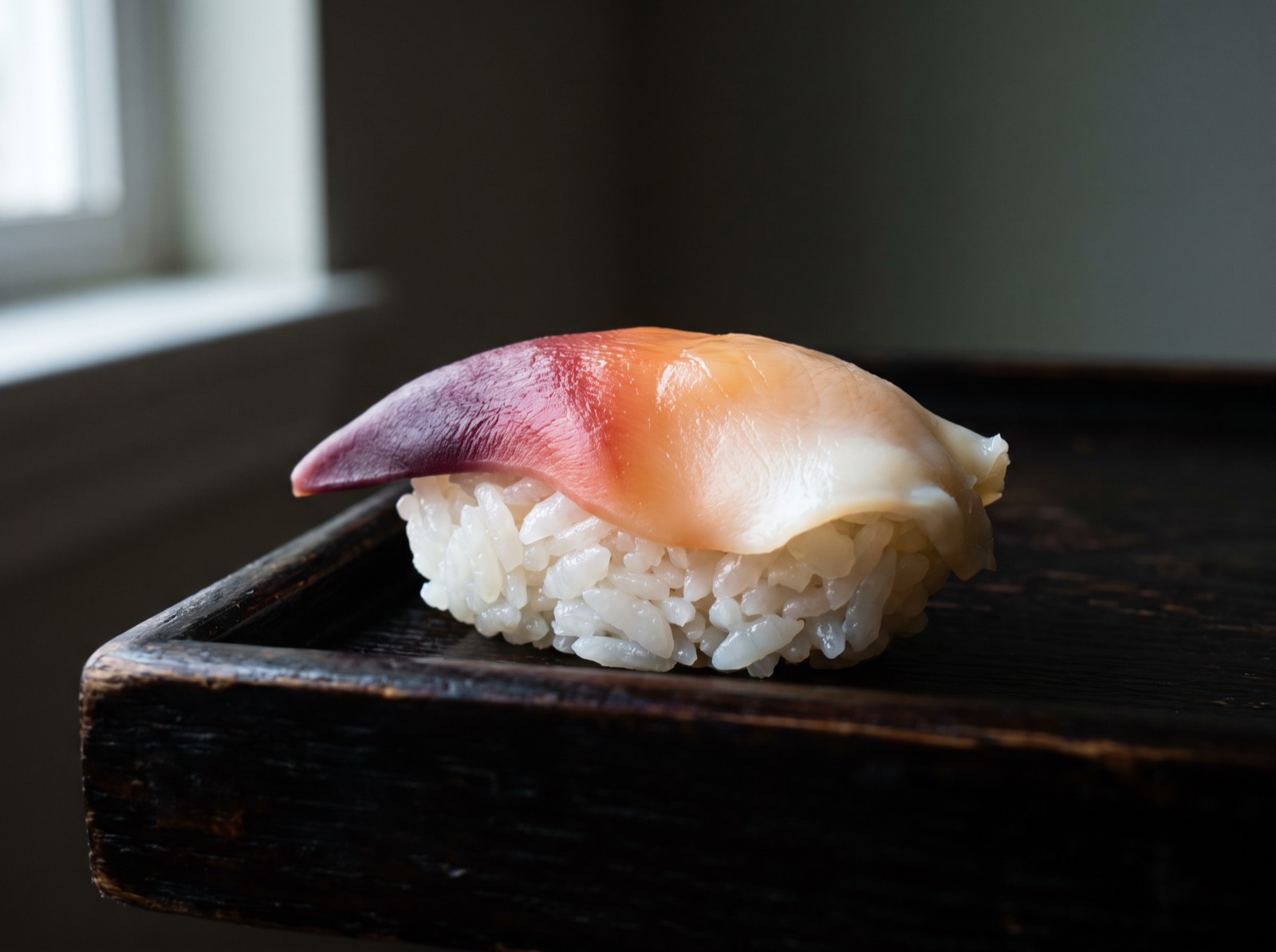
Hokkigai (ホッキガイ, surf clam) arrives on the rice pink at the tip and white at the base, and looks as though it has been dyed. It has not. Raw, the clam is a dull greyish brown; three seconds in boiling water turns it that colour, and the change is one of the few genuinely visible chemical events on a sushi counter.
What it is
A large, thick-shelled bivalve of cold northern water. The formal name is ubagai (ウバガイ); hokkigai is the name everyone actually uses, and it is associated with Hokkaidō, where much of the domestic catch is landed. The part served is the foot, the muscular wedge the clam uses to burrow, sliced open and flattened.
The texture is firm and slightly springy, and the flavour is clean and sweet with a mineral finish. It is one of the more forgiving shellfish for a first-time eater: no strong iodine note, no slipperiness, nothing challenging about it.
The colour, and why it happens
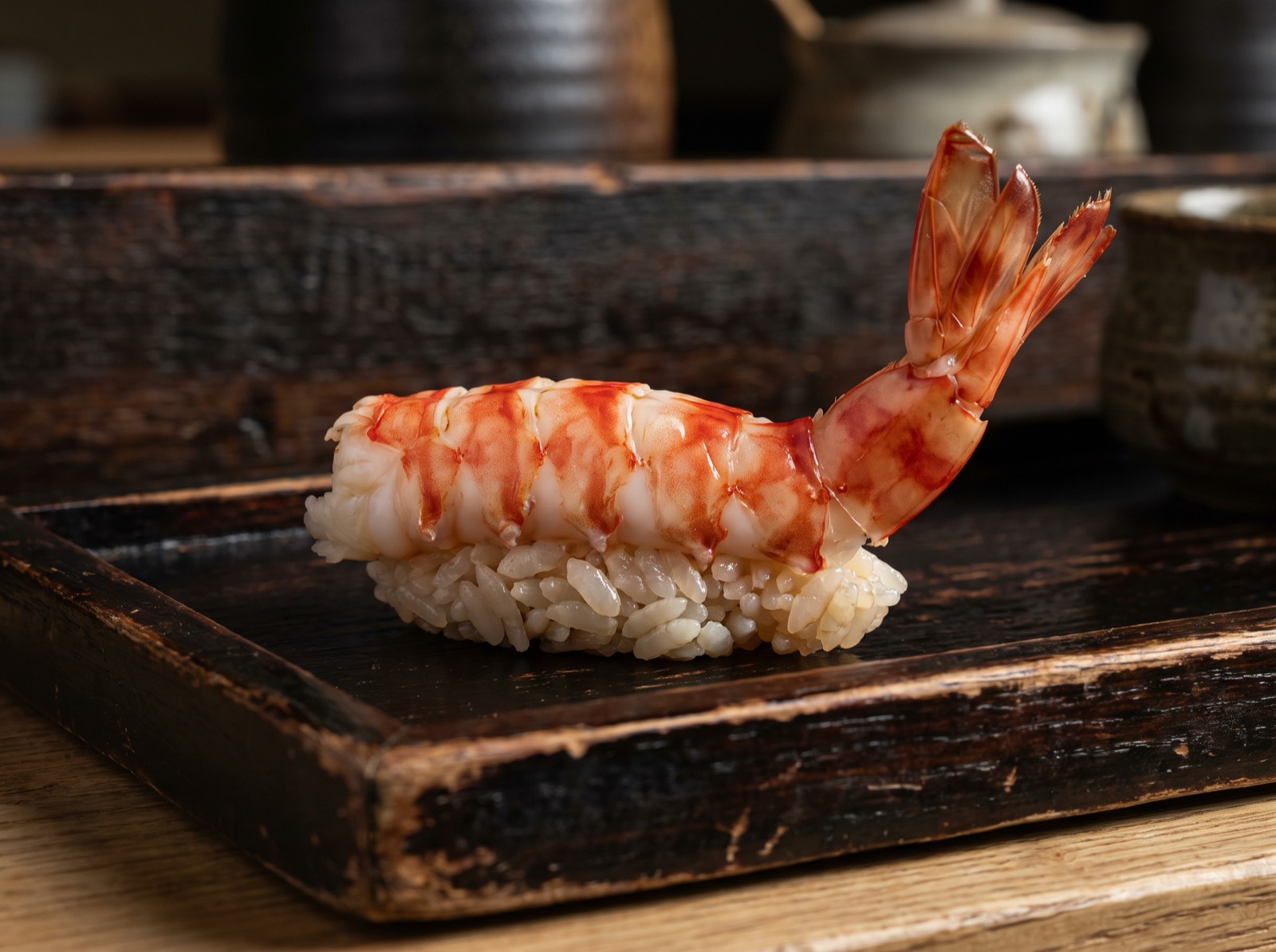
The pigment responsible is a carotenoid, and in the living clam it is bound up with protein in a complex that reads as dull grey-brown. Heat denatures the protein, the complex breaks apart, and the free pigment shows its own colour: a vivid pink-red. It is the same mechanism that turns a prawn or a crab from grey-blue to orange in the pot.
What makes hokkigai worth pointing at is that the change is partial by design. Only the tip of the foot carries much pigment, so a very brief blanch colours the tip and leaves the base white, and the two-tone piece is the recognisable result. Blanch it longer and you get a uniformly cooked, rubbery clam. The skill is in how short the contact is.
It is the prawn reaction, run for three seconds instead of three minutes. That is the whole technique.
When it is best
Winter into early spring. Hokkigai is a cold-water animal and the flesh is fullest and sweetest in the cold months. It is available year-round, largely because a great deal of the supply is frozen at sea, and the frozen product is respectable; this is a shellfish that survives freezing better than most.
Imports from Canada and the northern United States are eaten in Japan alongside the Hokkaidō catch. A conveyor-belt piece may well be imported and previously frozen, which is not a criticism so much as a description.
What the chef does to it
- Shucked and cleaned. The digestive tract runs through the foot and has to come out; leaving it makes the piece gritty and bitter.
- Butterflied. Sliced open and opened flat, so it lies across the rice.
- Blanched for a few seconds and immediately chilled in iced water. This is the colour step, and the timing is the entire skill.
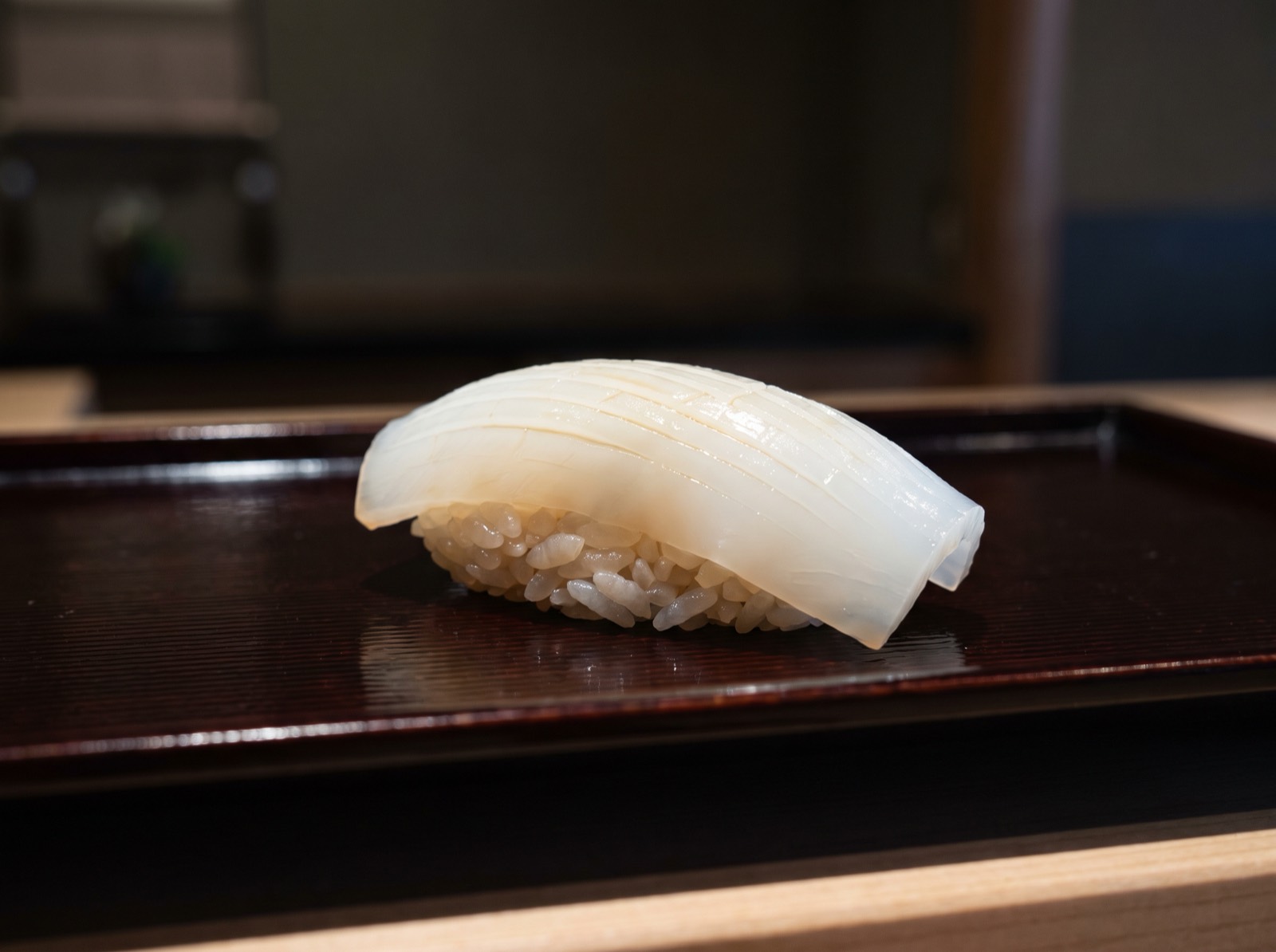
- Sometimes scored, the same shallow knife work used on cuttlefish, for the same reasons.
- Served with soy, or occasionally with salt. A shop that has good clams may brush it and tell you to leave it alone.
- The rest of the clam is not wasted. The mantle and the adductor muscle are used elsewhere, and the tip of the siphon appears as its own item.
How it differs from what it is confused with
The shellfish section of a Japanese menu is where English translation gives up entirely. Four clams commonly appear and are commonly conflated.
- Hokkigai, surf clam. Two-tone pink and white, blanched, firm and sweet. The one described here.
- Akagai (アカガイ), ark shell. Deep orange-red all the way through and served raw. This is the one hokkigai is most often confused with, and the colour is natural rather than heat-induced: the animal carries haemoglobin, which is unusual in a mollusc.
- Torigai (トリガイ), cockle. Black-tipped, glossy, briefly blanched like hokkigai but a different animal and a different shape.
- Aoyagi (アオヤギ). A different clam altogether — bakagai, the round clam — orange, softer, cheaper, and the source of kobashira, the small adductor muscles served in a heap.
If you take one distinction from this list, take hokkigai and akagai: one is cooked and two-tone, the other is raw and uniformly red, and neither is dyed.
How to say it
HOK-kee-guy. Five beats in Japanese, ho-k-ki-ga-i. The doubled k makes a small stop in the middle of the word, as in the English “bookkeeper”. The gai ending means shellfish and turns up across this whole family of names.
Edomae and Kansai
Tokyo has the stronger habit, through the Hokkaidō supply line and through the conveyor-belt trade, where hokkigai is a fixture. Kansai's shellfish tradition leans towards the clams of the Inland Sea, and hokkigai is present but less emblematic. Neither city treats it as a prestige item.
Where you will see it, and roughly what it costs
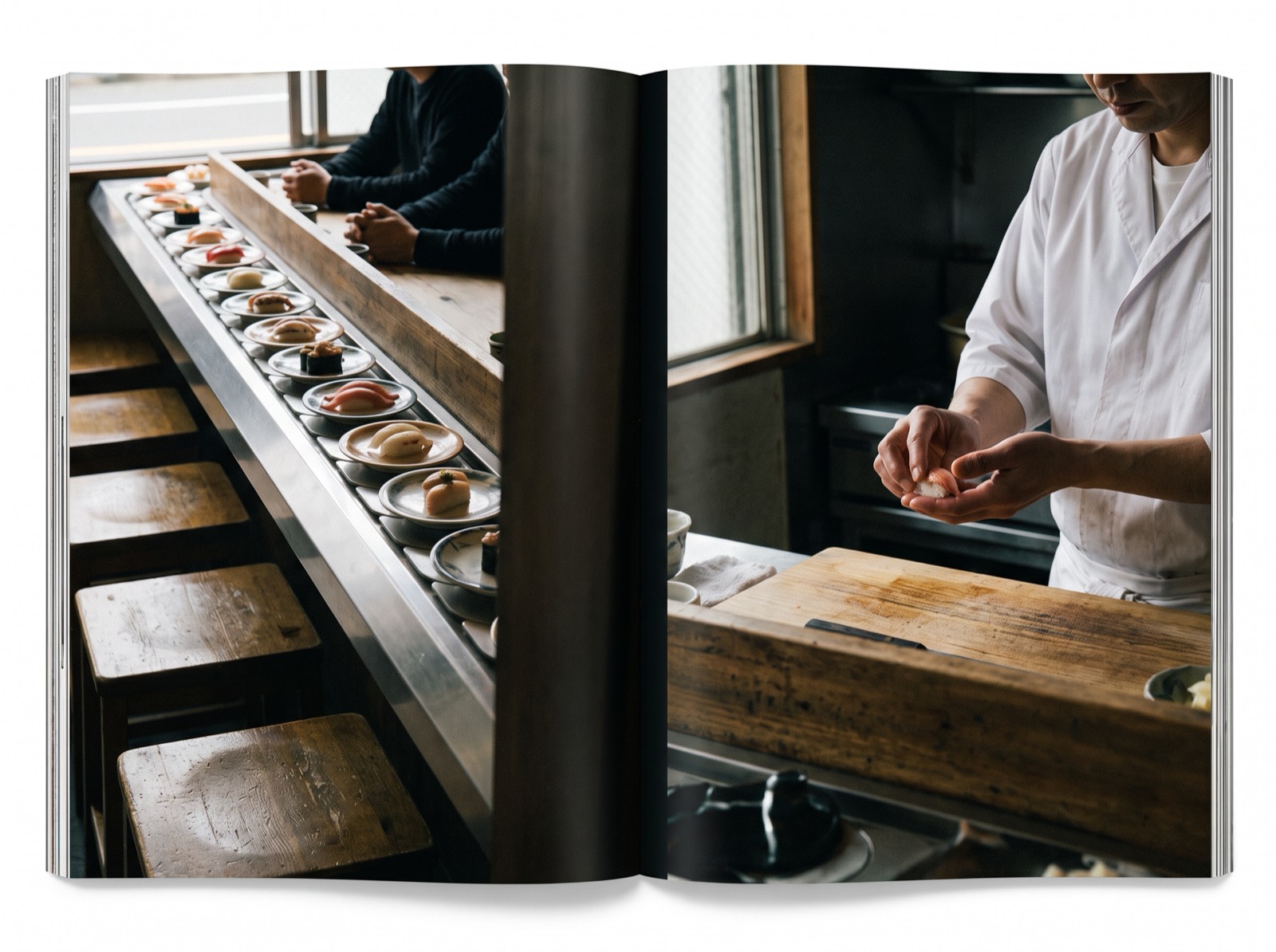
Everywhere, and cheaply. It is one of the most reliable conveyor-belt items in Japan and a supermarket staple. On an omakase course it appears less often, and when it does the shop is usually working with a live clam rather than a frozen one, which is a noticeably different piece: sweeter, with more resistance.
Hokkigai sits at the accessible end of the shellfish range wherever you eat it. If you want to understand what the price is buying, order it once from a belt and once from a counter in winter. For what courses cost, see omakase price tiers, and for the difference between the two settings see conveyor belt vs counter.
Frequently asked questions
What is hokkigai?
Surf clam: a large cold-water bivalve of the northern seas, formally called ubagai. The part served is the muscular foot, sliced open, briefly blanched and laid across the rice. The texture is firm and springy and the flavour clean and sweet.
Why is hokkigai pink and white?
Heat. Raw, the clam is dull grey-brown because its carotenoid pigment is bound to protein. A few seconds in boiling water denatures the protein, releases the pigment and turns the tip vivid pink, the same reaction that turns a prawn orange. Only the tip carries much pigment, so the base stays white.
Is hokkigai dyed?
No. The colour is the clam's own pigment, revealed by brief cooking. A very short blanch is what produces the two-tone appearance; longer cooking makes it uniform and rubbery.
Is hokkigai raw or cooked?
Cooked, but only just: a blanch of a few seconds followed by immediate chilling. Akagai, the deep red clam it is most often confused with, is served raw and is naturally that colour.
When is hokkigai in season?
Winter into early spring, when the flesh is fullest and sweetest. It is sold year-round because much of the supply is frozen at sea, and it survives freezing better than most shellfish.
How do you pronounce hokkigai?
HOK-kee-guy, with a small stop in the middle from the doubled k, as in bookkeeper. The gai ending means shellfish and appears across the whole family of names.