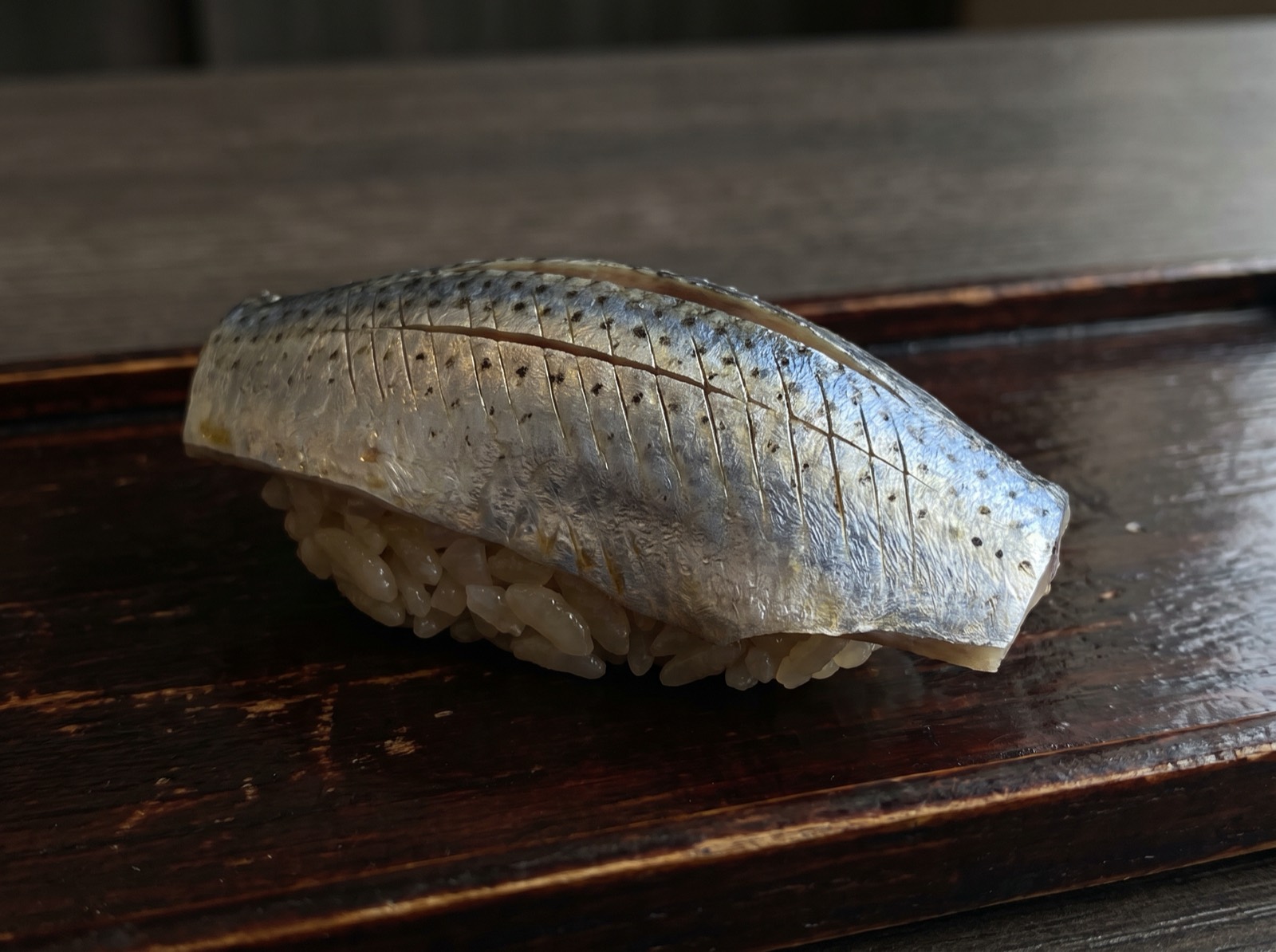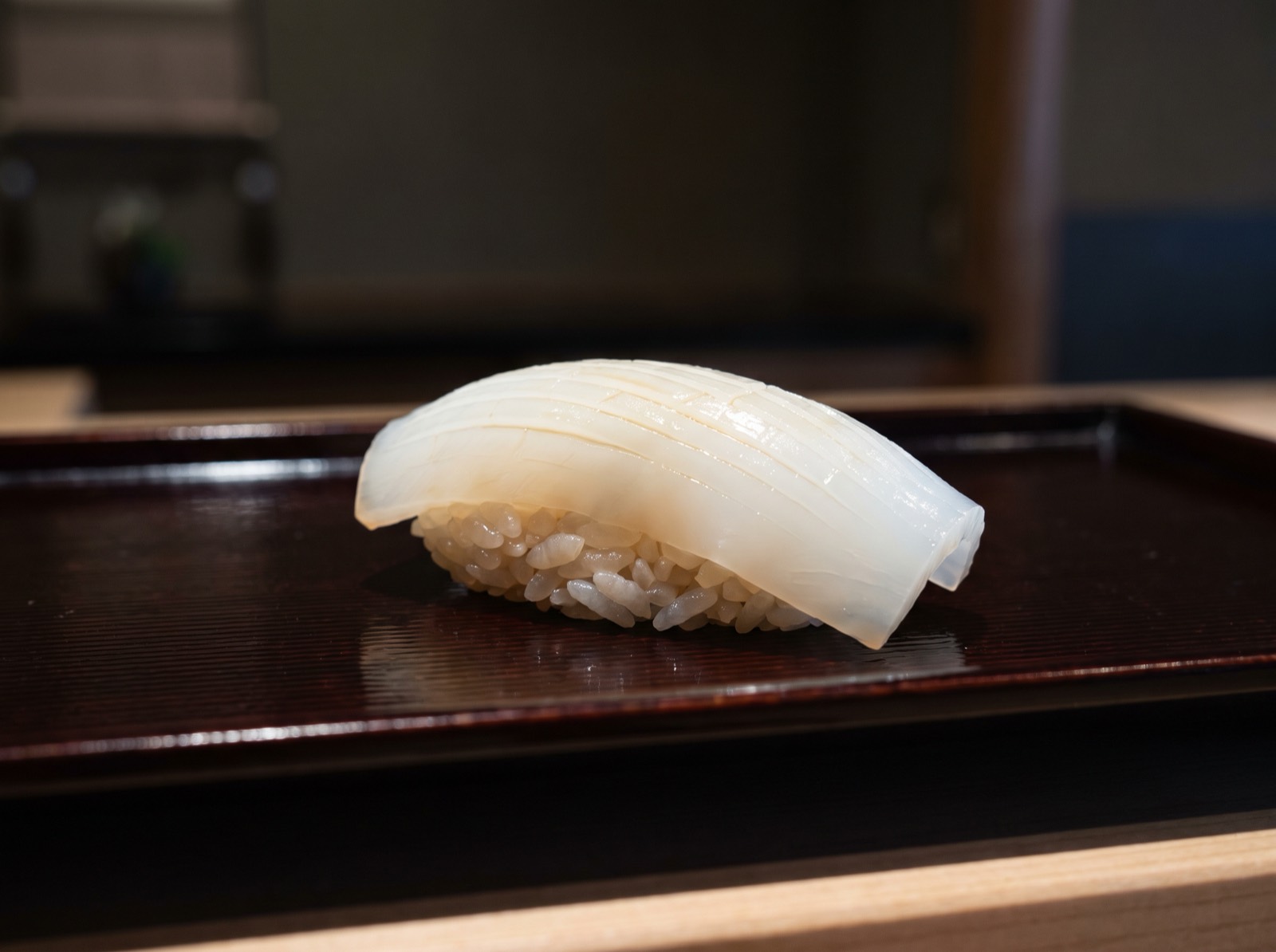
Sumi-ika (スミイカ) is cuttlefish: thicker, denser and sweeter than the squid most people have met, and the piece on which a chef's knife work is most openly on display. The name means “ink squid”, after the quantity of ink the animal carries. In the Tokyo trade it is also called kōika (コウイカ), “shell squid”, after the internal shell.
What it is
Cuttlefish and squid are different animals, and the difference is easy to feel. A cuttlefish has a thick, broad mantle with a rigid internal shell, the cuttlebone, while a squid's body is longer, thinner and supported by a flexible internal pen. On the plate, cuttlefish is dense and opaque with a firm, almost snapping resistance and a clear sweetness. Squid is thinner, more translucent and more elastic.
English collapses both into “squid” on most menus, which is why the difference tends to be discovered rather than explained.
- Sumi-ika / kōika, cuttlefish. Thick, dense, sweet. The winter item and the one a serious counter reaches for.
- Aori-ika (アオリイカ), bigfin reef squid. Thick like cuttlefish, very sweet, and the most expensive of the group in many markets. Not a cuttlefish, but treated with the same respect.
- Yari-ika (ヤリイカ), spear squid. Slimmer, more delicate.
- Surume-ika (スルメイカ). The common flying squid, the everyday and cheapest of them, and what most conveyor-belt squid is.
When it is best
Winter, and the smaller autumn fish that the Tokyo trade calls shin-ika (新イカ), new cuttlefish, is a genuine seasonal event. These are young animals, barely large enough to make a piece, and a shop will sometimes use two or three layered together for a single one. They are prized for tenderness rather than for size, and they appear for a short window in late summer and early autumn before the fish grow into the winter product.
A cut you can see is unusual. The scoring on cuttlefish is the one piece of knife work a diner is meant to notice.
What the chef does to it
Cuttlefish is one of the few items where the technique is visible in the finished piece.
- Kakushi-bōchō (隠し包丁). Literally “hidden knife”, the shallow parallel or crosshatched scoring across the surface. It cuts the long fibres so the piece yields rather than resisting as a single sheet, it lets the flesh sit against the rice instead of curling away from it, and it gives soy somewhere to hold. Nothing about it is decorative, though it happens also to be beautiful.
- Skinned carefully. Cuttlefish has several layers of skin and membrane, and leaving any of them makes the piece tough. This is slow work.
- Salt and citrus more often than soy. The sweetness is the point and soy buries it.
- Sometimes a dot of yuzu peel or sea salt applied by the chef, in which case eat it as given.
- Never cooked in this context, though cuttlefish is excellent simmered or grilled elsewhere on a Japanese menu.
How it differs from what it is confused with
- Sumi-ika is not the squid on a conveyor belt. That is generally surume-ika — thinner, chewier, far cheaper, and not the same experience.
- Sumi-ika is not tako (タコ, octopus), which is boiled before serving, purple-skinned, and much firmer.
- The ink in the name is not on the plate. Cuttlefish ink is used in Japanese cooking and in Italian and Spanish cooking, but a sushi piece of sumi-ika is white.
- “Cuttlefish” on an English menu is correct and unusually precise. Most shops write “squid”, and then you have to look at the thickness.
How to say it
SOO-mee-EE-kah. Four beats, su-mi-i-ka, with the double i held slightly longer than a single one. The alternative name is KOH-ee-kah, and either will be understood.
Edomae and Kansai
Tokyo has the stronger attachment. The shin-ika season is an Edo-style preoccupation, and the scoring technique is associated with Edomae work. Osaka uses cuttlefish too, but the pressed and box forms that define its tradition suit fish that can be cured and laid flat, and a scored cuttlefish piece is built for the hand-formed style. See Osaka vs Tokyo.
Where you will see it, and roughly what it costs
At counters, reliably, and usually early in the course while the palate is clean. On a belt you will get squid rather than cuttlefish, at a fraction of the price and with a fraction of the work in it. In a supermarket the pre-cut squid sold for sushi is almost always surume-ika.
Cuttlefish sits in the middle of a counter's range (well above the everyday items, well below the tuna cuts), and shin-ika in its short season costs more than the winter fish despite being smaller. For course pricing, see omakase price tiers.
Frequently asked questions
What is sumi-ika?
Cuttlefish: thicker, denser and sweeter than ordinary squid, with a firm snapping texture. The name means ink squid, after the quantity of ink the animal carries. It is also called kōika, shell squid, after its internal shell.
What are the fine lines cut into cuttlefish sushi?
Kakushi-bōchō, hidden knife work. The shallow scoring cuts long fibres so the piece yields instead of resisting as a sheet, keeps it lying flat against the rice, and gives soy somewhere to hold. It is functional, not decorative.
What is the difference between cuttlefish and squid?
Cuttlefish has a thick broad body with a rigid internal shell; squid is longer and thinner with a flexible pen. On the plate cuttlefish is dense, opaque and sweet, while squid is thinner, more translucent and more elastic. English menus usually call both squid.
What is shin-ika?
New cuttlefish: young animals caught in a short window in late summer and early autumn, prized for tenderness. They are so small that a chef may layer two or three to make one piece, and they cost more than the larger winter fish.
When is sumi-ika in season?
Winter for the mature fish, with the shin-ika season in late summer and early autumn as a separate and shorter event.
Is the squid on a conveyor belt the same thing?
Usually not. Belt squid is generally surume-ika, the common flying squid: thinner, chewier and much cheaper. Sumi-ika is a counter item.