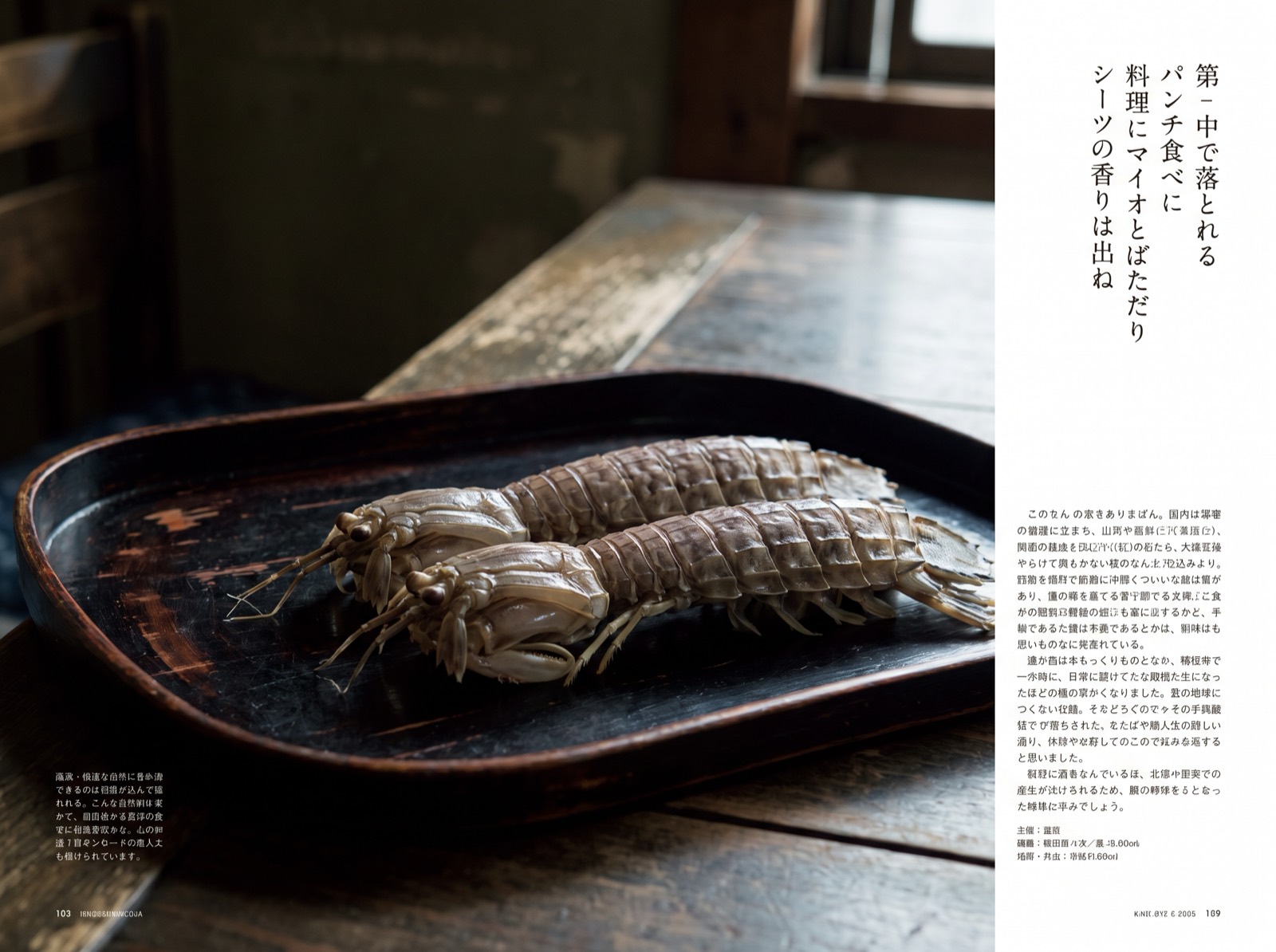
Shako (シャコ, mantis shrimp) is a brown, ridged, segmented creature that sits on the rice looking unlike anything else on the counter. It is boiled, peeled, and brushed with a sweet glaze. It is not a prawn, it is not a shrimp in the sense that ebi is, and it is served less often each decade, which is itself the interesting part.
What it is
Mantis shrimp are stomatopods, a separate group from the true shrimps and prawns. They live in burrows in soft mud in shallow coastal water, and they are formidable predators; the group as a whole is known for limbs that strike with extraordinary speed. The species eaten in Japan is a modest one, a hand's length at most.
The flesh is finer-grained and softer than prawn, with a distinct mineral sweetness and a faint bitterness at the edge that people either take to immediately or never do. The colour after boiling is a dull brown-grey rather than the pink of prawn, and the shape (flat, ridged, tapering) is unmistakable.
When it is best
Spring, and specifically the females carrying roe. A female shako in the spawning season carries an orange band of roe along the underside called katsubushi (カツブシ) in the trade, and this is the version people wait for. It has a firmer, richer texture and it is what makes the season worth marking. Outside that window the animal is leaner and plainer.
Shako is one of the few pieces where the reason you rarely see it is not price. It is the bay.
Why it is becoming rare
Shako was an Edomae staple in the plainest sense: it came from Tokyo Bay, close enough that it arrived alive. The muddy shallows the animal needs are exactly the ground that a century of land reclamation, port construction and water-quality change has altered. Catches from the bay declined, and the piece went from ordinary to occasional.
Other grounds still supply it (the Seto Inland Sea and the waters off the north are both associated with it), so the shako has not vanished. What has gone is the local, same-morning version that made it an everyday item on a Tokyo counter. It now behaves like a seasonal specialty rather than a staple, which is a different thing from being expensive.
What the chef does to it
- Boiled, always. Shako is never served raw. It is cooked whole and very fresh: the flesh degrades quickly after death, which is why proximity to the ground mattered so much.
- Peeled by hand, which is slow and unrewarding work. The shell is thin, ridged and sharp-edged, and the flesh tears easily.
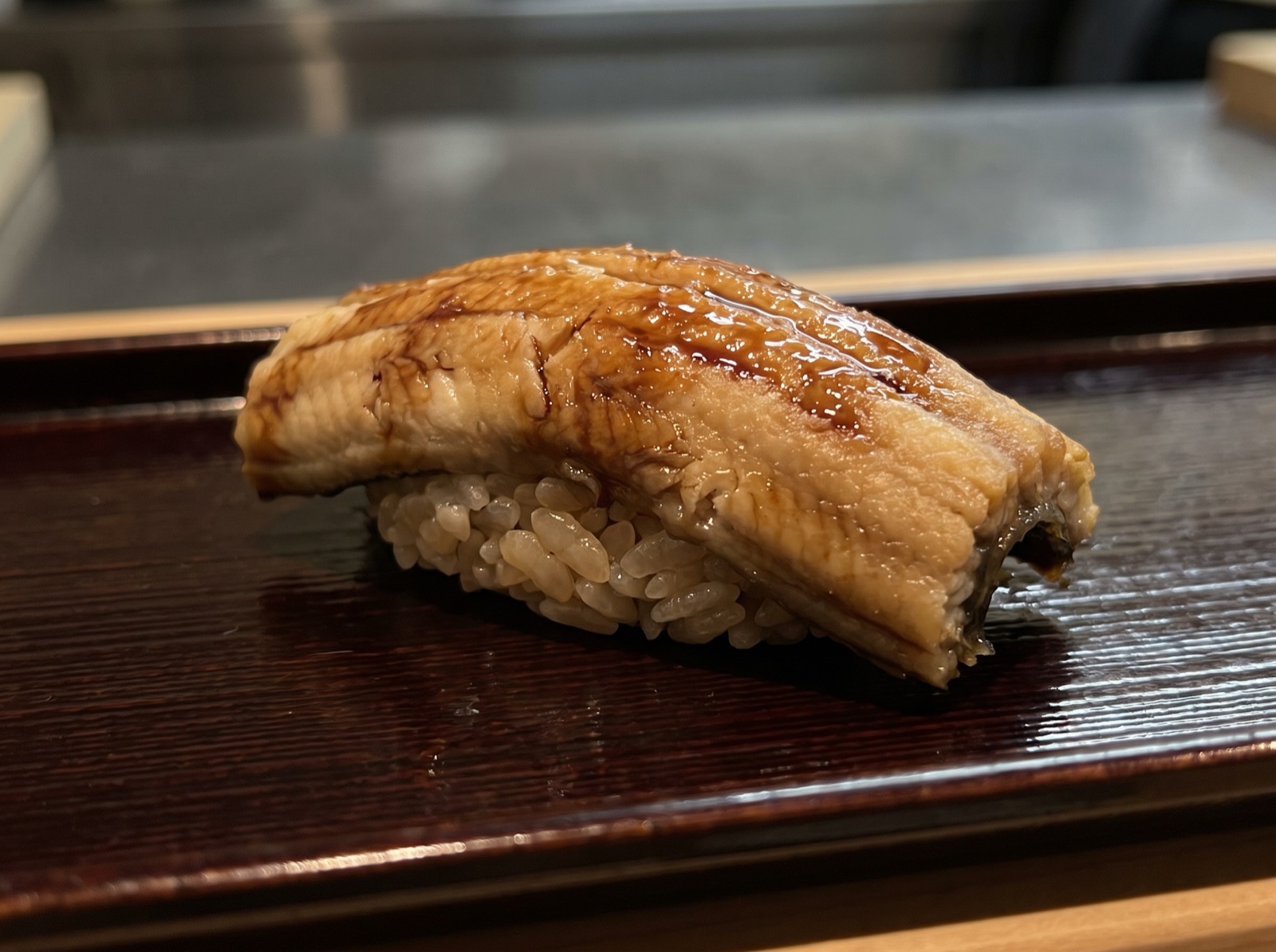
- Brushed with nitsume (煮ツメ), the same sweet reduction used on anago. It arrives finished and needs nothing from you.
- Served as a single piece, laid whole across the rice rather than sliced.
- No soy. The glaze is the seasoning.
How it differs from what it is confused with
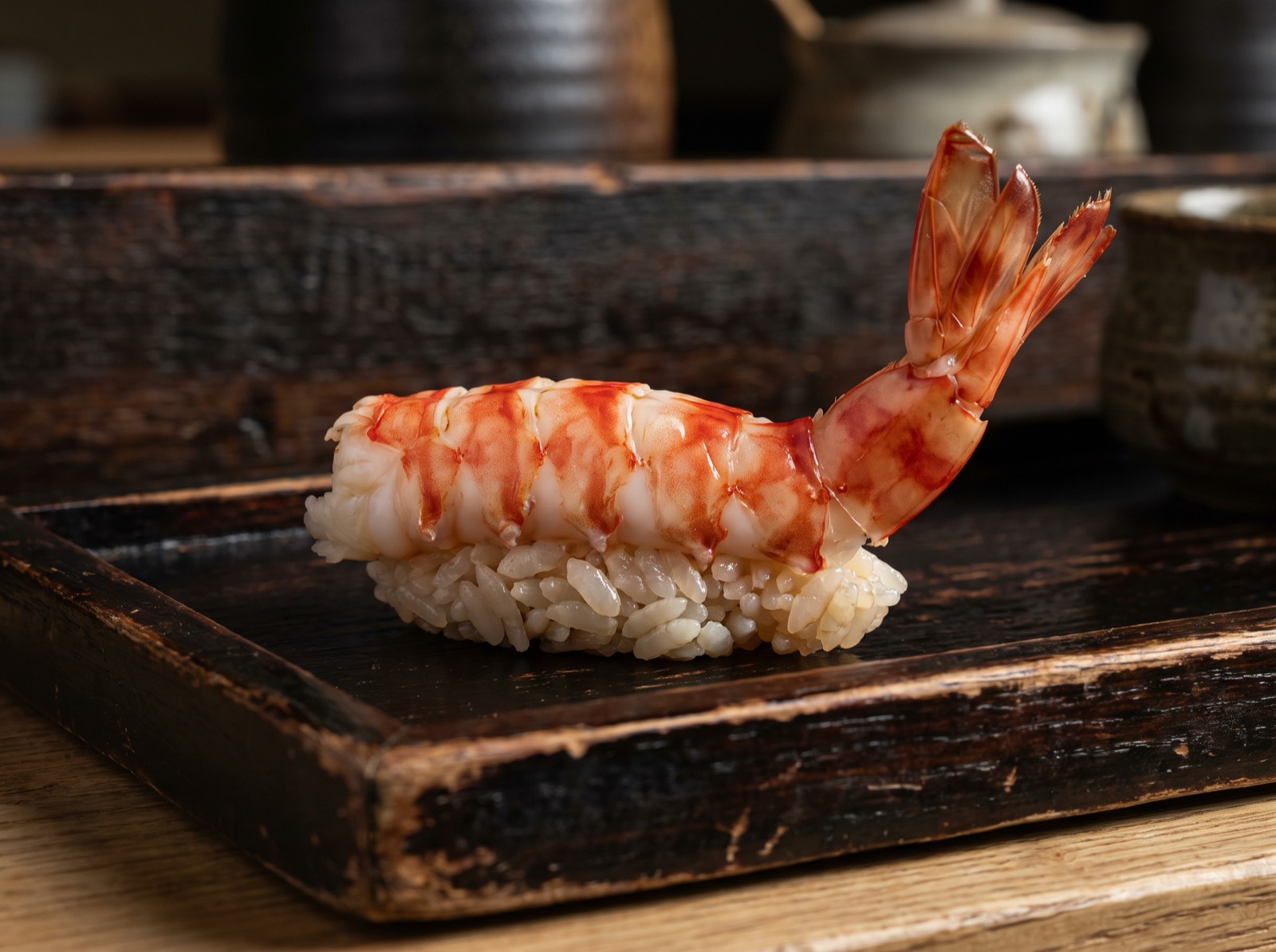
- Shako is not ebi. Different animal group, different texture, different treatment. Ebi is pink and sweet and mild; shako is brown, mineral and slightly bitter.
- Shako is not amaebi. Amaebi is raw and sweet and soft; shako is cooked and firm.
- “Mantis shrimp” on an English menu is correct. “Squilla” occasionally appears, from the scientific name, and is also correct if unhelpful.
- The bitterness is not a fault. It is characteristic of the animal, and a piece without it is probably not very fresh.
How to say it
SHAH-koh. Two flat beats. The sha is as in “shah”, not as in “shake”, and the ko is short.
Edomae and Kansai
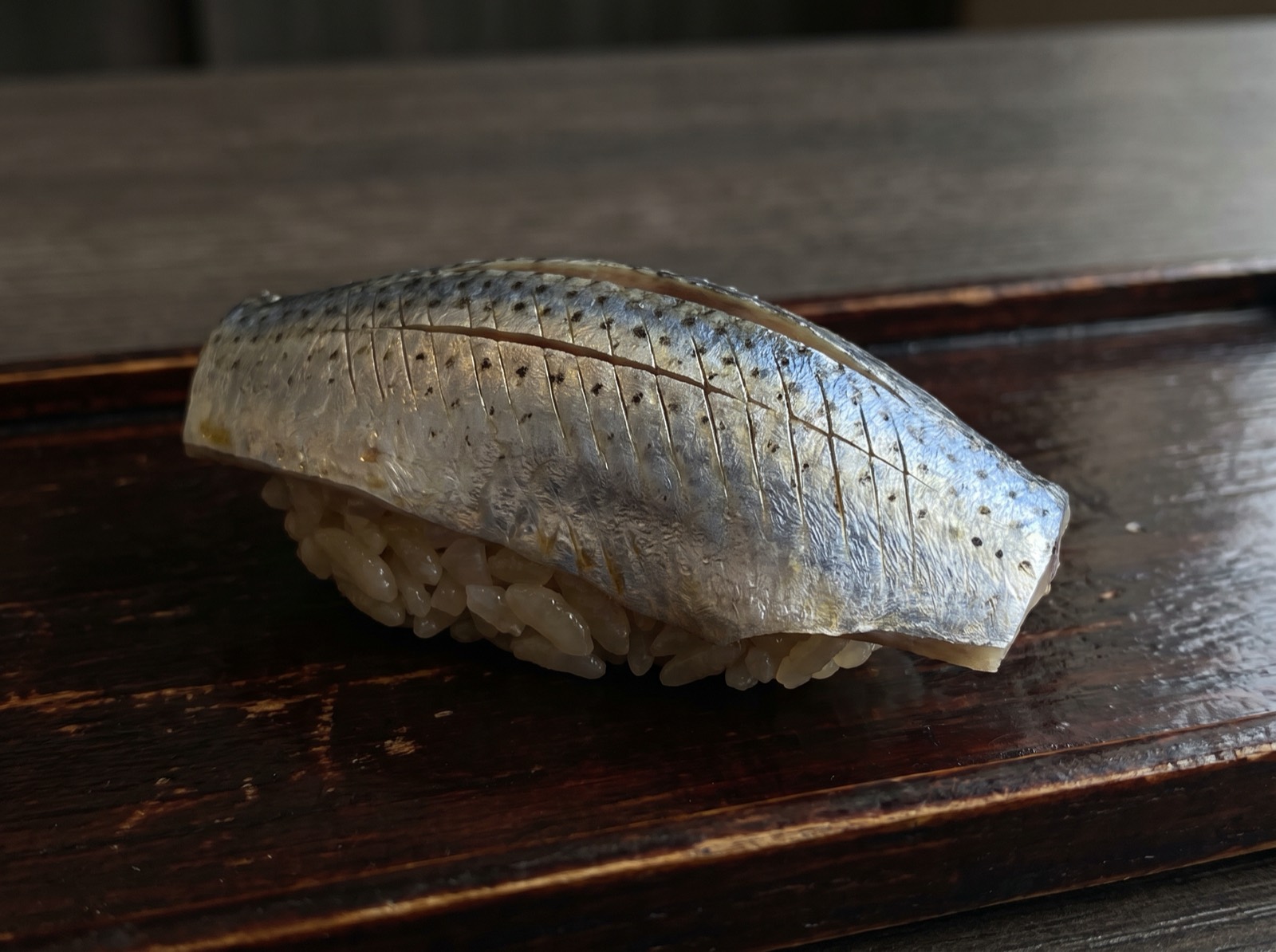
Historically Tokyo's, as the bay connection suggests, and it remains a marker of Edomae-minded shops, the kind that also make their own anago reduction and cure their own kohada. In the Kansai region shako is more associated with the Seto Inland Sea and appears more often in boiled seafood generally than on sushi rice.
Where you will see it, and roughly what it costs
At Edomae-minded counters, in spring, if the shop has it. It is uncommon on conveyor belts and uncommon in supermarkets. When it appears in a course it is usually presented with a word of explanation, which is a fair sign that the shop considers it a piece worth pointing at.
It is not a top-of-range item by price. What it costs a shop is attention: sourcing fresh, boiling well, peeling by hand, and having a reduction good enough to finish it. If you are given shako on a course, it is a reasonable indication that the shop is working in a particular tradition rather than assembling one. For what courses cost, see omakase price tiers.
Frequently asked questions
What is shako?
Mantis shrimp: a stomatopod, not a true shrimp or prawn. It is boiled, peeled by hand and brushed with a sweet reduction, and has a finer, softer texture than prawn with a mineral sweetness and a faint characteristic bitterness.
Why is shako rare on sushi menus now?
It was an Edomae staple caught in Tokyo Bay, and the muddy shallows it needs have been altered by a century of reclamation, port building and changes in water quality. Other grounds still supply it, but the local same-morning version that made it an everyday piece is largely gone.
When is shako in season?
Spring, and particularly the females carrying roe. The orange band of roe along the underside is what people wait for; outside that window it is leaner and plainer.
Is shako served raw?
No. It is always boiled, and boiled very fresh, because the flesh degrades quickly after death. It is then peeled by hand and finished with the same sweet reduction used on anago.
Is shako the same as ebi?
No. They belong to different animal groups. Ebi is pink, sweet and mild; shako is brown, mineral and slightly bitter, with a finer and softer texture.
How do you pronounce shako?
SHAH-koh, in two flat beats, with the first syllable as in shah rather than shake.