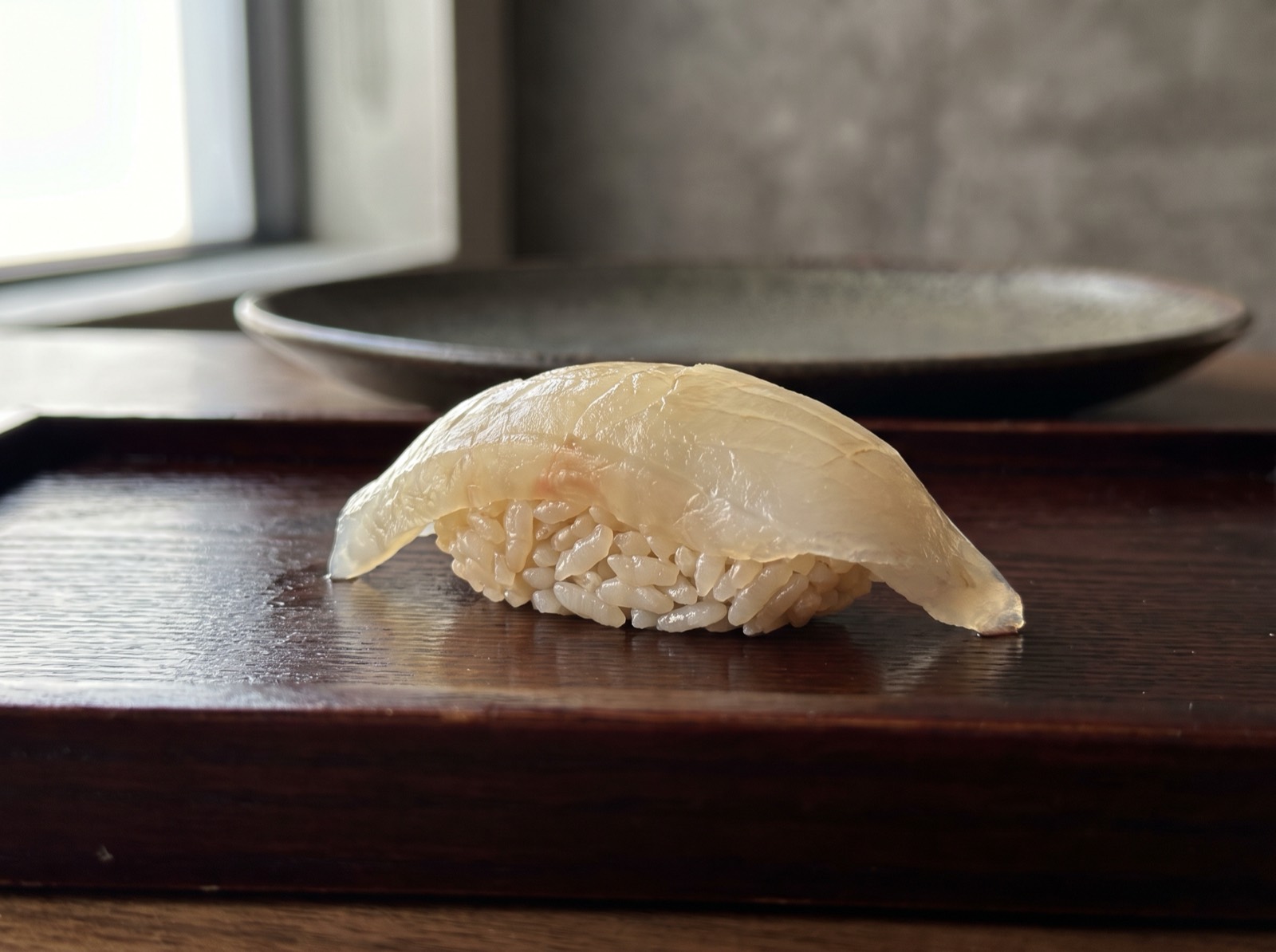
Hirame (平目, olive flounder, Paralichthys olivaceus) is the standard white fish of an Edomae counter: lean, firm, faintly sweet, and the piece against which other white fish are described. It is also the fish that engawa comes from, and the clearest demonstration on the whole menu that the freshest fish is not the best-tasting one.
What it is
A flatfish that starts life swimming upright like any other fish and then, as a juvenile, rotates: one eye migrates across the skull, the body lies down on one side, and the animal spends the rest of its life on the sea floor with both eyes on top. The upper side is dark and mottled, the underside white.
Which side the eyes end up on is how you tell it from its relatives. The Japanese mnemonic is hidari-hirame, migi-karei (左ヒラメに右カレイ): lay the fish with the dark side up and the belly towards you, and hirame’s head points left while karei, the other flatfish family, points right. It is not a perfect rule biologically, but it is the one the trade uses and it works on the fish you will actually see.
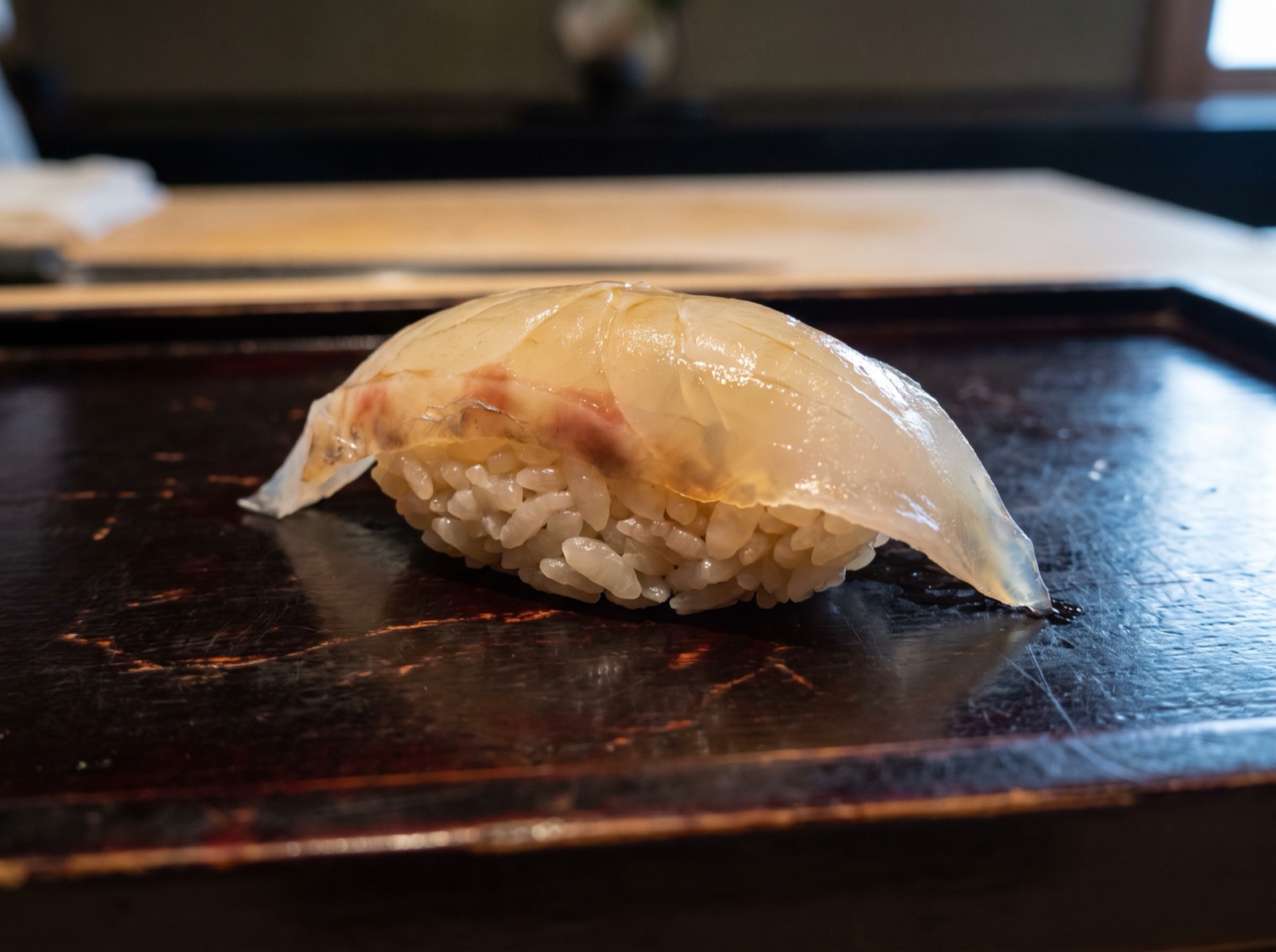
The flesh is white, translucent, low in fat and high in structure — the opposite proposition to tuna in every respect. Fresh, it is springy to the point of being rubbery and tastes of very little. That is not a fault. It is the raw material.
When it is best
Winter. Kan-birame (寒平目), cold-season flounder, is one of the fixed points of the Japanese winter counter, and the fish thins out and loses interest through the warm months. Summer flounder has a Japanese name too and it is not a compliment.
Farmed hirame is produced at scale and available year-round. It is a competent product with more fat and less character than a good wild winter fish, and the honest position is that at the lower price tiers it is what you are eating.
What the chef does to it
This is where the fish becomes interesting, because almost nothing about hirame works if you serve it immediately.
- Ike-jime (活け締め). The fish is killed and bled by a specific method at the point of landing, which stops the flesh from burning through its own energy stores and lets it be rested afterwards. Without this the rest is impossible.
- Ageing (熟成, jukusei). A day, two days, sometimes longer under controlled refrigeration. The springiness relaxes, the texture becomes yielding, and savour appears where there was none. Most of what a good hirame tastes of was not there when it was landed.
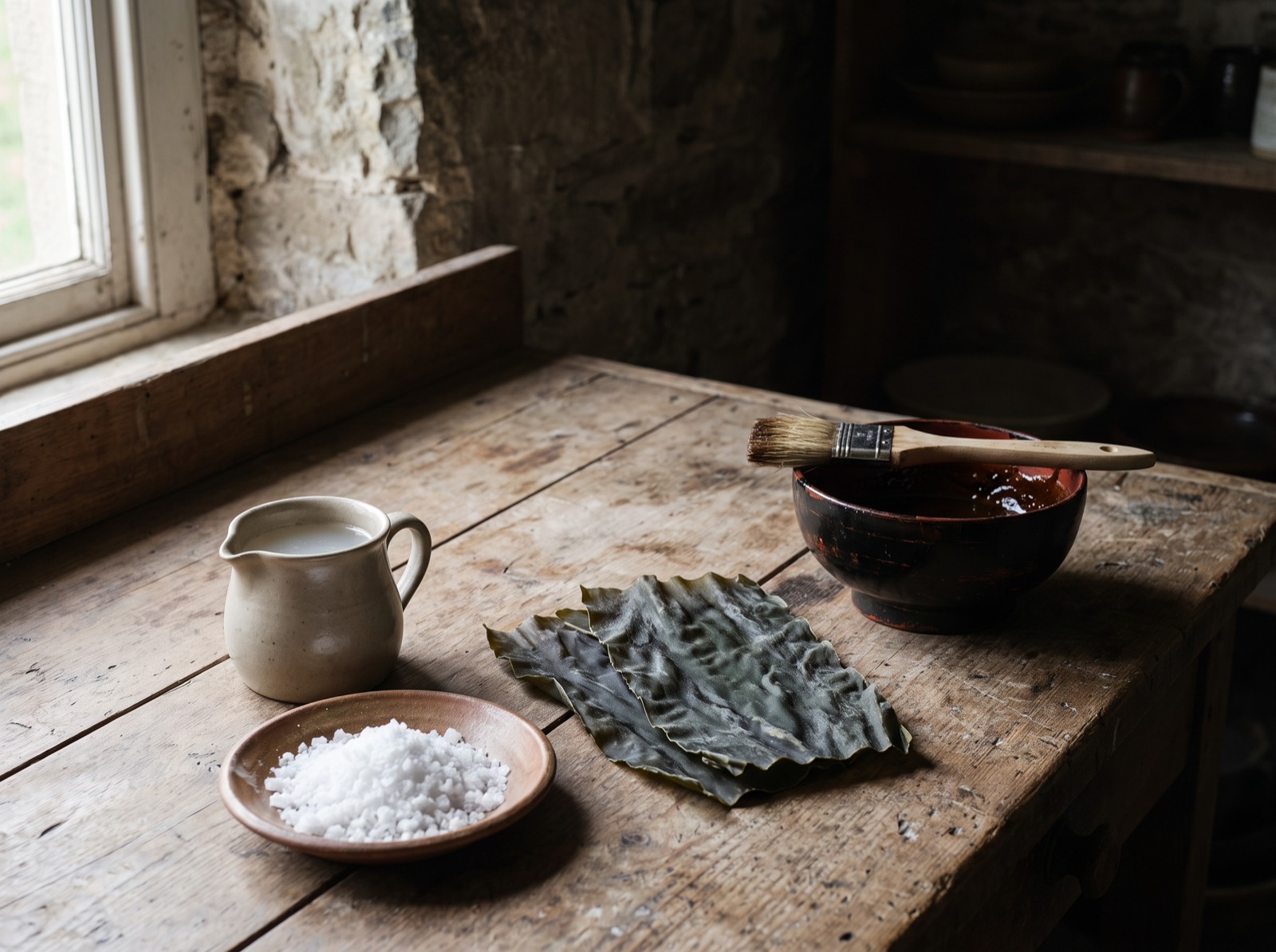
- Kobu-jime (昆布締め). The fillet is pressed between sheets of kelp. Kombu draws out water and pushes glutamate in; the fish firms slightly, turns faintly glossy, and gains a savoury depth that lean white fish cannot produce on its own. It is the classic Edomae answer to a fish with nothing to say.
- Usu-zukuri (薄造り). Slicing thin enough to see through, so the piece has surface area rather than mass. Firm white fish cut thick eats like an eraser; the same fish cut thin eats like something else.
A counter may use one of these, or three of them, and will rarely announce which. What you can notice is the result: if the piece is limp it was rested too long, if it fights back it was not rested at all, and if it tastes of kelp rather than of fish the cure ran over.
Fresh is a starting condition, not a quality. Hirame is where that becomes impossible to argue with.
The strips along the edge
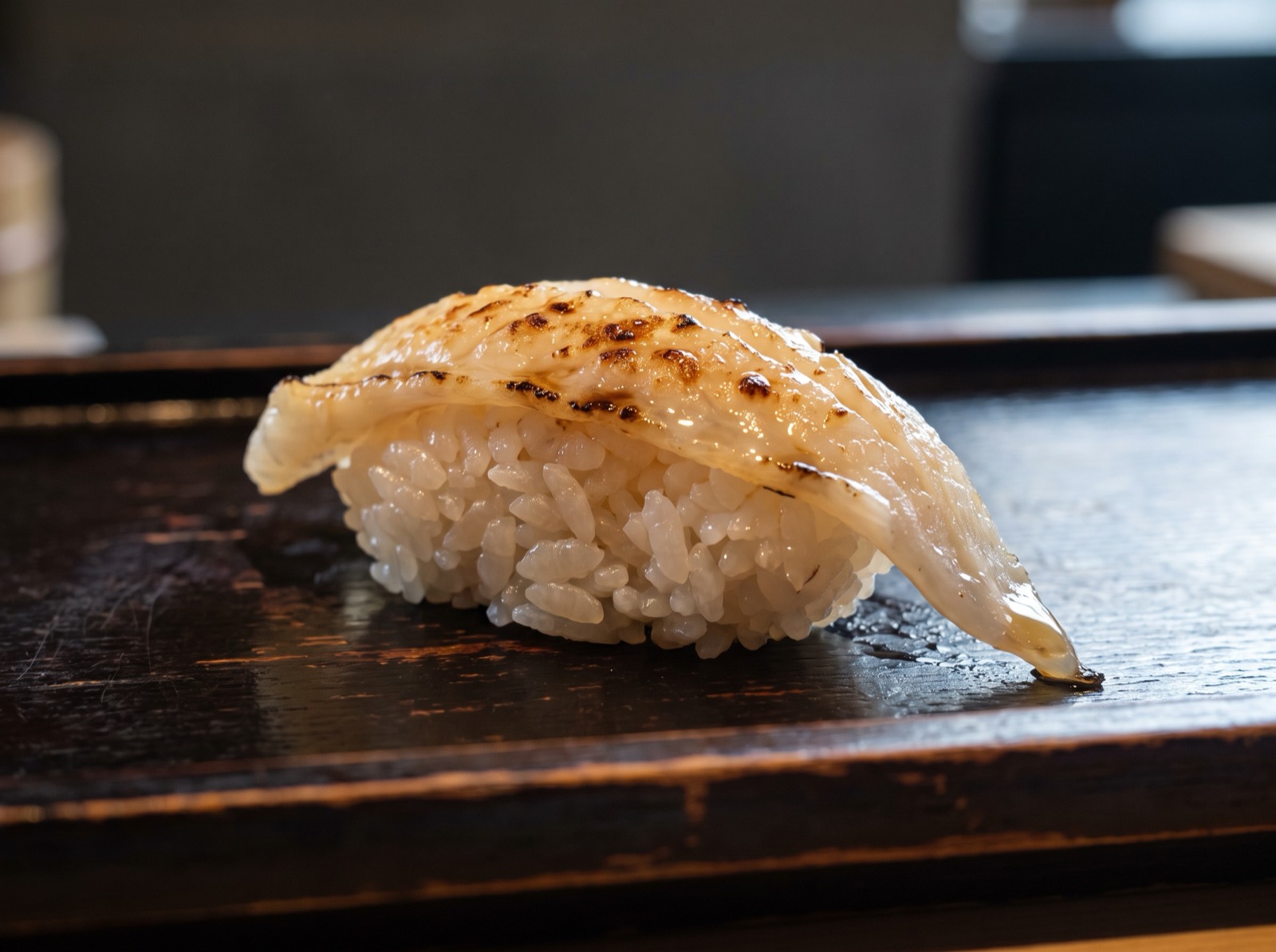
Running down both sides of a flatfish, at the base of the fin, is a narrow band of muscle that works constantly to ripple the fin. It is denser, fattier and more sinewy than the rest of the animal, and it is sold separately as engawa — four strips per fish, and no more.
That arithmetic is worth carrying: a shop serving engawa to a full counter is getting through a lot of flatfish, or buying the strips separately, or serving farmed fish. None of those is dishonest, but the four-strip limit explains the price and explains why cheap engawa is usually a different animal entirely.
How it differs from what it is confused with
- Hirame and karei. Different flatfish families, distinguished in the trade by which way the head points. Karei is generally softer and more often simmered or grilled than served raw; hirame is the counter fish.
- Hirame and halibut. English menus outside Japan often translate hirame as halibut. They are not the same fish — true halibut is a much larger, colder-water species — and the substitution is a translation convenience rather than a fact.
- Hirame and madai. The two reference white fish. Sea bream is sweeter, firmer, more distinctly flavoured and carries more ceremony; flounder is leaner, more neutral and more dependent on the work done to it.
- Hirame and engawa. Same animal, different muscle. The fillet is lean and clean; the fin strip is fatty, chewy and much stronger.
How to say it
hi-ra-me, three even beats, with the h soft. In compounds it voices: kan-birame, not kan-hirame. Kobu-jime is ko-bu-ji-me, four beats — and note that the kelp is kombu on its own but kobu in this compound, which is a Japanese sound change rather than a spelling error.
Edomae and Kansai
Hirame is Edomae to the core. A lean, near-flavourless fish that only becomes food through resting and curing is exactly the kind of raw material the Tokyo tradition was built to handle, and the techniques — ike-jime, ageing, kelp curing — are the same four jobs described in our piece on what Edomae means.
Kansai leans towards sea bream as its defining white fish, with its own ceremonial weight and its own preparations; see our comparison of the two traditions. Both cities serve both fish. The difference is which one the tradition was written around.
Where you will see it, and roughly what it costs
At any counter in winter, usually early in the sequence, because a lean white fish is where a chef starts before the flavours build. On a belt it will be farmed and it will be there in midsummer, which tells you what it is.
No per-piece figure from us. It is not among the expensive items at a counter, and the interesting money is elsewhere — but hirame is a good piece to judge a shop by, because a kitchen that cannot make a lean white fish taste of anything is not doing the work. Our season calendar sets out what runs with it.
Frequently asked questions
What is hirame?
Olive flounder, the standard white fish of an Edomae sushi counter. It is lean, firm and translucent, with very little flavour of its own when fresh — the flavour is developed by resting the fish or curing it between sheets of kelp.
What is the difference between hirame and karei?
They are different flatfish families, told apart in the Japanese trade by which way the head points. Lay the fish dark side up with the belly towards you: hirame points left, karei points right. Hirame is the counter fish; karei is more often simmered or grilled.
Is hirame the same as halibut?
No. English menus outside Japan often translate it that way, but true halibut is a much larger cold-water species. Hirame is Paralichthys olivaceus, the olive flounder or bastard halibut.
What is kobu-jime?
Curing a fillet between sheets of kelp. The kombu draws water out of the fish and pushes glutamate in, so the flesh firms slightly and gains a savoury depth it cannot generate on its own. It is the classic Edomae treatment for lean white fish.
Why is fresh hirame not the best hirame?
Because straight out of the water the flesh is springy to the point of rubbery and tastes of almost nothing. A day or two of controlled rest relaxes the texture and develops savour. Most of what a good piece of hirame tastes of was not present when the fish was landed.
Where does engawa come from?
From this fish. Engawa is the narrow band of muscle at the base of the fin that ripples it constantly — fattier and chewier than the fillet. There are four strips per flatfish and no more, which is why it is priced the way it is.
When is hirame in season?
Winter. Cold-season flounder, kan-birame, is a fixture of the Japanese winter counter. Farmed hirame is available year-round and carries more fat and less character.