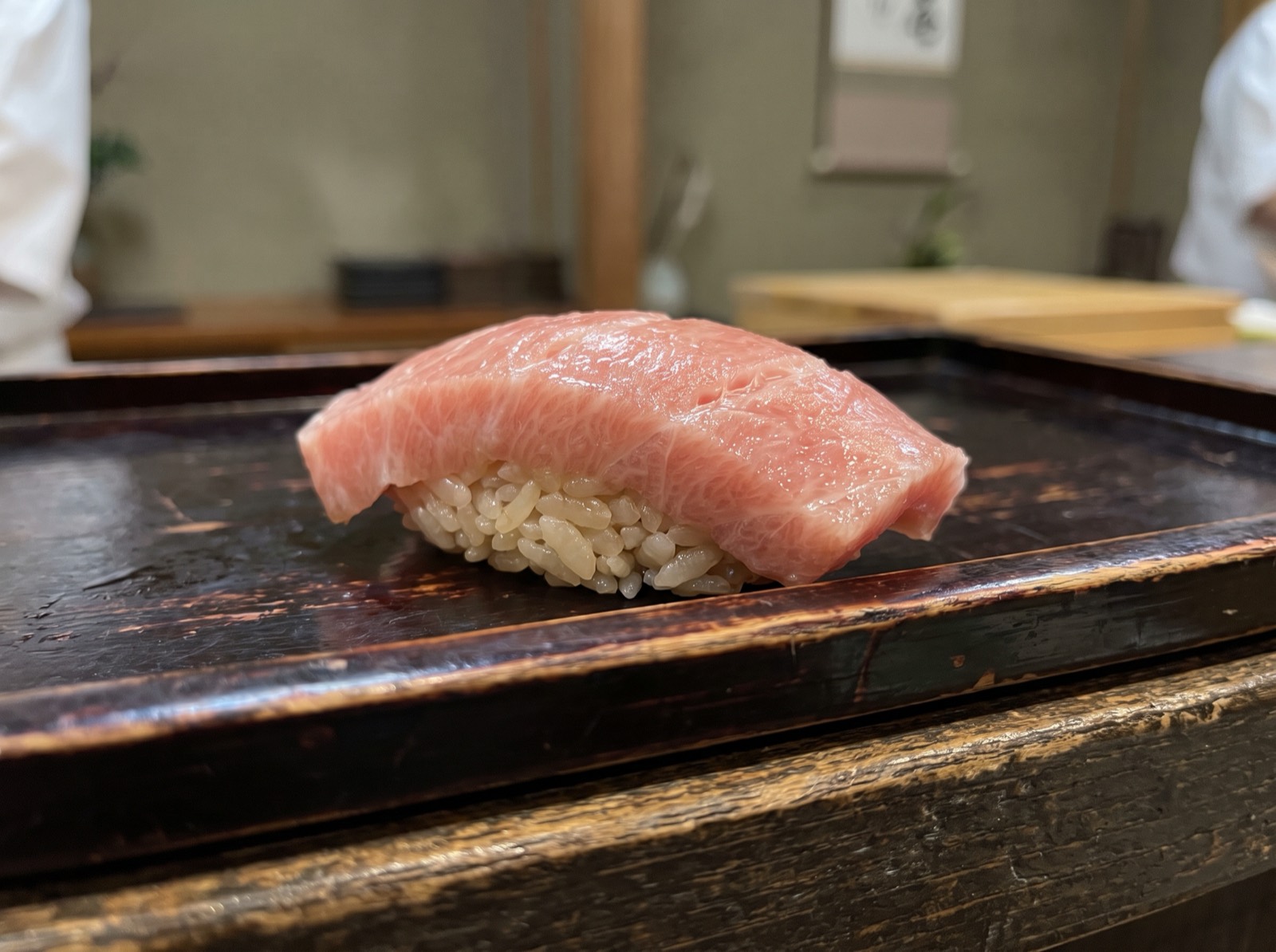
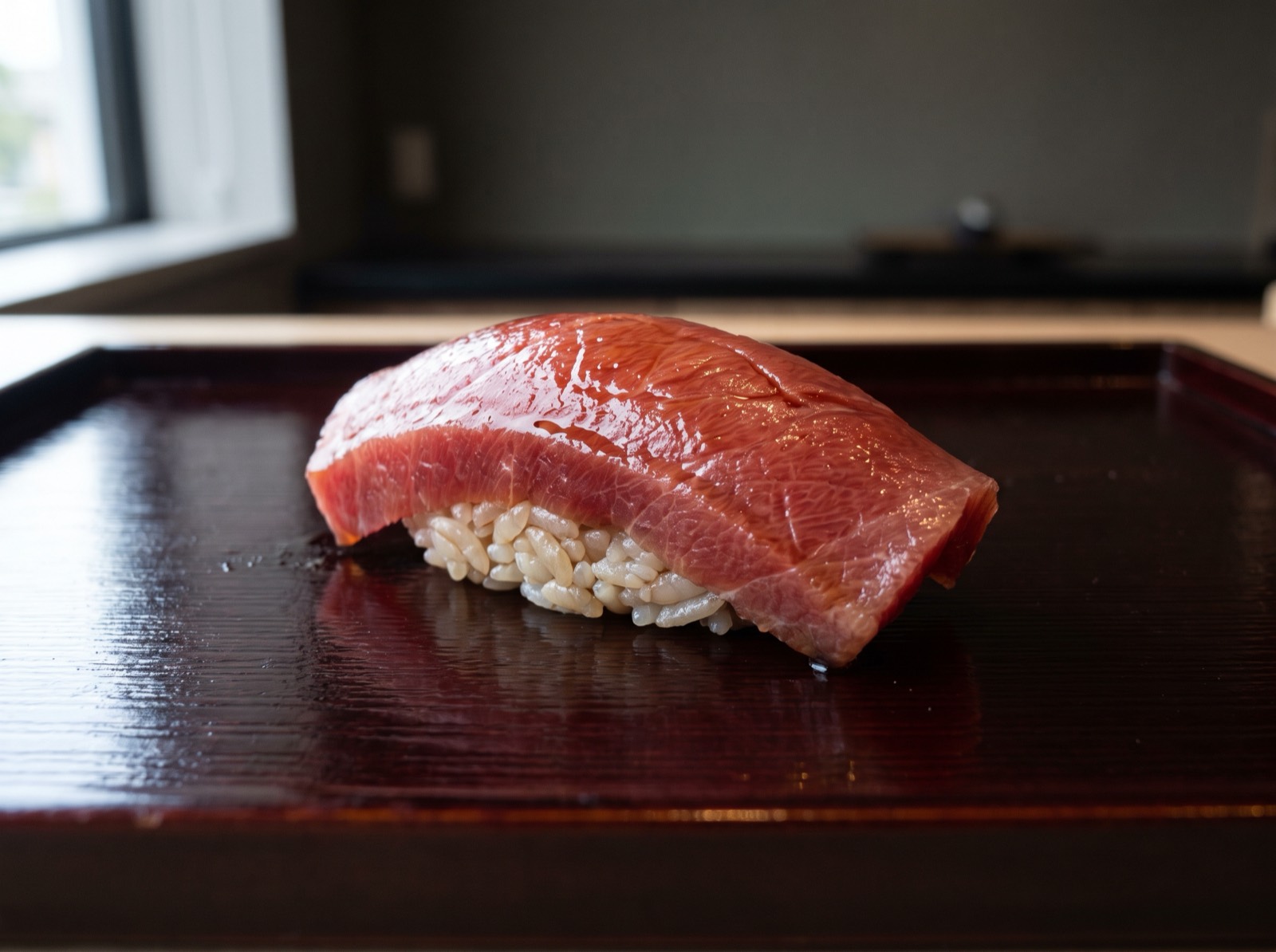
Maguro (鮪) is not the name of one fish. It is an umbrella term covering several related tuna species, and what it means on a given day depends on what the boat brought in and what the kitchen bought. Said alone, without qualification, it is usually understood to mean Pacific bluefin tuna, the species also called honmaguro, “true maguro.” But the umbrella word comes first. The specific fish comes second.
What it is
Bluefin carries the reputation, but it is not the only species sold and eaten under the same word. Southern bluefin, yellowfin, bigeye and albacore tuna all reach a counter as maguro, and a menu that simply prints the word is not committing to any one of them.
What changes between the species is scale more than category: typical size, typical fat, and how the fish is graded once it is cut. Maguro describes the animal. What actually determines the piece in front of you is which part of that animal it is — a separate question this site answers elsewhere rather than here.
One animal, several names on the case
A tuna is not sold as one thing. It is graded, largely by fat and position, into cuts that each carry their own name and their own place on a menu: lean red muscle, a medium-fat cut with no fixed boundary, and the fattiest cut from the belly. Each of those has enough going on to deserve its own entry, and this site has written them separately rather than folding them into this one. See akami, chutoro and otoro.
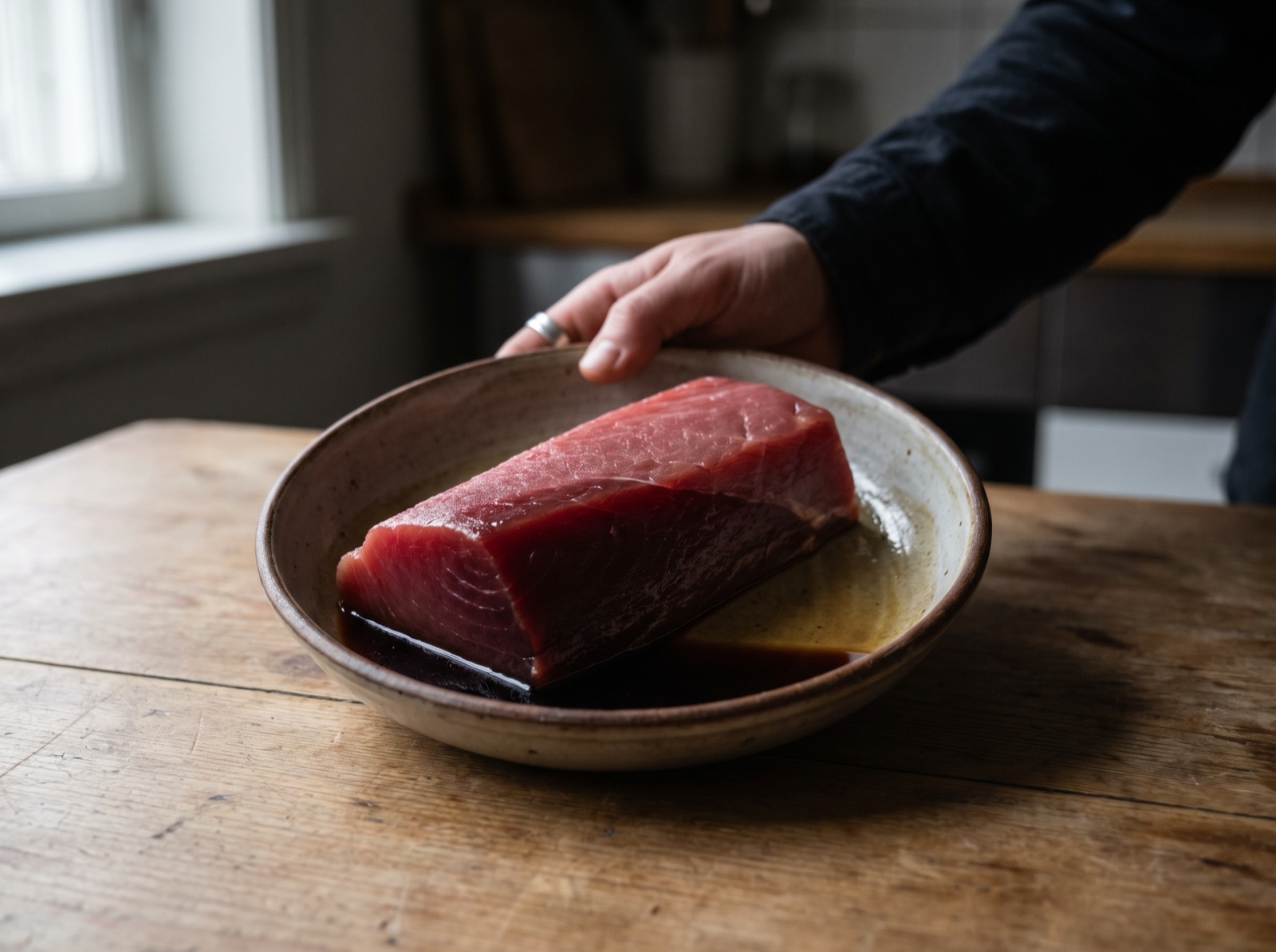
Two more traditions sit on top of that grading rather than inside it. One is a soy marinade whose original job disappeared once refrigeration existed, and which never left the menu regardless; see zuke. The other turns the trimmings scraped from the bone into a dish of its own, not always made of what its name implies; see negitoro. None of that is repeated here. It belongs to those entries, and that is where to actually learn it.
When it is best
There is no single answer, because there is no single fish. Pacific bluefin, southern bluefin, yellowfin, bigeye and albacore do not share a migration pattern, a spawning season or a set of fishing grounds, and compressing all of that into one date range for a word that covers five different animals would mean inventing a season that does not exist. What can be said honestly is narrower: which grade you are eating, and how it was handled, tell you far more about how good a piece of maguro is on a given day than the calendar does.
Maguro is not one fish. It is a word that five different fish answer to, and the animal underneath it changes more than the calendar does.
How it differs from what it is confused with
- Toro is not a species. It is a fat grade of maguro, not a different fish. The word covers both chutoro and otoro, and both come from a bluefin or a related tuna, not from something separate.
- Akami is not a lesser fish either. It is the same animal as toro, cut from a leaner part of the body, and for most of Edomae sushi's history it was the cut actually eaten. See our entry on akami.
- “Maguro” on a menu does not mean bluefin specifically. Several tuna species answer to the word, and only context — price, colour, what the chef says — tells you which one is in front of you.
- Negitoro is not always tuna belly. At a counter, under that name, it usually is. In a packaged product it is often a different mixture entirely. See our entry on negitoro.
How to say it
ma-gu-ro, three even beats, with no syllable stressed over the others. Honmaguro, “true maguro,” the name for Pacific bluefin specifically, is hon-ma-gu-ro.
Where you will see it, and roughly what it costs
On every sushi menu in some form, more consistently than almost any other fish — which is exactly why the word alone tells a diner so little. What a price is actually responding to is the species, the specific cut, and how the fish was handled after it was caught, not the single word maguro printed on the case.
For what drives the price of Pacific bluefin specifically, including how thin the wild stock has run in recent years, see our entry on otoro. For what a course built around it generally costs, see omakase price tiers.
Frequently asked questions
What is maguro?
Maguro is an umbrella term for several related tuna species, not the name of a single fish. Said alone, it is usually understood to mean Pacific bluefin, but yellowfin, bigeye, southern bluefin and albacore are all sold as maguro too.
Does maguro always mean bluefin?
No. Several tuna species are sold and eaten under the same word, and a menu that simply prints maguro is not committing to any one of them. Honmaguro, true maguro, is the specific term for bluefin.
What is the difference between maguro, toro and akami?
Maguro is the species; toro and akami are fat grades cut from that same animal, not different fish. Akami is the lean red muscle; toro, split into chutoro and otoro, is the fattier cuts from the belly.
Which fish are sold as maguro?
Pacific bluefin (honmaguro), southern bluefin, yellowfin, bigeye and albacore are all used as sushi toppings under the word maguro.
What is honmaguro?
Honmaguro, “true maguro,” is the specific name for Pacific bluefin tuna, distinguishing it from the other tuna species also sold as maguro.
When is maguro in season?
There is no single season, because there is no single fish. The species sold as maguro do not share a migration or spawning pattern, so a single date range for the word would not be accurate.