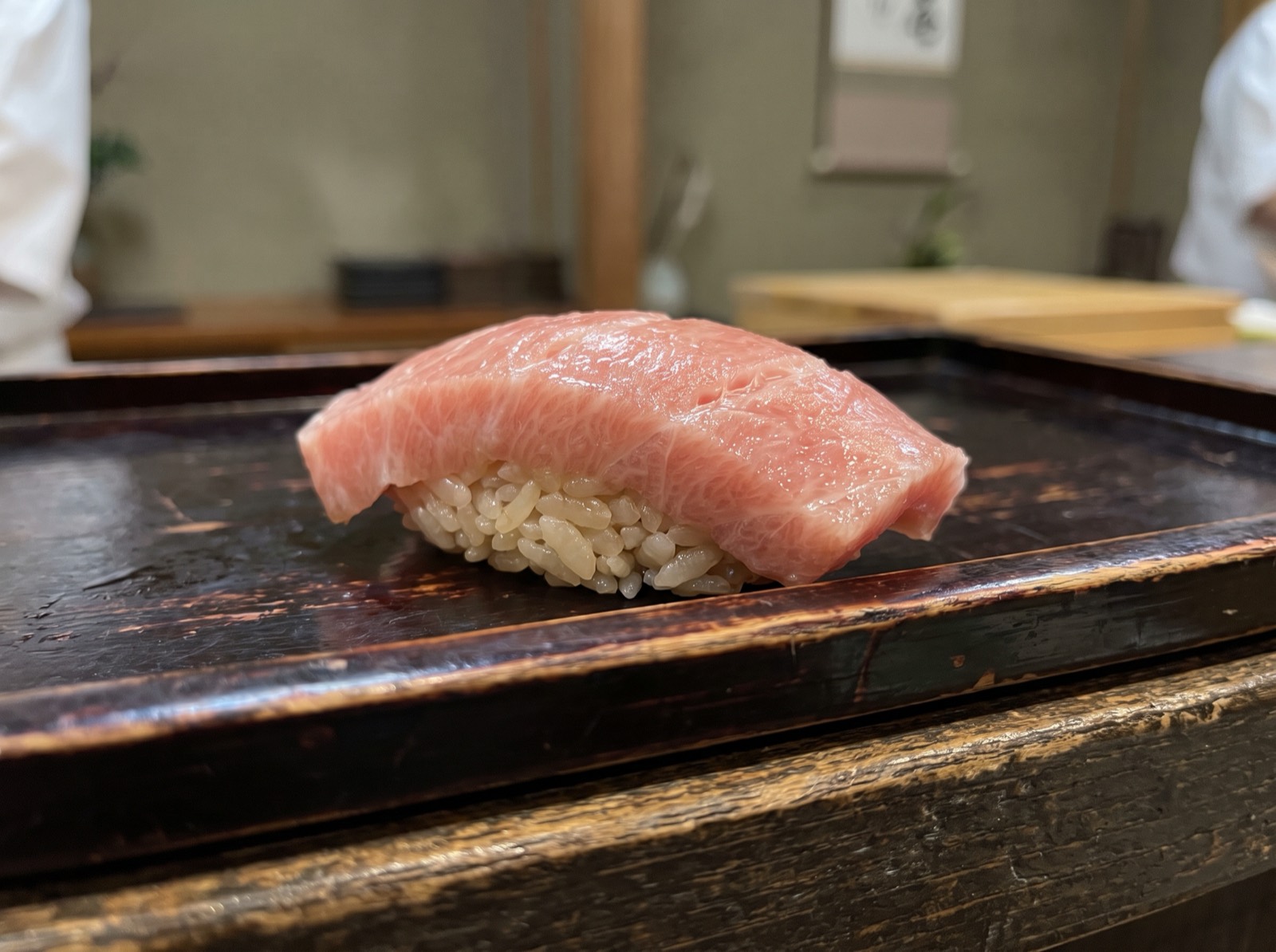
Otoro (大トロ) is the fattiest section of the tuna belly, and at most counters it is the single most expensive piece served. The name is straightforward: ō is “great”, and toro comes from torori (とろり), the word for something that melts or runs. It is a description of texture, not of anatomy.
What it is
Tuna is divided at the counter into three grades by fat content and position, and every menu in Japan assumes you know them:
- Akami (赤身). The lean red muscle along the back and the core of the fish. Deep red, firm, iron-scented, the historical heart of Edomae tuna.
- Chūtoro (中トロ). Medium fatty, from the transition between back and belly. Pink, marbled, the cut many people prefer once they stop chasing the most expensive one.
- Otoro (大トロ). From the belly, and specifically the fattest part of it. Pale pink to almost white, heavily marbled, soft enough to give way against the tongue.
The belly itself is subdivided in the trade by position along its length: harakami (腹上), haranaka (腹中) and harashimo (腹下), upper, middle and lower. These are not menu words, but they are why two pieces both correctly labelled otoro can eat quite differently.
The species matters as much as the cut. Hon-maguro (本マグロ), Pacific bluefin, is the reference standard; minami-maguro (ミナミマグロ), southern bluefin, is the other fish that produces otoro of the first rank. Yellowfin and bigeye are also sold as maguro and their belly meat is nothing like the same thing.
When it is best
Winter, for wild bluefin in Japanese waters. Cold-season fish carry the most fat, and the trade's benchmark is bluefin landed in the north through the winter months. Ōma in Aomori is the name that carries the most weight.
Two qualifications. Bluefin is a global fish and Japan imports it year-round from several oceans, so availability tells you nothing about season. And farmed bluefin, now produced at scale, carries a consistently high fat level in every month, which is a genuine achievement and also a reason menus no longer track the calendar the way they once did.
What the chef does to it
A great deal of the work on tuna happens before the slicing, and most of it is temperature and time.
- Ageing (熟成, jukusei). Tuna is the fish most transformed by controlled ageing. Days of rest under precise refrigeration develop savour and soften texture. Practice varies enormously between shops and it is one of the things a chef is most likely to have an opinion about.
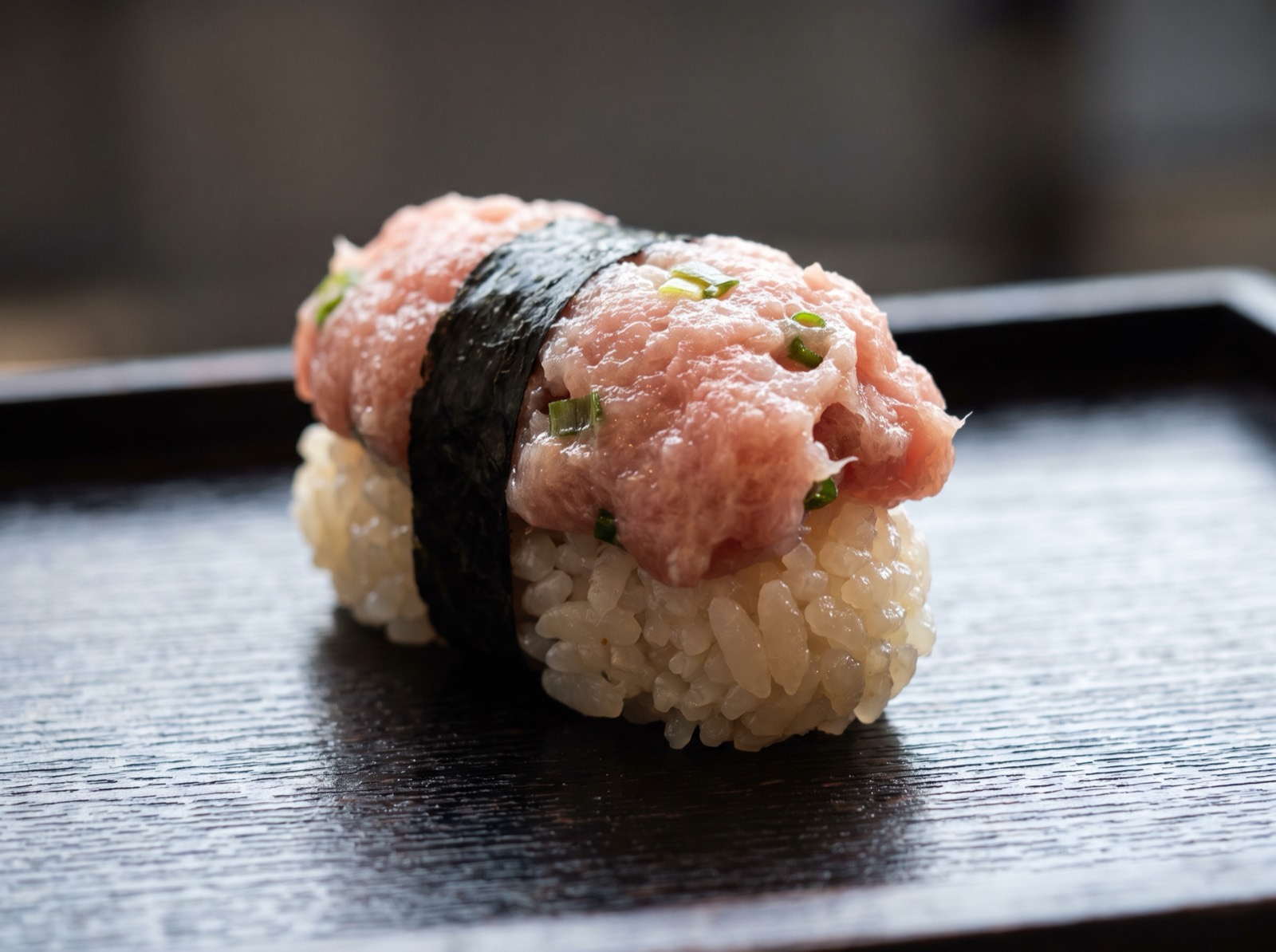
- Sinew management. Otoro is streaked with connective tissue. Where the sinew runs, the piece must be cut against it or the diner meets a band that will not break down. Heavily sinewed belly is often scraped rather than sliced, the flesh taken off the membrane with a spoon or a shell, and that scraped meat becomes negitoro.
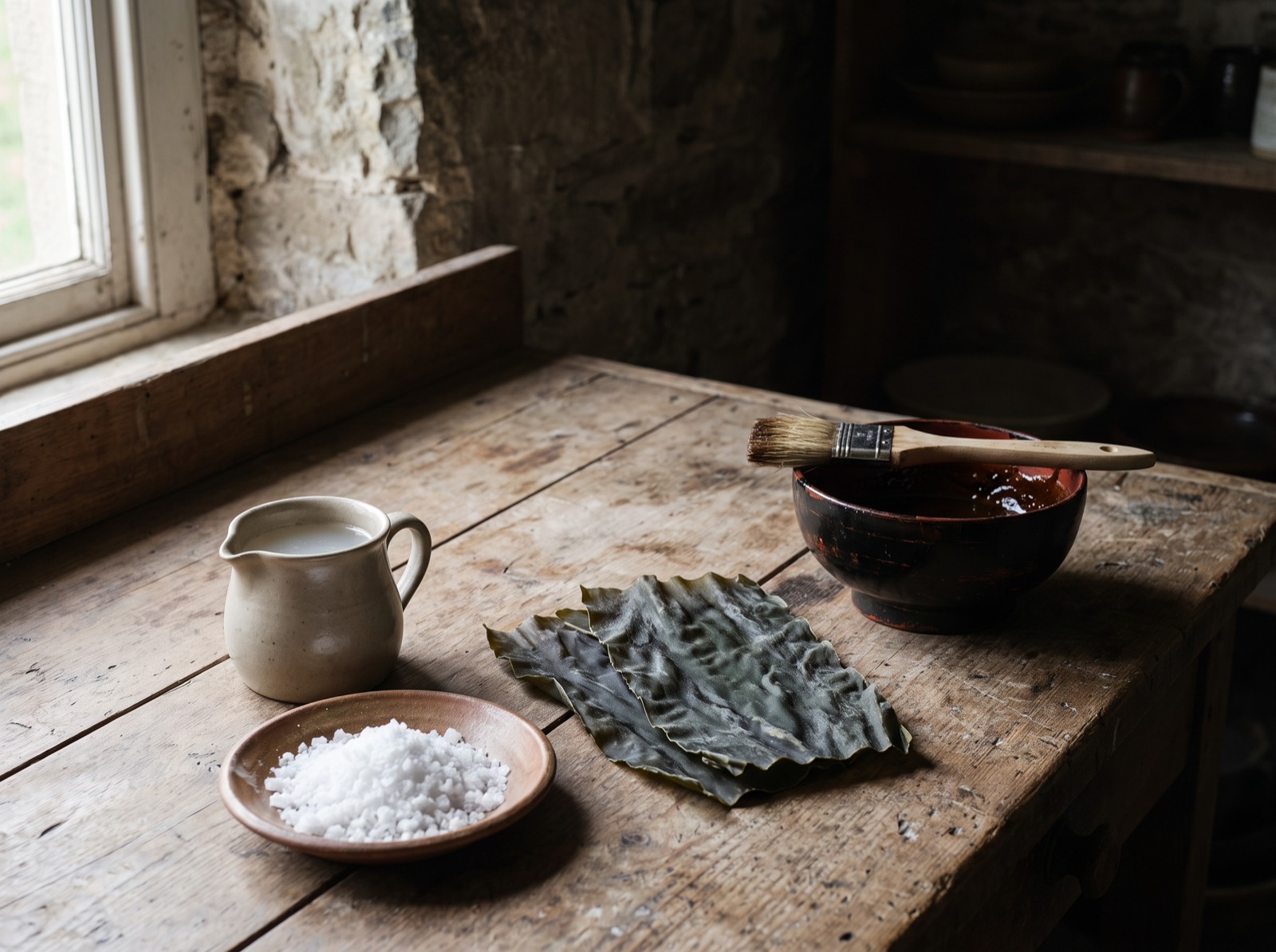
- Nikiri, lightly. A brush of the pre-seasoned soy reduction, and generally a restrained one: heavy soy on otoro fights the fat rather than cutting it.
- Sometimes a sear. Aburi (炙り), a brief flame across the surface, renders a little of the fat and adds smoke. Some counters do it, many consider it a distraction from a good piece.
What is rarely done to otoro is zuke (漬け), the soy marinade. Zuke was the Edo-period method of holding tuna without refrigeration, and it was applied to akami, the lean meat. Soy does not penetrate fat, and the belly spoiled too fast to be worth the attempt, which brings us to the reason this entry exists.
The fatty belly was treated as neko-matagi — the thing a cat steps over.
The cut nobody wanted
For most of the history of Edomae sushi, the fatty belly was close to worthless. Without reliable cold, fat oxidises fast: it turns rancid fast, in a way lean red muscle does not. Edo-period tuna was preserved in soy, and the belly could not be. It was discarded, rendered, or sold at a price that reflected nobody wanting it.
The Japanese trade word that survives from that period is neko-matagi (猫跨ぎ), “the cat steps over it”, meaning even a cat would walk past. It was applied to fish nobody would eat, and the tuna belly was in that category.
What changed was the cold chain: mechanical refrigeration through the twentieth century, then deep freezing at sea, then air freight. Once fat could be held stable, the qualities that had made it a liability (softness, richness, the way it melts at body temperature) became the most desirable characteristics in the shop. The reversal was complete within a few decades and it is the clearest illustration available of a point this publication returns to often: much of what looks like timeless tradition in sushi is a response to whatever technology existed at the time.
How it differs from what it is confused with
- Otoro versus chūtoro. Position and fat, not species. Chūtoro is leaner, holds more structure, and tastes more of tuna. A number of people who have eaten both extensively prefer it, and ordering it is not settling.
- Otoro versus “toro” abroad. Outside Japan, toro is used loosely, sometimes for any pale marbled tuna including yellowfin belly. A menu that says toro without saying which tuna is not telling you much.
- Otoro versus negitoro. Negitoro is scraped tuna with spring onion, usually made from trimmings and often not from bluefin belly at all.
How to say it
oh-TOH-roh is the usual English respelling and is perfectly understood. More accurately it is four beats with a long first vowel, o-o-to-ro, and no stressed syllable. The long ō is the “great” in the name; shortening it to toro is a different word, and a correct one for the category as a whole.
Edomae and Kansai
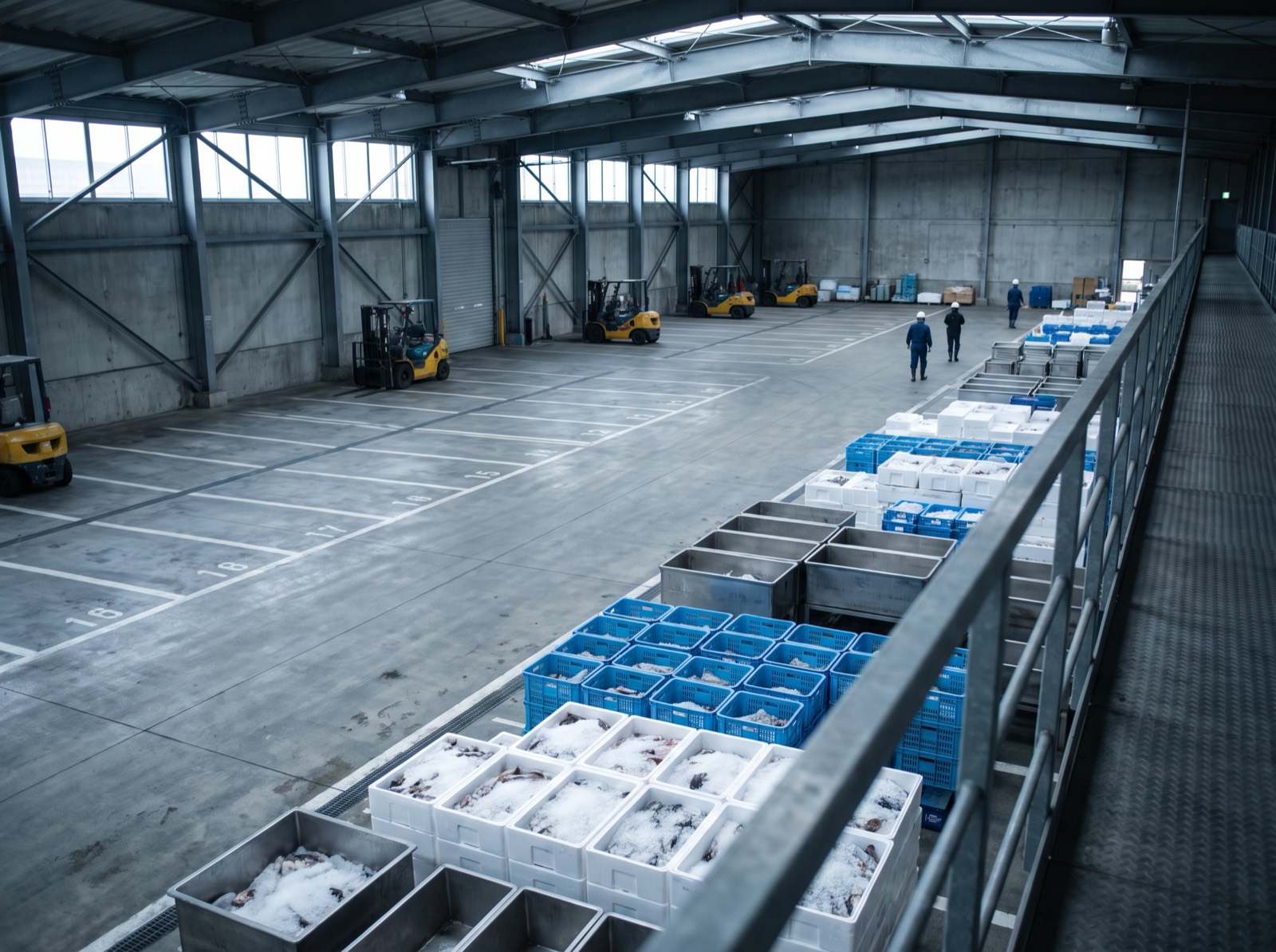
Tuna is Tokyo's fish more than anywhere else's. Edomae sushi grew up in a city with a tuna trade at its centre, and Tokyo's wholesale market remains the reference point for bluefin pricing worldwide; see Toyosu. Kansai's historical fish preferences ran more towards white fish and, on the sushi side, towards pressed forms that fat does not suit. Both cities serve excellent otoro today; the difference is one of emphasis and history rather than of availability.
The stock question, in dates and numbers
“Sushi is emptying the ocean of tuna” is the sentence otoro attracts, and it is one of very few points in this field where the Japanese record answers with years and figures rather than with argument. Pacific bluefin spawning stock biomass fell to about 9,800 tonnes in 2010. Catch limits began in 2015 under the Western and Central Pacific Fisheries Commission, became statutory TAC management in 2018, met the interim recovery target in 2019, and the quota for large fish was raised in 2022.
The management splits the fish at 30 kg: under 30 kg counts as small, 30 kg and over as large, each with its own cap. From January 2015 the small-fish catch was halved against the 2002–2004 average, which is the measure that did most of the work, because a small bluefin is one that has not spawned.
We are setting the dates down and stopping there. A recovery target met in 2019 is not the same statement as “the problem is over”, and the annual caps change with each management year, so any tonnage figure needs the year it belongs to printed beside it.
Where you will see it, and roughly what it costs
At the top of every price band, and the item most responsible for the spread between them. On a conveyor belt, “otoro” is likely to be farmed or imported tuna and priced as a premium plate. At an omakase counter, it is a single piece of a fish the shop bid on at market, and the cost of that piece can exceed the entire bill at a belt shop.
Otoro is the least reliable guide to a shop's quality, because it is the piece most easily bought rather than made, whereas the rice, the kohada and the egg tell you what the kitchen can actually do. See omakase price tiers for the whole-meal picture. Otoro is bought. The rest is made.
Frequently asked questions
What is otoro?
The fattiest section of the tuna belly, and usually the most expensive piece at a sushi counter. The name means 'great toro', from torori, a word for something that melts; it describes texture rather than anatomy.
What is the difference between otoro, chutoro and akami?
Fat content and position. Akami is the lean red muscle from the back and core; chutoro is medium-fatty from the transition zone; otoro is the fattiest belly. Otoro is palest and softest, akami is deepest red and firmest.
Why was fatty tuna once thrown away?
Because fat oxidises fast without refrigeration. Edo-period tuna was preserved by marinating in soy, which works on lean meat but not on fat. The belly spoiled, was worth little, and the trade called such fish neko-matagi, the thing a cat steps over.
Is otoro better than chutoro?
It is fattier and more expensive, which is not the same thing. Chutoro is leaner, holds more structure and tastes more of tuna, and many experienced eaters prefer it. Ordering chutoro is not a compromise.
When is otoro in season?
Winter, for wild bluefin in Japanese waters, when cold-season fish carry the most fat. Imports run year-round and farmed bluefin holds a high fat level every month, so what is on a menu in July tells you nothing about season.
Should I judge a sushi restaurant by its otoro?
It is the weakest signal on the menu, because otoro is bought rather than made. The rice, the cured kohada and the egg reveal far more about what a kitchen can actually do.
Is eating otoro bad for bluefin stocks?
Pacific bluefin spawning stock biomass fell to about 9,800 tonnes in 2010. Catch limits began in 2015 under the WCPFC, became statutory TAC management in 2018, and the interim recovery target was met in 2019, after which the large-fish quota was raised in 2022. Management splits the fish at 30 kg, and the small-fish catch was halved from January 2015 against the 2002–2004 average.