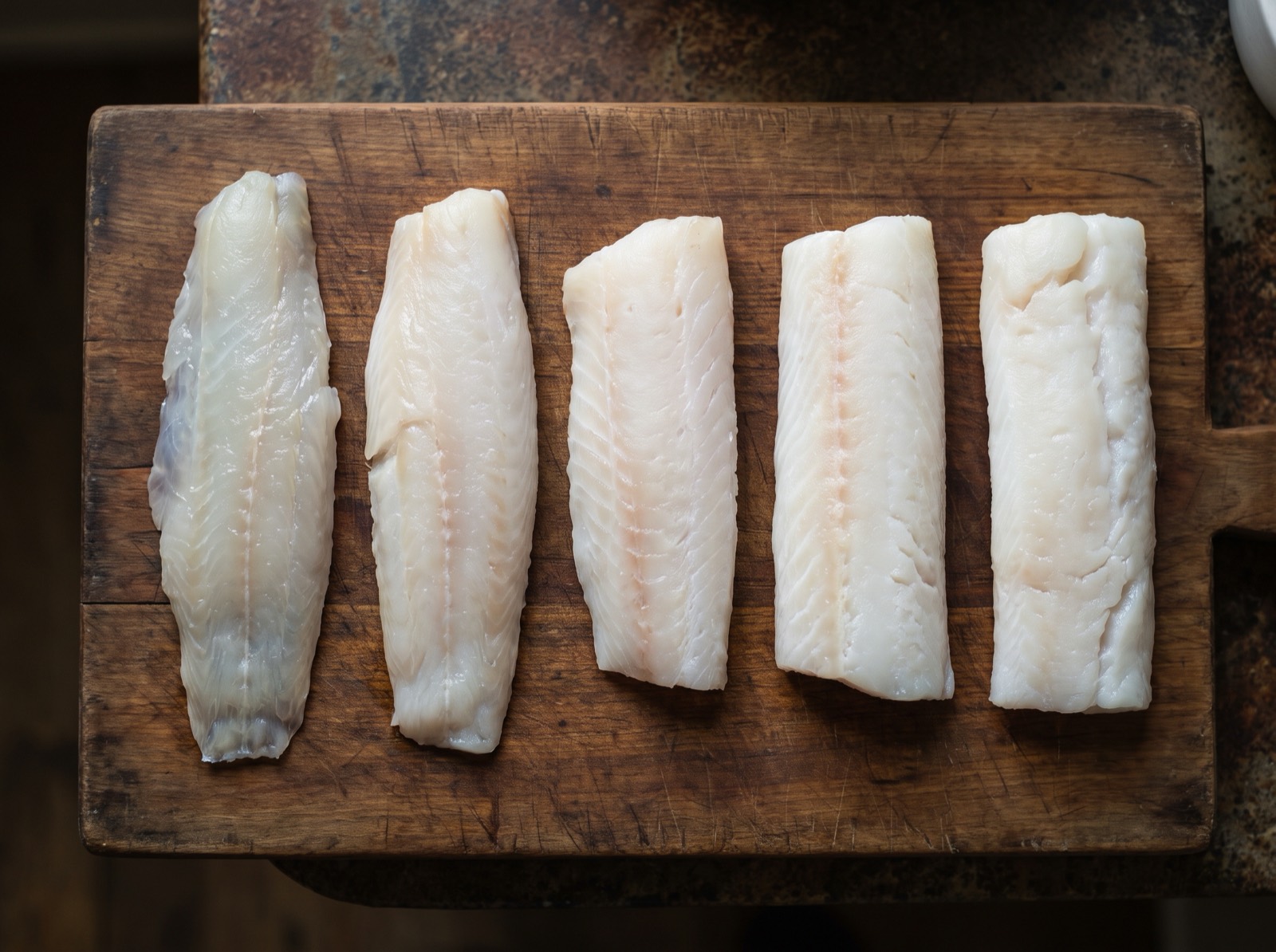
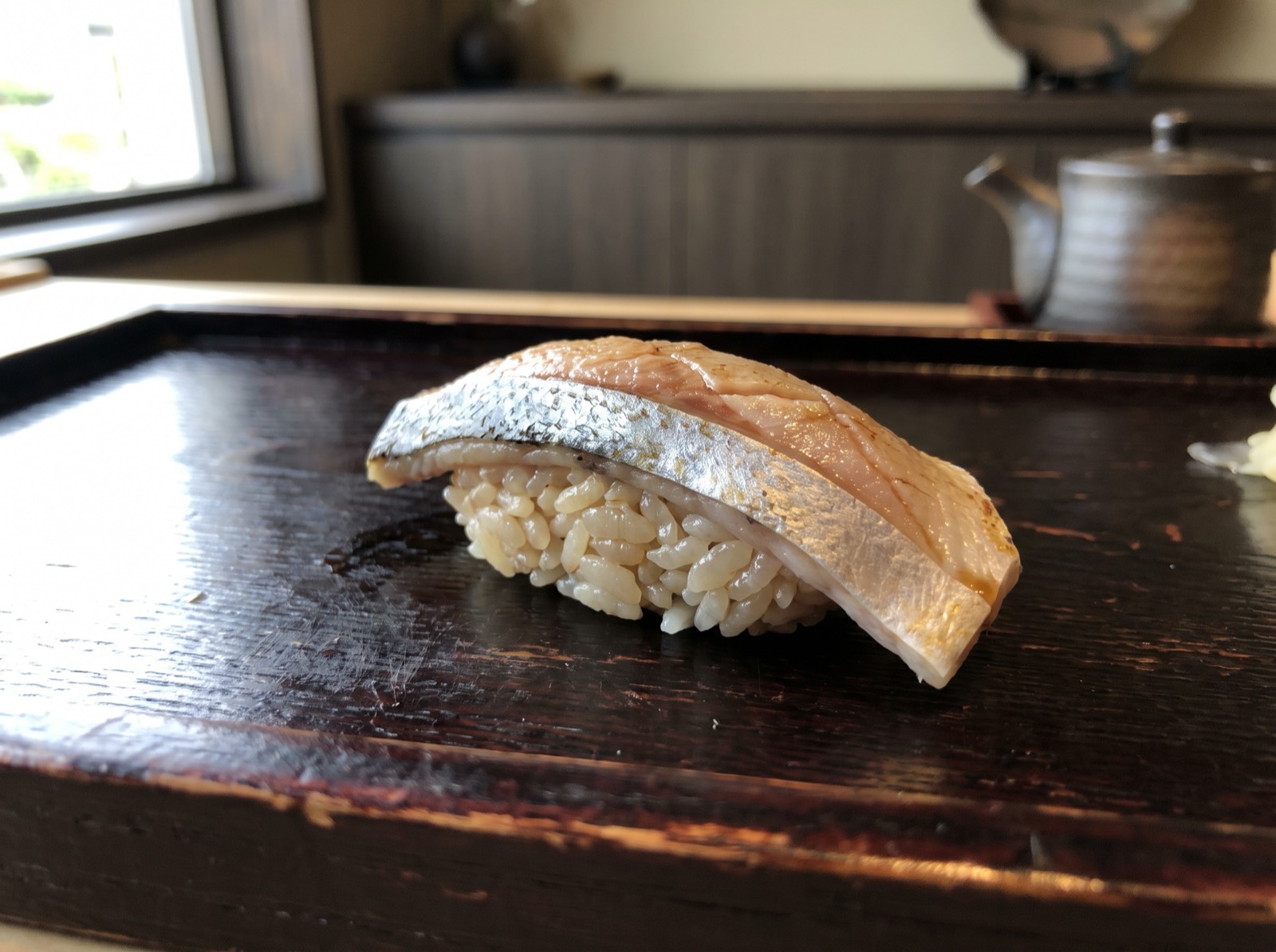
Kawahagi (カワハギ, filefish) takes its name from the way it is prepared: kawa means skin, hagi means to peel or strip, and the fish is named for the tough hide a cook removes before it can be used at all. What makes it worth seeking out is not only the flesh underneath but the liver, which is treated as an ingredient in its own right rather than discarded.
What it is
A modestly sized, white-fleshed fish (see our entry on shiromi) with a thin, springy body and a tough outer skin that has to come off before the fillet is usable. The flesh itself is lean, firm and mild, closer in character to the leanest of Japan's white fish than to anything rich.
The reason kawahagi is not simply another mild white fish is the liver. For a fish this size it is unusually large, and it is handled as carefully as the flesh, sometimes more so — a rare case where a diner is being served two separate ingredients from the same animal, one of them an organ.
The liver, not just the flesh
The liver, kimo (肝), is mashed or worked into soy sauce to make kimo-joyu (肝醤油), and the fillet is either dipped into it or has a little spooned directly onto the nigiri. It is the fish's defining way of being eaten, distinct from how any other white fish on a counter is served.
Because the liver matters this much, a chef buying kawahagi will typically press the belly by hand before deciding on a fish, judging the liver's size through the skin rather than waiting to open it. A larger liver is generally worth more, and a shop that has found a good one tends to say so rather than let it go unmentioned.
When it is best
Our sources disagree more here than they do for most fish, and we are printing the disagreement rather than resolving it. One places the liver's peak in the depth of winter. Another gives a longer window running from autumn into spring. A third states plainly that the fish does not fall away in quality through the rest of the year. We have no basis to choose among the three, so all three stand.
A chef buying kawahagi checks the liver before deciding on the fish. The flesh is not really the question.
What the chef does to it
- Peels the skin. The hide is tough enough that it will not soften with a light score, so it comes off before the fillet is cut, which is also where the fish's name comes from.
- Prepares the liver separately, generally boiled briefly or seared, before it is worked into soy or spooned onto the fish.
- Cuts the flesh thin. A kawahagi carries a large head and gut cavity relative to its size, so the usable fillet is a smaller share of the fish than it looks, and the slices are cut correspondingly thin.
- Garnishes lightly. Grated momiji-oroshi (chilli-flecked daikon) with chopped chives is one common pairing; citrus with a little salt, or a dab of ponzu, are others. All of them are chosen to sit next to the liver rather than compete with it.
How it differs from what it is confused with
- Kawahagi and umazurahagi. The threadsail filefish is a close relative with a longer, narrower face, generally sold for less, and by most accounts its liver runs even larger than kawahagi's own. The two are often sold in the same case and are easy to mix up on sight.
- Kimo-joyu and plain soy. Nigiri dipped in ordinary soy and nigiri finished with kimo-joyu are not the same order. The liver mixture is richer and has its own character; asking for it by name is worth doing if a shop has not already offered it.
- Kawahagi and other lean white fish. Most of Japan's white fish are served for the flesh alone. Kawahagi's liver is the exception that makes the comparison worth drawing at all.
How to say it
ka-wa-ha-gi, four even beats. Kimo-joyu is ki-mo-jo-yu, and it is a perfectly normal thing to ask a chef for by name.
Where you will see it, and roughly what it costs
On specialty counters more than on belts, since the liver has to be handled and judged by hand rather than portioned in advance. It also turns up as a grilled or simmered dish outside the sushi context, where the liver is served the same way, worked into a dip alongside the fish.
We are not giving a figure here. What is worth knowing is that the liver, not the fillet, is usually what sets the price: a kawahagi with a small liver and one with a large liver are, in practical terms, two different orders, even though the fish on the label reads the same. For where a course like this sits in a bill, see omakase price tiers.
Frequently asked questions
What is kawahagi?
Filefish: a lean, mild white fish named for the tough skin peeled off before it is prepared. It is served both for its flesh and for its liver, which is treated as a separate ingredient.
What is kimo-joyu?
Kimo-joyu is the fish's own liver worked into soy sauce, either used as a dip for the flesh or spooned directly onto the nigiri. It is kawahagi's defining way of being served.
Why does the liver matter so much?
Because it is unusually large for a fish this size and is judged, priced and served almost as its own ingredient. A chef will often press the belly by hand before buying a kawahagi to gauge the liver's size.
When is kawahagi in season?
Sources disagree: one names deep winter for the liver's peak, another gives autumn through spring, and a third says quality does not fall away through the year. We print all three rather than choose one.
What is umazurahagi?
A close relative, the threadsail filefish, with a longer face and generally a lower price. Its liver often runs even larger than kawahagi's, and the two fish are easy to confuse on sight.
How do you pronounce kawahagi?
ka-wa-ha-gi, four even beats. Kimo-joyu, the liver-and-soy mixture, is ki-mo-jo-yu.