One line, from this site’s own reporting on Tokyo sushi menus, reads in full: “Shiromi, white fish, is any of a dozen.” It sits on an English course menu exactly where a diner might expect a name, and it names none. That is not evasiveness. It is an accurate description of a category, printed as plainly as the Japanese line beside it.
What it is
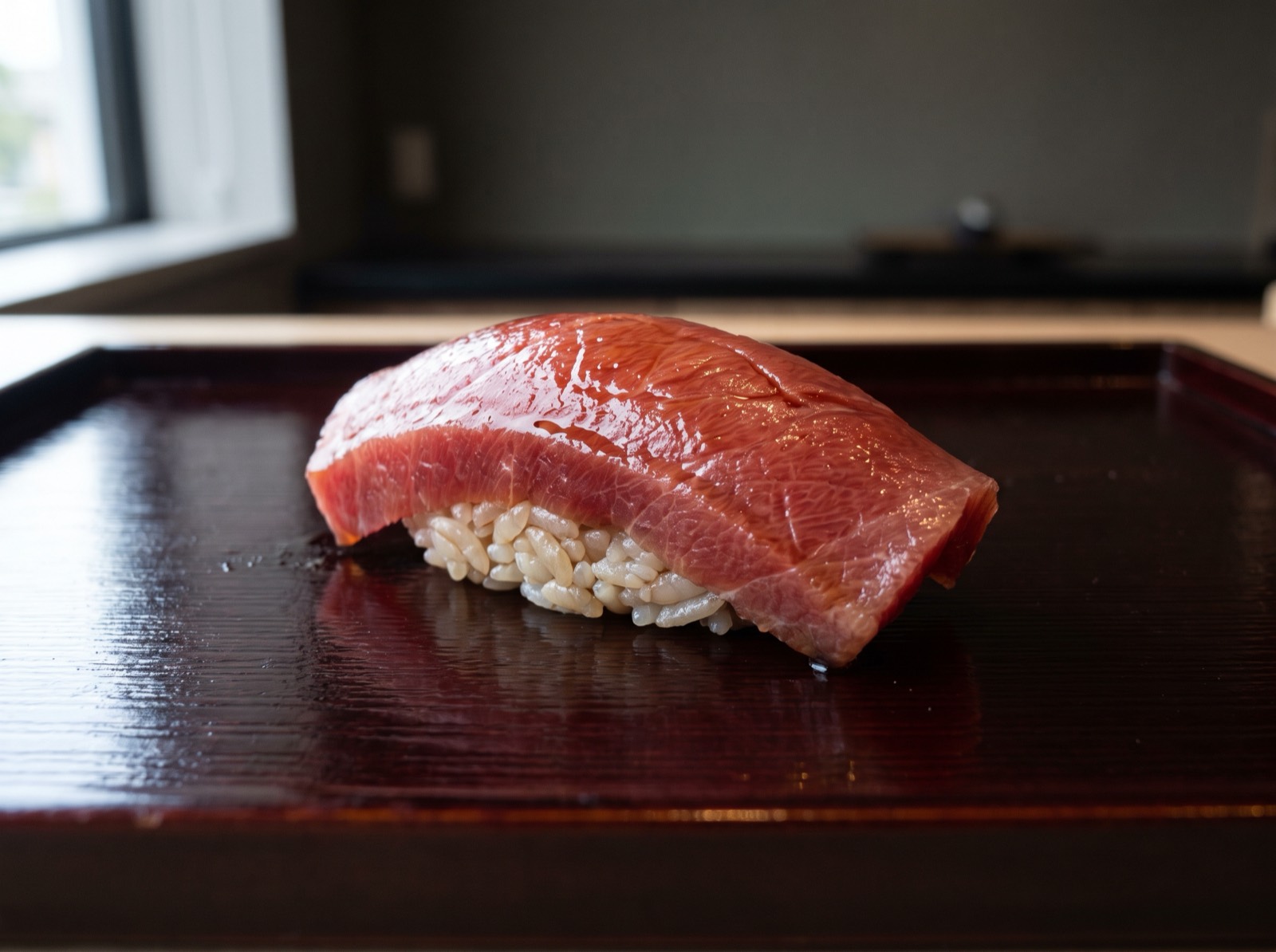
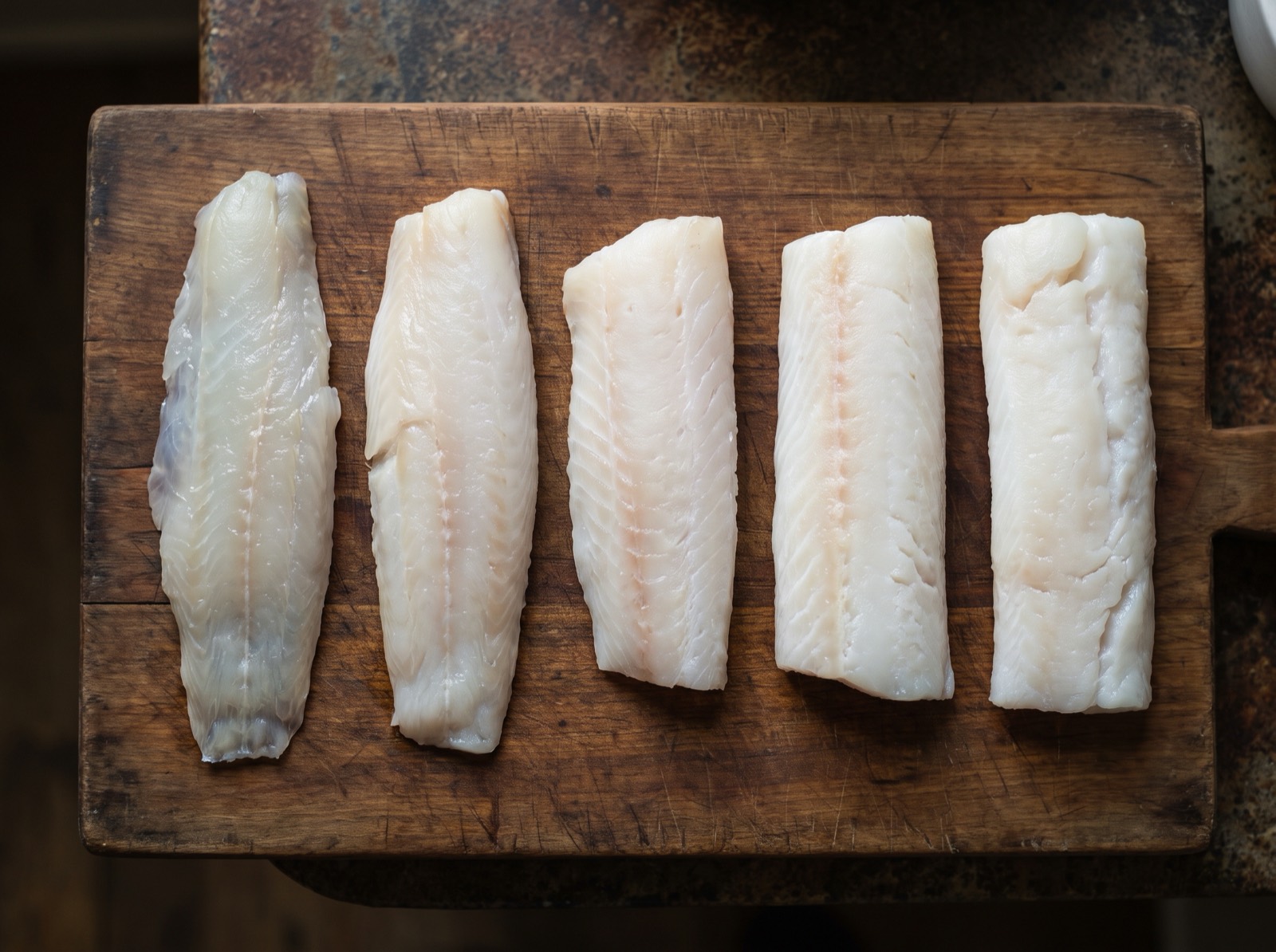
Shiromi (白身) means, in the plainest terms this site’s own fact index gives it, fish with little myoglobin in the muscle. Myoglobin is the pigment that stores oxygen in muscle tissue and, in high enough concentration, turns it red; akami, the word for the opposite case, is defined by the same index as muscle rich in that pigment. One word names an abundance. The other names its absence. Between them they cover most of what reaches a counter.
This site’s own guide to counter vocabulary puts the boundary precisely: akami and shiromi are red-fleshed and white-fleshed, “a distinction about how much myoglobin the muscle carries rather than about how the fish tastes.” Shiromi is not a fish. It is not, strictly, even a flavour. It is a fact about a muscle, repurposed by the trade into a word a customer can use without reciting a textbook.
Which fish
No fixed roster exists here, and this entry will not print one. Shiromi is defined by a shared property of the muscle, not by a finite list somebody keeps; naming every fish that qualifies would mean promising a total this site cannot stand behind the moment one more entry is published. What can be named honestly is which shiromi fish this site has researched and covered on its own terms, each under its own name rather than the umbrella word:
- Hirame. Flounder, lean and firm, and the fish this site’s own kobujime entry names as one of its two regular subjects.
- Madai. Red sea bream, just as lean, and the other fish that same kobujime entry names directly.
- Kinmedai. Scarlet-skinned and, despite the colour, white-fleshed by the same muscle chemistry as the rest of this list — in this site’s own words, “emphatically a white-fleshed fish.”
- Isaki. Richer than the lean end of the category; this site describes it as sitting “between the lean fish and the oily ones.”
- Shima-aji. Firm and pale, and by this site’s own account one of the most expensive white-fleshed fish in Japan.
The trade literature groups a great many more fish under the same heading than any one publication could research and stand behind at once. This entry names only what it has covered on its own terms and leaves the rest to the index this site keeps: the Sushi A–Z, sorted alphabetically rather than by category, which is a safer place to look for what is missing than a number printed here would be.
How it differs from akami
Akami and shiromi read as opposites, but the axis they sit on has a third point that neither owns. This site’s fact index describes chiai (血合い) as the dark strip of muscle where the blood pigments concentrate, and this site’s own entry on akami goes further: chiai carries “far more myoglobin again” than akami itself, is strong and distinctly metallic, and is trimmed away before any of it reaches a counter. Shiromi is not simply the absence of akami. It sits at one end of a gradient that has a third, discarded band at its far extreme.
Colour on the skin is not a reliable guide to colour in the muscle, and this site’s own account of kinmedai makes the point directly: for all its scarlet skin, kinmedai is, in this site’s own words, “emphatically a white-fleshed fish,” because the red-white division runs on how much myoglobin the muscle carries, not on what colour the fish is from the outside. A menu that sorted by eye would put kinmedai next to tuna. A menu that sorts by muscle puts it here.
Colour on the skin is not a reliable guide to colour in the muscle. A menu that sorted by eye would put kinmedai next to tuna. A menu that sorts by muscle puts it here.
How it differs from hikarimono
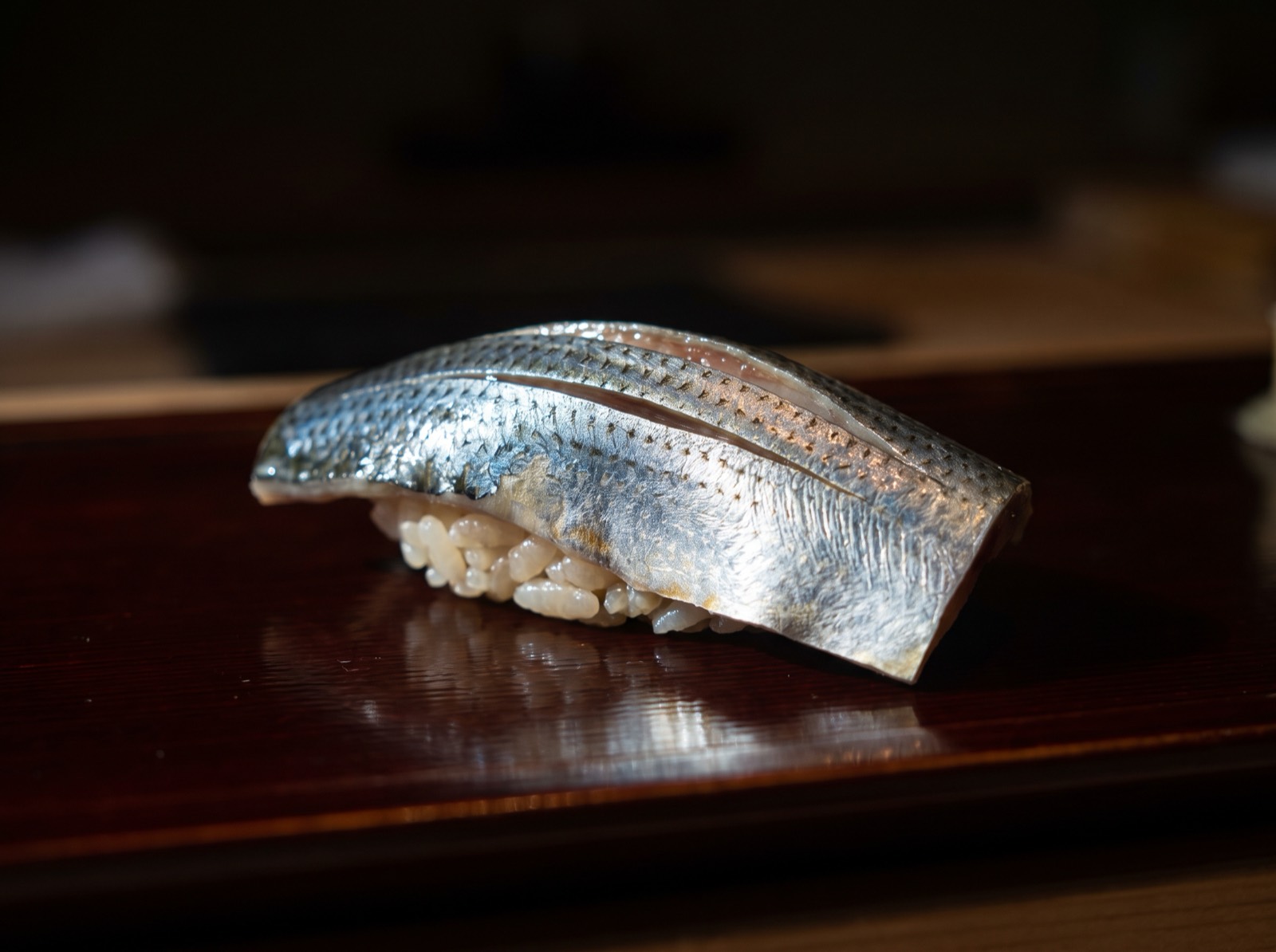
The two ideas get confused because they are printed side by side and often describe the same fish. This site’s own guide to counter vocabulary sets the two apart in the same breath it defines them: hikarimono (光り物), the shining things, “are the small silver-skinned fish and by extension the ones that are vinegar-cured” — a description built entirely from what a fish looks like and what has been done to it. Shiromi is built from neither. One axis sorts by skin and treatment. The other sorts by muscle.
This site’s own entry on hikarimono sets out which fish carry that tag and why the word covers two definitions at once; that list belongs there, not repeated here. What matters for shiromi is the boundary between the two ideas, not a headcount on either side of it: a fish’s myoglobin level and a fish’s skin, or its curing, are separate facts about it, and knowing one tells you nothing certain about the other.
What is done to it
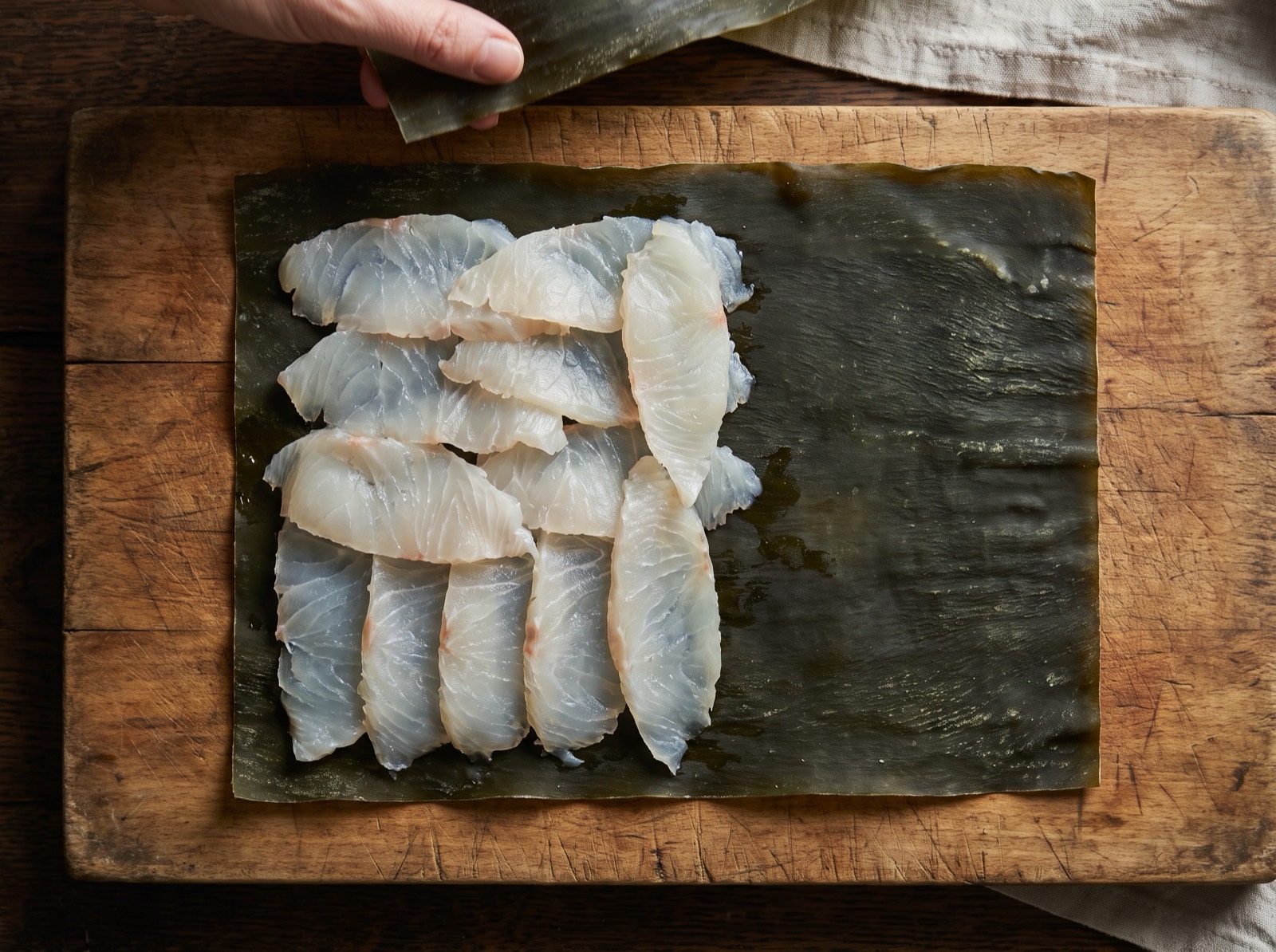
Leanness is the reason one particular piece of work gravitates toward shiromi more than toward any other classification. This site’s own entry on kobujime, kelp-curing, is explicit about the mechanism: “a fish with very little fat gives up its water quickly and takes on the kelp’s savour just as quickly, so the exchange is fast and the result is predictable.” That is a description of lean muscle in general, and lean muscle is most of what the word shiromi is defined by.
But shiromi is not uniformly lean. This site’s own entries on the fish above describe a real range, from hirame and madai at the lean end to isaki, which this site describes as sitting “between the lean fish and the oily ones,” and the frankly rich kinmedai at the other. The work done to a fish tracks that range more than it tracks the single word both ends share.
- Kobujime, on the leanest fish here. This site’s own kobujime entry names madai and hirame as its two regular subjects, for the reason given above: little fat, a fast exchange, a predictable result.
- Ageing, or jukusei — a day or more of controlled rest that this site’s own hirame entry describes as relaxing the flesh and building a savour the fish did not have when it was landed.
- Yubiki, boiling water poured over the skin and then immediately chilled. This site describes the same treatment for both kinmedai and isaki: the fat sits close under the skin on these richer fish, so the skin is kept rather than removed.
None of this is predictable from the word shiromi by itself. The category tells you about a fish’s muscle, not about the knife work that got it to the rice, and the leaner fish on this list are handled by a different playbook from the fattier ones, even though the same word covers them all.
How to say it
shi-ro-mi, three even beats, no stressed syllable — the same rhythm as a-ka-mi, its opposite number, and built the same way: 白, white, standing in for 赤, red, in front of the same second character, 身, flesh. Neither word is counter jargon. A customer can use either without sounding like they are performing.
Where you will see it
Printed, and printed as a category rather than a name. This site’s own reporting on Tokyo sushi menus found the word doing exactly that job on an actual English course menu: “Shiromi, white fish, is any of a dozen.” The Japanese page underneath used the same word for the same reason. Neither version was hiding a fish behind a euphemism — there was no fish to name yet. On a course menu, the piece has not been decided; it is bought that morning and told to you once, out loud, when it is set down.
We do not repeat that reporting here beyond the one line; the fuller finding, and what it costs a diner in translation, is set out in the article itself. What belongs in this entry is narrower: shiromi is one of the words a Tokyo menu can print honestly precisely because it commits to nothing more specific than the muscle.
What to ask at the counter
The practical answer is not to memorise which fish sits on the white-fleshed side of the ledger — the catch moves with the season, and this entry has already declined to make that list definitive. It is to ask the plainer question the word itself will not answer: Kono sakana wa nan desu ka, what fish is this. A chef who has just set a piece of shiromi in front of you can always answer that in a sentence, and the answer is worth more than any list this site could print and watch go stale.
Frequently asked questions
What does shiromi mean?
Fish with little myoglobin in the muscle, by this site's own fact index — the plain physical fact behind the everyday word for white fish. Akami, the word for red-fleshed fish such as tuna, sits on the opposite end of the same scale.
Is shiromi a type of fish?
No. It is a classification based on muscle chemistry, not a species or a family. A great many unrelated fish qualify, and this site names only the ones it has researched and covered in full rather than printing a total count.
Which fish are shiromi?
On this site: hirame, madai, kinmedai, isaki and shima-aji, each with its own entry. The trade groups many more fish under the same heading; we name only what we have researched and published ourselves, and do not print a running total, because it would go out of date the next time an entry is added.
What is the difference between shiromi and hikarimono?
A different axis entirely. Shiromi sorts by how much myoglobin a fish's muscle carries; hikarimono sorts by what a fish's skin looks like and whether it has been cured. The two ideas are printed side by side because they often describe the same fish, not because they measure the same thing.
Why is kinmedai considered shiromi if it has red skin?
Because the classification runs on the muscle, not the skin. This site's own entry on kinmedai describes it as ‘emphatically a white-fleshed fish’ despite its scarlet colouring, since the red-white division is decided by myoglobin in the flesh rather than by what the fish looks like from outside.
How do you pronounce shiromi?
shi-ro-mi, three even beats, no stressed syllable — the same rhythm as akami, its opposite number, and built the same way: white plus flesh, standing in for red plus flesh.