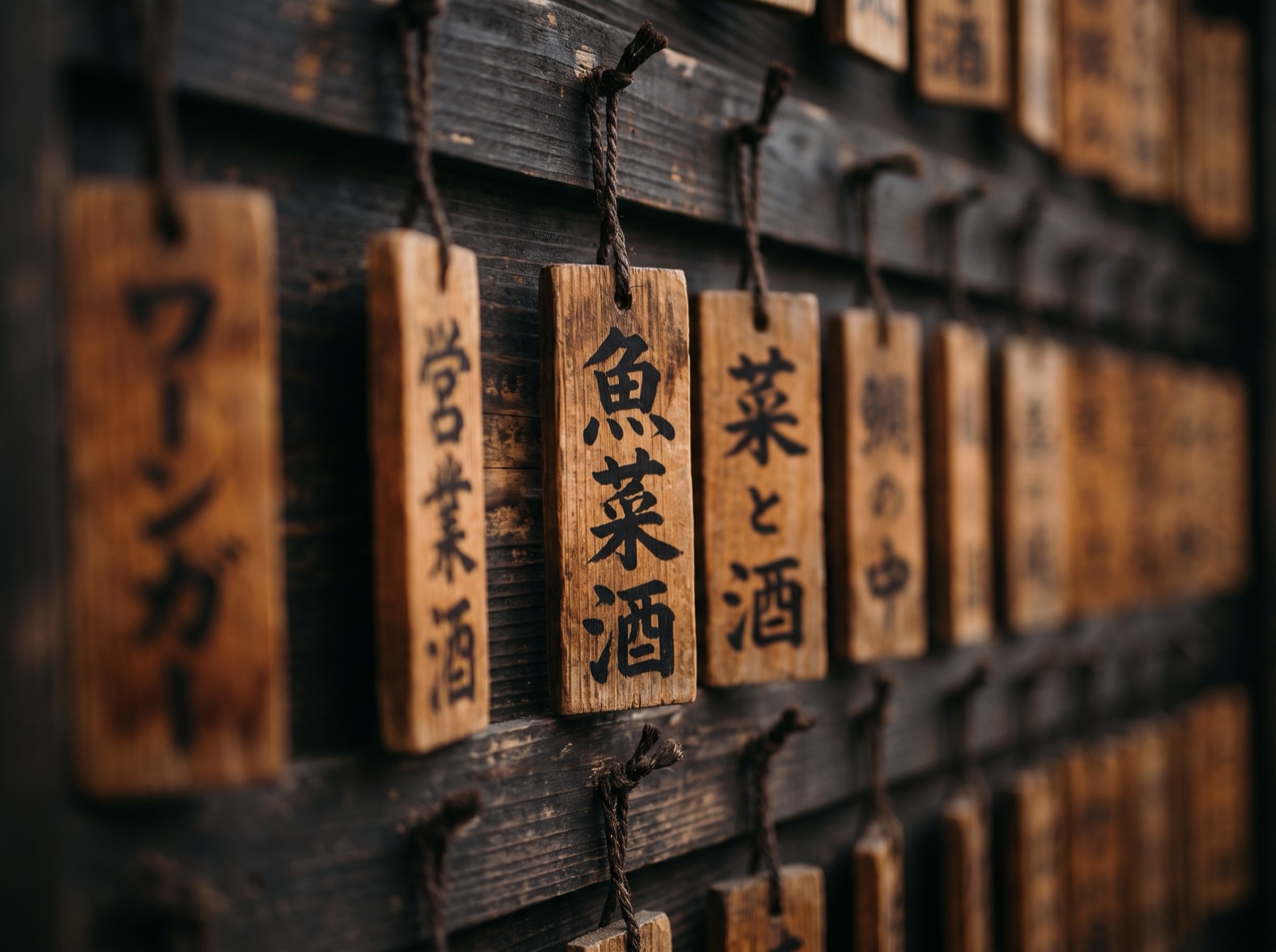
You need about eight words to eat comfortably at a sushi counter, and you need to understand perhaps thirty more that you should not say. That second category is the one English-language pages get wrong. A good deal of the vocabulary printed as “sushi terms” is fuchō (符牒) — trade shorthand, the kitchen’s own code, spoken by the people working and not by the people eating. Knowing what the words mean is genuinely useful. Using them is a performance, and it reads as one.
The word itself
Sushi is not named after fish. The standard account derives the word from an old adjective meaning sour, which fits what the dish originally was: fish packed in rice and left to ferment for months, the rice scraped away and discarded, the sourness the whole point. Everything at a modern counter descends from that, including the vinegar in the rice, which is a shortcut invented to reproduce in an afternoon what fermentation used to take a year to do.
Three written forms survive. 鮨 is the older character, and it appears in the oldest surviving Chinese dictionary meaning a preparation of fish. 鮓 is regarded as the strictly correct character for sushi. 寿司 — the form on most shop fronts — is ateji, characters chosen for their sound rather than their meaning, and pleasant ones at that: longevity and administration. A shop’s choice between them is a matter of taste and lineage rather than of category.
One more piece of mechanics explains a lot of apparently different words. In compounds the initial s voices to z: nigirizushi, oshizushi, chirashizushi, kaitenzushi. It is the same word every time.
The eight you can actually use
Said plainly, at a normal volume, none of these will sound like a tourist reciting. They are ordinary Japanese, and the first three are how you order at all.
- Omakase (お任せ) — from makaseru, to entrust. The chef chooses both the fish and the order. Literally: I leave it to you.
- Okonomi (お好み) — from konomi, preference. Ordering piece by piece at your own pace, which is the older way to eat at a counter.
- Okimari (お決まり) — a set: a fixed count at a fixed price, usually served all at once.
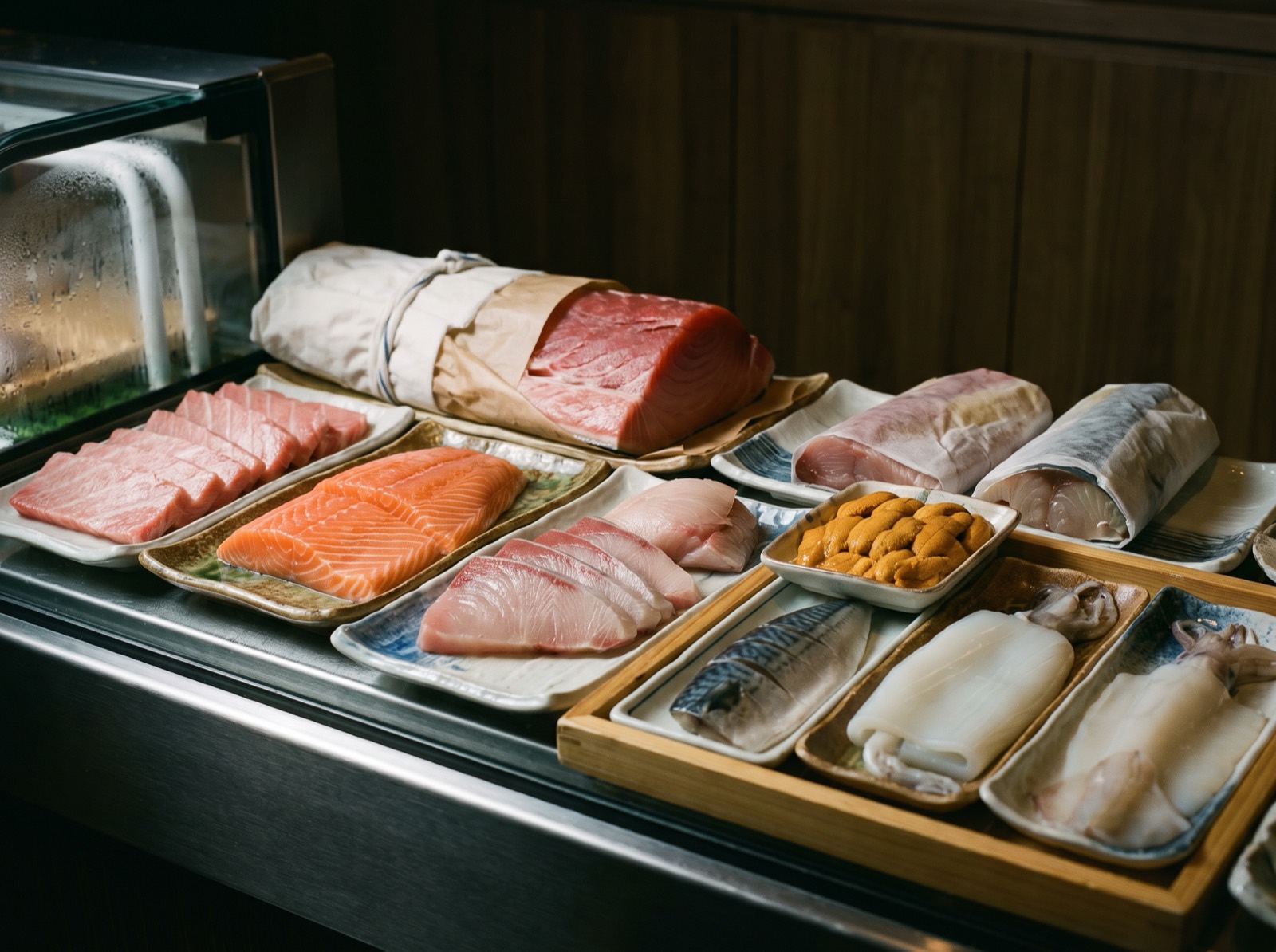
- Neta (ネタ) — the topping. The fish, or whatever sits on the rice.
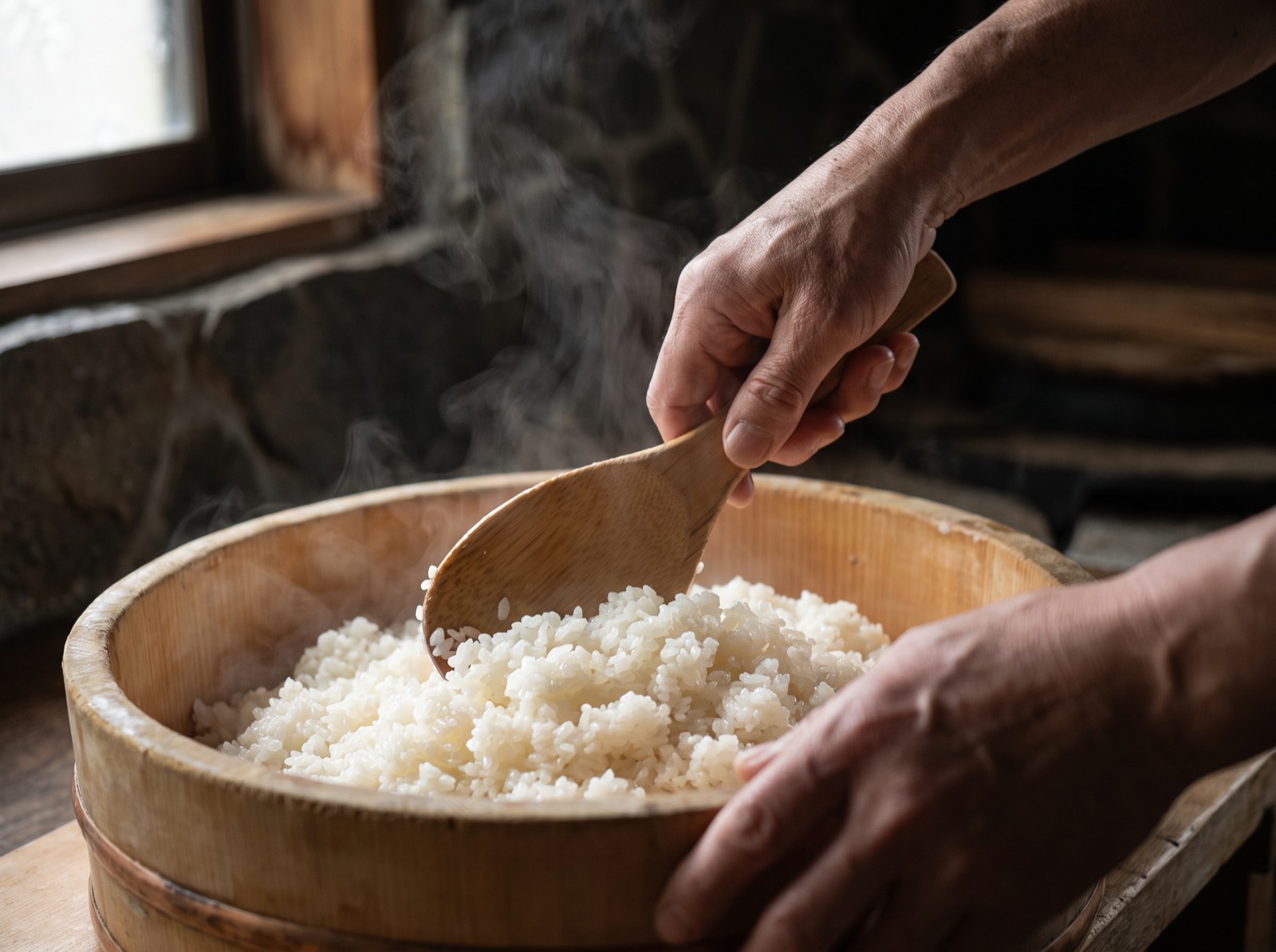
- Shari (シャリ) — the vinegared rice. Half the dish and the half most visitors never think to comment on.
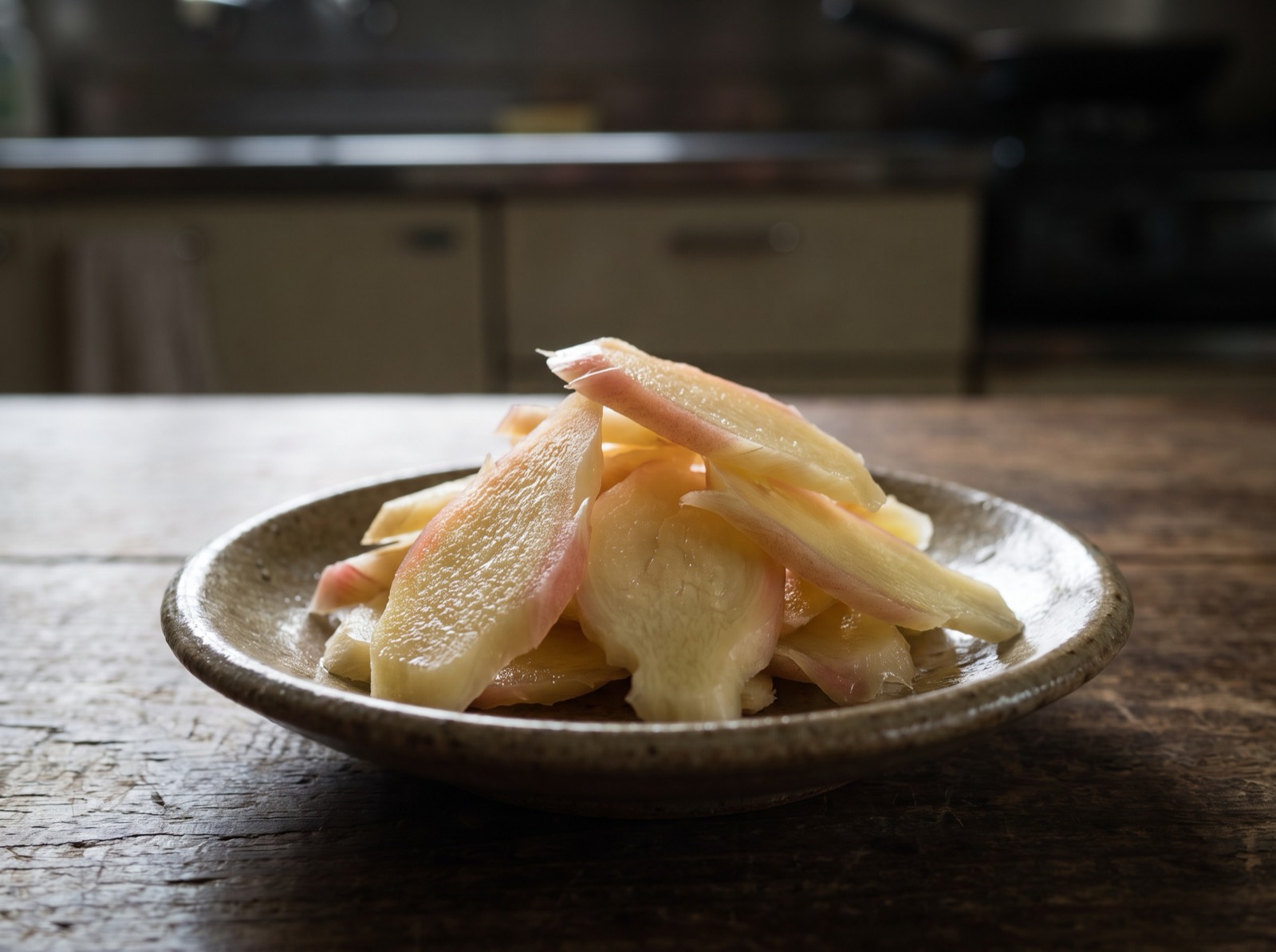
- Gari (ガリ) — the sweet-vinegared ginger, eaten between pieces, and at some counters handed to you as a brush for soy sauce.
- Kan (貫) — the counter for pieces of nigiri. One piece today; historically the same word could mean two, which is why old accounts of portion sizes are confusing.
- Aburi (炙り) — seared with a flame. Worth knowing because you may be asked whether you want a piece done that way.
Nigiri itself is the verb nigiru, to grip or to press in the hand, made into a noun. The name of the form is a description of the movement that makes it, which is as close as Japanese food vocabulary comes to a manifesto.
The ones to understand, not to say
These are the code words. They exist so that staff can talk across a counter in front of customers, and every one of them has an ordinary Japanese equivalent that a customer would use instead.
- Agari (あがり) — tea. From agaribana, freshly drawn tea, so it does not mean the meal is over, whatever English pages claim. Ask for o-cha.
- Murasaki (むらさき) — soy sauce. Literally purple, for its colour in the dish.
- Namida (なみだ) — wasabi. Literally tears, for the obvious reason.
- Gyoku (ぎょく) — the sweet omelette, tamagoyaki.
- Kusa (くさ) — sheet nori, from the last syllables of asakusa-nori.
- Teppō (てっぽう) — a thin roll. In some regions the same word means pufferfish, which is a good illustration of why borrowing kitchen slang is a risk.
A code word is the trade’s shorthand, not a password. Knowing what agari means is useful. Saying it is a performance.
The one word to avoid outright
Oaiso (お愛想) is widely printed in English as the way to ask for the bill. It is not. It is staff shorthand, and its root is a phrase meaning to have lost patience with somebody — so a customer who says it can be heard as announcing that they have run out of patience with the shop. This is set out explicitly in Japanese books on counter etiquette, which is more than can be said for most sushi vocabulary. Say okanjō o onegai shimasu or okaikei o onegai shimasu. Both mean the bill, please, and neither means anything else.
The words for what has been done to the fish
This is the vocabulary worth having, because it is the vocabulary of the work. A chef’s word for all of it is shigoto (仕事) — literally the job. When somebody says a shop does good shigoto, they mean these things and not the shopping.
- Shikomi (仕込み) — the preparation done up to the point just before a piece is cut to order.
- Nikiri (煮切り) — dark soy sauce simmered briefly with mirin and dashi and brushed onto the fish, so that the piece arrives already seasoned. Every shop has its own recipe.
- Nitsume (煮ツメ), usually shortened to tsume — a thick sweet-savoury reduction brushed onto simmered toppings such as anago.
- Zuke (漬け) — marinated in soy sauce; most often lean tuna. See akami.
- Sujime (酢締め) — salted, rinsed and then steeped in vinegar to firm the flesh. The defining treatment of kohada and shime-saba.
- Kobujime (昆布締め) — pressed between sheets of kelp overnight, which draws out water and puts back savour.
- Ikejime (活け締め) — killing the fish instantly with a blade so that it loses less of its savoury compounds. A word about the boat, not the counter.
Two more sort the fish rather than the treatment. Hikarimono (光り物), the shining things, are the small silver-skinned fish and by extension the ones that are vinegar-cured; akami and shiromi are red-fleshed and white-fleshed, a distinction about how much myoglobin the muscle carries rather than about how the fish tastes. The full set is in our Sushi A–Z.
The furniture
- Tsukedai (つけ台) — the lacquered ledge in front of the counter where the chef sets each piece down. Not a plate. The piece is meant to be taken from it immediately.
- Tsukeba (つけ場) — the chef’s side of the counter, where the work happens.
- Neta case — the chilled display case holding the day’s fish. Its presence usually means you can order piece by piece.
- Tezu (手酢) — the vinegared water the chef wets their fingers with, which is why the rice does not stick to them and does stick to itself.
- Geta (下駄) — the wooden board sushi is presented on, named for the shoe it resembles.
- Yunomi (湯呑み) — the tea cup, deliberately outsized at sushi shops so that the hot tea keeps coming without a refill.
The three things said out loud
Irasshaimase is called out when you come through the door. It is a greeting to a customer, and there is no reply; a nod is complete. Itadakimasu, said quietly before the first piece, is closer to an acknowledgement of the food than to grace. Gochisōsama deshita, said as you leave, is the one that matters most and the one visitors most often skip — it thanks the person who fed you, and at a counter that person is standing a metre away.
Six sentences that will carry an evening
- “What do you recommend today?” — Kyō no osusume wa nan desu ka.
- “What fish is this?” — Kono sakana wa nan desu ka.
- “Do I dip this in soy sauce?” — Shōyu o tsukete taberu no desu ka.
- “No wasabi, please.” — Sabi-nuki de onegai shimasu.
- “The bill, please.” — Okanjō o onegai shimasu.
- “Thank you for the meal.” — Gochisōsama deshita.
The fourth is the most useful sentence on the list, because at a counter working in the Edomae manner the answer is usually no — the piece has already been brushed with nikiri — and asking is how you find out without having to guess. None of the six requires an accent. They require only that you say them at the volume you would use in your own language, which is the single hardest part.
Frequently asked questions
What does the word sushi actually mean?
Not fish. The standard account traces it to an old adjective meaning sour, which matches the dish's origin as fish preserved in fermenting rice. The vinegar in modern sushi rice reproduces in an afternoon the sourness that fermentation once took months to produce.
Why is sushi written 寿司 sometimes and 鮨 other times?
鮨 is the older character and appears in the oldest surviving Chinese dictionary meaning a preparation of fish. 鮓 is regarded as the strictly correct one. 寿司 is ateji — characters picked for their sound rather than their meaning. The choice is lineage and taste, not category.
Should I use words like agari and murasaki at a sushi counter?
No. They are fuchō, the trade's own shorthand, and every one of them has an ordinary word a customer would use — o-cha for tea, shōyu for soy sauce. Understanding them is useful; saying them reads as a performance.
How do I ask for the bill at a sushi restaurant?
Okanjō o onegai shimasu, or okaikei o onegai shimasu. Do not say oaiso, despite what many English pages advise: it is staff shorthand whose root means having lost patience with somebody.
What is the difference between neta and shari?
Neta is the topping and shari is the vinegared rice. Both are ordinary words a customer may use, and both are half the dish — a point most descriptions of sushi quietly ignore in favour of the fish.
Do I need to say anything when I arrive or leave?
Nothing on arrival: irasshaimase is a greeting to you and takes no reply. On leaving, gochisōsama deshita — thank you for the meal. At a counter it is said to somebody standing a metre away, which is exactly why it is worth saying.