Shari (シャリ) is the seasoned rice of sushi — cooked rice dressed with vinegar, salt and usually sugar, cooled to a specific temperature and handled so the grains stay separate. It is about half of every piece of nigiri by volume, it is the first thing chefs discuss among themselves, and it is almost the last thing a visitor notices.
What it is
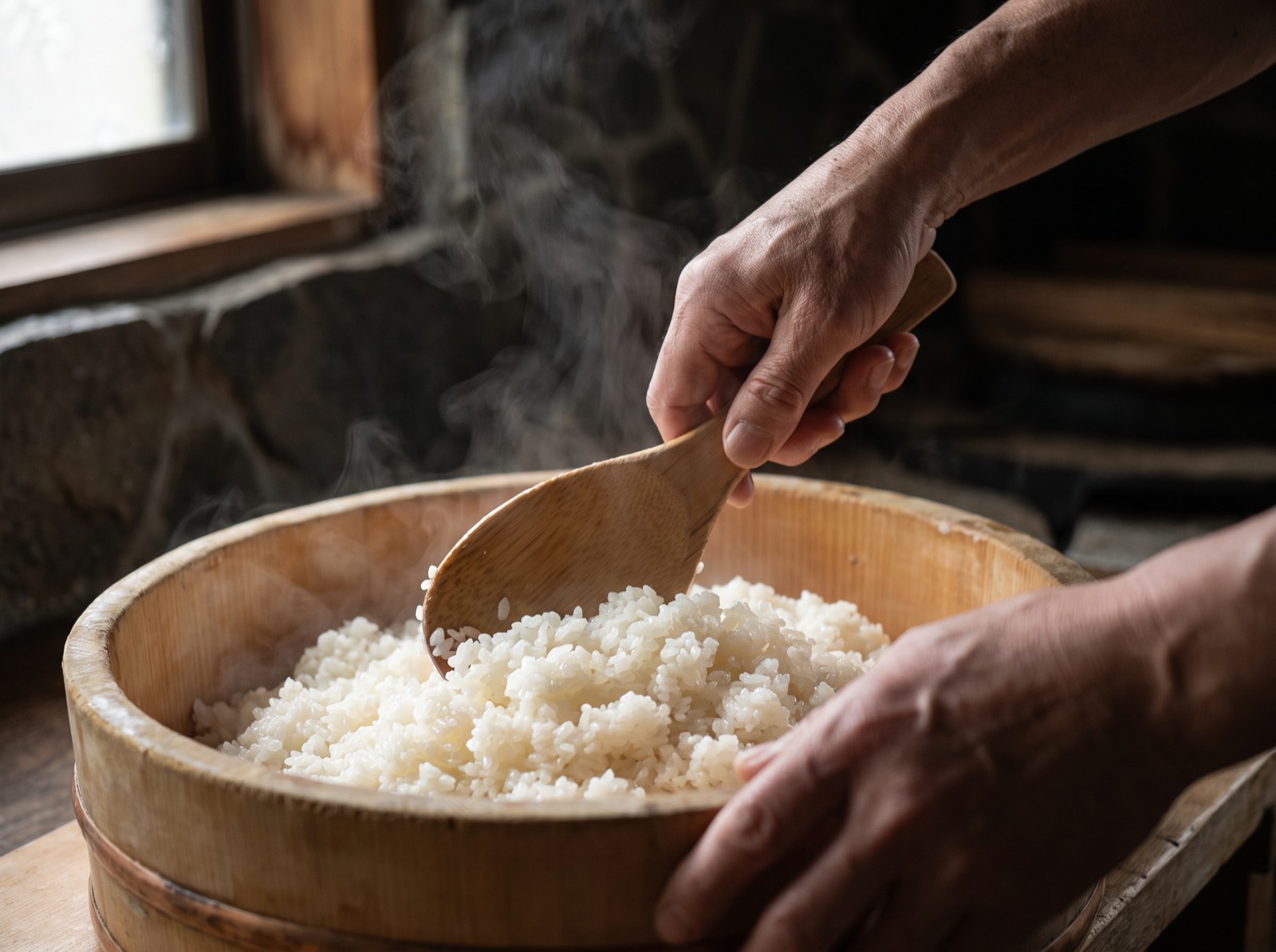
Rice, cooked slightly firm, then dressed while hot with awase-zu (合わせ酢) — vinegar, salt and sugar combined in advance to a house ratio. The dressing is poured over the rice in a shallow wooden tub and cut through with a paddle, never stirred, while the rice is fanned to drive off surface moisture and put a light gloss on the grain.
The word is trade jargon. It comes from shari (舎利), the Buddhist term for relics — the small white grains left after cremation — and it is one of a set of counter words, like gari and gyoku, that started inside the trade and leaked outward. On a menu it means the rice specifically, as against the topping, which is the neta.
The five decisions
A shop’s rice is not a recipe so much as five positions taken and held.
- The vinegar. Clear rice vinegar gives a clean, sharp rice. Aka-zu (赤酢), red vinegar brewed from sake lees, gives an amber-tinted, rounder, deeper rice and is the older Edo choice; a number of Tokyo counters have gone back to it, and you can see the colour immediately.
- The salt and sugar. The Tokyo tradition is sharper and less sweet; Kansai rice is generally sweeter. The two adjust against each other, and the ratio is one of the things a shop simply will not tell you.
- The rice itself. Firm-cooking varieties, often with a proportion of older rice rather than the new-crop rice that home cooks prize — new rice holds too much water and turns to paste under the hand. This is one of the few places in Japanese food where last year’s crop is the better ingredient.
- The temperature. Hitohada (人肌), skin temperature. Not cold. Rice at body temperature releases its aroma and softens the fat on the fish sitting against it; rice from a refrigerator does neither, which is most of why supermarket sushi tastes flat.
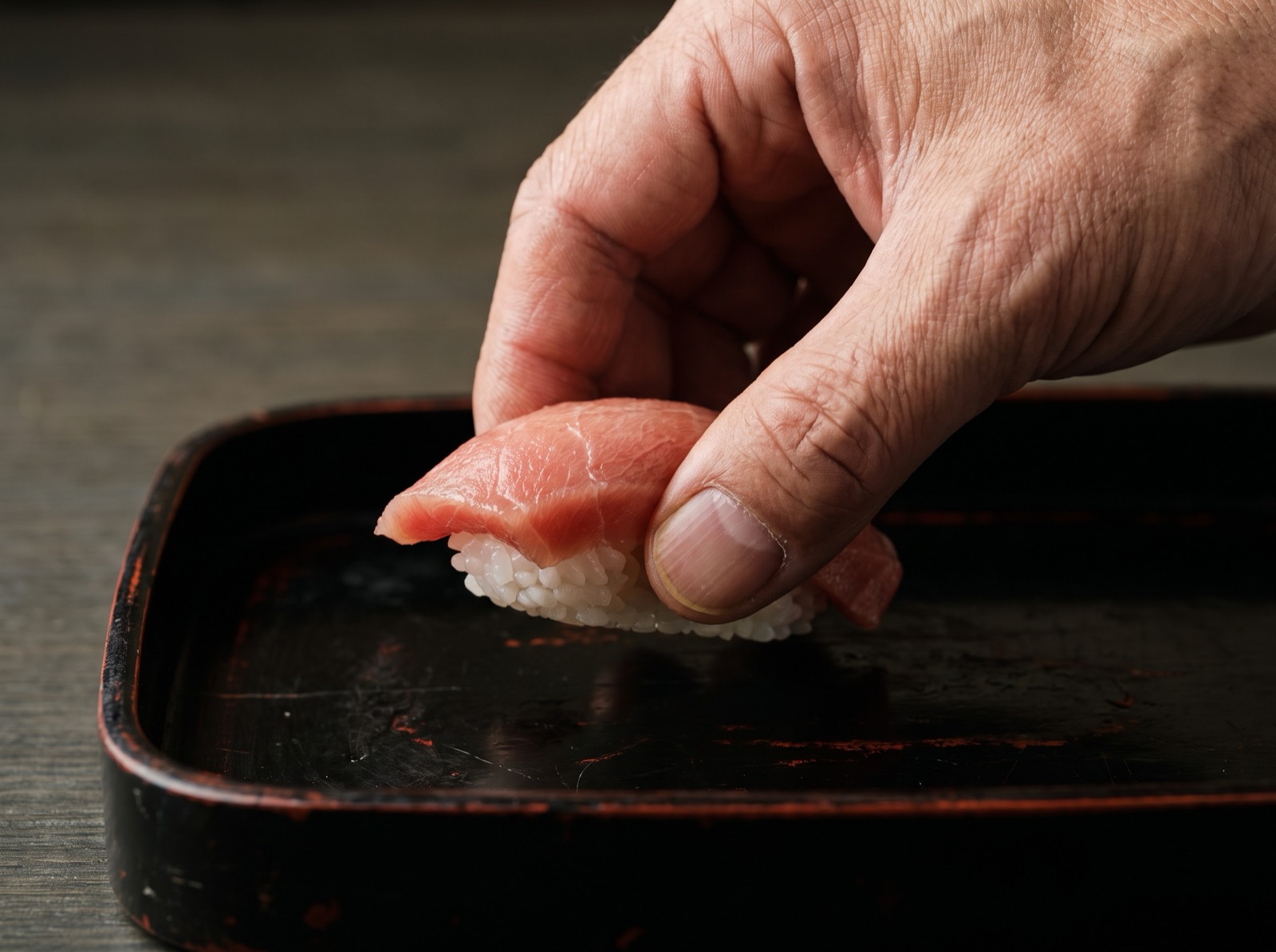
- The hand. How hard the rice is pressed. The target is a piece that holds together from counter to mouth and then falls apart the moment it is inside it. Too loose and it collapses in your fingers; too tight and it eats like a brick.
The piece has to survive the journey to your mouth and not one second longer.
What the chef does to it
Rice is cooked in batches through service, not once at the start. A batch has a working life of an hour or two before it dries at the edges and cools past useful, and a serious counter will simply stop using it and switch to the next. The tub — hangiri (半切), a wide, shallow, unlacquered wooden basin — exists because the wood absorbs excess moisture and the shallow shape lets steam escape fast enough to stop the rice steaming itself.
Between pieces the chef’s hands go to a bowl of vinegared water, tezu (手酢), so the rice does not stick. The amount of rice picked up for each piece is not measured; it is a trained hand, and consistency across a two-hour sitting is one of the quiet technical demands of the job.
Why it is served warm
This is the single most useful thing to know about shari, because it is invisible and it explains an entire category of disappointment.
At skin temperature the rice is aromatic and yielding, and the fat on a slice of tuna or mackerel laid against it begins to soften on contact. The piece arrives at your mouth as two textures meeting. Cold rice is firm, muted and slightly chalky, and the fish stays cold and closed. Nothing else about a piece changes as much for as little visible reason, and it is why sushi does not travel and does not keep.
It is also why the standard instruction to eat a piece immediately is not ceremony. The chef has handed you something that is at its intended temperature for a matter of seconds, not minutes. Our guide to how to eat sushi covers the rest of the mechanics.
How it differs from what it is confused with
- Shari and plain rice. Gohan is unseasoned. Shari is dressed with vinegar, salt and sugar and cannot be substituted for plain rice or the other way round.
- Shari and sumeshi. Sumeshi (酢飯) is the ordinary word for vinegared rice, used at home and in writing. Shari is the counter word for the same thing. Both are correct; one signals where you learned it.
- Shari and neta. The two halves of a piece. Neta (ネタ) is the topping — itself trade jargon, a reversal of tane, “the material”.
- Vinegared rice and cooked-through rice. The vinegar in shari is a seasoning and a mild preservative. It is not a sterilising step, and it does not make raw fish safe; that is covered in our piece on safety.
How to say it
sha-ri, two beats, flat. Sumeshi is su-me-shi. Aka-zu is a-ka-zu, with the z of “zoo”. If you want to compliment the rice specifically — and it is the compliment chefs actually want — the word you need is the one on this page.
Edomae and Kansai
The rice is where the two traditions separate most cleanly. Edomae shari is sharp, salt-forward and often red-vinegared, built to sit under fish that has itself been cured, marinated or simmered; the whole system is described in our guide to what Edomae means.
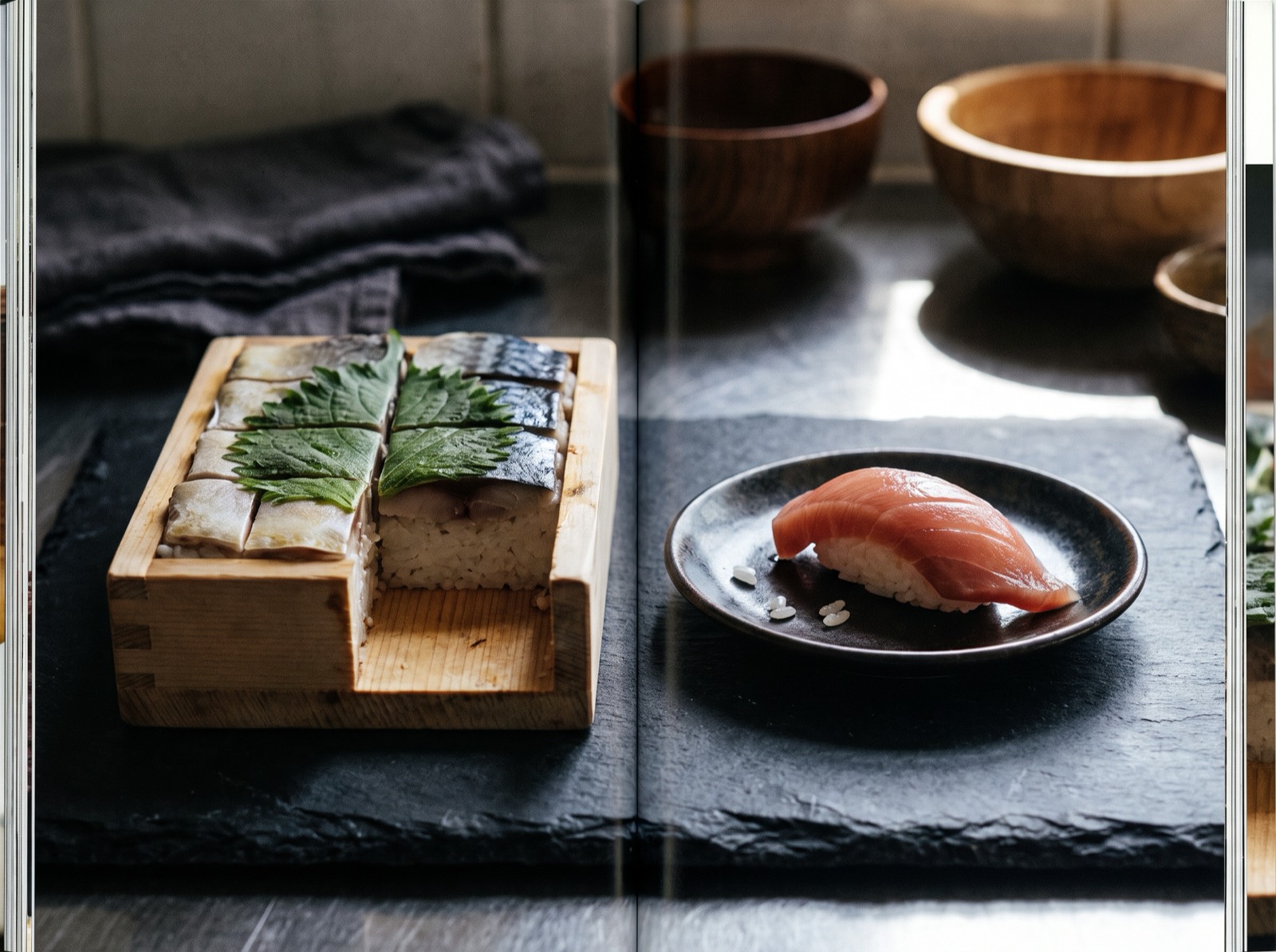
Osaka’s rice is generally sweeter and softer, which suits a tradition built on pressed and boxed forms — oshizushi, battera, bar-shaped sushi — where the rice is compacted and eaten cool rather than handed over warm. Neither is a compromise of the other; they were solving different problems. See the two cities compared.
Where you will see it, and roughly what it costs
Everywhere, in every piece, invisible. There is no price on it, which is exactly the problem: the rice is the largest single component of what you pay for and the one nobody itemises.
A practical test, if you want one. Order the simplest possible piece early — a lean white fish, or plain akami — and pay attention to the rice temperature and to whether the piece breaks in your fingers before it reaches your mouth. A shop that gets that right at the bottom of the price tiers is doing better work than one that gets it wrong at the top of them. Our guide to what sushi costs sets out the tiers.
Frequently asked questions
What is shari?
The seasoned rice of sushi: cooked rice dressed while hot with vinegar, salt and usually sugar, then cooled and handled so the grains stay separate. It makes up roughly half of every piece of nigiri.
Why is sushi rice served warm?
At skin temperature the rice is aromatic and yielding, and it softens the fat on the fish resting against it. Cold rice is firm and muted and leaves the fish closed. It is the main reason chilled supermarket sushi tastes flat next to the same fish at a counter.
What is the difference between shari and sumeshi?
None, in substance. Sumeshi is the ordinary Japanese word for vinegared rice; shari is the sushi trade word for the same thing, borrowed from a Buddhist term for relics because of the small white grains.
What is aka-zu?
Red vinegar brewed from sake lees. It tints the rice amber and gives it a rounder, deeper flavour than clear rice vinegar. It is the older Edo choice and a number of Tokyo counters have returned to it.
Why do sushi chefs prefer older rice?
New-crop rice holds more water and turns pasty when it is pressed. Firmer, slightly aged rice keeps its grain under the hand, which is what lets a piece hold together on the way to your mouth and fall apart once it gets there.
Does the vinegar in sushi rice make raw fish safe?
No. The vinegar is a seasoning and a mild preservative. Japanese health authorities are explicit that vinegar does not kill the parasites people worry about; freezing or heating does.
Is sushi rice supposed to fall apart?
In your mouth, yes. The target is a piece that holds together between the counter and the first bite and then releases immediately. If it collapses in your fingers it was pressed too lightly; if it eats like a block it was pressed too hard.