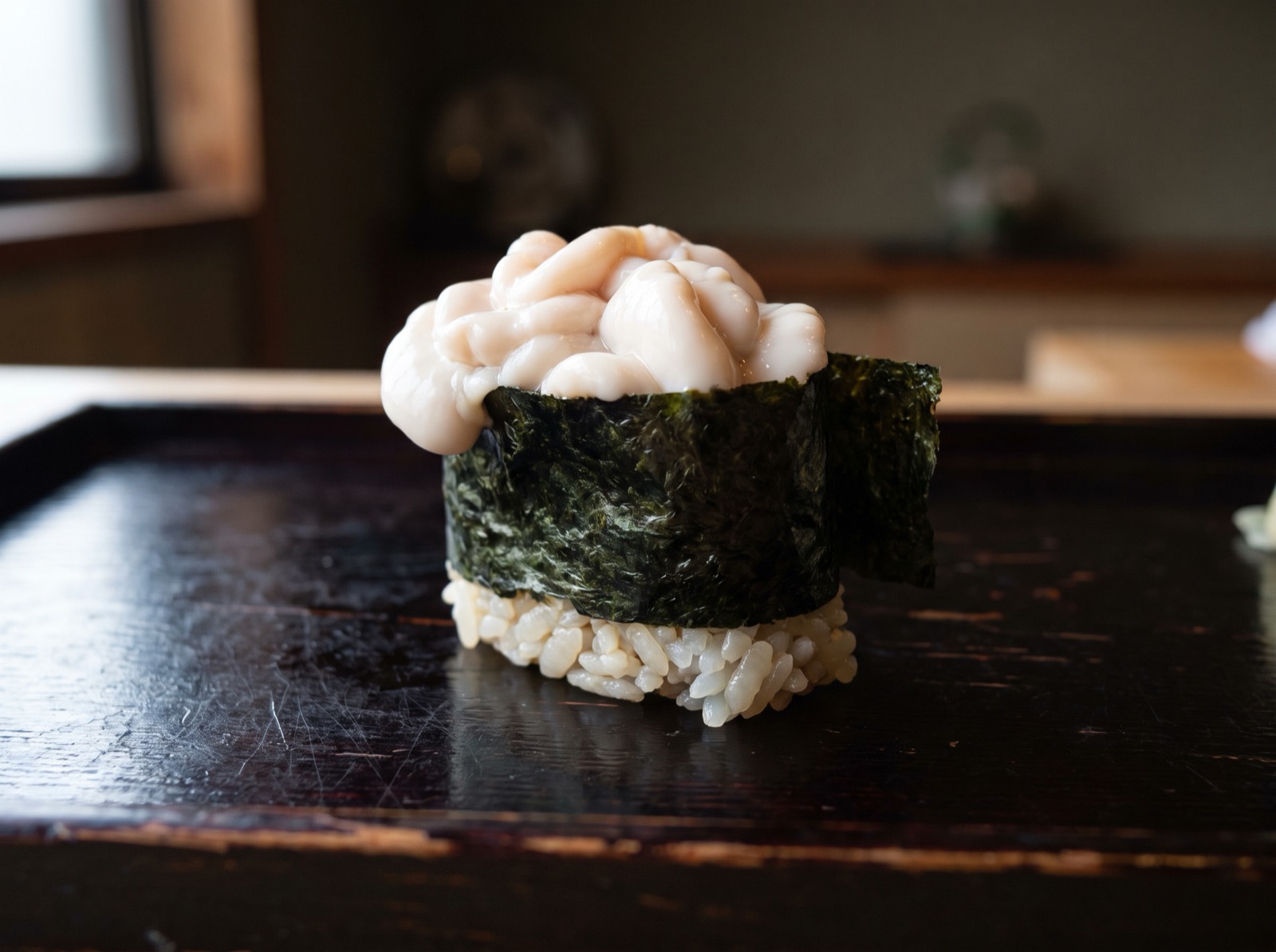
Shirako (白子) turns up on a tray as pale, soft lobes, and the menu, if it names it at all, may go no further than the two characters themselves. It is milt: the reproductive gland of a male fish, not an egg of any kind, and it is one of the clearer cases on this site of something served to an English-speaking guest with no explanation of what it actually is.
What it is
The name reads literally as “white child” — 白, white, and 子, child — a plain, old descriptive name for something pale and soft, with no figurative reach beyond that. What it names is the milt-producing gland itself, cooked and served as a single mass rather than broken apart, the way a fillet is served whole rather than flaked.
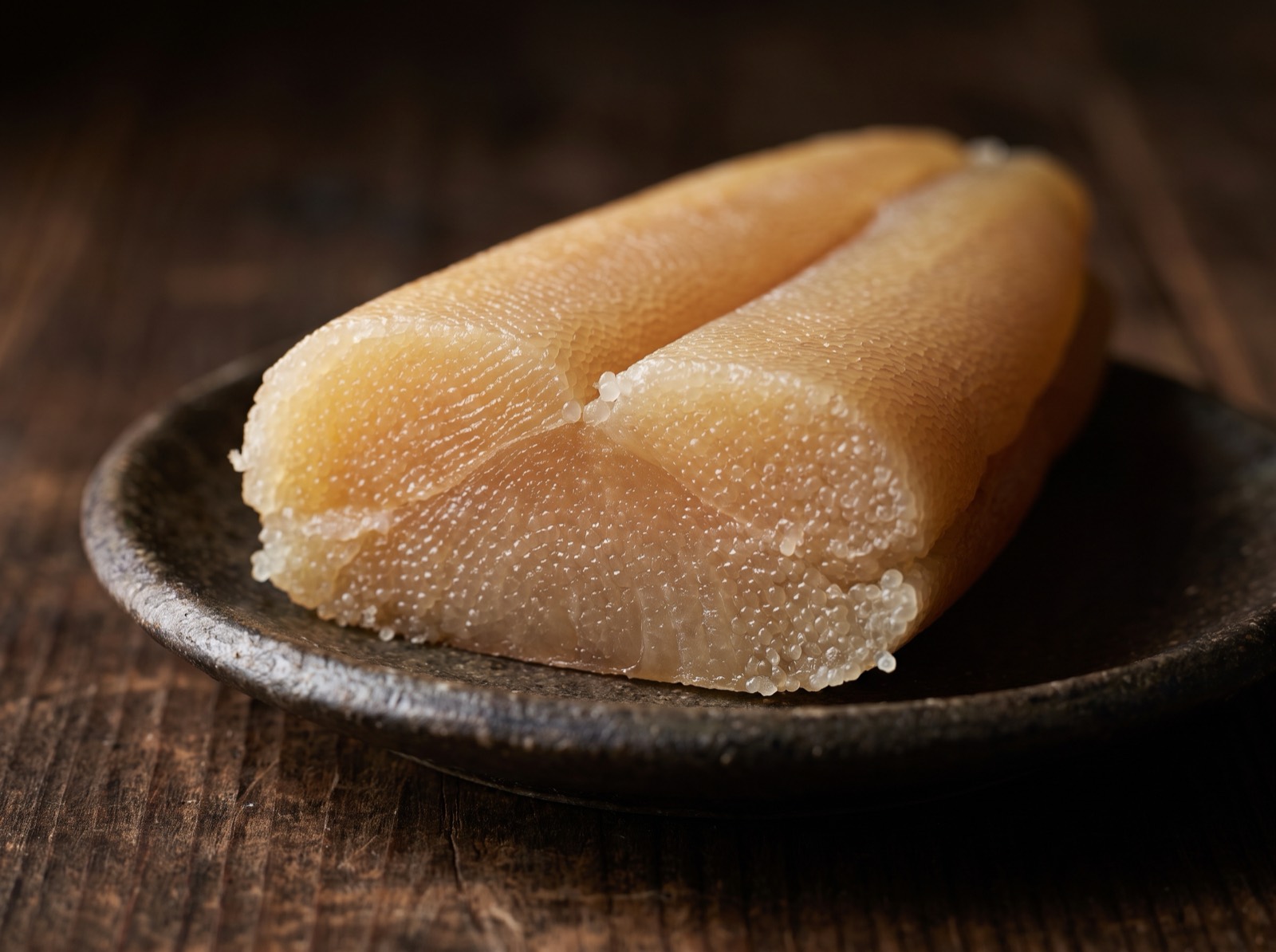
Every roe entry elsewhere in this glossary — ikura, kazunoko — is a mass of individual eggs, produced by a female fish, and that is why they burst or crunch depending on how tightly the eggs are packed. Shirako is glandular tissue from a male fish, structured as an organ rather than a collection of units. It does not burst and it does not crunch; cooked, it firms into something closer to a savoury custard, and raw it holds together loosely, nearer in the mouth to uni, another organ tissue served at the same counters, than to any of the roe beside it.
Which fish it comes from
Three fish account for most of the shirako reaching a Japanese counter, and Japanese sushi and fish-work writing treats them as a small, closed set rather than as interchangeable examples of one ingredient: cod (鱈, tara), monkfish (鮟鱇, ankō), and pufferfish (河豚, fugu). A menu that simply says shirako, without naming the fish, is telling a reader less than a Japanese menu usually does.
- Cod. The shirako most likely to reach a general sushi or izakaya counter: pale, full-lobed, and the softest of the three once cooked.
- Monkfish. Handled more often by kitchens already built around the whole fish than by sushi counters generally; it is worked the same range of ways as cod’s, on a smaller scale.
- Pufferfish. The one that comes with a licensing question the other two do not carry, addressed below.
Fugu shirako, and where this article stops
Pufferfish is regulated in a way cod and monkfish are not. Japanese law allows fugu to be handled only by a person a prefectural governor recognises as able to identify the species and remove its toxic parts, or by someone working under that person’s supervision. National criteria issued by the Ministry of Health, Labour and Welfare in 2019 and revised in 2025 now confirm that knowledge and technique by examination, and a handler certified under them is, in principle, recognised in other prefectures as well. Our guide to how a sushi chef is actually trained covers the licence in full; fugu is the one fish Japanese food law names directly.
This article does not go further than that. Which parts of a given fugu are prepared for the counter, and whether shirako is among them on a given night, is exactly the kind of species-by-species judgment the licence exists to place in one person’s hands — the handler at that counter, not a general reference written in English. We are not stating that fugu shirako is or is not something a diner may be served without concern; that determination belongs to the licence, the specific fish, and the kitchen preparing it, not to a definition on this page.
How it is prepared
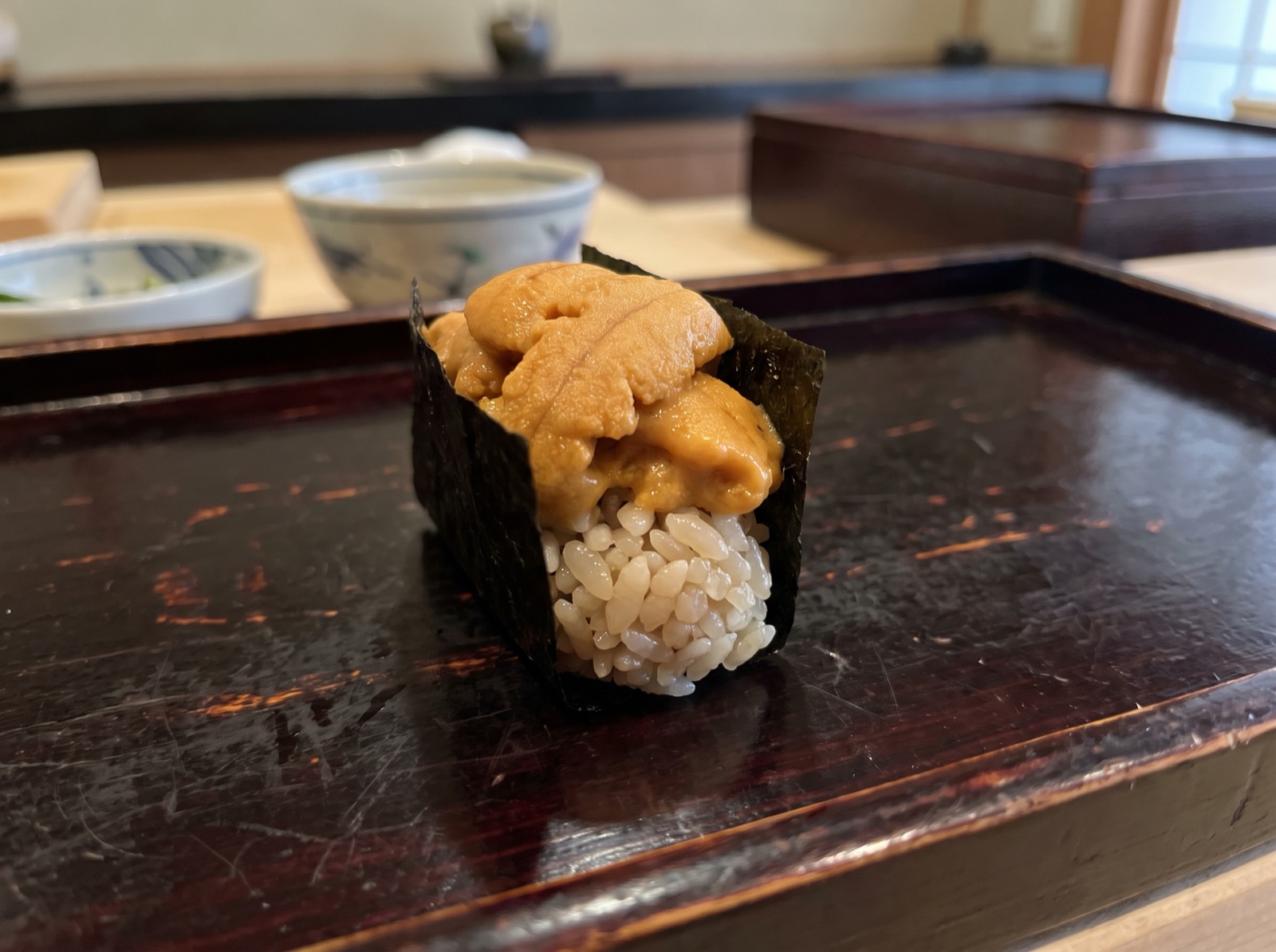
Raw, shirako is served the way uni is: as gunkan, a band of nori wrapped around the rice to hold a topping too soft to shape by hand. This is the form most likely to unsettle a diner who has not met it before, since it is served nearer to its raw state than almost anything else at the counter besides the fish itself.
More often it is blanched briefly first, which firms the lobes and lightens their colour, then dressed — with vinegar in the manner of a sunomono, or with a citrus-and-soy mixture in the manner of ponzu. The blanching step does the same job it does with roe elsewhere on this site: it changes the texture into something that holds its shape and reads cleanly on the tongue, rather than cooking the milt all the way through.
Grilled shirako is handled carefully rather than aggressively. The heat stays indirect and the surface is not pushed toward browning, because the membrane holding the lobes together is thin, and the interior turns dry and grainy well before the outside would show any colour. The point of grilling it is a faint firmness at the surface against a still-soft interior, not a seared crust.
Elsewhere on a menu it appears simmered gently in a seasoned dashi and served cool, or strained into a hot, clear broth and brought to the table as soup rather than plated on its own. The exact method differs from kitchen to kitchen, and from book to book in the literature behind this entry — which is one of several places in this glossary where the honest answer is that there is no single fixed method, only a family of them.
Shirako is not roe of any kind, soft or otherwise.
How it differs from what it is confused with
English menus that translate the word at all tend to write “soft roe,” a phrase that erases exactly the distinction that matters. Shirako is not roe, soft or otherwise, and none of the roe entries in this glossary describe the same tissue. Uni is the nearer relative in texture, but even that comparison only goes partway: our uni entry notes that uni is harvested from both male and female urchins, where shirako, by definition, comes only from a male fish — it is that fish’s counterpart to the roe a female of the same species would carry, not an equivalent organ present in both.
How to say it
shee-RAH-koh is close enough to be understood. Three beats, shi-ra-ko, evenly weighted, with no syllable pushed harder than the others the way English tends to push one.
Where you will see it
On a printed menu it most often stands as its own line, in kanji or hiragana, occasionally in rōmaji on a menu that has already committed to romanising everything else. It is not usually folded into a sashimi or roe category the way ikura or uni sometimes are; more often it sits under its own small heading, or by itself, since it does not fit neatly under “sashimi” or “gunkan” even when it is served as one.
A counter that lists shirako by name, rather than leaving it as an unlabelled dish of the day, is telling you it is confident enough in the preparation to put a name to it. If you want one question to ask before ordering, the fish it comes from is more useful than anything about how it was cooked: cod, monkfish and fugu do not taste alike, and only one of the three comes with a licence attached to the person who prepared it.
Frequently asked questions
What is shirako?
Shirako is milt: the reproductive gland of a male fish, cooked and served as a single soft mass. It is not a form of roe, and it comes from a different organ than the eggs a female fish of the same species would carry.
What fish does shirako come from?
Most shirako served in Japan comes from cod, monkfish or pufferfish (fugu). The three are not interchangeable in flavour or texture, and only fugu carries a licensing requirement for the person handling it.
Is fugu shirako regulated?
Handling fugu itself is regulated: only a person a prefectural governor recognises as able to identify the species and remove its toxic parts, or someone working under that person's supervision, may prepare it, under national criteria confirmed by examination since 2019. Whether shirako specifically is among the parts served on a given night is a decision made by that licensed handler, not a general fact this article states.
How is shirako prepared?
Raw as gunkan, in the same form as uni; blanched and dressed with vinegar or a citrus-soy mixture; grilled gently over indirect heat to firm the surface without drying the interior; or simmered in a seasoned dashi. Methods vary by kitchen, and no single one is standard.
Is shirako the same as roe?
No. Roe is fish eggs, produced by a female fish. Shirako is milt, the corresponding gland from a male fish. It does not burst or crunch the way the roe entries in this glossary do; texturally it is closer to uni, which is also organ tissue rather than eggs.
How do you pronounce shirako?
shee-RAH-koh, three even beats, shi-ra-ko, with no syllable stressed the way English tends to stress one.