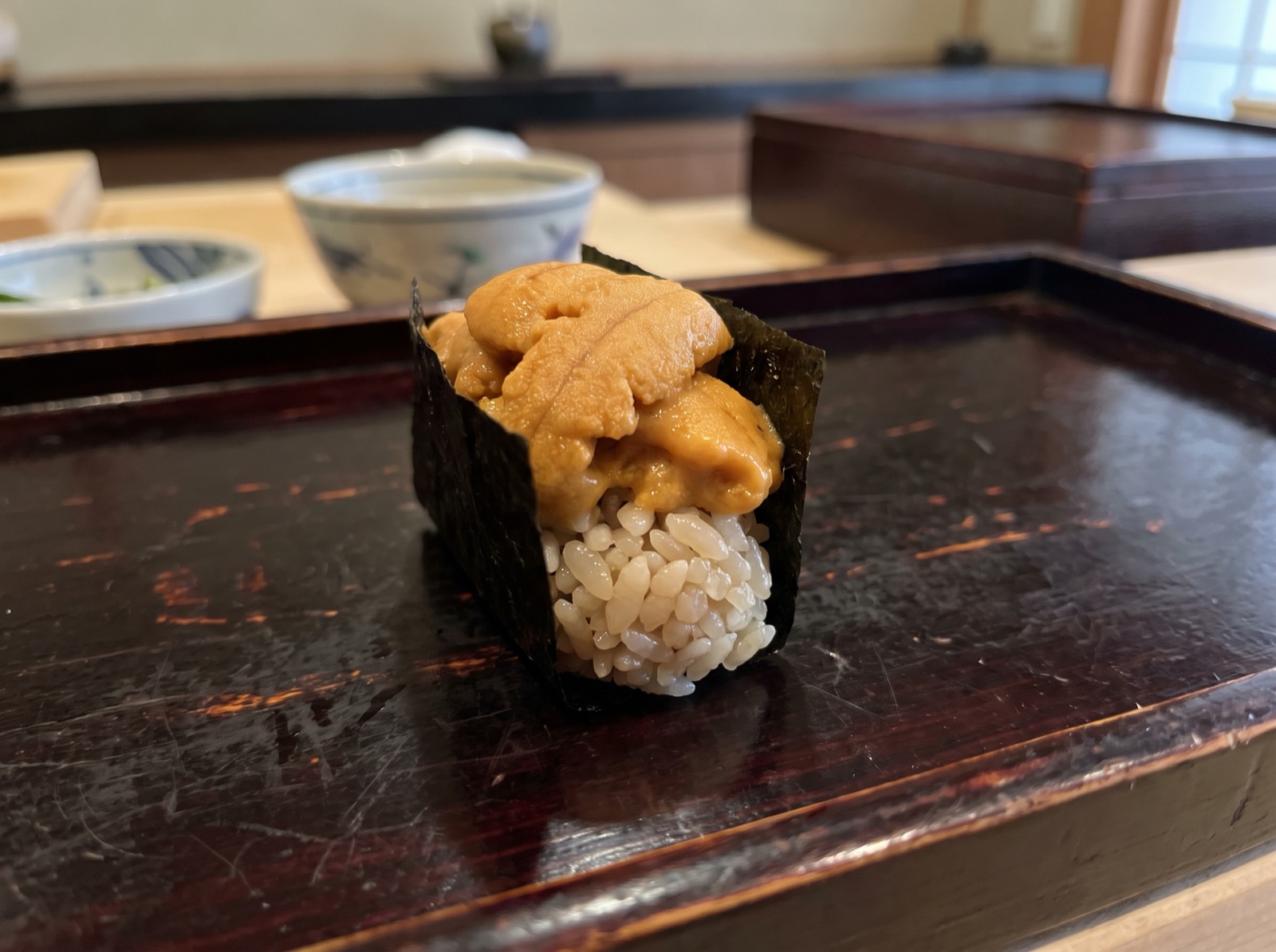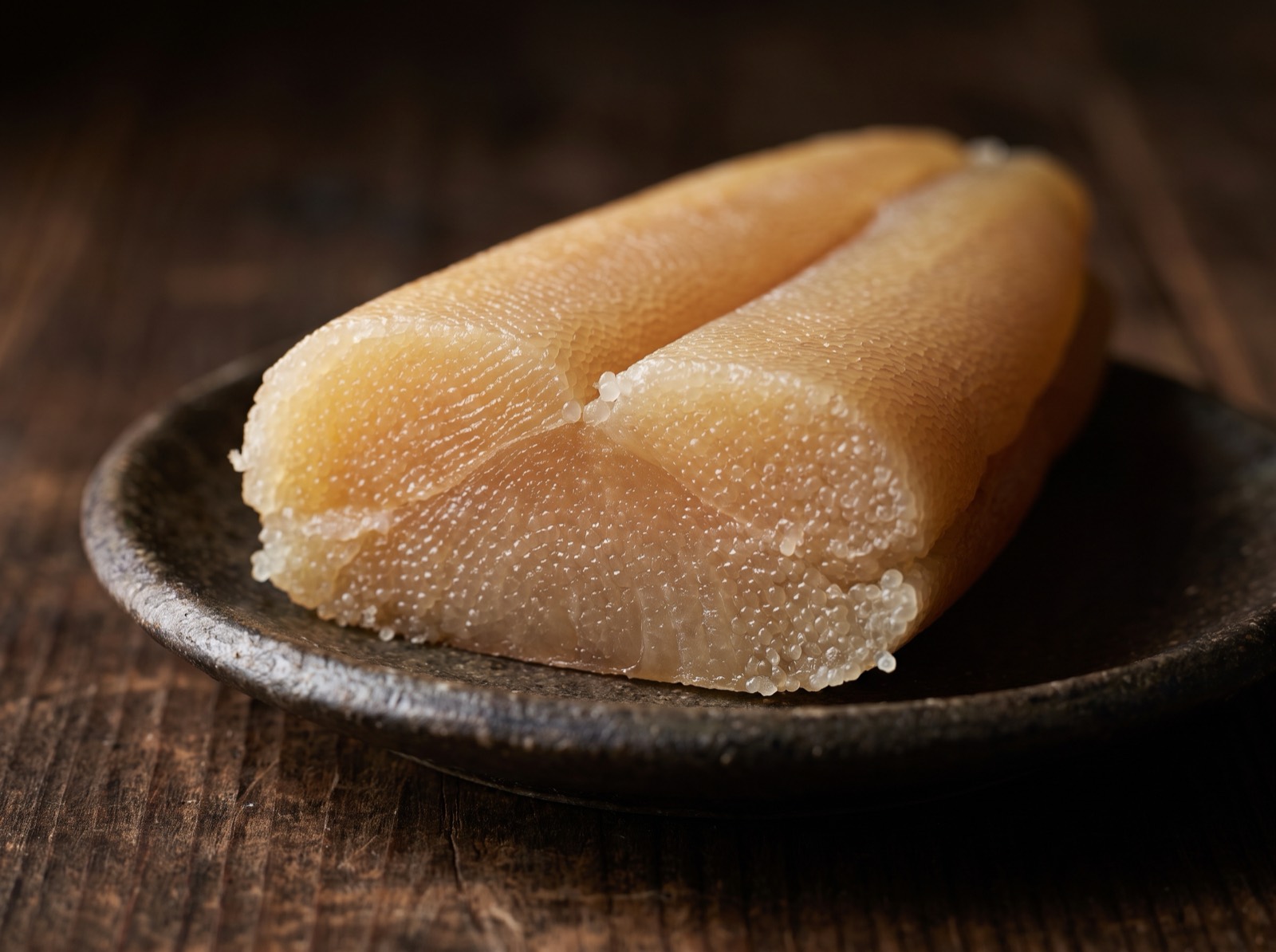
Kazunoko (数の子) is herring roe, and it does not behave the way the roes beside it do. Where ikura bursts and sea urchin dissolves, kazunoko is a solid golden block of eggs packed so tightly that it snaps between the teeth. The sound is not incidental: it is the quality people judge it on.
What it is
The name means “the child of the kado”: kado being an old regional word for herring. The eggs come from the ovary intact, as a single mass, and are preserved rather than served fresh. The forms you will meet:
- Salted (塩数の子), the standard modern product. Cured in brine, then soaked in fresh water before use to bring the salt down. Firm, clean, pale gold.
- Dried (干し数の子). The older method, now uncommon and expensive. Dried hard, then rehydrated over days. Considered by some to have a deeper flavour and a better snap; considered by others to be a great deal of work for a small difference.
- Seasoned (味付け数の子). Salted roe subsequently steeped in a dashi-and-soy marinade. This is what most people eat at New Year and what most sushi shops serve.
- Komochi konbu (子持ち昆布). Herring roe deposited on kelp, harvested together. A different and excellent thing: the crunch of the roe with the kelp underneath. It appears on sushi counters in its own right.
The New Year meaning
Kazunoko is one of the fixed components of osechi, the New Year food. Its presence there is a pun: a herring ovary contains an enormous number of eggs, and the dish stands for a wish for many children and a flourishing family line. The great majority of Japan's annual consumption happens over the New Year days.
This is worth knowing for a practical reason. Demand and price for kazunoko are driven by that one holiday, not by the sushi trade, so what you pay in the run-up to it bears little relation to what the same product costs in midsummer.
The whole year's price is set by the New Year. Nothing else in this glossary works that way.
When it is best
It has no season in the sense that a fish does, because it is a preserved product. Herring spawn in spring in the northern waters, but the roe reaching a Japanese counter has been salted or dried and held. The New Year association is cultural rather than seasonal.
Most of the supply is imported (North Pacific and North Atlantic herring fisheries, principally), a shift from the historical position, when Hokkaidō's own herring runs supplied the country. Those runs collapsed in the middle of the twentieth century, and the herring towns of the Hokkaidō coast are a well-known chapter of that history.
What the chef does to it
- Desalting, which is the whole job. Salted roe is soaked in lightly salted water (not plain fresh water, which draws the salt out too fast and leaves the roe bitter) and changed repeatedly over a day or more. Too little and it is inedible; too much and the flavour is gone.
- Membrane removed by hand, the thin skin over the surface of the block.
- Steeped in dashi with soy and mirin, for a day, which is where the flavour comes from.
- Sliced and laid on the rice, usually with a strip of nori, occasionally with a shaving of dried bonito on top.
- Nothing added at the table. It arrives seasoned.
How it differs from what it is confused with
This is the roe most often misidentified, because the four common roes on a Japanese counter look and behave very differently and English gives you almost no help.
- Kazunoko, herring. A solid block, gold, crunchy.
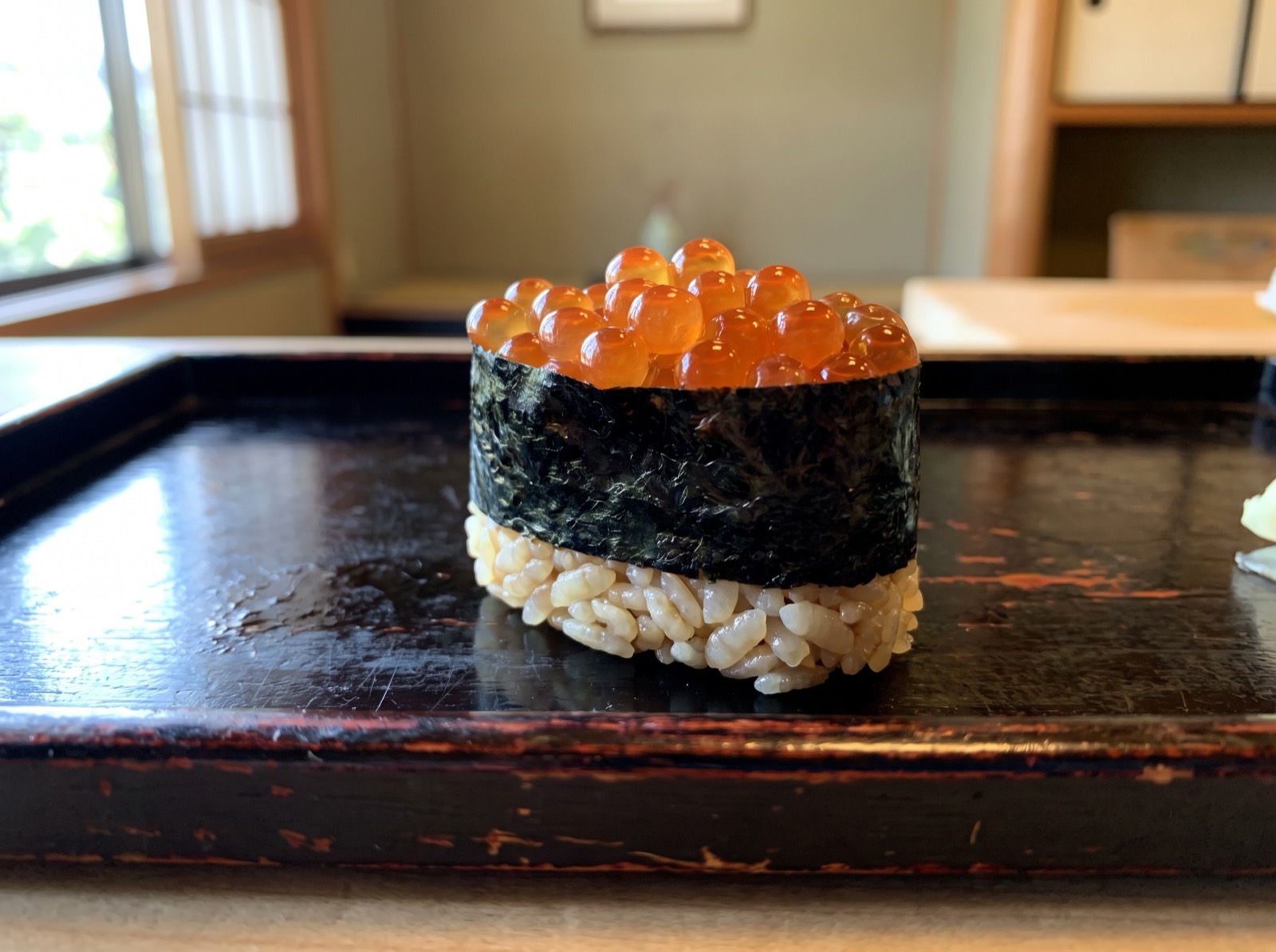
- Ikura, salmon. Large separate orange spheres that burst. See our ikura entry.
- Tobiko, flying fish. Tiny, hard, bright orange, faintly crackly.
- Masago, capelin. Smaller and softer than tobiko, frequently substituted for it, frequently dyed.
- Mentaiko / tarako, pollock. A soft pink sac; mentaiko is the one cured with chilli, tarako the plain version. Not usually a sushi topping, though it appears in rolls.
- Karasumi, mullet, pressed and dried into a hard amber slab. A delicacy, and closer to cheese than to roe in how it is eaten.
How to say it
kah-zoo-NOH-koh. Four beats, ka-zu-no-ko, none of them leaning on the others. The zu is soft, as in “zoo”, and none of the syllables is stressed the way English wants to stress one.
Edomae and Kansai
National rather than regional. Kazunoko is an osechi component everywhere, and the New Year associations do not vary meaningfully between the two cities. On sushi rice it is a minor item in both.
Where you will see it, and roughly what it costs
In every supermarket in Japan in the run-up to New Year, in vacuum packs, at prices that would surprise you. On sushi counters it is an occasional piece rather than a fixture: a small, texturally interesting item that a chef may use as a change of pace. Komochi konbu appears more often on counters than plain kazunoko does.
The point worth carrying is that the price you see is a New Year price, not a sushi price. For course pricing, see omakase price tiers.
Frequently asked questions
What is kazunoko?
Herring roe: a solid golden block of tightly packed eggs that snaps between the teeth rather than bursting. It is preserved by salting or drying rather than served fresh, and then steeped in a dashi-and-soy marinade.
Why is kazunoko eaten at New Year?
It is a fixed part of osechi, the New Year food, as a wish for many children and a flourishing family line; a herring ovary contains an enormous number of eggs. Most of Japan's annual consumption happens over the New Year days.
Why does kazunoko crunch?
Because the eggs stay in the ovary as a single dense mass rather than being separated, and the curing firms them further. Other roes on a sushi counter are served as separate eggs and burst instead.
What is the difference between kazunoko, ikura and tobiko?
Kazunoko is herring roe in a solid crunchy block. Ikura is salmon roe: large separate orange spheres that burst. Tobiko is flying fish roe, tiny and hard and bright orange. Masago, from capelin, is smaller and softer than tobiko and often substituted for it.
What is komochi konbu?
Herring roe deposited on kelp and harvested together, so the crunch of the roe sits on a sheet of kelp. It appears on sushi counters more often than plain kazunoko does.
How do you pronounce kazunoko?
kah-zoo-NOH-koh, in four flat beats, with a soft zu as in zoo and no strong stress on any syllable.