Hamo (鱧, daggertooth pike conger) is a long, aggressive, sharp-toothed fish of the western Japanese summer, and the centrepiece of Kyoto’s cooking in July. It is also close to inedible without a specific piece of knife work that takes years to learn, which is the whole reason it is famous.
What it is
An eel-shaped fish, a metre or more long, with a heavy jaw and teeth it uses. The flesh is white, clean and faintly sweet with a firm, slightly gelatinous quality when cooked. It is caught in the Seto Inland Sea and off the western coasts, and it is a summer fish in a cuisine that has relatively few of them.
The problem is bones. Hamo carries fine intermuscular bones running right through the fillet — not a spine you can lift out, but a dense field of needles distributed through the meat. Filleting removes none of them. Eaten as it comes, the fish is unusable.
Hone-kiri
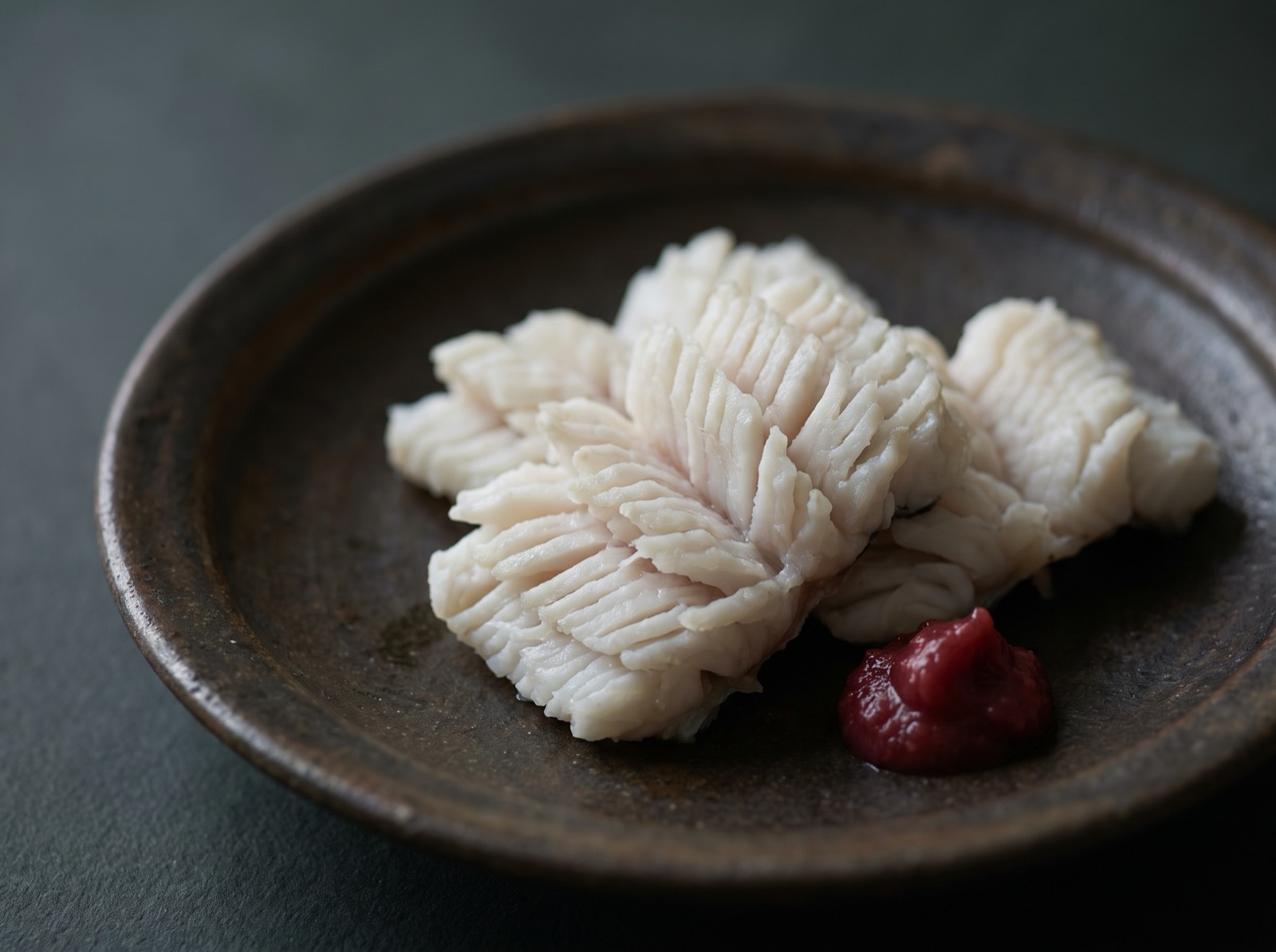
The answer is hone-kiri (骨切り), bone-cutting. The fillet is laid skin-down and the chef works along it with a heavy, square-tipped knife, cutting down through flesh and bone at roughly millimetre intervals and stopping at the skin without going through it. The skin holds the piece together; everything above it has been divided into strips too fine to notice.
The trade expresses the standard as a count of cuts per unit of length, and the number quoted varies between sources, so we will not put one here. What is not in dispute is the difficulty: the blade has to go deep enough to sever bone and stop within the thickness of a fish skin, hundreds of times, at speed, on a fillet that is not the same thickness from end to end. It is one of the two or three knife techniques in Japanese cooking that people travel to watch.
The sound is part of it. Done properly the cuts land in a fast, even rhythm against the board, and a Kyoto kitchen in July is audibly a hamo kitchen.
Cut through the bone. Stop at the skin. Several hundred times, and the fish is food.
What the chef does to it
- Yubiki (湯引き), also called otoshi. The bone-cut fillet is dropped briefly into hot water, at which the strips curl outward and the piece opens into a white flower. Chilled and served with bainiku, salted-plum paste, whose sourness is the standard partner. This is the dish most visitors will meet.
- Grilled. Over charcoal, plain with salt or brushed with a sweet soy glaze, in which form it is closest to what Tokyo does with anago.
- In broth. Hamo-shabu, swirled through hot stock, and as the base of a clear soup whose stock is drawn from the bones and head — a fish this bony makes an unusually good one.
- As nigiri. Blanched or lightly seared, on rice, usually with plum, citrus peel or a light glaze rather than soy sauce. It is a Kansai counter piece and it is uncommon in Tokyo.
Why Kyoto
Kyoto is inland. Before refrigeration, almost nothing from the sea reached it alive, and the city’s cooking developed around vegetables, dried goods and freshwater fish because that is what survived the journey.
Hamo survives. It is exceptionally hardy out of water, and the standard explanation is that it could be carried up from the coast and arrive in usable condition, which made it one of the very few genuinely fresh sea fish available to the old capital in high summer. That accident of physiology is why a bony, difficult, unglamorous fish became the luxury item of a city that had almost no other option — and why it is bound to the Gion festival in July, to the point where the month’s celebrations are nicknamed after it.
When it is best
Summer, with the peak through the rainy season and the weeks of the Gion Festival. There is a saying in the trade that hamo drinks the rain and fattens on it. A second, later window is recognised in autumn, when the fish is richer and is put with matsutake in a hotpot — a pairing that is treated in Kansai as one of the fixed pleasures of the year.
How it differs from what it is confused with
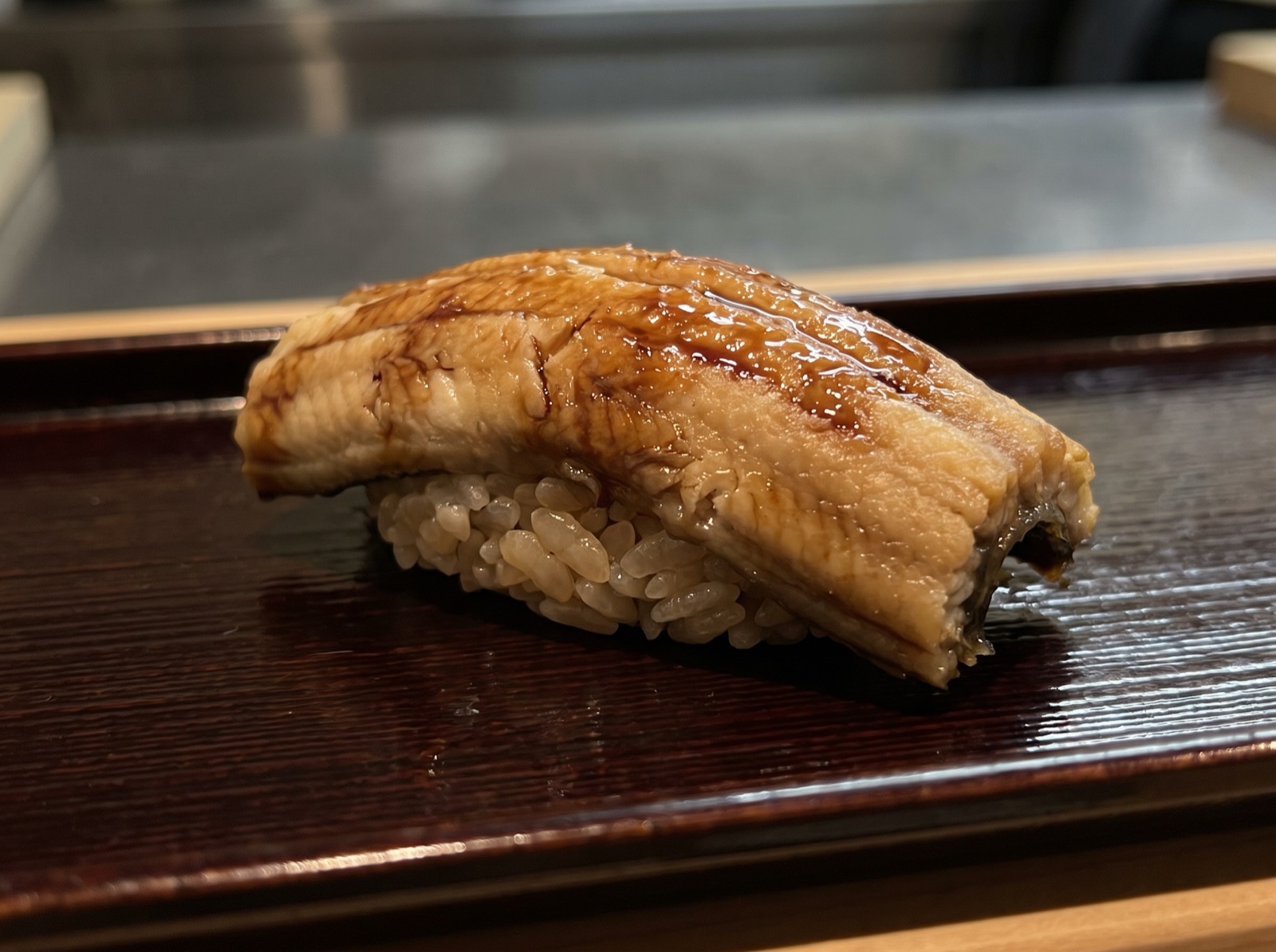
- Hamo and anago. Both are conger-family fish, both are long and pale, and each is a regional signature. Anago is simmered soft in a sweetened stock and glazed — the Edomae treatment. Hamo is bone-cut and blanched or grilled — the Kansai one. Anago is soft and sweet; hamo is firm, clean and served with something sour.
- Hamo and unagi. Freshwater eel is fatty, rich and grilled with a heavy glaze. Hamo is lean and is not a substitute for it in any dish.
- Hamo and pike. The English name is misleading; it is not related to freshwater pike. “Pike conger” refers to the jaw.
How to say it
ha-mo, two even beats. Hone-kiri is ho-ne-ki-ri. Yubiki is yu-bi-ki, and it is the word you will see on a summer menu in Kyoto or Osaka more often than the fish’s own name.
Edomae and Kansai
This is one of the cleanest east–west divisions on the whole list. Hamo is a Kansai fish, prepared by a Kansai technique, at a Kansai season, for a Kansai reason. Tokyo counters serve it rarely and Tokyo diners do not expect it.
Set beside the Edomae treatment of anago it becomes a fairly exact statement of what the two traditions each valued: Tokyo took a soft fish and made it softer and sweeter with a simmer; Osaka and Kyoto took a hard, bony one and solved it with a blade. Our comparison of the two cities works through the rest.
Where you will see it, and roughly what it costs
In Osaka and Kyoto in summer, at counters, in kaiseki, and in the summer sections of ordinary restaurant menus. In Tokyo, occasionally, as a seasonal guest. On a conveyor belt, effectively never — the labour will not carry the price.
No per-piece figure from us. It is a labour cost more than an ingredient cost, and it is priced accordingly. If you are in western Japan in summer, this is the single most regionally specific thing you can order, and our season calendar shows what runs alongside it.
Frequently asked questions
What is hamo?
Daggertooth pike conger: a long, sharp-toothed summer fish of western Japan, with white, faintly sweet flesh. It is the signature ingredient of the Kyoto and Osaka summer.
What is hone-kiri?
Bone-cutting. Hamo carries fine bones distributed right through the flesh, so the chef cuts down through flesh and bone at roughly millimetre intervals while stopping at the skin, which holds the fillet together. Without it the fish cannot be eaten.
Why is hamo associated with Kyoto?
Because it survived the journey. Kyoto is inland, and before refrigeration almost no sea fish arrived in usable condition. Hamo is exceptionally hardy out of water, which is the usual explanation for its being one of the few genuinely fresh sea fish the old capital could get in high summer.
How is hamo usually served?
Most often as yubiki: the bone-cut fillet is blanched briefly so the flesh opens into a white flower, then chilled and eaten with salted-plum paste. It is also grilled, used in clear soup and hotpot, and served as nigiri at Kansai counters.
What is the difference between hamo and anago?
Both are conger-family fish and each is a regional signature. Anago is the Tokyo one — simmered soft in sweetened stock and glazed. Hamo is the Kansai one — bone-cut, then blanched or grilled, and served with something sour rather than sweet.
When is hamo in season?
Summer, peaking through the rainy season and the weeks of the Gion Festival, with a second richer window in autumn when it is put with matsutake mushrooms in a hotpot.