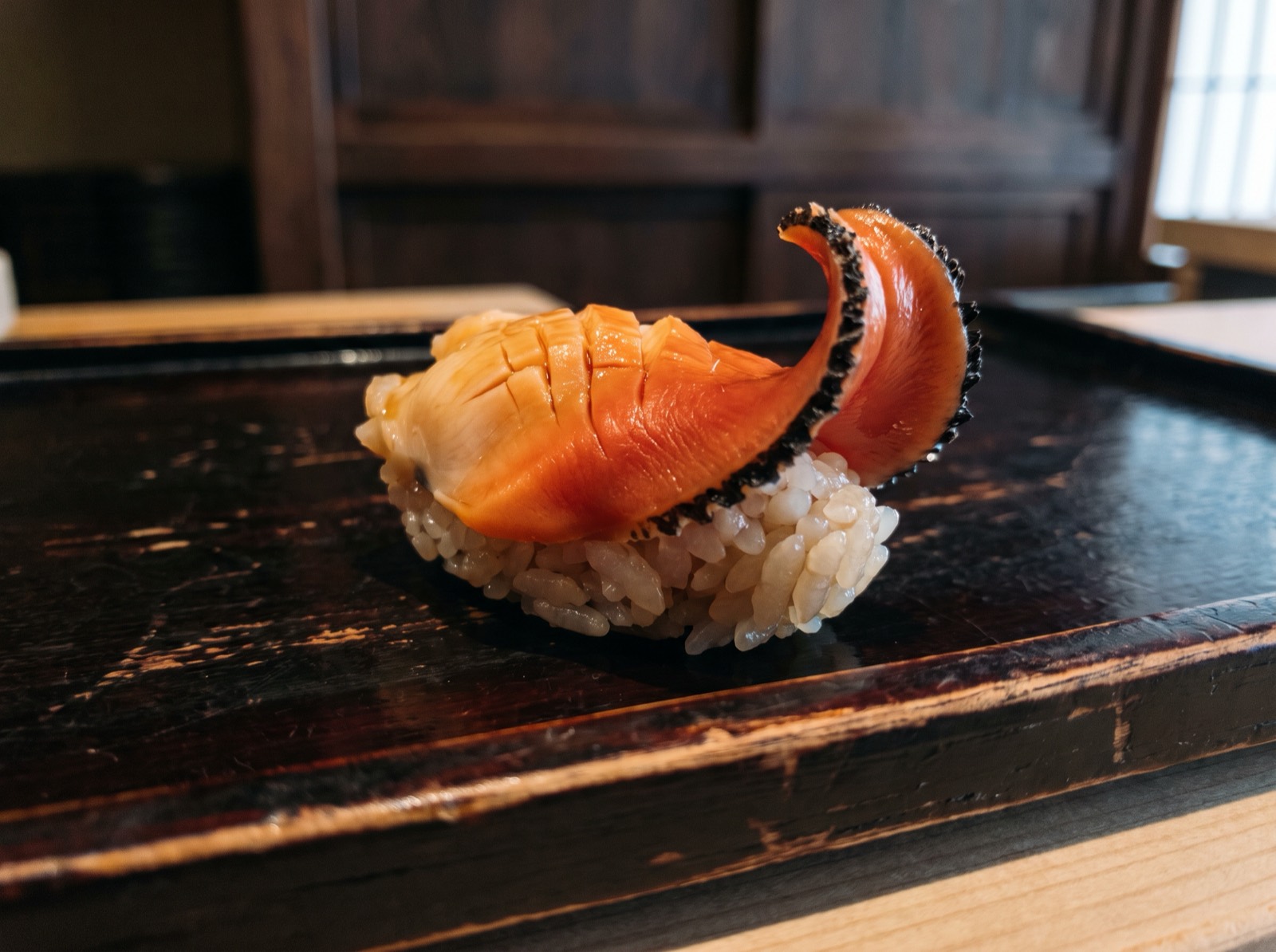
Akagai (赤貝, ark shell or blood clam) is a bivalve served raw, opened and cut to order. The flesh is a deep orange-red with a dark border, the aroma is frankly of the sea, and the flavour has an unmistakable mineral edge that people either love or quietly leave.
Why it is red
Almost all molluscs carry oxygen using a copper-based compound, which is blue-tinted and gives the pale flesh you see in a scallop or a clam. Ark shells are among the very small number that use haemoglobin instead — the same iron-based molecule vertebrates use.
So the red is blood, in the strict sense, and the faint iron note in the flavour is not a metaphor. It explains the English name, it explains why the colour bleeds slightly on the board, and it is the single most useful fact about the animal: once you know it, the piece stops being an odd-coloured clam and becomes the one shellfish on the counter that is doing something different.
The slap
Having opened and cleaned the clam, the chef will often strike it once, hard, flat against the board or the palm. The muscle contracts sharply, the flesh curls and stiffens, and the piece goes onto the rice with its edges standing.
This is a freshness test performed in public. A clam that responds is alive and in condition; one that does not is not, and there is nowhere to hide. It is also entirely practical — the contraction firms the texture and gives the piece its shape — but the demonstration is the point, and it is one of the few moments at a counter that is genuinely theatre and genuinely evidence at the same time.
It is a test done in front of you, and the clam either answers or it does not.
What the chef does to it
- Opens it to order. Ark shell is bought live in the shell and opened at the counter, not prepared in advance.
- Cleans it hard. The dark viscera are removed and the flesh is rubbed with salt and rinsed until the surface is clean. Under-cleaned akagai is unpleasant in a specific gritty way.
- Scores it. A few shallow cuts across the surface, both to help the piece curl and to let the seasoning in.
- Serves the frill separately. The mantle, himo (ひも), is chewier and stronger than the body and is treated as its own item — most often rolled with cucumber, a combination common enough to have its own menu name.
When it is best
Winter into spring, before spawning, with the peak generally placed in the early months of the year. Outside that window it thins and the aroma coarsens.
Where it comes from
Sendai Bay in the northeast is the domestic name that carries weight, and clams from there are sold and priced by origin. A substantial share of what is eaten in Japan is imported, mostly from elsewhere in East Asia, and there is nothing wrong with that — but it is one of the items where a shop that has good domestic stock will say so.
There is also a straightforward substitution to know about: a smaller related ark shell is widely sold under the same name, particularly in processed, canned and cheaper products. It is a legitimate food and a different animal, and it is thinner, paler and much less aromatic.
How it differs from what it is confused with
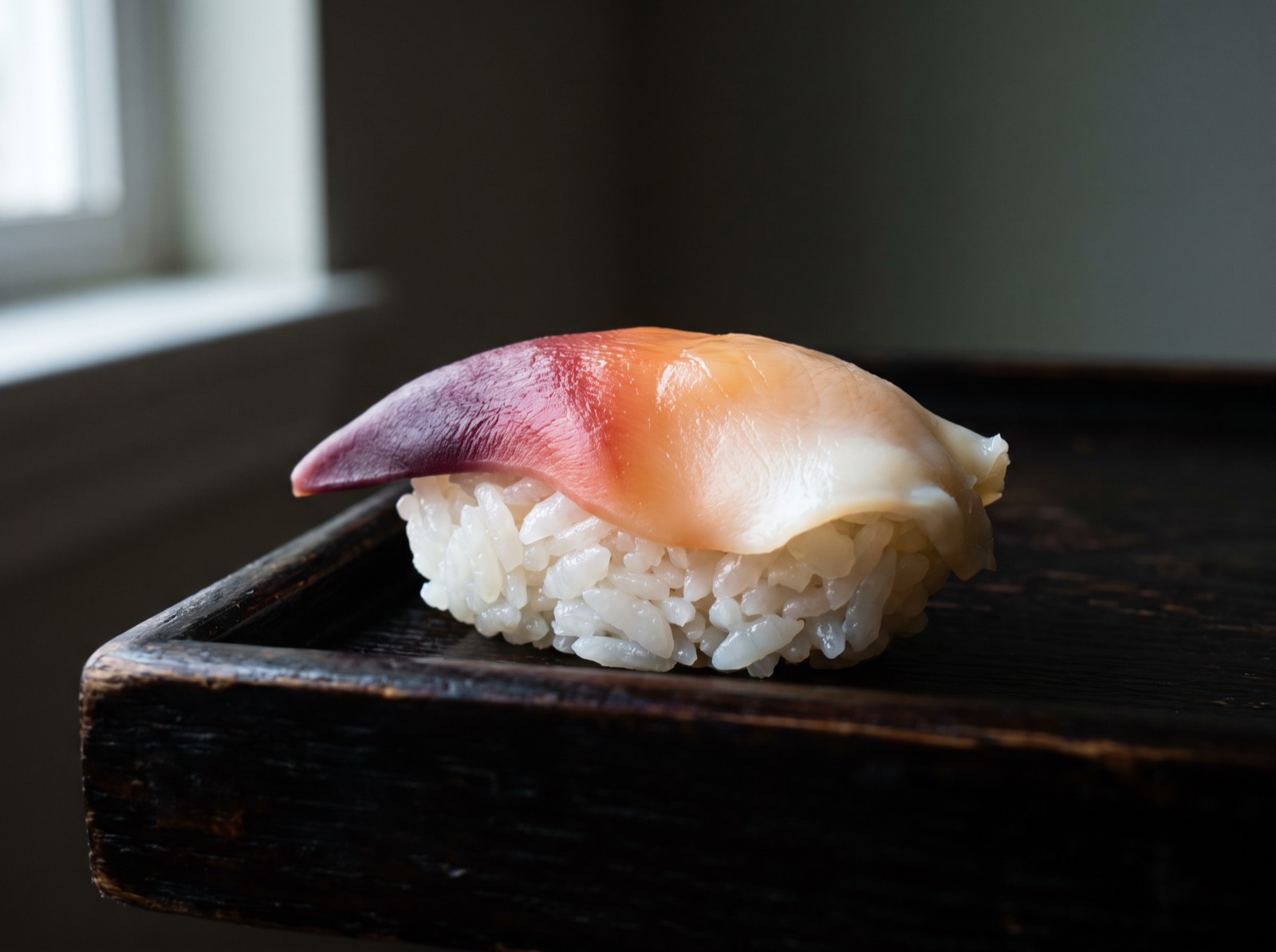
- Akagai and hokkigai. Surf clam is blanched, which turns its tip a bright, even red — a cooked colour. Ark shell is raw and its red is uneven, darker, and its own.
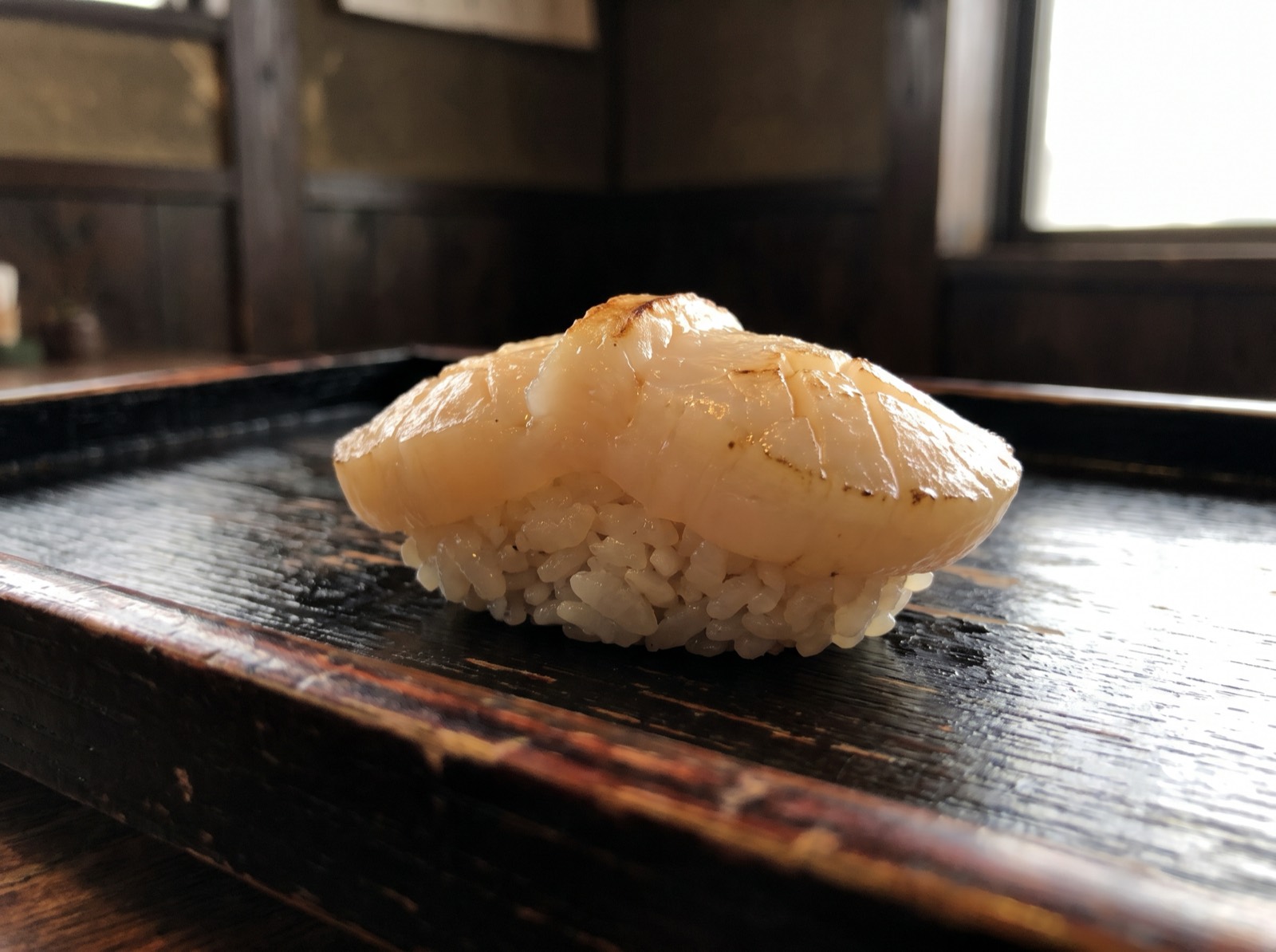
- Akagai and hotate. Opposite ends of the shellfish range: scallop is pale, sweet and mild; ark shell is red, mineral and assertive.
- Akagai and torigai. Cockle is dark-tipped and glossy, briefly blanched, and sweeter. The two are often confused on sight because both have a dark edge.
- Fresh akagai and the canned kind. The sweet-simmered product sold in cans is usually the smaller related species and belongs to a different category of eating altogether.
How to say it
a-ka-ga-i, four beats, with the last two run together lightly. Himo is hi-mo. If you want the frill rather than the body, it is worth asking by that name; it is cheaper, it is often better, and asking for it signals that you know what the shop has in the case.
Edomae and Kansai
Ark shell is an Edomae fixture. Tokyo Bay was a shellfish bay before it was a port, and the classical repertoire is full of clams — ark shell, cockle, hard clam, surf clam — handled raw or barely blanched in the way described in our guide to what Edomae means. A Tokyo counter in late winter will usually have it.
Kansai eats it too but leans less on raw shellfish as a category, with the western repertoire built more around pressed forms and cured fish. See the two traditions compared.
Where you will see it, and roughly what it costs
At counters in winter and spring, and on better belts. It is not a cheap item — good domestic ark shell is expensive by weight and it cannot be prepared in advance, so the labour is per piece.
No per-piece figure from us. It is, though, one of the more revealing things to order: it has to be alive, it has to be opened in front of you, and it cannot be improved by seasoning. A shop that puts it on the list in season is telling you something about how it buys. Our season calendar covers what runs with it.
Frequently asked questions
Why is akagai red?
Because it uses haemoglobin to carry oxygen, which is unusual among molluscs — most use a copper-based compound that leaves the flesh pale. The red is genuinely blood, and it is why the flavour has a faint iron edge.
Why do sushi chefs slap akagai?
To show it is alive. A clam in condition contracts sharply when struck, curling and stiffening; one that does not respond is not fresh. It also firms the texture and gives the piece its standing shape, so it is a demonstration and a preparation at once.
What does akagai taste like?
Distinctly of the sea, with a firm, slightly crisp bite and a mineral, faintly iron-like finish. It is one of the more assertive items on a sushi counter and it divides people.
What is himo?
The mantle frill around the edge of the clam. It is chewier and more strongly flavoured than the body and is served as its own item, most often rolled with cucumber. It is cheaper than the body and often better.
When is akagai in season?
Winter into spring, before spawning, with the peak in the early months of the year. Outside that window the flesh thins and the aroma coarsens.
Is canned akagai the same thing?
Usually not. A smaller related ark shell is commonly sold under the same name in canned and processed products. It is a legitimate food, but it is thinner, paler and much less aromatic than the clam served raw at a counter.