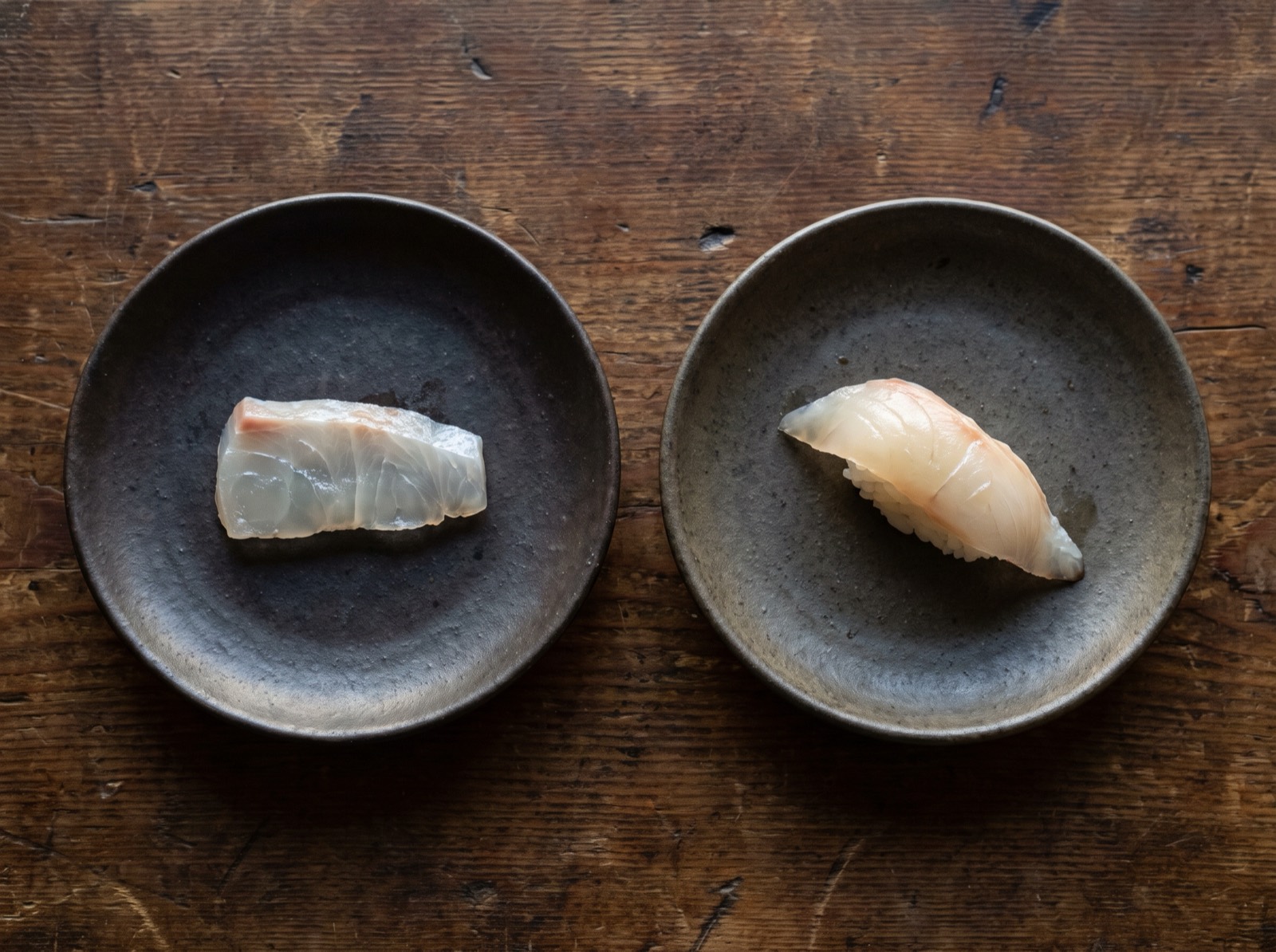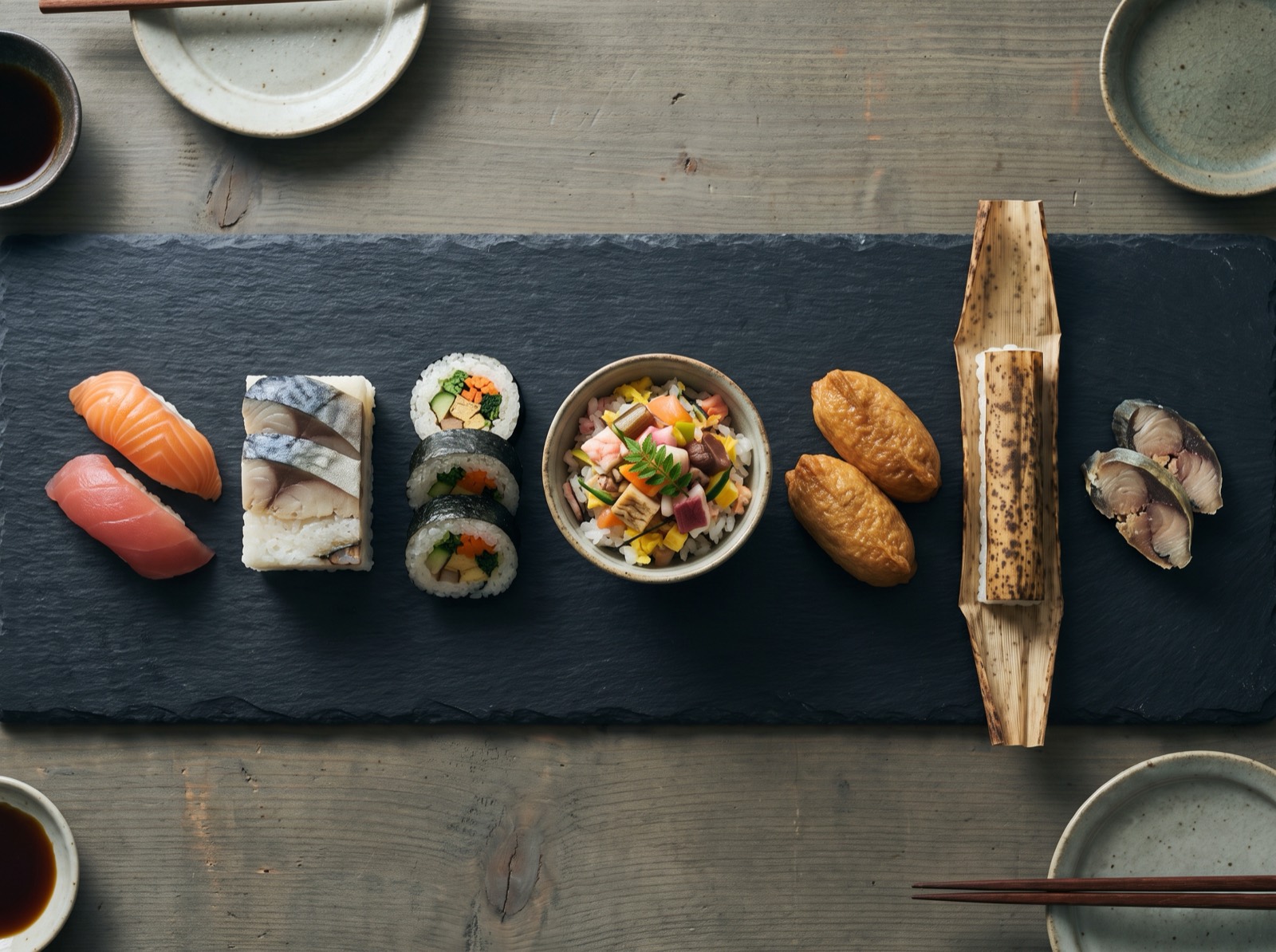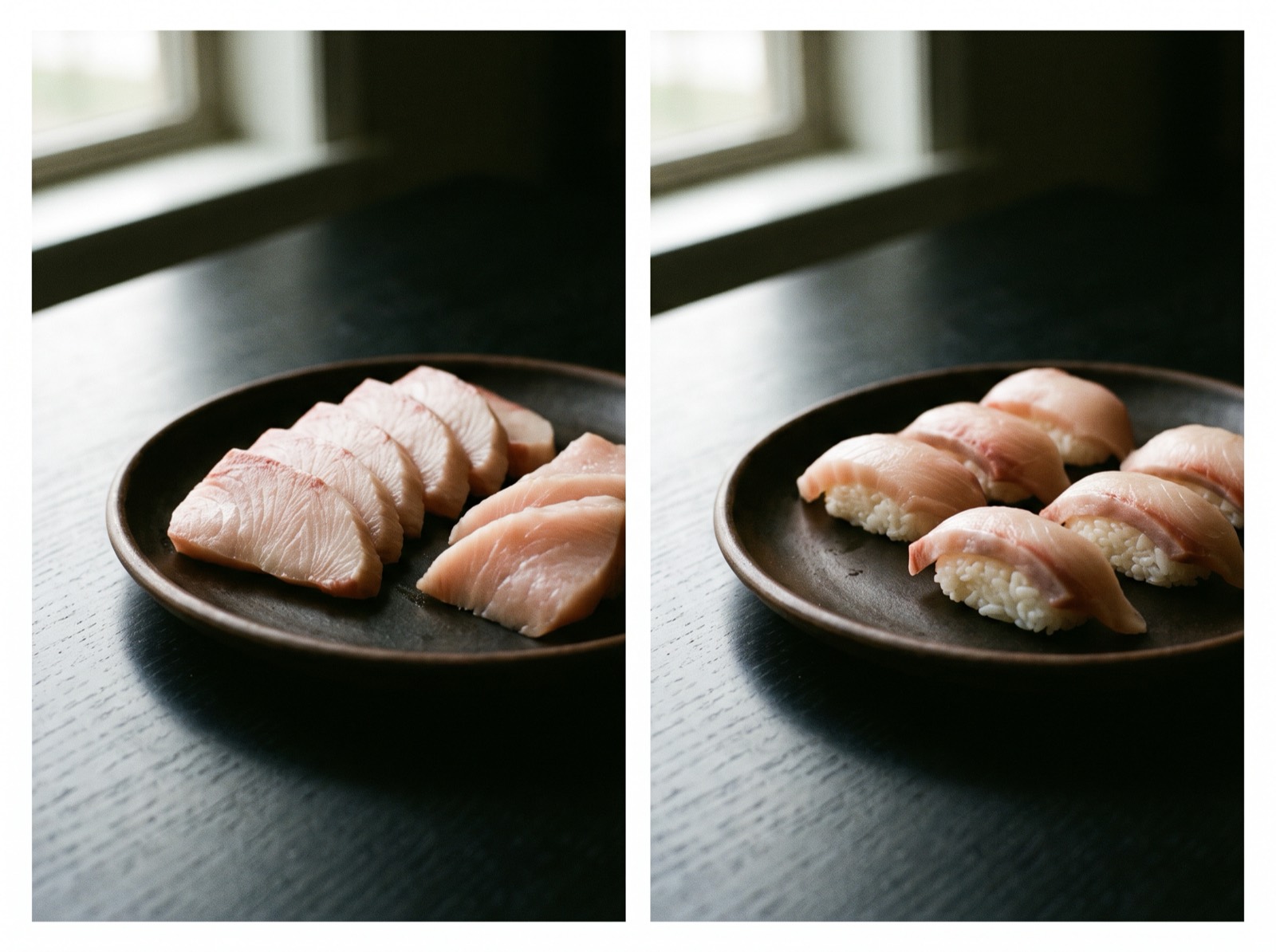
In its modern sense, sushi is any dish built on vinegared rice. Sashimi is fish sliced and served without rice. That is the entire distinction: not raw versus cooked, not fish versus no fish, but rice versus no rice. Sushi with no fish in it at all is still sushi; a plate of raw tuna with no rice is not.
The definition, and why people get it backwards
The Japanese word sushi attaches to the rice. This is why cucumber rolls, egg nigiri and rice packed in a sweet tofu pouch are all sushi, and why the historical starting point of the whole tradition, fish fermented in rice for months, is called narezushi even though the rice was thrown away.
Sashimi, by contrast, describes the act of slicing. The word has nothing to do with rice, vinegar or fermentation. It is a preparation of fish, judged on the cut, the fish and the knife.
The confusion is almost entirely an English-language artefact. Because both arrive raw and both arrive at a sushi restaurant, English writing treats them as two grades of the same thing: sashimi as “sushi without the rice,” as though the rice were a filler. In Japanese they are not two grades of anything. They are a dish and an ingredient preparation.
The oldest sushi threw the rice away
There is an awkward fact sitting inside that definition. The oldest form of sushi discarded the rice. Narezushi reached Japan around the Nara period: fish packed in rice and left to ferment for months, in some cases for years. Funazushi from Shiga, which is still made, is regarded as the starting point of the whole Japanese tradition. During the fermentation the rice broke down. It was scraped off and thrown away, and only the fish was eaten.
So for most of its history sushi was a preservation method, and the rice was equipment rather than food. What changed was the length of the ferment. Shorten it and the rice survives intact, and rice and fish were eaten together for the first time. Once vinegar was widely available the fermentation could be replaced outright, which is where the pressed box sushi of Osaka comes from, and where the word starts attaching to the rice rather than to the process.
This is also why neither category is as old as it looks. Nigiri was invented in Edo around 1820 and is roughly two hundred years old. Raw fish as a sushi topping became practical with ice; before that the topping was cured, simmered or marinated, and those techniques survive precisely because they were once the only option. Much of what reads as tradition is a set of solutions to problems that have since been solved.
Four things that follow from it
- The rice is the work. If sushi is defined by rice, then how the rice is made (the vinegar, the salt, the sugar, the temperature at which it is held) is the thing a sushi shop is actually judged on. This is why chefs in the trade taste a shop's rice first.
- Sashimi comes first. At a counter, sliced fish belongs with the opening dishes, eaten with a drink, before the meal moves into nigiri. It is not an alternative main course.
- They are seasoned differently. Sashimi is dipped by the diner in soy, usually with wasabi. Nigiri at a good counter frequently arrives already seasoned with brushed soy or a sweet reduction, and dipping it is either unnecessary or actively wrong.
- Neither means “raw.” Sushi toppings are routinely cured, simmered, marinated or aged, and were always so before refrigeration. Sashimi can be lightly seared or blanched. Raw is a property of some pieces, not a definition of either word.
Sashimi is not sushi without rice. Sushi is rice, with or without fish.
What each one is judged on
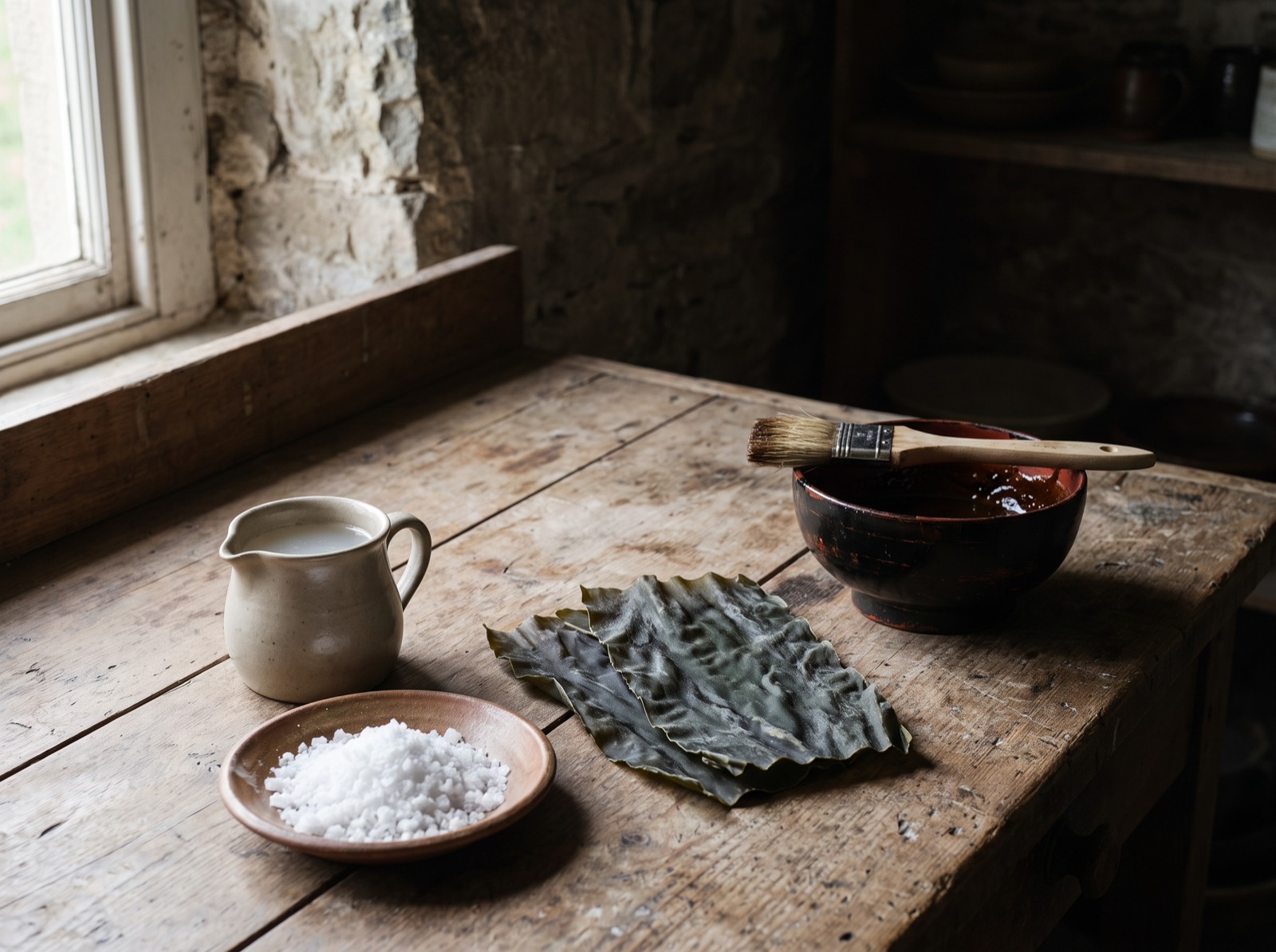
The practical consequence of the definition is that the two are assessed on completely different things. A plate of sashimi is judged on the fish and the knife: which fish, how it was killed and handled, how thickly it was cut, how long it has rested. The vocabulary is small and physical. Ikejime, killing the fish instantly with a blade, slows the loss of the compounds that carry savour. Kobujime, laying the slices between sheets of kelp overnight, firms the flesh and draws flavour into it. Past that there is very little to hide behind.
Sushi is judged on shigoto, the chef’s word for the work done to the fish before it reaches you, and on the rice underneath. Sujime salts the fish, rinses it, then steeps it in vinegar to firm it. Zuke marinates it in soy sauce. Nikiri, a soy sauce simmered briefly with mirin and dashi, is brushed on at the moment of serving, and every shop makes it differently. None of that is visible on the plate. That is the point of it. What arrives has already been decided for you.
Ordering one or the other
At a sushi counter both are available and the sequence is usually the same: a few small dishes, sashimi among them, eaten with sake or beer; then nigiri, one piece at a time; then a roll, egg and soup. If you want sashimi, ask for it at the start rather than in the middle, because it belongs to the drinking half of the meal.
At a conveyor-belt shop you will find sashimi plates on the belt or on the touchscreen. They are perfectly good and they are not what the format is for; the format is built around rice-topped plates moving past you.
One practical note: sashimi is generally the more expensive way to eat the same fish, because you are buying the fish without the rice that would otherwise stretch it. If value matters, nigiri is the better purchase, and chirashi, the same fish scattered on a bowl of rice, is better again.
Outside restaurants the same distinction holds and the prices move the same way. A supermarket sells trays of both, and the sashimi tray costs more for the same fish. There is also a tax wrinkle that catches visitors: Japan’s consumption tax is 10 percent on food eaten in and 8 percent on food taken away, so an identical box is slightly cheaper carried out than eaten at a counter. Alcohol is 10 percent either way.
The related question people are usually really asking
“Sushi vs sashimi” is often standing in for “nigiri vs sashimi”: the comparison between a hand-formed piece and a slice of the same fish. That is a more interesting question, because there the difference genuinely is one ingredient, and it changes the eating completely. We answer it in nigiri versus sashimi.
For the full set of sushi forms, see types of sushi. For what is done to the fish before it reaches you, see Edomae sushi.
Frequently asked questions
What is the difference between sushi and sashimi?
In its modern sense, sushi is any dish built on vinegared rice. Sashimi is fish sliced and served without rice. The distinction is rice, not rawness: sushi with no fish is still sushi, and raw fish with no rice is not.
Is sashimi a type of sushi?
No. Since the rice is what defines sushi, sashimi sits outside the category. They are served in the same meal, which is why they get conflated in English.
Is sashimi healthier than sushi?
Sashimi has no rice, so it carries fewer carbohydrates and less sugar and salt from the seasoning. Whether that makes it healthier depends entirely on what you are measuring; neither is a health food or an unhealthy one in ordinary quantities.
Is sashimi more expensive than sushi?
Usually, for the same fish. You are buying the fish without the rice that would otherwise extend it. Nigiri is better value for the same topping, and chirashi better again.
Do you dip sashimi in soy sauce?
Yes: sashimi is dipped by the diner, typically with a little wasabi. Nigiri at a good counter often arrives already seasoned, in which case dipping it is unnecessary.
Which comes first, sushi or sashimi?
Sashimi. At a counter it belongs with the opening dishes eaten alongside a drink, before the meal moves into nigiri.