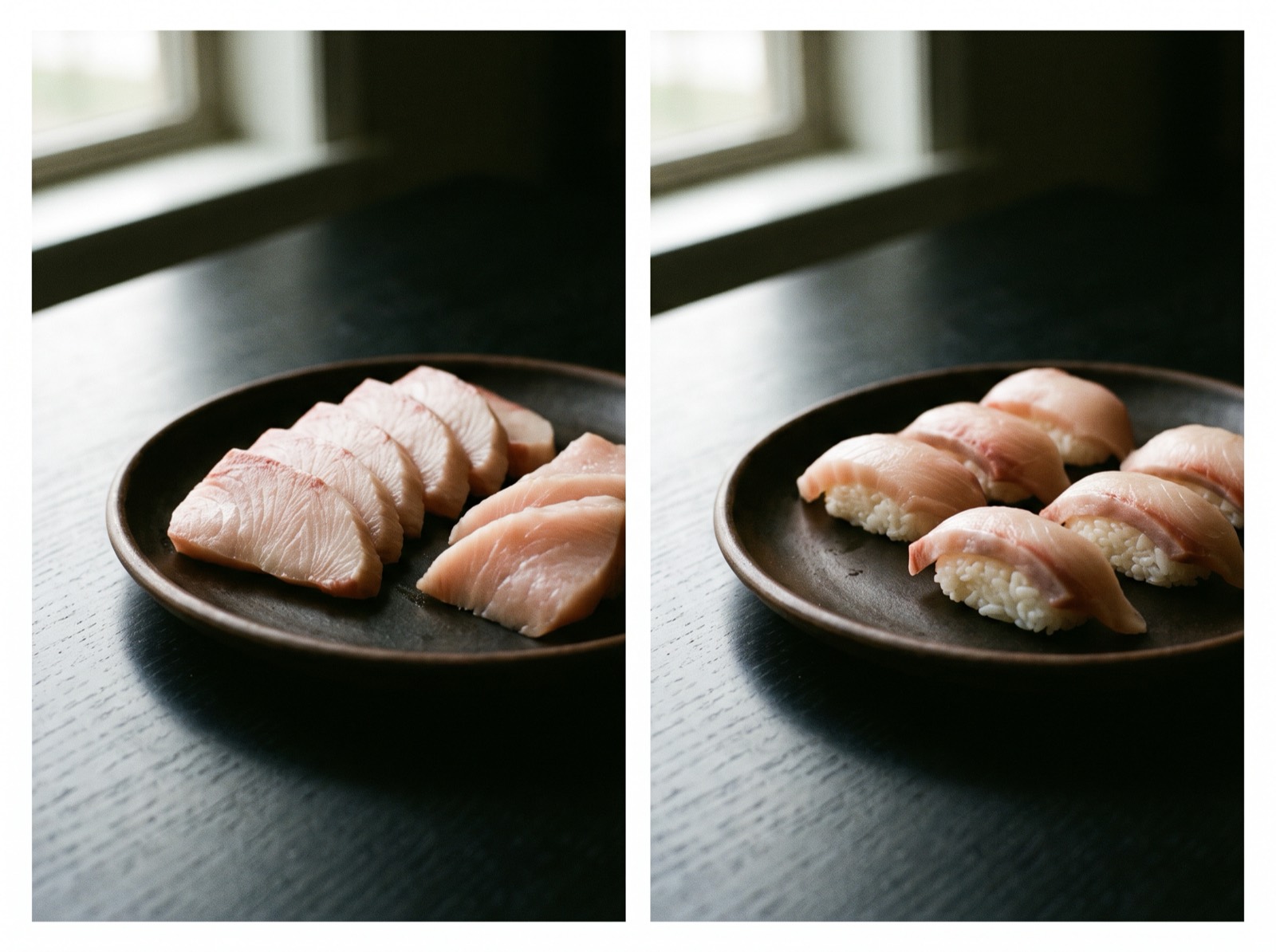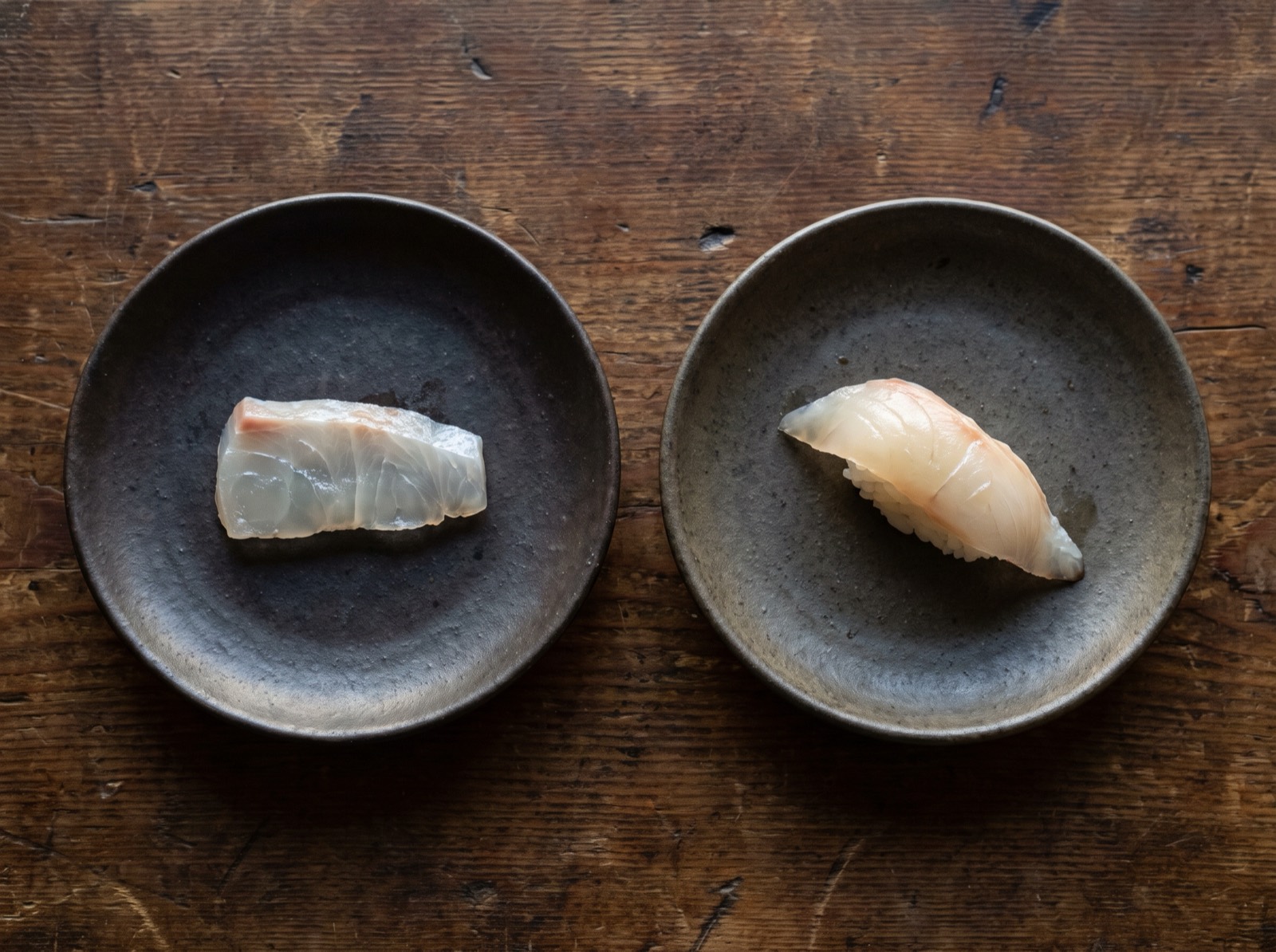
Nigiri is a slice of fish laid over a hand-formed finger of vinegared rice, seasoned by the chef and eaten in one bite. Sashimi is the same fish sliced and served alone, dipped by the diner. Nigiri is a composed dish with a temperature contrast built into it; sashimi is the fish presented on its own terms.
What the rice actually does
It is tempting to read the rice as a base or a filler. It is neither. Four things happen when fish is put on a finger of sushi rice, and none of them happen to a slice on a plate.
- Temperature contrast. The rice is held near body temperature and the fish is cool. That difference is deliberate, it is short-lived, and it is why nigiri is expected to be eaten within about ten seconds of arriving.
- Acid and salt. Sushi rice is seasoned with vinegar, salt and usually sugar. It brings acidity and seasoning to the fish from underneath, which is why a well-made piece needs little or nothing added.
- Fat handling. Warm, acidic rice cuts through fatty fish in a way that cold fish on a plate does not. Rich cuts frequently taste better as nigiri than as sashimi for exactly this reason.
- Density and air. A properly formed piece holds together on the way to your mouth and falls apart in it. The amount of air a chef leaves in the rice is one of the hardest things in the craft, and it is invisible.
What is done to the fish
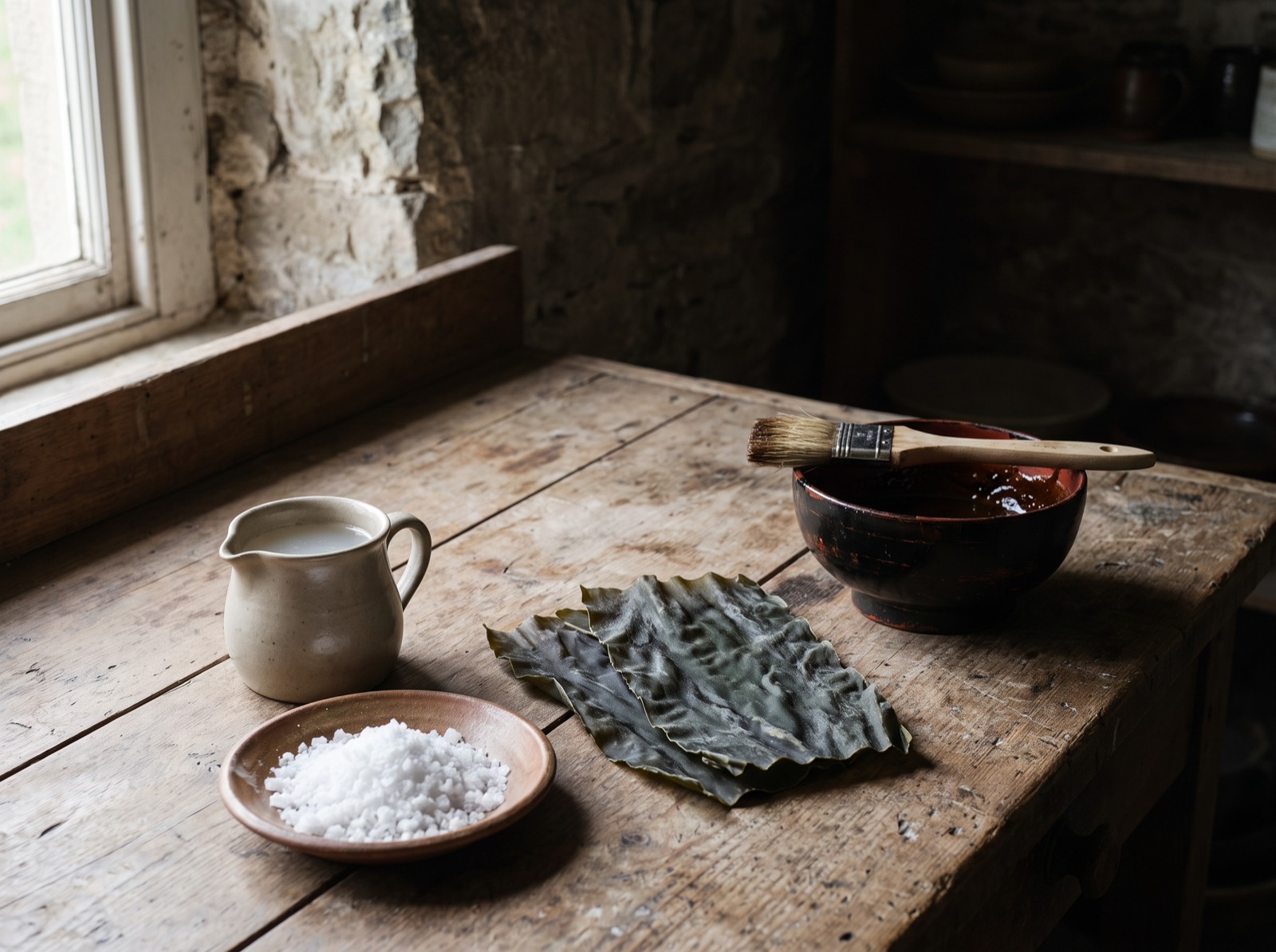
For sashimi, most of the decision is the cut: thickness, angle, which part of the fish, and the knife. For nigiri, the fish has usually been through something first. The trade word is shigoto, the work, and it covers curing in salt and vinegar, marinating in soy, pressing with kelp, simmering, searing and deliberate ageing.
This is not decoration. Before manufactured ice, every topping had to be treated, and those treatments survived the arrival of refrigeration because they make the fish better rather than merely safer. It is the reason two counters can serve the same species and produce two entirely different pieces. See Edomae sushi for the four principal jobs.
Sashimi shows you the fish. Nigiri shows you what someone decided to do about it.
The piece used to be much bigger
Nigiri is about two hundred years old. It was invented in Edo around 1820 and it began as street food, eaten standing at a stall, and each piece was considerably larger than the one you are served now. It shrank as it moved indoors and became a course rather than a snack, and two conventions that visitors find puzzling are left over from that origin.
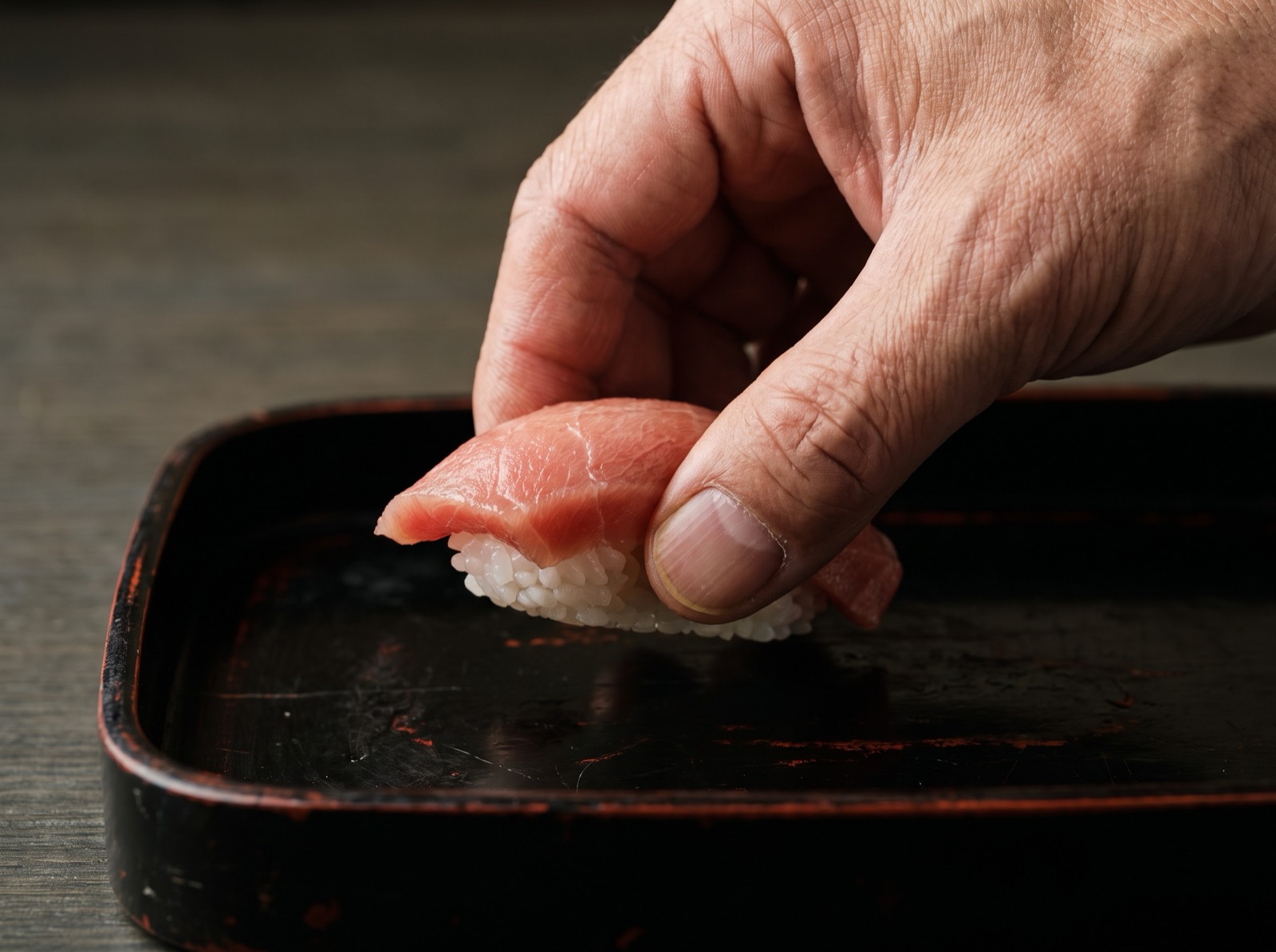
The first is that eating with your fingers is entirely correct. It is not a licence granted to tourists or a folksy affectation; it is simply how the food was designed to be handled, and shops that expect it hand you a separate cloth for your fingers on top of the oshibori. The second is that a piece is meant to go in whole. Cutting nigiri in half is the one thing that reliably reads as wrong, because it separates the topping from the rice and discards the temperature contrast that the piece exists to deliver.
If a piece is genuinely too large for you, the fix is not the knife. Ask for smaller pieces, or less rice, when you sit down. Give a reason and it is an ordinary request. Sashimi has none of this, because a slice was never assembled and nothing about it collapses if you take it in two.
Seasoning: who does it
- Sashimi. You do. A dish of soy, a little wasabi, and it is your call how much.
- Nigiri at a good counter. The chef does. Pieces normally arrive brushed with nikiri, soy thinned and softened, or with the sweeter tsume on simmered toppings. In the Edomae style the customer never dipped, because the piece came seasoned.
- Nigiri elsewhere. You do, and the convention is to turn the piece so the fish, not the rice, touches the soy. Rice put into soy absorbs far too much and falls apart.
If you are not sure which situation you are in, ask. “Do I dip this?” is an ordinary question at a counter and the answer takes two seconds.
Timing
This is the practical difference that matters most and is mentioned least. Sashimi will wait. A sashimi plate will tolerate a wait, which is precisely why it belongs with the opening drinks.
Nigiri will not wait. The temperature contrast collapses, the rice cools and firms, and the nori on a gunkan softens. Ten seconds is the number, and at a counter the chef is timing the next piece to when the last one is gone. Talking with a piece sitting in front of you does not stall a plate of sashimi; it stalls the whole evening.
Some fish only make sense one way
The two formats are not interchangeable across the whole case. Where the fish has been through serious work, the work was done on the assumption that rice would arrive underneath it, and taking the rice away leaves the piece unbalanced rather than pure. Gizzard shad cured in salt and vinegar is sharp and insistent on its own; it was seasoned to be answered by warm, sweet-sour rice. Simmered conger eel brushed with tsume is the same argument in the other direction, sweet and soft, built against the acidity of the shari. Lean tuna marinated in soy sauce as zuke is a third.
The traffic runs the other way too. Large fatty cuts, and white fish sliced thin enough to read through, reward being eaten alone, because there the cut itself is the whole proposition and rice would only dilute it. A useful way to decide at a counter: the more that was done to the fish, the more it wants the rice. See kohada and anago for what those treatments involve.
Which is better value
Nigiri, for the same fish. Sashimi buys the fish without the rice that extends it, so the same money buys less. Chirashi, the same toppings scattered over a bowl of rice, is usually better value again, because the labour of forming each piece is removed.
The exception is fish where the cut is the point: large, fatty pieces where you want more of it in the mouth at once, and delicate white fish sliced thin enough to see through. Those genuinely reward being eaten alone.
Choosing between them at a counter
- Order sashimi at the start, with a drink, as part of the opening dishes.
- Order nigiri as the meal proper, and eat each piece as it lands.
- At an omakase you will not choose. The chef builds both halves, usually small dishes and sashimi first, nigiri second. See what omakase actually is.
- If you only want one, take the nigiri. It is the form the entire craft is organised around.
For the category-level distinction, see sushi versus sashimi; for the other forms, types of sushi; for the mechanics of eating, how to eat sushi.
Frequently asked questions
What is the difference between nigiri and sashimi?
Nigiri is a slice of fish on a hand-formed finger of vinegared rice, usually seasoned by the chef. Sashimi is the same fish sliced and served without rice, seasoned by the diner. The rice adds warmth, acidity and salt from underneath.
Is nigiri raw?
Often, but not by definition. Nigiri toppings are frequently cured in salt and vinegar, marinated in soy, pressed with kelp, simmered, seared or aged, techniques that predate refrigeration and survived it because they improve the fish.
Should you dip nigiri in soy sauce?
Only if it has not already been seasoned. At a good counter pieces normally arrive brushed with thinned soy or a sweet reduction. If you do dip, turn the piece so the fish touches the soy, never the rice.
Is nigiri or sashimi better value?
Nigiri, for the same fish: sashimi buys the fish without the rice that extends it. Chirashi, the same toppings over a bowl of rice, is usually better value still.
How quickly should you eat nigiri?
Within about ten seconds. The contrast between body-temperature rice and cool fish is the point of the form, and it disappears quickly. Sashimi has no such constraint.
Which should I order first?
Sashimi first, with a drink, as part of the opening dishes; nigiri afterwards as the meal proper. At an omakase the chef makes that decision for you.