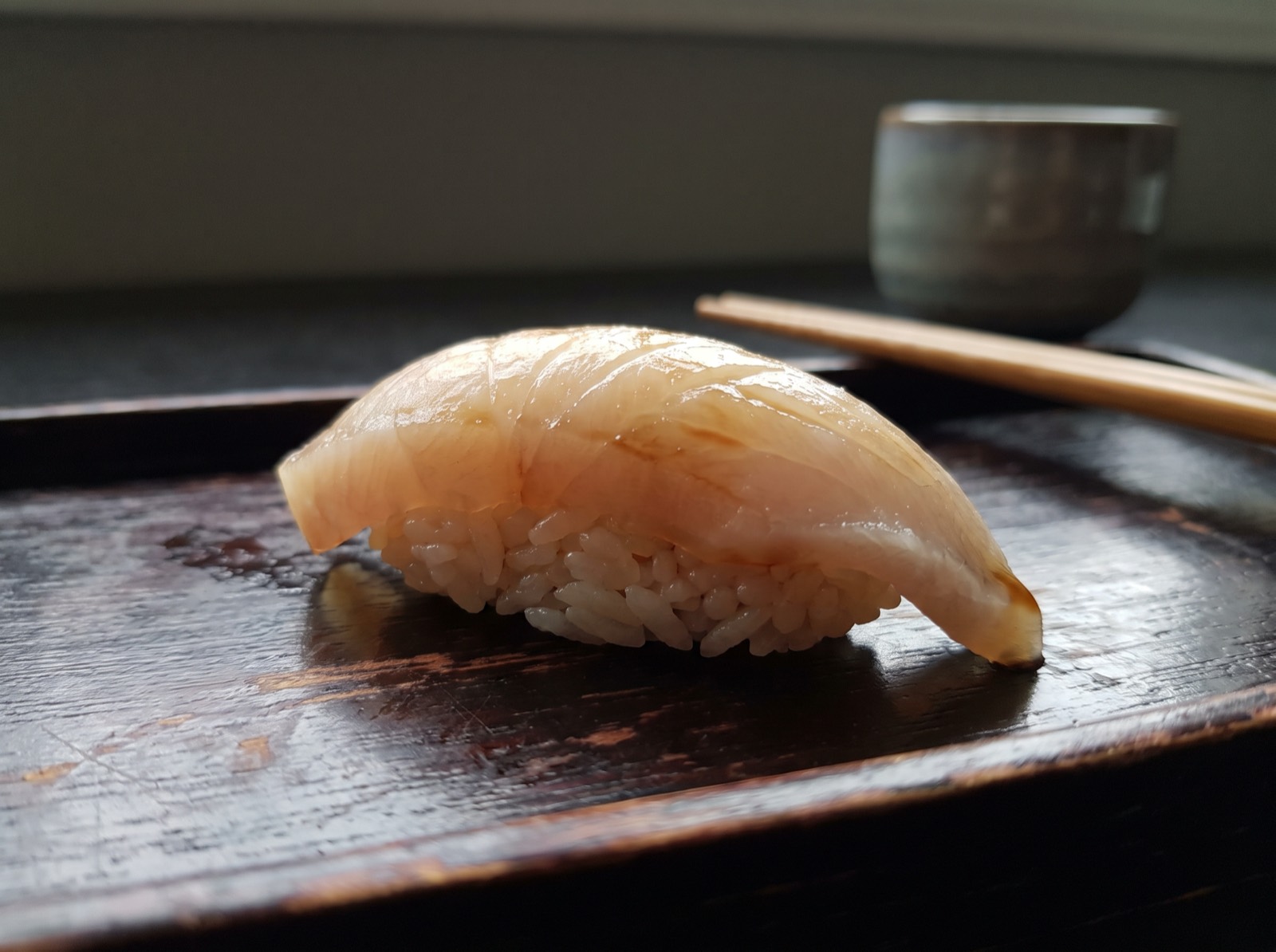
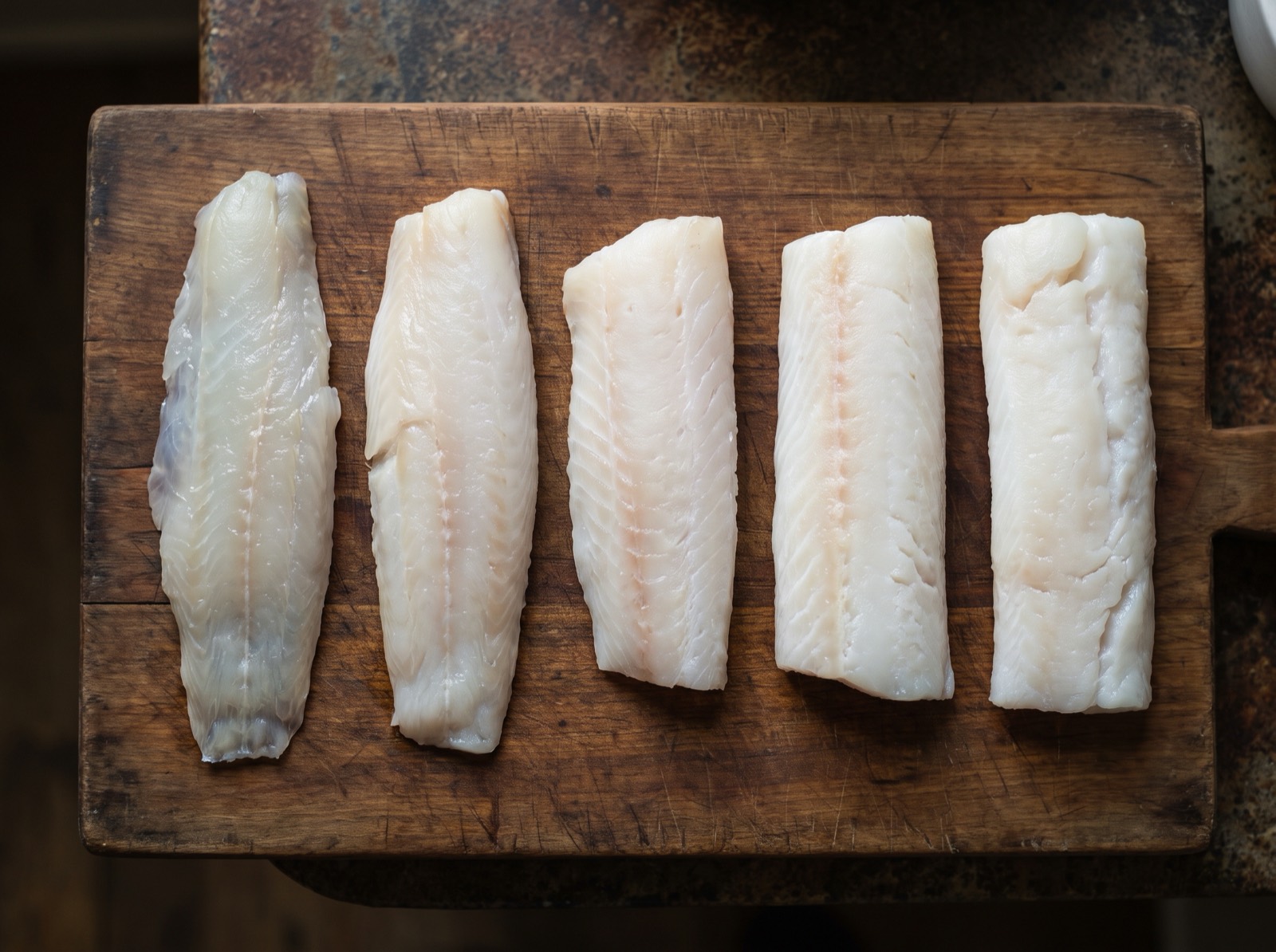
Suzuki (スズキ, Japanese sea bass) is a shusseuo (出世魚), a fish whose name changes as it grows. The same animal is called seigo when small, fukko at a middle size, and only suzuki once it reaches full size. What sits on the counter under that name is always the adult stage, not a separate species.
What it is
A coastal fish that moves freely between the sea and brackish or fresh water, which is part of why it turns up close to shore and even in river mouths. The flesh is white, firm and clean, closer to the leaner end of Japan's white fish than to anything richly fatted, and the skin is generally kept on.
A fish that earns each name
Shusseuo means, roughly, a fish that is promoted as it grows, and the trade tracks that promotion with a change in name rather than a size on a label. Suzuki is one of the standard examples: seigo (セイゴ) is the young fish, fukko (フッコ) the middle stage, and suzuki the adult, and a shop using any of the three names is telling you, without saying so directly, roughly how far along the fish is.
This matters because the three stages are not interchangeable at the counter. What is generally treated as the fish worth ordering is the mature suzuki; the smaller stages exist, are eaten, and are simply a different order in every practical sense.
When it is best
The warmer months, broadly early to high summer, when the fish is feeding hard ahead of a spawn that falls later in the year and is carrying the most fat it will carry. That puts suzuki among the minority of Japan's prestige white fish that peak in hot weather rather than cold, the same pattern our entry on isaki describes from the other side.
Suzuki is a fish caught by three different names, and only the last one is the one worth ordering.
What the chef does to it
- Arai (洗い). The classic treatment: the fish is prepared while still fresh, then rinsed and chilled in ice water, which firms the flesh and tightens the surface. It is a summer preparation, built partly around the coolness of the ice bath itself.
- Skin generally kept on, in keeping with how most of Japan's white fish with any fat under the skin are served.
- Farmed suzuki is common and available year-round, with steady, consistent fat. It is a legitimate product, but our sources describe it as lacking the wilder character of a fish caught in open water — the same distinction this site draws for other farmed-versus-wild fish.
- Salt-forward seasoning more than heavy soy, in keeping with the general treatment of lean-to-moderate white fish.
How it differs from what it is confused with
- Suzuki, seigo and fukko are the same fish, not three species. The names track growth stage, and only the adult is generally sold and ordered as suzuki.
- Suzuki and hirasuzuki. A close relative, the blackfin sea bass, looks similar but has a noticeably flatter body, lives further out on open, rocky coastline, and by most accounts peaks in the opposite season, autumn into winter rather than summer. It is sometimes called oki-suzuki, offshore suzuki, or hon-suzuki, true suzuki, names that imply the fish is regarded as the finer of the two.
- River-run suzuki and open-water suzuki. Because the fish ranges into brackish and fresh water, at least one source notes that a fish taken from those waters can carry a faint off-flavour that hirasuzuki, which stays further out to sea, generally does not.
How to say it
su-zu-ki, three even beats. Seigo is sei-go, and fukko is fuk-ko, with a small stop in the middle of the word.
Where you will see it, and roughly what it costs
On summer counters and on conveyor belts, where it is not treated as a rare item; a large, wild, in-season fish is a different order from a farmed one available in January, even though both may be labelled the same way. A shop that distinguishes between the two, or names the season it is working in, is telling you something worth knowing.
We are not giving a figure here. For where a fish like this generally sits in a course, see omakase price tiers, and for the wider pattern of what peaks when, see our season calendar.
Frequently asked questions
What is suzuki?
Japanese sea bass: a coastal, white-fleshed fish that moves between salt and brackish or fresh water. It is a shusseuo, a fish whose name changes with growth, and suzuki is the name used once it reaches full size.
What are seigo and fukko?
The earlier growth stages of the same fish. Seigo is the young stage, fukko the middle stage, and suzuki the adult; all three names refer to one species at different sizes, not three different fish.
When is suzuki in season?
Broadly early to high summer, when the fish is feeding heavily ahead of a later spawn and carries the most fat. It is one of the minority of prestige white fish that peak in warm weather rather than cold.
What is arai?
The classic preparation for suzuki: the fish is prepared fresh, then rinsed and chilled in ice water, which firms the flesh. It is associated with hot weather and is one of the fish's defining treatments.
What is hirasuzuki?
Blackfin sea bass, a close relative with a flatter body that lives further out on open, rocky coastline. It generally peaks in autumn and winter, the opposite season from regular suzuki, and is sometimes called oki-suzuki or hon-suzuki.
How do you pronounce suzuki?
su-zu-ki, three even beats. It is unrelated to the vehicle brand that shares the name in English.