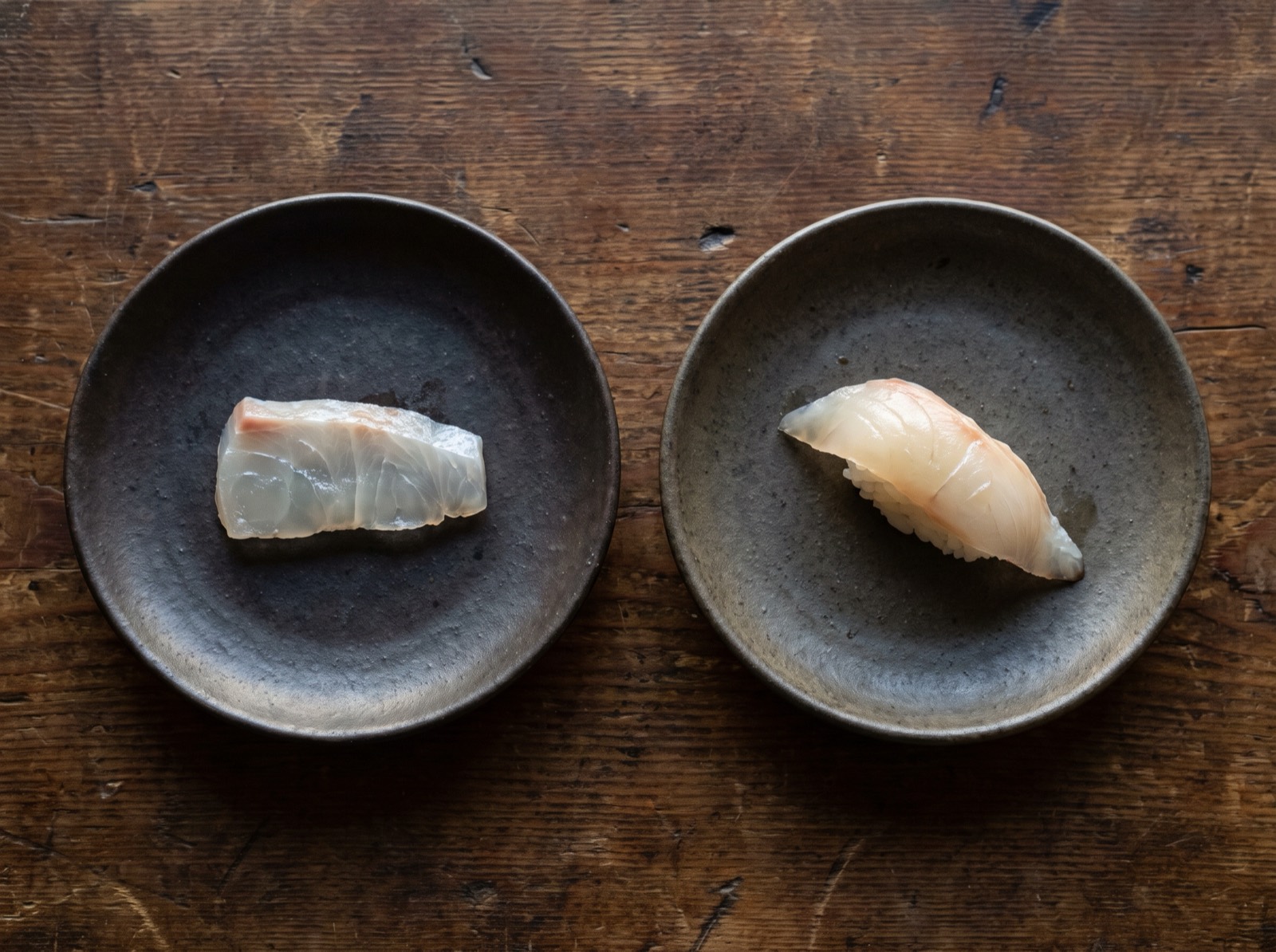
Nigiri (握り) is a bite-sized seafood topping pressed by hand onto a finger of vinegared rice. It is what most people picture when they hear the word sushi, and on a Japanese menu the plain word sushi often defaults to exactly this form, with the other shapes named separately.
What it is
The name is the verb. Nigiru (握る) means to grip or to press in the hand, and nigiri-zushi, shortened almost everywhere to nigiri, describes exactly that action: rice pressed into an oval finger, a topping laid over it, and the two pressed together once more so they hold as a single piece. Nothing is cut to shape afterward and nothing is folded around it. What you are served is what was formed.
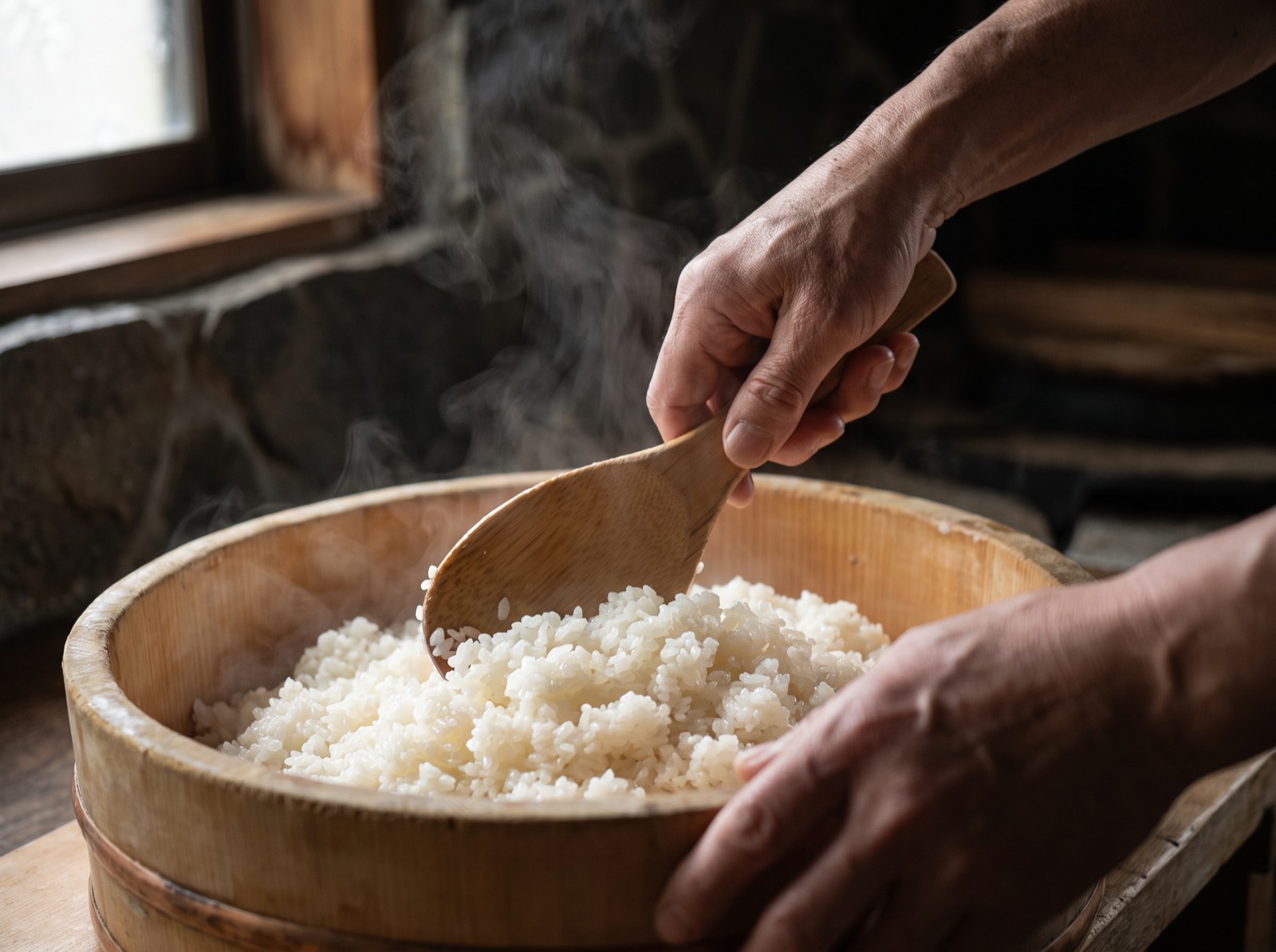
Two halves make the piece, and they are usually discussed separately even though they are eaten together. The rice, shari, is roughly half the volume and most of the technical argument among chefs. The topping, neta, is the half a diner asks for by name. Nigiri is the form that puts the two in direct, immediate contact, which is also what makes it unforgiving: there is no sauce, no wrapper and no cutting board between a mistake and the plate.
When it is used
Nigiri is the main course of an Edomae meal, served one piece at a time after the opening dishes, and it is the form the rest of a counter’s reputation is built on. At a conveyor-belt shop the same word covers whatever plate comes past on rice; the pace changes but the underlying construction, topping pressed onto a hand-formed base, does not.
It is not the only way vinegared rice and fish are served, and this entry is about the piece itself rather than about how it compares to the others. For how nigiri differs from a slice served alone, see nigiri versus sashimi; for the rice underneath it, see sushi versus sashimi.
What the chef actually does
Before a topping reaches the rice it has usually been cut to order. A block of fish is sliced across the grain at an angle chosen for that cut’s thickness, the blade drawn through in one motion rather than sawed, and turned straight just before the cut completes so the exposed face comes away clean rather than ragged. A thin, oily cut and a thick, lean one are sliced at different angles for the same reason a tailor cuts different fabrics differently: the angle is chosen to produce the texture the topping is meant to have on the rice, not simply to remove a piece of the right size.
The rice itself is gathered and shaped in one hand, a motion practised until it is fast rather than deliberate. A dab of wasabi, unless the topping is one that is seasoned another way, is set onto the rice before the topping goes over it, and the two are pressed together with enough contact to hold and no more. The same judgement that shapes the rice, described in full in our piece on shari, is what decides how firmly this last press is made: too light and the piece falls apart before it reaches the mouth, too firm and it stops falling apart at all.
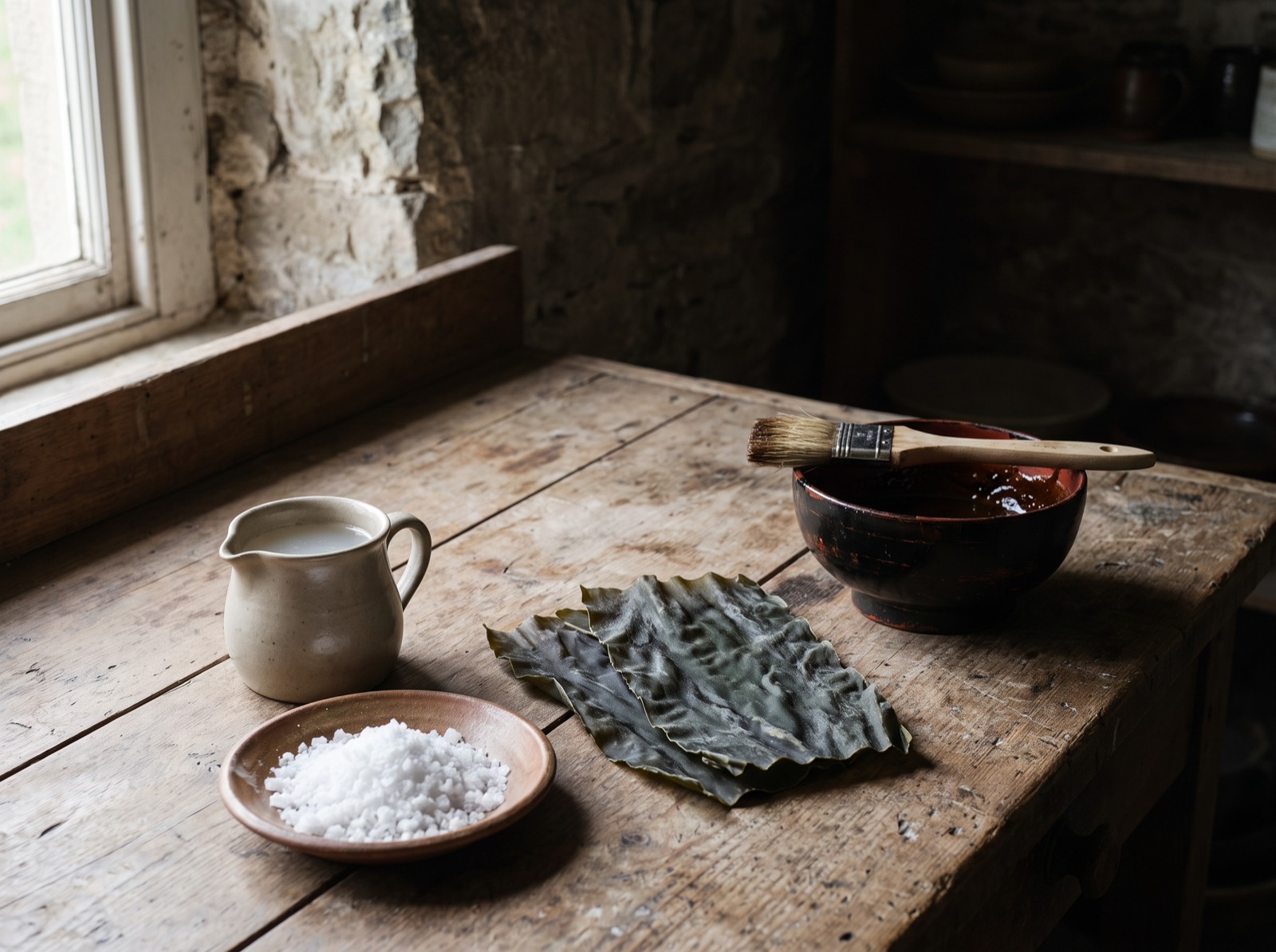
What is easy to miss watching this happen is how little of it is visible work. The curing, marinating or simmering that gave many toppings their character was finished earlier, sometimes a day earlier; the counter motion is the last few seconds of a process that began well before service. Our guide to Edomae sushi sets out what happens to a topping before it ever reaches this stage.
None of this is done once and repeated identically. Fish varies piece to piece in fat and thickness, and the chef reads each one before cutting it, which is why two nigiri of the same fish from the same counter are rarely pressed with exactly the same hand.
Why it is built this way
Speed is the whole point of the form, and it always has been. Nigiri began as street food sold to people standing at a stall, and a piece made to order in seconds, rather than prepared in advance and held, is a direct answer to that origin. Pressed and boxed sushi, made ahead and cut later, solved the same underlying problem of serving rice and fish safely by taking the opposite route; see oshizushi for that older tradition.
Because it is made fresh for each order, nigiri is also the form that most directly shows a chef’s hand. A pressed block can be sliced by anyone once it is made; a nigiri is remade, decision and all, every single time.
What you are served is what was formed. Nothing is cut to shape afterward, and nothing is folded around it.
The disputed origin
Nigiri emerged in the late Edo period as a quick hayazushi, fast sushi, sold to people standing at a street stall. Our sources place that around 1820, which is the date used elsewhere on this site. What is not settled is who first made one. The form is traditionally credited to a chef named Hanaya Yohei, and that attribution is widely repeated in Japanese writing on the subject, but at least one of our sources names a different chef alongside him as an equally likely candidate. We treat the name as a tradition rather than an established fact; the date is the part the sources agree on.
How it differs from what it is confused with
- Nigiri and sashimi. Nigiri is fish on rice, pressed by hand; sashimi is the same fish sliced and served alone. The comparison is worth its own space: see nigiri versus sashimi.
- Nigiri and gunkan. A gunkan is a nigiri with a standing collar of nori added, built for a topping too loose to sit on plain rice. The rice-and-press logic underneath is the same.
- Nigiri and chirashi. Chirashi uses the same rice and often the same toppings, scattered over a bowl rather than formed into individual pieces. No pressing, no per-piece shaping.
- Nigiri and oshizushi. Pressed sushi is made in a mould well ahead of time and cut to order; nigiri is made to order and never held.
How to say it
nee-GEE-ree is close enough. Three even beats, ni-gi-ri, with no strong stress on any of them — English tends to lean on the middle syllable of a three-syllable word, which is not how it is said in Japanese. Nigiru, the verb it comes from, is said the same way with a different ending.
Where you will see it
Everywhere sushi is sold, from the most expensive Edomae counters to conveyor-belt chains to the sushi cases in supermarkets and convenience stores, though what has been done to the topping before it reaches the rice varies enormously across that range. The word on a menu rarely appears on its own; it is followed by the name of the fish, since nigiri is a method rather than a dish.
At a counter it is served one piece at a time, meant to be eaten within a few seconds of arriving and with the fingers rather than chopsticks; the mechanics of that are covered in how to eat sushi. For what a full sitting of it costs, see omakase price tiers.
Frequently asked questions
What is nigiri?
A bite-sized seafood topping pressed by hand onto a finger of vinegared rice. The name comes from the verb nigiru, to grip or press, describing exactly how the piece is formed: rice shaped in the hand, topping laid over it, and the two pressed together once more.
Who invented nigiri sushi?
It is traditionally credited to a chef named Hanaya Yohei in Edo around 1820, but at least one of our sources names a different chef alongside him as an equally likely candidate. The date is the part our sources agree on; the name we treat as a tradition rather than a settled fact.
What does a sushi chef actually do to make a piece of nigiri?
The topping is sliced to a thickness and angle chosen for that cut, then the rice is gathered and shaped in one hand, seasoned with wasabi if needed, and pressed together with the topping once. The whole sequence takes seconds and is repeated fresh for every piece.
Is nigiri the same as sushi?
It is one form of sushi, not the whole category. Rolled sushi, pressed sushi and scattered sushi are all sushi too, but on many menus the unqualified word defaults to nigiri because it is the form most associated with the word today.
Why is nigiri made fresh for every piece instead of ahead of time?
It began as street food made to order for people standing at a stall, and the form still answers that original problem: speed. Pressed and boxed forms of sushi solved the same underlying question, serving rice and fish safely, by being made ahead and held instead.
How do you say nigiri?
nee-GEE-ree is understood, though it is properly three even beats, ni-gi-ri, with no strong stress on any syllable.