Whether a sushi meal in Japan is halal is not something the name of a dish can settle. What can be checked is what goes into the meal besides the fish and rice: mirin and sake in the sauces brushed onto the fish, sweetening in the rice, fish paste in some egg toppings. What a label can add is limited, because Japan’s food-labelling standard largely does not reach a meal served at a restaurant. This piece lists what goes into the preparations, says where each fact comes from, and leaves the judgement where the Japan Tourism Agency leaves it: with the traveller.
Who decides what counts as halal
The Japan Tourism Agency publishes a guidebook for hotels and restaurants that receive Muslim travellers, issued in August 2015 and expanded in March 2018. Its first volume says that how Islamic teaching is interpreted and practised differs by sect, country or region, culture and individual, and that for this reason there is no worldwide standard for responding to Muslim travellers (basic volume, p. 4).
The second volume turns that into advice for businesses: say what you can offer so that travellers can choose, and leave what to eat and what to avoid to the individual (practice volume, p. 16). It also asks businesses to be careful with the word “halal” itself, since what counts as halal is for the Muslim traveller to judge (p. 17). Its practical starting point is two plain commitments, dishes without pork and dishes without alcohol, with dishes made from halal ingredients as a further step (p. 18).
That is the frame used here. We say what is in a preparation. We do not say whether it is halal.
What the guide names: pork, alcohol, and what sits inside them
On food, the guide names pork first. It says pork-derived ingredients turn up in processed foods, seasonings and additives, and gives emulsifiers, shortening, gelatin and collagen as examples (basic volume, p. 5). Second comes alcohol. Islamic teaching holds that alcoholic drinks should be avoided, the guide says, and many Muslims do not take sake, mirin included. Some also avoid the trace alcohol in seasonings such as soy sauce, and a footnote adds that whether that trace should be avoided is a point on which opinion is divided (p. 5).
Third, for animal foods other than pork, it says there are rules on slaughter, and that meat not processed by the Islamic method is to be avoided (p. 5). That page is about meat. It does not discuss fish, and neither do we.
The practice volume is specific about mirin. It is a compounded liquor, and a kitchen cooking without alcohol has to leave out mirin along with sake (pp. 18, 24). Soy sauce is not a liquor, it says, but some people mind the alcohol added to it (p. 24).
Where alcohol and animal ingredients turn up in a sushi meal
What follows is how Japanese sushi books describe the preparations. Each kitchen has its own recipe, and a book describes one kitchen or a general pattern, not the shop you are booking.
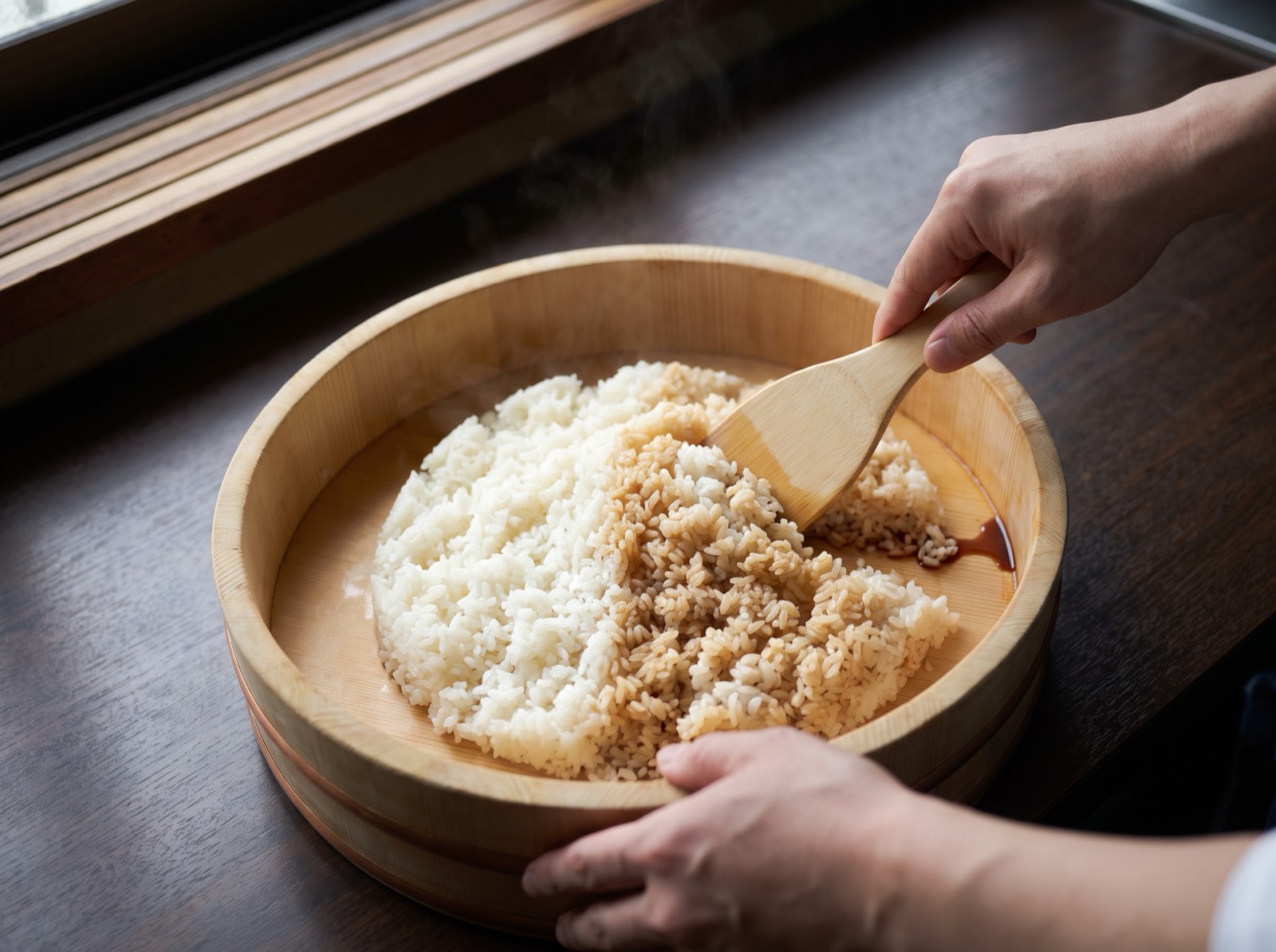
- The rice. One Japanese sushi handbook says the seasoned vinegar for the rice contains salt, that Edomae rice was once made with vinegar and salt alone, and that in recent years a sweeter, softer rice, with sugar, mirin or dashi added, has been preferred. The same handbook says vinegar comes as rice vinegar and as red vinegar fermented from sake lees, and that most shops today use rice vinegar. Whether red vinegar matters to a given traveller is that traveller’s call; what it is made from is set out in our entry on akazu.
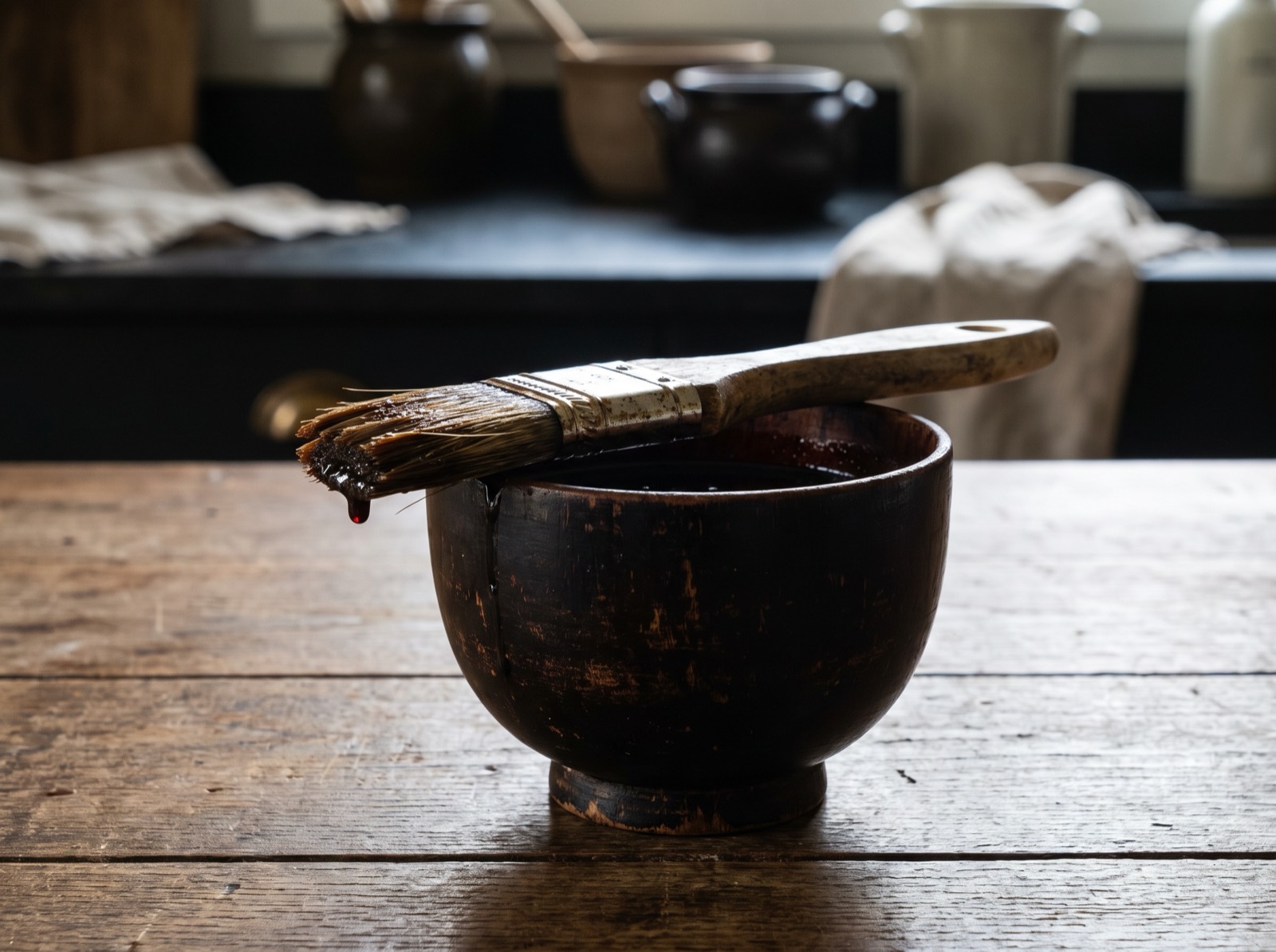
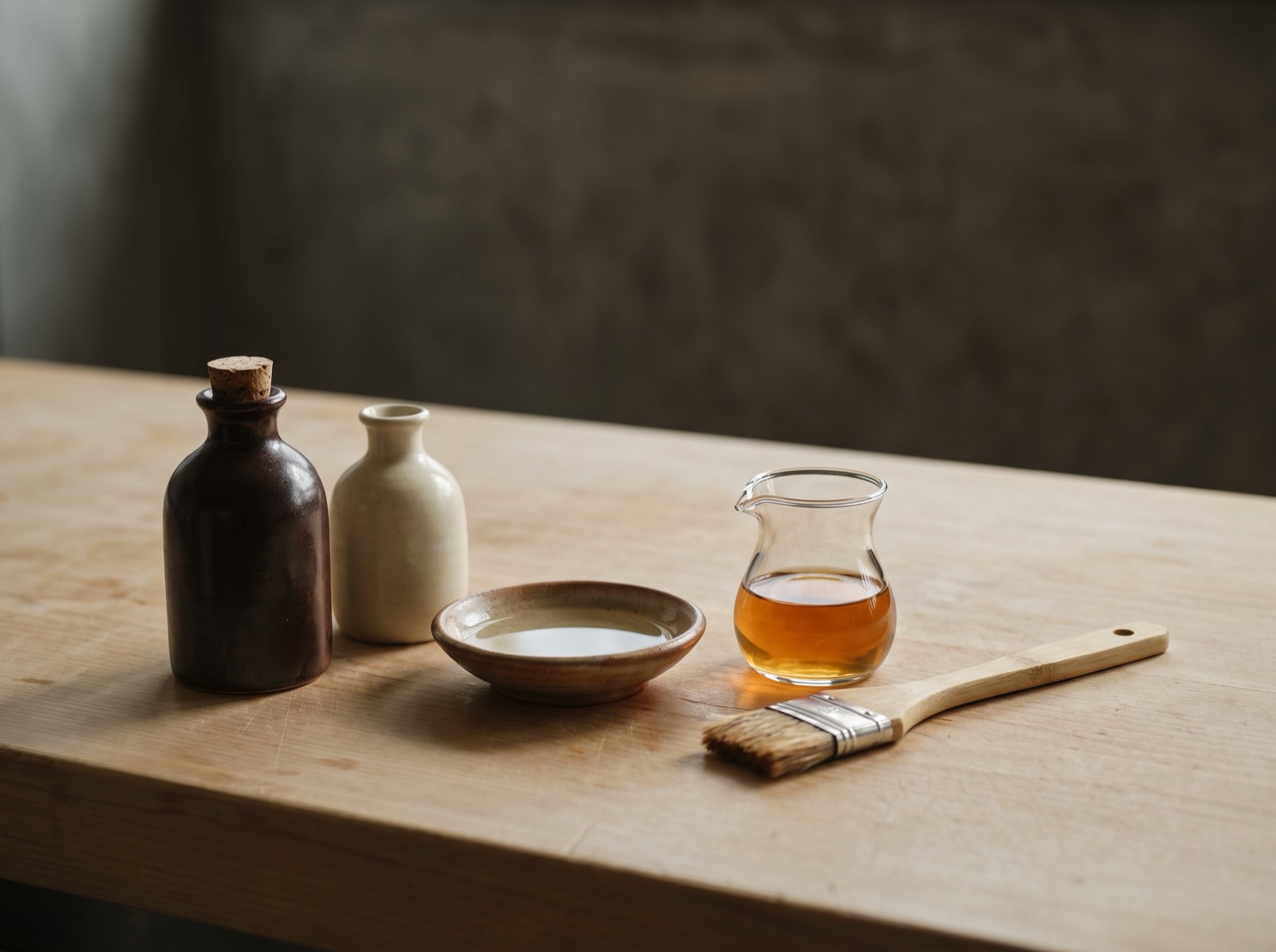
- The brushed sauce. Nikiri is dark soy sauce simmered briefly with mirin and dashi and brushed onto the piece. A bilingual sushi handbook defines the word as heating mirin or sake to drive the alcohol off. Our nikiri entry describes the step as cooking the alcohol off; no source we read measures what remains in the finished sauce, and the guide says that trace alcohol in seasonings is a point on which opinion is divided.
- The thick glaze. Tsume is a reduction of simmering liquid with soy sauce, mirin and sugar, brushed mainly onto anago (conger eel) and clams. One professional book describes one counter’s anago liquid as water, soy sauce, mirin and coarse sugar.
- Zuke. A professional book gives one counter’s marinade for fatty tuna: soy sauce, sake, mirin or sugar, and water, boiled and cooled. It also says that today it is common to soak the fish in soy sauce that has had sake added and been heated.
- The egg. One style of grilled egg, tamago, described in a Japanese sushi handbook is made with fish paste added to the egg and seasoned with mirin and sugar. Fish paste is an animal ingredient that the word for egg does not signal.
- The soy sauce on the counter. The guide says soy sauce is not a liquor. A Japanese sushi handbook says the dispenser set at the seat often holds nikiri, the brushed sauce above. What is in the dish at a particular counter is a question for that counter.
That is a list of where to ask, not of what to avoid. Whether red vinegar, simmered mirin or fish paste matters is the traveller’s decision, which is where the guide leaves it.
Shared kitchens are a separate question
Alcohol and pork are questions about ingredients. A second kind of question is about the kitchen. The guide lists four things Muslim travellers ask for: cookware used only for dishes made for them, separate cooking and storage areas, separate tableware and cutlery, and a dining space where dishes not made for Muslims, and people drinking, are out of sight. It says many accept cookware and tableware that have been properly washed, some find sharing unpleasant, and some worry about the whole cooking environment rather than the utensils alone (p. 19).
It also notes that some kitchens make dishes with sugar, honey or apple juice in place of mirin (p. 25). That is a choice a kitchen makes, and one a traveller can ask about.
A published policy can answer some of this and still leave a gap. Our Shinjuku piece quotes one shop’s own notice, with its list of what the kitchen does and its statement that cookware and tableware are shared with the regular menu. A reader who needs the first half needs the second.
What a label does and does not tell you
Japan’s Food Labelling Standard applies where a food business sells food. Its Article 1 carves out food served for eating on premises with facilities, apart from a single provision on raw beef (Article 40). The Consumer Affairs Agency’s Q&A explains that this covers restaurants, canteens and cafes, including dishes delivered from a restaurant in the state in which they are served, and that a restaurant which buys in food made elsewhere and serves it needs no label.
Under Japan’s food-labelling standard, food served for eating on the premises is largely outside the rule. What a counter tells you about its sauce is what it has chosen to say.
So the dish in front of you has no ingredient list under that standard, and a counter has no duty to print one. What it says on a menu or a web page is voluntary. The Tourism Agency’s guide encourages saying it: it points out that English beside the Japanese on a menu gives a Muslim traveller something to judge by, and it lists whether pork or alcohol is used among the information to give without being asked (p. 17). The guide is advice to businesses. The labelling standard is the law, and it generally does not apply to the meal.
Whatever a page says or leaves out, the way to learn what is in a sauce is to ask the kitchen.
What to ask, and when
- Say it when you book. Our booking guide puts what you cannot eat, and whether you plan to drink, among the things to tell the shop, and says that a dietary restriction first mentioned at the counter can mean a piece has to be remade.
- Ask by preparation, not by label. Is the rice seasoned with mirin or dashi? Is the sauce on the fish simmered with sake or mirin? Is the egg made with fish paste? These have answers a kitchen can give.
- Ask what is in the soy sauce dish, and what has been brushed on the fish before it reaches you.
- Ask about the shared parts: boards, knives, cookware and tableware, and what the shop is able to keep separate (guide, p. 19).
- Decide for yourself. What to eat and what to avoid is the individual’s judgement, which is the guide’s own position (p. 16).
No label can answer these for you, because at a counter there is none. What exists instead is a conversation, and the guide says the shop’s side of it is to tell you what it does and leave the decision with you. Facts about the guide were read on 20 October 2026.
Frequently asked questions
Is sushi halal in Japan?
That is not something we rule on, and the Japan Tourism Agency’s guide for restaurants leaves it to the traveller: it says no worldwide standard exists and that interpretation differs by sect, country, culture and individual. What can be checked is what goes into the meal, such as mirin and sake in sauces, sweetening in the rice, and fish paste in some egg toppings.
Does sushi contain alcohol?
Some preparations around the fish are made with sake or mirin. Nikiri is soy sauce simmered with mirin and dashi, tsume uses mirin, and a professional book gives one counter’s zuke marinade with sake, and mirin or sugar. The guide classes mirin as a compounded liquor and says some Muslims also avoid trace alcohol in soy sauce, a point on which it says opinion is divided.
Do Japanese restaurants have to label their ingredients?
Not under the Food Labelling Standard. Under its Article 1, the standard does not apply to food served for eating on the premises, apart from one provision on raw beef, and the Consumer Affairs Agency’s Q&A describes that as restaurants, canteens and cafes. Anything a counter tells you about its sauce is voluntary.
Can a sushi restaurant cook without mirin?
The guide notes that some shops use sugar, honey or apple juice in place of mirin. Whether a particular shop does is a question for that shop, best asked when booking.
What should I say when booking sushi if I avoid alcohol or pork?
Say what you avoid when you book, since said at the counter it can mean a piece has to be remade. Ask about preparations by name, such as the rice seasoning and the brushed sauce, and about shared boards, knives and cookware, rather than relying on a word such as halal.